

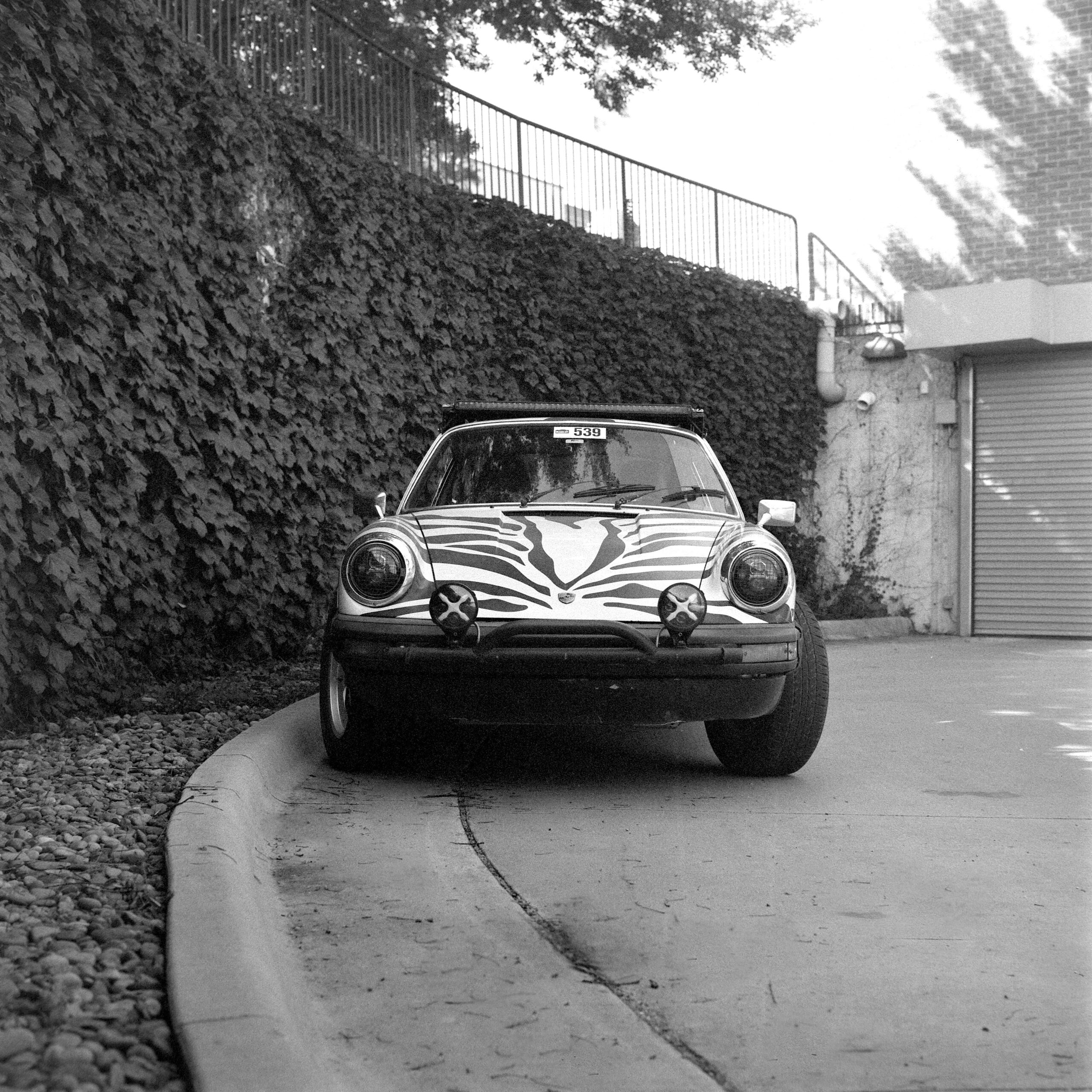
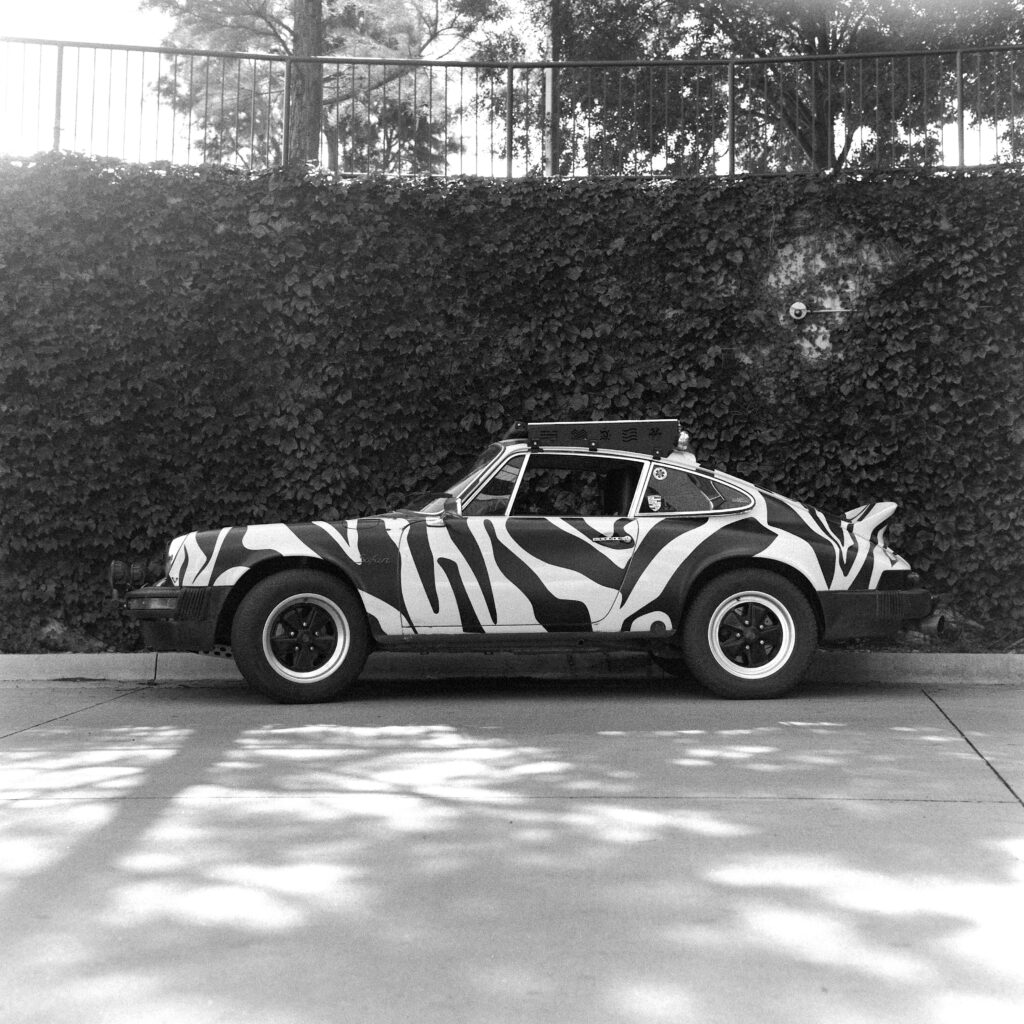
There’s something so satisfying about pairing a Rolleiflex with a vintage, air-cooled Porsche. Both are high-end, precision-engineered machines, but they’re at their absolute best when you take them out of the display case and actually put them to work. When I saw Austin’s 1974 Porsche 911 Safari build, I knew Bergger Pancro 400 was the right film stock to use.
The film
I ended up shooting three rolls of it for this session. Pancro is easily one of my favorite films, right up there with Ilford FP4+ and XP2 Super. It has this beautiful, classic film look that perfectly mimics the feel of vintage black-and-white photos and cinema. It isn’t overly smooth or clinically clean like some other film. The grain is just right, pleasantly noticeable without ever getting chunky or disgusting.
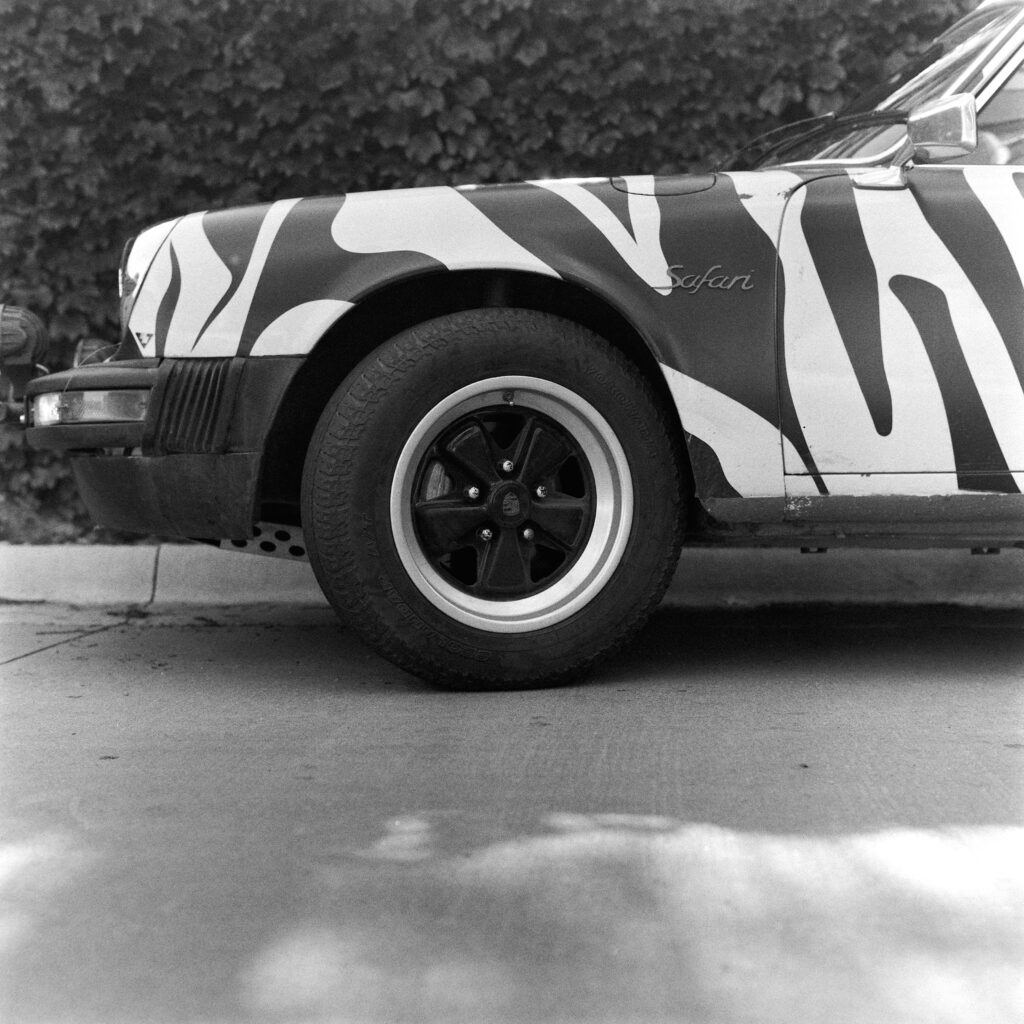
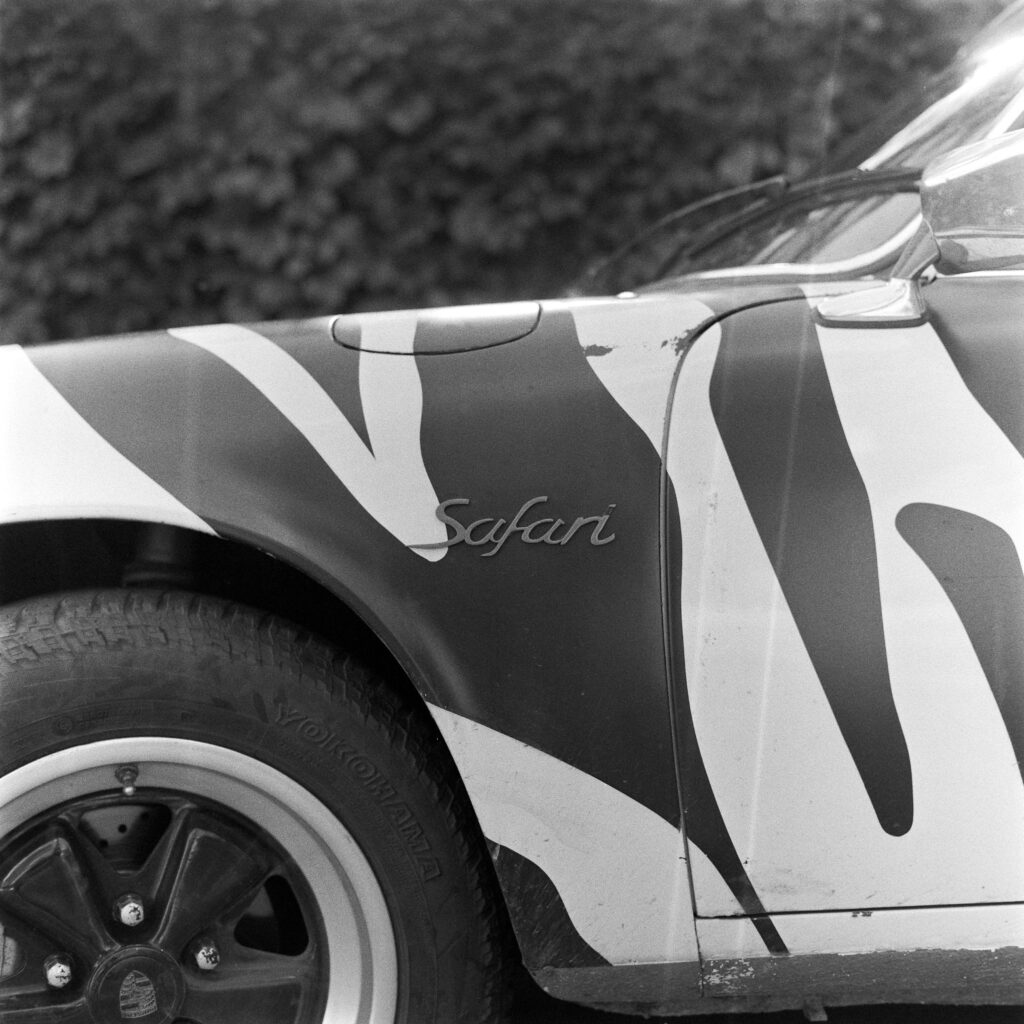
That crisp detail was absolutely crucial for capturing the gritty textures of Austin’s car. Plus, shooting in the morning shadows meant the 400-speed ISO was a lifesaver. It gave me just enough speed to shoot comfortably handheld wide open, but it wasn’t so fast that I had to worry about threading on an ND filter when the sun finally broke over the horizon. I did need to throw the camera on my Tiltall when shooting at F/8 and F/11. I developed the rolls in Rodinal, and the combination yielded incredibly sharp, detailed negatives that I will be doing large darkroom prints with. Rodinal is my favorite developer, really the only one I use anymore. It’s super simple to use, one-shot, very long shelf-life, and sharpness-enhancing with good contrast.
The Camera
The camera for the shoot was my Rolleiflex 6003 SRC 1000. This camera is just amazing. Not only does it have a cool 80s look, it is loaded with features. I’ve never had a single problem with it. One of the biggest advantages is the built-in light meter. Not having to pause and pull out an external meter and take a reading speeds up my workflow a lot. I trust this built-in meter wholeheartedly. It hasn’t failed me yet, and it was dead-on all morning. The auto film advance is another huge plus. Being able to shoot the next frame quickly meant I was always ready to take the next shot, which was great since I only had an hour to shoot with the car. Even reloading the film is super simple and never broke my momentum.
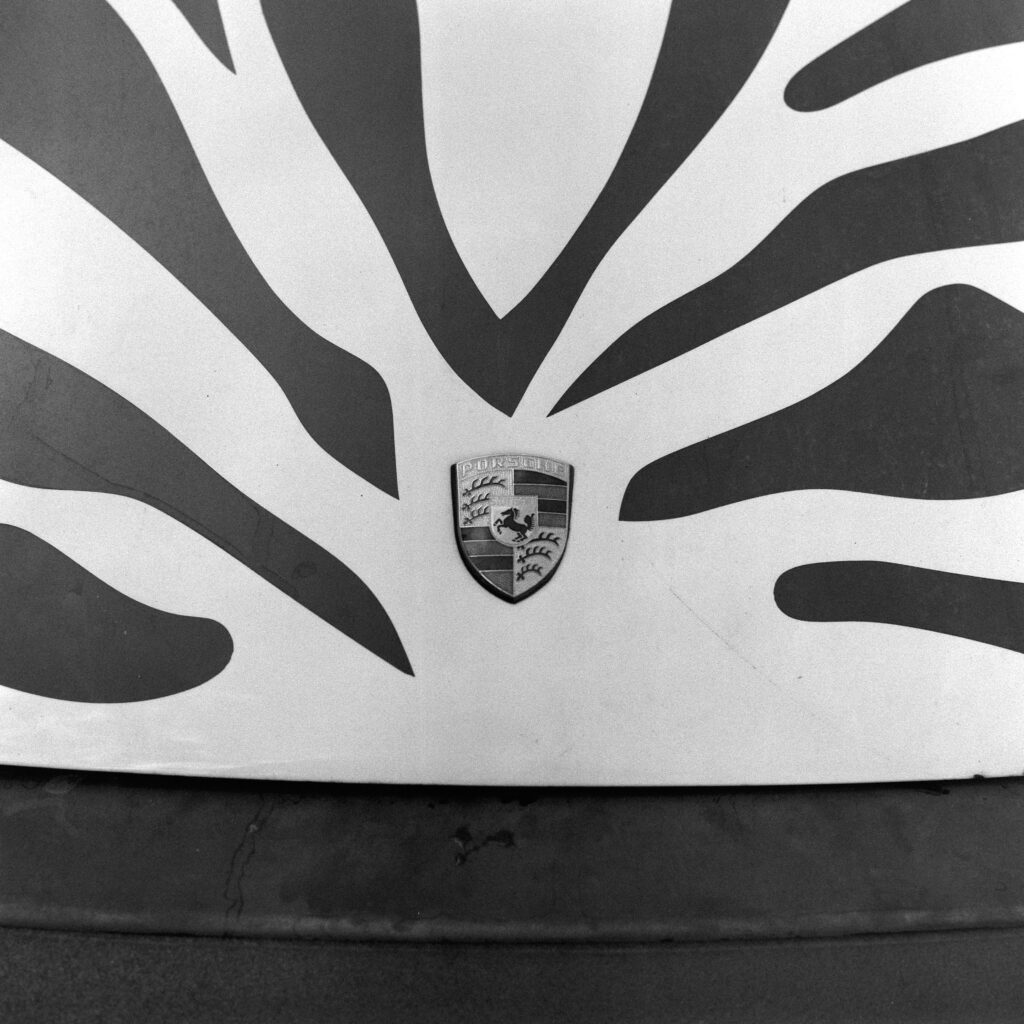
I did end up popping off the prism finder and swapping it for a waist-level finder when I needed those lower angles of the car. The split prism screen on the 6003 isn’t my favorite because of how dim it is. It can actually make shooting more difficult if the subject doesn’t have straight lines or a repeated pattern. Maybe I just need more practice. But I’ve bought a really bright screen off of eBay that I’ll probably keep on more often. However, for this shoot, it was actually really nice for nailing critical focus, especially in the tricky low light of the morning shadows. I had the 80mm lens mounted, and while a wider 50mm would have been great (accepting donations), the 80mm proved to be surprisingly versatile. The sharpness of this lens is also unreal. I was easily able to step back and capture the whole car, and then step right in to shoot all the details.
The Car
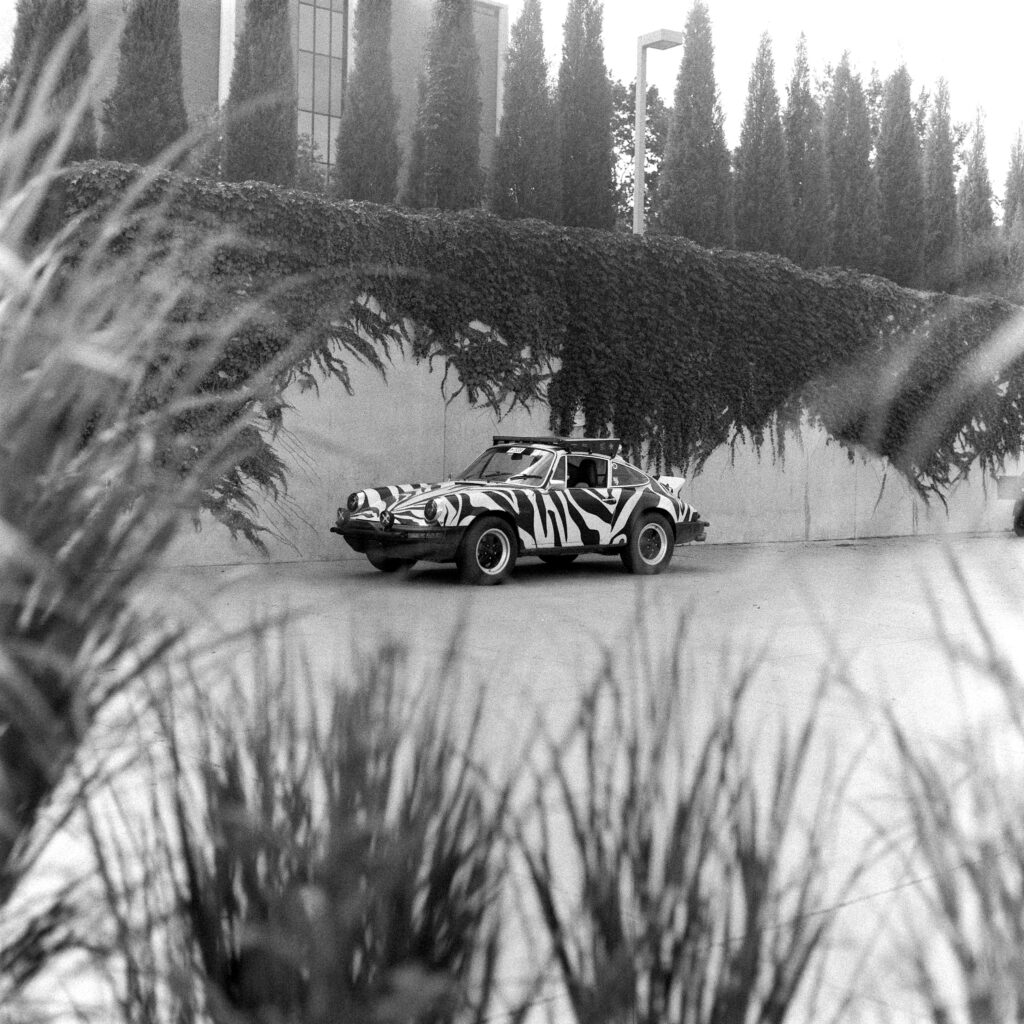
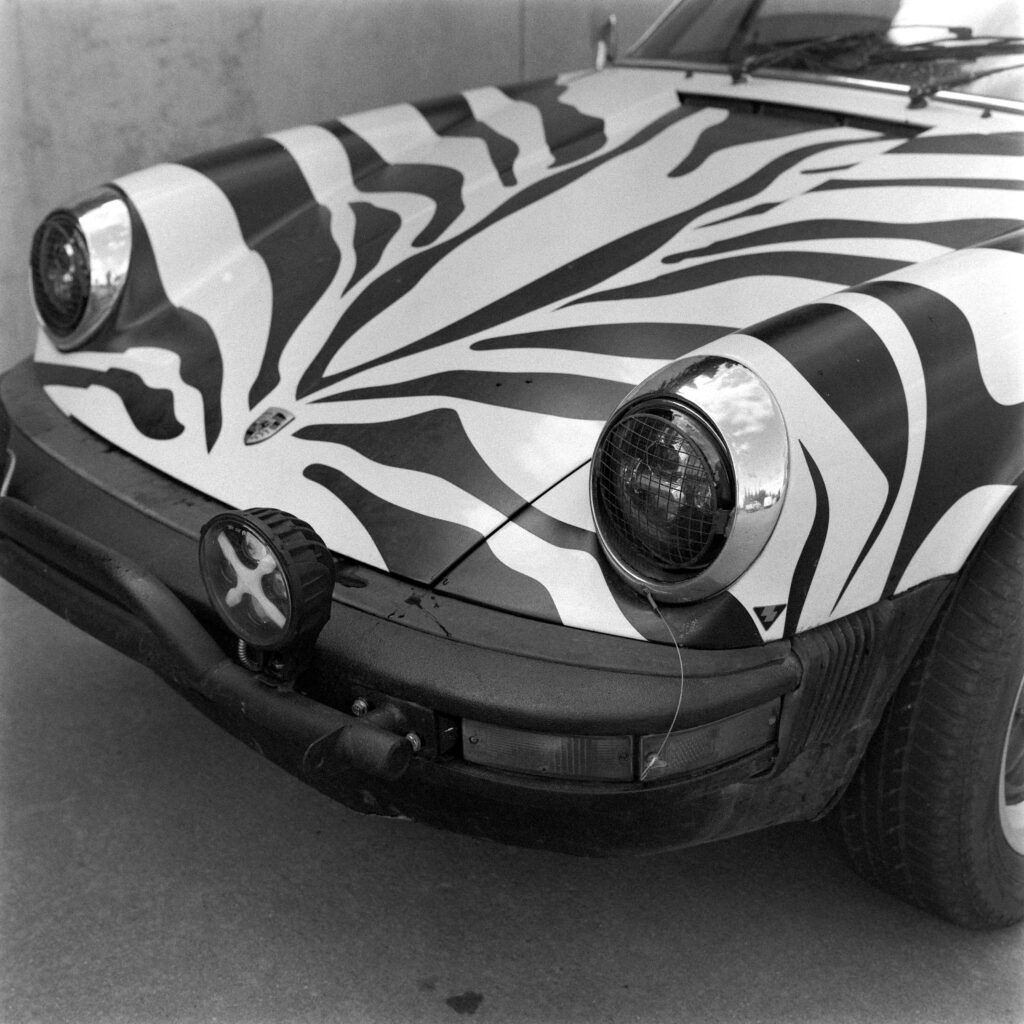
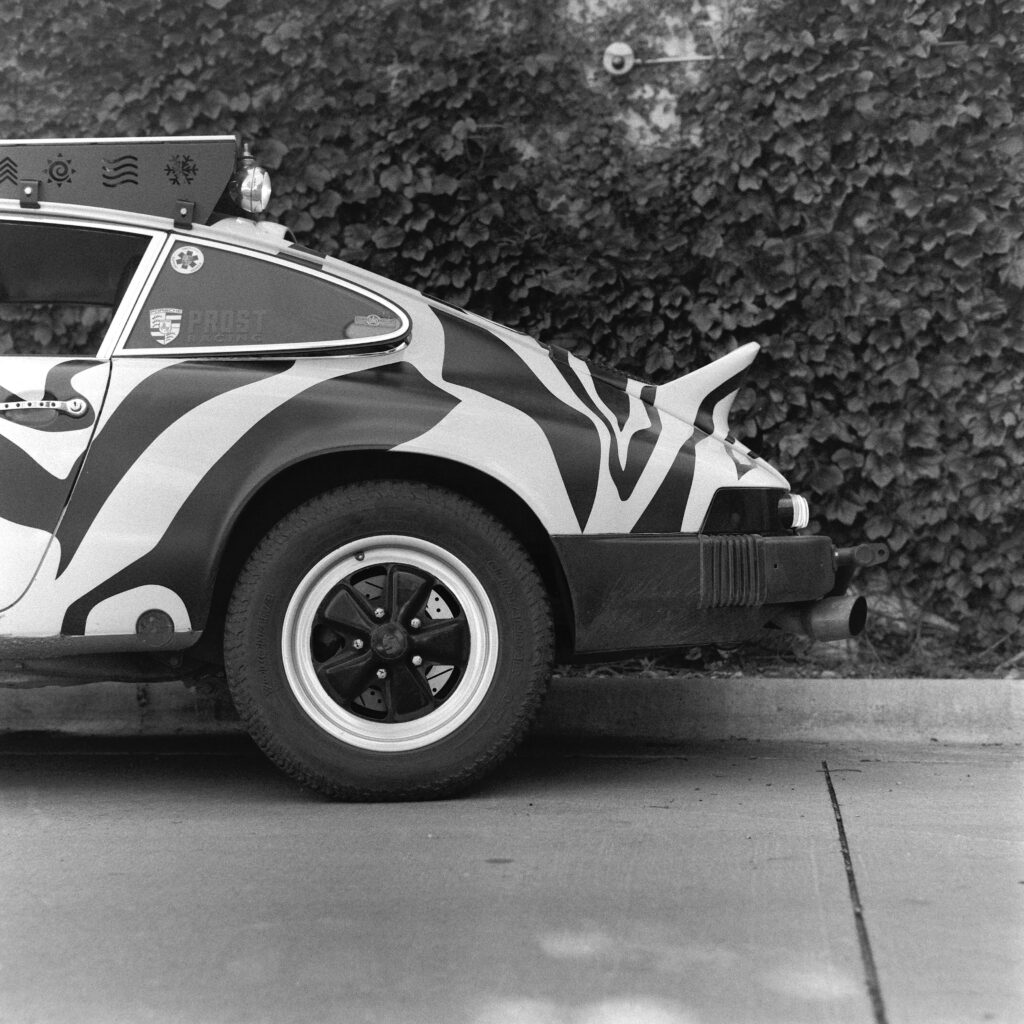
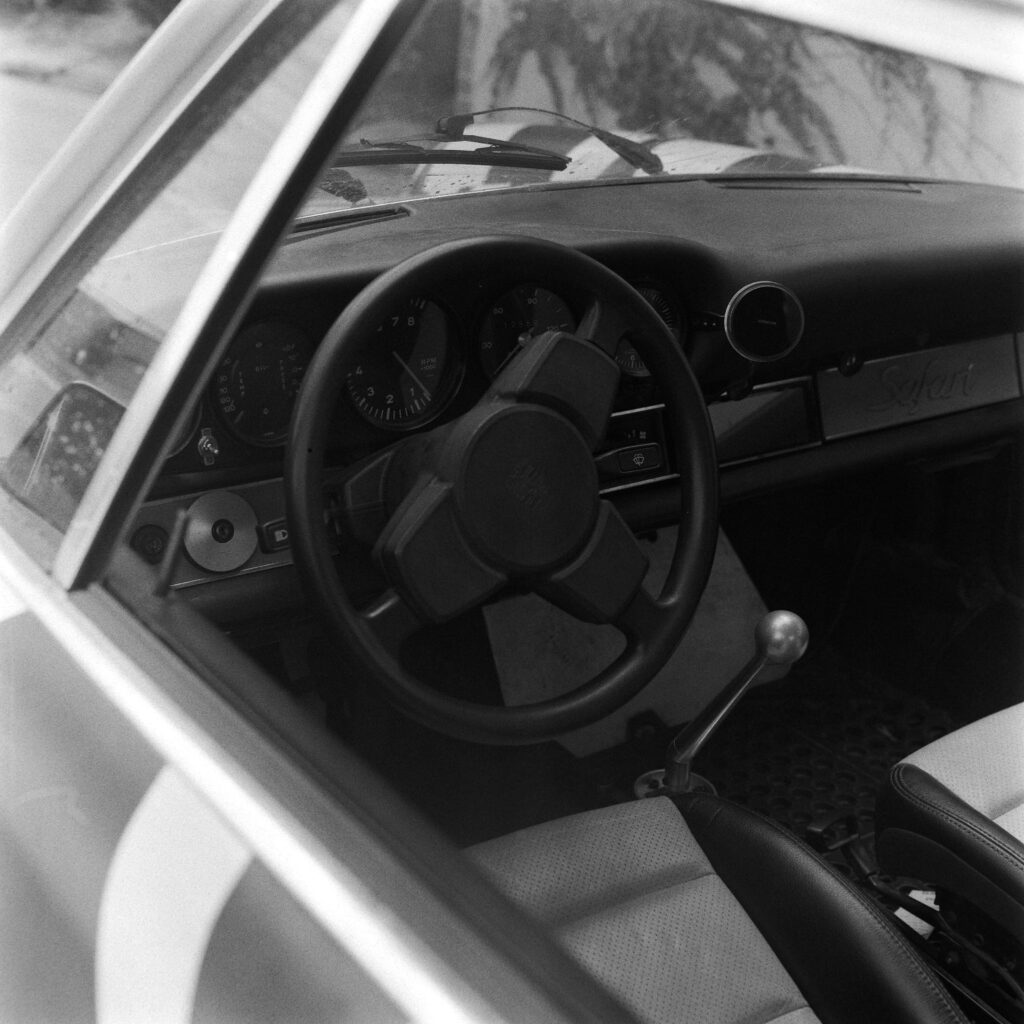
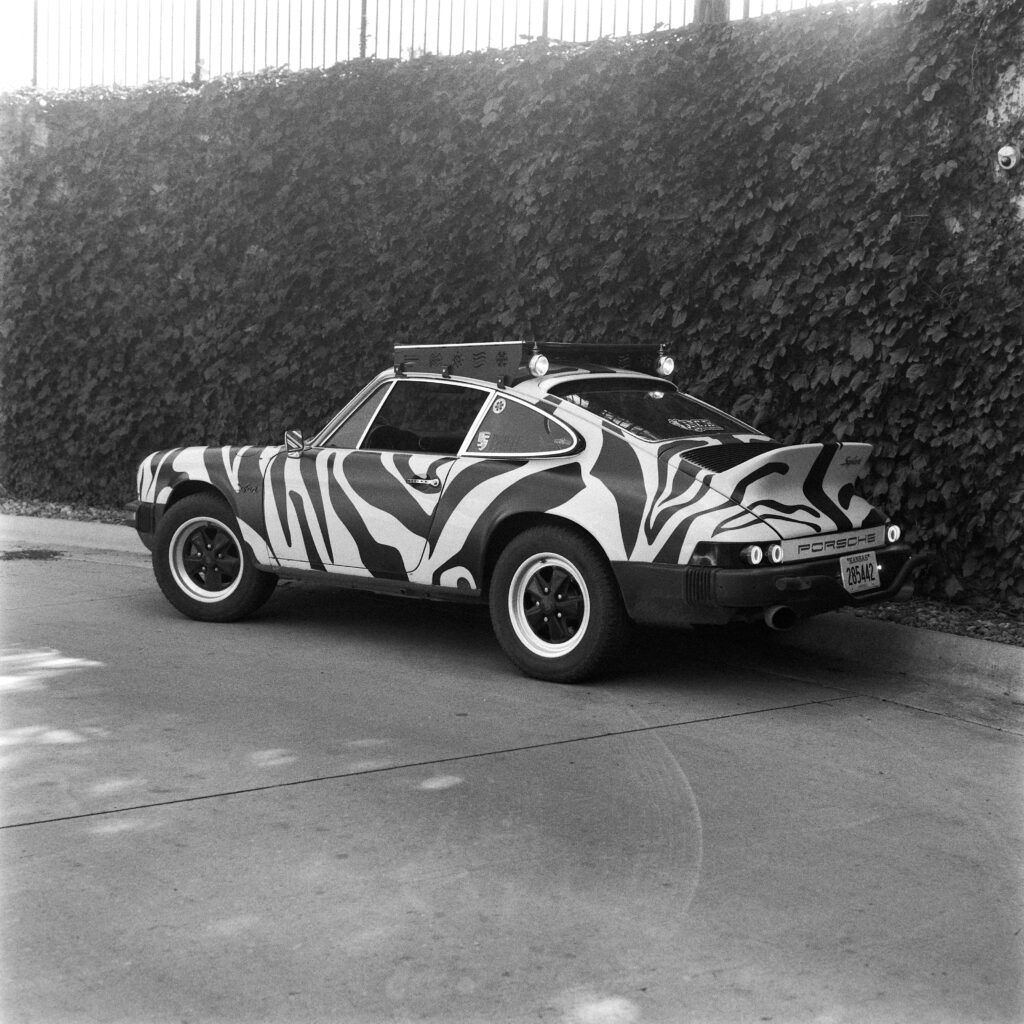
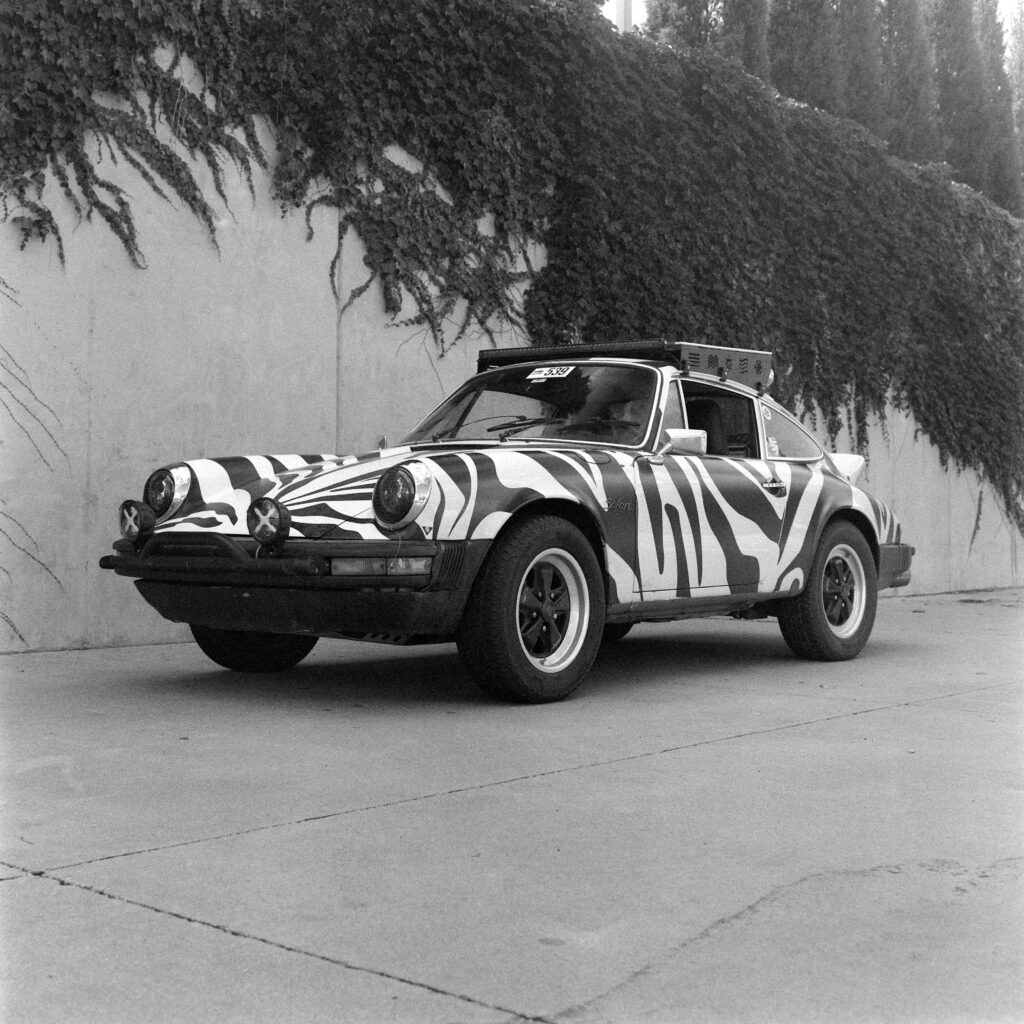
And this car has a lot of details. Austin essentially rescued this 911 from the grave. He bought it “literally in a box,” discovering that the previous owner had patched it together using household wire nuts, duct tape, and PVC plumbing pipes. Instead of restoring it to factory perfection so it could collect dust, Austin stripped it to the bare shell and built an off-road monster.
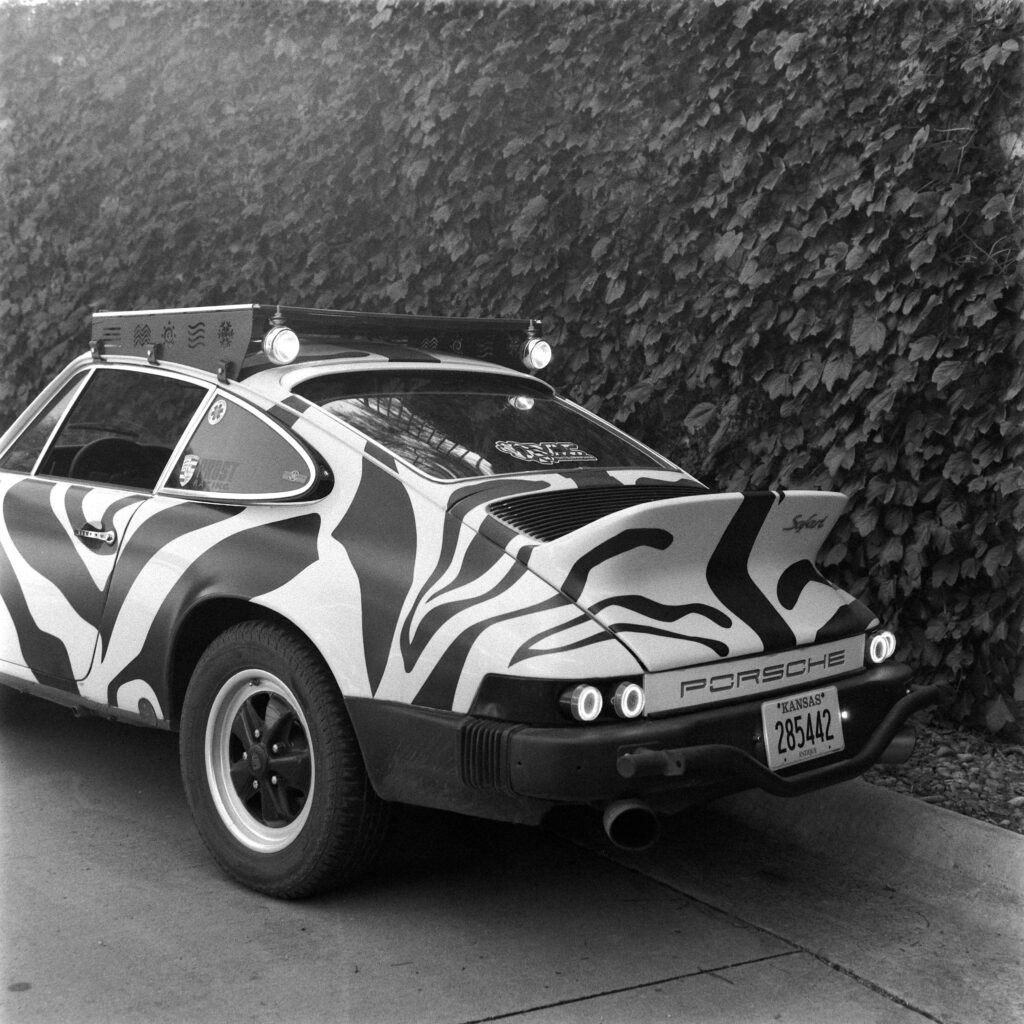
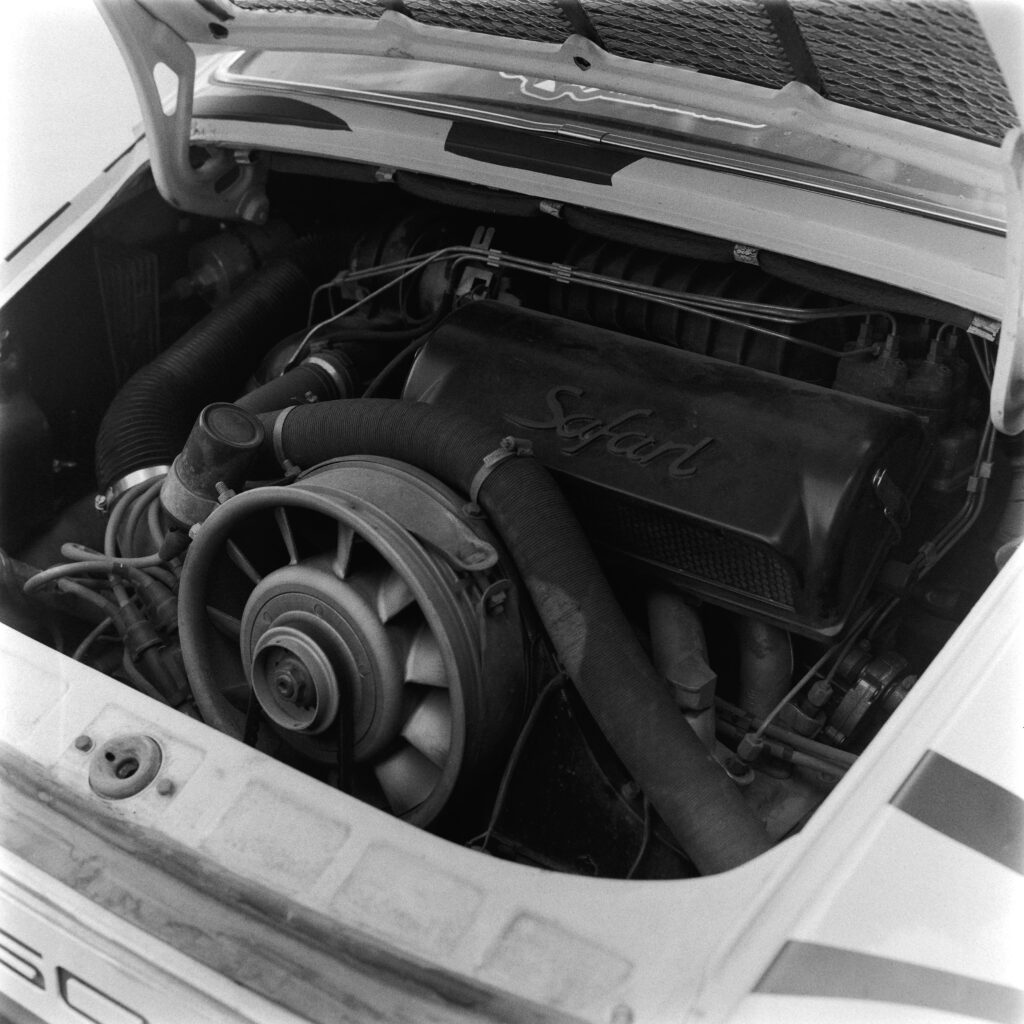
To handle the dirt, he welded in an Elephant Racing “Urban Assault” kit to stiffen the vintage chassis and swapped the old 2.7-liter motor for a beefier 3.0-liter Super Carrera engine. He realized how small a classic 911 is next to modern trucks, so he completely rewired the car with modern fuses, incredibly bright LED headlights, daytime running lights, and a custom third brake light so he stays visible on the road.
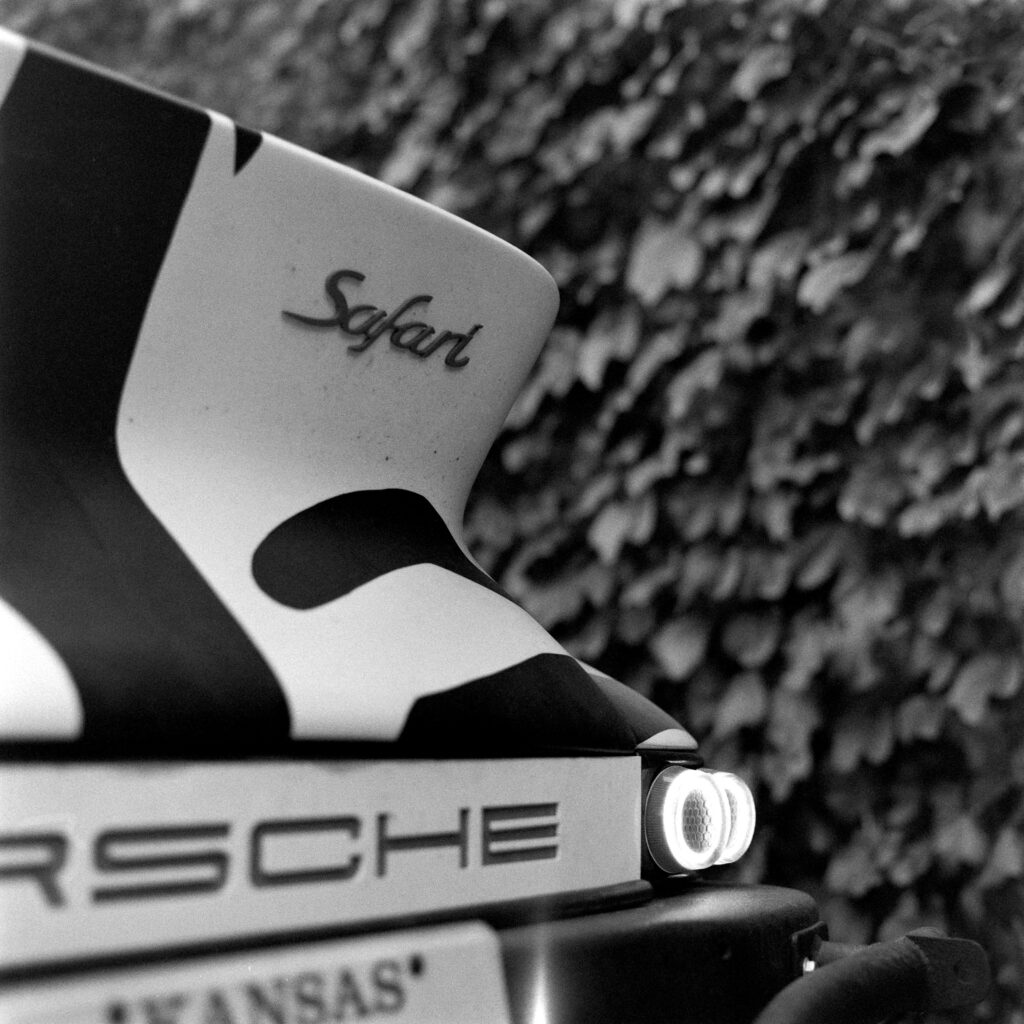
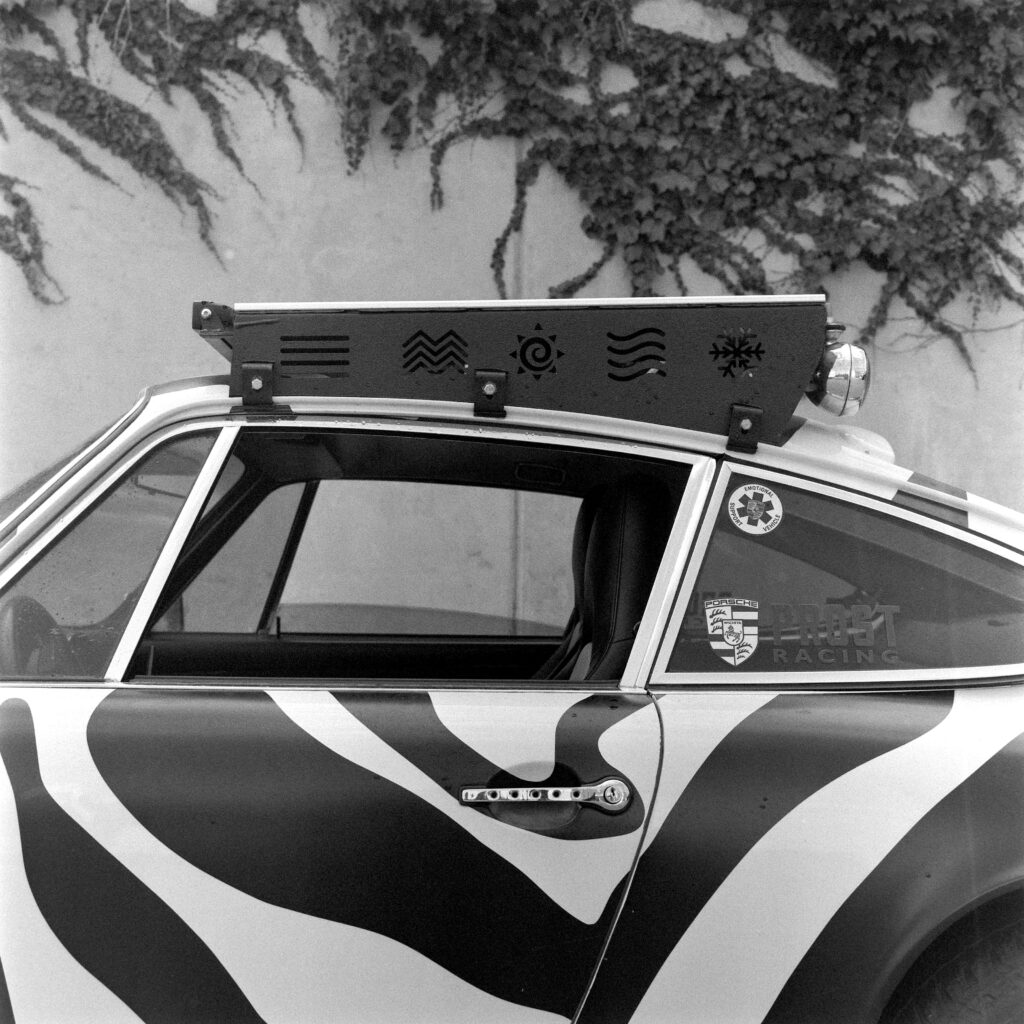
He hand-built a custom roof rack and wired the lights using a military-style aircraft cannon plug, meaning with one twist, he can disconnect all four overhead lights without cutting wires or risking water leaks. Inside, he ripped out the carpet, Rhino-lined the entire floor and dropped in modern Cayman seats and a compact radio GPS. He even CNC-machined the Safari badges.
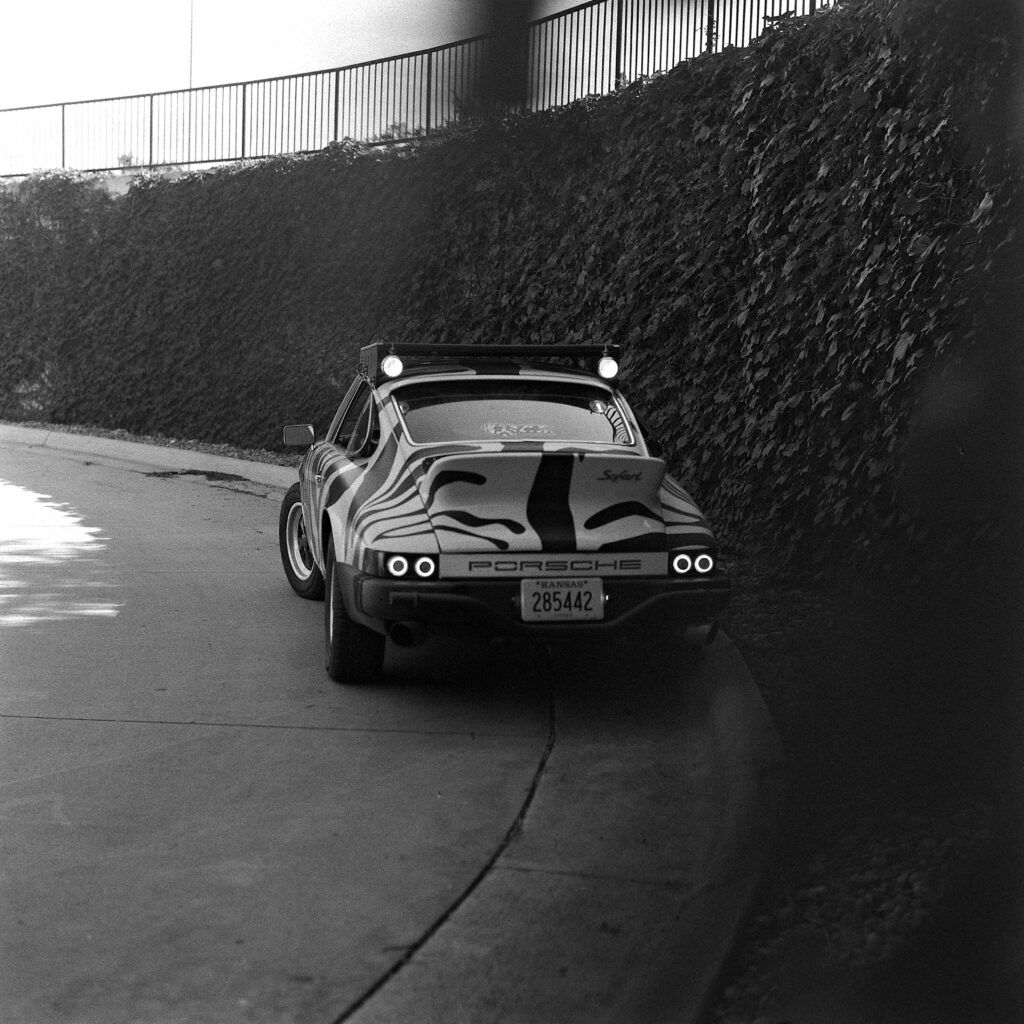
This car has drifted through the dirt trails of the Appalachians and climbed the snowy summit of Pikes Peak. Austin isn’t interested in storing it in a garage and saving the car for the next guy to enjoy. He wants to have the time of his life driving it right now. Capturing this car on Bergger Pancro 400 just felt right. It was a perfect morning to shoot film.
Thanks for reading.
You can visit my website, or find me on Instagram.
Share this post:


Comments
Martin on Pancro and Porsche
Comment posted: 01/08/2026
Gary Smith on Pancro and Porsche
Comment posted: 01/08/2026
David Pauley on Pancro and Porsche
Comment posted: 01/08/2026
Tony Warren on Pancro and Porsche
Comment posted: 01/08/2026
Nick Orloff on Pancro and Porsche
Comment posted: 02/08/2026