

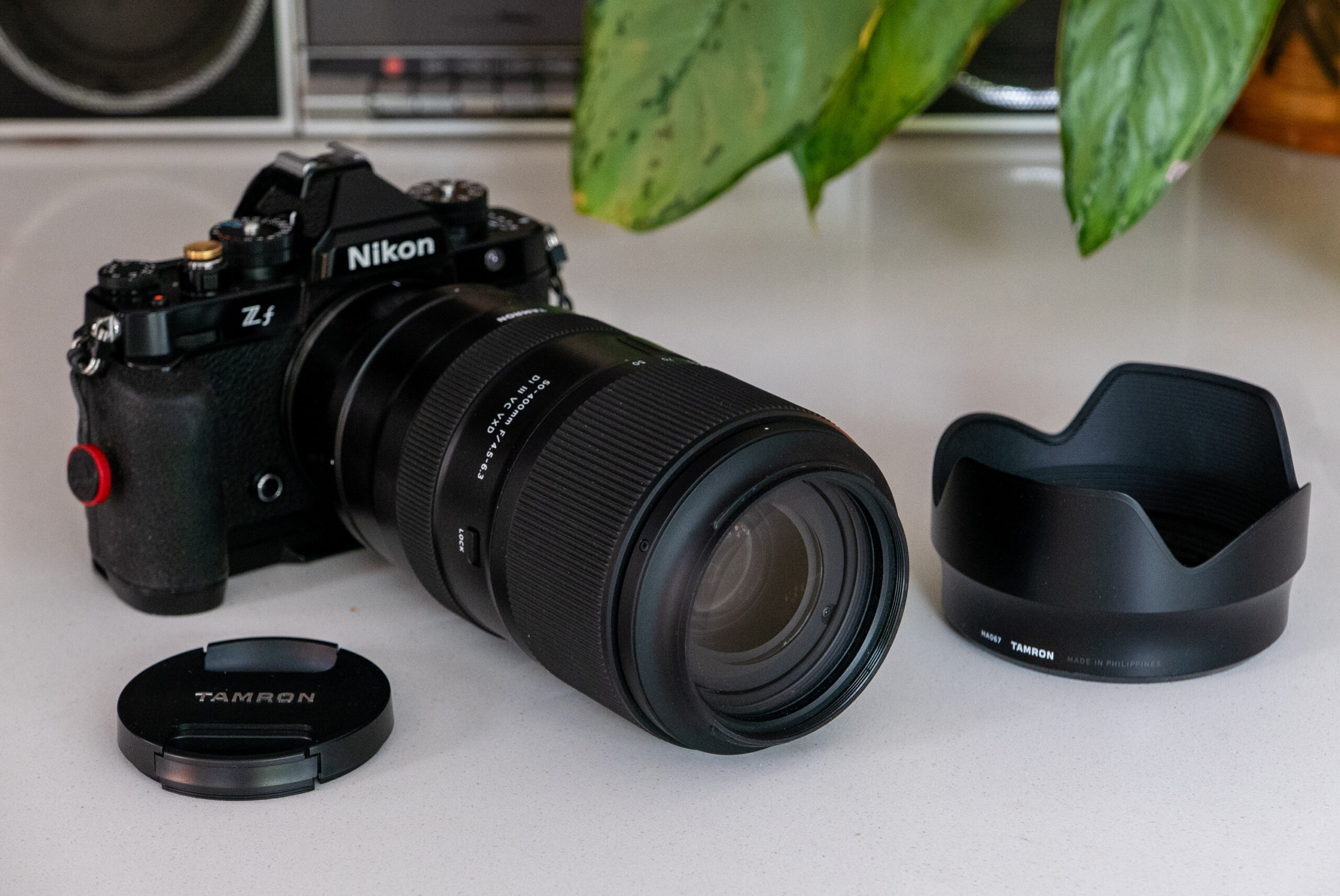
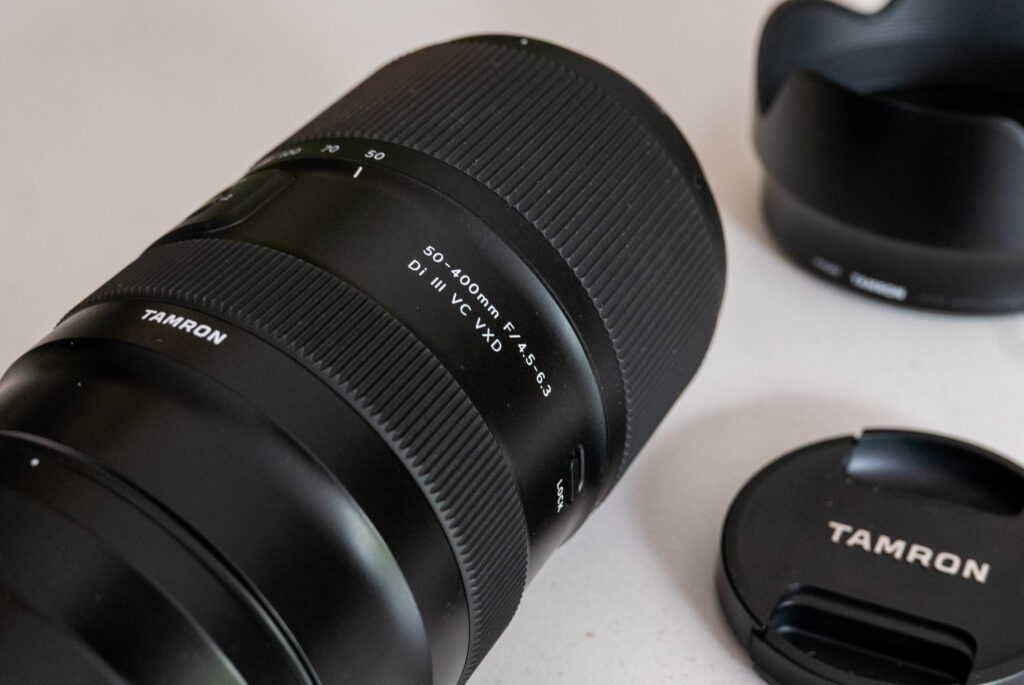
I probably wouldn’t have considered myself the target audience for such a lens as the Tamron 50-400mm f/4.5-6.3 Di III VC VXD (Model A067S), but having spent a month with one on loan, now I’ve had to give it back I have found myself lacking a very useful tool. I’m not about to tell you this lens is one everyone needs to own, but even as someone whose overriding preference is usually for smaller, lighter, often pocketable cameras, I am about to tell you about a very much larger piece of kit that I actively chose to use, with little concern for its size, pretty much every time I went out taking photos for the whole month of August!
The Preamble
This review started with a conversation with my daughter wanting to have a go at sports photography. This was an idea that both me and my wife were very happy to encourage, so we set about trying to make it happen in as interesting and fun way as we could. As some of you might know, I run a coworking space – what you are less likely to know is that through the coworking space we sponsor Worcester City Women’s Football Club. As they say, it’s not what you know, but who you know, and as much as I am no expert when it comes to sports photography, I do know Nicole who owns the club so I asked her if we could come along to a match and take some photos. She agreed and said she’d let me know a date toward the time when the season was due to start.
That was the easy part. The more complicated bit was the fact that I only had one camera and no suitable lens/lenses for sports photography, so, being skint, if we were going to both take some photos, I was going to need to beg, borrow and steal (or at least beg and borrow) some kit to make it happen. Fortunately, the first conversation with Nicole happened in June so I had a little bit of time to plan before the football season restarted.
The second camera came easy. Since this was for the benefit of Connie, me and Hannah decided we could justify the purchase of a Nikon Z50ii as something of a family camera. If you don’t know already, this is a smaller-sized APS-C Nikon mirrorless camera that just so happens to have an extremely powerful autofocus system in it. A story for another day maybe, but actually I can’t tell you how impressed I’ve been with this camera.
The lens problem was a little more tricky. Good telephoto lenses in the 200-400mm range don’t come cheap. They can do, if you don’t mind manual focus, and old, but if you want bleeding edge technology autofocus then budget options are a little more difficult to come by. There was certainly nothing I could afford to buy. So, again leaning into the who-you-know factor, I got in touch with someone from Tamron UK who I met at the photography show a few years ago to ask if I could borrow the Tamron 50-400, and happily the answer also came back positive.
Then it was just a matter of waiting for August when the football season was due to start again. I made arrangements with Tamron for the lens to get to me about 10 days before, and even agreed a slightly longer loan so I could take it on holiday after. Then, something else happened which would end up being quite timely and inspire even more use of telephoto zoom lens such as the Tamron 50-400. As I talked about in this post, I won a contract with Worcester Wildlife Trust and found myself a little inspired to take photos of some wildlife. With this lens loan on the horizon it was not only a possibility, but one I started to get quite excited about exploring!
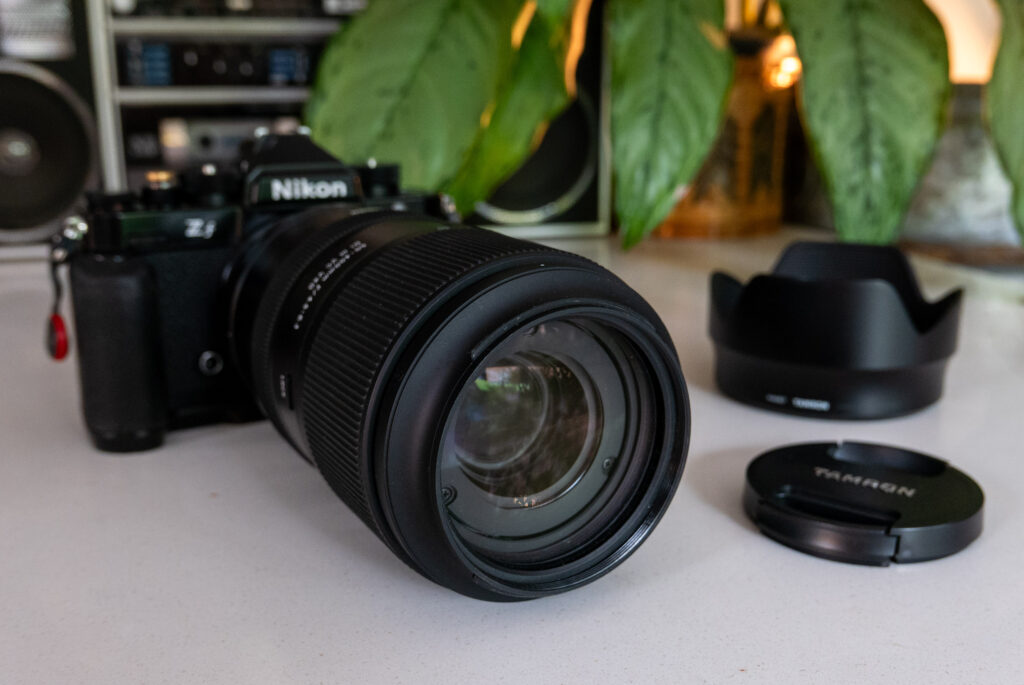
And then the Tamron 50-400 actually arrived, and until I had to send it back at the beginning on September, it pretty was pretty much welded to the Zf, only to be taken off to be attached to the Z50ii. As I’ve said, it’s gone back to Tamron now, so I’m very much (finishing) writing about the experience in the past tense. I feel like I have a lot to say too, but if there’s one TL;DR to share with you, it’s that I really do think, at least as a hobbyist photographer, I am more the target audience for this lens than I could have ever expected – I shall get into how I have come to that conclusion throughout!
You can see the shots from mine and Connie’s football shoot here.
Tamron 50-400mm vs. Nikon 28-200
Before I get into the review properly, I just want to touch on a hypothetical antagonist in this story, the Nikon 28-400 f/4-f/8 – this is a lens that I must admit came to mind a lot of times whilst experimenting with this Tamron 50-400. To me, the Nikon feels like the most obvious alternative to this lens, and with the amount of comparisons and discussions online between these two lenses, it seems I’m not the only one to think this.
These two types of lenses have existed for decades of course, but up until relatively recently, they have more easily fit into two categories. For example, when I was selling cameras and lenses back in the mid-2000s, I would often sell APS-C cameras with either a 18-70 and 70-300mm combo, or with an all purpose travel zoom lens either from from Tamron, or more often the then-extremely-popular Nikon 18-200 VR. Back then it was a lot easier to delineate between these options too. The 18-200 was a great lens, but it wasn’t as great optically as the other combination of lenses, nor did it have the 300mm reach. It was smaller and lighter though. The twin lens kit was therefore for the photographer who wanted better quality and didn’t mind the extra bulk, the 18-200 was for the photographer who just wanted to be able to carry a single lens and didn’t mind that there was a bit of a hit to the optical quality.
Just a quick but relevant sidebar here: we sold mountains of Nikon’s 18-200 lenses back in the day, many of which to people who came in quoting Ken Rockwell’s review. I still find it funny to read his hyperbole to this day. He called this lens “life changing” and a “miracle”. Whilst I don’t want to take too much away from the lens – it was impressive in its day – by today’s standards it really is a pretty crap lens in objective terms optically speaking. Andy Westlake’s review from a few years later was much more accurate. Just read his conclusion; it spells out exactly the market positioning of the lens, as well as touching on the delineation I’m talking about here.
In the intervening years, lens technology has improved a great deal, and even the travel zoom lens optical quality has increased dramatically. With high ISOs becoming less noisy, and noise reduction technology improving as much as it has, lenses don’t need to be as fast to be useful either. Add to that the zoom ranges of these two different types of lenses encroaching on each other, and things start to feel a lot more muddy when it comes to making the choice between them. Especially when comparing the likes of the Nikon 28-400 and Tamron 50-400.
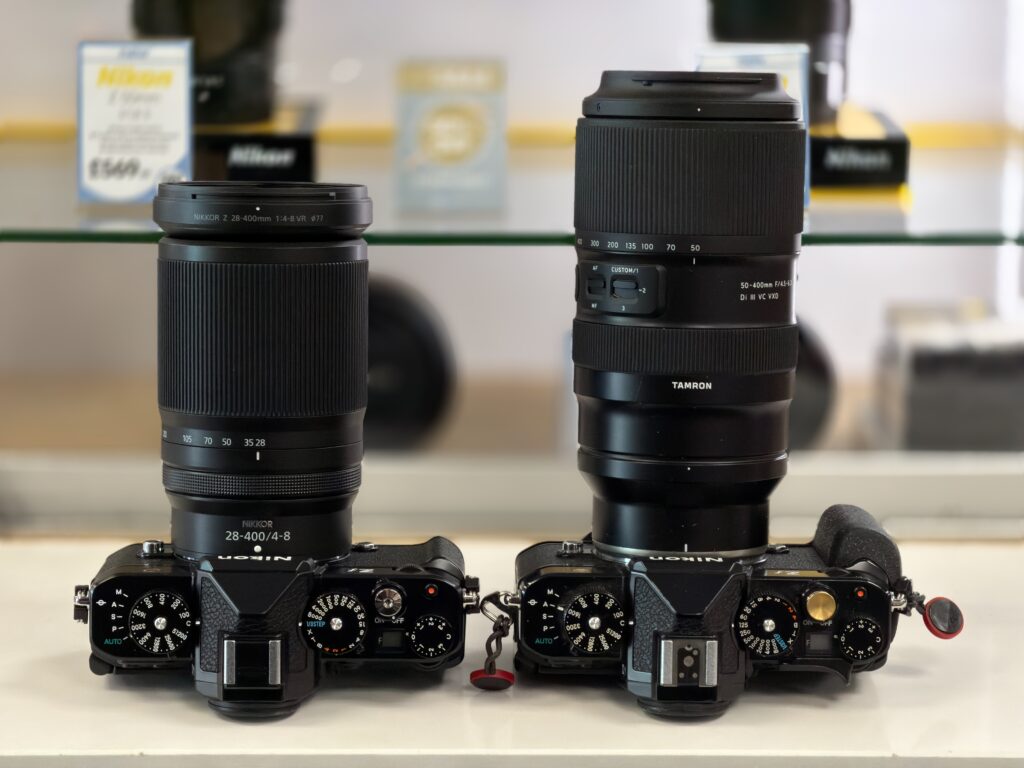
Obviously I can’t make a direct comparison myself here – not having access to the Nikon 28-400 somewhat hinders me in that pursuit. What I can talk about though is what I perceive as their different design compromises. And really, though the gap between the lenses has closed a little compared to back in my retail days, were I selling these two lenses to people these days, I’d still be saying similar things to those considering which one to buy. That is to say, the Nikon 28-400 is still an all purpose travel lens that has been designed with a greater compromise in terms of lens speed and optical quality in favour of smaller size, lighter weight and wider angle wide end. Whereas the Tamron 50-400 instead favours a hop up in optical quality and lens speed at the expense of increased size and weight as well as the normal focal length wide end. For the majority of potential users, this slight shift in compromise pitches the Tamron away from it being an all purpose travel lens to being a normal-to-ultra-telephoto zoom, that’s more targeted toward higher-quality results for subjects such as sports and wildlife.
Other online reviews, reports and conversations from people who have tried both seem to back all this up too, with additional comments around faster AF from the Tamron, and how quite specifically the long end of the zoom range on the Nikon suffers a greater fall off in sharpness making it less objectively useful as a lens for specific telephoto use. In short, when choosing between these two lenses, there’s a set of compromises to choose depending on needs and desires.
The 50-400mm zoom range – the right compromise for me
Given my specific initial use case of wanting to do some sports photography with my kid, the Tamron definitely feels like it was the more obvious choice to begin with. But as I’ve shot more with it, it’s become clear that I would still favour it as an all purpose travel lens for me too. But, it did take a full month of using it – including a week of actually travelling with it in the Welsh countryside – to come to that conclusion as firmly as I have. In fact, it’s fair to say, it’s been a bit of a journey of discovery with the Tamron 50-400 for me. I’m so short on recent experience when it comes to shooting these sorts of lenses, that I must admit, my first experiences with it were entirely defined by the novelty of shooting it at the long end of the zoom.

I actually don’t use zoom lenses as part of my hobby very much at all. I find my 24-70 zoom totally indispensable as a professional photographer, but when I am shooting for my hobby I am never inspired or even remotely interested in using it. “Zooms for work, primes for my hobby” has become almost a mantra, so my hobby photography practice with it meant that to begin with I almost treated it as a 400mm prime lens. I’d set it to 50mm to carry it around, then zoom to 400mm when I put it to my eye. It felt a bit like when I get an ultra-fast lens and for the first week I only shoot it at its maximum aperture. This was so much the case in fact that I initially wondered if the wide range of zoom it offered was going to be useful to me at all. I was just thinking of it as a longer telephoto lens that I was going to use with Connie on this football shoot and maybe for some wildlife that how useful it could be for a more broad spectrum of subjects hadn’t really begun to enter my mind.
Fortunately, this was quickly put to bed as I started to just use the lens day to day. It took a while for me to stop just zooming to 400mm when I put it to my eye, but once I did, I started finding the range it offered very useful, and moreover actually very natural to my eye. A part of this is probably due to the fact that I already favour lenses in the telephoto range.

I’ve talked about how my 85mm lenses feel the most natural to me here, and more recently how easy I have I found shooting a 180mm prime lens here. So really this is a lens that just goes a little wider to 50mm, which I also find it very easy to work with, and longer to 400mm, which is also just as easy to frame with, and obviously very useful when you find yourself needing that bit of extra reach.
I should add, I would by lying if I said I’ve not come across situations where a little bit of extra on the wide end would have come in handy. We found ourselves in a chapel in North Wales that I might’ve liked to get a wide shot of the interior.

There were also a couple of family group shots I couldn’t quite get whilst also capturing a wider context too. The funny thing was though, on all these occasions, I also had the Viltrox 26mm to hand, and wasn’t bothered enough to switch to it. Perhaps if I’d had that 28mm wide end I might have taken advantage of it, but given the fact that we’re talking about maybe a handful of shooting situations in a whole month of fairly intensive usage, concluding that the 50-400 is likely better all-rounder for me, eventually, came quite easily. Losing a couple of opportunities to get wide angle shots in favour of a lot of higher quality shots from the full range of the zoom is definitely the compromise that feels right for me!
Size, Weight and Portability in Practice
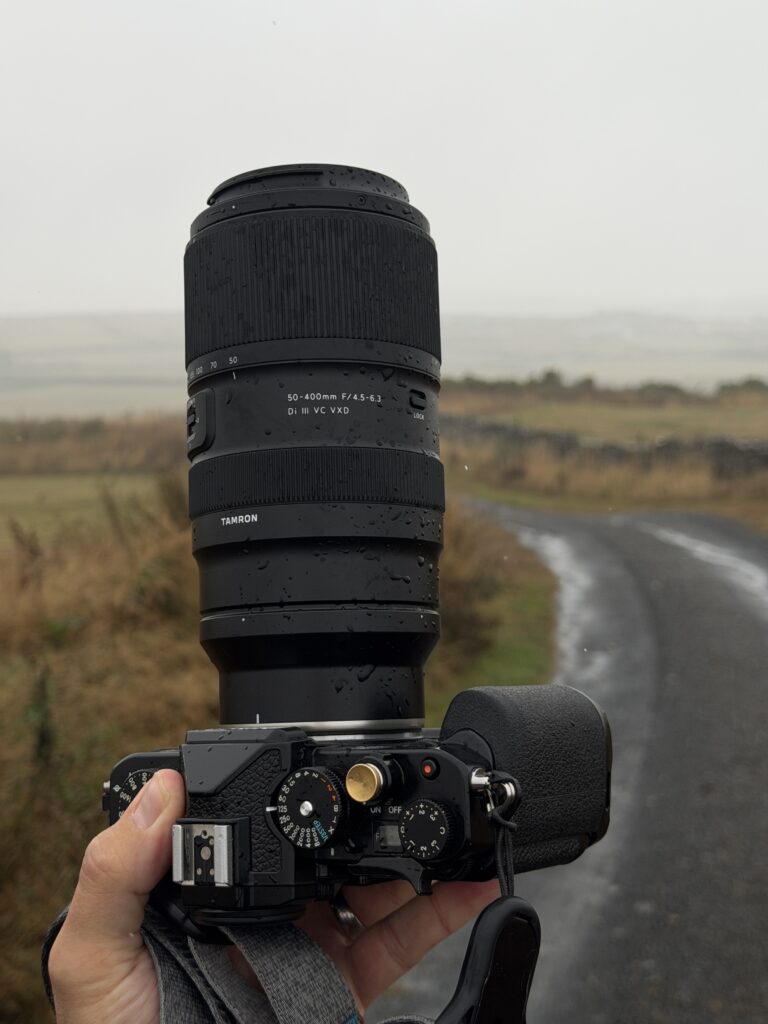
Whilst it did take me some time to fully understand those preferences, what I found quite surprising was how easily I found myself carrying such a big lens without it really bothering me that much. The Tamron 50-400 is quite a big lens compared to the sorts of lenses I usually enjoy. The last lens I reviewed prior to this one was the aforementioned Viltrox 26mm 2.8 pancake lens, which with it being a fixed focal length wide angle lens that’s designed to be compact, it’s pretty much the antithesis of this Tamron. It is the sort of lens I am much more used to shooting with though, so I expected this relative beast of a thing to cause me some discomfort, especially when mounted to the Zf with the additional Smallrig grip I’ve bolted to it. In reality though, I’ve genuinely found it not too bothersome to carry.
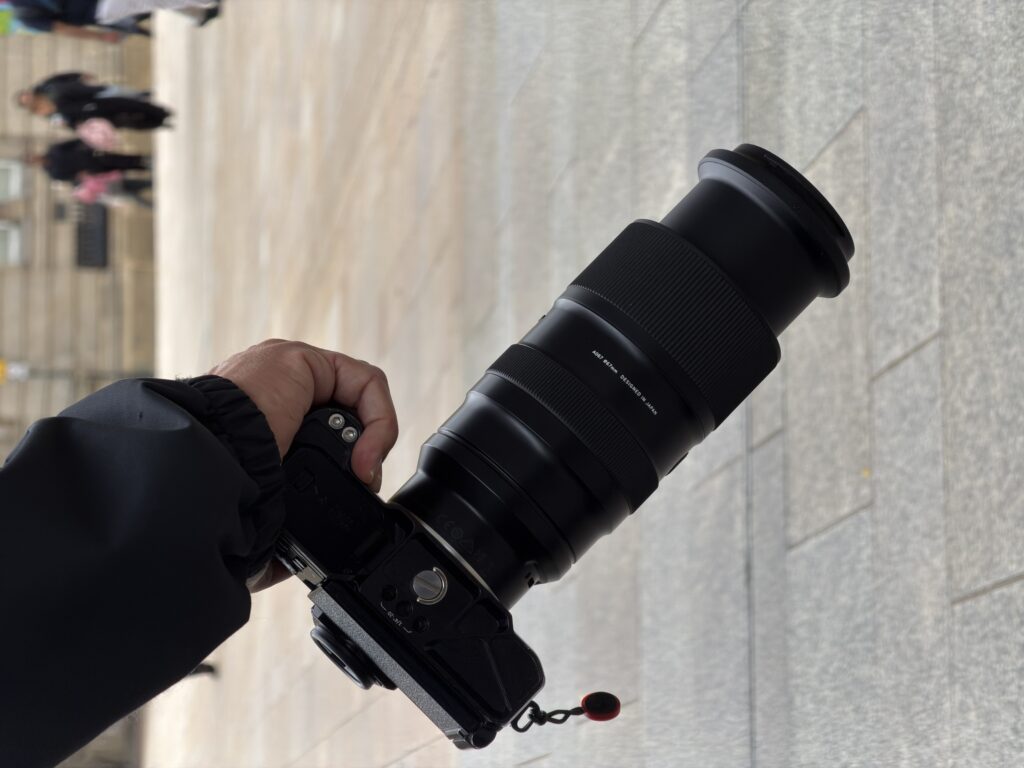
One thing I did quickly discover though is that the additional Smallrig grip on the Zf is pretty essential with a lens like this. Without the grip, it feels a little heavy on the camera with lifted to the eye, but moreover it’s harder to carry. Although always have a strap on my cameras, I sometimes have the strap round my neck, and sometimes round my wrist. With it round my wrist with a small lens the camera is easy enough to hold, but with a bigger lens like this I found the grip essential for being able to hold and carry the camera comfortably. Of course, this issue is limited to the Zf (and Zfc) all of the other cameras in Nikon’s range have great grips that are really comfortable to hold. With the lens mounted to the Z50ii, I found myself very able to carry the camera/lens comfortably – and that’s despite it being a small and light camera.
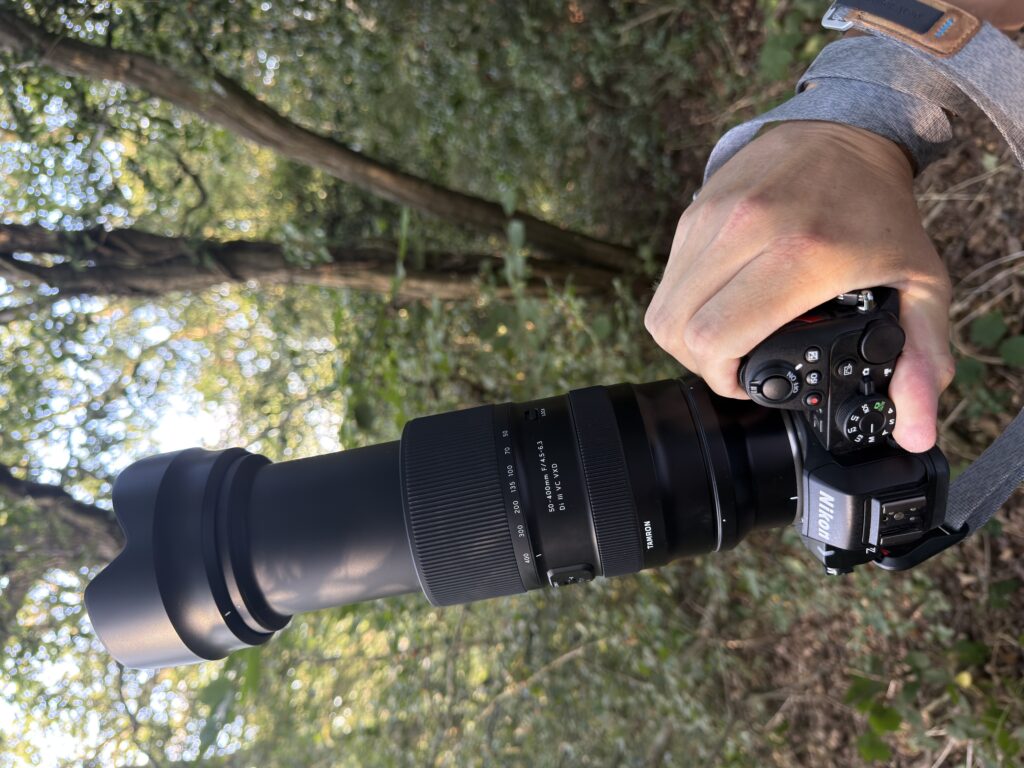
On a strap around my neck I also haven’t found it too uncomfortable – the lens obviously tilts the camera forward so it hangs vertically/parallel to my body, if that makes sense? With it like that, when carrying it around, I’ve had it by my side and it hung comfortably for hours on end. Annoyingly the Smallrig grip has a sort of sharp edge to it that has jutted into my hip a bit, but this was been resolved by shortening the strap slightly.
I really have carried it and used it a lot too. I take a lot of photos for my lens tests, but this month of extensive shooting has really put it through its paces to a level I am not sure I have with any lens before. To kick off, so to speak, I used it particularly intensively during the football match me and Connie shot. I ended up convincing the guys at LCE to loan us a Nikon 70-200 2.8 lens so both me and Connie would have a lens to play with. We swapped between us which one we used, but both found the Tamron 50-400 to be less fatiguing. Interestingly, there’s only ~200g in it with the Nikon being a bit less than 1400g and the Tamron a bit less than 1200. You wouldn’t think that would make much difference, but it definitely felt like it did. Even with the Tamron fully extended at 400mm didn’t feel unwieldy when trying to follow fast moving subjects for longer periods.
The rest of the time I used it was less intense shooting, but with some quite significant periods of lugging it around. We go on lots of walks with the dog when not on holiday, but when on holiday, we tend to torture the kids with a good few days of dragging then miles and miles for hours and hours around Welsh countryside, mountains, beaches etc – poor things…

On one day on Anglesey, we walked 3 miles to a beach, down the coastline for a bit and then around 3 miles back, and I didn’t find it too much of an issue – I got some shots I was thrilled with too! This is all subjective of course, but as someone who’s much more accustomed to smaller lighter kit, I thought it worth talking about.
Build quality
Despite being quite lighter weight (for what it is), the Tamron 50-400 feels really nicely put together. It does, in my opinion though, feel slightly more like a hobbyist lens. Compared to the Nikon 70-200 I tried alongside it on the football photography day, it definitely didn’t feel as though it was made of as tough stuff. The Nikon is a slightly more svelte lens, albeit longer (though internal focusing) but it felt like it could take a lot more abuse.
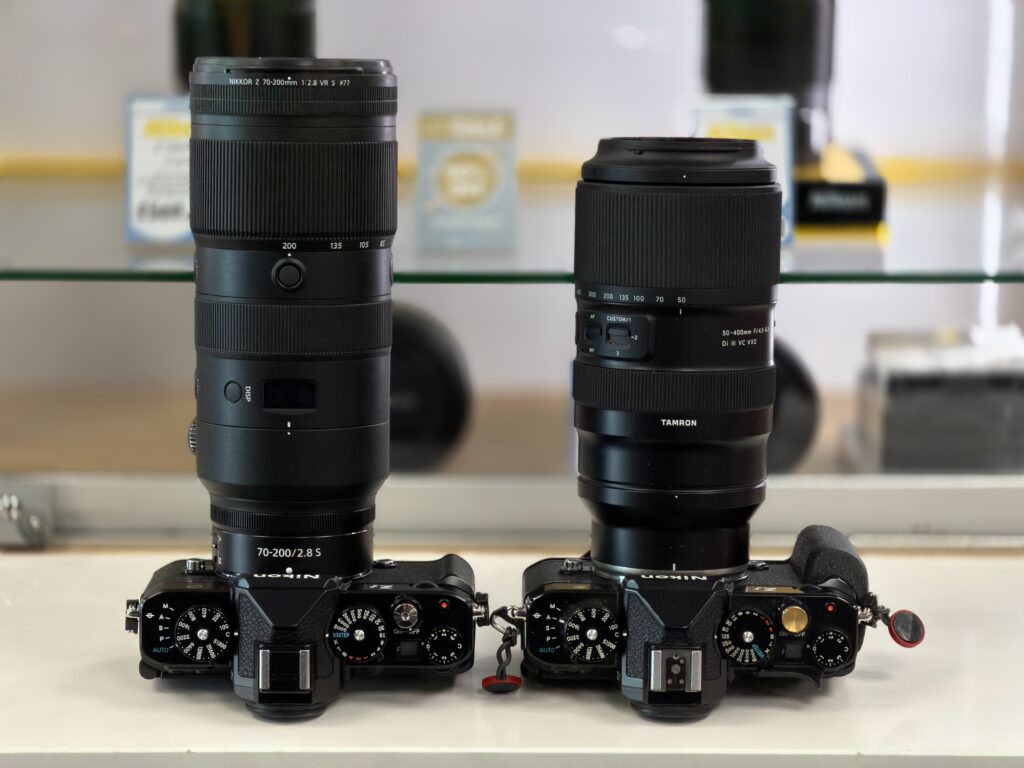
That’s just the nature of a proper professional specification lens though – great for everyday pro use, but heavier with it. The Tamron is lighter because it’s made out of more plastic. But this shouldn’t make you think it feels cheap; it’s good quality feeling plastic, it looks and feels solid, it’s just not that heavy for its size.
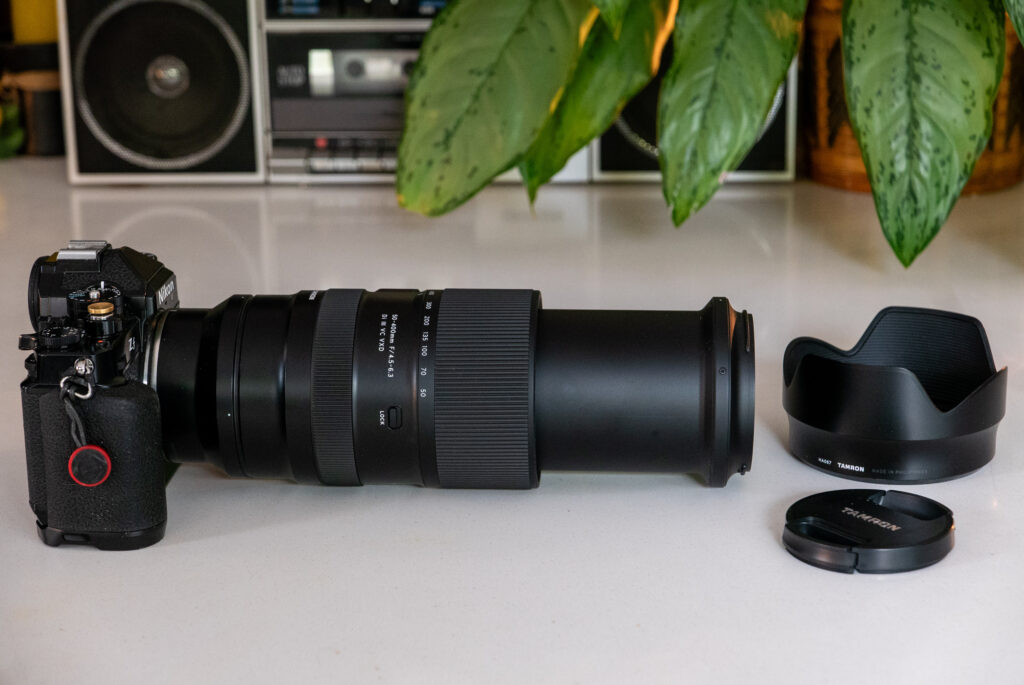
The controls feel great too. I didn’t use the manual focus control, but it has a nice smooth feel to it. The zoom too is very smooth. Zooming the lens extends the body of the lens via one tube out of the front of the main barrel of the body. There is just enough weight to the zoom control that it not feel lose yet also not be too stiff. As already alluded to, extending the zoom also doesn’t make the lens feel any more imbalanced. It also doesn’t suffer from zoom creep at all – zoom it to any focal length, hang to lens facing down, and it holds position. It’s also weather sealed, which was handy in Wales…
Features
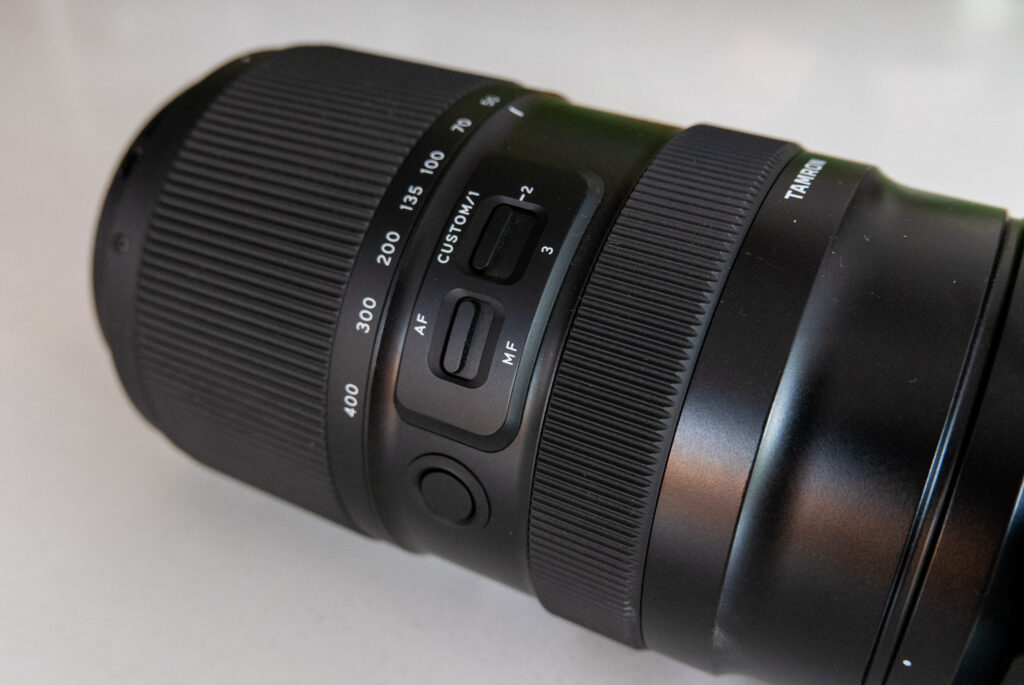
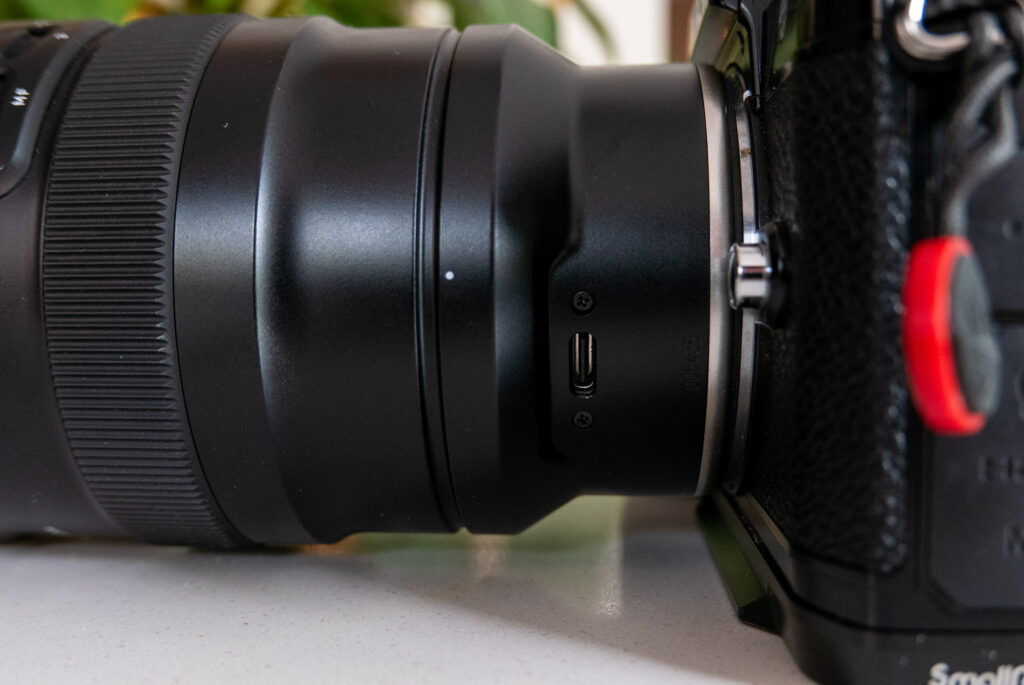
I must admit, I feel like I have sold the lens a little short when it comes to the features. It has an AF/MF switch – as I have talked about elsewhere on this website, I have AF activation via a button, so don’t really need one of these. I have used the Fn button which I still have allocated to crop-mode switch on the Zf – great for a little jump in reach. The feature I didn’t use at all though was the custom switch. It has 3 settings, but you need an app or something to make use of the feature… I didn’t have time for any of that stuff and I certainly don’t need more apps! But, you can read about the interesting set features the switch allows access to here.
Vibration Reduction
I must admit, vibration reduction, or vibration compensation (VC) as it’s called in Tamron world is a subject I am not well up on. You wobble one way, it wobbles back the other way to counteract it – it’s a little like noise reduction in headphones I think. How effective this works is usually rated in stops of compensation, but I can’t find reference to how many stops this lens is capable of by itself. I didn’t really test it either – at least not just for the sake of testing. I did have a few occasions to make use of it though.
Whilst visiting the Lloyd George museum in Criccieth, we had a little tour of the cottage next door which was lit with just light from the widows. I have the auto ISO on the camera set so the shutter speed doubles the focal length. This is fine outdoors for the most part, but with a slower lens in a dark room, my ISO was sky high. I wasn’t particularly concerned – see previous comments about noise reduction – but in the end figured switching to manual to drop the speed would be a better option. I set it to 125th and took a couple of shots.

I then went outside and forgot to reset it to aperture priority and snapped away at 125th even at 400mm. I realised after a couple of shots and switched it back. I was initially worried the shots would have had a bit of visible blur, but the VC had my back. Other than that, I didn’t really take advantage of it – or at least, I didn’t notice I was taking advantage of it beyond the really steady view it provides through the VF. I have read it’s not quite as good as Nikon’s own lens based VR, but how much better, I have no idea.
Autofocus speed
The autofocus is really very impressive. As with most modern lenses, it’s totally silent. But the really impressive bit is how fast and accurate it is. I’m very used to very good AF from the Viltrox lenses I have been shooting, but I would say the Tamron 50-400 is probably a step up bath in terms of speed and accuracy. Even compared to the Nikon 70-200 2.8, I couldn’t really say there was a lot of difference within the context of the football photography – I didn’t miss any shots I tried to get.

The one test I have found to really find the limits of autofocus capability is taking photos of my dog running toward me at full speed. Given this challenge I didn’t find it miss too often, but it wasn’t perfect every time. Closer range accuracy seemed to be where it struggled the most – though I still got a few good shots when pushing my luck. It did let me get this photo too, which i think might be a favourite from my entire experience with the lens:

Another limitation I found is that zooming the lens whilst shooting and autofocusing at the same time isn’t great for reliably sharp photos. I discovered this on the very last shoot I undertook with the Tamron 50-400. I took it out on a corporate PR shoot in the centre of Birmingham. The PR/Marketing guy that was leading the shoot asked me to get a few shots of the team walking toward the camera. As they walked toward me I zoomed out and kept on shooting – I checked the results on the screen and found a lot of them were soft. After a couple of times doing this I realised what must be happening and changed my approach to only zoom the lens when I wasn’t pressing the shutter. It feels a little clumsy having to work like that and I had to get the guys to do the same walk a couple more times, but it was ok in the end. Just something to be aware of.
 In hindsight this made me wonder this is why I was getting some misses when the dog was getting closer to me too. The AF worked a treat until the dog got closer, but I was probably zooming out too, which might have been why it missed focus. In short, the autofocus is brilliant – perhaps not quite perfect, but for most people’s uses, I’d be surprised if the limitations were found too often.
Lens speed
I nearly didn’t write this section because ultimately I didn’t really find any issue with the f/4.5-6.3 aperture range. I did think I was going to though. Before the lens landed, I had a nagging feeling that the wide aperture of f/6.3 at the long end of the zoom was going to be a hindrance. When you’re used to lenses that at “worst” have a maximum aperture of f/4, it’s hard to imagine that f/6.3 isn’t going to feel slow at some point. Fortunately, real life experience quickly put that idea to bed. Perhaps I had just been geared up to shooting in daylight, or perhaps it’s just less likely altogether that I would find need to use a zoom like this in lower light. One way or another, I only really shot it in daylight throughout the entire loan, so even the f/6.3 hasn’t caused too much of an issue when it comes to light gathering power. As already mentioned, the VC is pretty impressive too so even when I did force a lower-light shot, I didn’t need to use as fast a shutter speed as I thought I might as often as I might. And, with the added benefit of modern noise reduction in Lightroom, I’ve been able to risk higher ISOs too, even when I’ve wanted cleaner photos!

And then there is the depth of field question. I must admit, I would have liked a little more background blur on my football photos, but for everything else I have shot, especially anything even remotely portrait or portrait distance, I have been totally happy. I don’t think I have ever shot a 400mm 2.8 lens, but at portrait distances, the DoF must be insanely narrow – like eyelashes in focus and eyeballs not, narrow. Useful for some things I’m sure, but given an intensive month of use, I have found myself pretty comfortable as a hobbyist photographer with the aperture range.


Zoom Range
There’s loads of comparisons online that show off the zoom range of this lens, but I don’t think many do it justice. I can’t promise mine is much better, but I tried to take a set of photos that would really give a sense of the practical difference between 50 and 400mm. These were taken from the same spot, moments apart:


Optical Quality
I’ve said it before and I will say it again, as someone used to reviewing vintage lenses, I find these modern lenses pretty dull to write about when it comes to their optical capabilities. This lens is no exception. In fact, in the month I used it, it didn’t give me reason to think about the quality of the images once.
Ok, that’s not entirely true. I have looked at the photos and have thought about how impressed I’ve been, objectively speaking, a lot of times. I’ve wandered how much less good the Nikon 28-400 would be in real terms a couple of times too. But beyond those thoughts, I’ve just been uniformly impressed, and not really given the lens’s optical qualities much consideration. I think that’s a good thing though. I love my characterful lenses for everything they do for me in the circumstances I choose to use them for what they do. I even enjoy the very subtle characteristics of lenses like my Viltrox EVOs. But, when it comes to lenses like the Tamron 50-400, the primary concern for me is that it just lets me take advantage of the wide range what it’s capable of without me having to worry about juggling this or that limitation.
What I have thought about this a few times whilst thinking about this review is that I do like to share some thoughts on optics. I have also very much enjoyed this lens, so felt it would be remiss not to make some level of comment… So do I have some thoughts, but they are going to be peppered with references to more reading elsewhere.
Sharpness
I saw a comparison somewhere online between a lens like the Tamron 50-400 (though I think it was their 150-600mm), and one one or another of the absurdly expensive Nikon ultra-tele prime lenses (I think their 600mm f/4) – frustratingly, I can no longer find it, but the gist was that the Nikon is way better. I must admit, I was quite blown away by just how sharp the result from the Nikon was, but also how – had I not seen that result and the comparison – I would have thought the result from the Tamron was also very sharp. Mostly because it was also very sharp… it just wasn’t £11.5k Nikon lens sharp. The difference also didn’t justify the price difference at all – at least in my opinion. But the key point here is just that, this is just an opinion and it is entirely based on my needs.
For my needs, this Tamron 50-400 is easily sharp enough. There have, on occasions, been shots I’ve taken with the lens that haven’t looked as sharp as others – despite definitely being in focus. Earlier on in this process, I decided I was going to try and log which shots were less sharp and try and keep track of what focal length and aperture they were taken at. Then I decided I couldn’t imagine a way I could have made trying to review this lens any more more boring for myself, so canned the idea. Instead, I have scoured a couple of other people’s reviews to see if they had found slightly softer results too, namely two ‘names’ that I trust, Dustin Abbot and Thom Hogan. Both reviews are a good read, but Thom Hogan’s has a particularly well written sharpness section that details where in the zoom range is more and less sharp, and then concludes with the sentence, “Considering the price, size, and range of this lens, this is remarkable performance for what really is a budget lens”… which pretty much exactly sums up my feelings exactly. Yes I have seen (very) slightly softer results, and yes it probably isn’t going to be up there with a 400mm Nikon prime lens, but for what it is, “remarkable” is definitely a word I am comfortable with!
Bokeh
Where do you even start trying to talk about the bokeh of a zoom lens with a range of 50-400mm? At the wide end, f/4.5 isn’t particularly fast for a 50mm lens, so even at close distances, backgrounds aren’t massively out of focus:

Whereas given similar subjects, 400mm f/6.3 very much can knock a background into total blur:

So, of course, bokeh rendering is going to be massively variable. I have had shots that I have thought looked a little busy:

And also had shots that, for the same character trait, I have found aesthetically pleasing – though some people might also say busy:

But for the most part, I have been pretty pleased that when I have an out of focus background, I have neither found it too distracting, or too flat/2d:

Ultimately, for a zoom lens, I think it does an admirable job!
Other comments
I honestly don’t really have anything else much to say on the optics. It doesn’t really seem to vignette – or at least I haven’t seen anything of note, even when shot wide open. I thought I could see a bit of barrel distortion at the wide end in this image (window frame to the left):

But Dustin’s more technical review says the opposite is true, so I guess it can’t be that big a deal. I haven’t spotted distortion elsewhere – I am not sure when distortion would even be that relevant or problematic in a lens at 400mm…? It also doesn’t seem to flare. I’ve not really used the hood that much, and I still haven’t seen even a single a bit of flare in all the photos I have taken, even shooting in sunshine in the summer we had! I also haven’t noticed much in the way of colour aberrations. And finally, I’m not sure it has quite the pop and colours of my old Nikon 180mm, but I still would struggle to say I have been particularly disappointed with the results once I have added a little boost in LR (which is the case with all the samples in this review).
In short, in terms of the optics, I think it’s great – it’s not an exciting character lens from the 1970s, nor is an £11.5k Nikon prime that cuts your eyeballs with sharpness and pop. But as I have already said, Thom Hogan’s, “remarkable performance for what really is a budget lens” really couldn’t more more spot on!
Photos
I have taken loads of photos which you can find on flickr – here are a few faves though:


Final Thoughts
I tend only to write positive reviews. Mostly because I tend to avoid reviewing things I don’t like – I don’t really see the point in spending time not enjoying camera equipment, never mind not enjoying it and then going on to write in a negative way about the process. But, I do always try and be fair. That is to say, I always try to find the negative factors within the products I do like. On this occasion, when I read back what I have written, I note that I almost haven’t had a bad word to say about the Tamron 50-400. In fact, the things that could be said to be the bad things about this lens, I have instead found myself making excuses for, or highlighting how they haven’t really been a problem for me. This has made me wonder if I’ve really just been trying to convince myself here. This is, after all, a lens that sits so far outside of my usual preference for smaller, lighter, often even pocketable gear – usually with a prime lens – that it’s almost comical…!
And perhaps that’s a factor in all of this. I’m certainly willing to accept that a chunk of my enjoyment here has been driven by novelty. But I genuinely don’t think that’s the complete story. For a start, I am increasingly finding myself enamoured with longer lenses. As I’ve mentioned, I have long enjoyed the ~85mm as my almost-normal lens of choice. The 180mm has repeatedly proved itself as a perfect choice for certain circumstances too. And, when I think about it, my favourite photo from 2025 was taken at 200mm equivalent too. So this lens definitely leans into a widow of photographic preference that’s been growing over the last few years.
But I think there’s more to it here. There is just a balance of compromises that sat particularly well for me here. This isn’t just a do-everything, jack of all trades travel lens, it’s more targeted at people who want to shoot at longer focal lengths (either for subject, or just preference reasons). But it’s not too big, it’s not too heavy, it’s not too cumbersome, and it still has a massively useful zoom range. Add to that the impressive image quality that didn’t once negatively impact a photo I took with it, and it becomes very difficult to be anything other than impressed!
Ultimately, whilst I’m not about to go full Ken and tell you this lens is a “miracle” or “life changing”, I do think it might just be good enough at what it is and what it does to entirely override my usual preferences, and just be a larger lens I absolutely need in my kit!
Since I have referenced them within, here again are the links to Thom Hogan and Dustin Abbot‘s excellent reviews. And here is some more info from the horse’s mouth. Thanks to Tamron UK for the loan (and the GAS).
Share this post:




Comments
Jeffery Luhn on Tamron 50-400mm f/4.5-6.3 Review – “Life Changing”?
Comment posted: 07/09/2026
Thanks for an enjoyable and informative read! The load of very nice images gave me a look at most of the situations where I'd need such a lens. You also did shots with the Nikon Zf, which is the source of frequent GAS attacks. I have a Nikon 500 mirror lens, and I assume that could be put to use on the Zf, and a Nikkor 70-300, which has never let me down. The Tamaron 50-400 is an improvement on both ends of the scale. This has been a great read. Thanks!
Comment posted: 07/09/2026
Comment posted: 07/09/2026
Fred Nelson on Tamron 50-400mm f/4.5-6.3 Review – “Life Changing”?
Comment posted: 07/09/2026
I have to go back and enjoy more.
Comment posted: 07/09/2026
Gary Smith on Tamron 50-400mm f/4.5-6.3 Review – “Life Changing”?
Comment posted: 09/09/2026
Not only do you host a great place to read about camera stuff but from the images included above you apparently also know how to use the stuff...
Comment posted: 09/09/2026
Roger on Tamron 50-400mm f/4.5-6.3 Review – “Life Changing”?
Comment posted: 09/09/2026
Based on my own experience with long lenses (though I have never had any £10k lenses) I conjecture that the difference between a zoom and a good prime is obvious only when you use a 2x teleconverter and crop a lot to get a picture of that bird you can barely see with the naked eye!
Some nice images in there.
Comment posted: 09/09/2026