

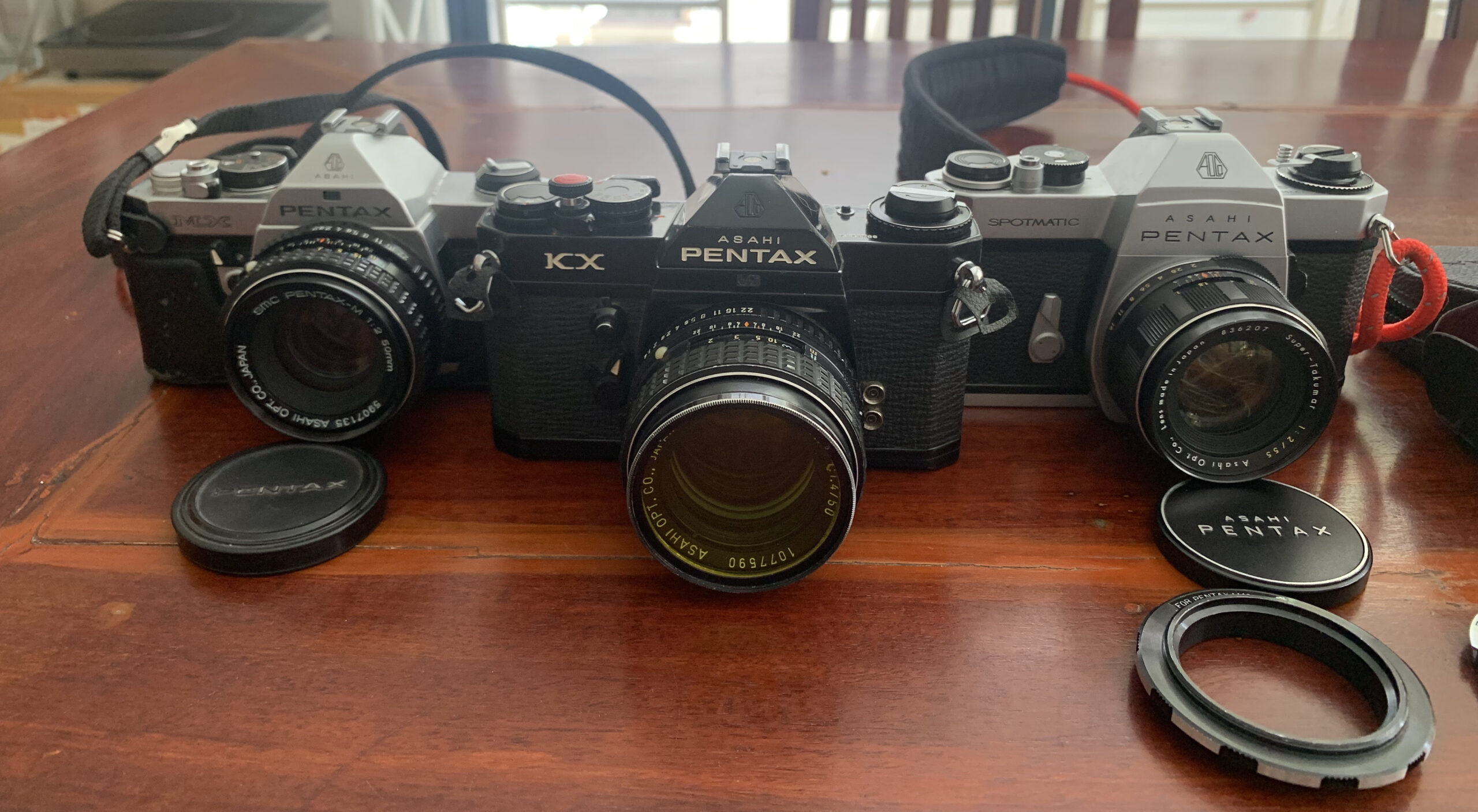
If the Volkswagen Beetle was the people’s car, then to an extent, all the Pentax models with the Asahi name etched into their pentaprisms could be considered the people’s SLRs. Yes, the Canon AE-1 changed things – but don’t let it be forgot, that once there was a spot, called Asahi. It’s something I am reminded of every time I pick up a Pentax – 46 years after picking up my first one.
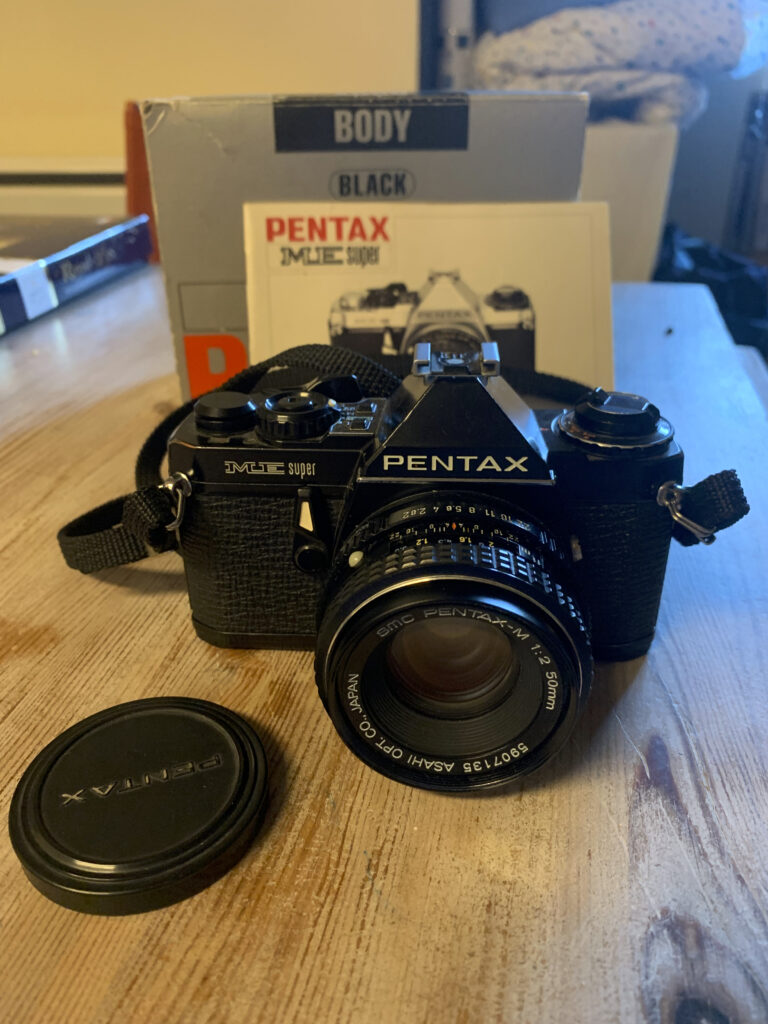
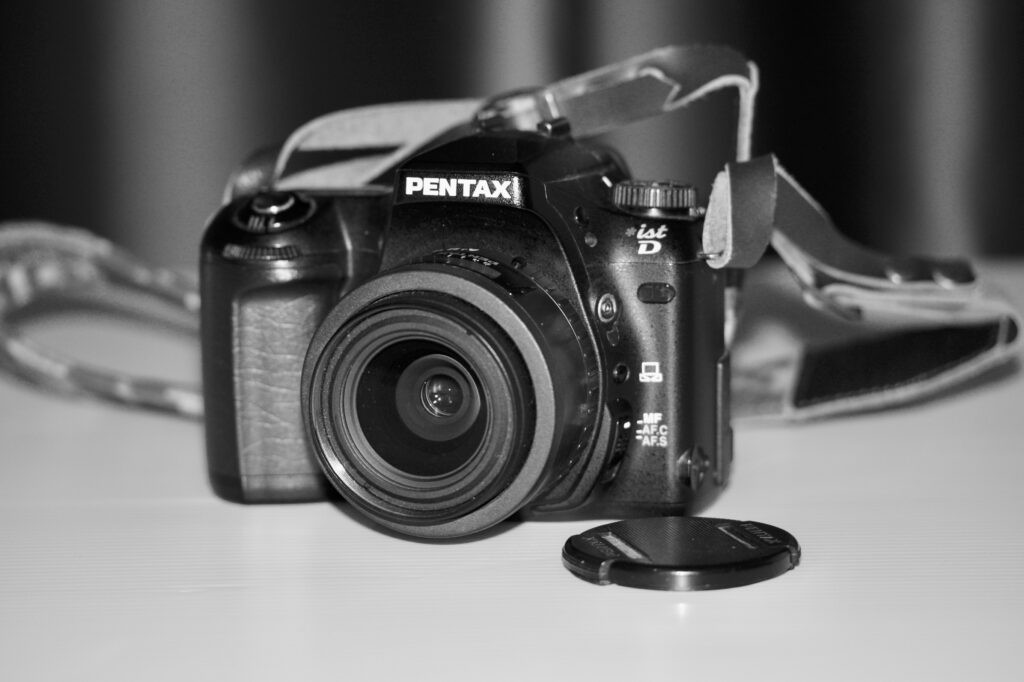
So, where is this going? Well, I haven’t written a long-form piece about photography in a while. But during that time, I’ve reconnected with the world of Pentax. Actually, that isn’t entirely true – I never really disconnected. Since 1980, I have used an ME Super, MX, P30, LX (briefly), and an *ist D. My MX alone has seen 44 years of fairly regular use.
What I mean is that I’ve reconnected with a side of Pentax I had never explored before. I am a child of the ME Super. I got one by mistake when I was 14 back in 1980 (a story you can read here). I added an MX in 1982, and it went on from there. But I had never really given much thought to Pentax cameras older than the M-series.
What changed? Well, I’m currently living in Cambodia, where I have access to a recycling centre that processes Japanese e-waste. It isn’t a secondhand shop, but rather a facility whose primary aim is recycling electronic waste.
Japan offsets its carbon footprint by exporting a lot of its e-waste to Cambodia. Much of it is actually usable and ends up in countless local thrift shops. But if you dig deep enough between the import stage and the shops, you can intercept items right where they get sorted between sellable and dismantlable. (is that a real word?)
By luck, I found that gap in the system – a process I might dive into deeper in another post.
Now, I hear the cogs turning: classic cameras aren’t e-waste. Well, they are when you consider Japan’s aging population. Many elderly people pass away without living relatives, at which point the state takes control of their assets (so I’ve been told), and through bureaucratic routine, items like cameras wind up in the waste stream.
That means every now and then, I visit a sorting facility to hunt through the piles. This modern-day mud-larking occasionally yields interesting finds. Rarely working cameras, but lots of filters, flashguns, eyepiece magnifiers, extension tubes, and light meters – 90% of which suffer from storage damage after two months at sea and six months in a dockside container.
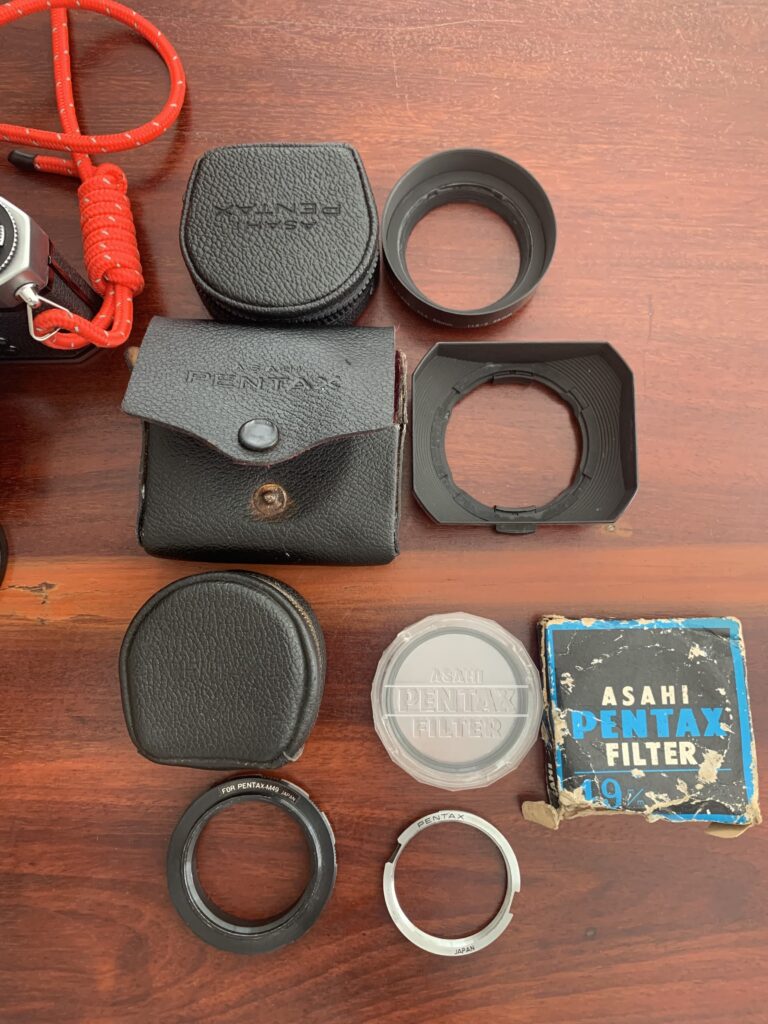
But… BUT… every now and again, there is a jewel. That is how, over the last year, I found myself in possession of a working Spotmatic SP II and a Pentax KX.
I say “working,” but to assemble a functional Spotmatic, I acquired two bodies, two lenses, and an ever-ready case. The KX was sitting in a box at the bottom of a pile of Canon EOS and Minolta Maxxums – which is probably what saved it from destruction by salt and humidity. Both needed a good CLA (Clean, Lubricate, Adjust), but they showed real potential the moment I unearthed them. (Side note: I also managed to score a fully working, lensless ME F, an ME II winder, an ME Data Back… oh, and a Pentax slide projector.)
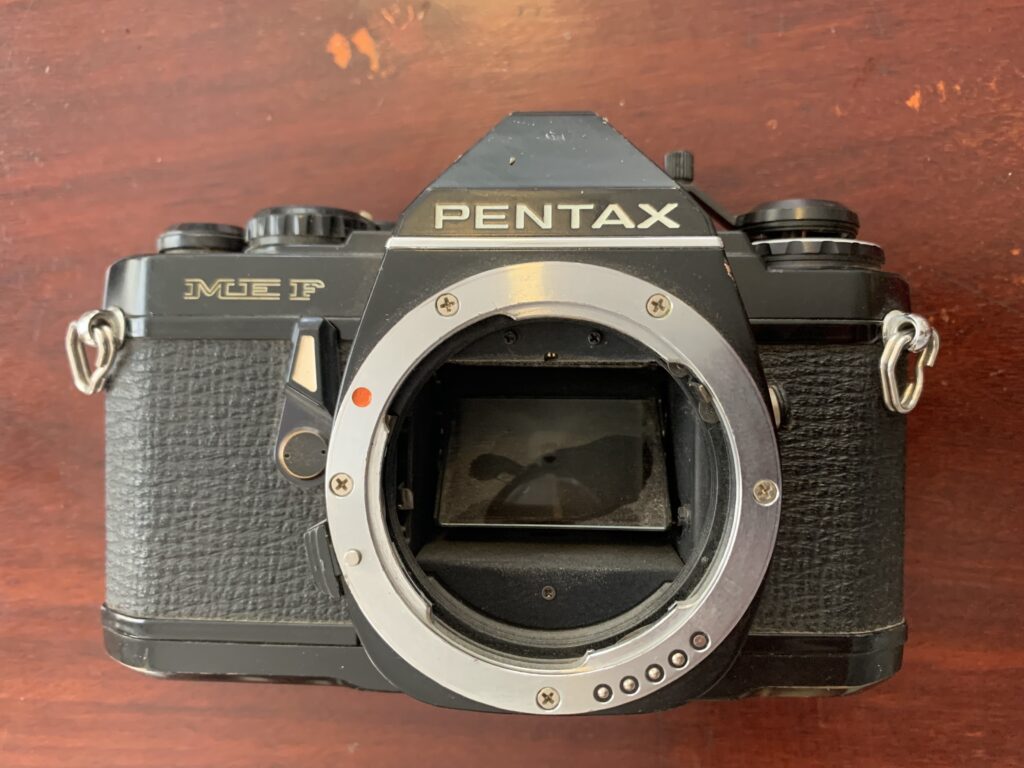
Alright, preamble over: How has this changed my Pentax world?
Not at all – and, ultimately, entirely. I love Pentax; I have always loved Pentax. The ME Super is still my favourite model, its rapid manual controls are brilliant once you get the hang of them.
What has changed is my appreciation for mechanical Pentaxes. I’ve liked the MX ever since I bought it, but for some reason, it never quite gelled with me the way the ME Super did.
Here is my personal take:
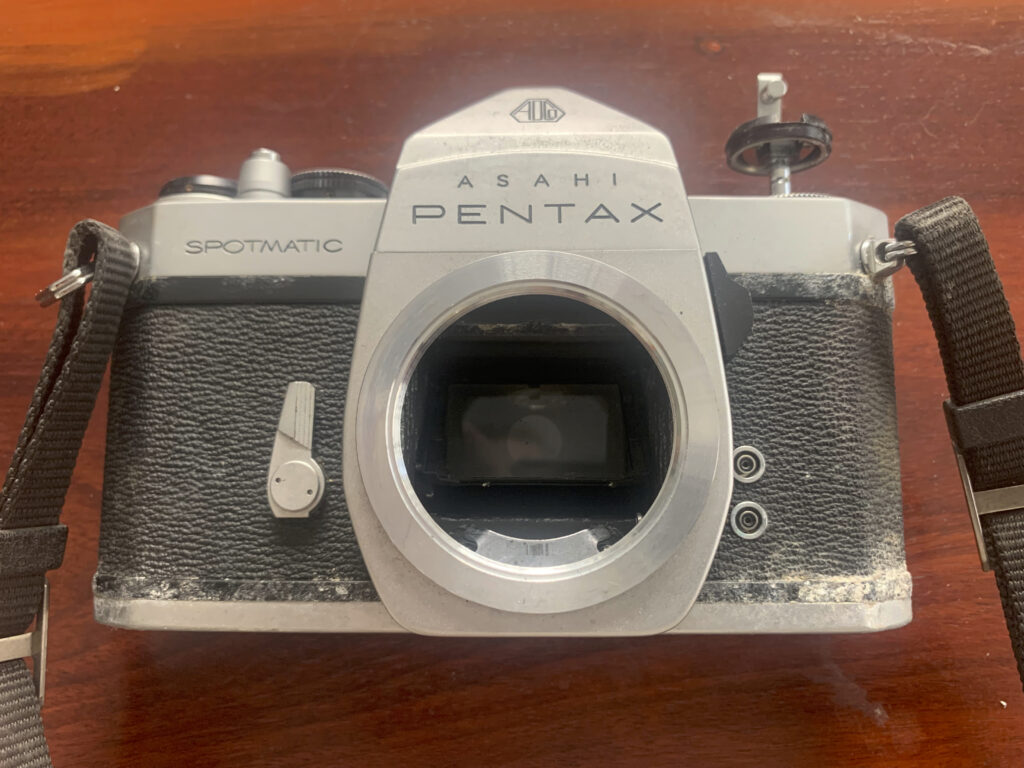
Yes, classic Pentax light seals were awful… but in fairness, Asahi never expected anyone to be using these cameras 60 years later. And Spotmatic prisms degrade easily; don’t try to clean one if the light seals have degraded, because the disintegrating foam sticks to the silvering. My “Spotty” has a thin desilvered strip at the very bottom of the viewfinder. One day, I’ll source a K1000 prism to replace it.
Pentax grease hasn’t aged particularly well either, but then again, neither did Campagnolo grease on a vintage Bianchi bicycle. Old Pentaxes need a CLA, simple as that. Luckily, millions of replacement parts still exist because Pentax manufactured millions of cameras that shared basic Spotmatic architecture. And the MX? It just keeps going.
So, what about the cameras themselves?
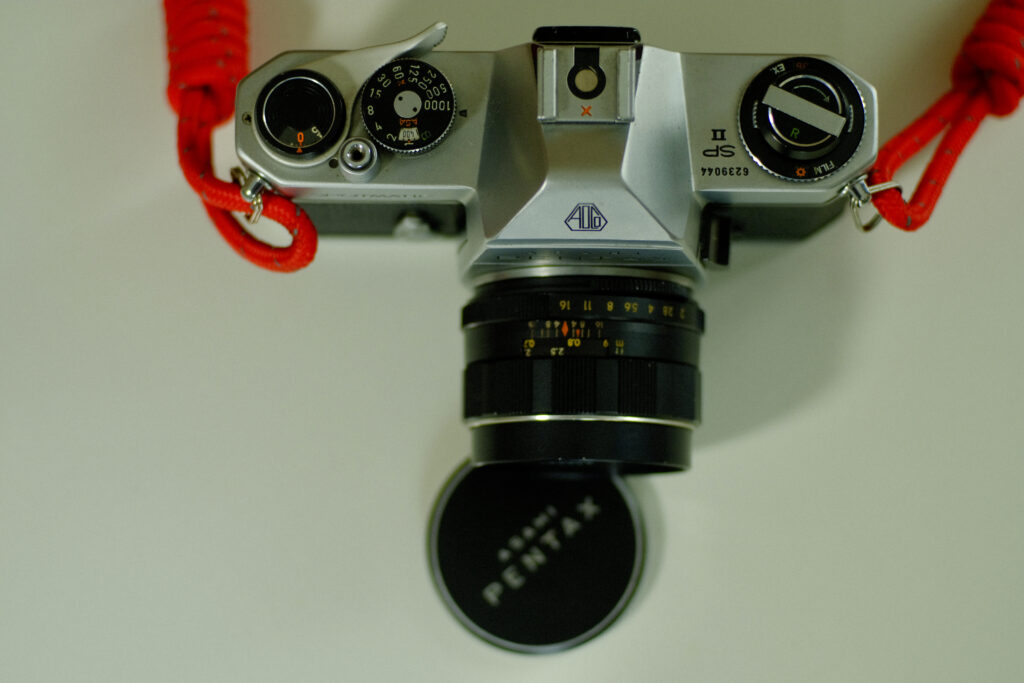
The Spotmatic SP II is beautifully engineered and built just as solidly as a Nikon F. Asahi simply used slightly less expensive (though high-quality) metals in a few areas. The build quality rivals anything coming out of Germany from that era. Then, of course, there are the Takumar lenses. While the Instagram crowd raves about the 50mm f/1.4, the 55mm f/1.8 is often unfairly overlooked – it features a gorgeous Extended Ultron design and, like all Takumar glass, superb mechanics.
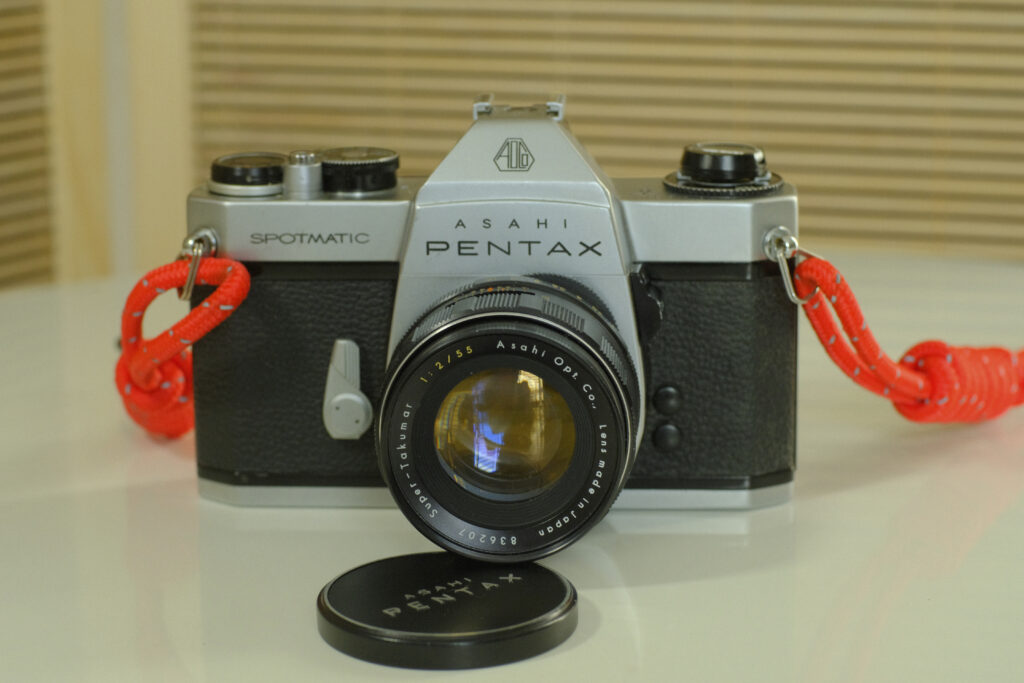
The SP II has a large viewfinder for its day, fitted with a clear focusing screen and a microprism spot. If you’re accustomed to split-image screens, it can seem daunting at first, but nailing focus is surprisingly easy. Everything about the SP II just feels right.
Then there is the KX – the direct descendant of the Spotmatic, and the K1000’s sophisticated big brother. Compared to the basic K1000, the KX operates on a completely different level of fit and finish. It is easily the most complete fully manual Pentax SLR ever made (aside from the LX, which isn’t strictly a manual-only camera).
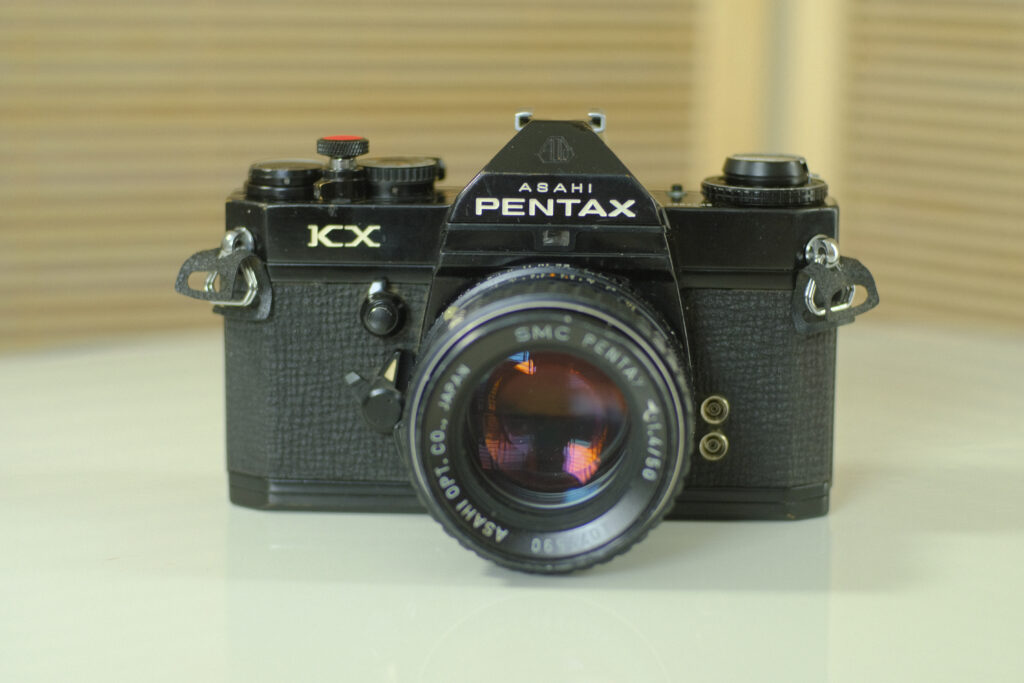
Had I not used the Spotmatic first, the KX would have felt enormous. Compared to the compact MX, it’s a giant. Working against it (or perhaps for it) is the mirror lock-up feature, which is a noticeable need, because its shutter and mirror mechanism feel heavy-duty. My KX has a temperamental meter – it works, but doesn’t always turn on cleanly – not it’s not the wind lever. It’s a fixable issue, the shutter/meter ride plate doesn’t always fully disengage, but since I rely mostly on a handheld meter, it doesn’t bother me.
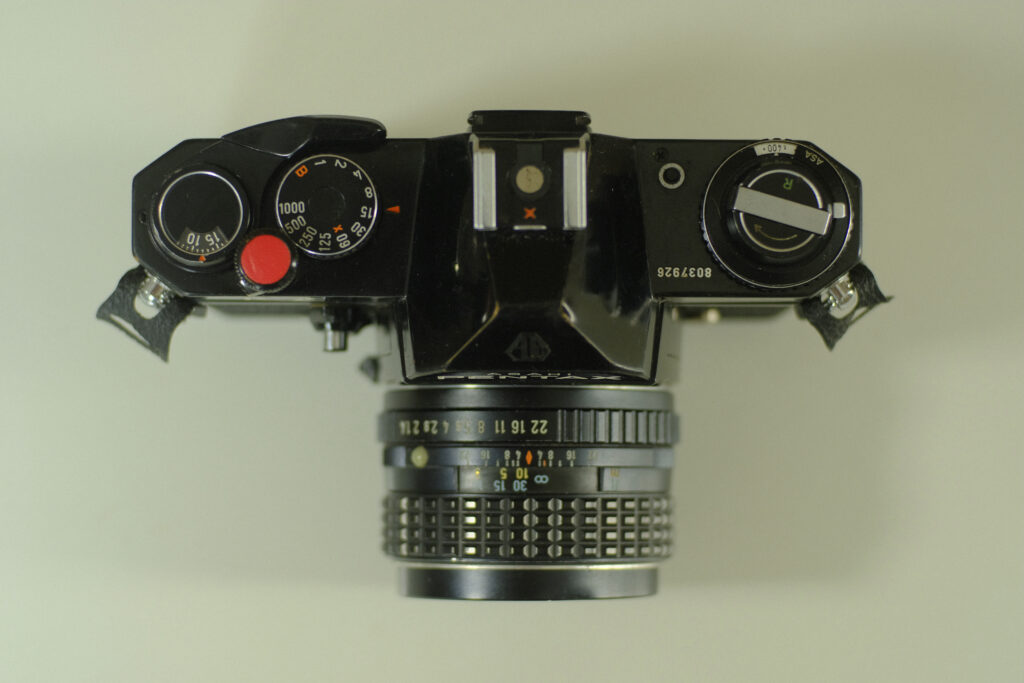
Where the KX truly excels is focusing. The viewfinder is brighter than the SP II’s, and subjects pop sharply into focus on the microprism and Fresnel screen. It’s also perfectly balanced for the original K-mount lenses with 52mm filter threads. My favourite 50mm is the K f/1.4, which can feel front-heavy on an MX. On the KX, it balances perfectly.
And then… we arrive back near where my Pentax journey began: the MX. Pentax’s answer to the Olympus OM-1 – and arguably better in several ways. Until you’ve shot with an MX for a year or two and then switched back to a full-sized SLR, you don’t realise just how tiny it really is.
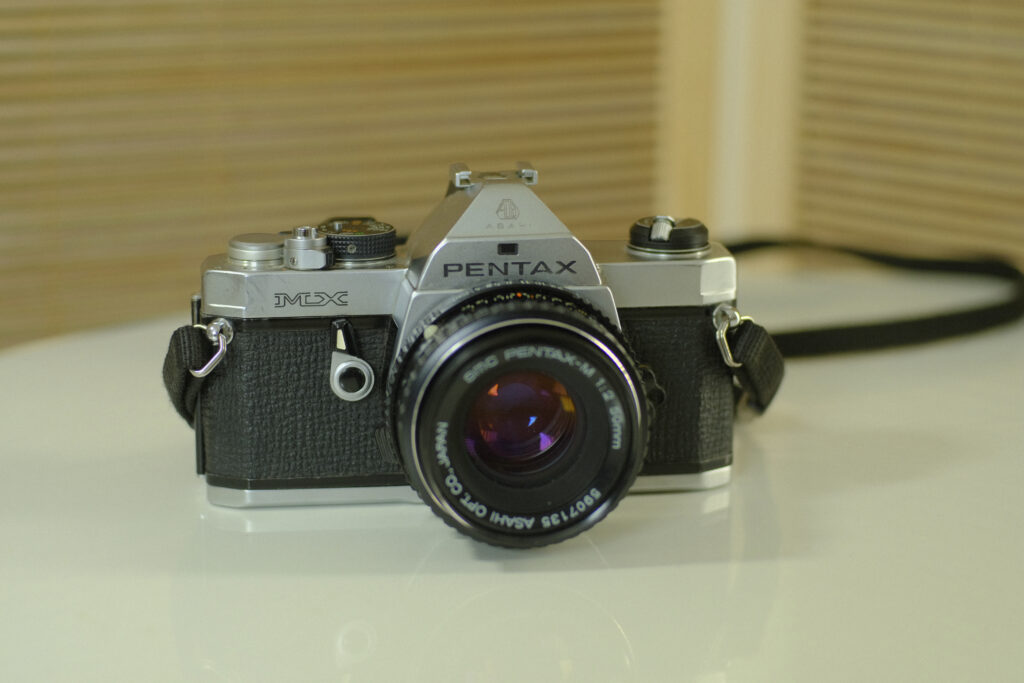
It is my ultimate “Images à la Sauvette” camera – the ideal street tool. It is small, discreet, and labeled “Pentax,” so nobody pays it any mind. Yes, it has an SLR mirror, and mirrors are naturally louder than rangefinder shutters, but nowhere is truly quiet these days anyway – especially on city streets. The MX meter is also a absolute joy to use across all light conditions.
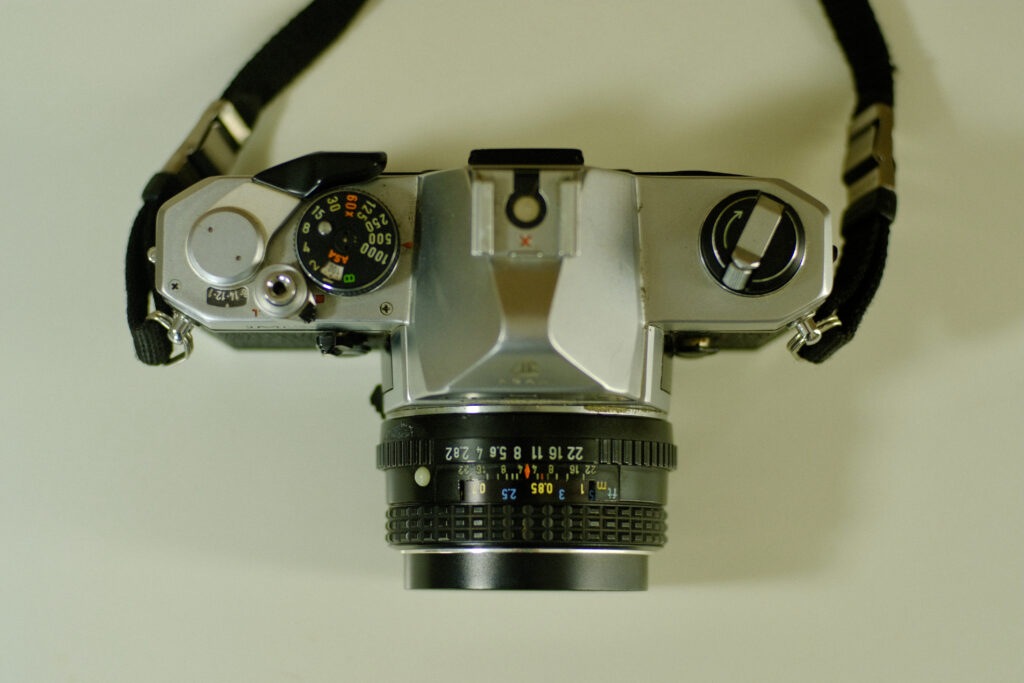
Do I have a favourite? Of course I do. The gap between them is narrow now – something I wouldn’t have believed before shooting with the SP II and the KX. But if there is one thing that remains my absolute favourite… it’s Pentax itself.
The people’s camera brand.



Share this post:


Comments
Chuck on Rediscovering what I had never lost
Comment posted: 21/10/2026
Since then, I have moved on to both Leicas and Russian rangefinders. Quieter shutters!
Chuck