

It’s not uncommon nowadays to come across out-of-production or repurposed movie film for both 35mm cameras and medium format. Movie negative color films have different chemistry compared to still photography films, and as you might guess, this affects many characteristics of the final images. Technically, the difference lies in the presence of a remjet layer on the back of motion picture films—a carbon-based coating that prevents internal reflections by capturing stray light, avoiding halos around highlights. This effect, commonly referred to as halation, can actually be more than welcome in some situations, giving pictures that distinctive wet-night look. This additional layer also protects the film from physical scratches that can occur due to the high speed at which the film is rolled during shooting. The additional layer also force an extra step in the process before getting the final negative ready for prints, the layer in fact needs to be removed before developing the film. The all process goes under the name of ECN-2 opposed to the standard still photography process C-41.
ECN-2 films are the standard for motion pictures because their dynamic range is greater, capturing details even in contrast-heavy situations that would be extreme for standard still photography C-41 rolls. Now, this extended dynamic range comes at the expense of saturation. Does it? Well, it surely does—but lately I’ve been experimenting a lot with expired or repurposed motion picture films, and I have to admit I don’t mind the muted colors. In some lighting environments, the colors even pop in a subtle, very pleasing way.
One of my favorite films currently available is the Ilford Cinetone 400. This film is basically Kodak Vision3 500T, which is something of a standard for motion pictures today (used by Nolan and Tarantino, among others). Once repurposed for still photography, the box speed reads 400, and I’d suggest overexposing the 500T as a general rule. Overexposure (+1/3 stop) normally—daylight or at least not in particularly dark environments—improves shadow detail, gives more saturated colors, and reduces grain (shot at ISO 500, the grains can be almost too much). Other brands that use Kodak Vision3 500T won’t specify a different speed if boxed for still photography, but it’s worth keeping in mind. Shooting at ISO 500 gives more visible grain but punchier colors—your choice really!
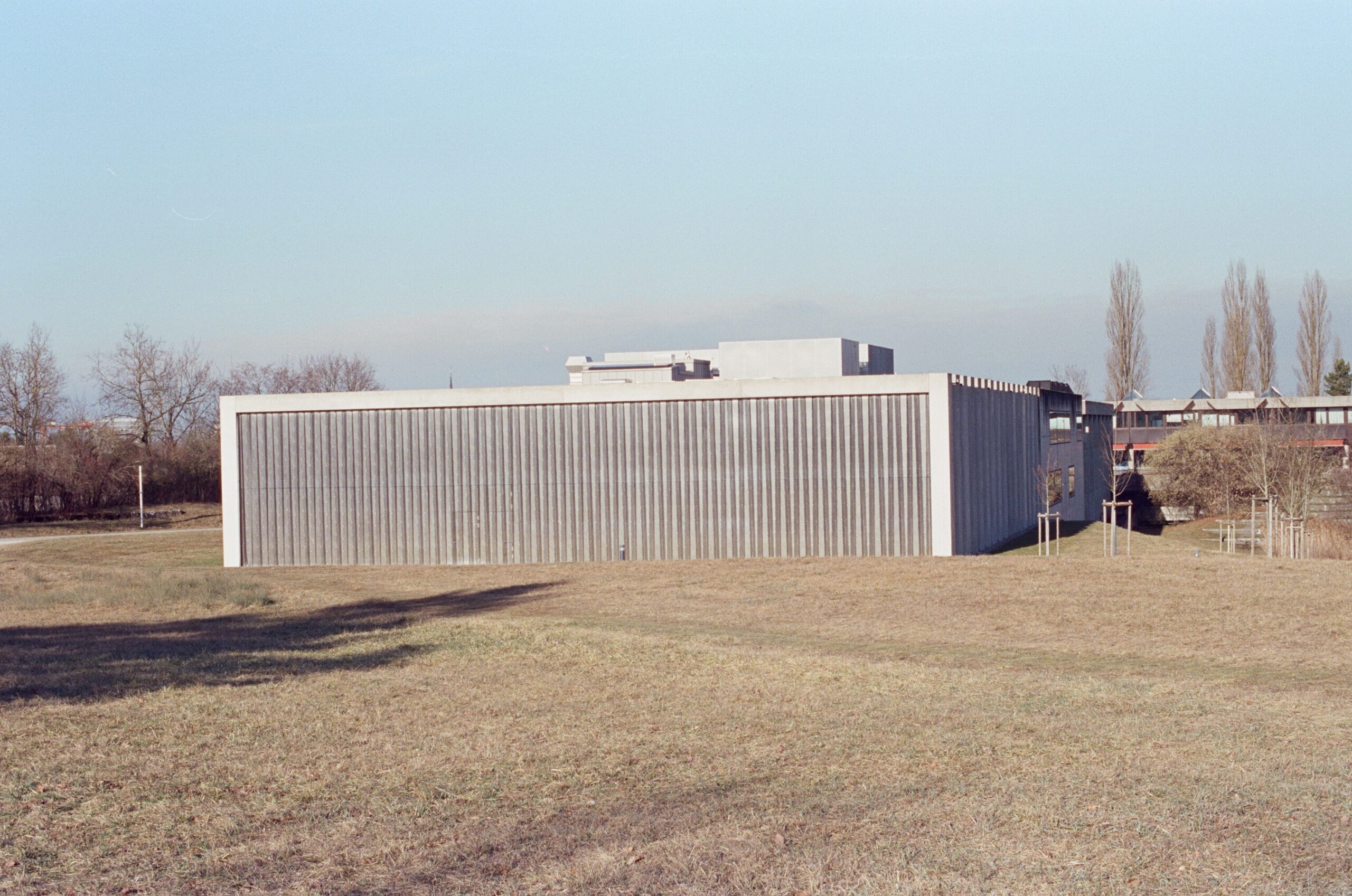
Alternatively, it’s possible to find expired Kodak Vision2 stocks in some shops, prepared in 35mm still photography canisters. Kodak Vision2 can give inconsistent, but interesting, results because all available stocks are expired, meaning results vary depending on how the film was stored (cold, room temperature, etc.). More often than not, it produces higher contrast, so it’s my choice if contrast is what I’m after in a particular situation—which is rarely the case for me—but it might work for you. The examples I have though, are of “landscapes” which I believe are not the best gig for this film.
Enough talking—here are some examples for you to judge what you like best.



As a bonus I though it would be nice also to include some pictures from a C-41 stock that is though advertised in a similar fashion by Ilford, the Ilford Ilfocolor 400 Vintage Tone. This is a standard still photography film but it will give you results that are close to a Kodak Vision2 500T or Vision3 500T.


What’s your favourite?
Share this post:



Comments
Tony Warren on 5 Not so muted frames of Ilford Ilfocolor 400 Cine Tone – an ECN-2 adventure
Comment posted: 12/05/2026
My favourites are the double exposure and the contre jour woodand scene, next to last. The film seems to suit these subjects particularly well. The close up too is effective in a more conventional way.