

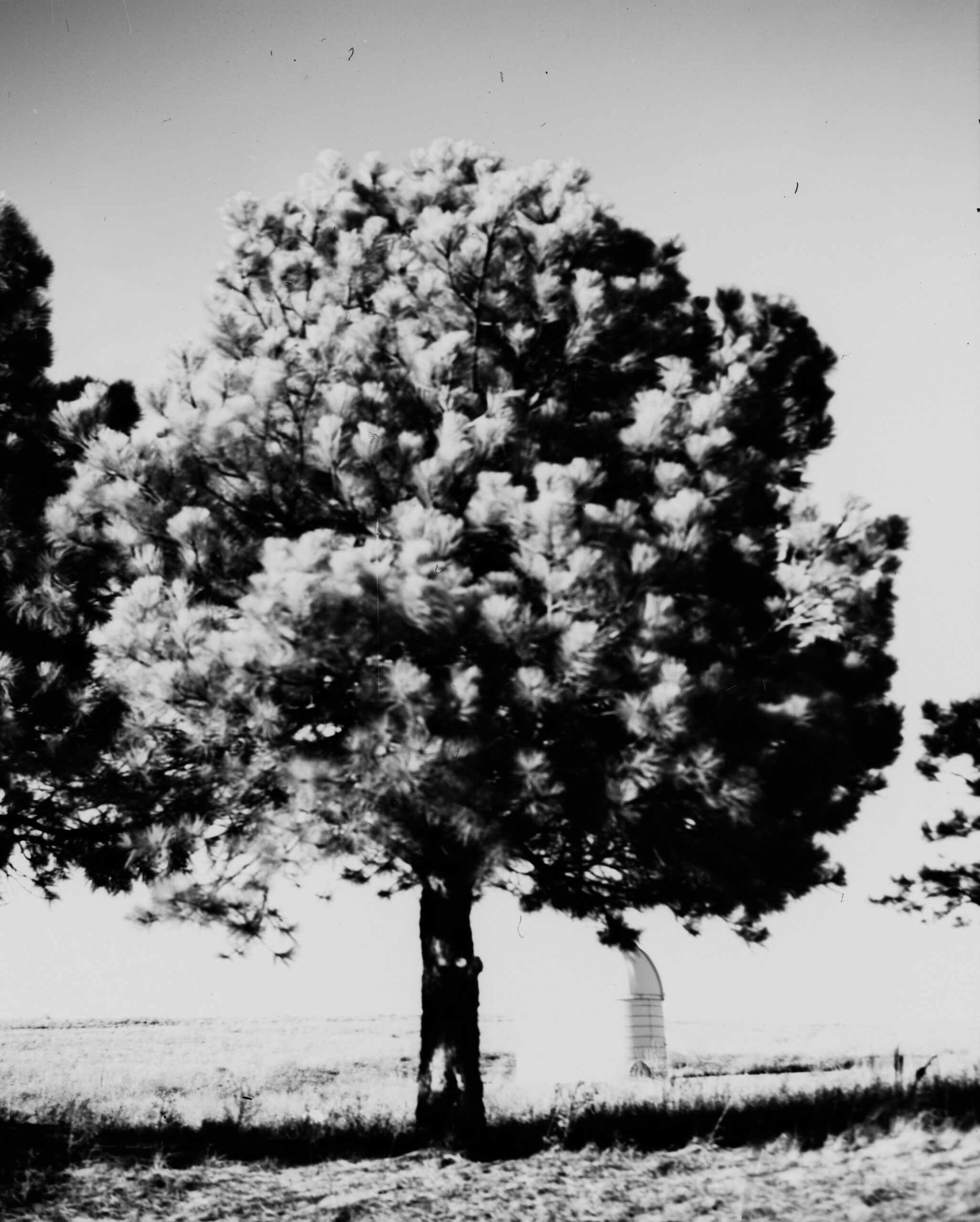
Last year, a friend showed me something that would put the seed of an idea into my mind. Most photographers aren’t aware that a film like the one I found exists, but I want to change that.
Discovering a weird film
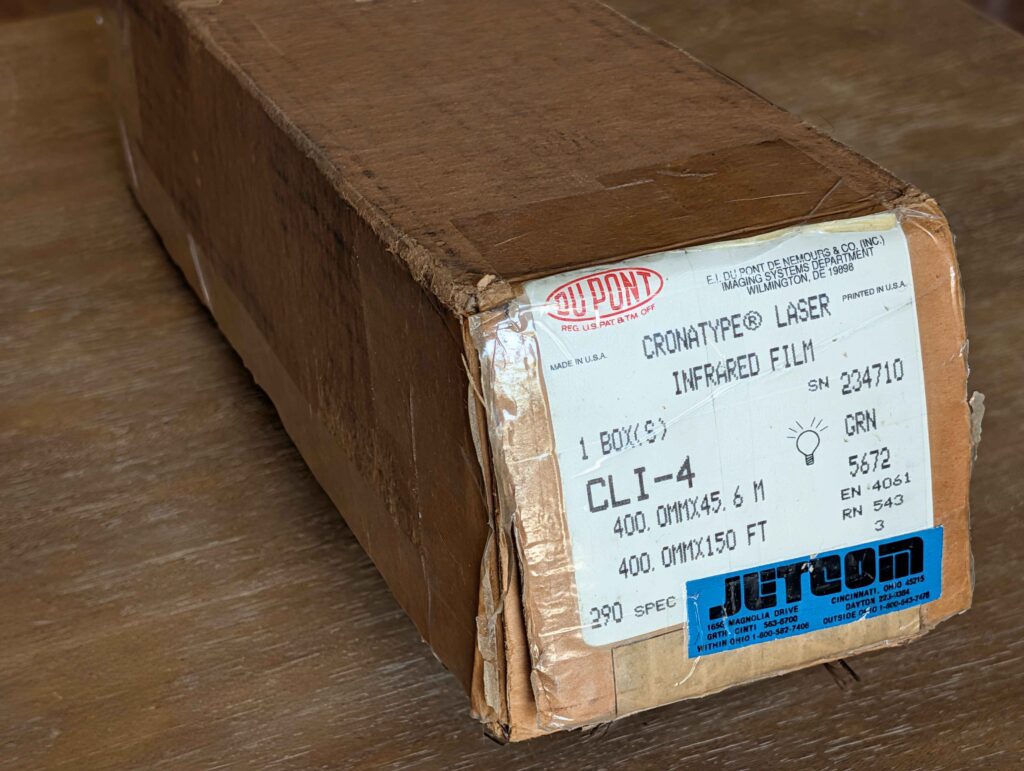
In September 2025, a friend found something in storage that piqued my curiosity. A 15.75 inch by 150 ft roll of DuPont “laser Infrared film”. I had no idea what it was used for, or even if it was photographic film, but they had a ton to play with so they cut some into 4×5 sheets and tested it. It was slow, contrasty, and fogged.
Although I was intrigued by this film, the initial results were fairly disappointing, and I didn’t think much of it until he posted another image that he took. And it had all the hallmarks of an infrared, or IR, image! After seeing that, I decided to do a bit of research on this film. I wasn’t sure if this film was still made, but if it was, I wanted to try some.
I had been told that it was probably imagesetting film, made for machines that took images off a computer and put them on film for the printing industry, as well as PCB manufacturing and other graphics arts applications. I even managed to find a data sheet, which told me that this film would be sensitive to at least 850nm.
It wasn’t actually that hard to find, apparently some places still use imagesetters. DuPont stopped making film long ago, but Agfa still makes it, and many printing supply stores online sell it. The only problem was, it comes in giant rolls that cost a decent amount, and I just couldn’t justify spending that much on something I didn’t know would work well. So, the idea went on the back burner. At some point, though, I found a roll of IR imagesetting film for a very good price on eBay, so I decided to get a roll.
Testing, testing, and more testing
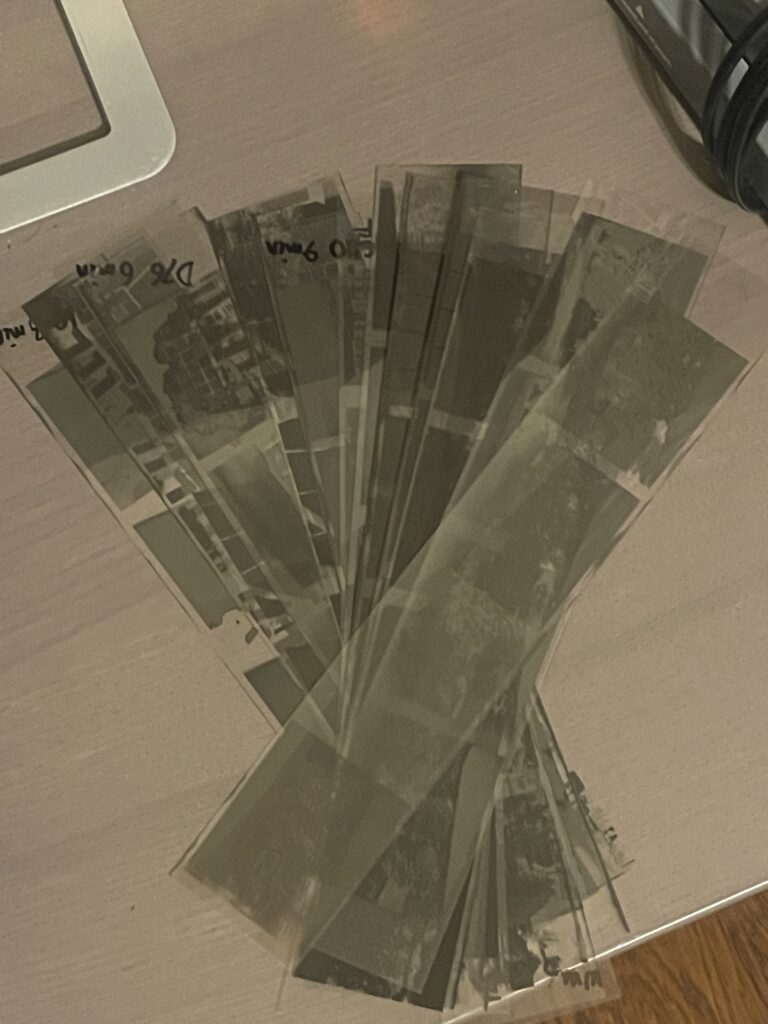
When the film got here, I went straight to work cutting 61.5 mm strips and putting them in 120 paper. This has to be done in complete darkness to not expose the film. While some photographers use night vision goggles to help aid darkroom activities like this. However, those use IR light and would fog this film, so I cannot use them. I also have to make sure that all the equipment I use is IR safe, as some stuff is not (for example, my dark bag).
I used my Mamiya RB67, a professional 120 camera I know is IR safe, to run tests on the 4 exposure rolls of film I cut. At first I used a roll just to see what the contrast was like, and as expected, it was pretty high, but not unmanageable. Another thing that I noticed immediately is that the film is extremely insensitive to green, since this type of film is usually handled for short periods under a green safelight. This was something I expected, but still very unique.
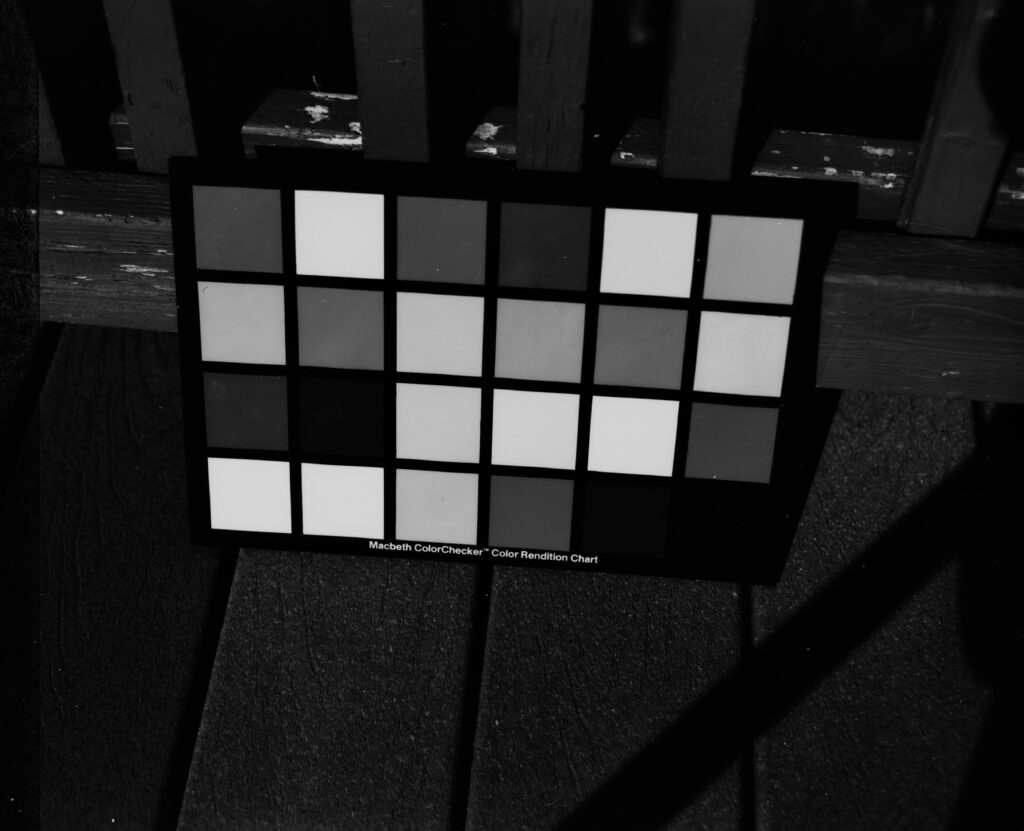
Next, I tried to find good speed and developer combinations. I settled on EI 3 for this film. The contrast is still high, but you do retain some details in the highlights and shadows at that speed. After this, there were a lot of test strips put in different developers for different times. Although I don’t have many developers, I tested the ones that I did have, and found some pretty reliable developing times for common ones people probably have.
I tested this film for IR sensitivity next. With a 720nm filter, which only lets IR and a very small amount of deep red through, I initially git good results at EI 0.8. However, on further testing, I realized that this was still overexposed, and that EI 1-1.5 is actually the correct exposure! This might not seem like something to be excited about, but this result immediately told me that I was onto something. Instead of the normal 5 to 6 stops of compensation needed with an IR filter, this film only needed 1! This confirmed that even though the film was slow, it was extremely sensitive to IR, just like the datasheet said it was.
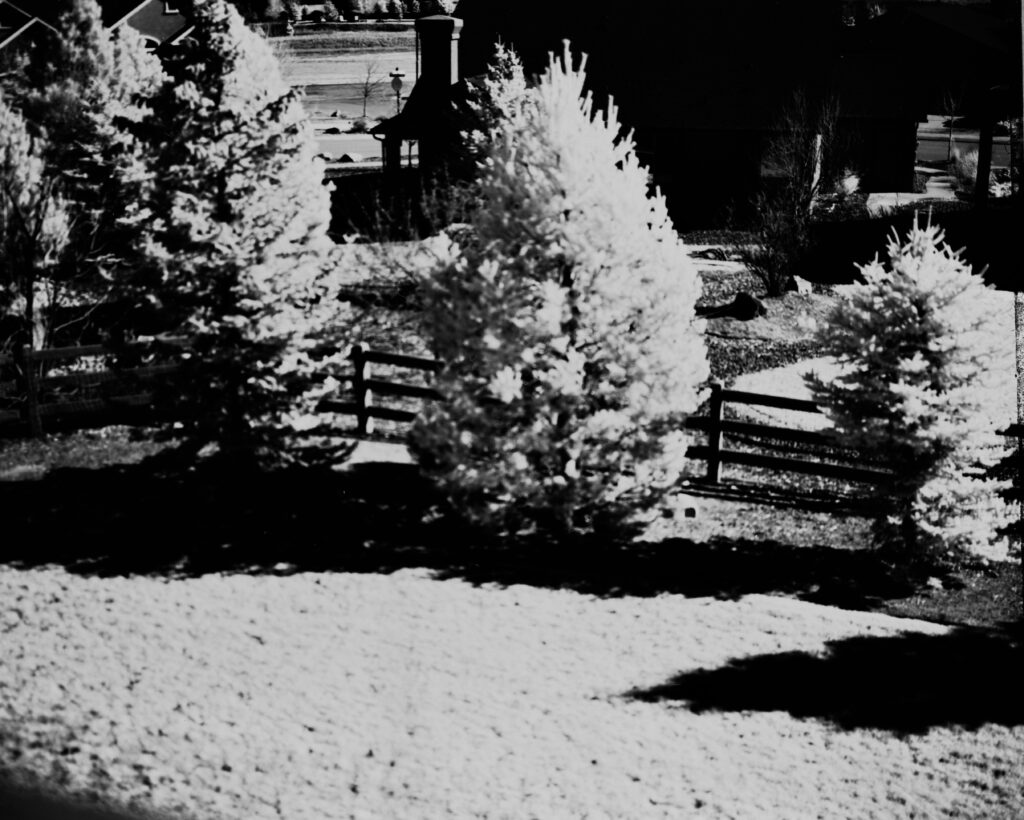
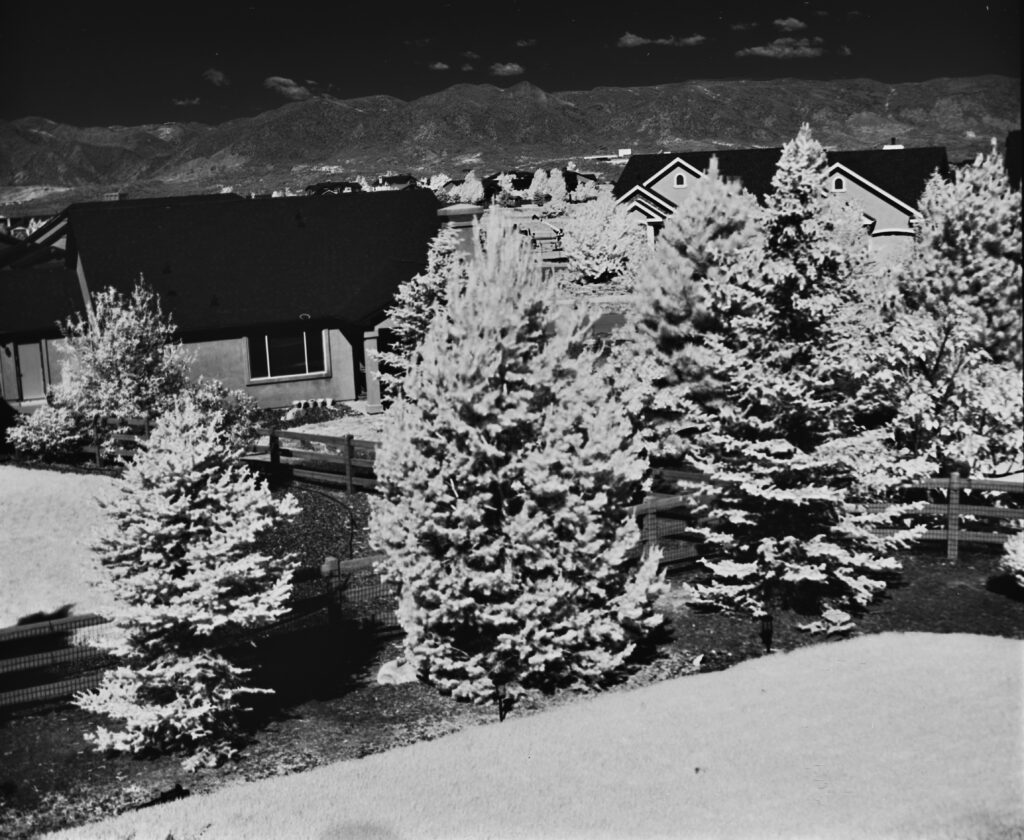
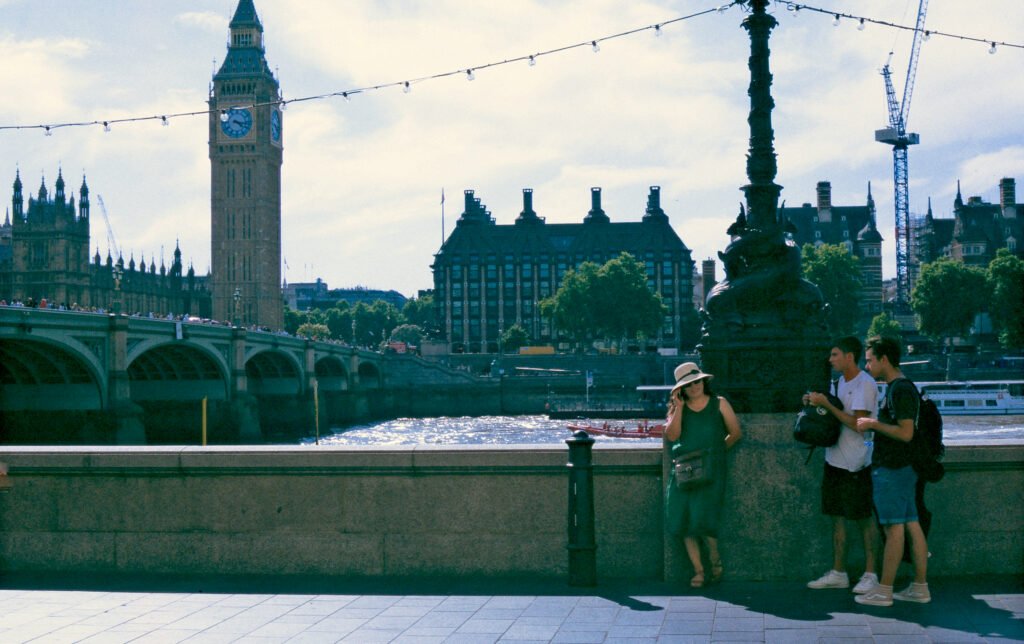
Finally, I tested it with a red 25 filter. This is the test I was most excited about because it would tell me if this film could be used in an SLR without needing to use an opaque filter, like HIE or Aerochrome. Metered TTL at EI 3, the results were stunning! You could clearly see the strong IR effects of this film just like with the 720nm filter!
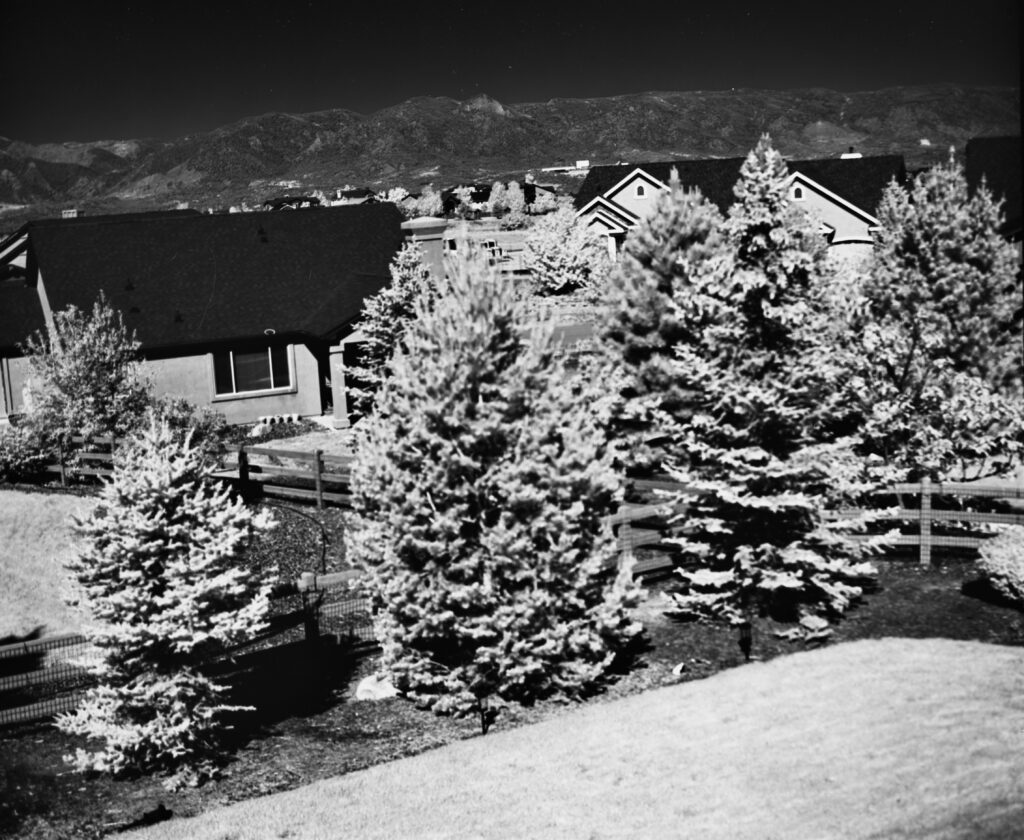
However, even though this is an amazing discovery, it is by no means a perfect replacement for older films. As mentioned, this is not a film made for normal cameras, and so has very different behavior compared to traditional films. It is an extremely slow film, and very contrasty due to the high degree of detail needed for the use cases this film is intended for. While low speed film can still be shot with relative ease on a sunny day, even handheld, the contrast is trickier, and often requires more technical knowledge to reduce. It is certainly not impossible though!
Despite all that, I decided that I would try and get this film into the hands of photographers. While the end goal is 35mm film, there are still a few roadblocks that prevent me from making it, so those plans are currently on hold. However, what I can do is cut this film into large format sheets. A daunting task to be sure, but even though I didn’t find this film until last year, the adventure really started long before that.
How did I get here?
I started shooting film in 2019 for a high-school art class, and I fell in love. Seeing a physical object with a photo on it that I took was incredible! But it wasn’t just about the final image for me. I wanted to know how it worked, and I wanted to find ways to make sure I could keep shooting film, preferably without spending a ton of money on film. I bulk loaded 250D from pre-made 100 ft rolls at first, then from short ends. Eventually I started to focus more on black and white, since color developing was pretty inconvenient for me due to the limited shelf life of the chemicals.
In 2022, I got an RB67, and started shooting medium format 120 film. 10 shots per roll was not nearly as many shots per roll as I was used to with 35mm, and it also cost quite a bit compared to 35mm bulk loading. So I looked for a solution just like with 35mm. And I found one, hand rolling medium format film. There wasn’t much information about how to do it at the time, but I decided to jump in anyway. I bought 300 feet of old Aviphot 200 70mm on eBay, and spooled 220 with it. At first I just rolled film for me, but eventually for friends, then for people who saw I was doing it and asked. Then it wasn’t just 220, I bought bigger rolls of Aviphot and cut sheets off them, 4×5, 5×7, 8×10.
When the Aviphot on eBay ran out, I found Astrum in Ukraine selling fresh Aviphot in a bunch of sizes. I arranged a group buy to order a lot of film at once to make shipping less costly. I’ve done that every 6 months since summer 2024, and I have helped photographers get anything from 16mm for cinema and 110 reloading, to 20×24 for ULF portraits, to 16 inch rolls for Cirkut photography! This helped me build connections within the community and gave me experience organizing some truly massive group buys, something that has definitely helped me with my most recent project.
What’s special about IR?
When I was looking at how to roll 220, 70mm aerial film was the only practical option. While 70mm stills film was available for a while, it is not nearly as easy to find, and not as cheap either. An interesting side effect of using aerial film for 220 is that some aerial film has an extended red sensitivity! At the time, I didn’t know much about IR photography, but when I was looking at how to shoot and develop the film I picked up on eBay, I saw that some people were getting surreal images that looked nothing like what you normally see in pictures. I wanted to know more about this super cool effect, so I looked into it.
IR photography is using IR light, usually starting at 780nm, to capture images. This is especially useful when looking at vegetation from the air since vegetation reflects a ton of IR. some of the most common use cases are determining how many trees in a forest are actually alive, or if vegetation growth is changing over time. The most infamous use for IR films was finding enemy encampments in highly vegetated areas during several wars.
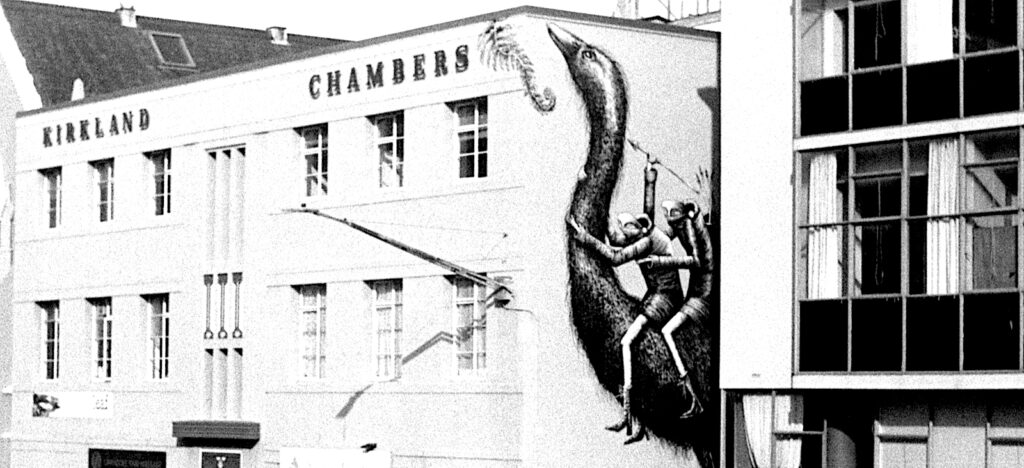
Since our eyes can’t see very much past 720nm, the world of infrared is invisible to us. Because of this, IR images can look surreal, or even alien. Plants, which are normally green and show up as a middle grey on black and white film, look bright white, almost covered in snow. The sky looks pitch black due to infrared radiation not bouncing off the atmosphere. And when taking pictures of people, skin looks pale, and eyes are black.
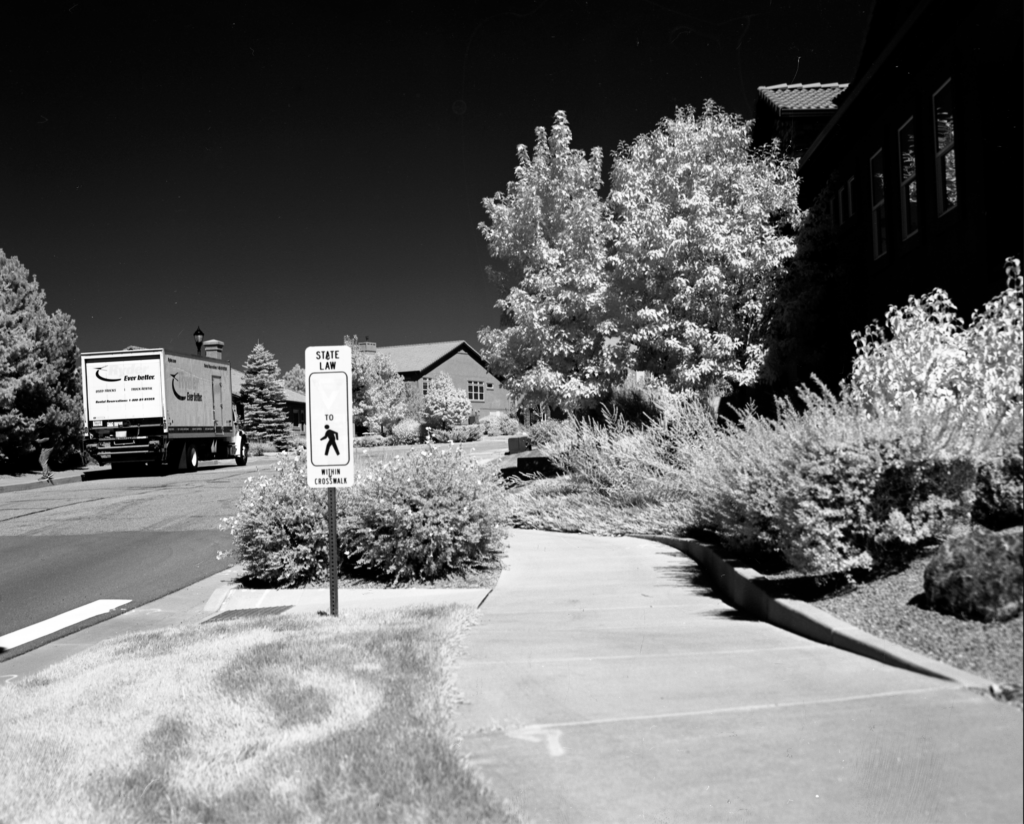
I loved this effect, being able to see an invisible world intrigued me, and I wanted to be able to take pictures like that! I shared my experiences taking infrared photos with the film I could get my hands on, and explored how I could make my images better. But, my choices of film that wouldn’t break the bank were pretty limited.
What’s available to use now?
Although IR film was sold in 35mm and sometimes 120 and sheets to photographers for technical or scientific purposes, most was made into giant rolls for use by governments for aerial photography. Since the government no longer uses film for aerial IR photography, true IR film is no longer produced by Kodak. HIE, Kodak’s black and white IR film, was discontinued in 2005, and Aerochrome, a false color IR reversal film, in 2009.
These films are now extremely rare and expensive, and deteriorate quickly if not stored correctly. The usable film that is left is running out, and rolls are now prohibitively expensive. Working HIE can go from anywhere between $50-$150 for a single roll of 35mm, and Aerochrome Is now above $300 per roll of 120!
Efke, Maco, and Konica all had IR offerings in 35mm, 120, and sheets, but these films were not designed for the same applications as films from Kodak. They usually require longer exposures and the use of a deep red filter, similar to aerial film (which some of this film was). This, as well as the fact that even when stored correctly it is often badly fogged, makes this film considerably less useful.
Rollei and other companies like JCH and CatLabs offer respooled Aviphot 80 and 200 in 35mm and 120, and Astrum sells it in many sizes. However, the sensitivity of these films ends around 750nm, which is only an extended red sensitivity, and are not true IR. To get an IR effect, a filter needs to be used that blocks out almost all visible light. This makes shooting with a SLR extremely difficult as the filter is opaque, and the film speed decreases a lot, usually to EI 6-12 on a sunny day.
Bringing true IR back for photographers
When I figured out what the film I stumbled across was capable of, I wasn’t quite sure what I should do at first. Although this is a very cool film, I knew that it would have a very limited appeal. While there are definitely people interested in high contrast, low speed film stocks, the majority of photographers tend to avoid such films. I just was not sure if there were enough people to justify the enormous effort needed to convert these large rolls into normal film formats.
I could cut the film down into large format sheets on my own, which I have been doing for years now, but anything beyond that would require outsourcing to someone else. And that wouldn’t be like any previous Astrum group buy, I couldn’t just order a little bit of film. If I was going to do this, I would need to make a lot of film, around 2,200 feet of 35mm, or 1,000 feet of 70mm film (for 120 and 70mm cassettes) with the roll size I chose.
On April 1st this year, I decided to announce my plans to try and get this film made in stills formats! A lot of people thought it was a joke (I knew they would) but I just loved the idea of announcing this insane sounding project on April Fool’s Day. For a name, I chose Hi-Con IR, because it is a high contrast IR film, very original, I know. I posted it to a few places like Reddit, Photrio, and Discord, and boy did I get a ton of attention!
When it was clear that there was actually serious interest in this film, I set about making arrangements for the film to be slit and perforated with Astrum, who I have worked with for a long time and could provide the services I needed. Unfortunately, they weren’t able to help me with the project at that time. So, I went about trying to find a different place to slit and perforate it. I emailed several other companies that I knew offered film finishing services. A few replied, but so far none are able to help.
Where are we now, and where are we going?
At the time of submitting this article for publication, I am currently only able to offer large format sheets cut in my darkroom. I did have a quote to get film slit and perforated for 35mm, but testing revealed that the equipment would have fogged the film. While this was extremely discouraging news, I am still going to push ahead anyway, because I do believe that this film is something that people would be interested in.
While I am still looking to get it finished in 35mm, 120, 220, and 70mm, as well as other potential formats such as 102/122, these formats will take time. I am currently looking into making a slitter capable of slitting the wide roll at home, which would allow me to make non-perforated formats of rollfilm. This will be a massive project by itself though, and will take a lot of work.
I think that this film will let a new generation of photographers get to experience the wonderful world of true IR photography. While Hi-Con IR certainly has its drawbacks and limitations, I still believe that it has incredible potential!
Most of all, I’m happy to be part of this wonderful community I’m extremely passionate about, and I’m happy that I get this extremely unique opportunity to bring a type of photography most thought would never really be affordable again back within reach to many.
If you are interested in potentially getting some of this film for yourself, check out the website I have set up for it! Although I will have limited access to my darkroom when classes are in session, I will do my best to cut it when I can.
Share this post:

Comments
Mark Ellerby on Hi-Con IR – The Story of Bringing Back True IR on Film
Comment posted: 14/07/2026
Your IR shots look great.
I would be interested in using some of your film in my SLR with a Red 25. What exposure times do you use for that in bright sunshine? Sorry I'm not familiar with the "EI" value, is that like ISO? (I should know really; I've been photographing on film for decades!)
I'll keep an eye on your website. Thanks for sharing.