

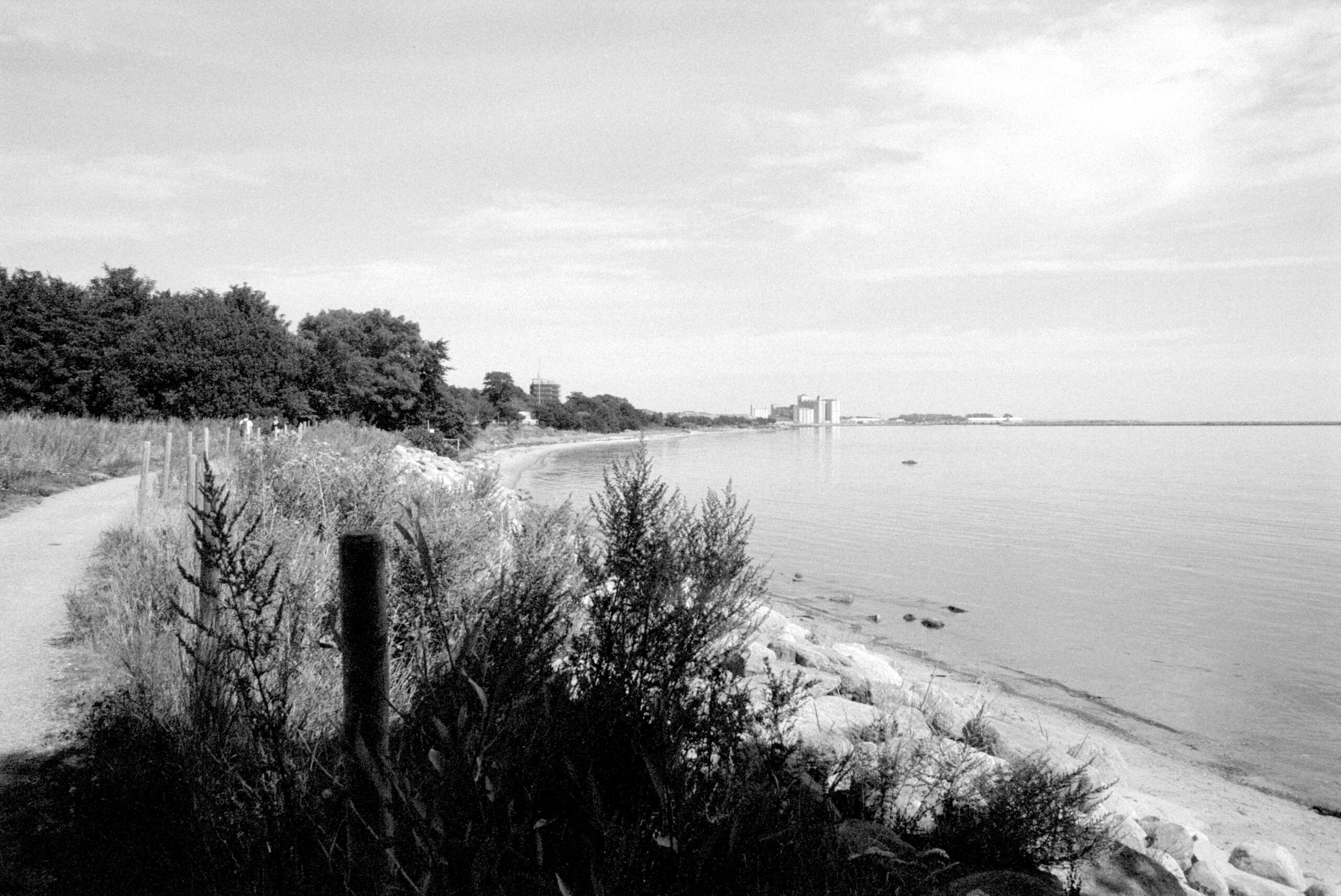
Frankly, I’m not very impressed by the urban planning in my home town, Ystad, southern Sweden. The town’s proximity to the sea and the Danish island Bornholm attracts many tourists. However, unlike Nice or Les Sables d’Olonne, where the Promenade des Anglais and the Promenade Georges Clemenceau connect to the beach and make it a part of the city, Ystad is effectively cut off from the sea by a number of fenced-off areas, housing things like a railway, a sewage treatment plant, and an old garbage tip, To go for a swim in the sea, tourists usually head for a beach on the eastern outskirts of Ystad, east of what is popularly known as “Världens ände” (“the end of the world”; alluding to Finistère in France and Finisterre in Spain). Personally, I prefer the beach on the western outskirts of Ystad, where there are fewer tourists, and dogs and horses are welcome to join in the swimming.
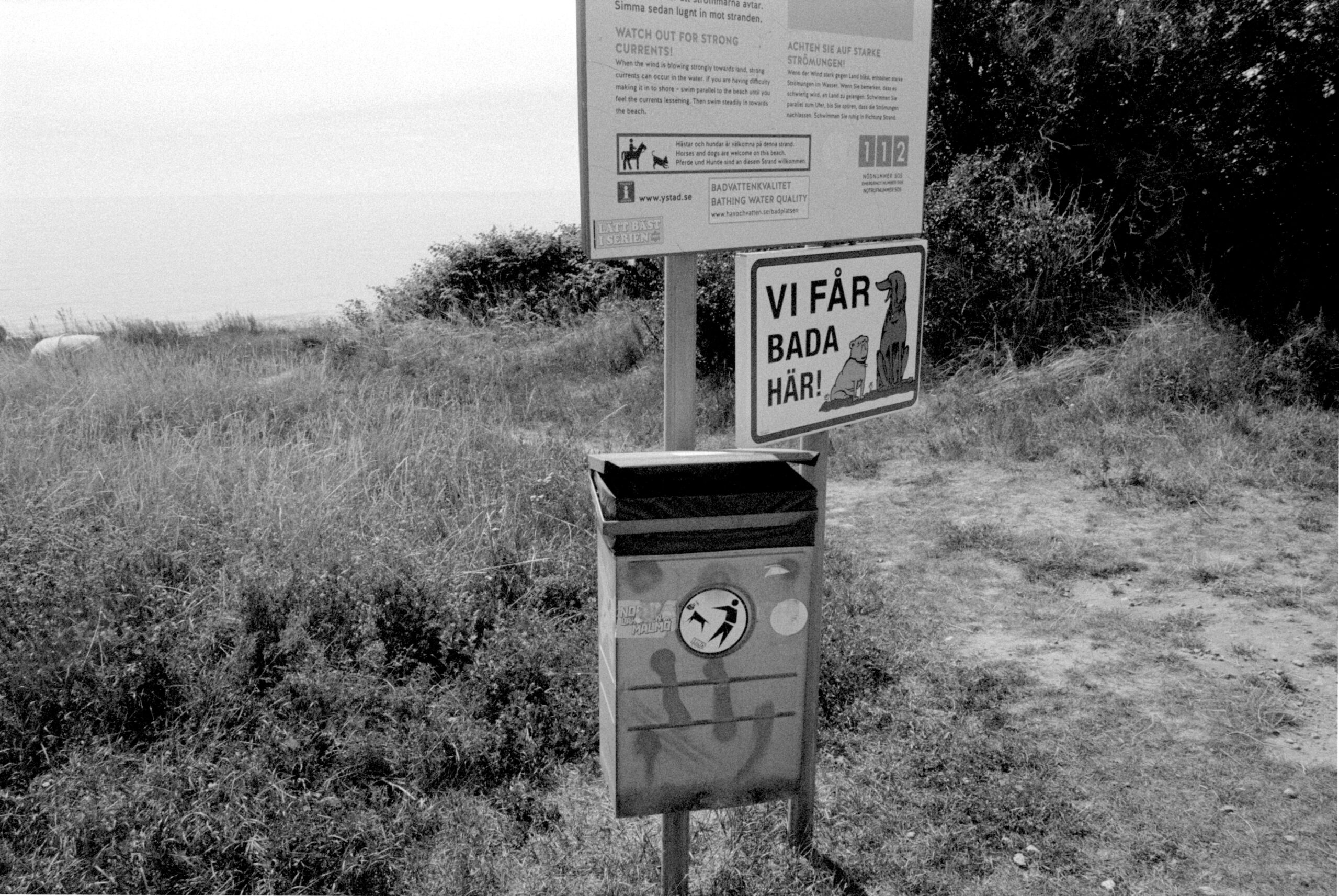
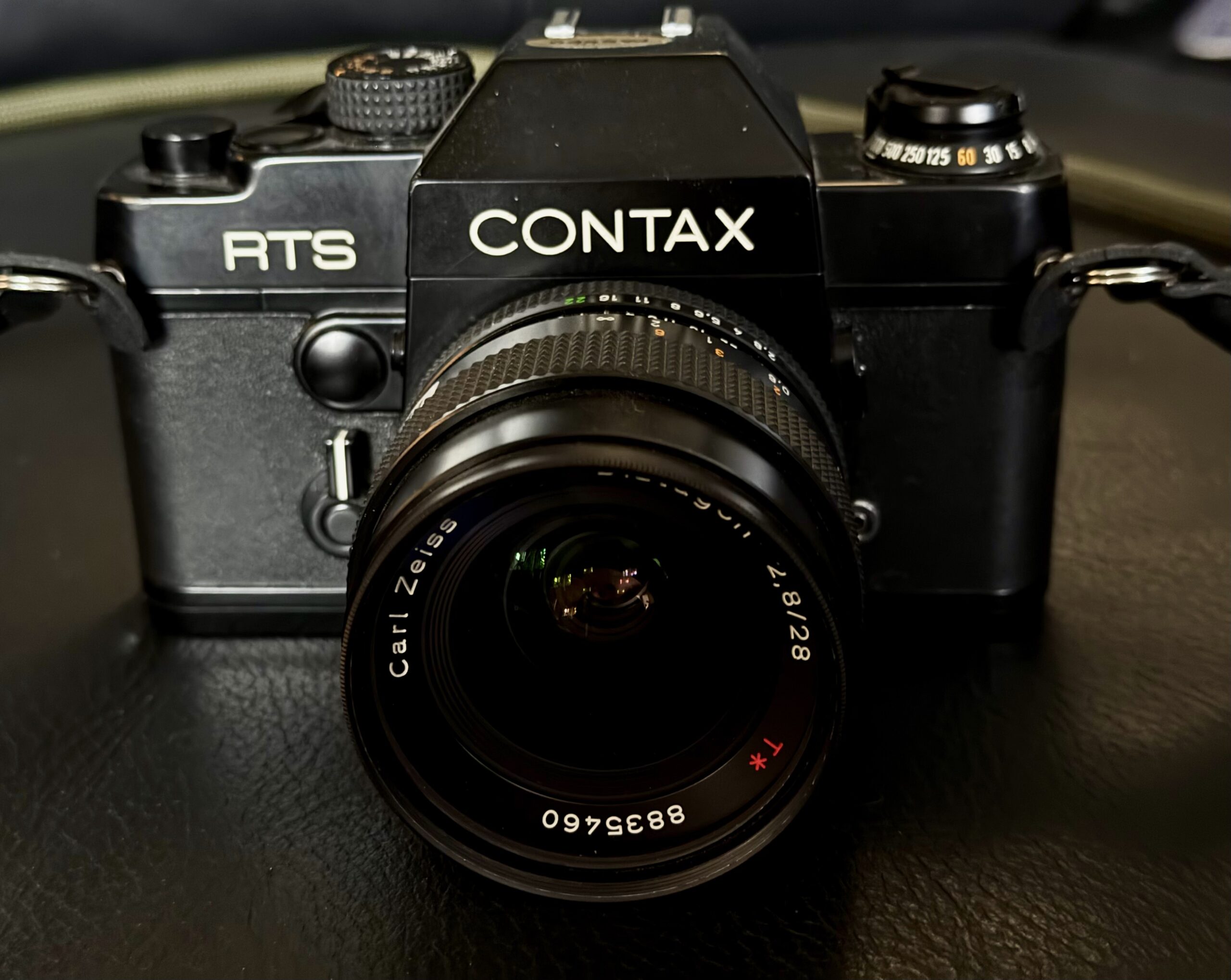
I usually bring a camera when I go there for a walk. Perhaps a little optimistically, I brought my CONTAX RTS and a Carl Zeiss T* 28mm f/2.8 Distagon lens the other day. It was in the early afternoon, with bright sunshine, and I had no lens hood for this wide-angle lens. To make matters worse, the camera was loaded with 400 ASA Fomapan. I had for a long time been planning to photograph the beach in soft light, in haze, mist, or the light of dawn or dusk but had never got round to it. When I now reached the beach, I realised that the equipment I had brought with me was hardly ideal. A sunny summer’s day by the sea means a very wide dynamic range, reflective white sand and harsh, sharp shadows. This could be difficult to manage. I also worried about the missing lens hood and expected major flare issues.
The issue with flare is that some light bounces back when it goes from air to glass instead of going through the glass. When a lens contains several elements (the 28mm C/Y Distagon has 7 elements in 7 groups), the loss of light can be substantial and result in a decrease in contrast and creation of flare and “ghosting” from to stray internal reflections.
The first practical interference-based anti-reflective coating was invented in 1935 by a Zeiss physicist, Olexander Smakula. Zeiss put a red “T” for “Transparency” on the lenses that had this coating. Later, at the end of the 1970s, Zeiss switched to a multi-layer version of the coating and renamed it to “T*”. Although anti-reflex coatings are now commonly used, Zeiss T* lenses are renowned for their excellent light transmission, which delivers exceptional contrast, brightness, and, since only image-forming light reaches the film, a richer shadow detail.
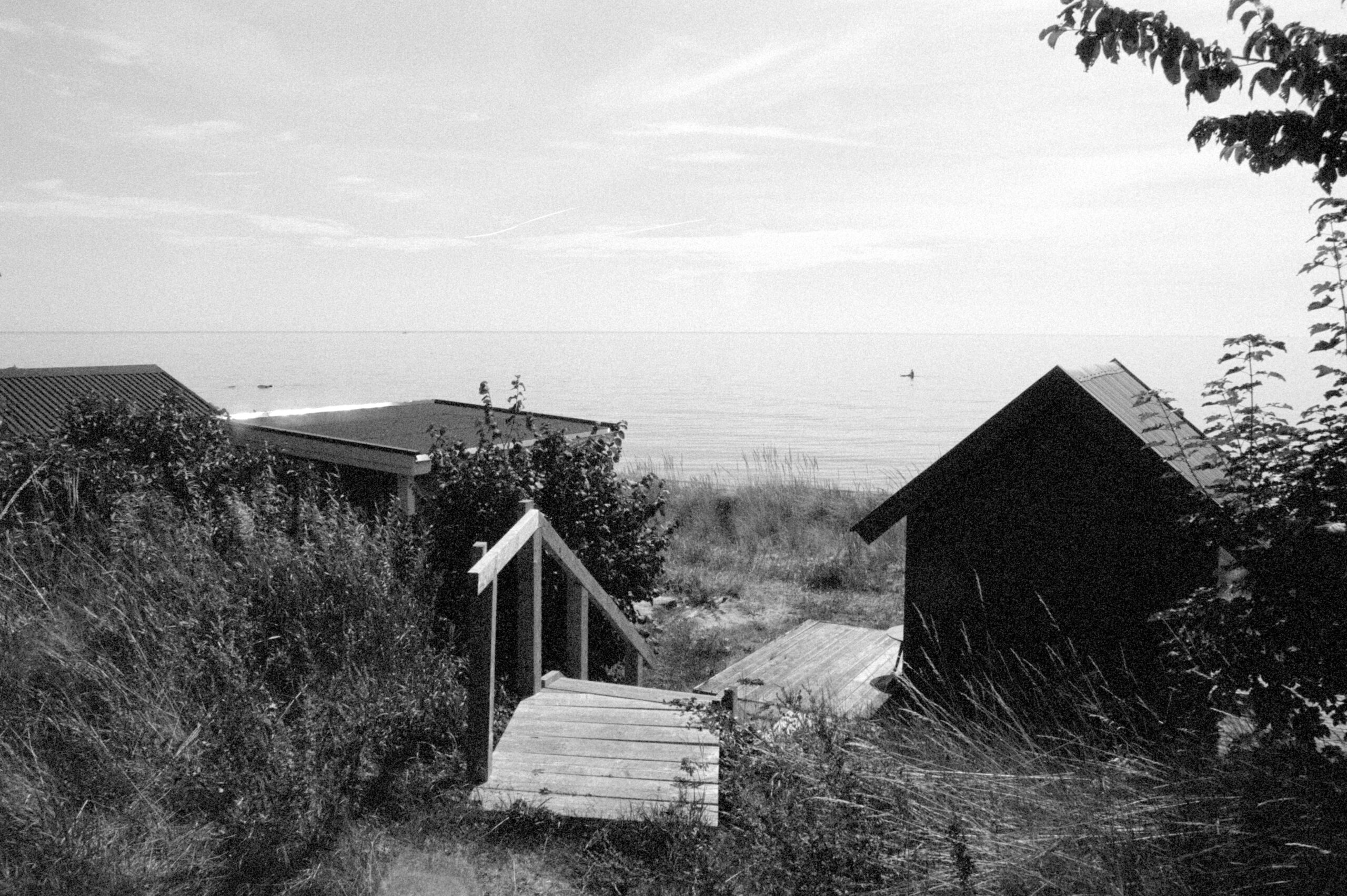
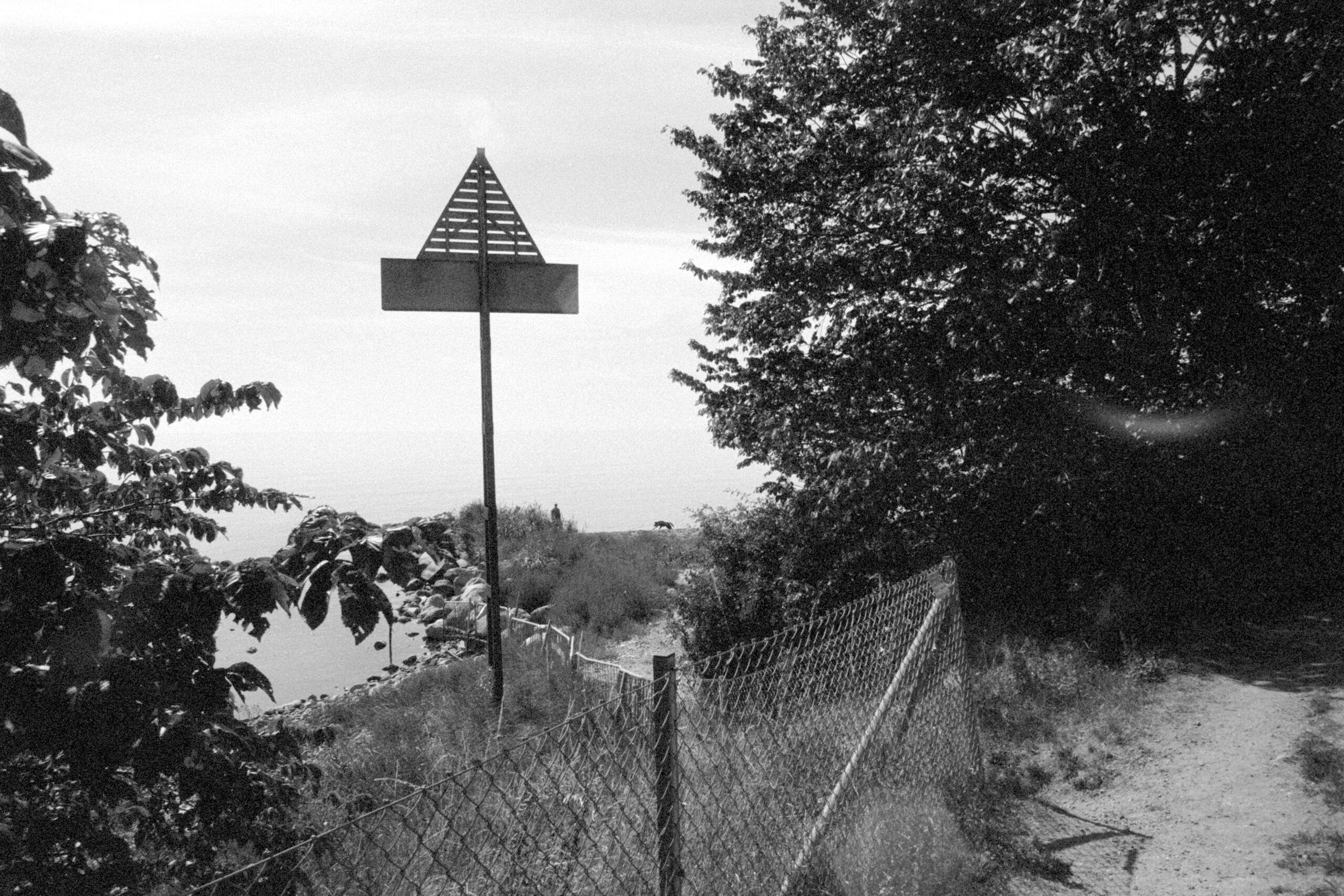
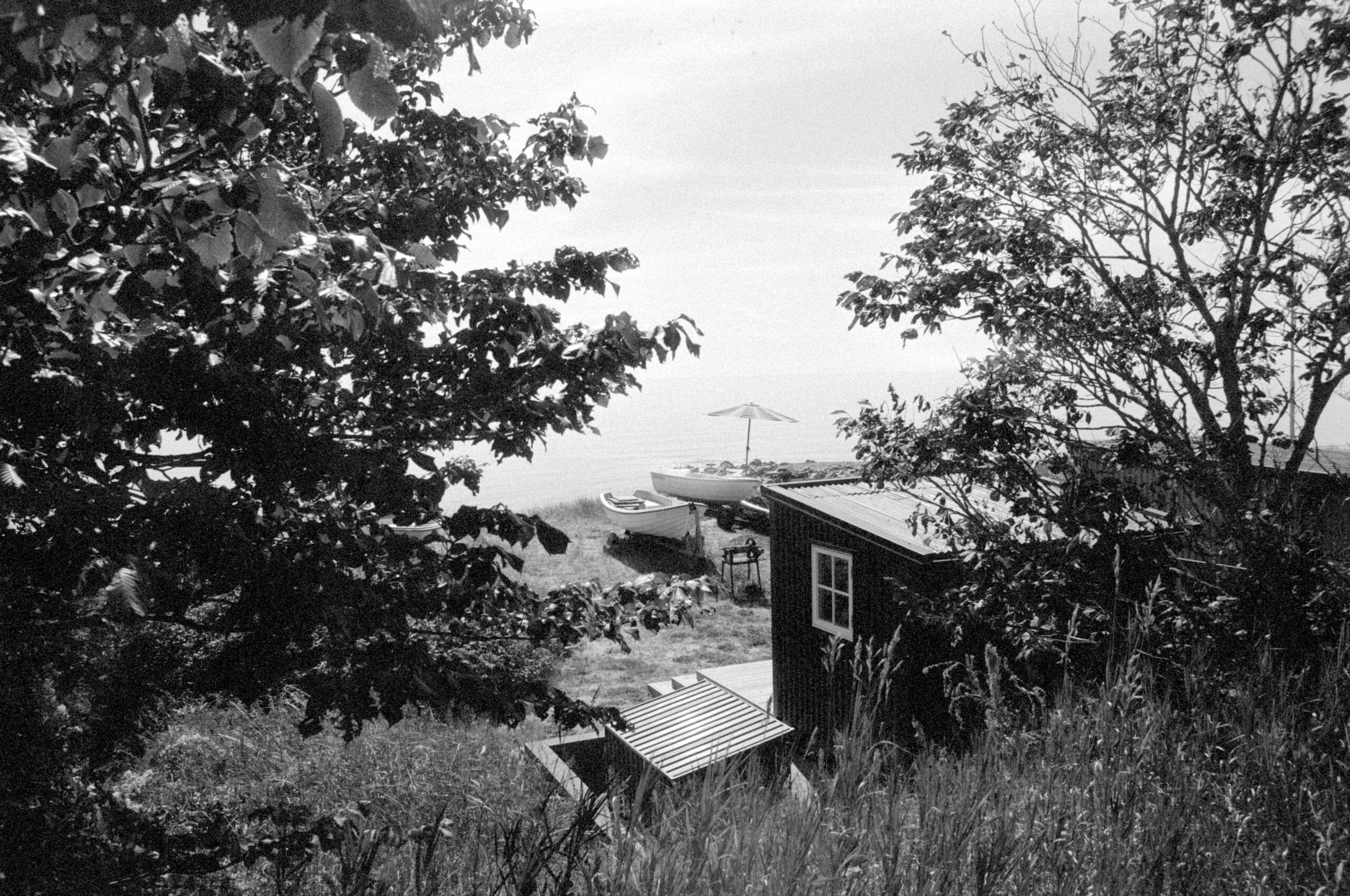
Out of the pictures taken on the walk, only one showed a flare. Flare and ghosting may therefore not be as serious problem as I initially believed. However, I continue to contemplate whether to acquire a lens hood. Is it really needed?
Share this post:



Comments
JC on 5 frames from a sunny summer’s day without lens hood
Comment posted: 17/09/2026
your Ystad pictures are very nice !!!
When i think about southern sweden i always remember Löderups Strandbad which is so lovely !
The Contax RTS (I) is one of my favourite cameras and i have two of them.
I recommend : 1.When you need a reliable workhorse, take the RTS. 2.When you need a lightweight SLR, don't take the RTS.
I love wide angle lenses around 28 or 35mm too.
So i use two single coated lenses on the RTS very often : Pentacon 29mm f2.8 and a Pentacon/Lydith 30mm f3.5.
Both lenses handle coloured film and b&w film very nicely.
I never use a hood on them and i have no issues with harsh light or contre-jour light.