

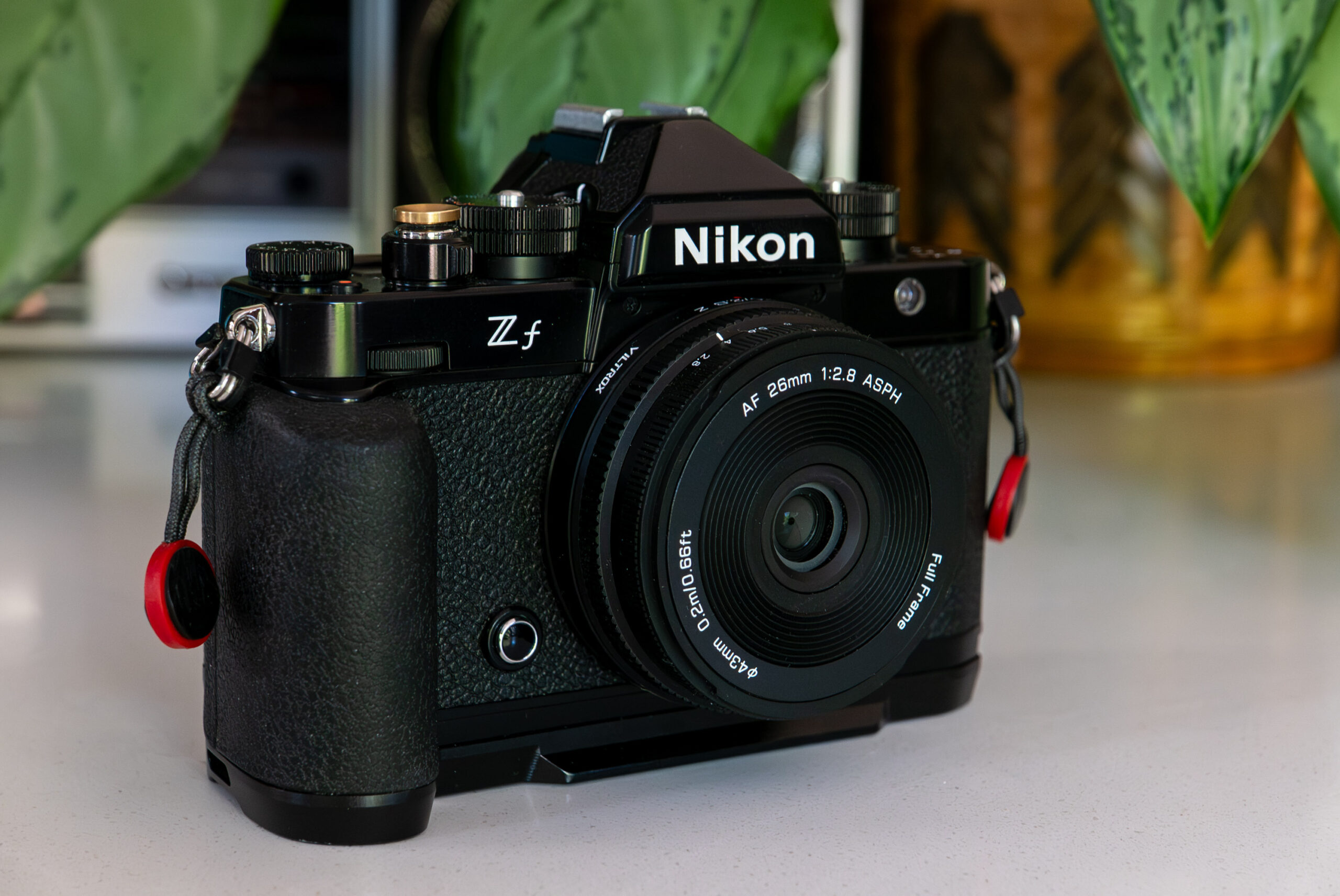
This is a review of the new Viltrox 26mm 2.8mm EVO. This lens feels like it has landed on my desk at just the right time. I’ve recently been looking for both a wider-angle lens and something a little more low profile on the camera. I had even been thinking about picking up one of Nikon’s own 26mm 2.8 lens. I’m pleased I waited though, as this little beauty fits the bill perfectly!
I must admit, when I first received the email from my contact at Viltrox saying they had yet another EVO lens for me to review I was a little worried about my ability to write another one so soon. I’d recently reviewed the 35mm and 55mm which were both excellent, but also both pretty much the exact same lens but for the focal length. Even their optical characteristics are similar. So as much as I’d absolutely loved the lenses, I’d felt a little bit of fatigue writing about them at the same time. When I saw the 26mm 2.8 spec in the email title, I expected to open it up to find another lens with the same proportions and features.
I then opened the email attachment and saw the picture of the lens. My initial reaction was definitely positive – it was literally the lens I’d been looking for from the brand of AF lenses I’ve recently grown to enjoy the most. After that initial excitement though, a few little doubts began to creep into my thoughts about it. The first one was around why they had decided to use the EVO nomenclature on a lens that’s very obviously different to all 5 other lenses in the series. Wouldn’t a different sub-brand make more sense for this new style of lens? And then there’s the features of the EVO lens series, and familiarity of the shape of them. All the lenses being exactly the same might make for a slightly fatiguing reviewing process, but the reality of them being all the same in practice is something I have grown to appreciate. I even have the button configuration settings on the camera to work best with the extra function button on the side of the lens. So, with some pros and cons in theory here – how would this lens play out in practice?
Zf & Z50ii testing
Before I kick off, I just want to point out that I have recently picked up an Nikon APSc camera in the form of a Z50ii – this isn’t a camera for my own use as such, more for the rest of my family, but obviously I have access to it. As such, I won’t be relying on the crop mode of the Zf to talk about how the lens performs when not shot full frame. This actually feels like great timing too as though this lens is very much a full frame lens, because of its lower profile, it also makes for a really good option when mounted on an APSc camera.
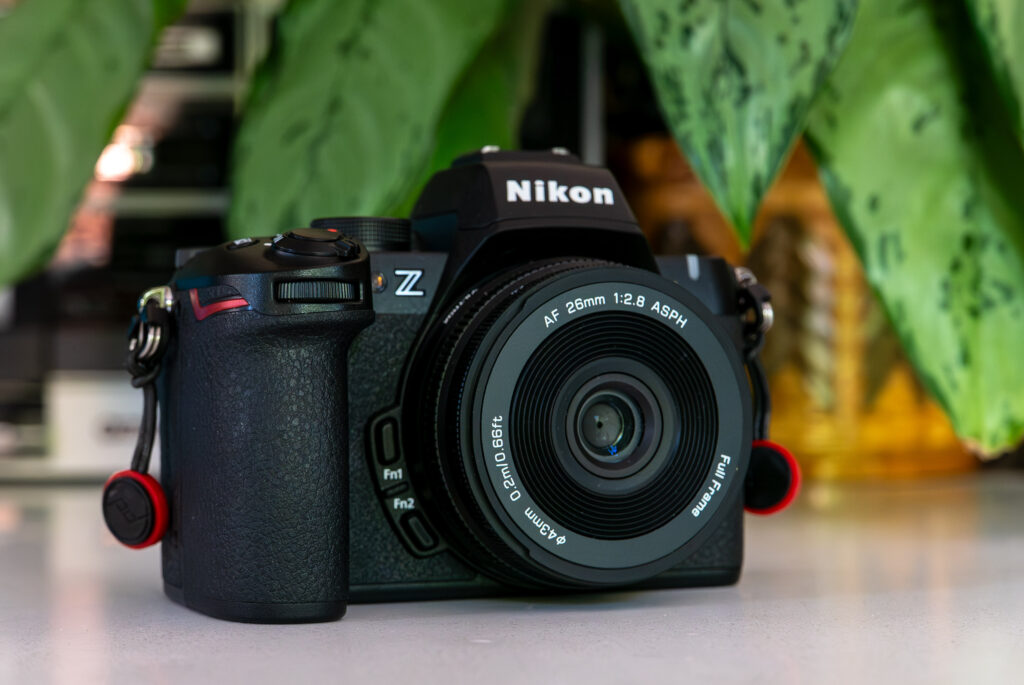
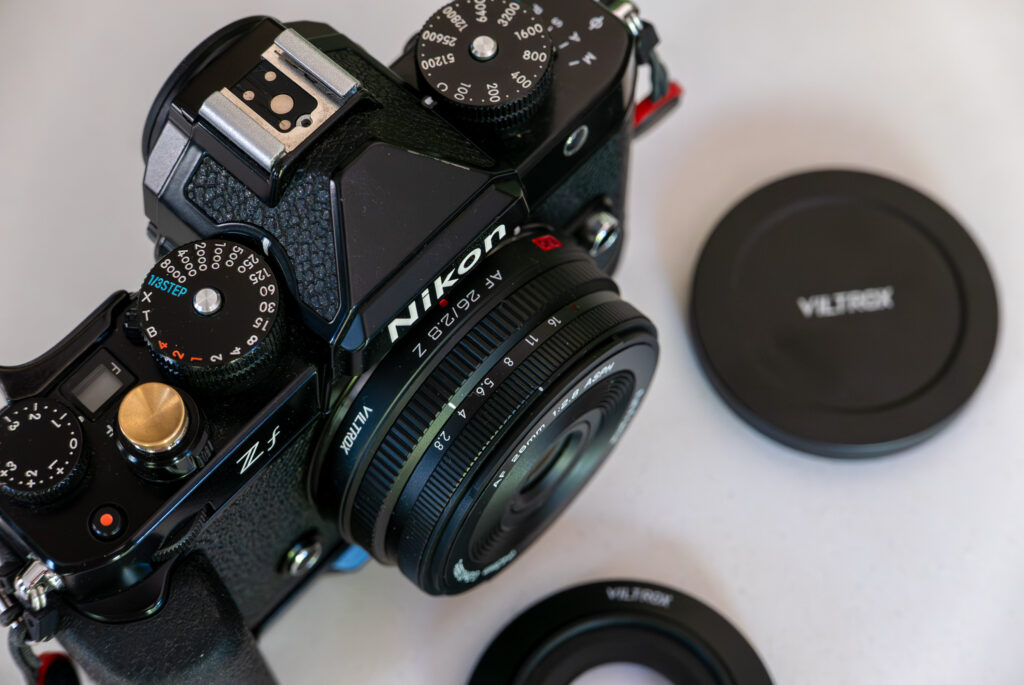
The Viltrox 26mm EVO on the camera and in the hand
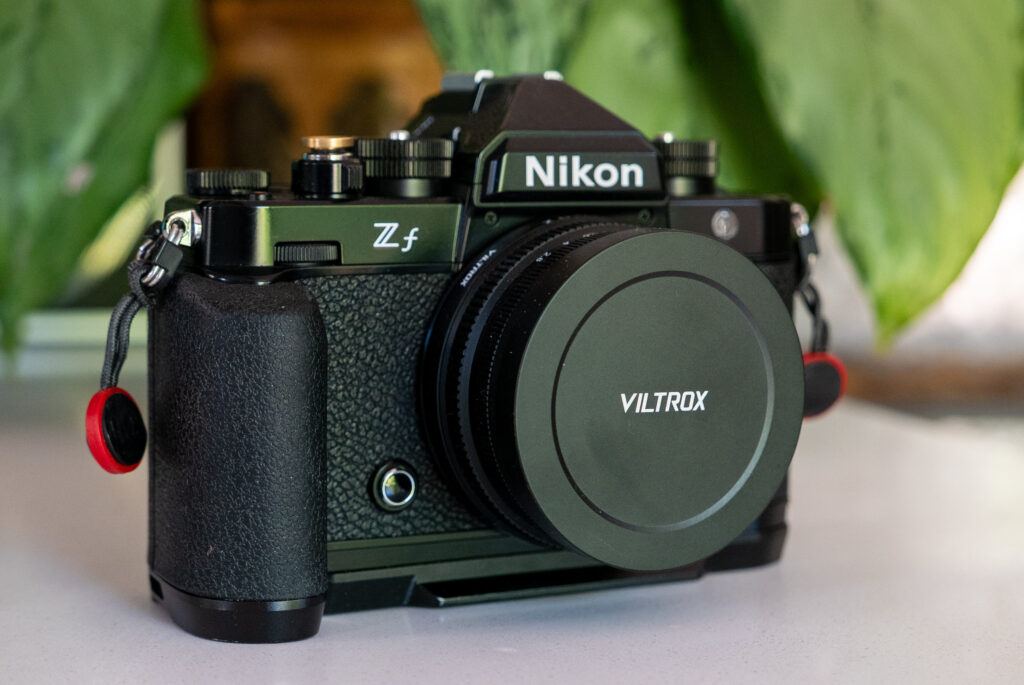
The first thing to say about all this is that as soon as I put the lens on the camera, many of my concerns were – at least temporarily – totally forgotten. The small size, feel of the build and even the look of the thing on camera appealed. On the Zf it looks and feels like the nice and small pancake style lens I had hoped it might. Despite being small, it doesn’t feel odd though – even dangling off the strap around my neck, the camera doesn’t tilt back up at me in the way smaller lenses can on some cameras. It could be argued that it’s an even nicer match to the smaller Z50ii though. This camera came with a tiny little kit lens that really suits the size and shape of the camera – the Viltrox 26mm EVO, though heavier and better built than that kit lens is of a similar size and so feels almost perfectly at home on the camera. I think it might actually look even smarter than the kit lens too!
Build quality
As with the other lenses in this series, the Viltrox 26mm EVO is immediately impressive. The lens mount is metal and has a weather sealing ring to help keep dust and moisture out – though as I’ve said in my other EVO reviews, taking cameras out in the rain always makes me a little uncomfortable so please don’t take my word on how resistant this particular lens is!
The whole main body of the lens is made of metal. Even the focus and aperture control appear to be metal and feel solid in the hand. The only plastic bit is the front face of the lens, though that too feels pretty solid.
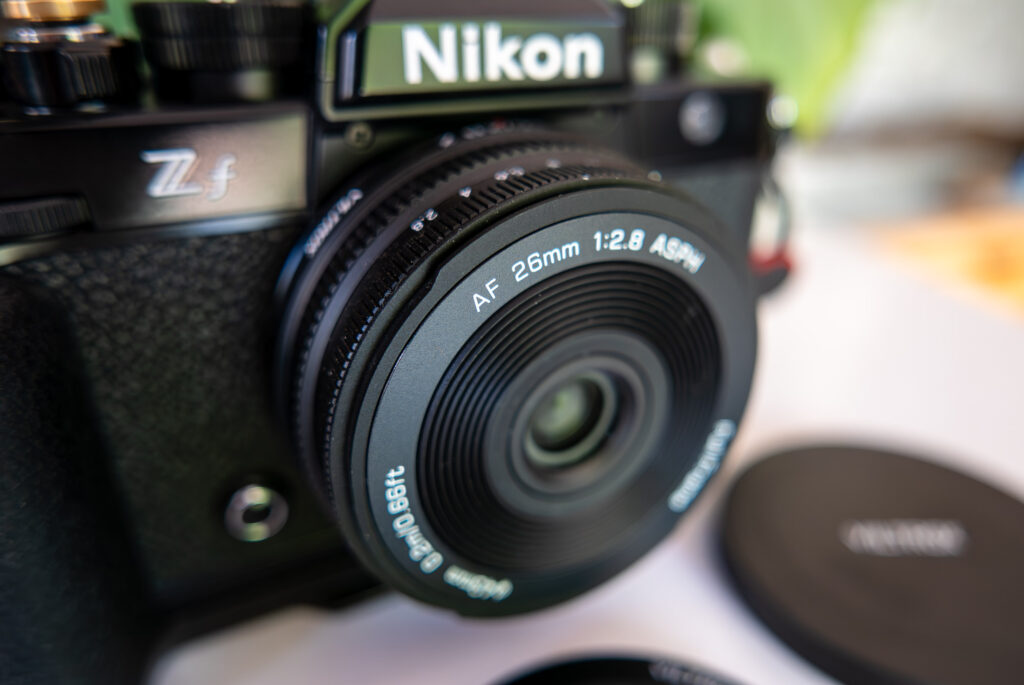
One thing that’s a little unusual is that when focusing close, the whole body of the lens stays the same size aside from a small central part which houses the front elements. When focusing at the closest 20cm distance, this part of the lens pokes out a good few mm. As a result of this, the body of the lens itself doesn’t have a filter thread at all – if it did, the front elements would crash into the back of an attached filter. Instead, the Viltrox 26mm EVO comes with a neat little lens hood with built in filter thread. The hood is attached to the lens with a small bayonet mount, though it also has a magnetic ring in the back of hood which holds it to the lens before the bayonet is engaged.
I quite like this setup as without the thread or filter it keeps the lens feeling and looking as small as possible on the camera. The disadvantage to this is two fold though. First, if you want to mount a filter, you absolutely have to also use the little hood. Second, the filter size is 43mm which is different to the other lenses in the EVO series. With that said, the plastic lens hood is a very nice fit on the camera.
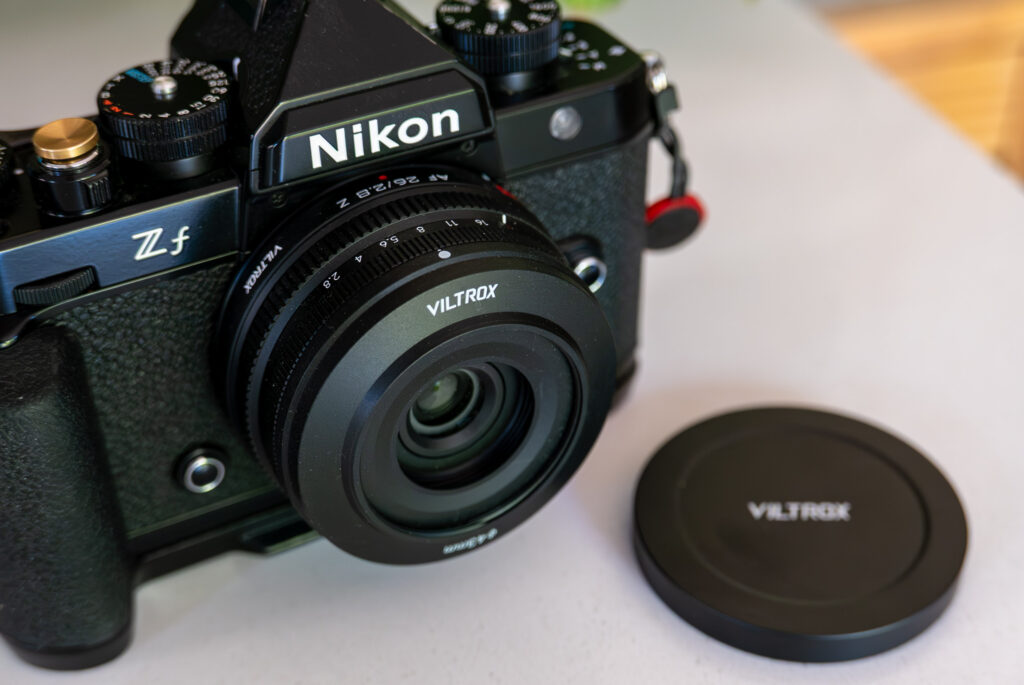
Since there’s no filter thread for a cap to click into, the Viltrox 26mm EVO also comes with a magnetic metal cap. This feels like a pretty ingenious solution to this problem – it also sticks firm to the front of the lens regardless of whether or not the hood is already mounted to the lens. I suspect the magnetic part in the hood plays a part in this.
Features
I must admit, when I first started using it, some of my initial concerns resurfaced. I actually have the same issue with the Nikon 24-70 f/4 – the lack of function button on the lens is frustrating now I have the camera set up to make use of one. Especially as I have now committed to its function as a digital zoom button by making it an FX/DX (crop mode) switch button. Fortunately for the Nikon, it’s a zoom lens, so I tend to just use the lens to zoom and therefore don’t miss it as much. With this little 26mm being a fixed wide-angle lens, this is a function I definitely miss out on by having it mapped to a button that doesn’t exist on this lens.
This is, I appreciate, a “me problem”. I will get to my Nikon Zf review, within which I will talk about the various features I have discovered and hurdles I have overcome. The short version here is that I have had to rethink how I set up the camera to retain the advantage I have found in having the FX/DX switch available. Fortunately, since the camera is so customisable, I am still able to have the lens button work as that switch. I’ve just had to reprogram a different button on the camera too.
It is worth it though. The 26mm focal length crops to a 40mm equivalent. Having a compact lens like this that can work as both 26mm and 40mm for snapshots on the Zf is great. Though the 40mm equivalent drops the resolution of the final image on the Zf, it also crops out the very slightly more problematic corners that this lens suffers from. Which, of course, also slightly adds to the appeal on the Z50ii – but more on all this in a moment.
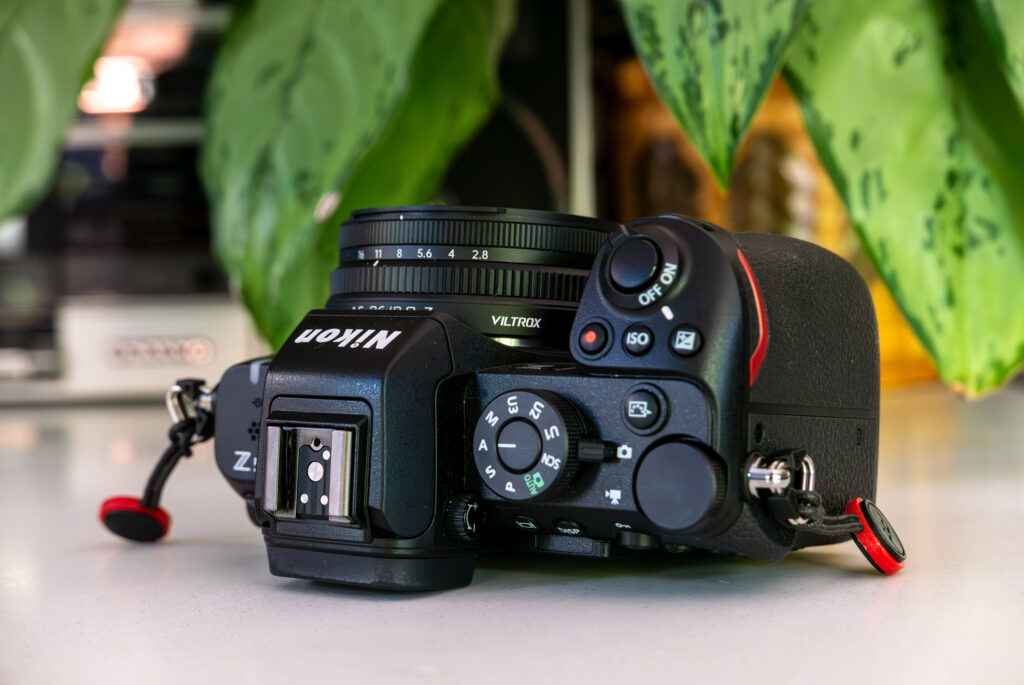
The lack of function button also obviously means a lack of any other lens-based switches. So there’s no de-clicking the aperture, and no AF/MF switching on lens. Fortunately, these are features that I don’t really miss. I prefer a clicked aperture on these types of AF lenses, and I have the camera set up so AF only activates when I press a button on the camera. Turning the manual focus control on the lens brings up the focus distance scale in the viewfinder. Focus peaking also appears with the camera set up this way, so I just don’t need the focus mode switch at all.
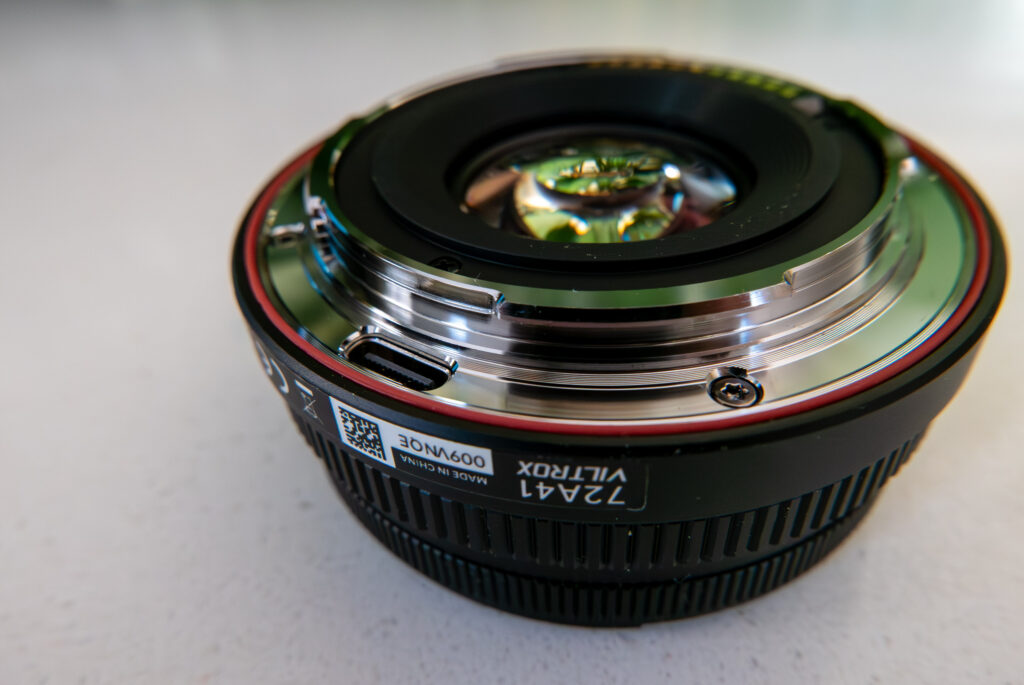
Finally, on the lens mount, there’s also a USB port for updating the firmware in the lens. I have actually seen a couple of firmware updates for other EVO lenses, but I’m yet to try updating one so I can’t comment on the process. It is a nice to have though – I definitely appreciate this potential for future-proofing lenses.
Viltrox 26mm EVO in use
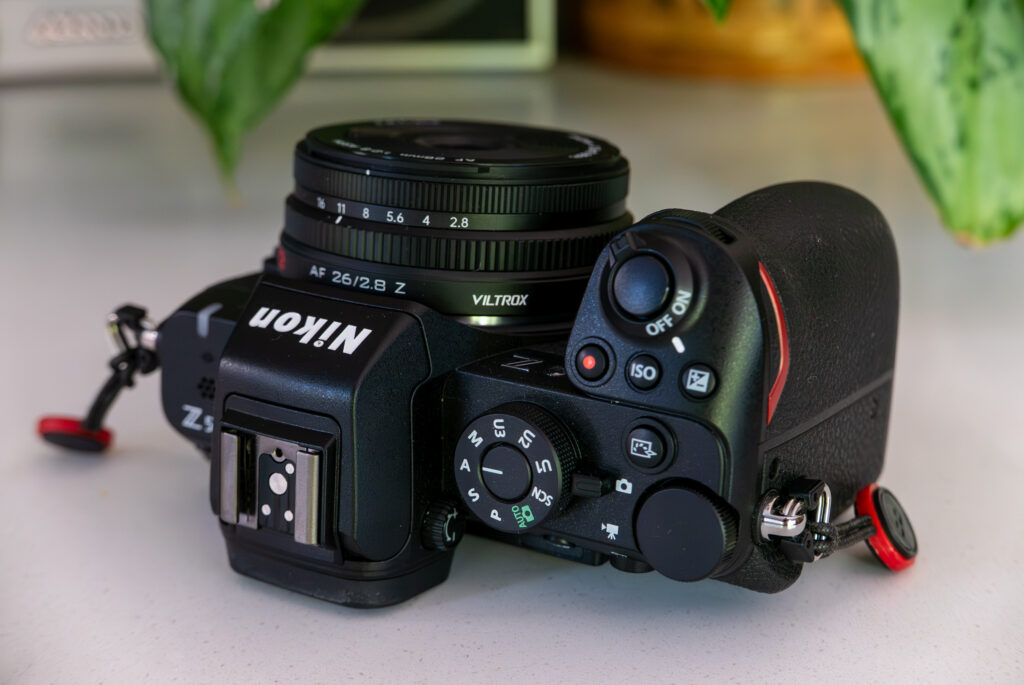
As with all the lenses in the EVO series, the feel of the lens in use is really solid. The aperture control is really nicely clicked with a very smooth action. The focus control feels really smooth too. As with all pancake style lenses, it’s probably fair to say it’s a little more fiddly than lenses with larger controls – I have certainly found reaching for the focus control a little more tricky than on the bigger EVO lenses. I think they made the right choice making the aperture control the bigger and easier to grab of the two though – I have played with the manual focus a bit, but 99.9% of the time, if I am grabbing the lens in use, it’s to change the aperture.
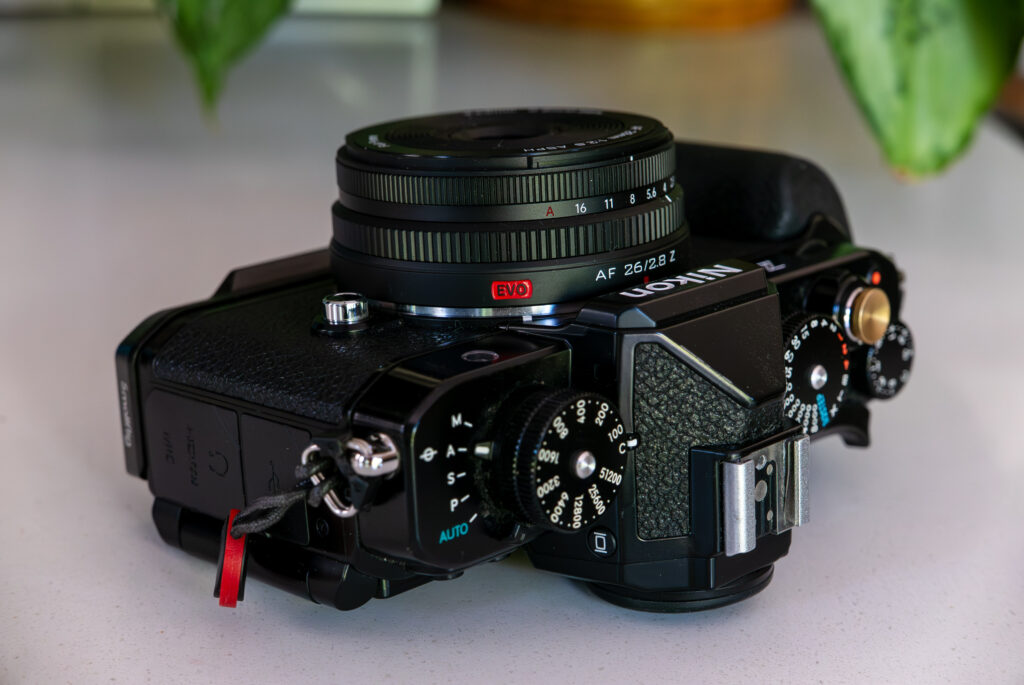
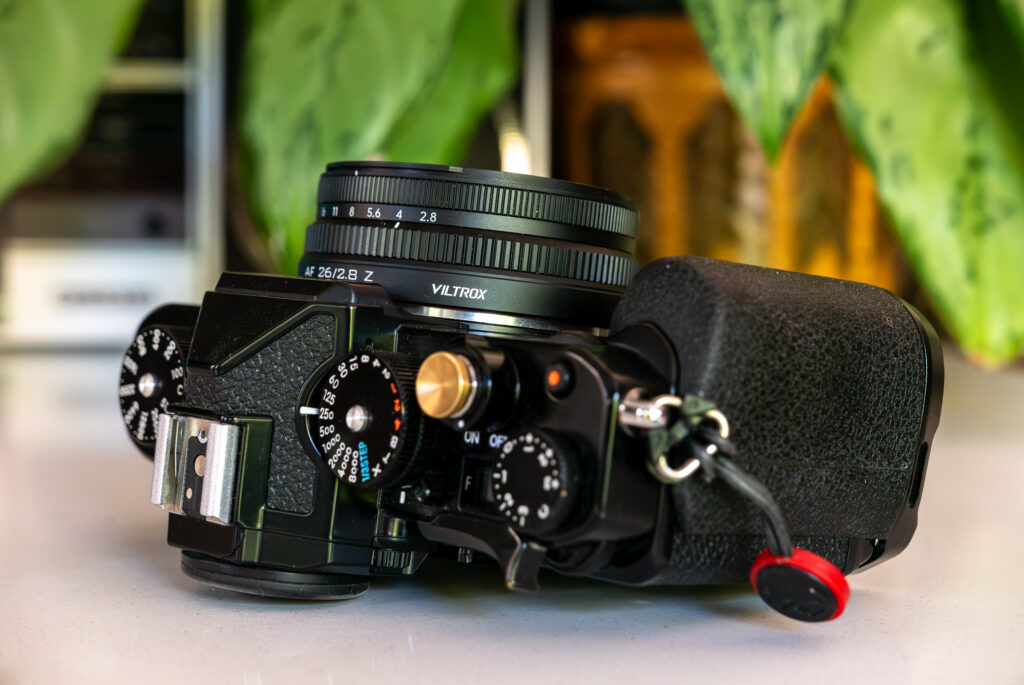
On the subject of the aperture control though, there is one slightly odd thing about the way it works. If you look down at the lens, f/8 is always centred looking up at you with the other readings either side. Rotating the aperture control doesn’t move the aperture dial, it moves a little white marking next to the scale.
I must admit, this felt particularly awkward for a little while – every time I looked at the lens to see the aperture I was set at, I thought it was set to f/8. What was odd, is that to begin with it didn’t even click (pun) that there was something different about how the control was laid out, it just sort of felt wrong on a subconscious level. I think for the most part I rely on the aperture readout in the viewfinder and often change the setting with my eye to the camera, so on the occasion I did look at the lens, it just jarred. Anyway, this is largely meaningless waffle – all you really need to be aware of is that it’s not quite conventional. Now I’ve realised how it works, I’m totally used to it and don’t notice the difference in use, and that’s all that really matters longer term.
Focusing speed
Testing the focusing speed on the Viltrox 26mm EVO has made me think a little differently about wide angle lenses and autofocus, especially in the context of features like face detection. I’ve found that the face detection, especially on the Zf where this is a particularly wide angle lens isn’t quite as effective. I’ve most noticed this when trying to test the lens with the dog running toward me as I have been with other AF lenses recently. I think this is just a matter of the subject, i.e. the dog, being much smaller in the frame until he gets closer to the camera so the camera itself isn’t so readily locking on. That said, some of this might possibly be speculation born out of my relative ignorance in this area.
One way or another I have found these two contradictory statements to be true: 1, the AF seems pretty fast and capable of locking onto subjects both moving and stationary pretty well – maybe not as well as the other lenses in the EVO range, but not all that far off. 2, when trying to photograph my dog running toward the camera as I have done with previous EVO lenses, I haven’t had as much success. Overall though, I’ve not been too dissatisfied at all – in real use, where I haven’t been trying to “test” the lens, the AF hasn’t often fallen short – perhaps the odd miss, and occasionally bit of jittery hunting, but nothing that’s left me frustrated or particularly strongly questioning the lens’s capabilities. It’s only when I have attempted a specifically difficult test of capabilities that I have run into any sort of perceived and specific limitation.
In short, I probably let just need a bit more time to get to grips with it. I wanted to get this review out for launch day, so haven’t had a huge amount of time. I shall try and update the review with more thoughts down the line – but if you’re reading this and I haven’t, please feel free to ask me for more thoughts in the comments below.
Optical qualities
Reviewing the other EVO lenses has so far been something of an exercise in really pushing myself to find anything to say at beyond highlighting an almost total lack of flaws. This is obviously great for the lenses, but pretty dull for the reviewing process. Fortunately, or well, unfortunately, there’s more to talk about here – though, erm, fortunately again there’s nothing that I think feels like anything close to a total deal breaker, for me at least.
Sharpness and contrast
The Viltrox 26mm EVO is a sharp lens. I don’t want what I’m about to say to be taken out of proportion. For my money, and use case, I would be very surprised if I ever felt it falling short in real life use.

With that said, on the Zf (full frame) the corners do seem to get a tiny bit soft when shot wide open. As is to be expected, stopping down definitely helps a lot. Where I have noticed this is within the woods near my house, which has become my most commonly used testing ground for lenses. There is a convenience factor for me here as I walk in these woods daily, but actually these sorts of conditions are great for showing up flaws like corner softness. For eg, shooting wide open, I can see some smearing to leaves in the upper corners of the frame.

Outside of this situation, I haven’t really noticed the softness at all. What I’m trying to say here is that if you shoot either flat subjects or wider-open where there is a desire for critically focused detail into the corners, you might notice this. For photography where high performance all the way to the corners isn’t as absolutley critical, it doesn’t feel like a problem I would put any thought to at all. Of course, if you’re shooting the lens on an APSc format camera, the corner softness is cropped out.
Contrast and colours are great too. I have noticed in a few frames focused closer up where there’s been a little bit of a drop in contrast, but nothing too serious and nothing particularly problematic to overcome in Lightroom later.

This is also a lens that seems to be capable of a good bit of 3D pop, though I have noticed this more when stopped down slightly.

Bokeh
The bokeh from this lens is actually pretty great! Being a 26mm 2.8 we are really only talking about closer-up shots where bokeh becomes a prominent feature of the image anyway. In these sorts of circumstances, there is only just the slightest hint of busyness to the rendering – which as I have mentioned in previous EVO reviews is a preference of mine anyway.


With the subject further away, the subtle out of focus rendering seems to be a little calmer too – or at least at normal viewing distances it’s much less discernible. Overall, I would say the bokeh is actually pretty objectively/conventionally good!

Flare
Every EVO lens so far has wobbled under flare-testing and the 26mm is no exception. In fact, I think it might be the worst, or at least most extreme, of the bunch when it comes to flare. Unfortunately this doesn’t seem to be solved when using the hood either, or at least not completely.

The issue occurs with the light source just outside the edge of the frame. Catch it just right and you can find yourself with a bloom of flare that’s quite hard – even for me – to write off as a potentially endearing character trait. Fortunately, a slight adjustment of framing helps remove the bloom, though some artefacts of the issue including an occasional bit of ghosting and some veiling flare can still remain.
A better way to solve the problem is to use a hand to block the source of light from causing flare. I’ve found this isn’t always that easy or possible with wide angle lenses, but it is with this one. Here’s an example where I forces the issue and then completely remedied it with my hand shielding the lens.


Another positive is that this is still just an issue with very bright sources of light, eg the Sun. Unlike the tiny Viltrox 28mm which would veil out given essentially any light source, the 26mm EVO is largely unaffected and easily worked around.

Vignetting
Not much – nothing I’ve really noticed. A shame in some ways for me, but those who it bothers will be pleased.
Other aberrations
The 35mm and 55mm EVO lenses gained an APO designation in their nomenclature. The 85mm also arguably deserved such designation too. Unfortunately, the Viltrox 26mm EVO falls very slightly short in this area. Though definitely sharp, there seems to be a very slight issue with colour fringing into the softer corners when shot wide open. Nothing too dramatic, but pixel peep in the corners of shots taken in the woods and a bit of fringing can definitely be seen. This can be seen in the photo shot in my local woods above. I’ve not really noticed much in the way of distortion.
Viltrox 26mm EVO – Overall Character
I think it’s fair to say that the overall character of the Viltrox 26mm EVO isn’t quite as near-unquestionably spectacular as the other lenses in the EVO series. There’s also a slight departure from what I see as the house character traits of the series so far (or at least the ones I have tried). The rest in the series have near perfect sharpness into the corners which comes with a pretty impressive lack of colour aberrations. Bokeh isn’t perfect, but has an ever so slightly busy nature. They all vignette a bit too.
The 26mm isn’t as sharp all the way into the corners (on full frame at least), and does have a small amount of colour aberrations. Bokeh is possibly slightly smoother than the other EVOs and it doesn’t seem to vignette. Where all these lenses share some similarity is in the fact that they all flare a little. The 26mm seems to suffer the most from flare too, though it is fixable with a hand held in the right place to block the light source.
Whilst it perhaps doesn’t perfectly fit the series in terms of optical characteristics, there really is not a great deal of difference. I think I’m being picky just to illustrate a point really. For normal day to day shooting, for the average photographer looking for a compact EDC type of lens, there’s really very little to complain about. It’s certainly leagues ahead of the 28mm 4.5.
More Viltrox 26mm EVO photos


Final thoughts
What’s odd about the Viltrox 26mm EVO is actually nothing to do with the lens as such, instead it’s a branding issue. I find it a little odd that Viltrox have put this lens under the EVO sub brand. Every other lens in the series looks the same, is the same size and has the same set of features. As such, my personal expectations, at least before opening the email attachment from Viltrox, were set somewhere else. Of course, anyone else looking to buy this lens isn’t going to go through that same mental process as me. Regardless, it is still a very different lens to the other EVO lenses, with its smaller size, different feature set, different filter thread size and subtly different optical characteristics. Is this gong to make much difference in real terms though? Well, no, probably not – if I were Viltrox, I might just have called it an EVO-P (for pancake) to give it a bit of differentiation from the rest.
My pickiness around the nomenclature aside, I’m very pleased with the Viltrox 26mm EVO lens. Optically, it’s great – as outlined above, it’s not quite as near-perfect as the other EVOs I have tried, but the issues really are very minor in the grand scheme of things. It’s small, but feels well built. Its very well suited to full frame cameras as a small everyday carry lens, especially if you’re happy to switch between full frame and cropped formats on the camera. On a dedicated crop format camera the 40mm equivalent focal length is again great for everyday carry snaps, and the small size of the lens suits the smaller cameras really well too! The hood, cap and lens filter situation is a little idiosyncratic, but is totally workable in normal use. And normal use is definitely something the Viltrox 26mm EVO is going to get from me – I have been carrying it a lot on the Zf, and I can see it getting a lot more use in the Z50ii too! Another Nikon lens I don’t need to buy; another Viltrox win!
Viltrox 26mm EVO is available for Sony FE and Nikon Z Mounts for 299USD / 319EUR / 279GBP / 420CAD / 52800JPY
It can be bought with a little bit of a discount from Viltrox here (affiliate link)
Share this post:



Comments
Gary Smith on Viltrox 26mm 2.8 EVO Review – A New Autofocus Pancake Wide Lens
Comment posted: 15/07/2026
Very nice shots - did you edit these from RAW or are these Vivid jpg's SOOC?