

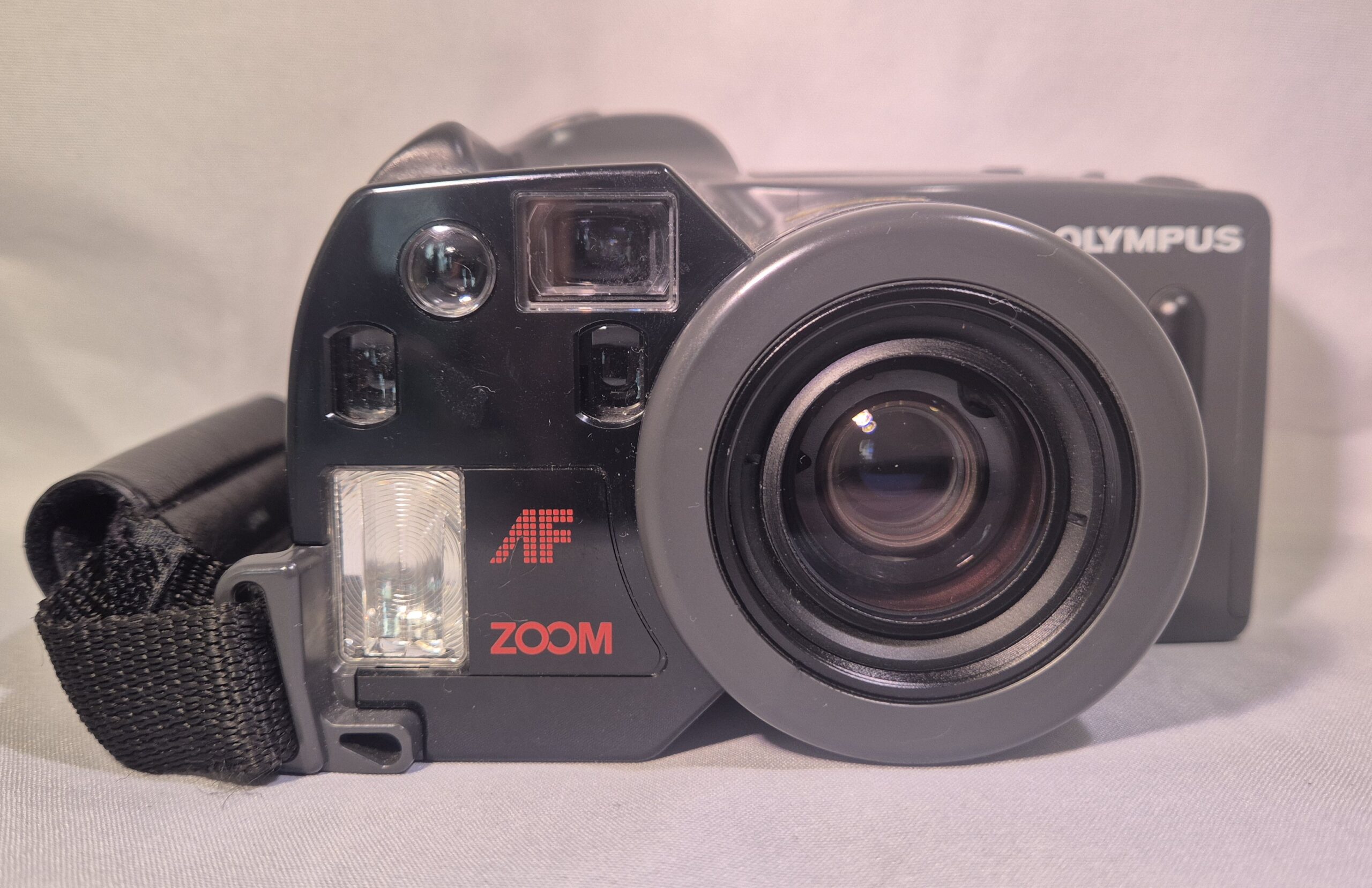
“Before you even touch this camera, you are going to want to own it…”
I seem to be drawn to the quirk currently. That’s not a bad thing and as far as I know there are, as yet, no laws against it. If there were, my choice of the Olympus AZ-300 as the third of my instalments in this series would almost certainly lead to a criminal record.
Looking every inch like a camcorder, this ‘beauty’ (eye of the beholder, and all that) was released in 1988. The quote at the top of this article opens the US TV advert from the time (in the UK, we had the inimitable George Cole alongside David Bailey), and the print advert claimed, ‘A new species of camera captures the world’s imagination’. It is certainly like no other camera I have seen.
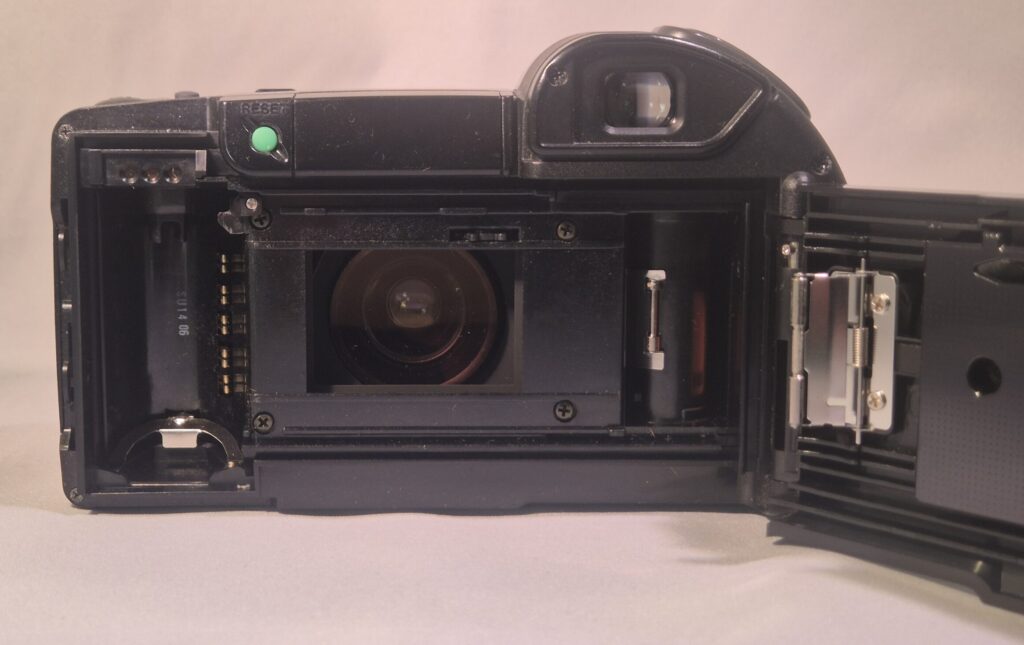
It is a fully automatic camera, and once again I was relieved that the ISO defaults to 100 for non-DX coded film, suiting my choice of Ilford FP4 Type 517. Loading is easy and entails simply pulling the film across the back of the camera and closing the back.
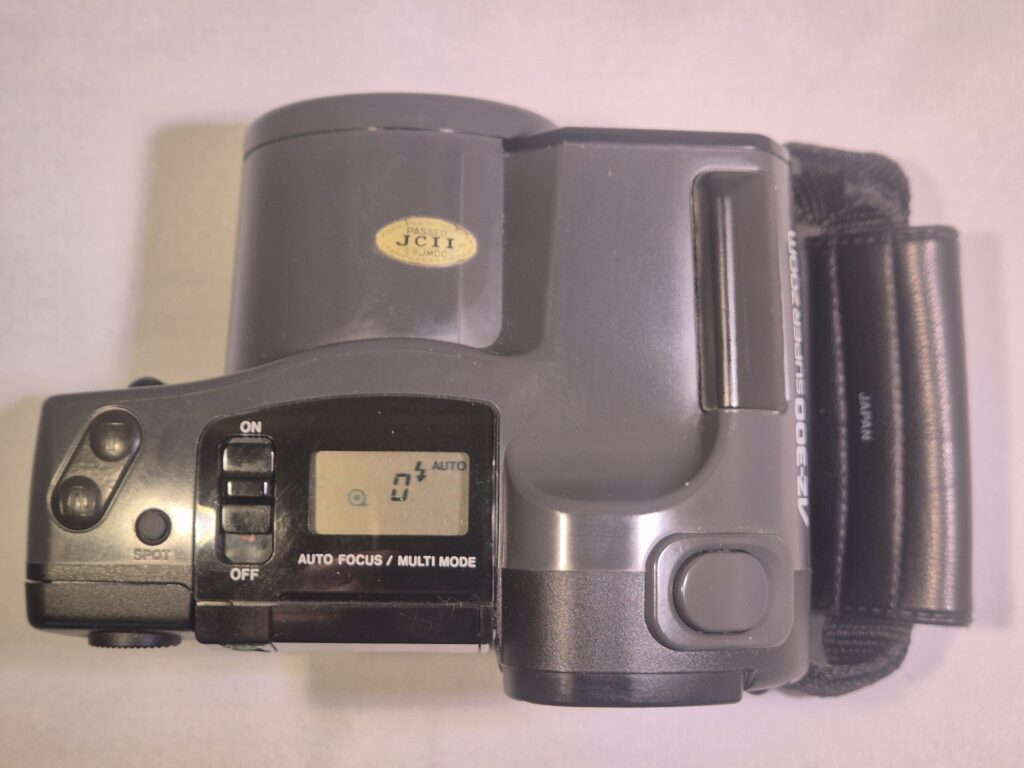
The majority of the minimal controls are on top of the Olympus AZ-300 and as you slide your hand under the strap to the right of the body, the index finger falls naturally onto the shutter release. The zoom controls are on the left, along with the spot metering button. In the middle of the camera are the on/off switch and an LCD screen.
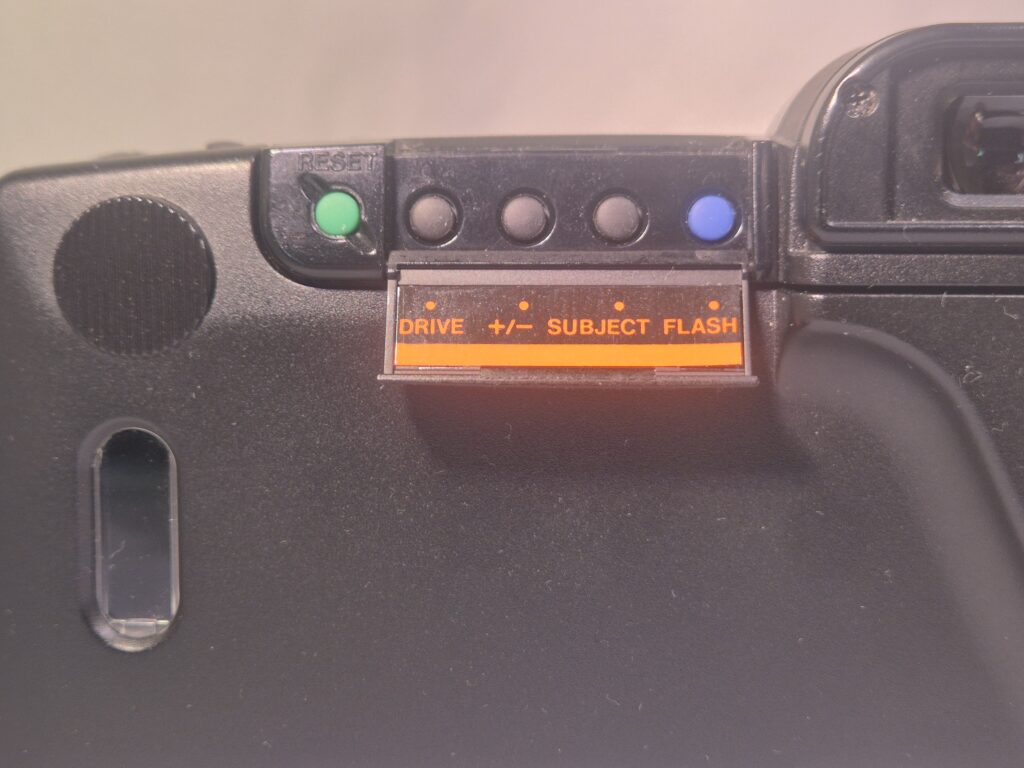
Just behind the screen is a pull-down door, which accesses further controls: drive mode (single, continuous (1.5 fps) timer and double-exposure); exposure compensation (+/- 1.5 EV in 0.5 increments); subject (macro, portrait, full body and infinity); and flash (off, fill-in and auto). I’m very disappointed with myself that I omitted to try the double-exposure mode and once again my propensity for self-flagellation reared its very ugly head; I had to remind myself why I’m undertaking this project – not for the first time, and probably not for the last. Focus, clarity, perspective, being in the moment… remember your therapy, Niall!
The lens is 38mm to 105mm and is the first autofocus to zoom beyond 100mm. It has 12 elements in 11 groups. It had an RRP of $320, which was approximately £180, although I cannot find any information on the UK RRP.
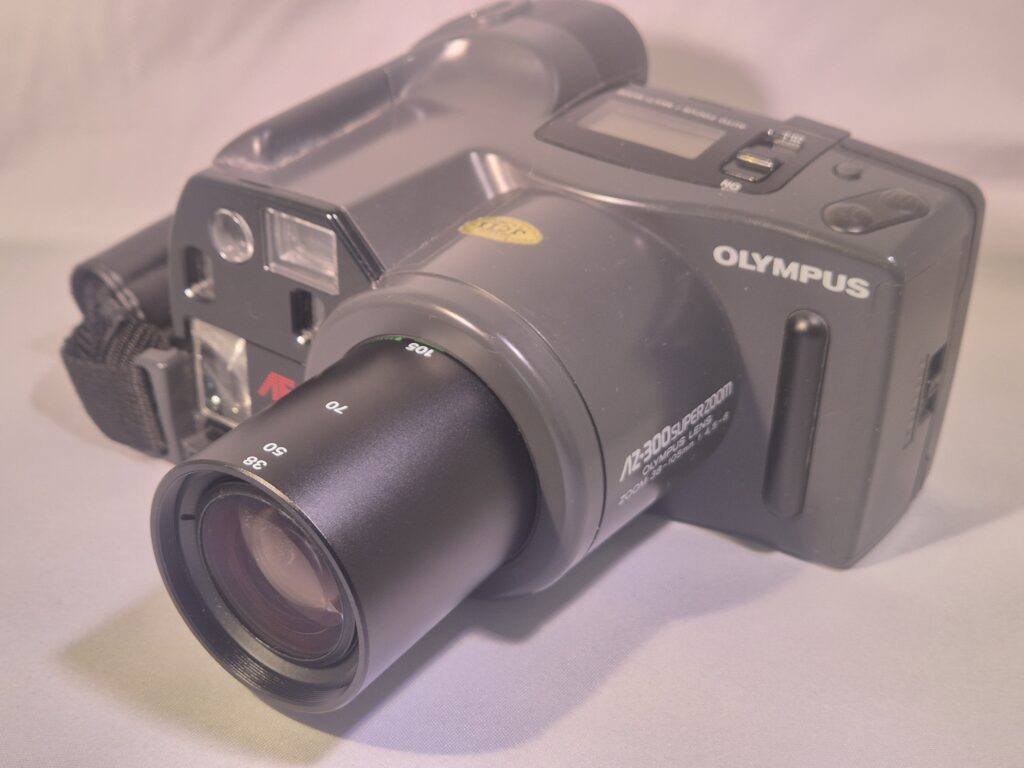
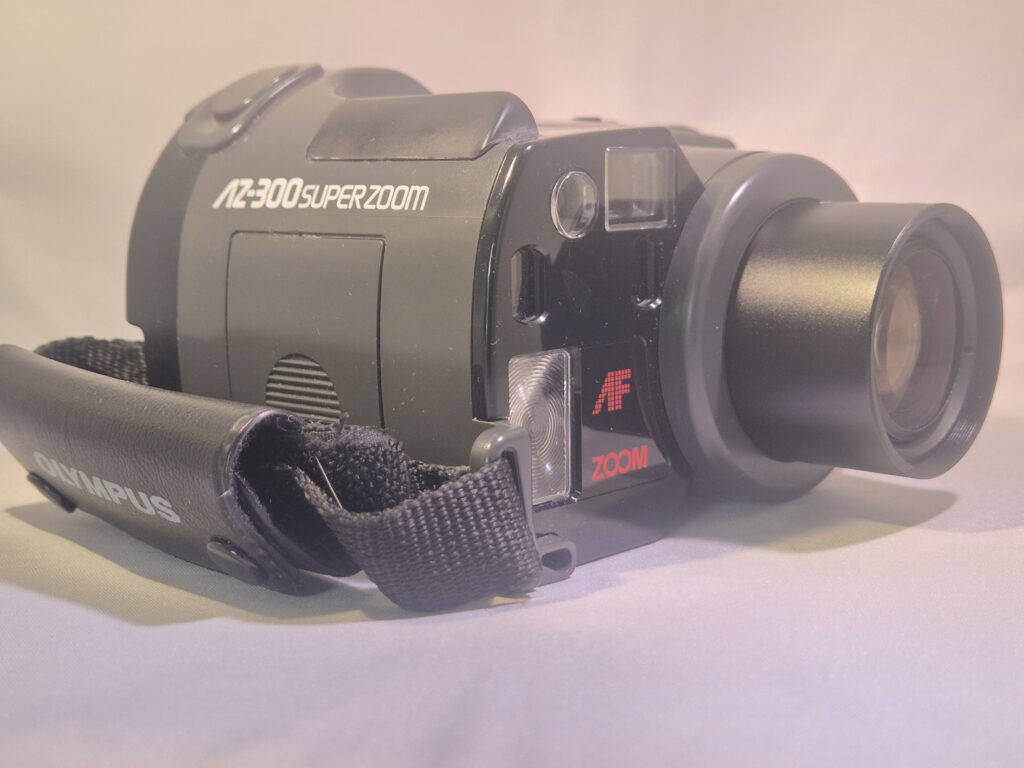
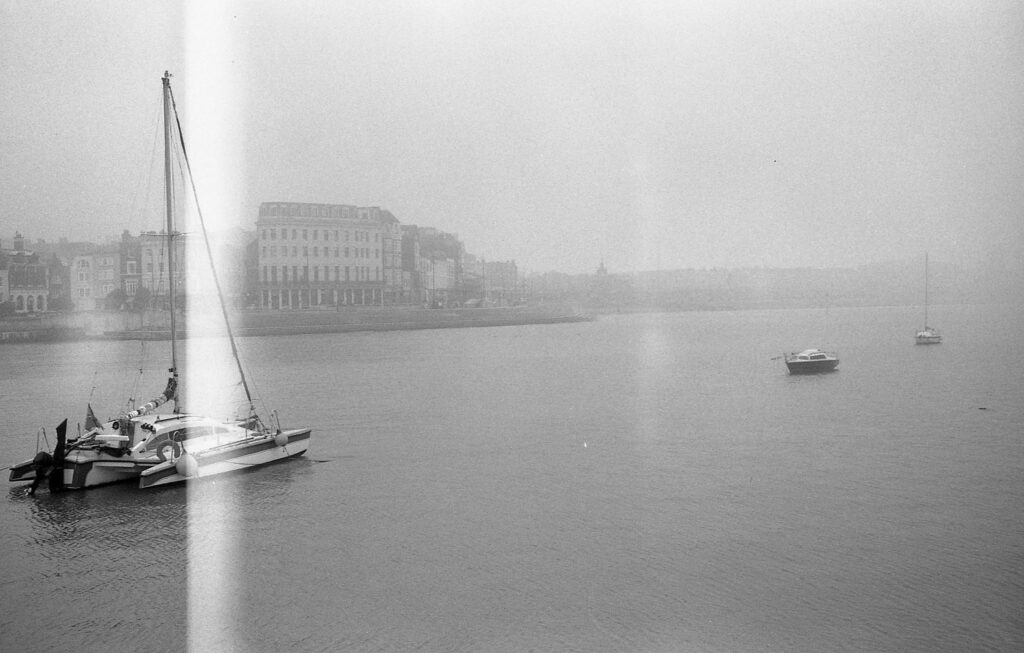
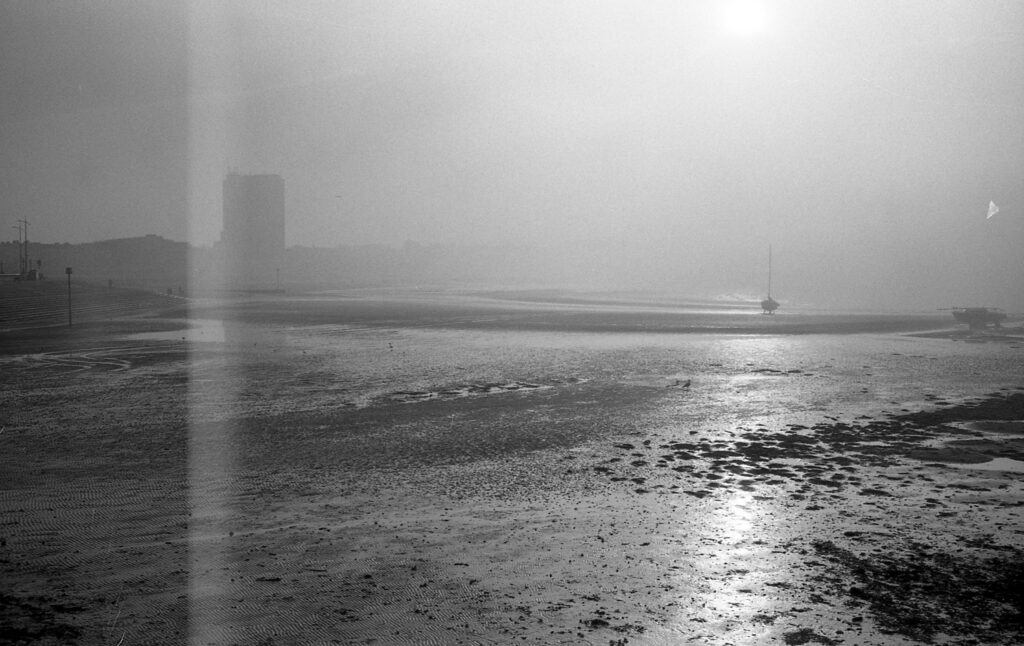
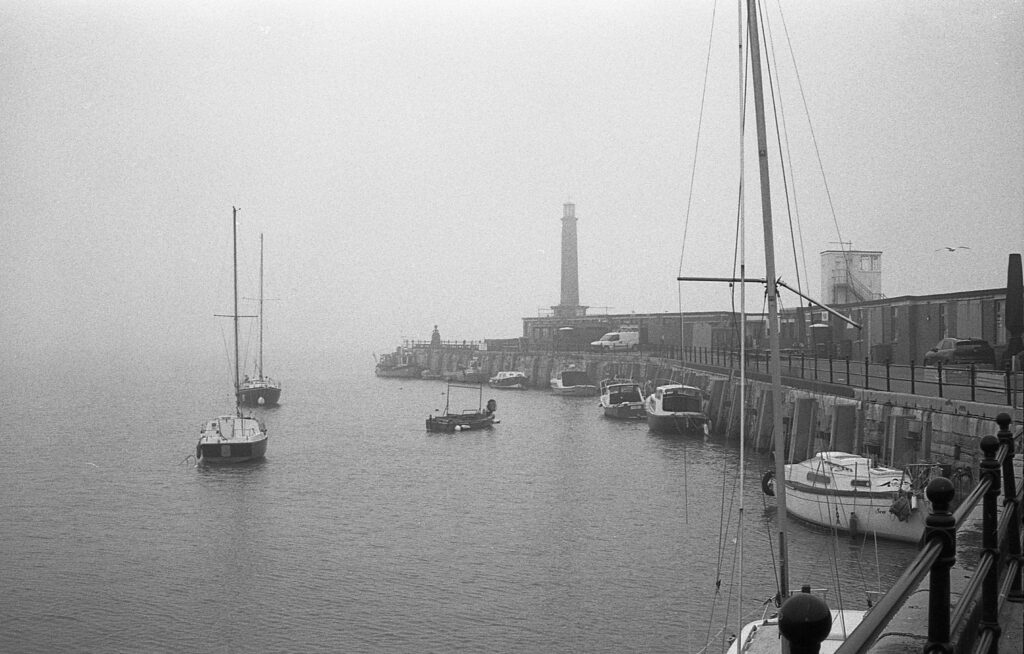
I am currently still signed off work and, whilst this in itself has caused me a lot of anxiety (what will my colleagues think of me? How can I justify being paid and not working? Get off yer lazy backside, Keohane! Those kind of thoughts…), it has given me time to work on my recovery and one part of this was visiting my family in Kent in early March. The Isle of Thanet offers us the opportunity to escape the sometimes oppressiveness of the city, and enjoying the vastness of the sea, enjoying what we refer to as a ‘big sky’, being daft with my family… all of this is balm to the soul. Of course, the Olympus made the trip with us (but not the Olympus Trip. Groan), and I ended up shooting the whole roll in one very foggy day.
I’m mightily relieved that I have some images to share with you, as I had what can be politely described as ‘a bit of a mishap’; this isn’t quite how I described it at the time. I was developing a second roll of Type 517 from my Nikon f801s at the same time, and foolishly tried to use a developing reel with which I am unfamiliar for the film from the Olympus. To say I struggled to load it is an understatement, and as I messed around inside the dark bag the air in my kitchen was turned a heavy shade of blue, bringing my wife in to see what was going on. “You always struggle with that,” she helpfully said. I don’t, but sometimes did when I first started developing film, and she seems to think that every time I load a film now I am doing battle with inner-demons. On this occasion she was correct, and I really must buy another AP self-feed reel.
For all my efforts, I was unable to fully load the film onto the reel and ended up just rolling the last part around the reel and shoving it in the tank. Hoping for the best was the order of the day.
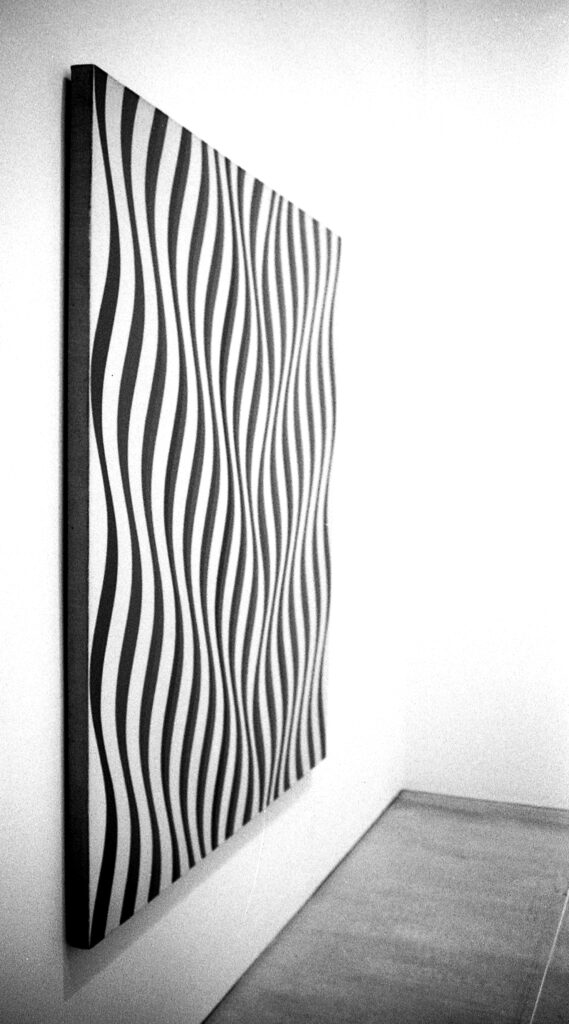
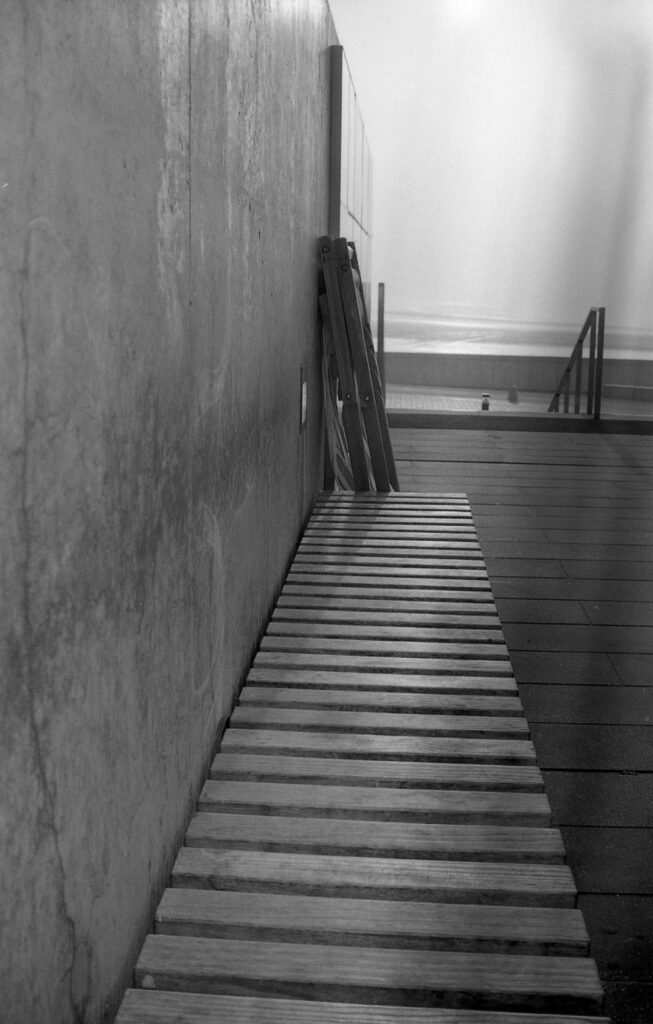
We always try to visit The Turner Gallery when we are in Margate and I was delighted to find that there was a Bridget Riley exhibition running. I was quite excited by the idea of shooting art that is so intrinsically linked with colour in black and white, to slightly subvert her statement that ‘colour is the proper means for what I want to do…’ Before visiting this show, however, I was equally delighted to find two magnificent Simone Leigh sculptures in the Sunley Gallery, Untitled and Bisi.
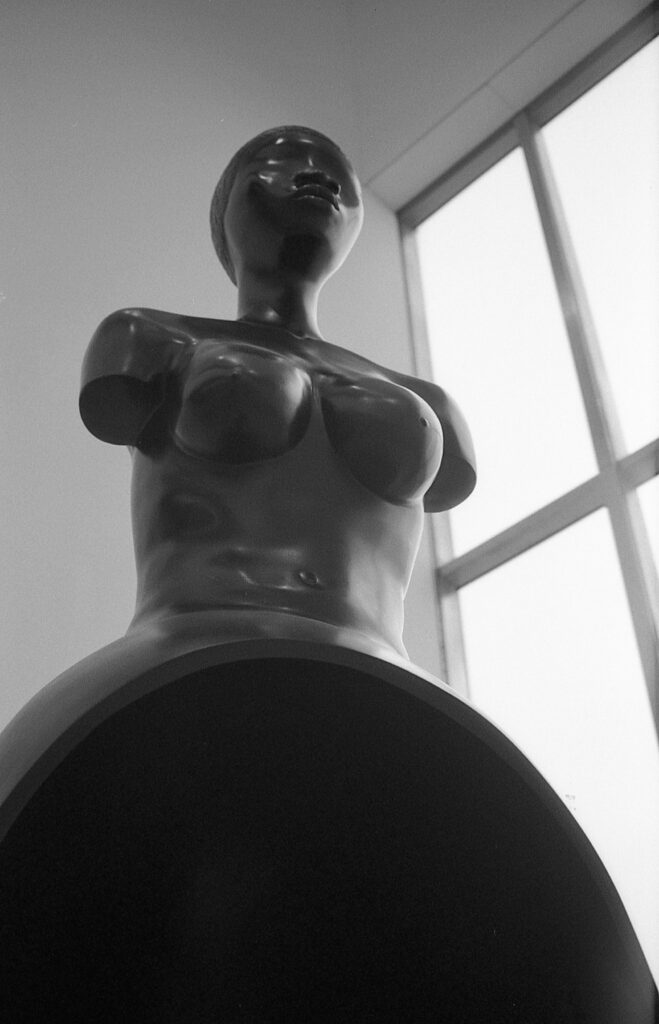
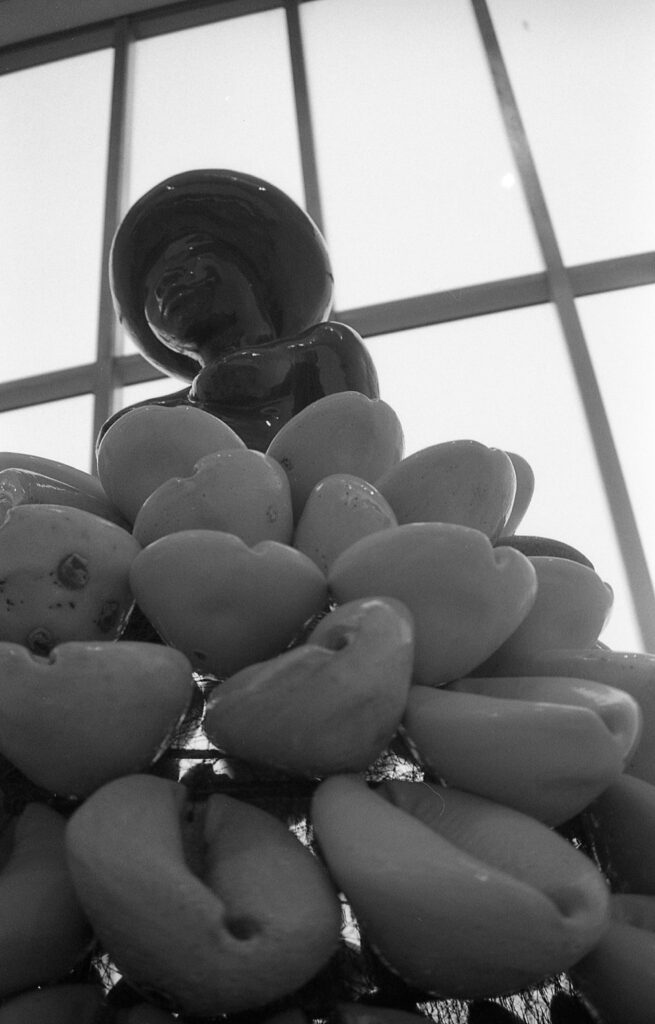
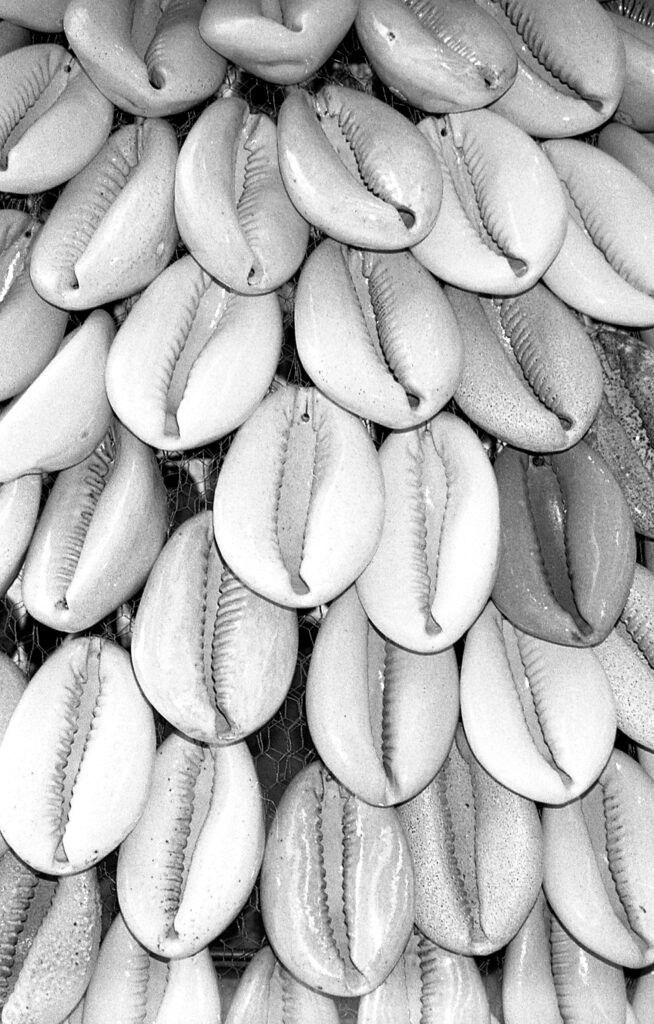
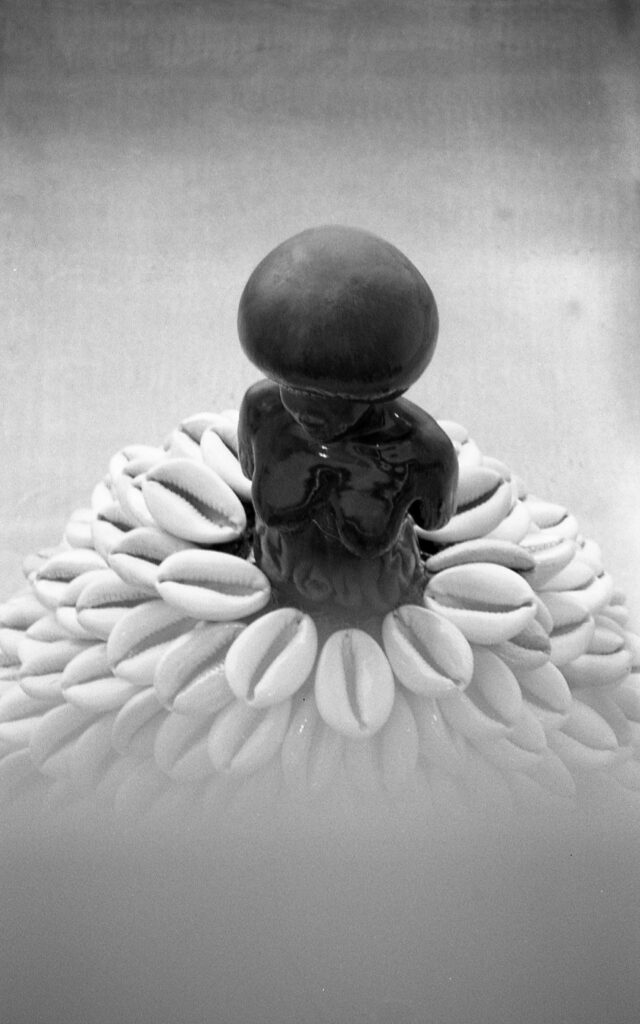
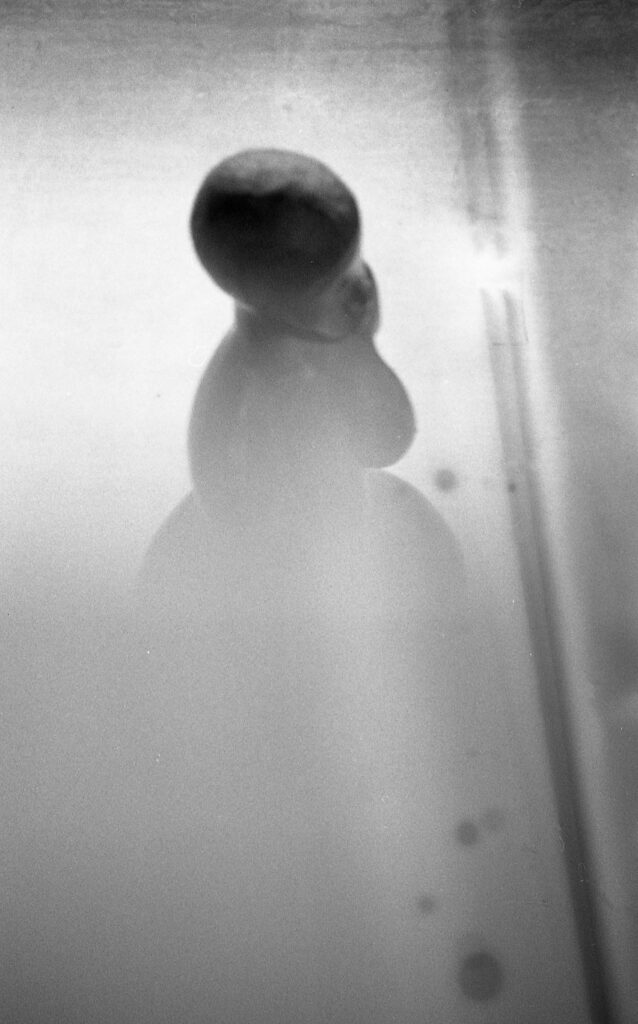
I took a few shots around the gallery before heading into the Bridget Riley exhibition.
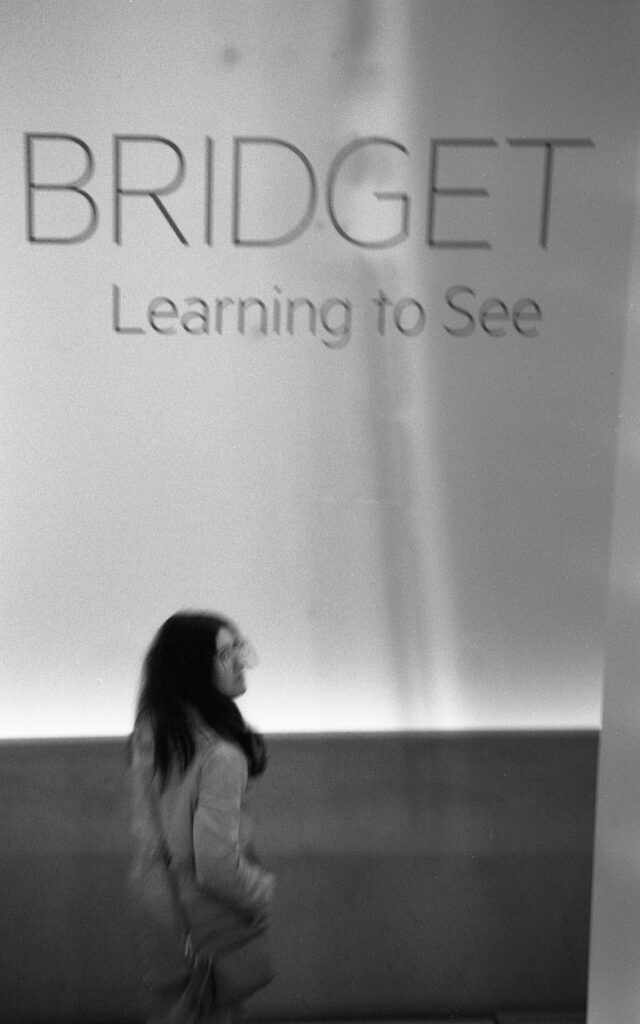
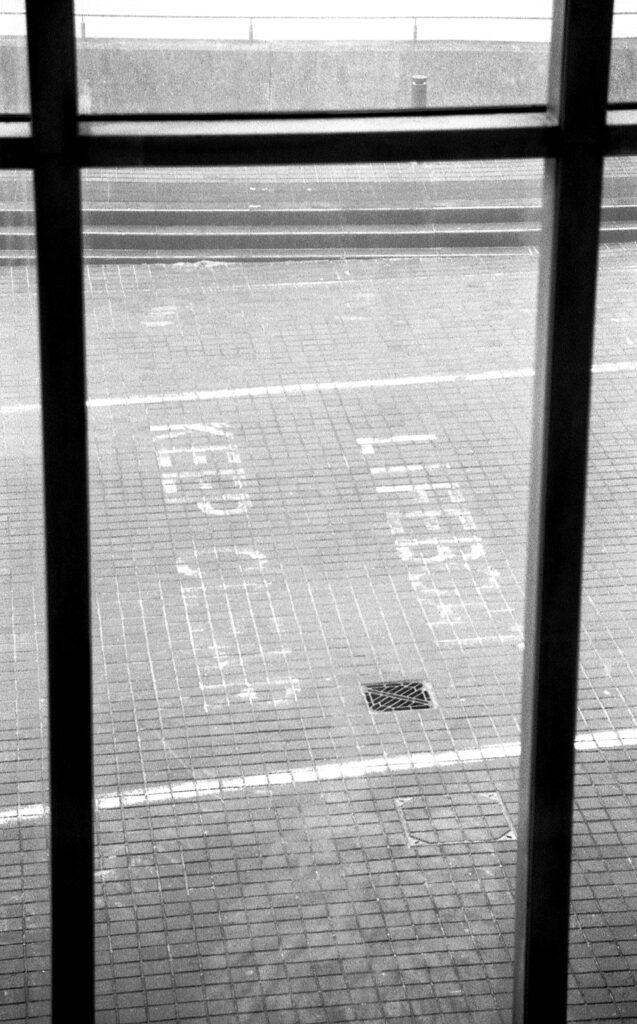
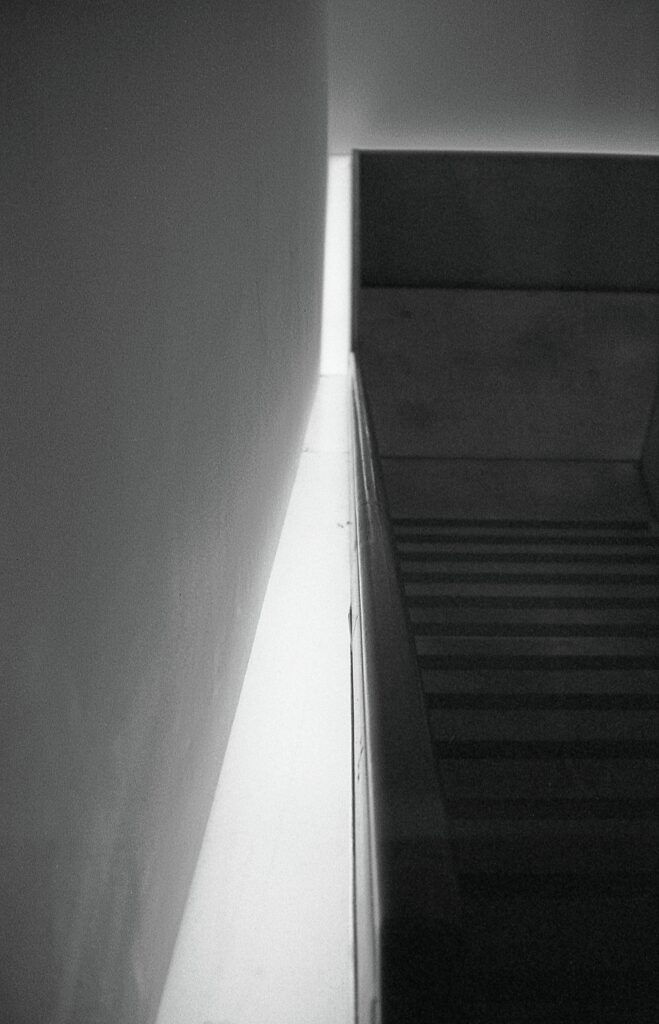
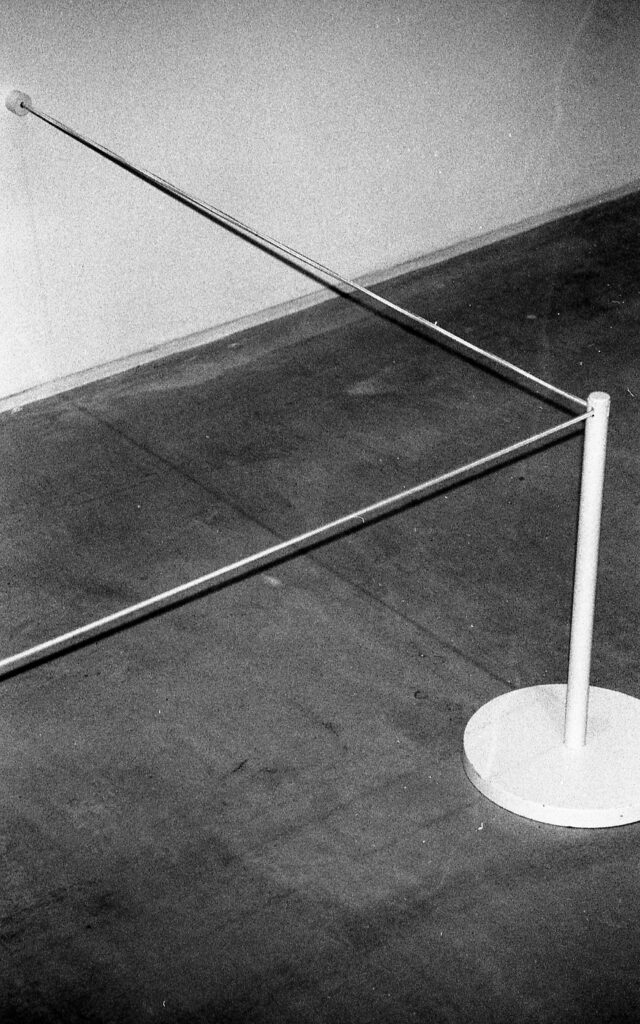
The exhibition I thought excellent, and Bridget Riley’s work often seemed 3D. I quite like the works in black and white and feel they offer another dimension to her art.
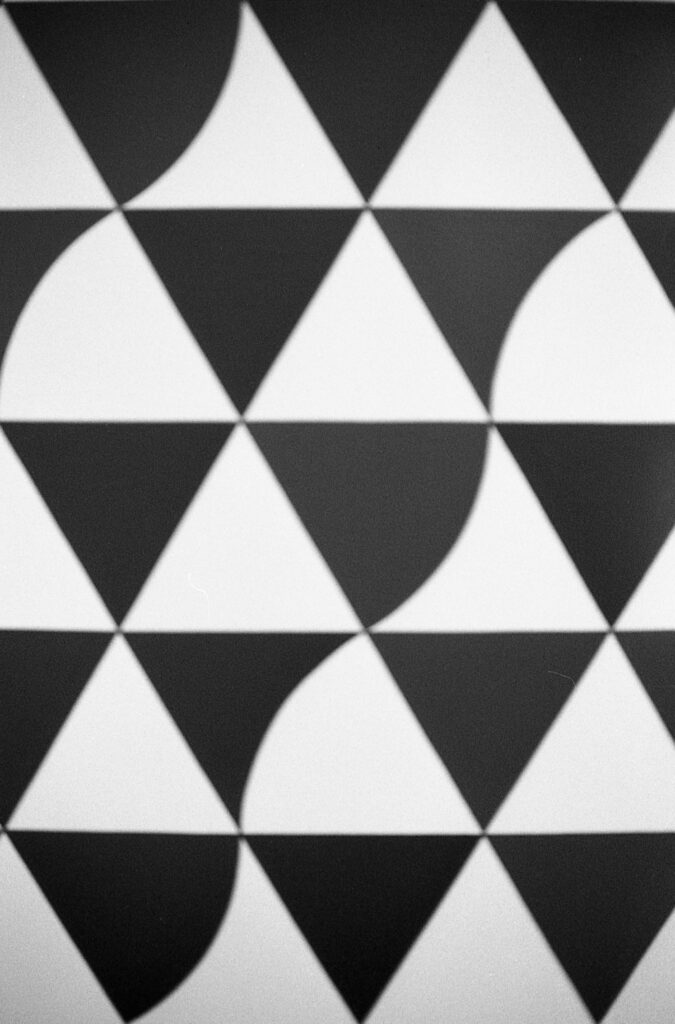
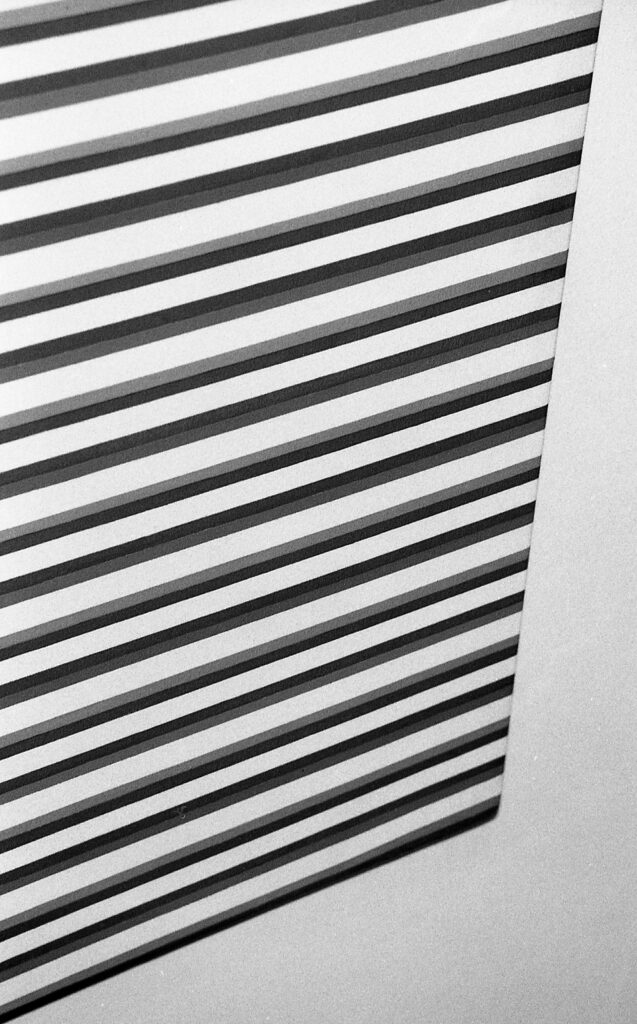
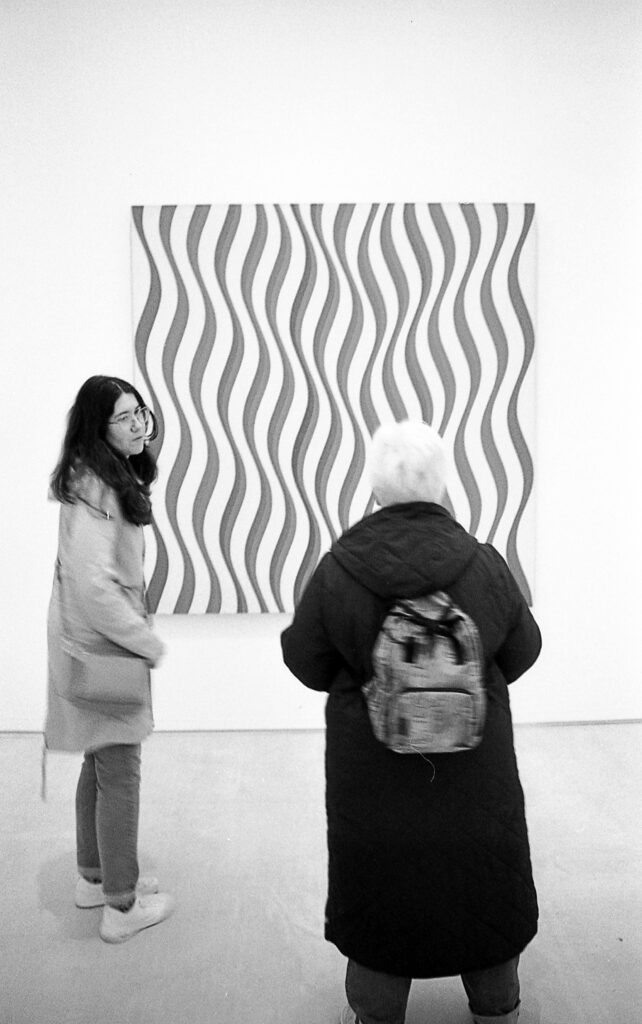
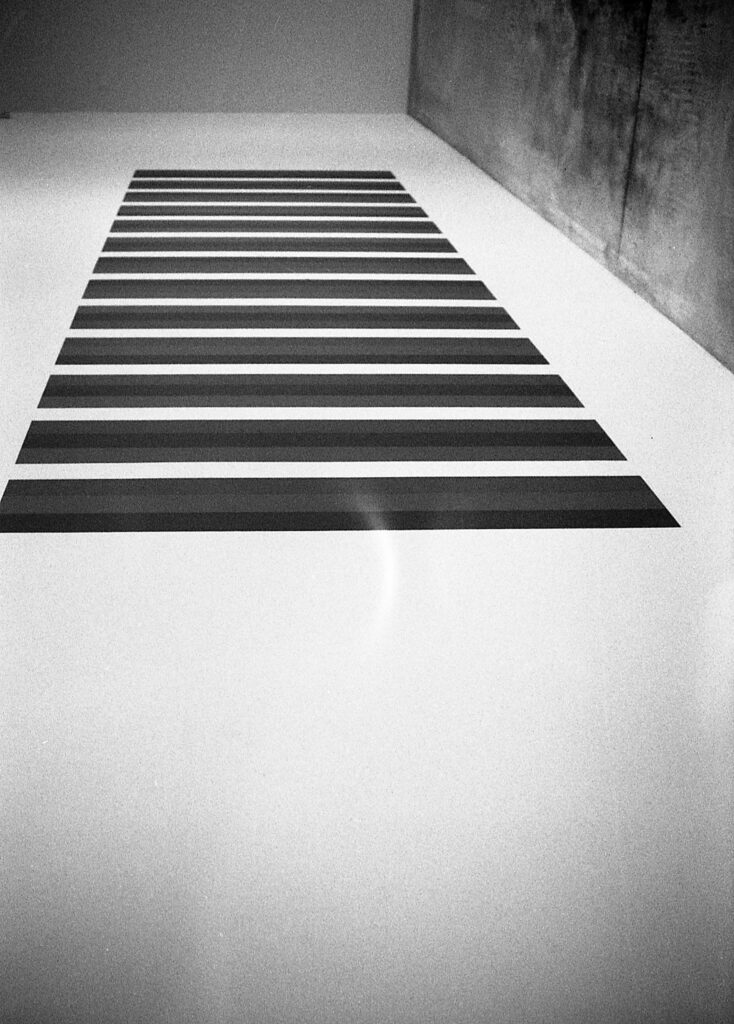
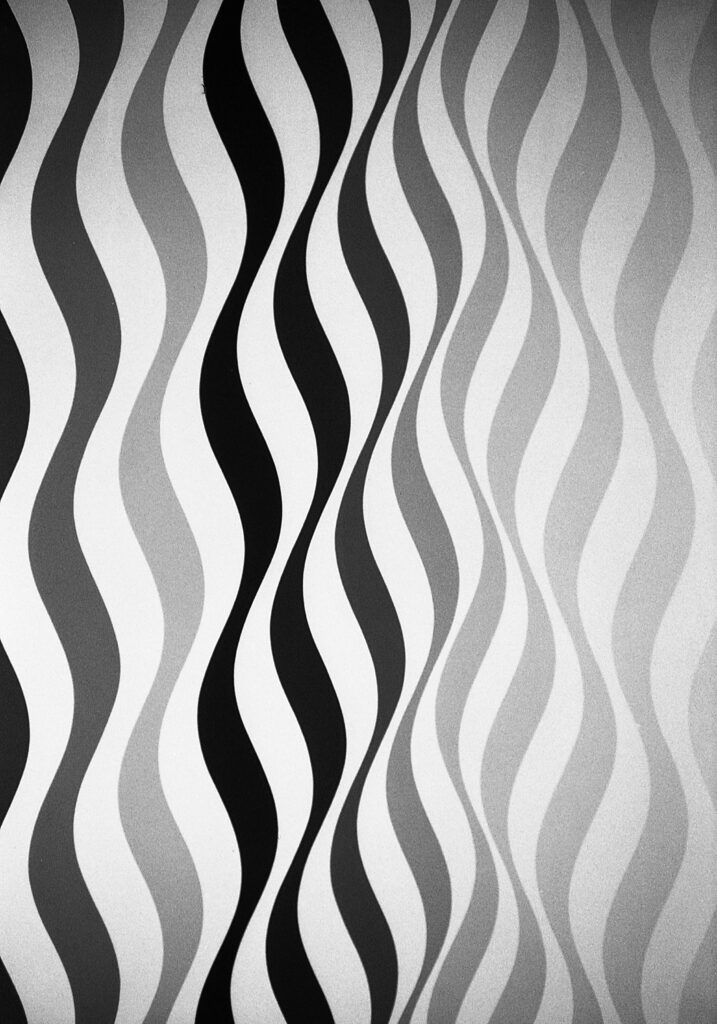
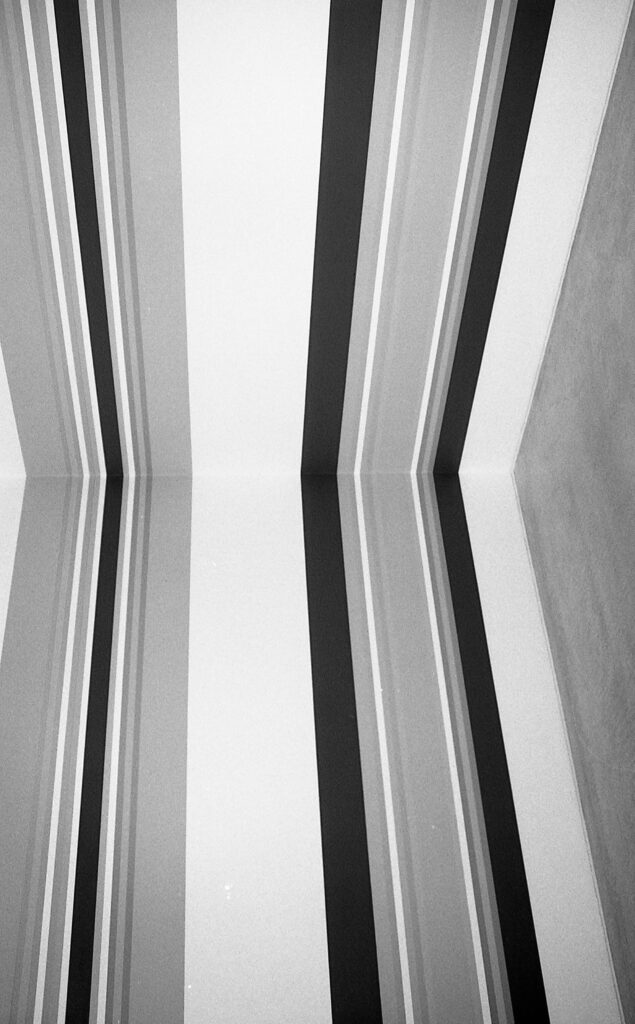
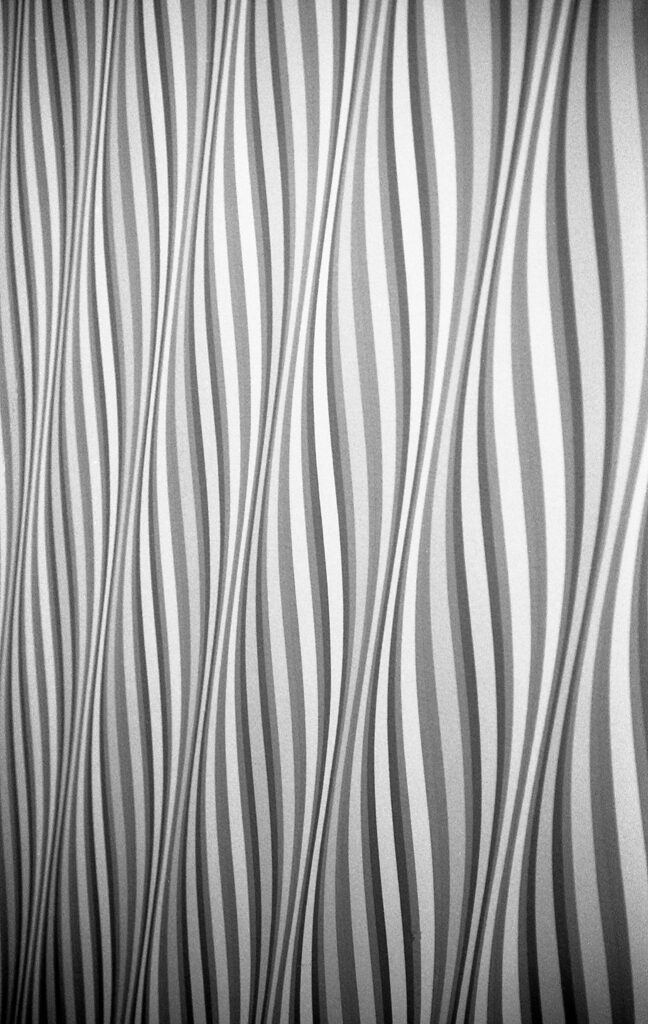
We headed outside to find that the heavy fog had not lifted. We’d had a glorious day of sunshine the previous day and were looking forward to another, but I actually really liked the fog. It didn’t feel oppressive, as it would have in the city, and instead cast an eerie but somehow joyous atmosphere. I was having a good day.
You’ll see some of the effects of my battle with the film development in this set.
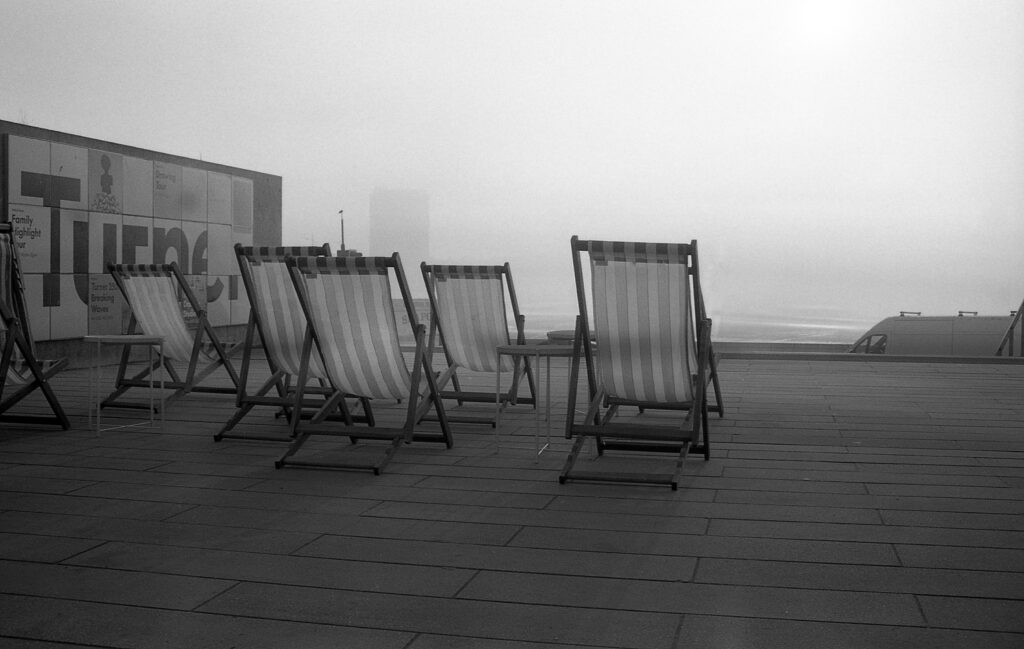
In use, the Olympus AZ-300 was pretty straightforward, with everything being automated. I have to admit, I prefer something a little more tactile, something that requires consideration of each shot. When I began the project with the Exa Ia, it was the involvement in the process that I found rewarding and that helped me to slow down, to calm my overactive brain.
There were, as I now expect with the cameras I pull from the bottom of the drawer, a few issues. The ‘wide’ zoom button was quite stiff and it was very frustrating when trying to zoom out. There were also some issues with the auto exposure and certain shots it just would not take, necessitating the tried and tested method of switching it off and on again.
This is another camera that I doubt I will keep, as I just can’t see me getting any use out of it. As another rung on my ladder to recovery, however, I offer it huge thanks.
Share this post:

Comments
furlongphoto on Olympus AZ-300 – Out of the Drawer and Into The Light – A Journey of Recovery and Rejuvenation (Part 3)
Comment posted: 21/04/2026
Comment posted: 21/04/2026
Andrew on Olympus AZ-300 – Out of the Drawer and Into The Light – A Journey of Recovery and Rejuvenation (Part 3)
Comment posted: 21/04/2026
My frustration with vintage stuff from this era (and into the 1990s/2000s with digital) is that the “wide” end of zoom lenses isn’t wide at all. I seem to take wide photos a lot of the time and having something like 38mm at the “wide” end is just too constraining. I have a lovely little Olympus C7000 digital which takes fabulous photos with its CCD sensor, but again, it’s about 38mm at the wide end. I would use it far more if it went wider….
Comment posted: 21/04/2026
Comment posted: 21/04/2026
Comment posted: 21/04/2026
Comment posted: 21/04/2026
Comment posted: 21/04/2026
Comment posted: 21/04/2026
Comment posted: 21/04/2026
Comment posted: 21/04/2026
Ibraar Hussain on Olympus AZ-300 – Out of the Drawer and Into The Light – A Journey of Recovery and Rejuvenation (Part 3)
Comment posted: 21/04/2026
Ah memories - my brother bought this very model new and I always remember George Cole “auto focus? Hocus pocus!”
Thanks
Comment posted: 21/04/2026
Walter Reumkens on Olympus AZ-300 – Out of the Drawer and Into The Light – A Journey of Recovery and Rejuvenation (Part 3)
Comment posted: 21/04/2026
Comment posted: 21/04/2026
Bob Janes on Olympus AZ-300 – Out of the Drawer and Into The Light – A Journey of Recovery and Rejuvenation (Part 3)
Comment posted: 21/04/2026
Comment posted: 21/04/2026
Omar Tibi on Olympus AZ-300 – Out of the Drawer and Into The Light – A Journey of Recovery and Rejuvenation (Part 3)
Comment posted: 22/04/2026
Happy shooting and looking forward to more of your reviews.
Comment posted: 22/04/2026
Keith Drysdale on Olympus AZ-300 – Out of the Drawer and Into The Light – A Journey of Recovery and Rejuvenation (Part 3)
Comment posted: 22/04/2026
Comment posted: 22/04/2026