

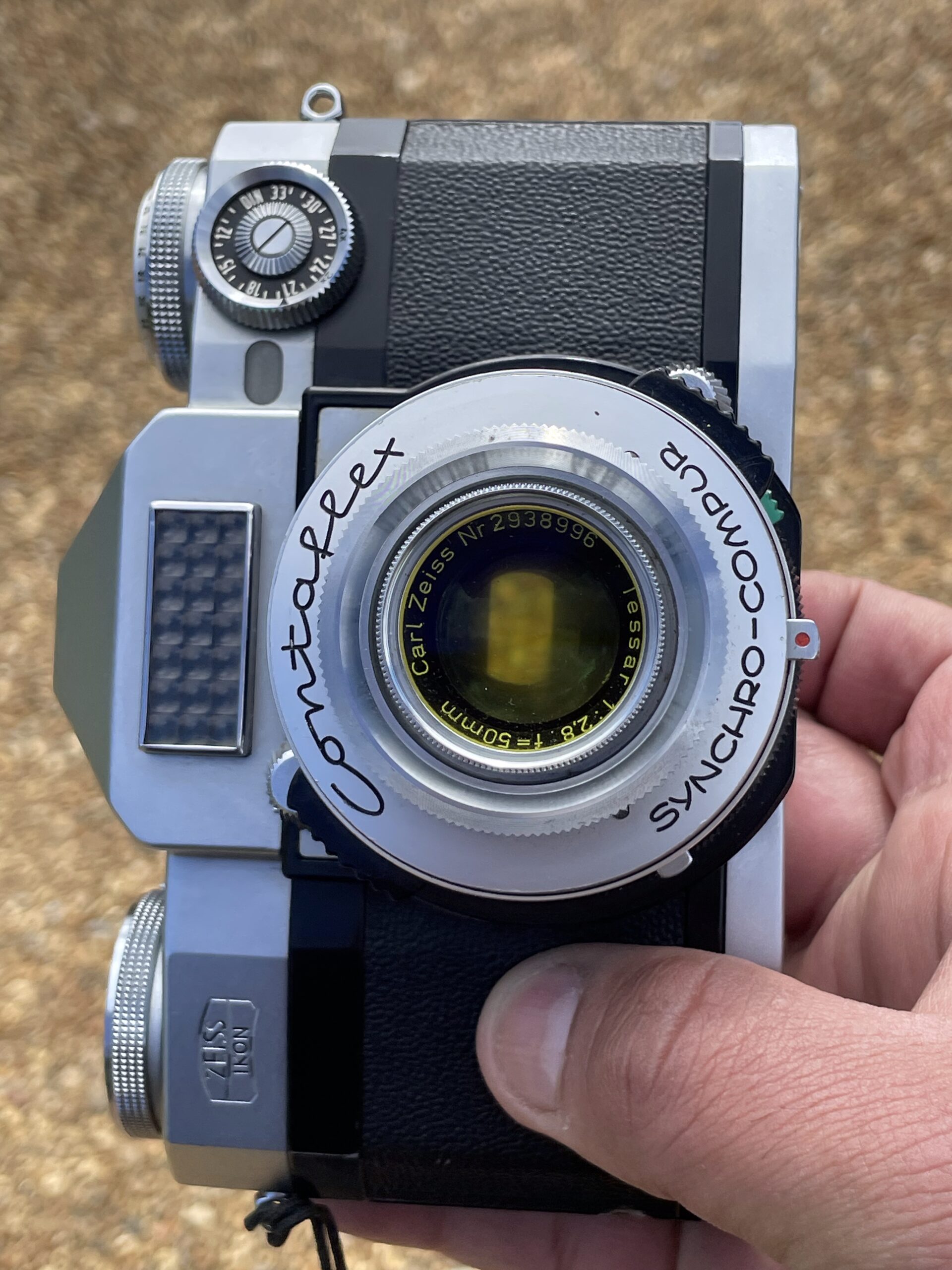
I’ve been a long time user of Japanese Contax cameras, hence I also have a fondness for related West German cameras with the Zeiss Ikon name.
I wrote a review of the pretty (if unreliable) little gem; the Zeiss Ikon Contessa S310 Here and Here. The Contessa S310 is a diminutive View Finder/ Scale/Zone Focus Camera with a fixed lens, the Contax line of cameras from the era are Range Finders.
My favourite type of camera is an SLR with interchangeable lenses.
I’ve never been a hardcore Range Finder fan, though I do enjoy using them, it’s just that I much prefer the reflex design and to look through the Lens. There’s nothing like seeing the actual image of what you’re going to shoot; through the lens and to be able to see the world through the lens.
It was for this reason that my hunt for a Zeiss Ikon SLR began.
My choices were limited to the very expensive Contarex series, or so I thought, as perusing the web one day I came across a post on a forum about the Icarex and Contaflex. Contaflex I thought? Weren’t they low end? How wrong I was, they’re as high end as anything this side of a Contarex and in terms of fit, finish and build quality – up there with the best.
So with this in mind I thought I’d give it a look. I bought one from eBay in minty condition for about £30. (I then bought a Zeiss-Ikon Icarex 35 CS (thanks Tony Warren) as well to keep it company).
I was a bit apprehensive as it has a Leaf Shutter, the Contessa had an electronic Prontor which was prone to seizing up (I had three!), but this isn’t electronic, the camera is fully manual and without any batteries.
My Zeiss Ikon Contaflex Super arrives, initial thoughts
Anyway, it arrived and I was impressed – what a lovely looking, hefty glorious work of art! It is a solid hunk of dense metal, beautifully die cast, milled, formed and heavy; heavy but oh so nice to hold and feel. Everything is superbly damped and precise; a lot of care and attention had been gone in working the metal and getting it all to sit together in such a melodic way.
The focussing is buttery smooth and pinpoint accurate, the ratcheting clicking wind on crank has one of the best feel and sound of any I’ve handled and used, the shutter doubles as an anti-depressant, I wasted film just to wind on and click, wind on and click…..If you haven’t used a West German SLR with Leaf Shutter before, you’re in for a treat, the wind on and shutter sounds from both the Contaflex and Voigtlander Bessamatic / Ultramatic are a thing of beauty and add to the experience and joy of shooting with these gems.
it’s as close as a precision instrument as I’ve experienced (with my Zeiss-Ikon Icarex and Voigtlander Ultramatic and Bessamatic Deluxe) in terms of feel in the hand, handling and shooting it’s may favourite amongst all of these.
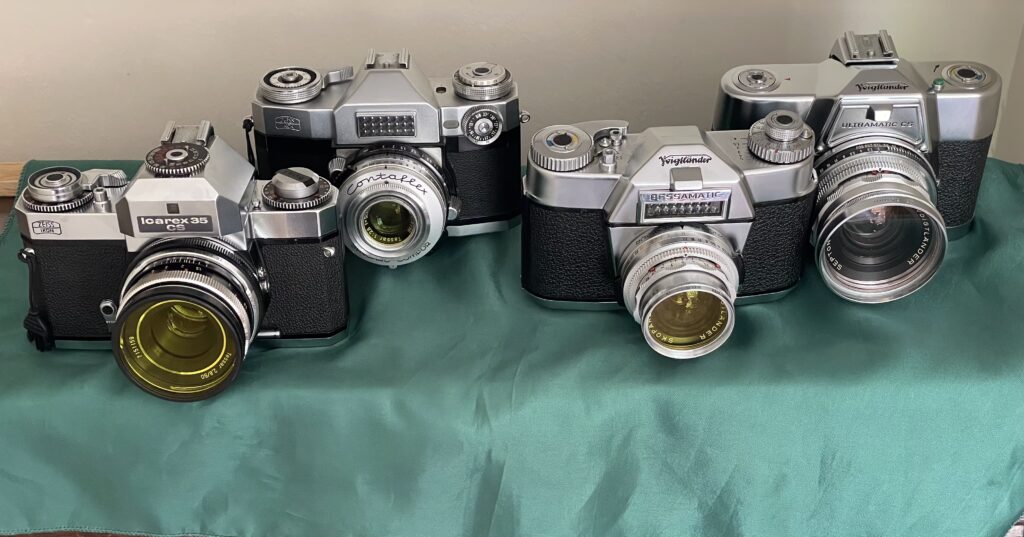
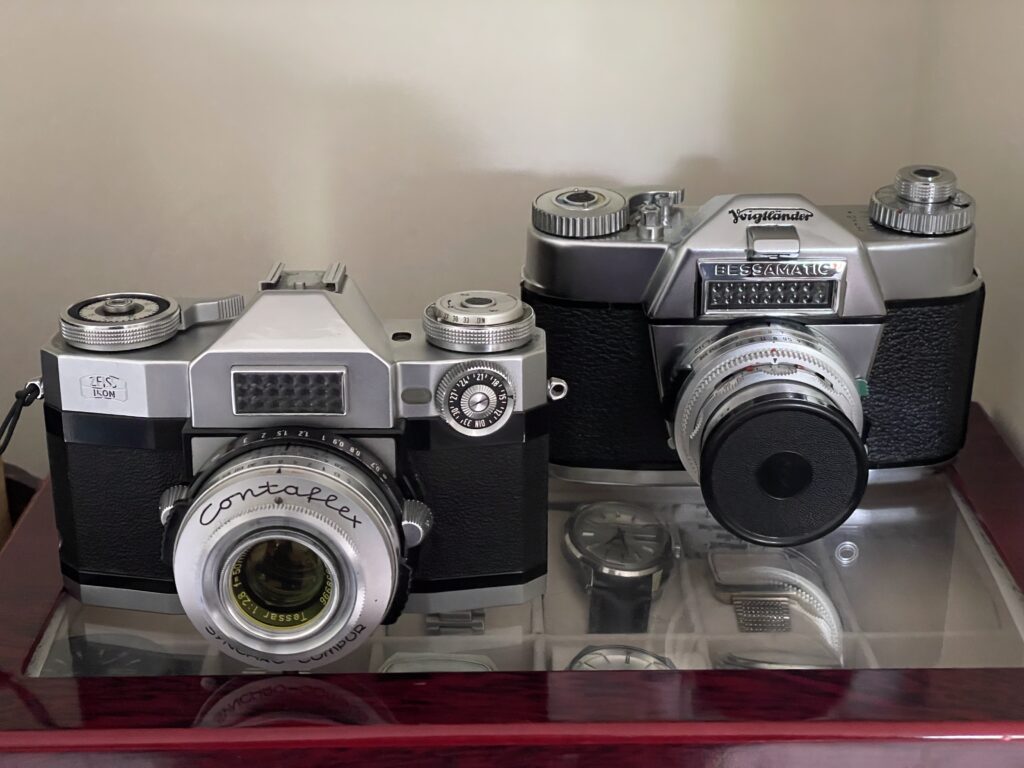
I knew it would deserve to be used to take nice pictures rather than just mere snaps, the heritage, feel and quality are deserving of extra care in composition and use.
Cameras today are generally bland pieces of electronic boredom. There is not much innovation gone into aesthetics. The only different cameras are futuristic looking blocks, (such as the Zeiss ZX1 and the Sigma FP but fair play to them for trying something different a la Carl Zeiss Werra) the “Retro” cameras are anything but retro – just rehashed designs to mimic classic (and other not so classic) designs of years gone past, (and now abhorrently just computers with a lens attached made to look like actual cameras).I would like to add that I think Mirrorless ILC’s – especially those from Sony, are the worst thing ever to happen to photography (my rational, informed opinion so I wouldn’t bother arguing – each to their own).
We see the same trend in everything; from cars to motorbikes, to HiFi equipment and TV’s and real estate. It’s as if we have been taken over by Orwellian regimented and generic soulless design bureau’s. Yawn!
Some may say this looks dated, of course it does – as it’s from the 50ies! And yes the 35mm lens does look Odd…very odd, it sure as hell attracts the right attention. That block of a Selenium meter makes it look even more dated, but it’s a very good meter which works impeccably.
The very limited number of lenses will be an issue for many, but not for me, as the ones available are a bonus. I only expected to use the 50, but then went for the 35 and would want an 85mm as well for the type of photography I’d do with this camera, and I’m happy with the look and quality of the results.
A Little History
Mike Eckman has a fantastic review Here with some very good information and pictures from all angles.
The Contaflex was made for rich amateurs, hence in terms of build quality, fit and finish (and the lenses) its right up there with the Contarex (which was made for Pros). The Contaflex Super (original one I have with the selenium block) is the best of the line, for many reasons (including the brightest finder of the lot).
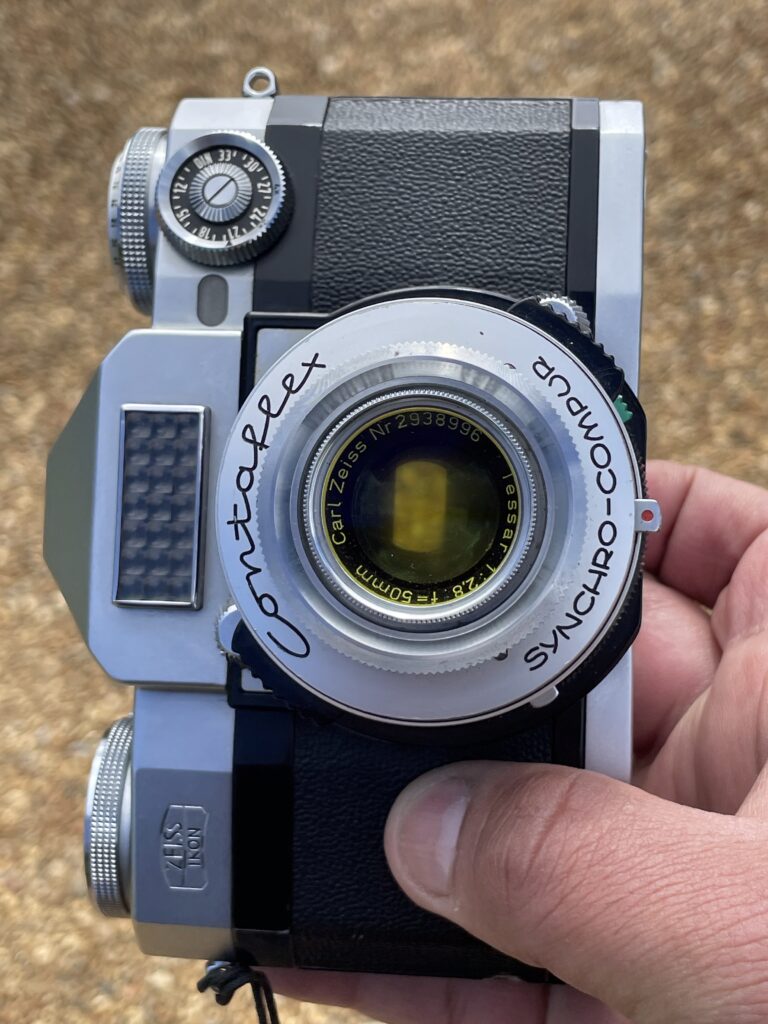
This is a Zeiss-Ikon Contaflex Super, a 35mm Single Lens Reflex leaf shutter camera made by Zeiss-Ikon AG in Stuttgart, West Germany between the years 1959 and 1962. It was part of the long lived Contaflex series that saw many variations between the original Contaflex I in 1953 all the way to the Contaflex S from about 1970. The Super, as it’s name implies was a rather high spec version of the camera, featuring a coupled selenium exposure meter with match needle readout in the viewfinder, and a 4-element 50mm Tessar lens with interchangeable front elements. With the use of Pro-Tessar bayonet mount lenses, the Contaflex had available wide angle and telephoto lenses
Standard Lens: 50mm f/2.8 Carl Zeiss Tessar coated 4-elements
Mount: Contaflex Bayonet (front element only)
Focus: 0.7m – ∞
Viewfinder: Pentaprism
Shutter: Synchro-Compur Leaf
Speeds: B, 1 – 1/500 seconds
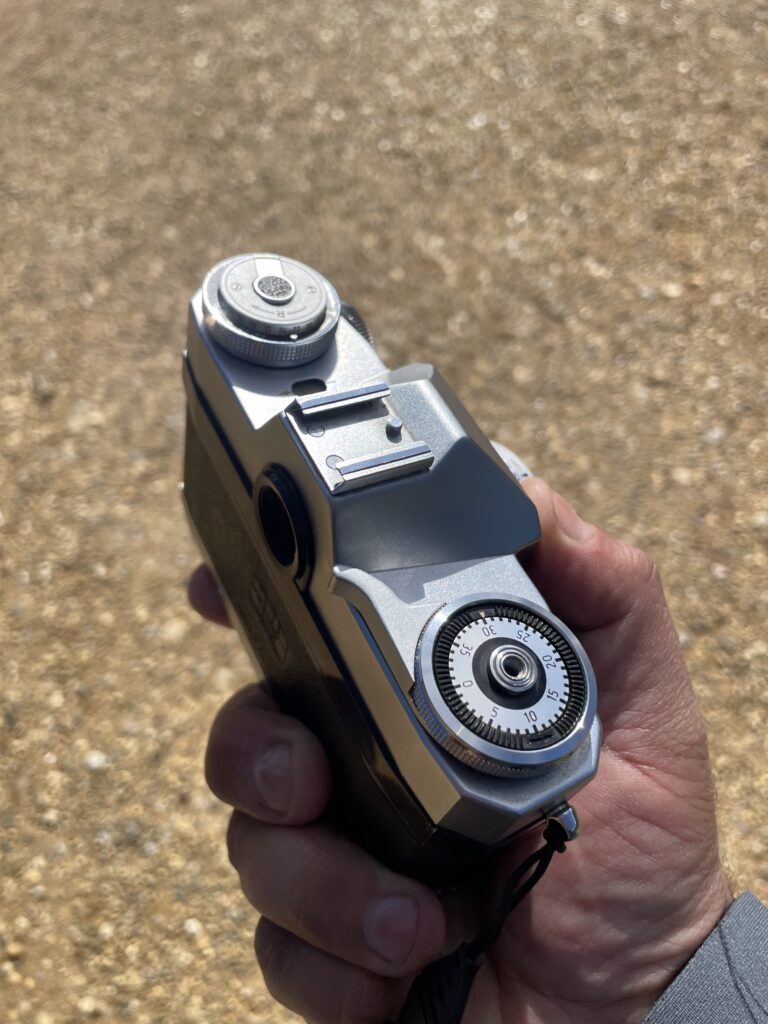
Exposure Meter: Coupled Selenium Cell – In-viewfinder and top match needle
Flash Mount: Coldshoe and M and X Flash Sync
Weight: 850 grams
Manual: http://www.cameramanuals.org/zeiss_ikon/zeiss_ikon_contaflex_super-02.pdf
It’s not a large camera, slightly smaller than a Contax RTS (but taller and fatter a tad), bigger than a Voigtländer Vito B, but more in tune with a Vitomatic II and the Contaflex handles much much better than both.
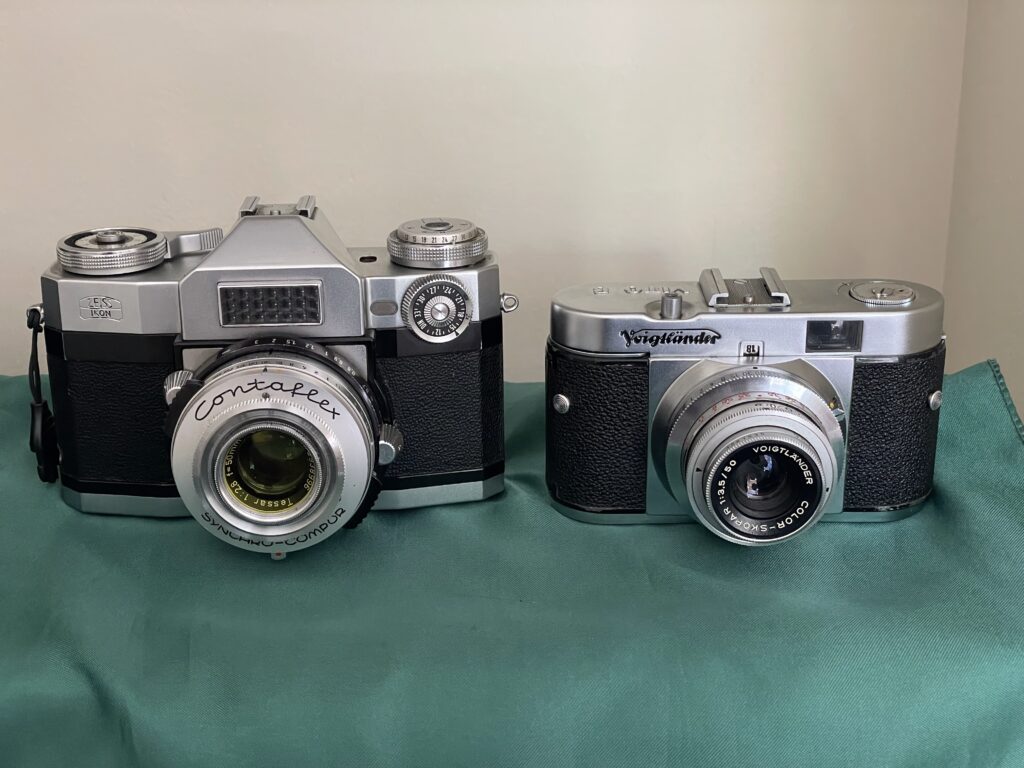
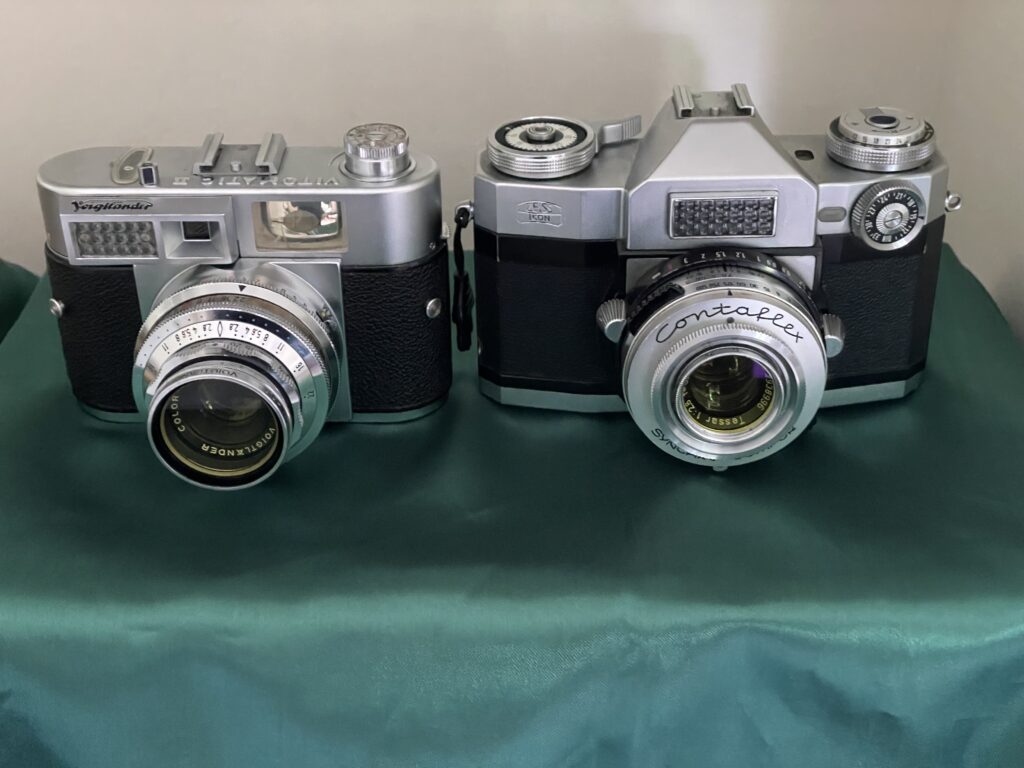
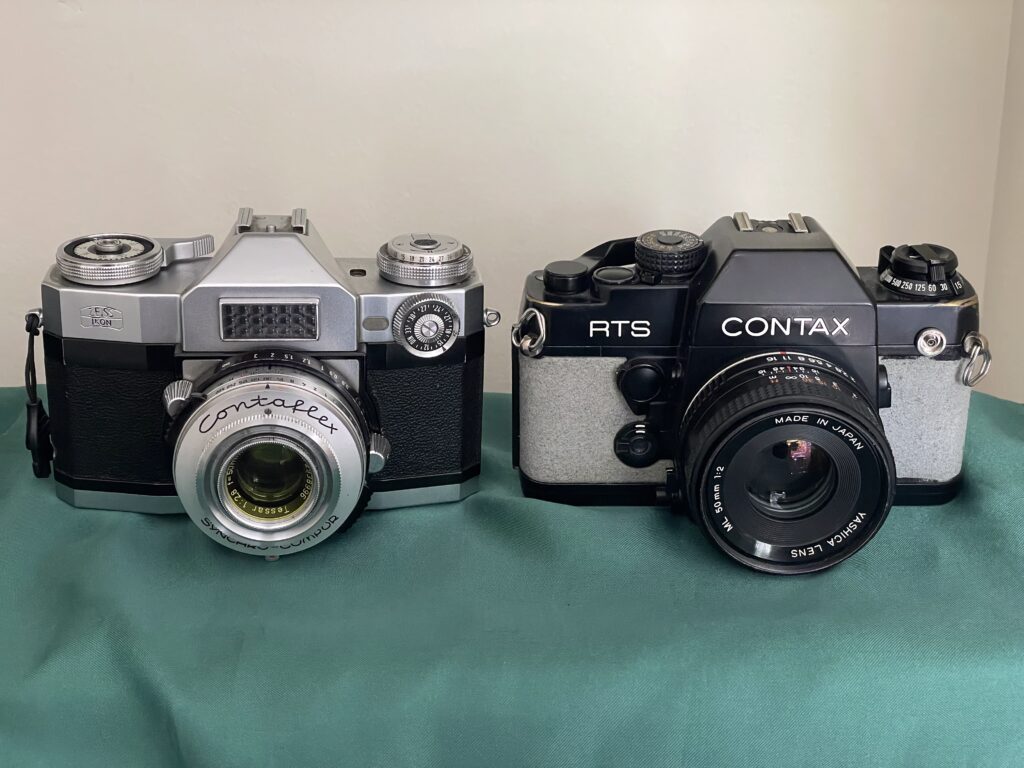
Rick Drawbridge, on photo.net has an excellent couple of review articles about the Contaflex Super and testing the Pro-Tessar lenses. His results just shine (far better than my amateurish attempts) and give you a good insight into the quality when used with good Film, developer and technique.
Taking a Picture
The camera stayed with me for months before I actually started using it. But once I got around to using it is my favoured camera for B&W Photography. It’s easy to use,. newbies may find it tricky at first. It just takes getting used to and then it’s all second nature, as the handling and ergonomics are great, oh so good, not often you’ll find a completely manual camera with no batteries and a perfect light meter!
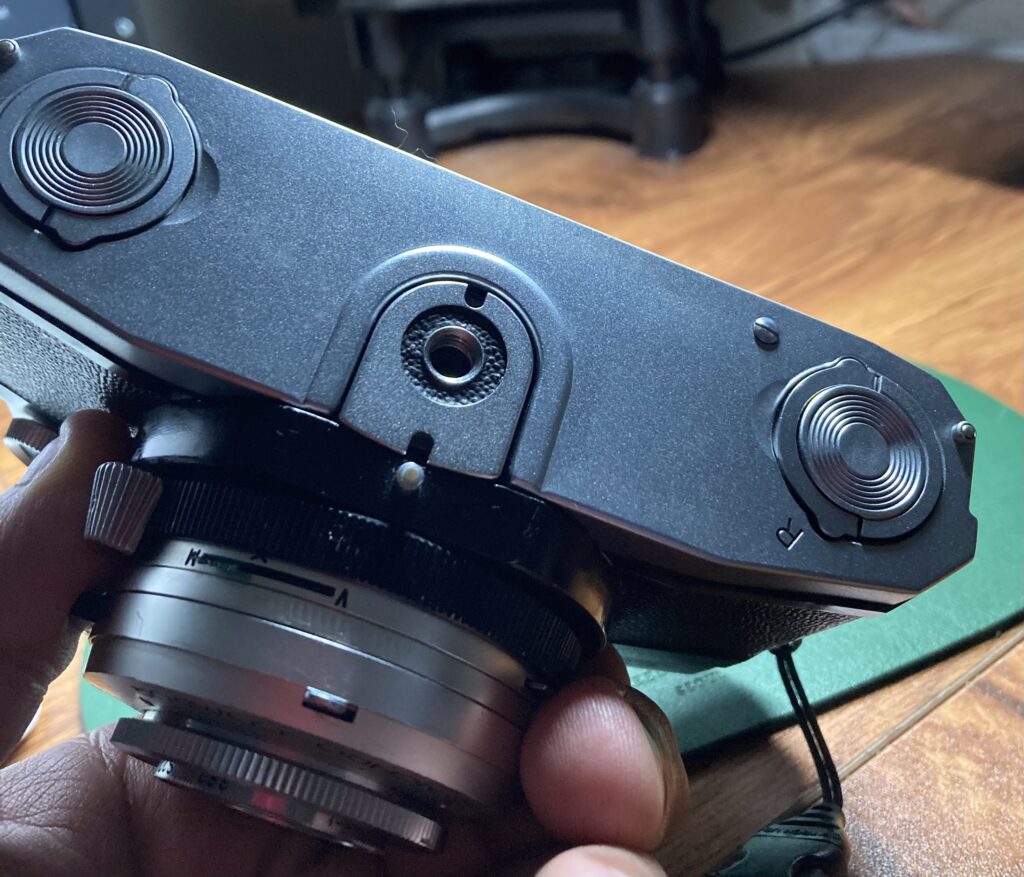
To load a Film you remove the back, using the Door Locks on the underside. Inside you’ll find a empty reel, as in a Medium Format camera. Simply insert film, insert leader into this reel and wind on. Close and voila!
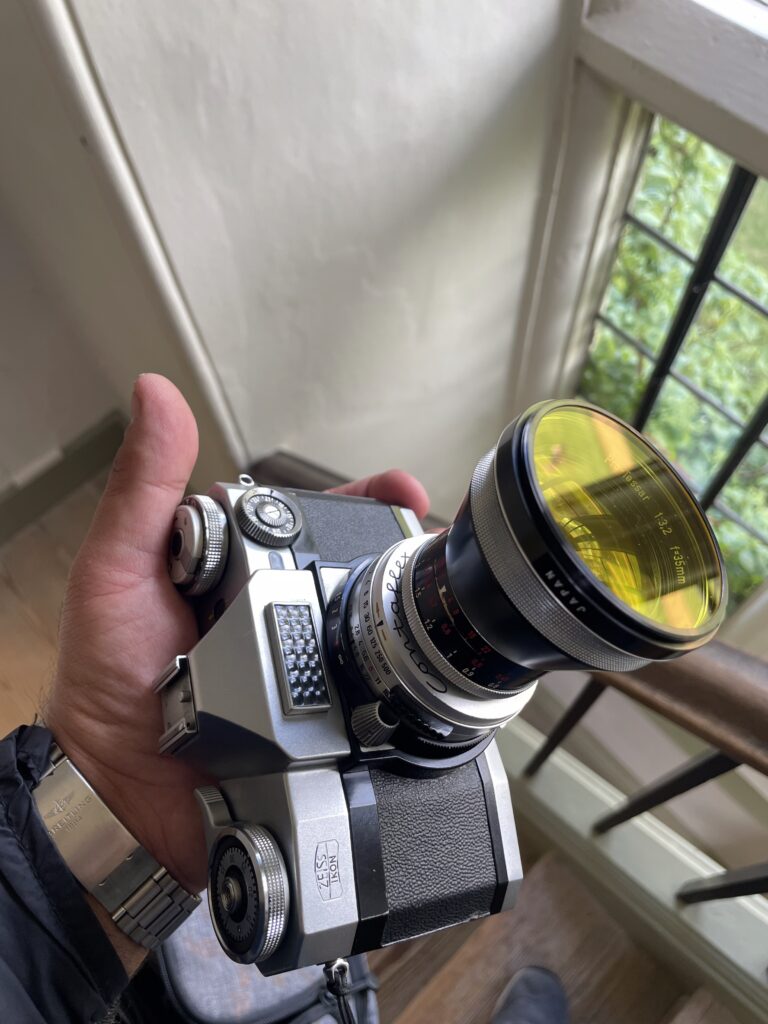
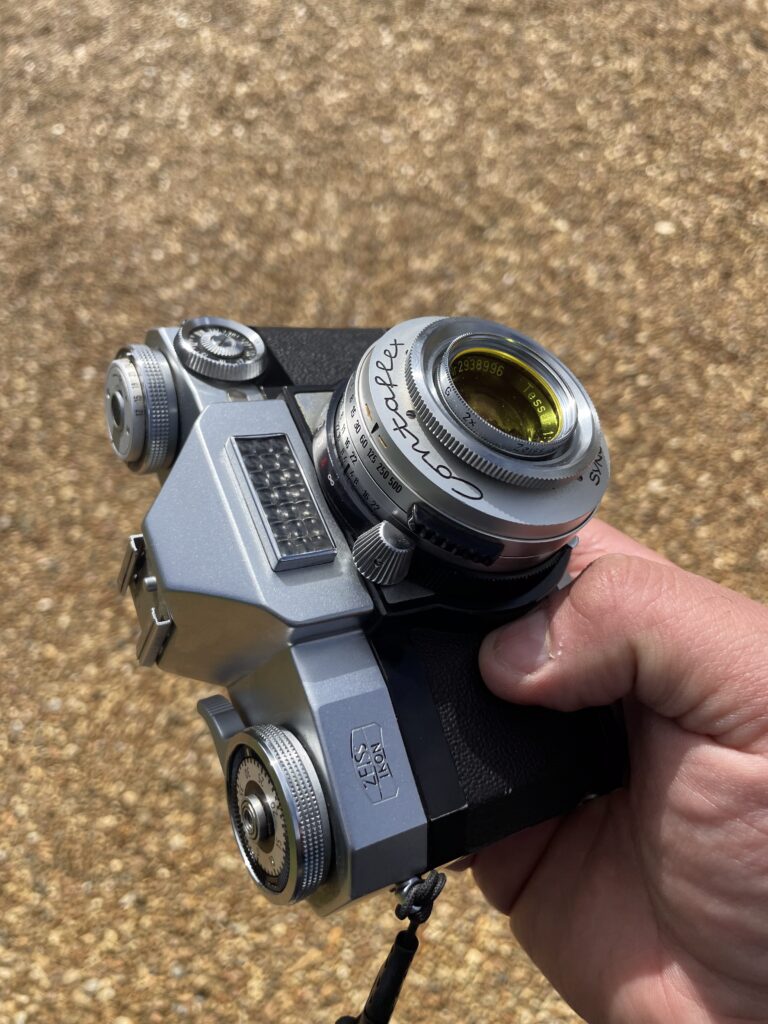
The lens comes off – or rather the small front element on the 50mm f2.8 (27mm filter size) comes off precisely and you can add another supplementary front element lens such as the 35mm f3.2 I have (60mm Filter thread). The 35mm f3.2 I have makes it look like no other camera I’ve seen used out and about.
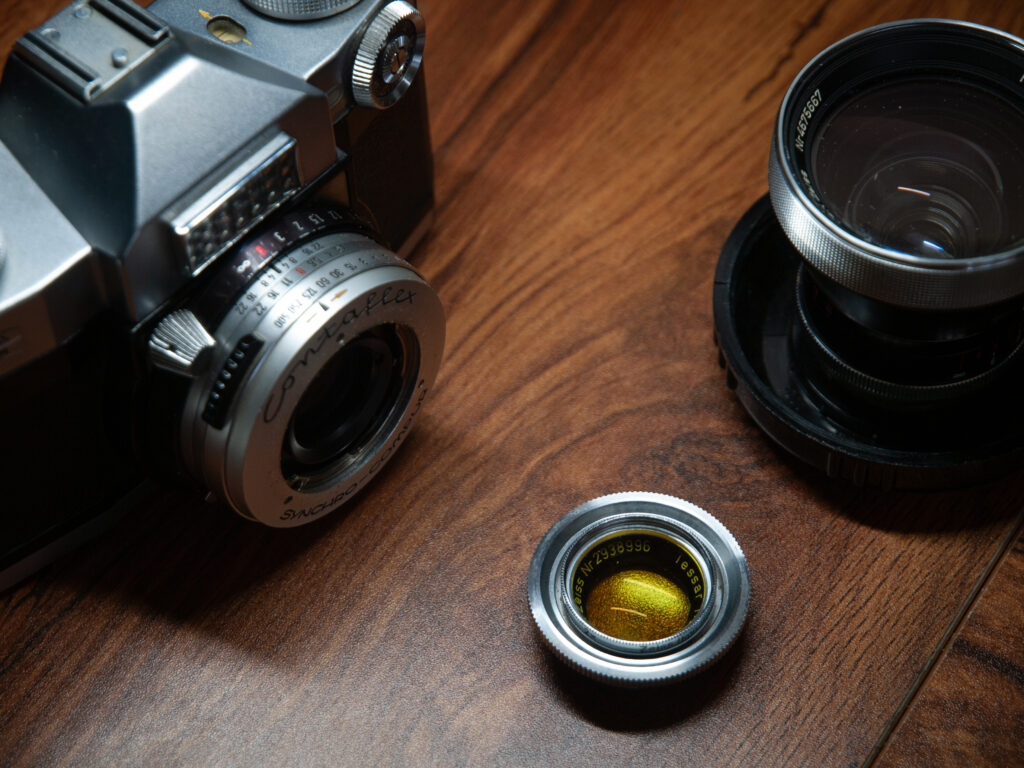
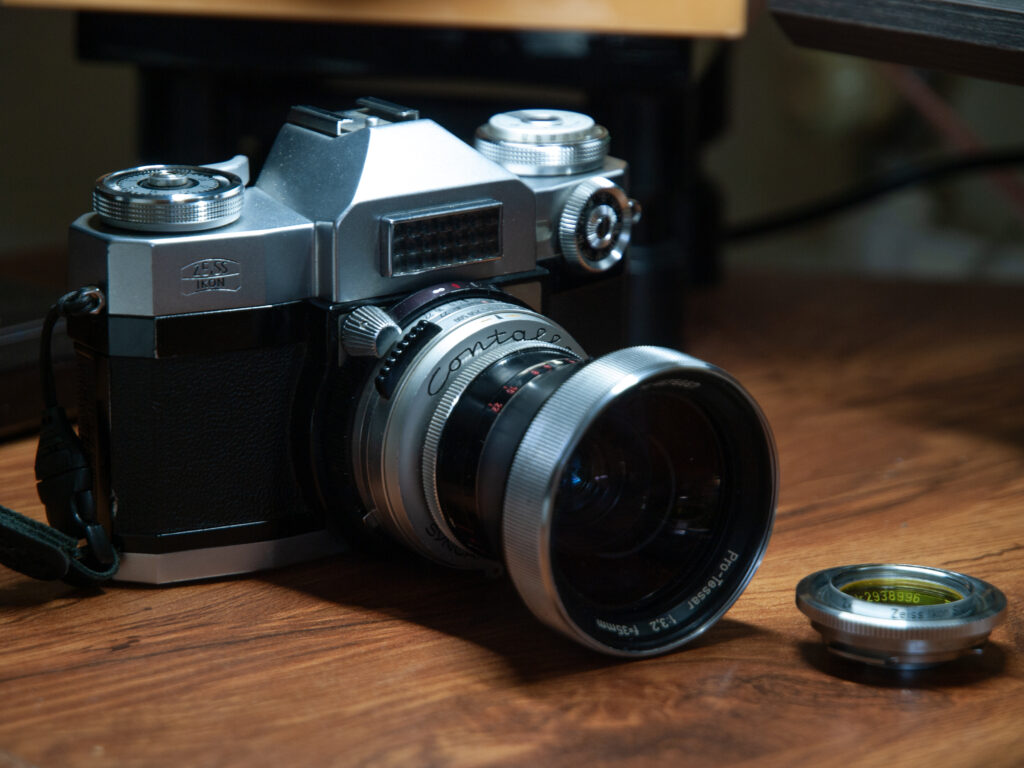
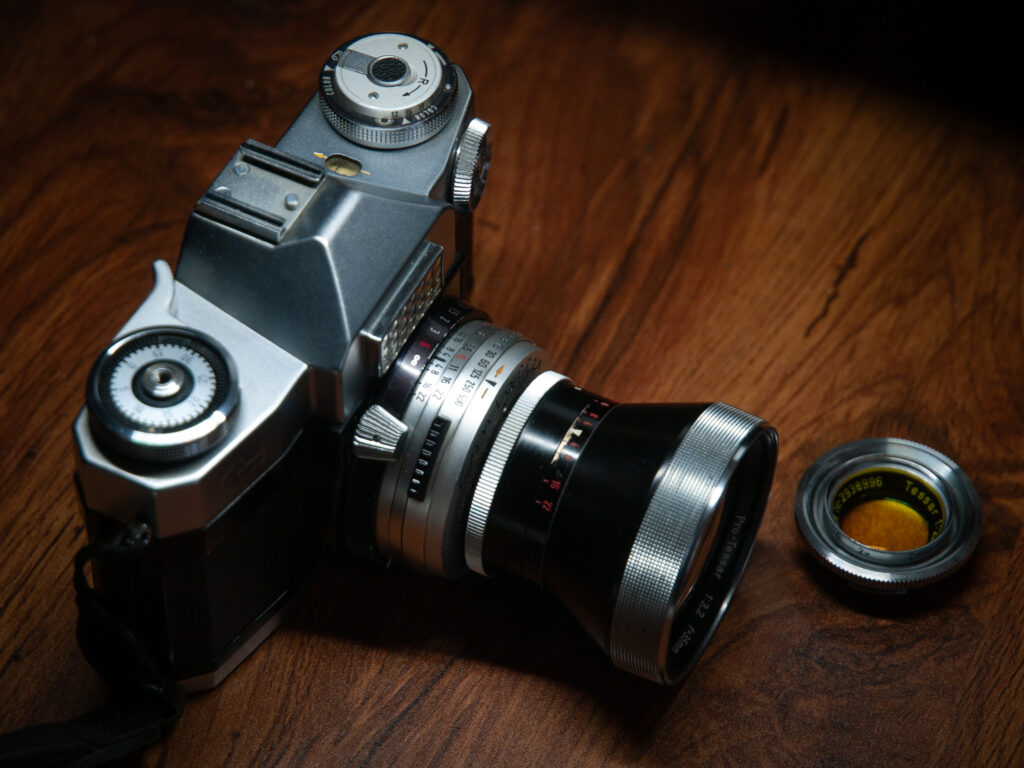
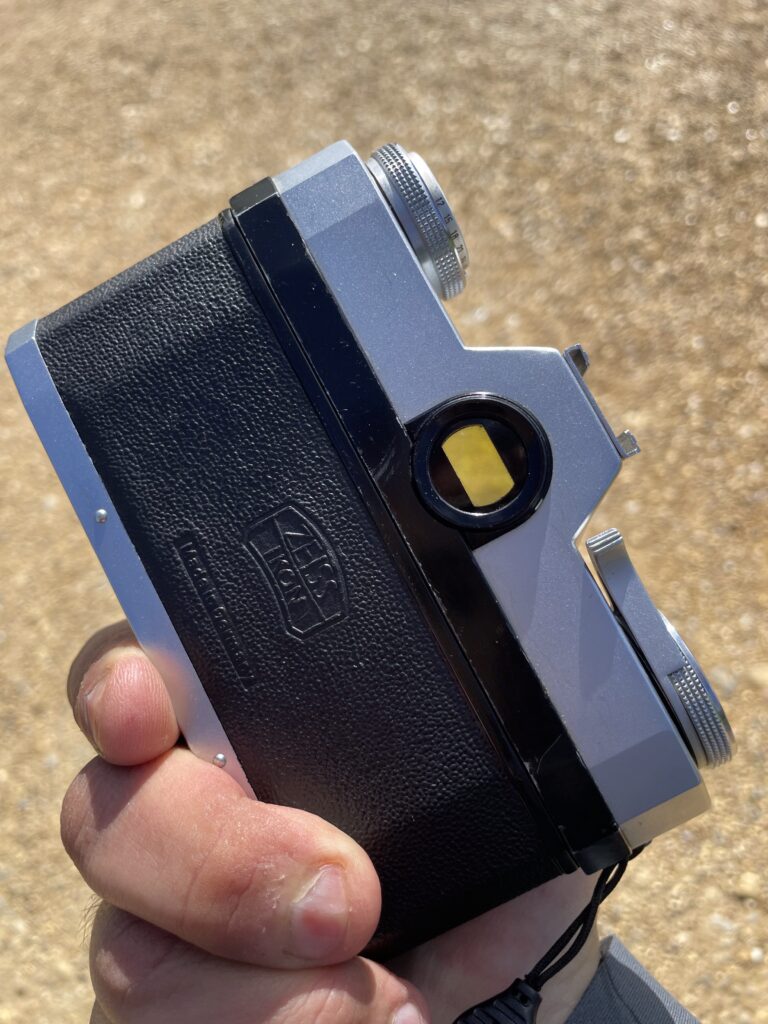
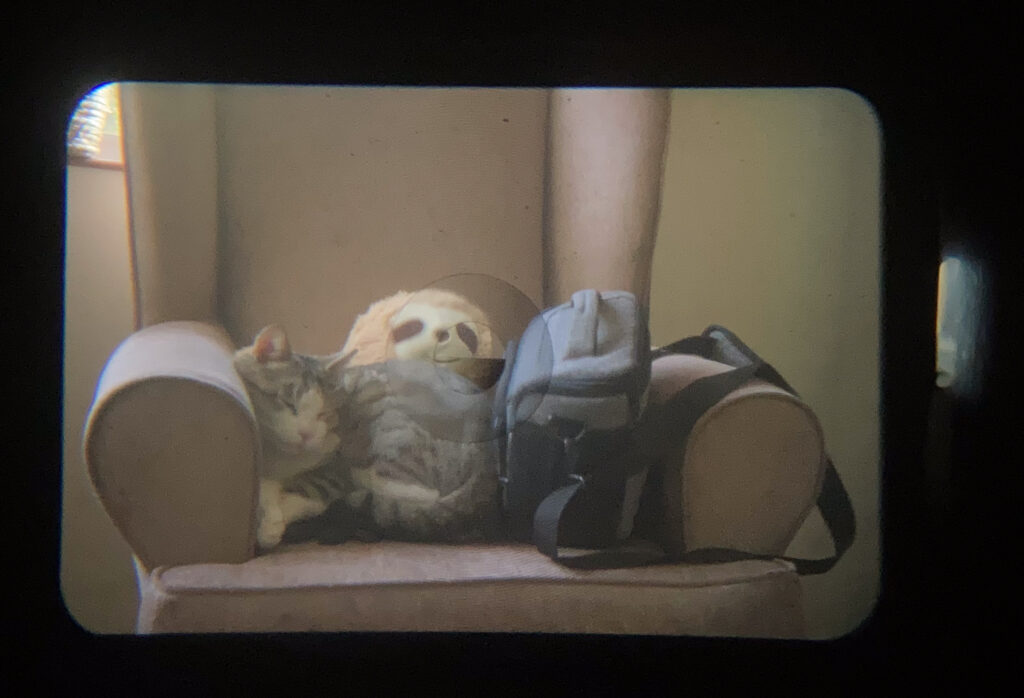
The Zeiss Ikon Contaflex Super viewfinder is large and very bright, even with the Yellow Filter on, only the centre circle of the VF can be used to focus. The rest of the glass is a clear finder. On the right you can see the match needle – its centred for ‘correct’ exposure and if the needle is up, it’s Over and of course Under for Under exposure. The same match needle scale is on the top of the cameras as well.
In the centre is a large and bright split image rangefinder, and around it a ground glass focusing aide. It’s very easy to look and focus using this centre circle. Focussing requires you to adjusting the protrusions on the barrel.
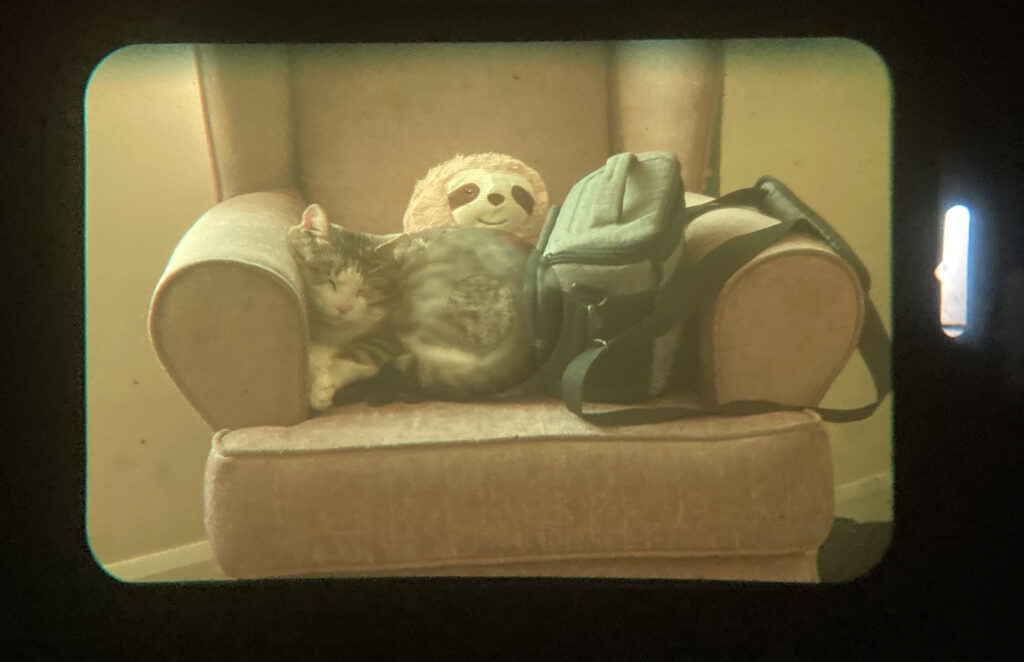
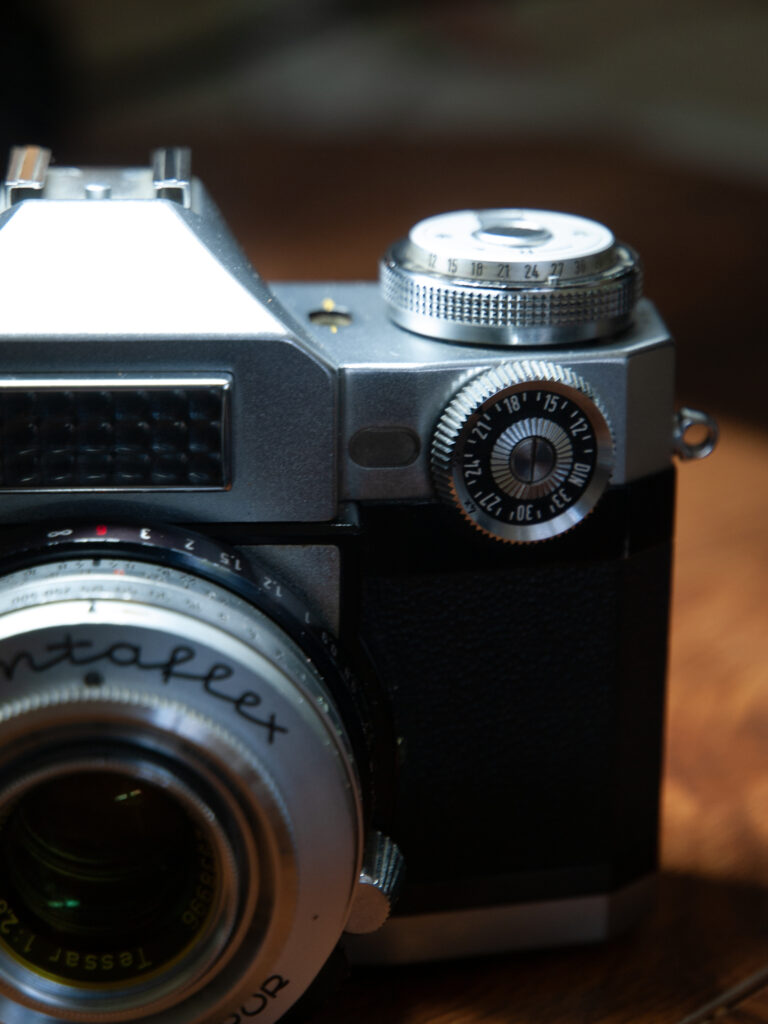
To use, set the DIN (Mine is a European model with a DIN only scale for Film Speed and Metres for Distance) on the finger controlled Aperture dial you can see on the top right on the front.
Set the Aperture using the finger control dial (not on the lens). The Aperture can be set independently. Then look through the VF, see the match needle – and adjust shutter speed until the needle is centred. Wind on with that beautiful precision zippy ratchet and press one of the nicest and most stress relieving shutter sound. The mirror doesn’t return after every exposure, so the VF will be blacked out. Wind and it clears.
When you turn the shutter speed dial (on the lens) the Aperture will now shift (as they’re coupled). So you have to then set the Aperture to the value you want again (just set them independently). With the light being constant, you have to only do this once – then just use the Aperture dial when looking through the VF to compensate, so you’ll stay within a stop. As I said, the Shutter and Aperture are linked (So Shutter Priority) Move the shutter dial and the Aperture will change accordingly, e.g. 60 – 125 and the Aperture will open up a stop.
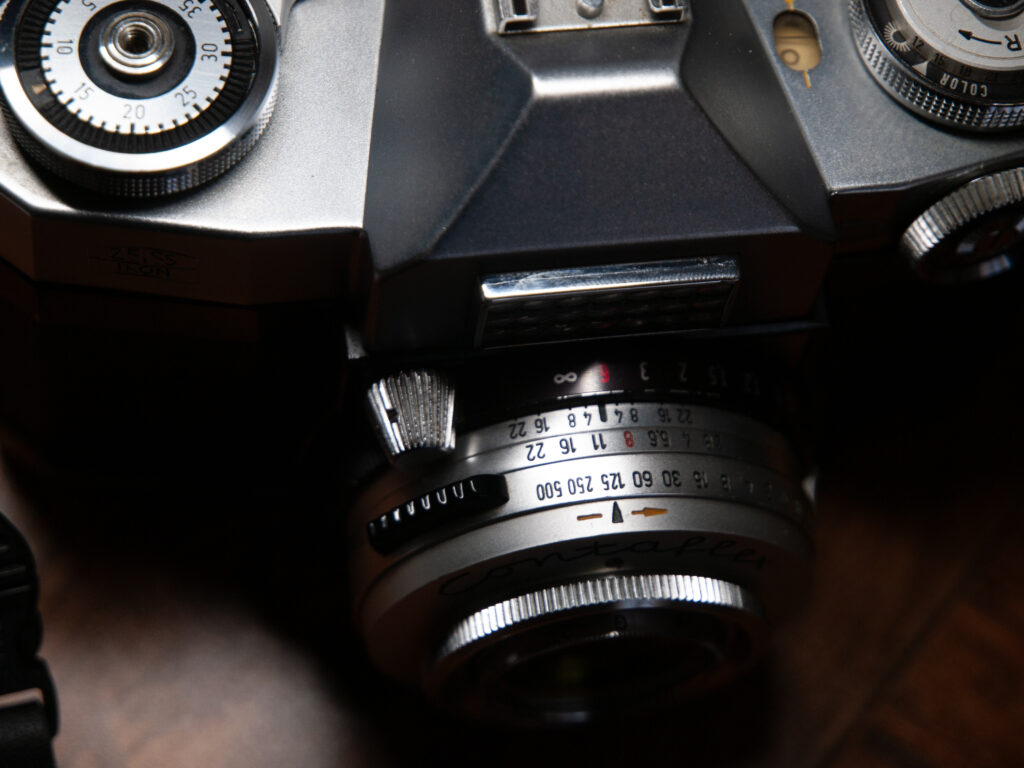
Easiest way to focus for snapshots with the Zeiss Ikon Contaflex Super is use the Distance Scale – line up the Red 6m Mark with f8 and you’re good to go – so anything from 6m to Infinity will be in focus (on the 50mm) The 35mm has a scale on the lens which corresponds and shows you what the main scale on the body elements is to be set to. This sounds complex but it isn’t. On the 35mm it’s 3m to Infinity.
Or just focus through the VF as usual. I like using scale focus for speed when taking snaps and through the VF for Portraits and wider apertures. The User Manual explains things better than I, and is quite easy to follow.
When you’ve finished the roll (remember to set the manual Film counter dial on top of the wind on lever) set one of the door key locks to R then rewind using the lift out crank.
Results and Disasters
I shot two rolls of Kodak Eastman 5222 XX a Roll of Agfafoto APX 100. I didn’t have the yellow filter yet, so no filter. I shot the Agfafoto at Framlingham Castle in Suffolk and in Covent Garden in London’s West End.
I then bought the Yellow you see in the photos (and another for the 35mm) and I shot a roll of original Fuji Acros 100. This was at Blickling Estate in Norfolk, the birth place of Anne Boleyn. I then shot a roll of expired Ilford Pan F 50 at Dedham in Essex.
The Fuji was the original Acros 100 and had been expired for about 10 years. The yellow filter as always helps with contrast and darkening skies. I think it’s essential for B&W work.
As you will probably notice, I started with my usual snapshots and as I got to know the camera my Photography gradually progressed to extra carefully composed photos with more intent. This is thank you to the nature of the camera which demands care ( I shot the Kodak Eastman 5222 Double X first, followed by the Agfafoto and then the two rolls of Fuji Neopan Acros 100 followed by the Ilford Pan F).
I did have a disaster, I shot a roll of Ilford Pan F 50, in perfect conditions, at Flatford in Constable Country, photographing Willy Lotts Cottage, Flatford Mill and the beautiful country around there. Everything was fine, I photographed extremely carefully and was oh so happy and keen to get the roll developed. That evening, I popped into the closet, wound the Film onto the reel…then, bizarrely, instead of putting it into the tank and tightening the lid, I turned the light on!?? I must’ve been tired or just had a moment of insanity, ruined the whole days shoot, just like that. Luckily, Flatford is but 3 Mile away, so I returned the next day half heartedly, intent upon getting some nice photos to make up for the disaster (bad mistake- I should’ve just left it), with a a different roll of (expired 2005) Fuji Neopan Acros 100 (original). I wasn’t careful, rushed, didn’t pay attention to the shutter speed on the 50 and it didn’t feel good – many out of focus wasted shots and the Film was also not as nice as the other Fuji 2013 I had, you can see the results below, apart from the portrait of my son, the rest are just bleurghh..
The Kodak Eastman 5222 Double X gave not very pleasing flat results with no tonality, but that’s the nature of the Film with the developer I have used lately. The Agfafoto performed as expected, nice and consistent, it being a Film I have a lot of experience with.
I was very pleased with the Fuji results. In fact I was very very pleased with the results. the 13 year expired Fujifilm Neopan Acros 100. I wasted many frames while practising with the first roll of Kodak (winding and clicking for fun taking non-pictures of tat). But as I said above, by the time I went out with the Fuji I had more or less mastered the camera and used it with care.
The Ilford Pan F was disappointing, but again, this is down to the expired Film plus the now piss poor condition of the developer (my carelessness – as I should’ve filtered it).
I developed the films in Bellini Foto Duo Stop (Liquid Diafine). Unfortunately I hadn’t cleaned / filtered the build up in the developer so was cursed with small pinprick dots everywhere, especially in shadow areas, when I did filter it the results improved slightly but I bodged that up by contaminating it with fairy liquid (leading to zillions of white grain like pricks), I of course wasn’t pleased with my development! The thing to note about the Diafine – very very gentle agitation, preferably using a rod, and closer to 4 minutes rather than 3 otherwise you’ll kill any shadow detail (as I have learned), also, use Distilled water when initially mixing it!
This Bellini (Diafine) developer needs replenishing every year or so, as the build up of residue and particles kills it – even more so if not using Distilled water (I used tap water!). I put this down to my own carelessness.
I should’ve shot the expired Films at a lower DIN value, sure I really like under exposed contrast and mood but the Ilford Pan F should’ve been shot at EI25. I have one more expired roll in the fridge (Ilford FP4+) so apart from say Kodak HIE IR (of which I have two precious rolls) or something no longer in production, I’ll stick to new stock. But I have, after playing with very slow to very fast films over the years, come to the conclusion that Fuji Neopan Acros followed by Ilford Pan F 50 are my favourite, they have every quality I want which suits my style; deep inky blacks, lovely tone and silvery highlights. I also really like the original Agfa APX 100, a true classic.
The Pro-Tessar Lenses are nice and sharp, contrast well suited to B&W, rendering and resolution. With a Yellow filter they perform even better.
Summing up the Zeiss-Ikon Contaflex Super
The Zeiss Ikon Contaflex Super is a pleasure to use, to handle, to own and to just Photograph with. The controls become second nature and as you can see the metering is very good. I use the match needle to determine whether I want under/over exposure and didn’t use any other technique, just by look and feel. I usually expose for the shadows and deduct a stop or two, with this I just determine what I want by tweaking the Aperture dial and looking at the match needle. It’s a nice camera, as solid and beautifully made as any much more expensive Leitz SLR’s.
The SLR nature of this makes it so much easier than a Rangefinder, the heft and build quality, the complete manual battery-less operation, the big bright finder, the wonderful wind on crank and exquisite leaf shutter sound will have you hooked; and the lenses are sweet.
As I said above, some wouldn’t look at this as they like modern stuff or a ‘classic’ looking (generic) SLR, others may be put off by very very limited lens options, So it’s far from perfect, but it’s very satisfying – master this and you’ll feel great, I don’t often say this about any material thing, but I am very fond of this camera, it is perfect for what it’s intended to do. It’s a keeper, the Light Meter requiring no batteries and no electronics is also a bonus (though a coupled meter for B&W for me isn’t a must).
Beautifully made old German cameras are complicated (over engineered and a pain to get fixed) pieces of work, lovingly designed and built, things one can keep, use and pass onto anyone else who would appreciate it.
I’d say if a camera as lovingly built and over engineered as this was released today (this has absolutely no corners cut in build quality – I don’t think there are any plastic parts) it would be unaffordable for most, (take the new WideluxX for example – this Zeiss Ikon Contaflex Super would likely cost twice as much as that now considering) so the like of this will never be seen again.
We now have computers with a lens attached and for film sorry stuff unless one goes to larger formats.
They also enable me to take better photos than anything lesser. Why? Because such things aren’t worthy of wastefulness. I will enjoy using this over the years, along with others in my collection.
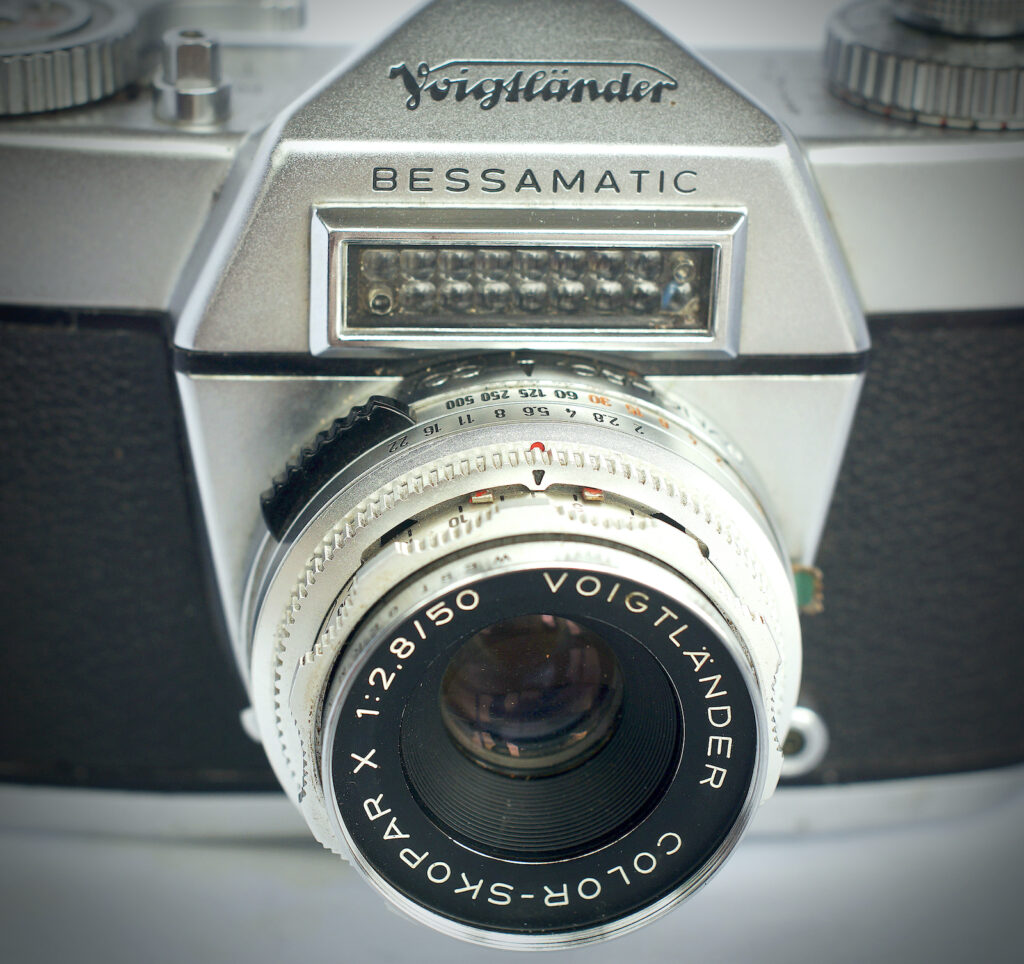
These cameras are dirt cheap, it’s so sad to see this, some people may be put off by the lens design, or by the LV system lens/shutter speed coupling. All I can say is grab a bargain while you can, before prices start to rise, you won’t regret it. Just make sure you get one with a working shutter, working meter and a viewfinder still bright with silvering all nice. Alternative leaf shutter SLR would be the more popular but every bit as nicely built Voightlander Bessamatic/Ultramatics – but this isn’t as loved and is to be found for much less. I’d grab one of each!
The Photographs
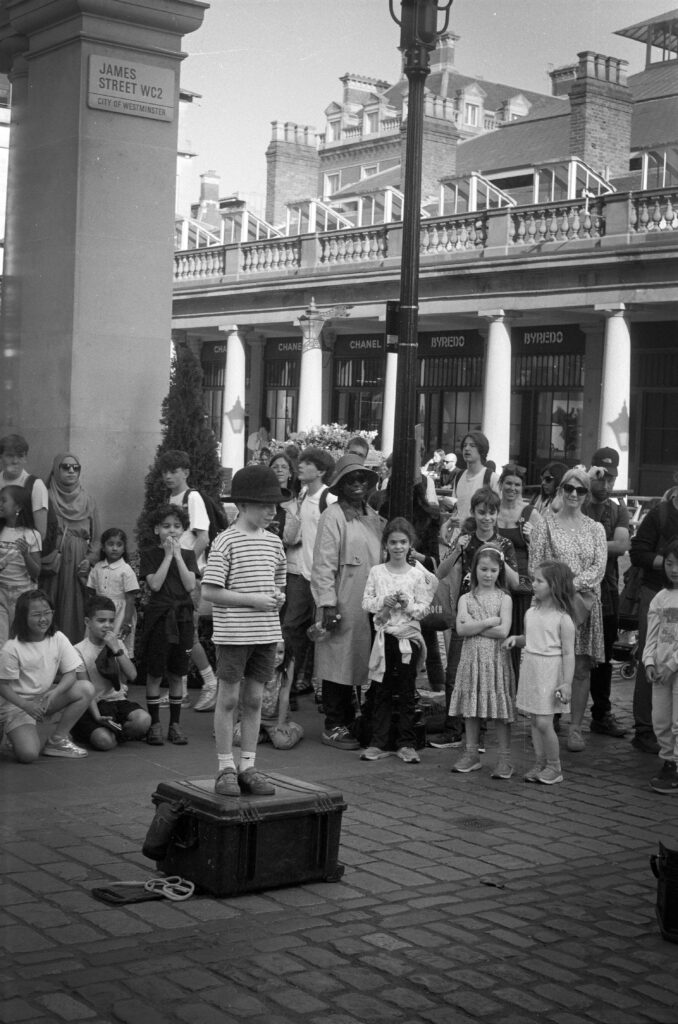
Agfa APX 100 Covent Garden – no filter
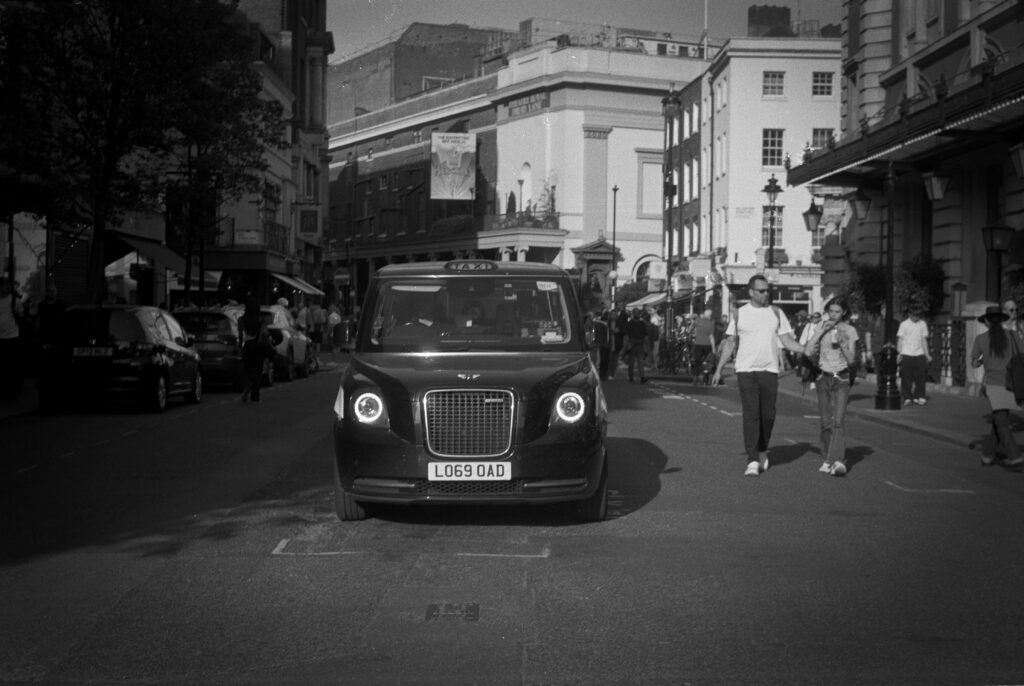
Agfa APX 100 London West End – no filter
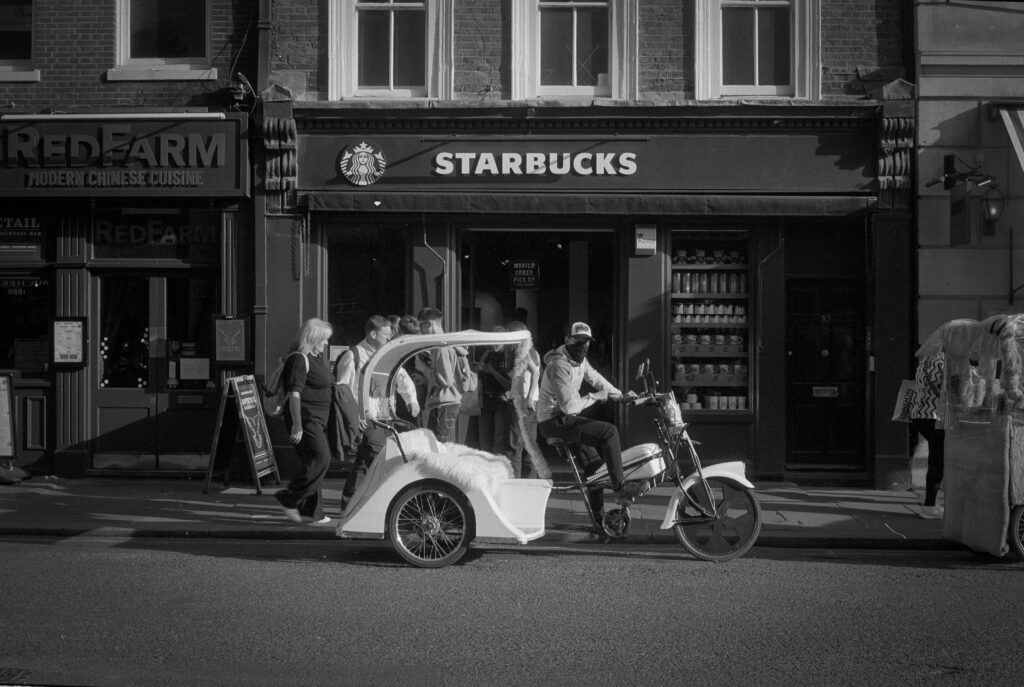
Agfa APX 100 London West End – no filter
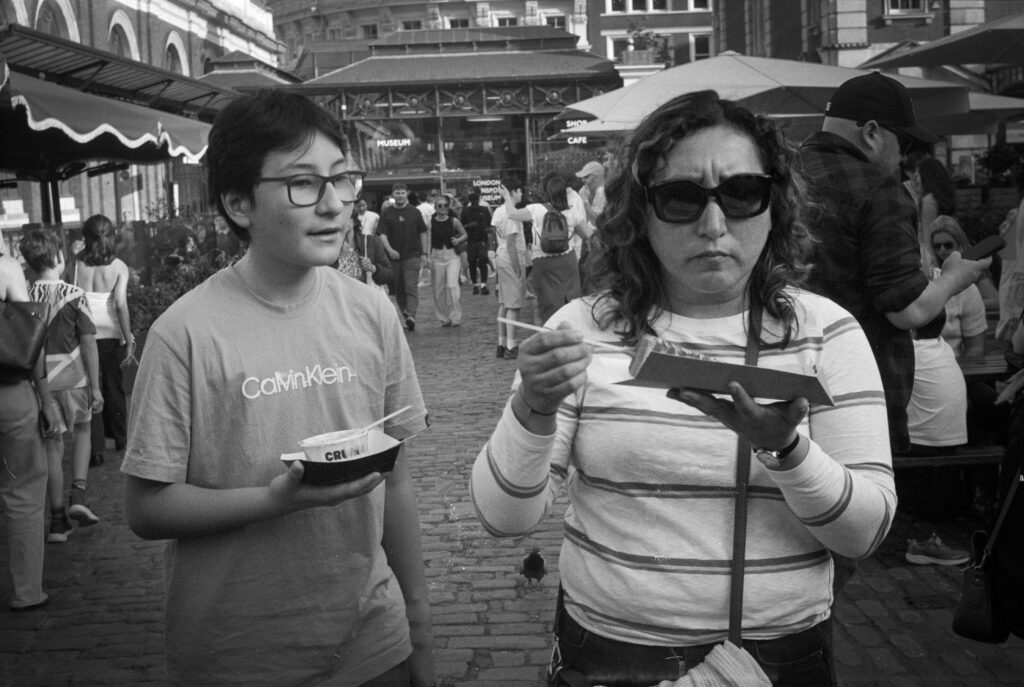
Agfa APX 100 – no filter
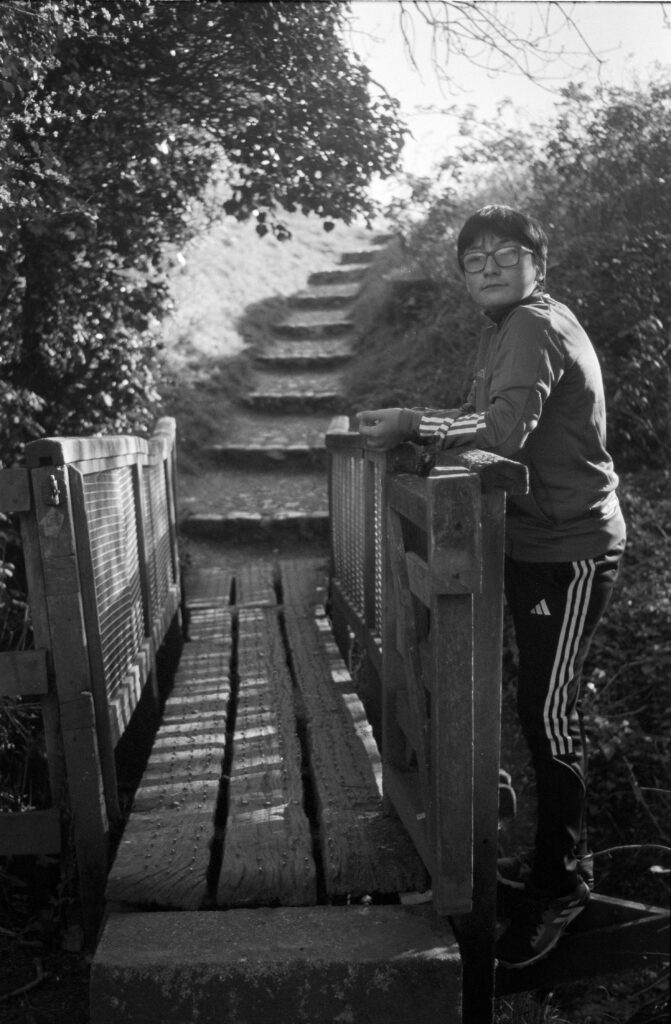
Agfa APX 100 Framlingham – no filter
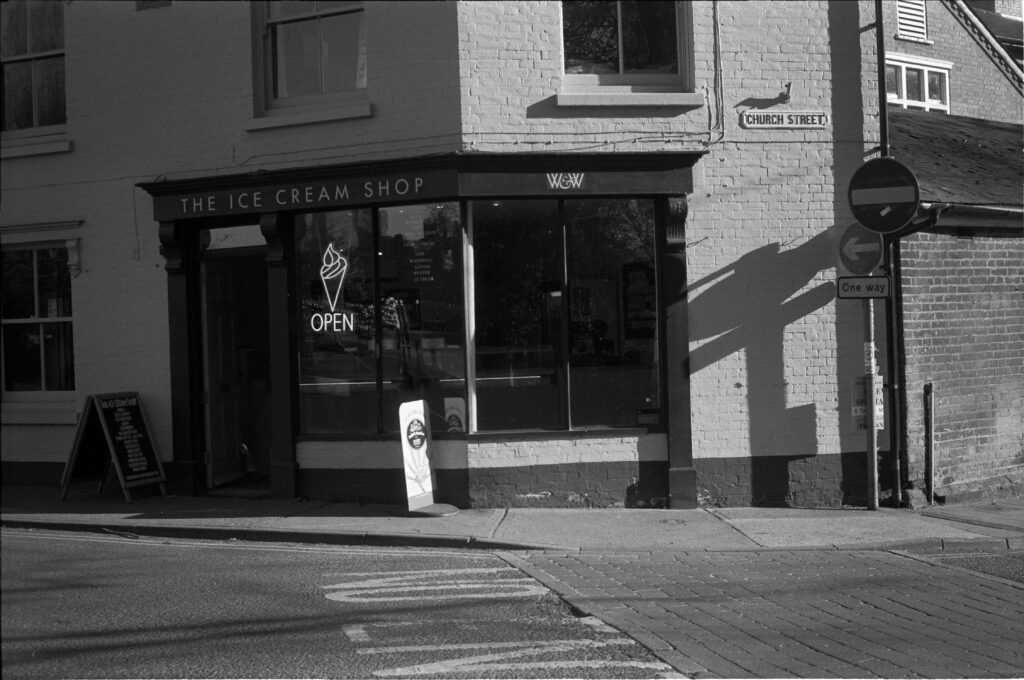
Agfa APX 100 Framlingham – no filter
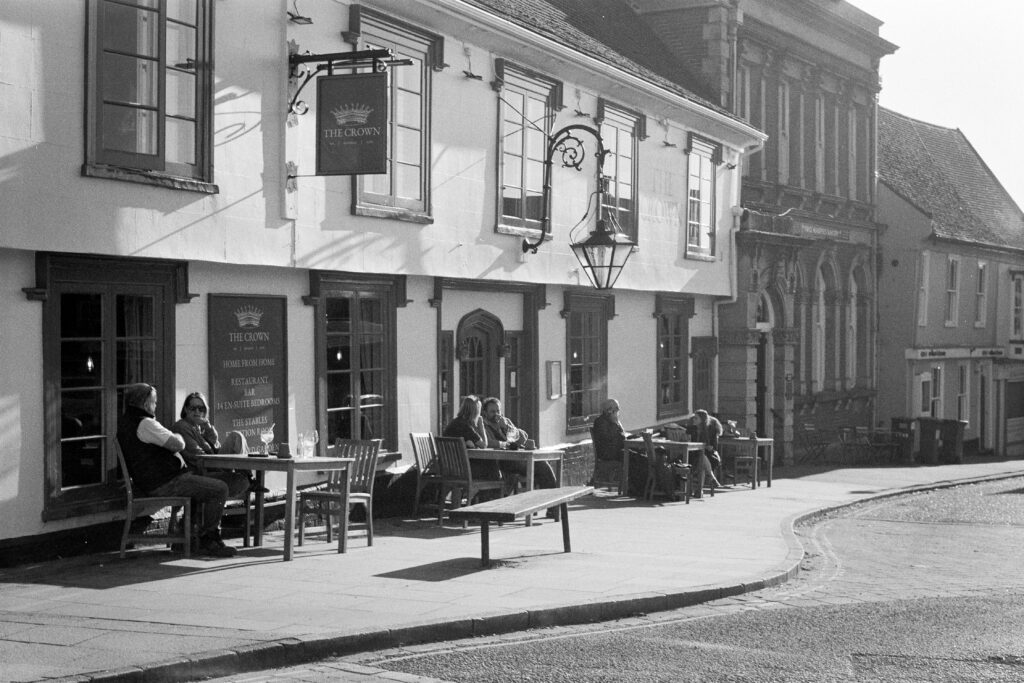
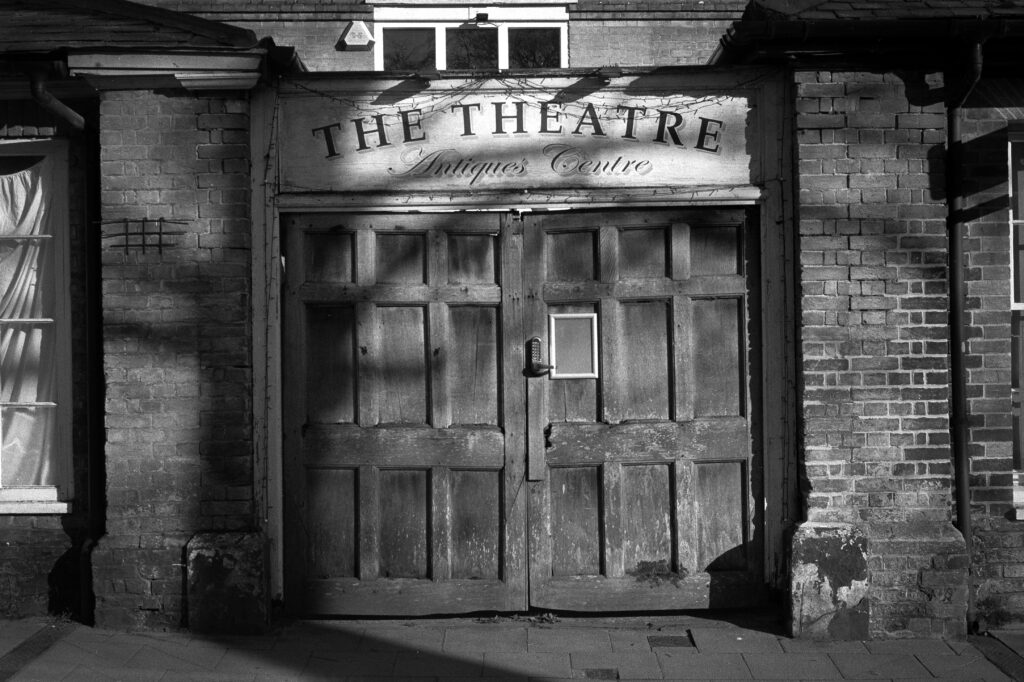
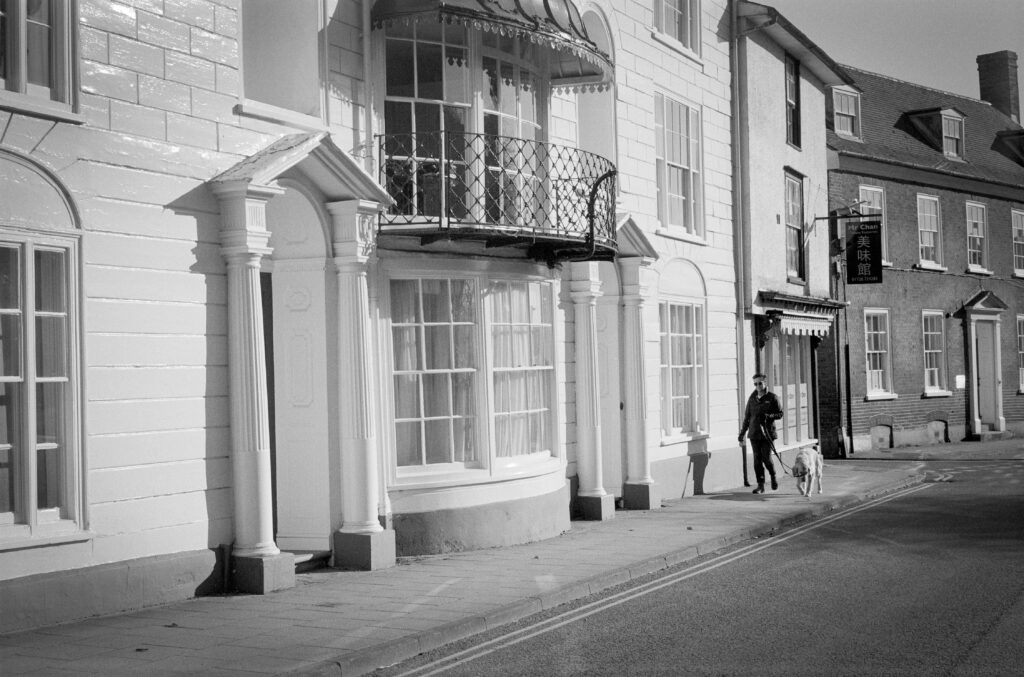
Agfa APX 100 Framlingham – no filter
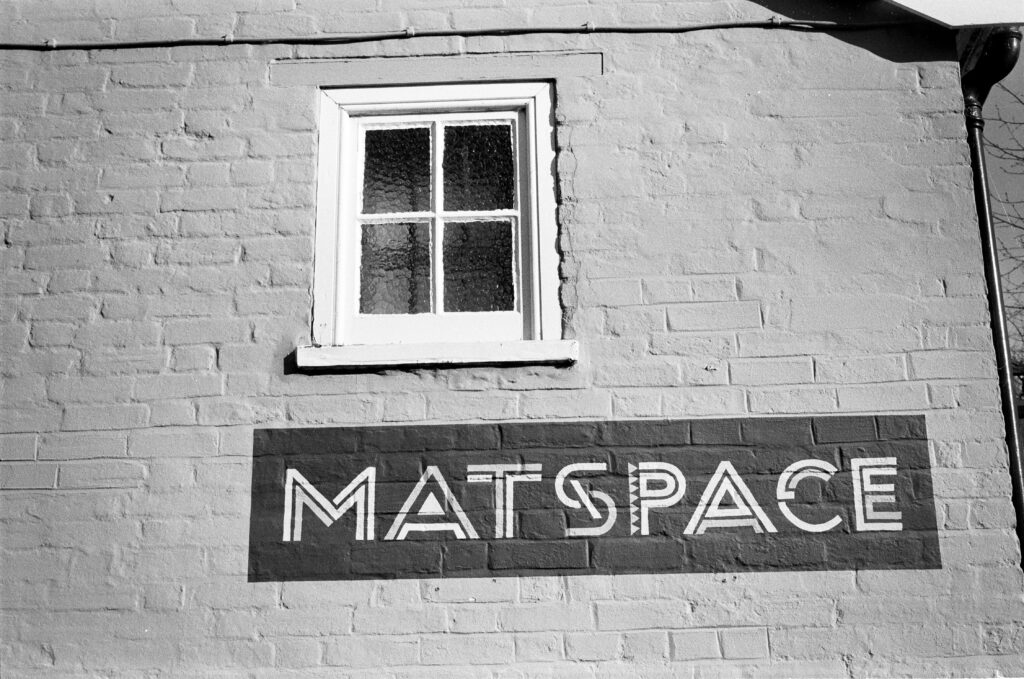
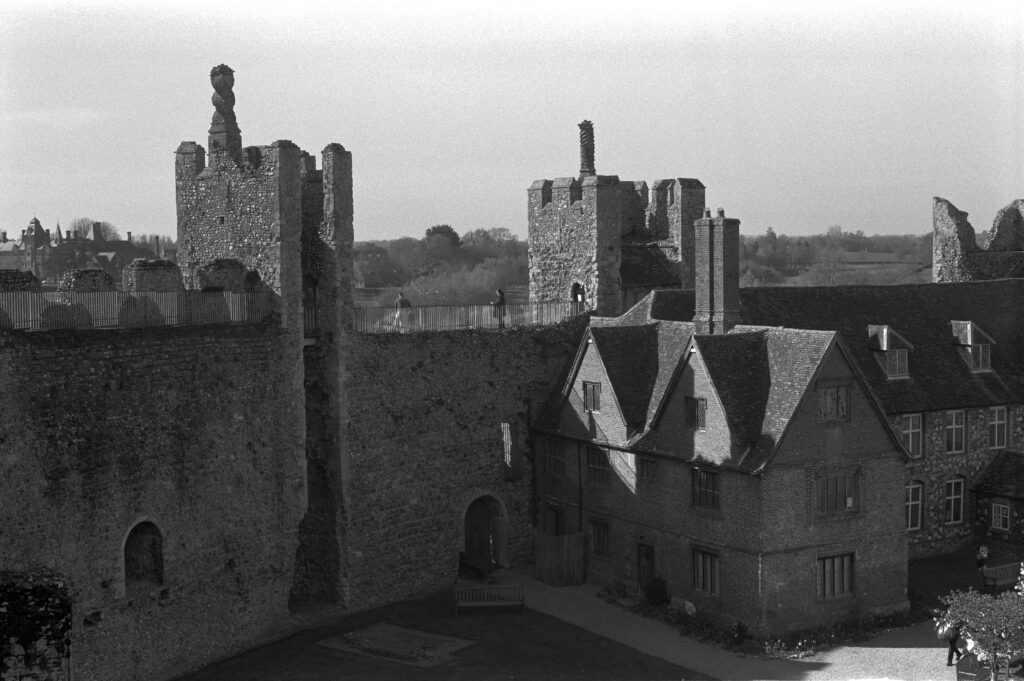
Agfa APX 100 – no filter
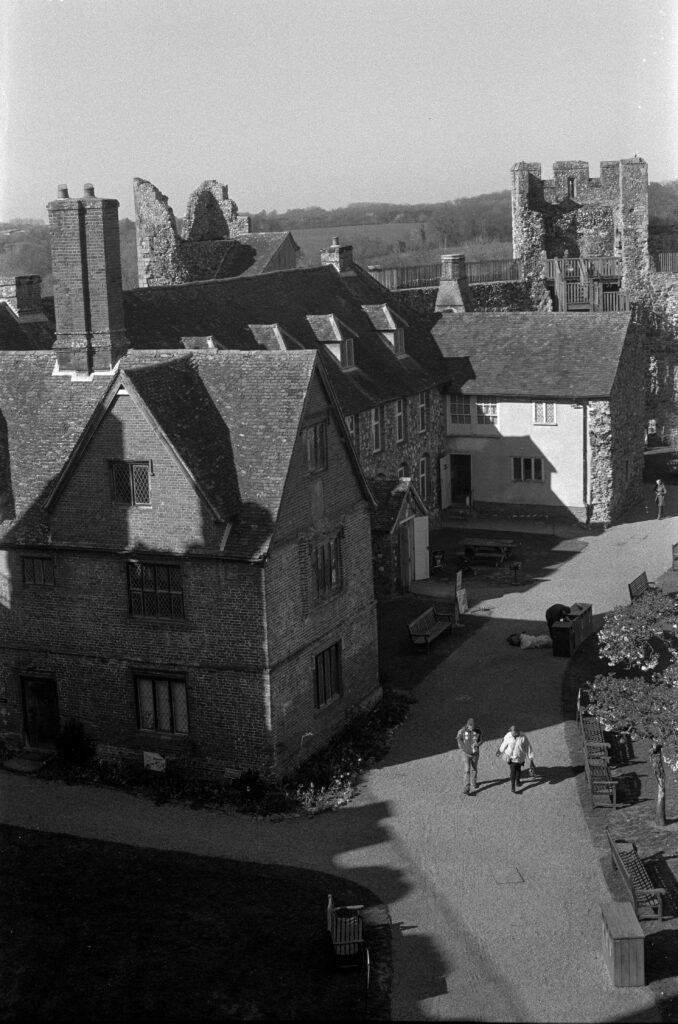
Agfa APX 100 Framlingham – no filter
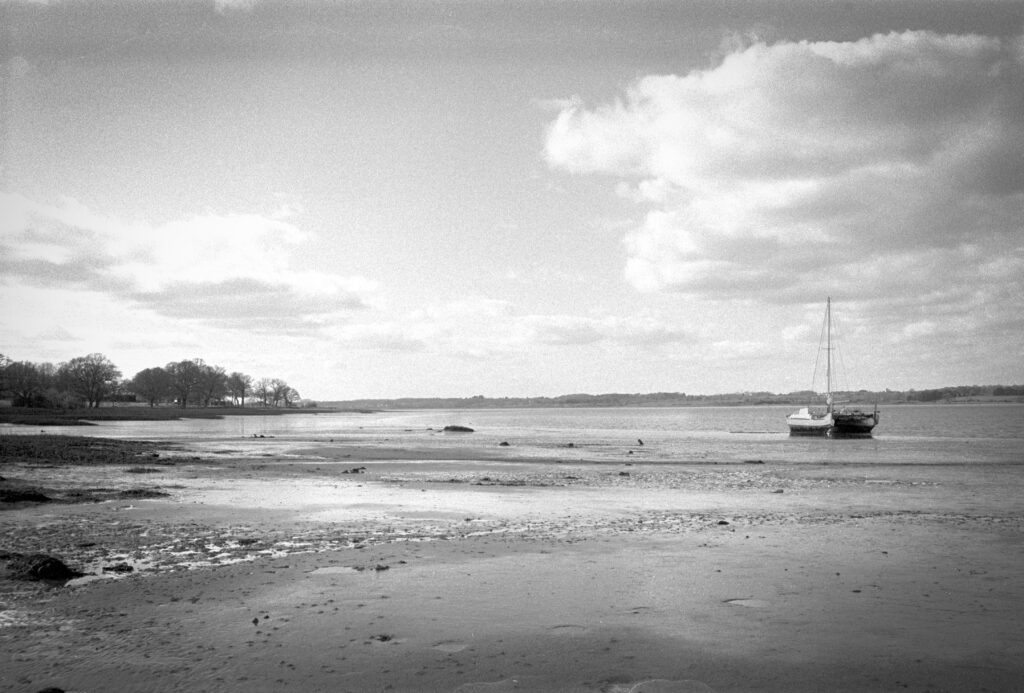
Kodak Eastman 5222 Double X Wrabness – no filter
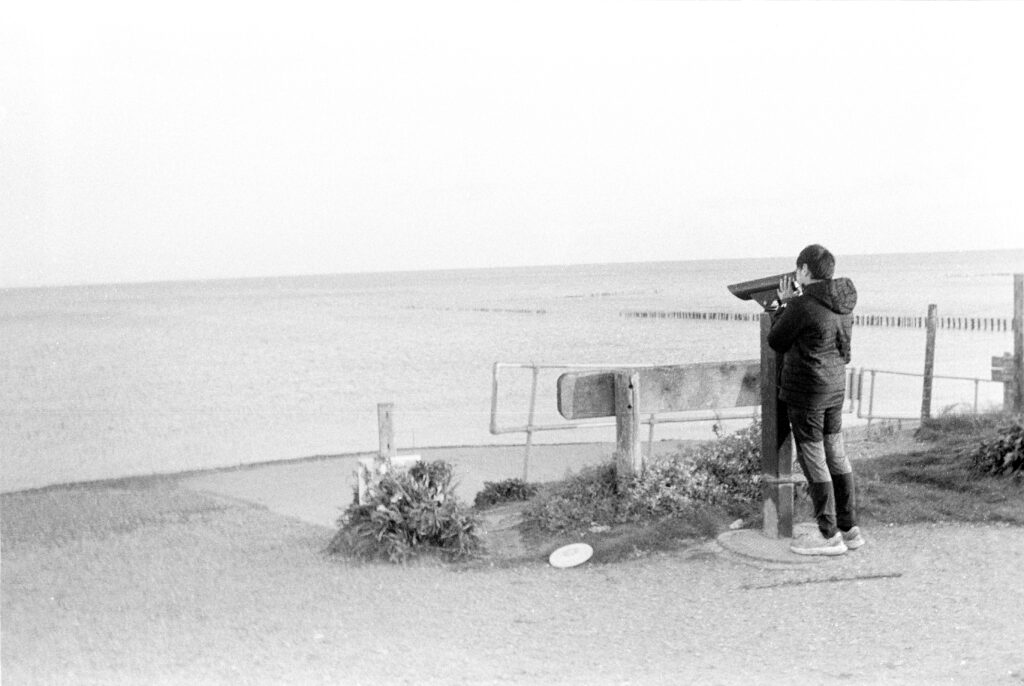
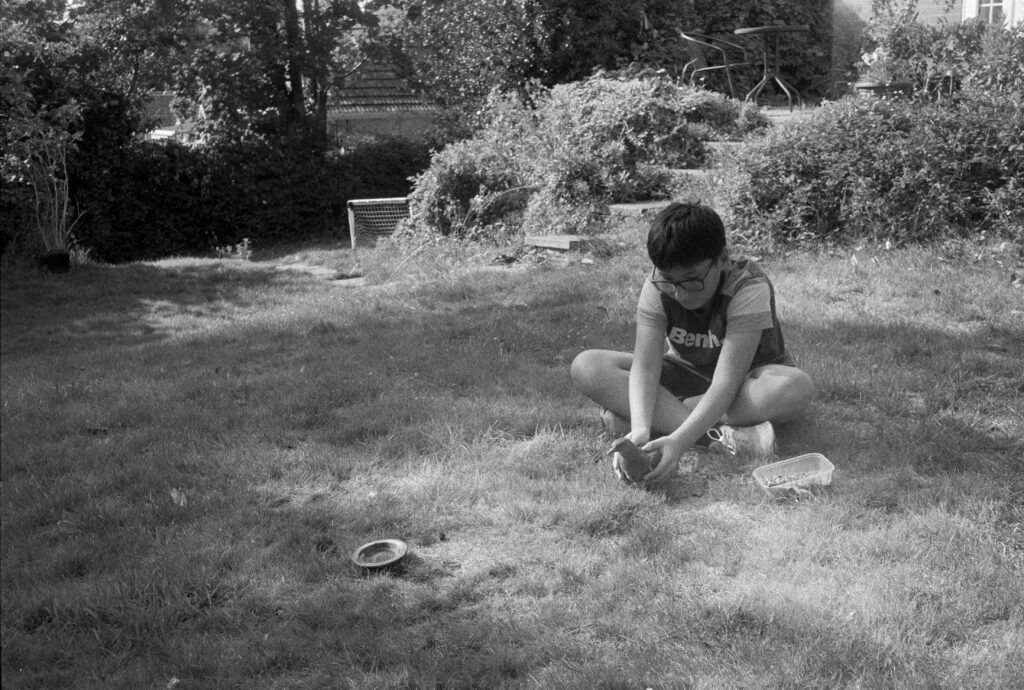
Kodak Eastman 5222 Double X – no filter
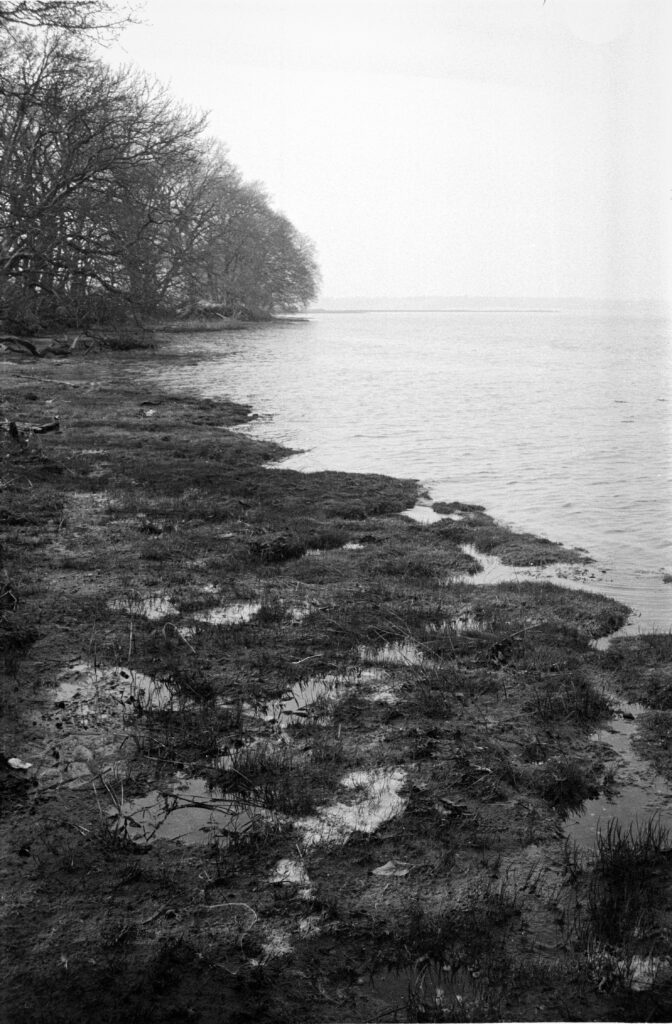
Kodak Eastman 5222 Double X – no filter
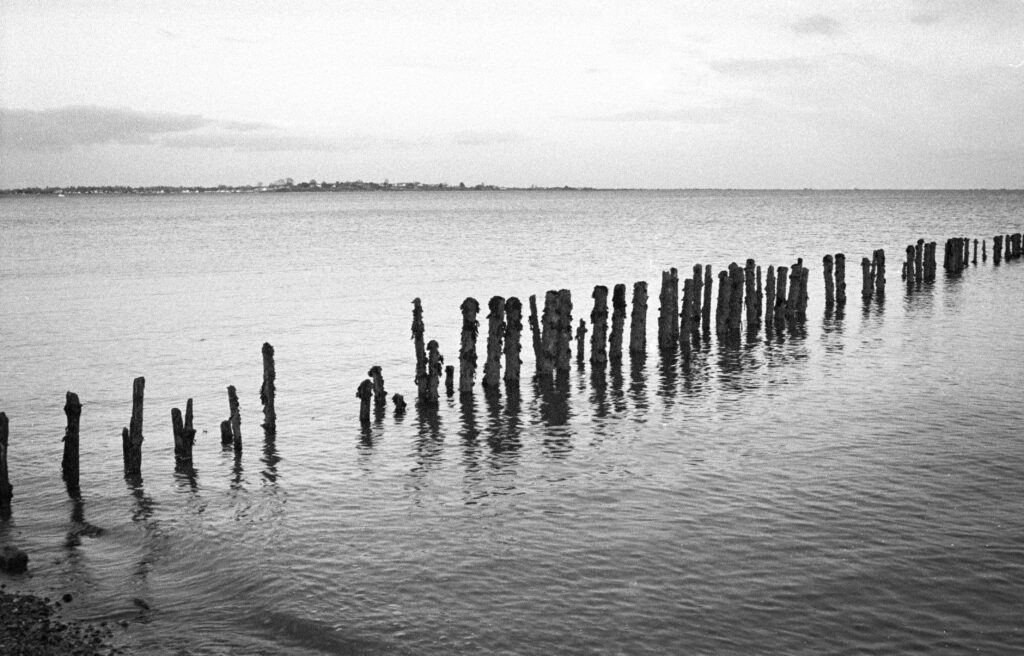
Kodak Eastman 5222 Double X – no filter
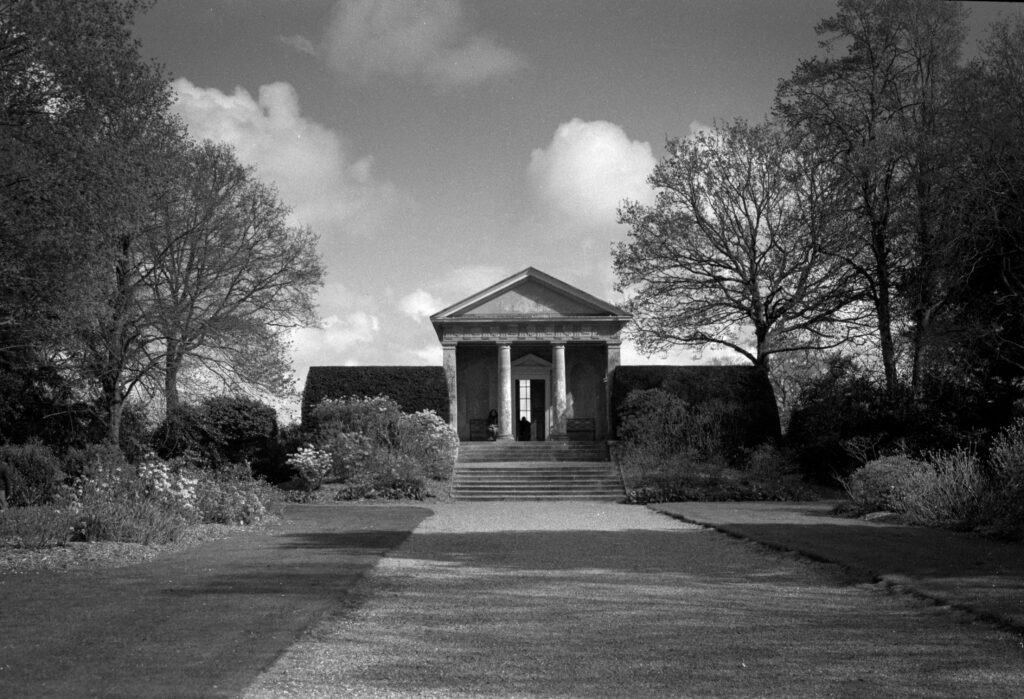
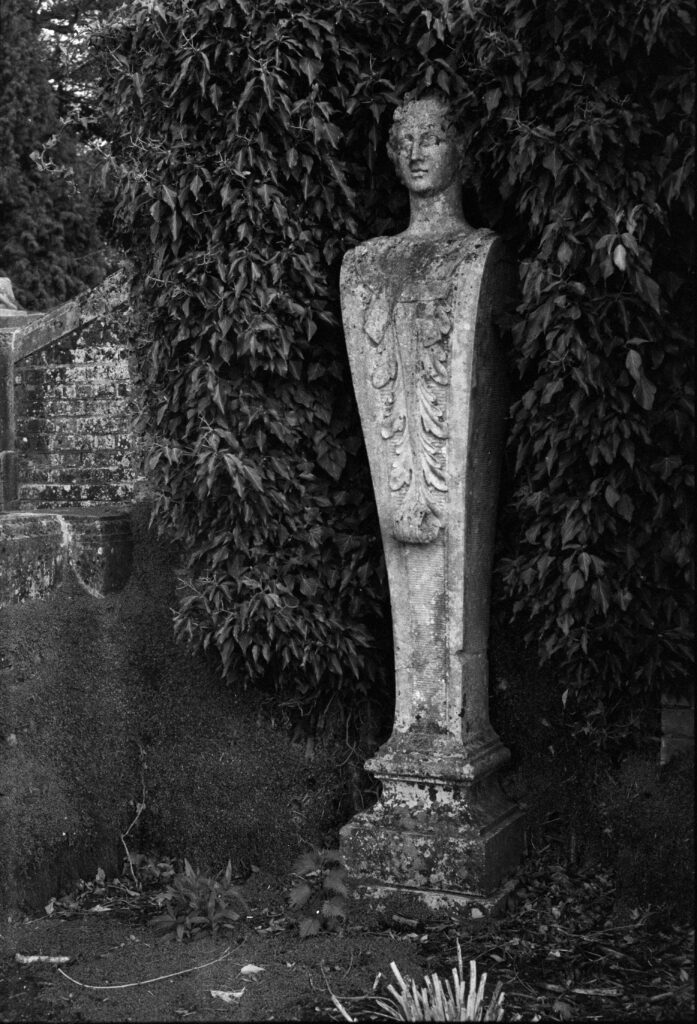
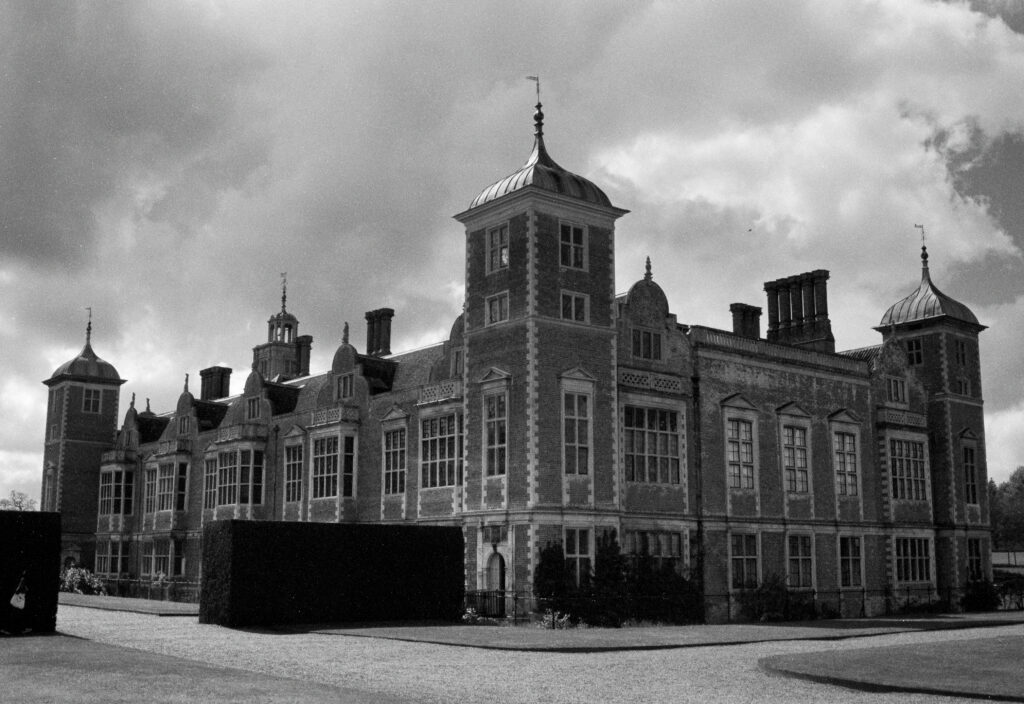
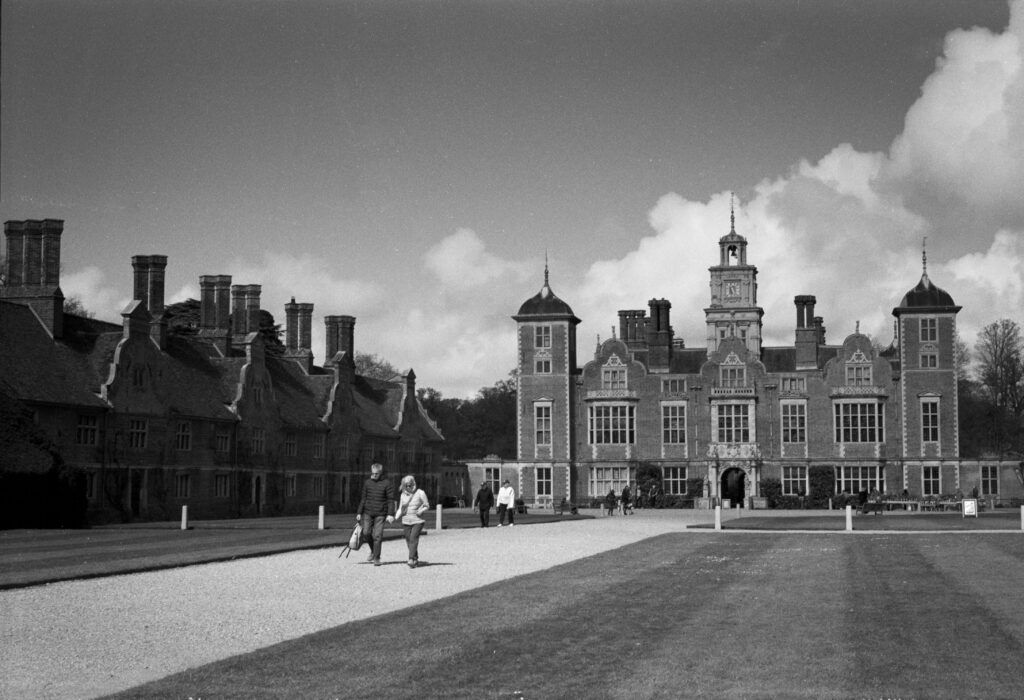
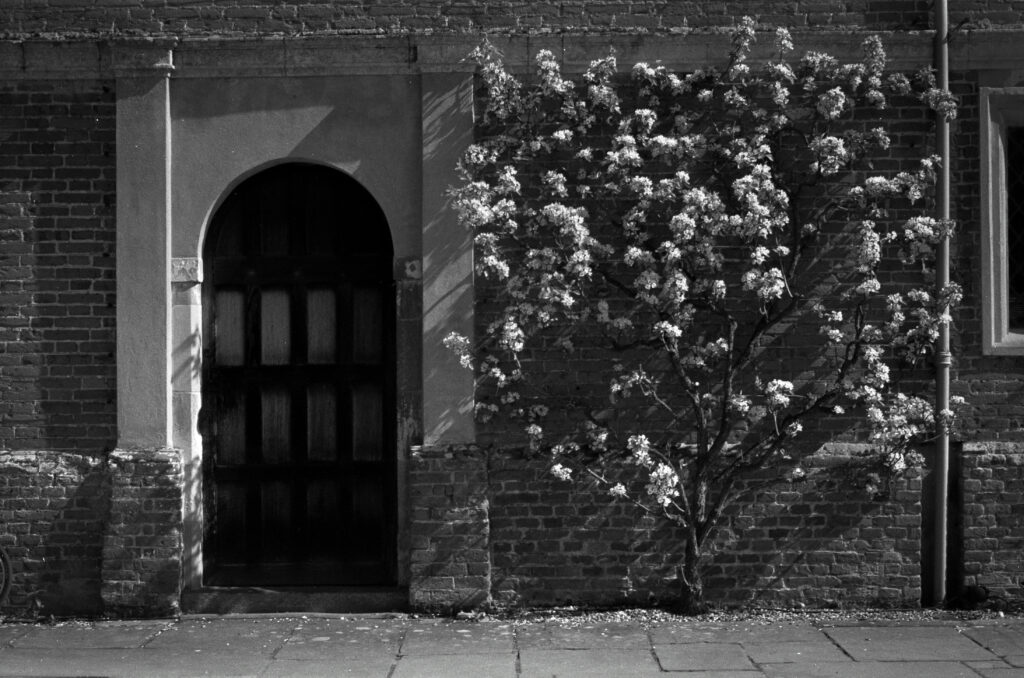
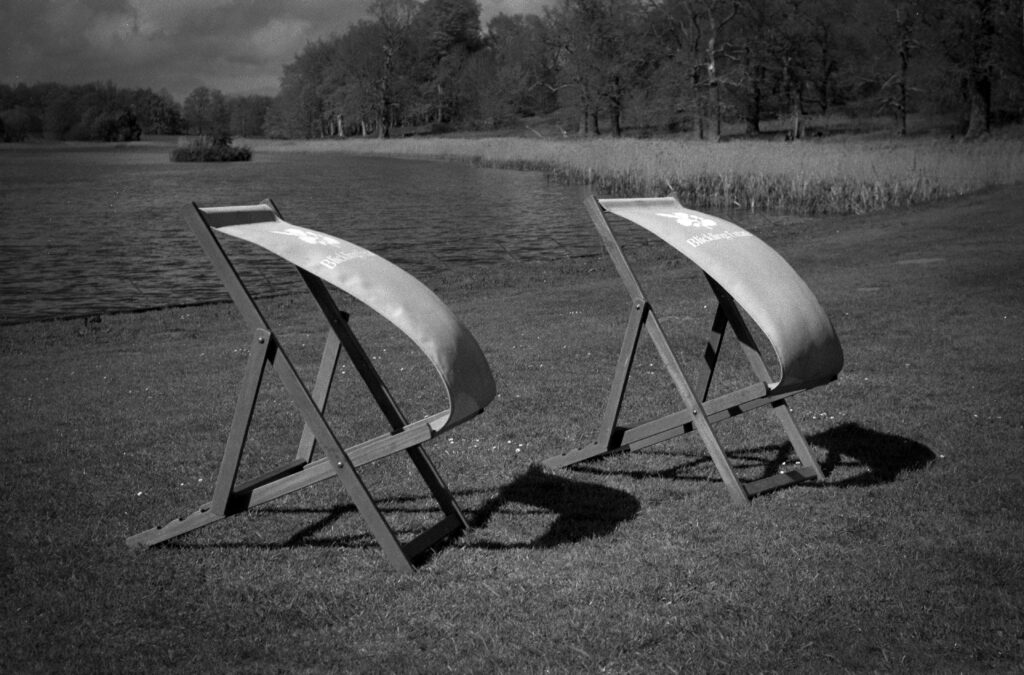
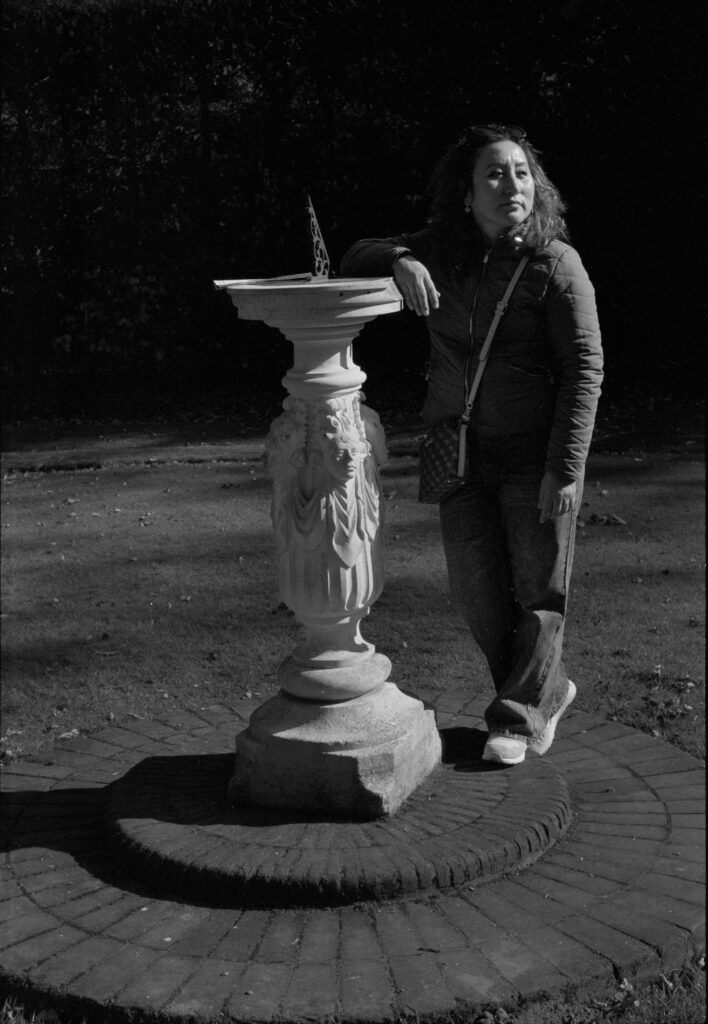
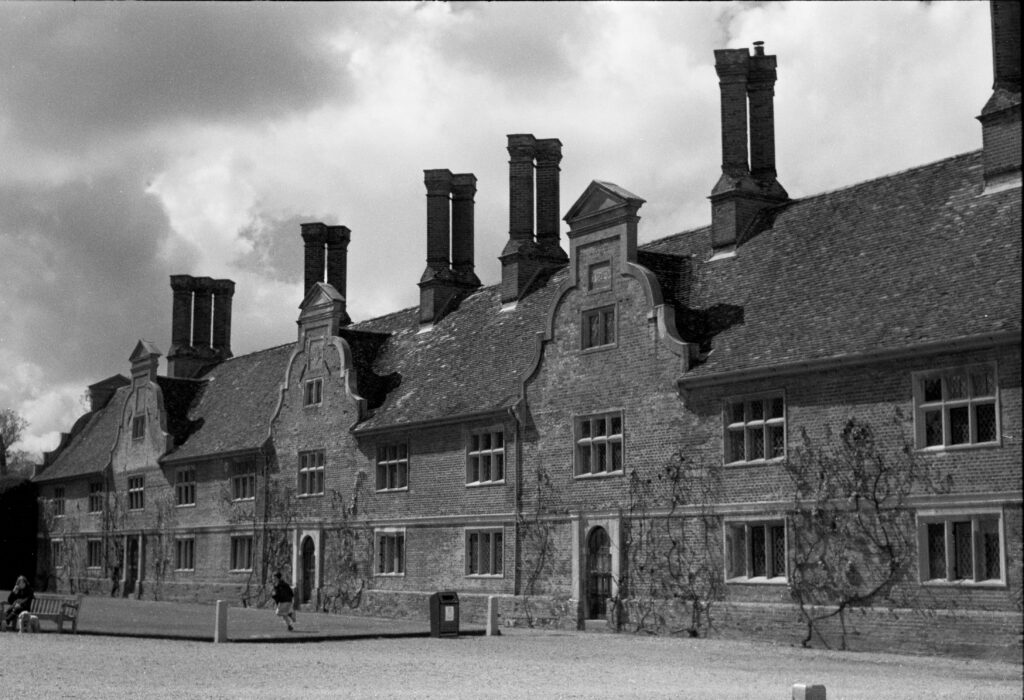
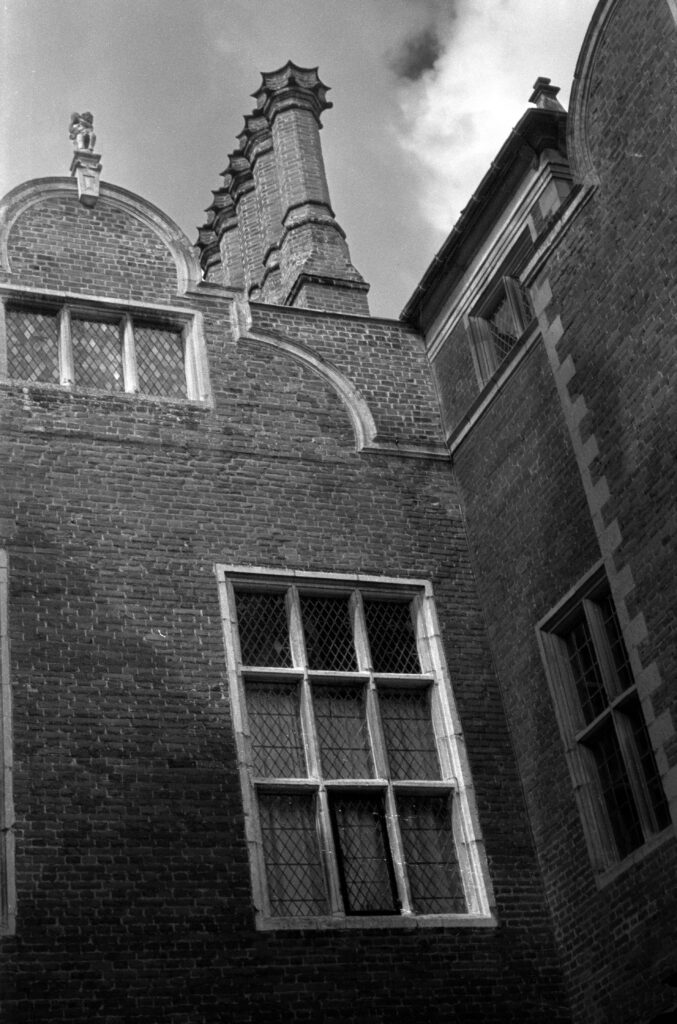
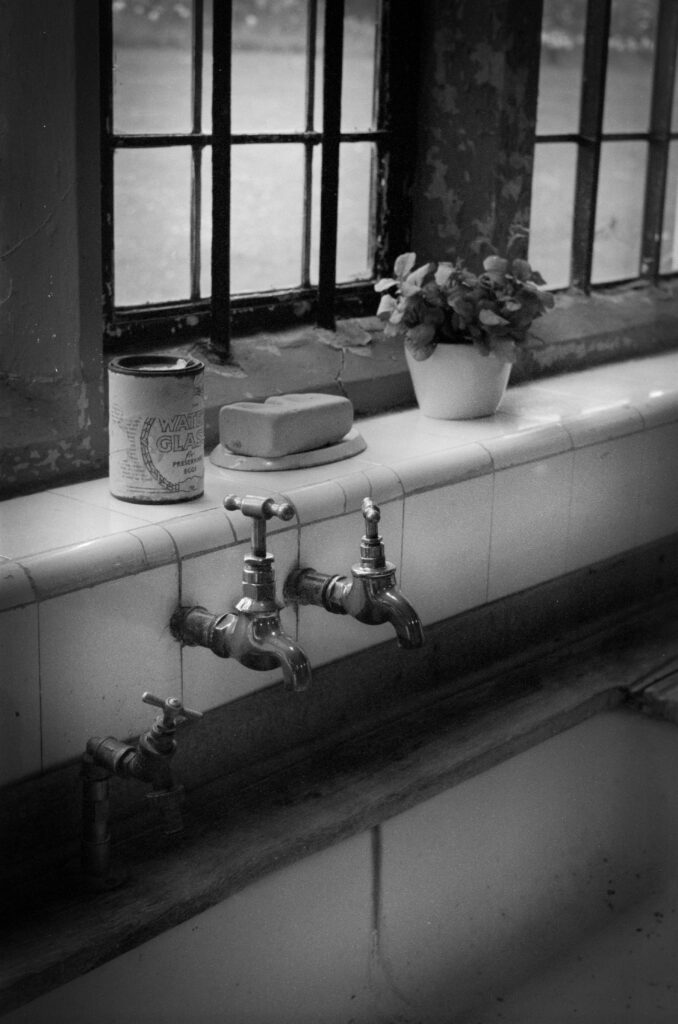
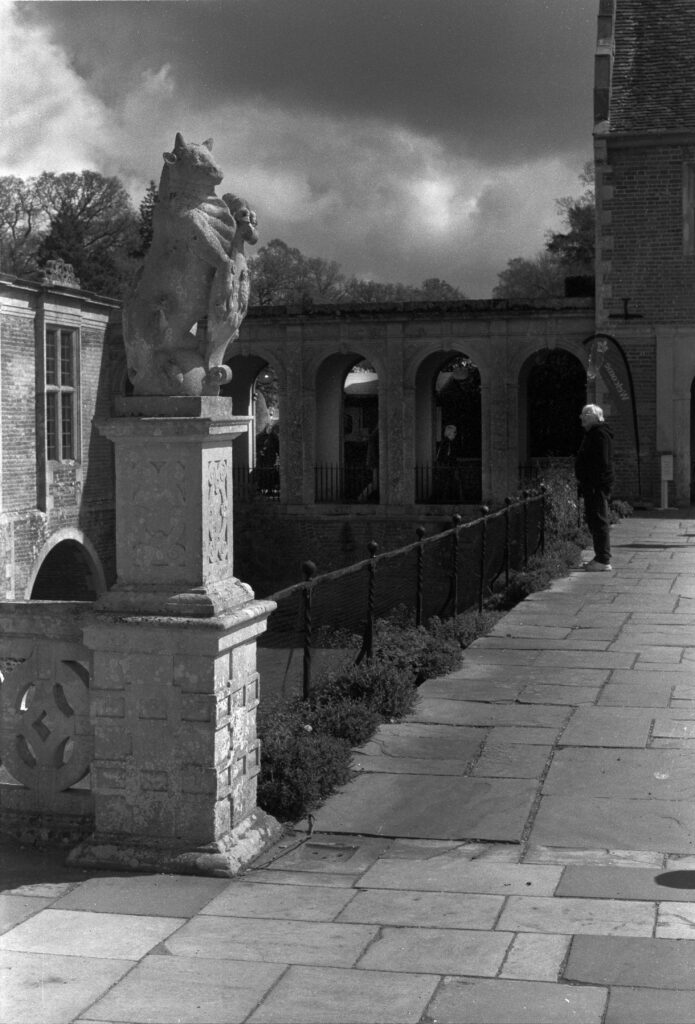
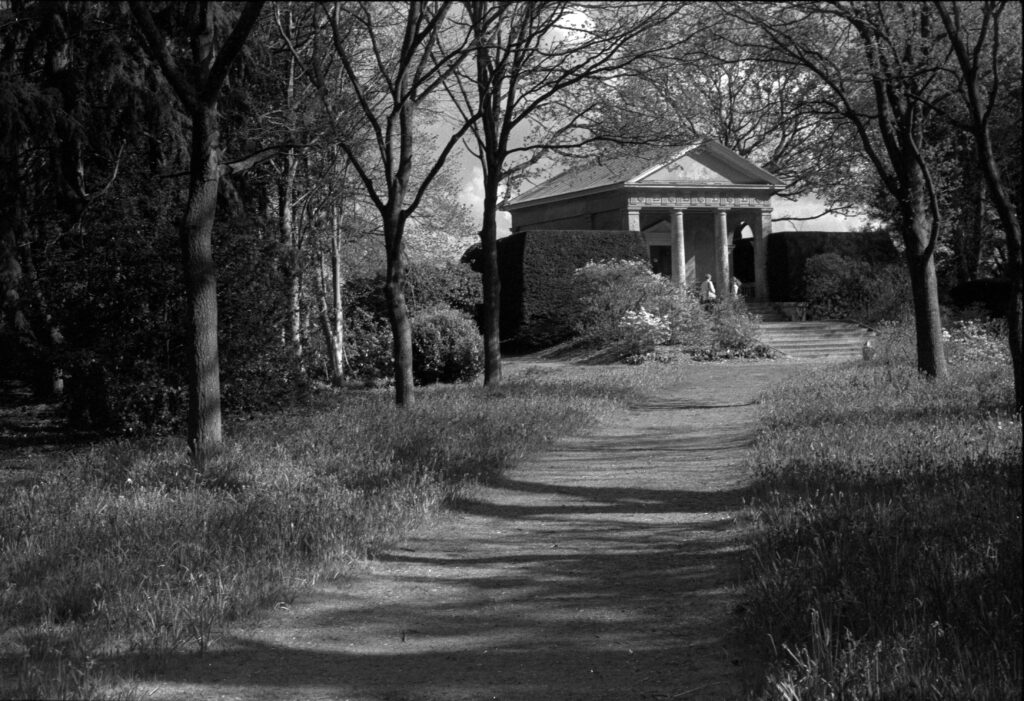
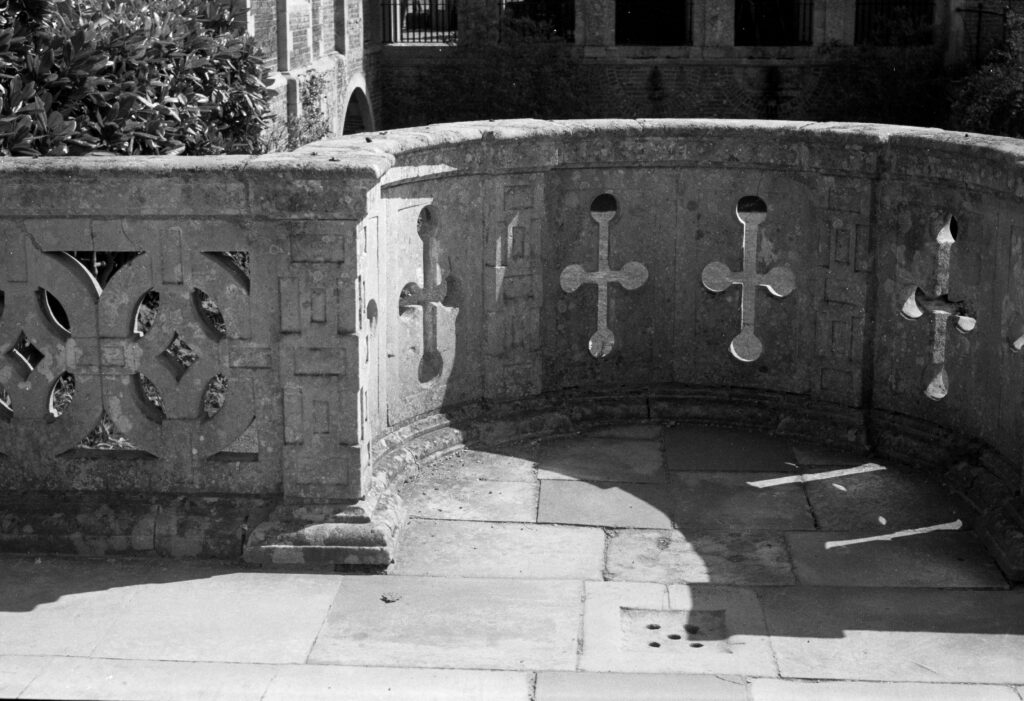
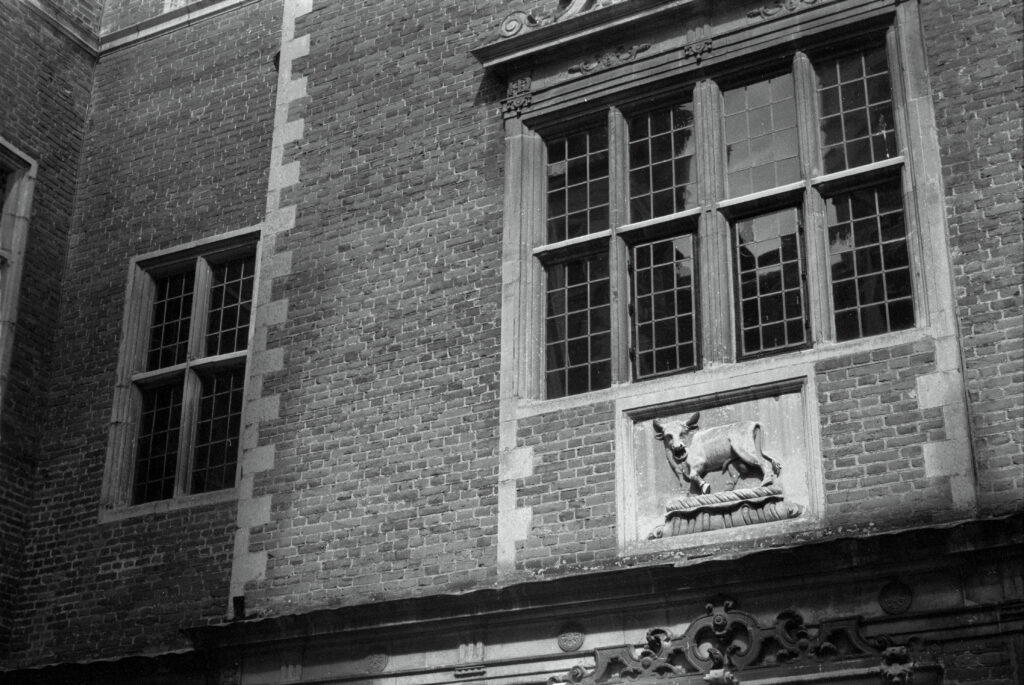
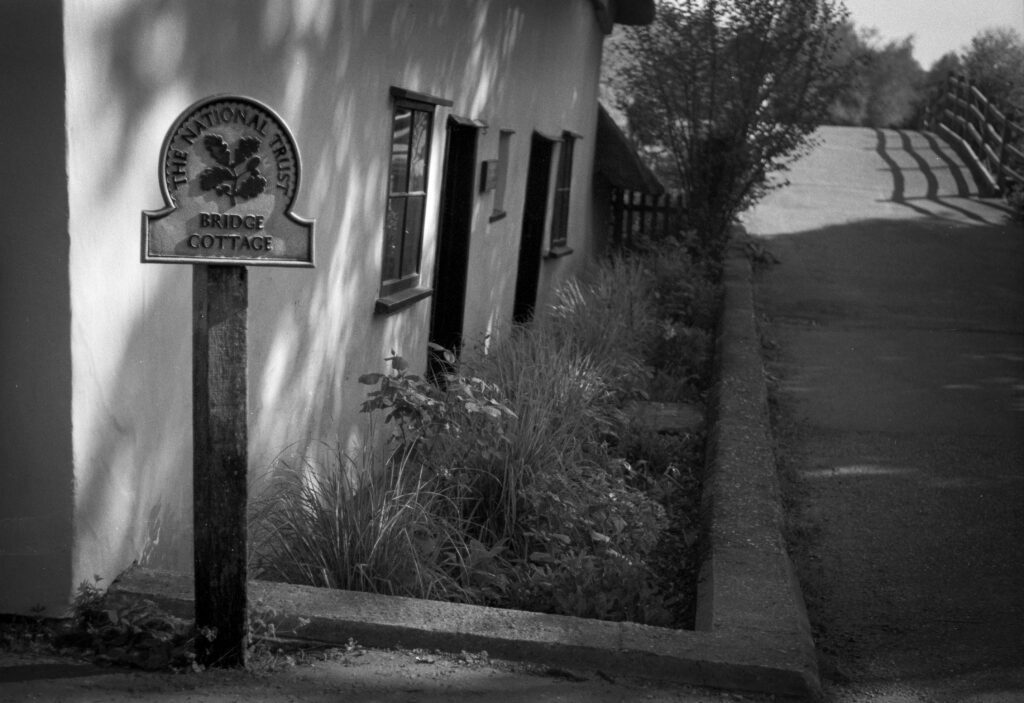
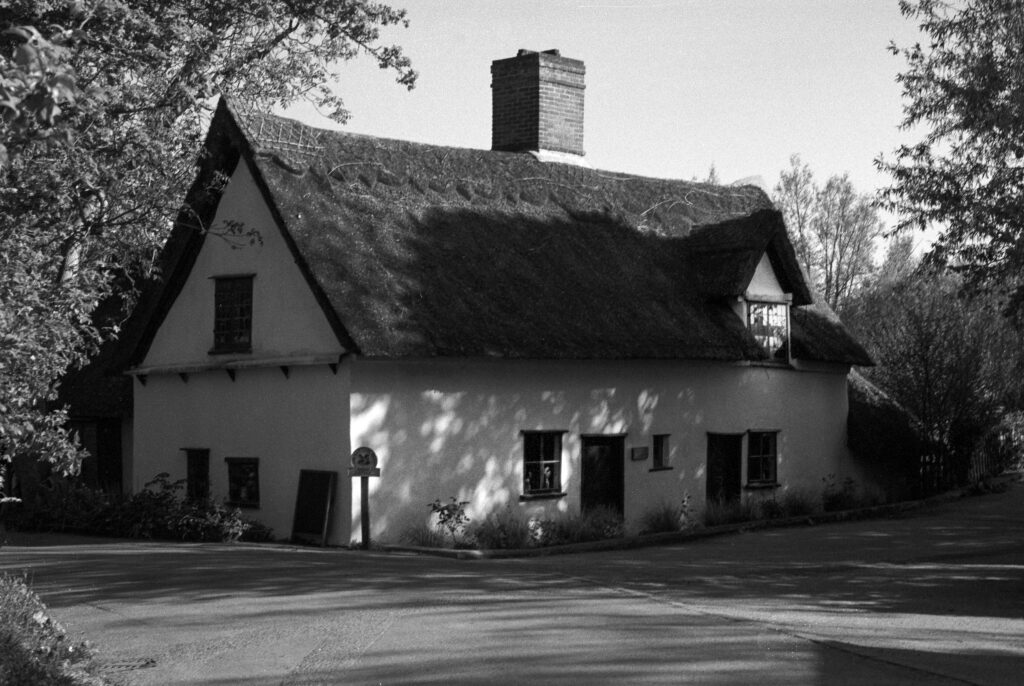
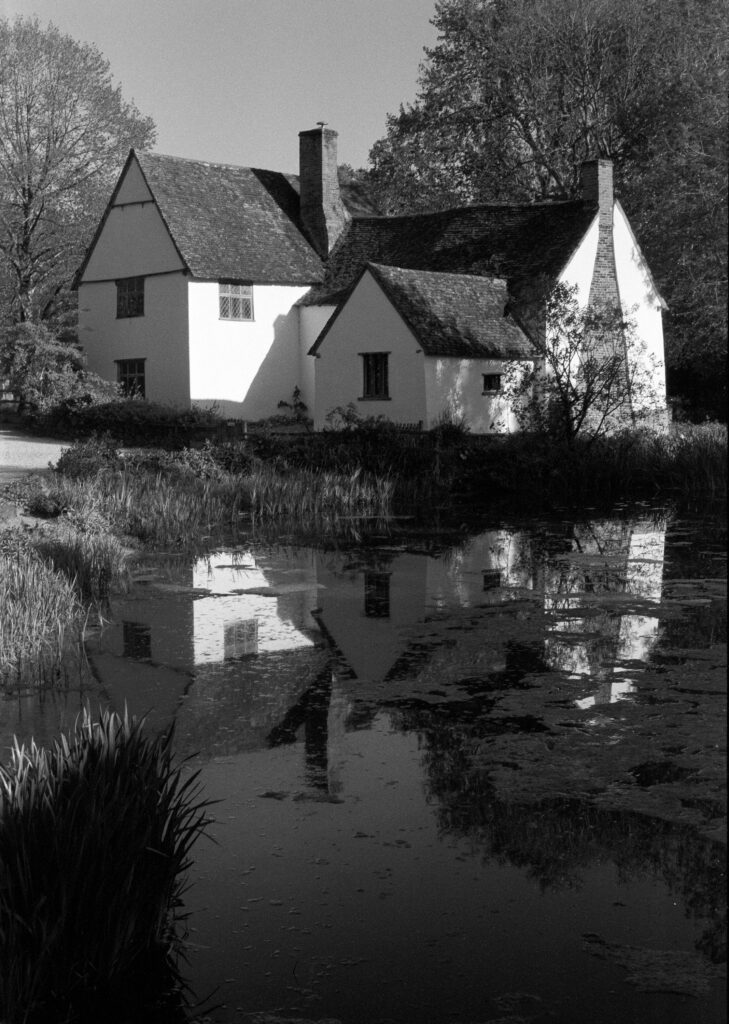
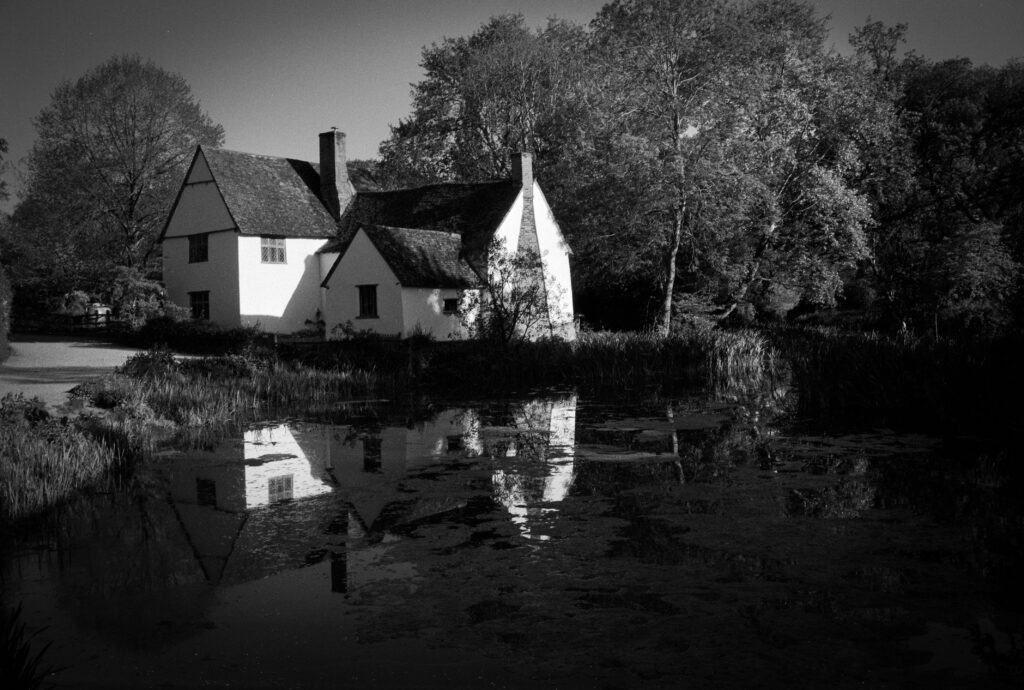
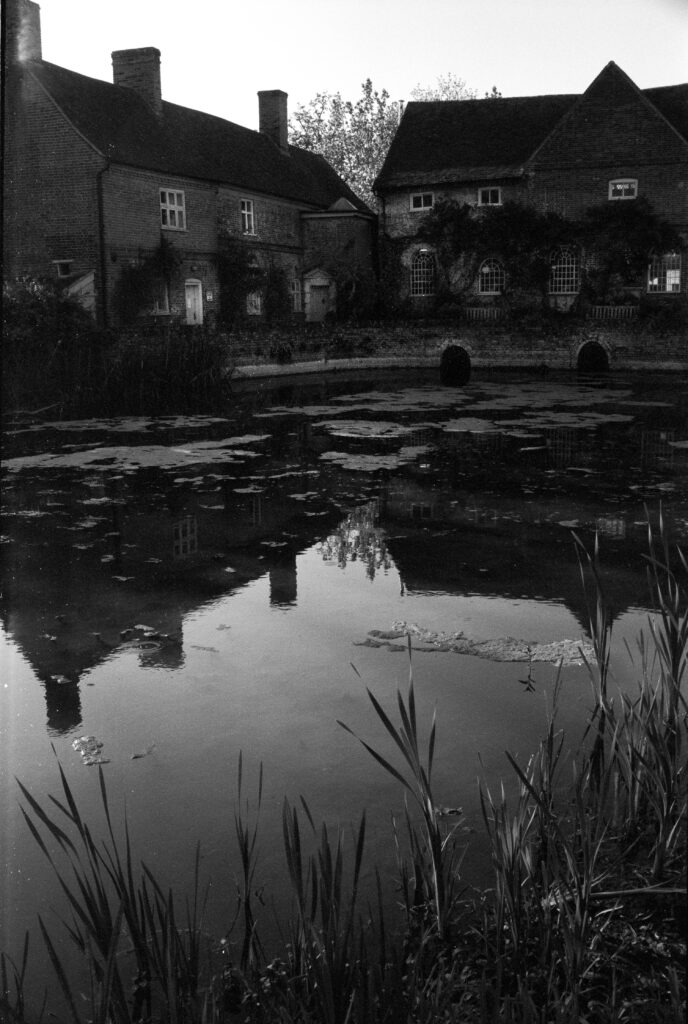
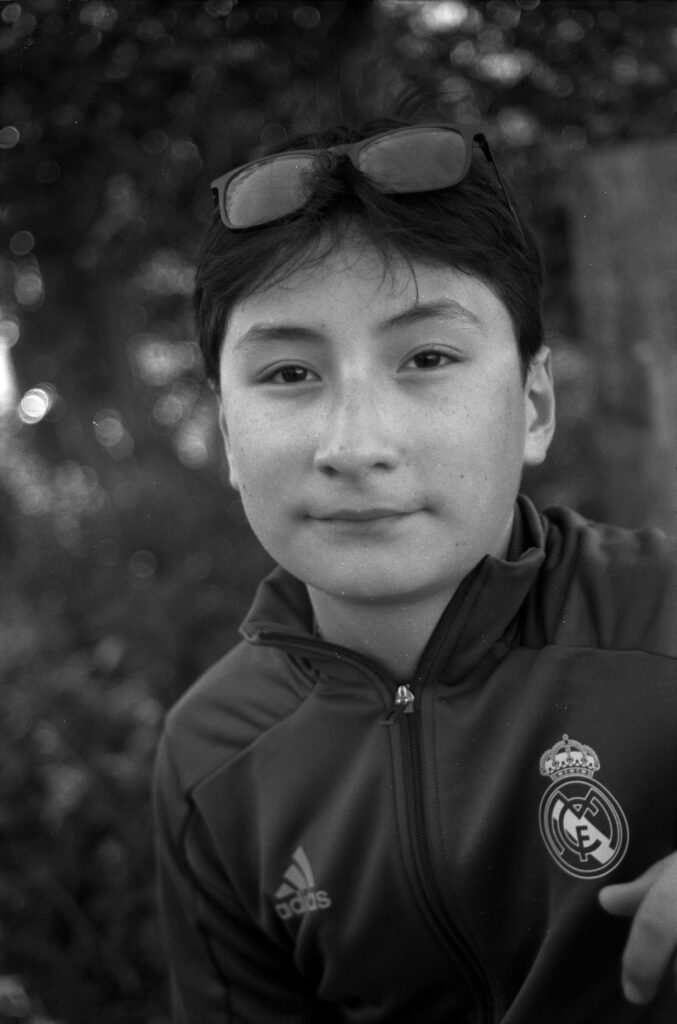
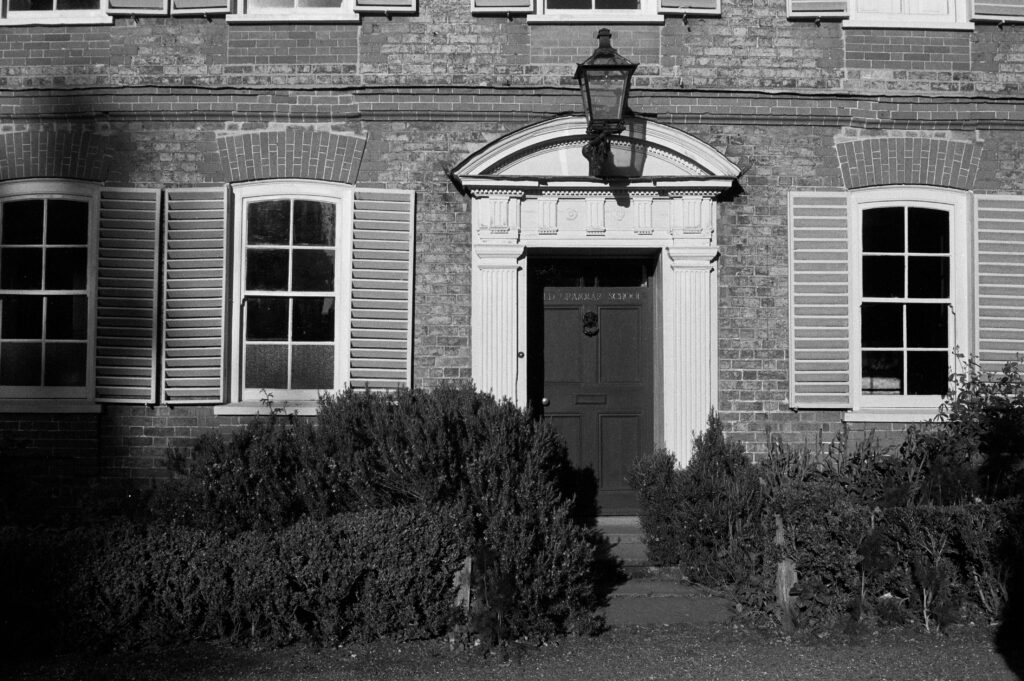
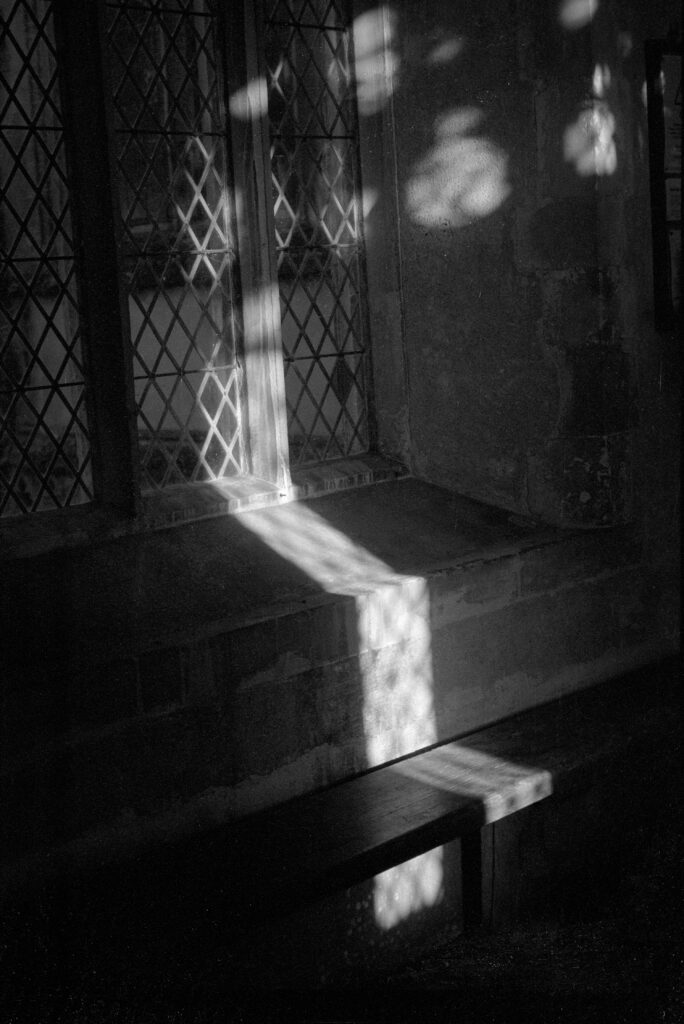
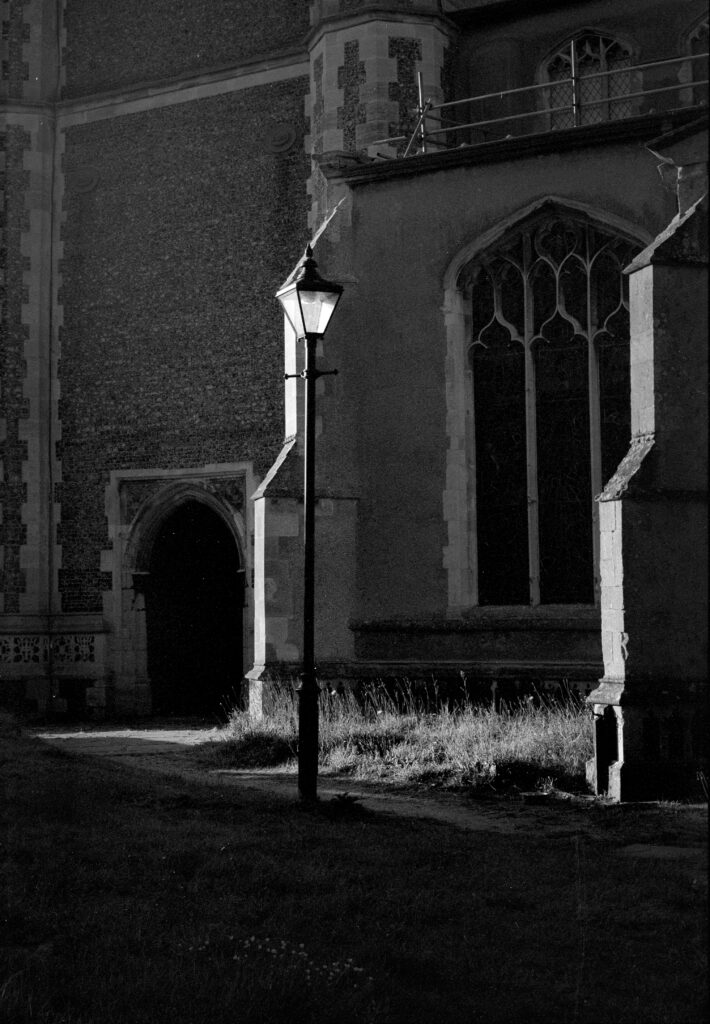
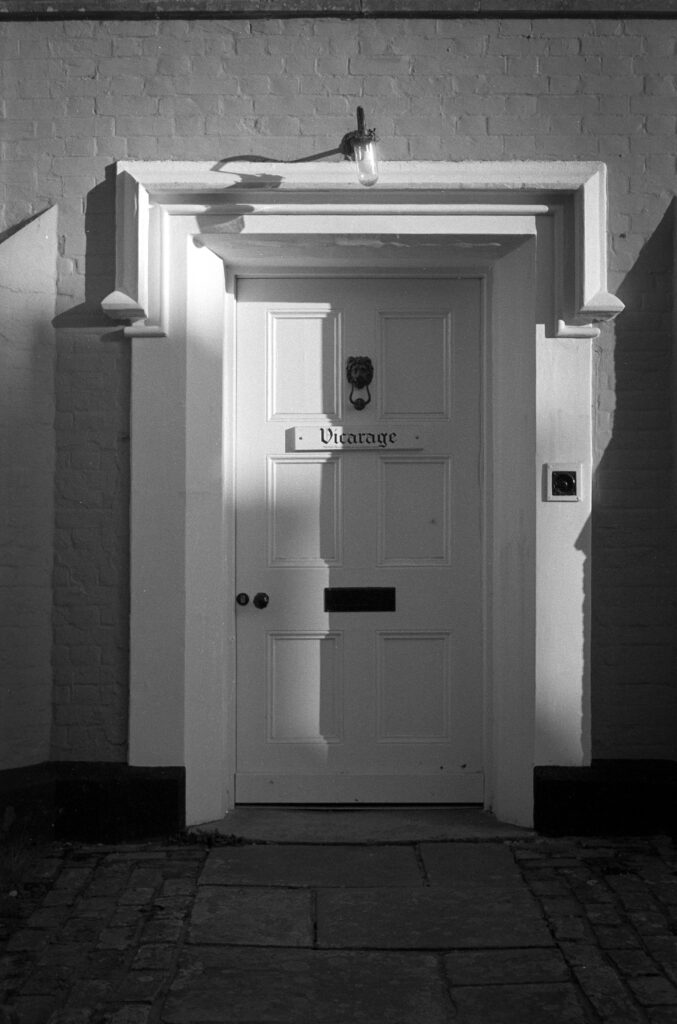
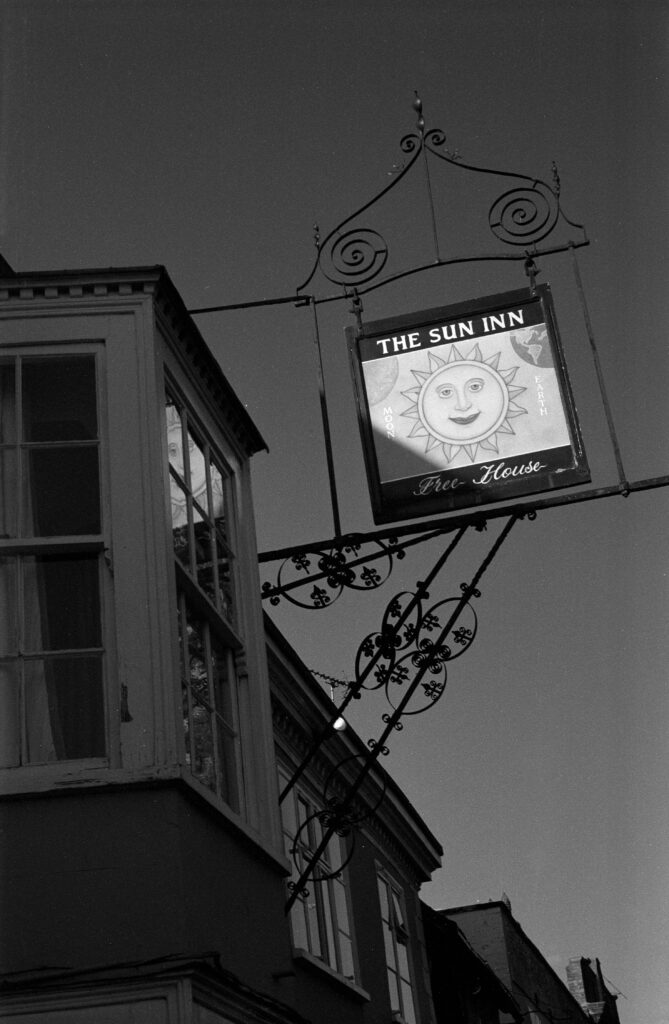
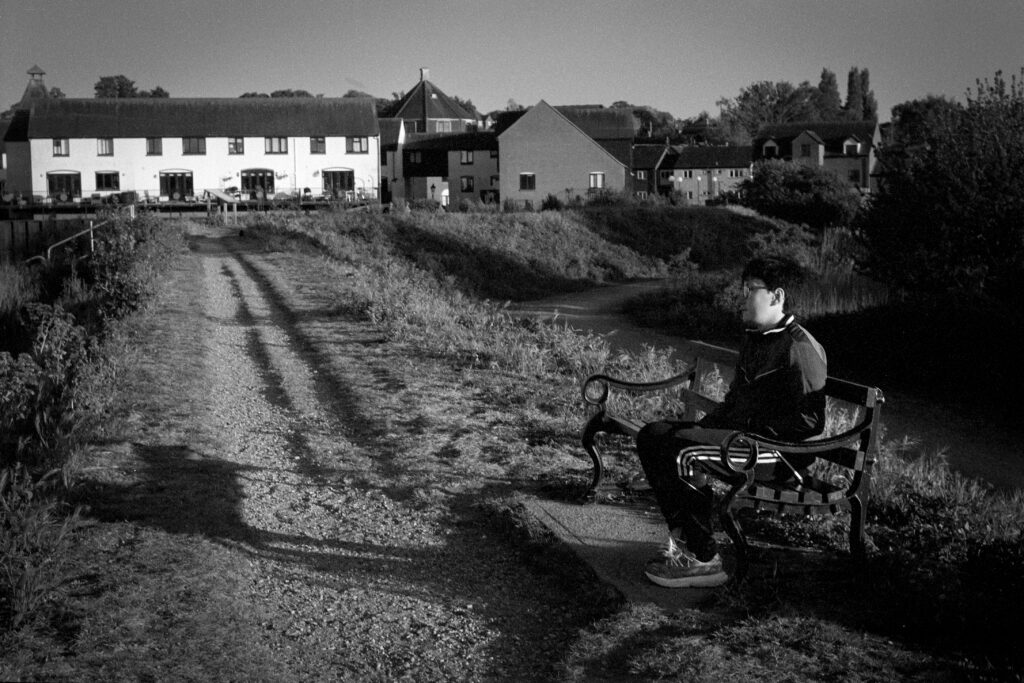
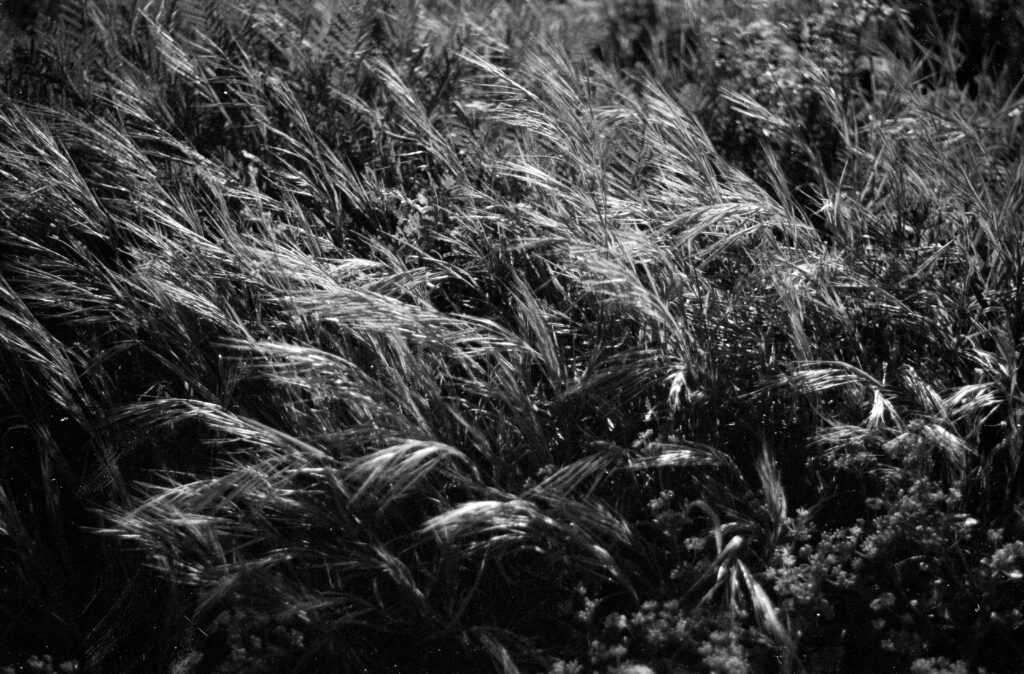
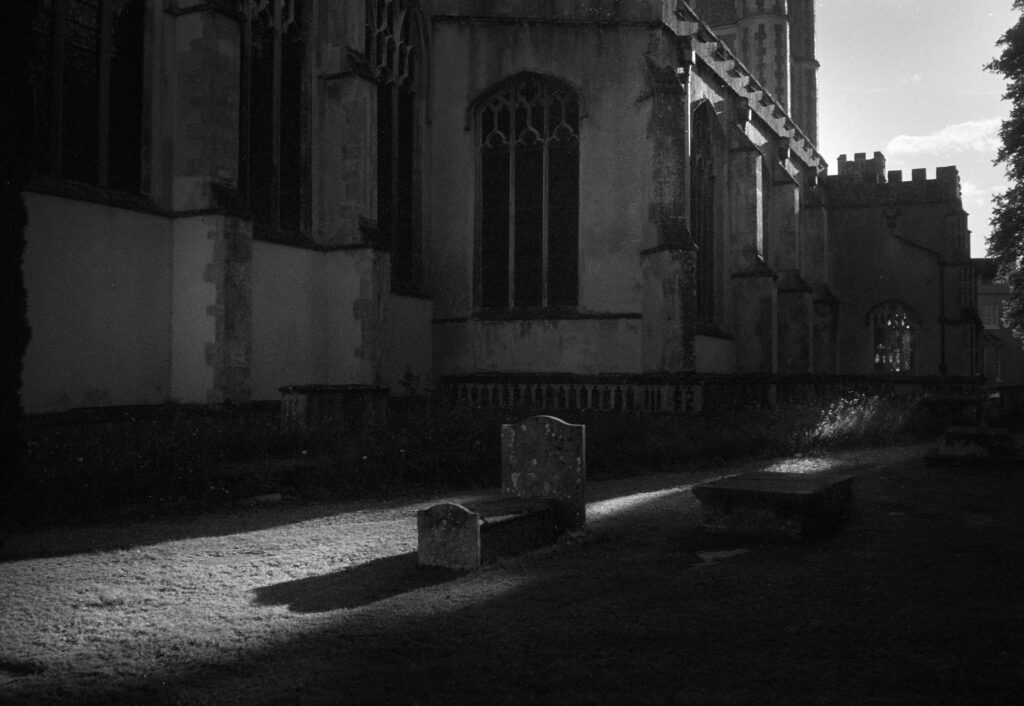
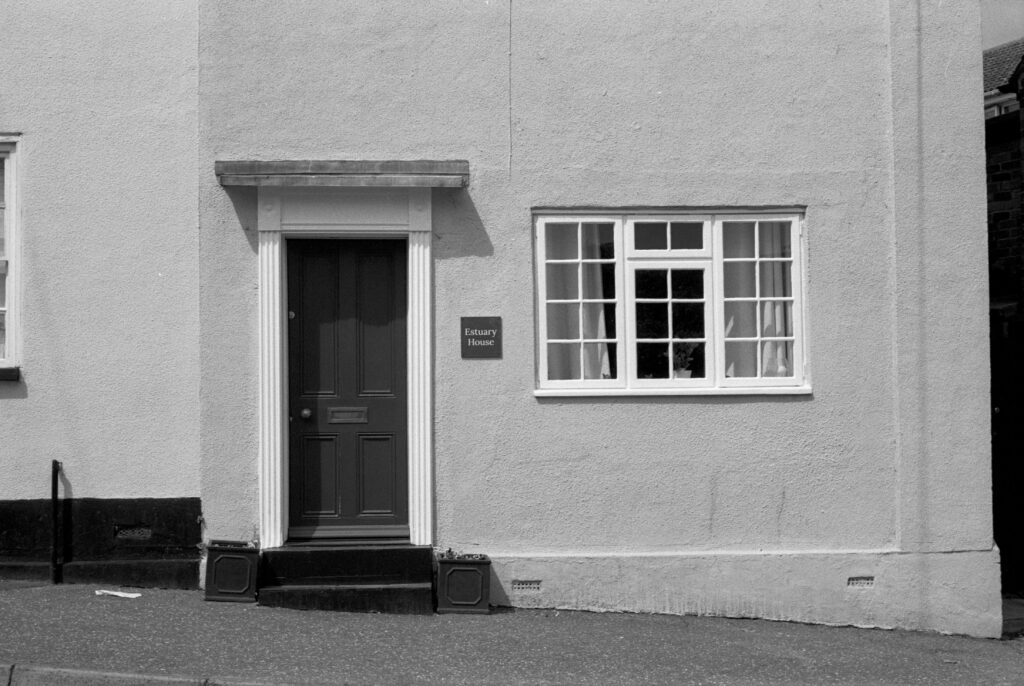
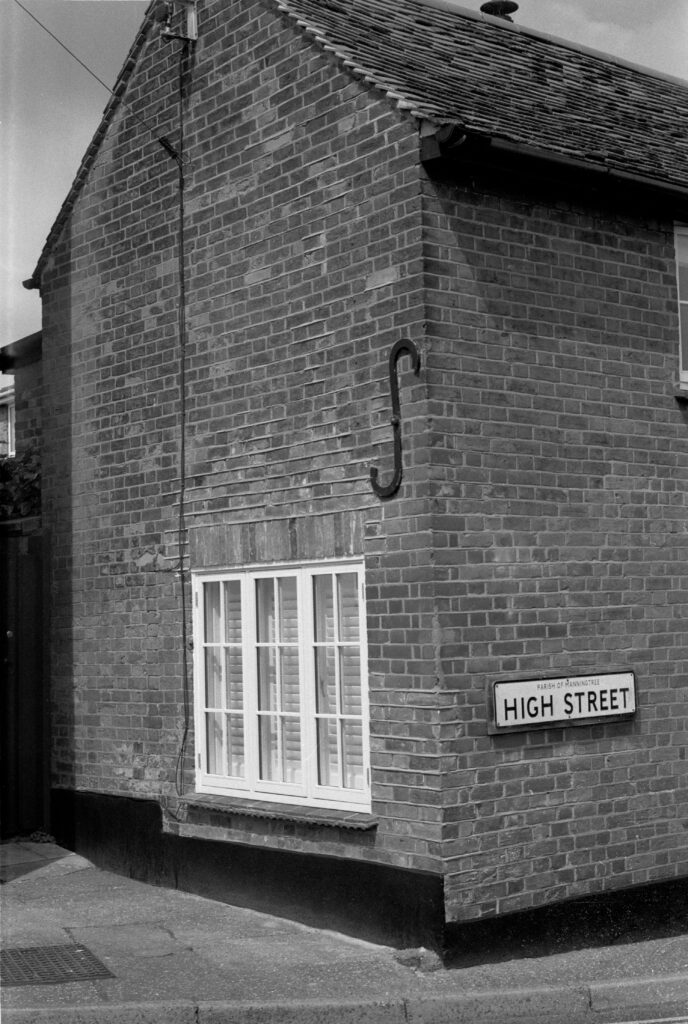
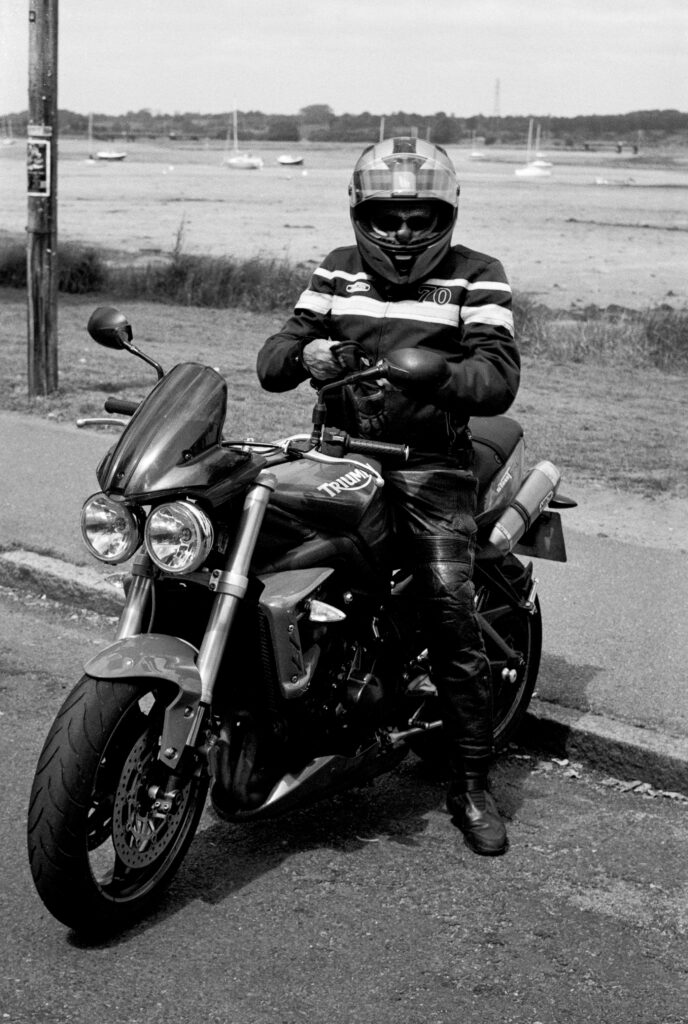
I’d just like to add (again) that the nature of the camera, with the right film, enabled me to take careful photographs – especially with the Fujifilm Acros 100. Lenses are lenses, but when combined with such a beautiful carefully made camera does make you want to take and savour every shot, making the experience and the results more fulfilling and better than with any old tat.
Share this post:

Comments
KF on Zeiss Ikon Contaflex Super (1959) and the Pro-Tessar lenses – A work of Art
Comment posted: 22/06/2026
Comment posted: 22/06/2026
Walter Reumkens on Zeiss Ikon Contaflex Super (1959) and the Pro-Tessar lenses – A work of Art
Comment posted: 22/06/2026
In the early 1970s, when interest was growing significantly, they stood out as outdated and far too expensive compared to Japanese models, which quickly found buyers. Is it because I lived in West Germany? When my interest in German cameras emerged just under 20 years ago, it was exclusively in East German products (Altix, Altessa, Carl Zeiss Jena, Ihagee, Extakta etc.) that I bought, which I still use and with which I’m completely satisfied. Perhaps it’s also because, right up until the fall of the Wall, all products from the GDR were demonised here in the West. We heard and read about it everywhere – at school and in the media.
You took a different stance; you had a different perspective. Solid, technically sophisticated cameras that are certainly a lot of fun – a friend of mine has two older Contaflex models. As you can clearly see from your shots, they take really good photos. But as we all know, it’s not just down to the equipment. Thanks for the article and the photos, Ibraar.
Ralph Turner on Zeiss Ikon Contaflex Super (1959) and the Pro-Tessar lenses – A work of Art
Comment posted: 22/06/2026
Your set of images certainly do the camera justice, too (and then some). They're quite beautiful. Thank you for sharing, Ibraar.
Matthew Bigwood on Zeiss Ikon Contaflex Super (1959) and the Pro-Tessar lenses – A work of Art
Comment posted: 22/06/2026