“If you’re flying to Venice to catch a break from your ‘digital video’ production work by taking ‘film photos’, maybe you just have a camera problem.”
– All my friends.
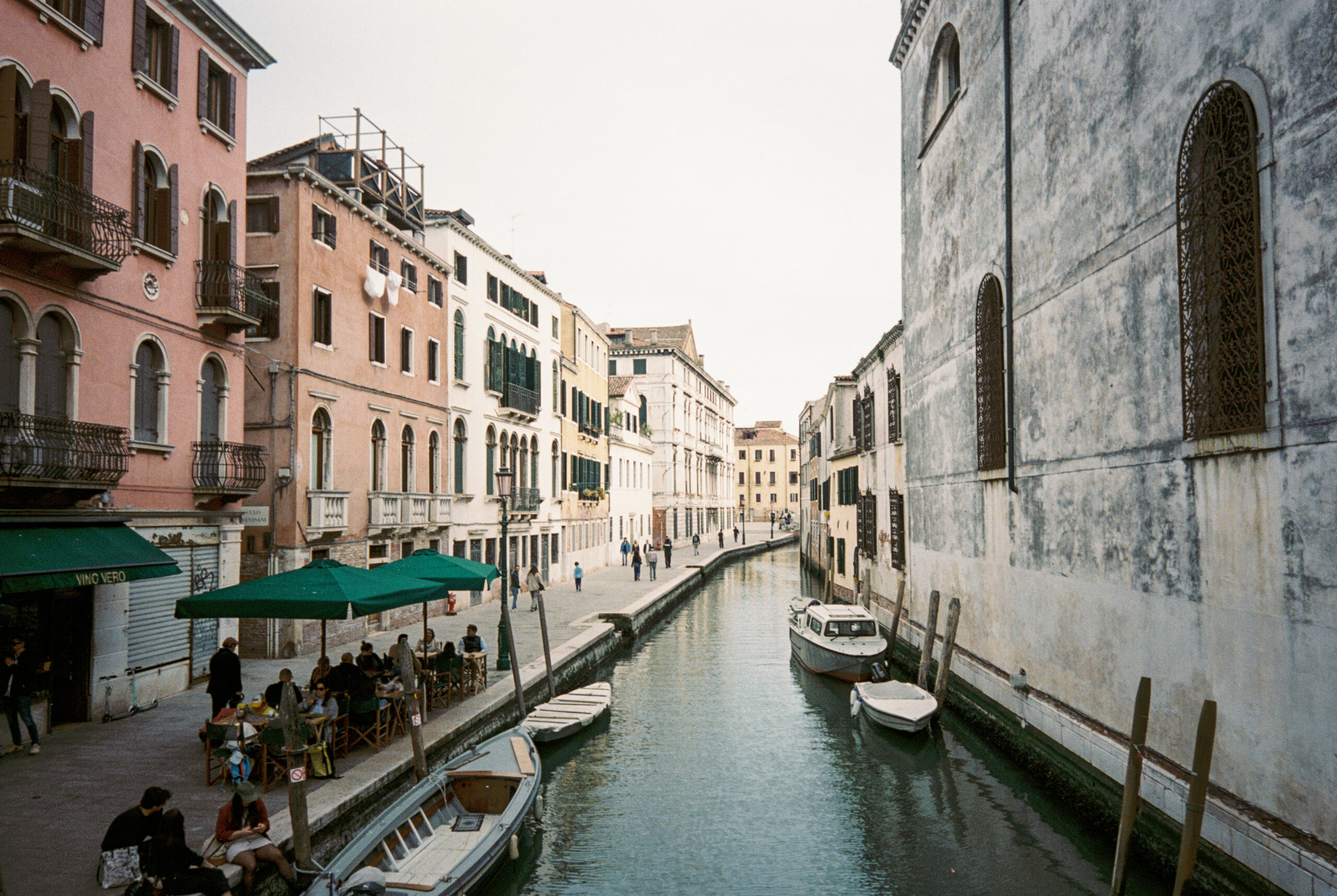
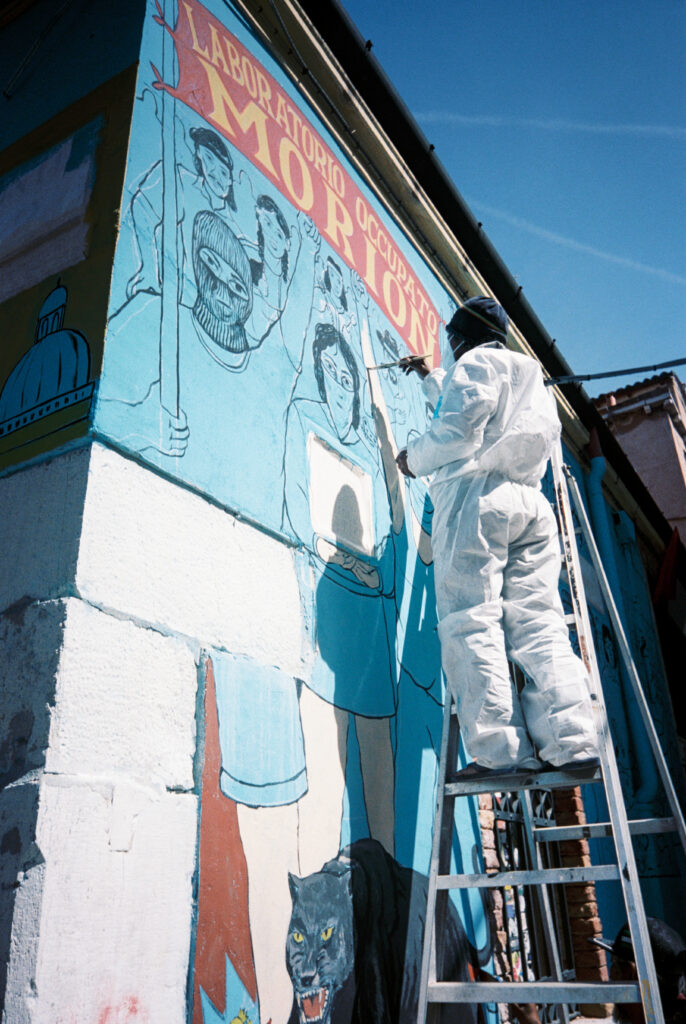
If there’s any European city that deserves to be shot on film, it’s Venice. There’s simply no need for a Nottingham man in his late 20s to describe its beauty. A weekend is all you need if you’re on your own. Beautiful venetian gothic architecture, suited-up old Italian men holding newspapers, murky green canal water, a contrast of high fashion and rustic looking washing lines. It’s so easy to shoot multiple rolls.
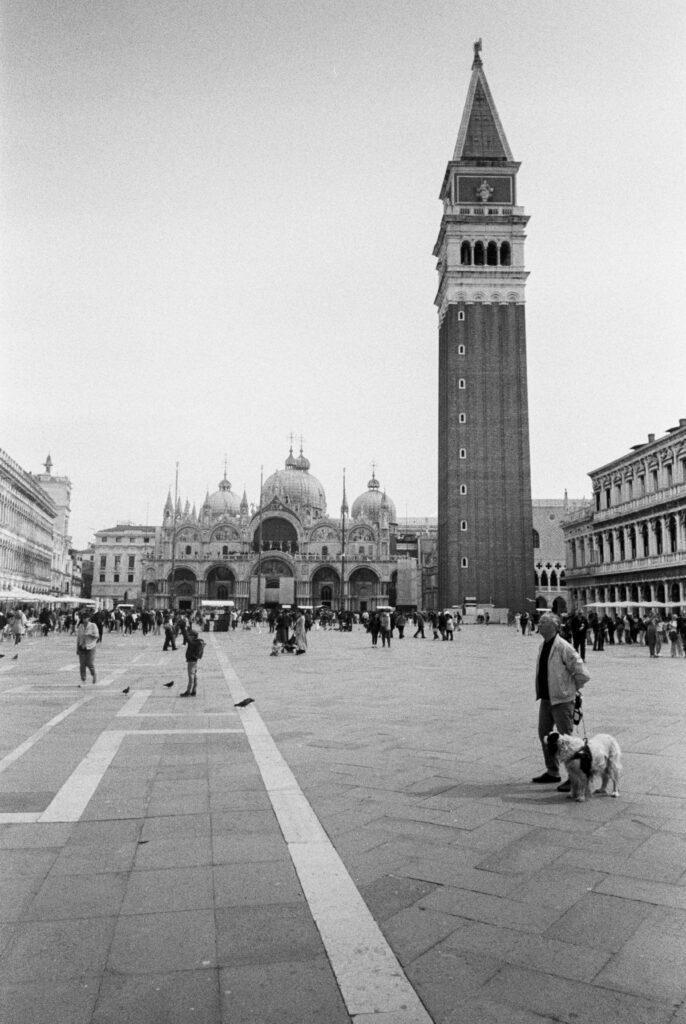
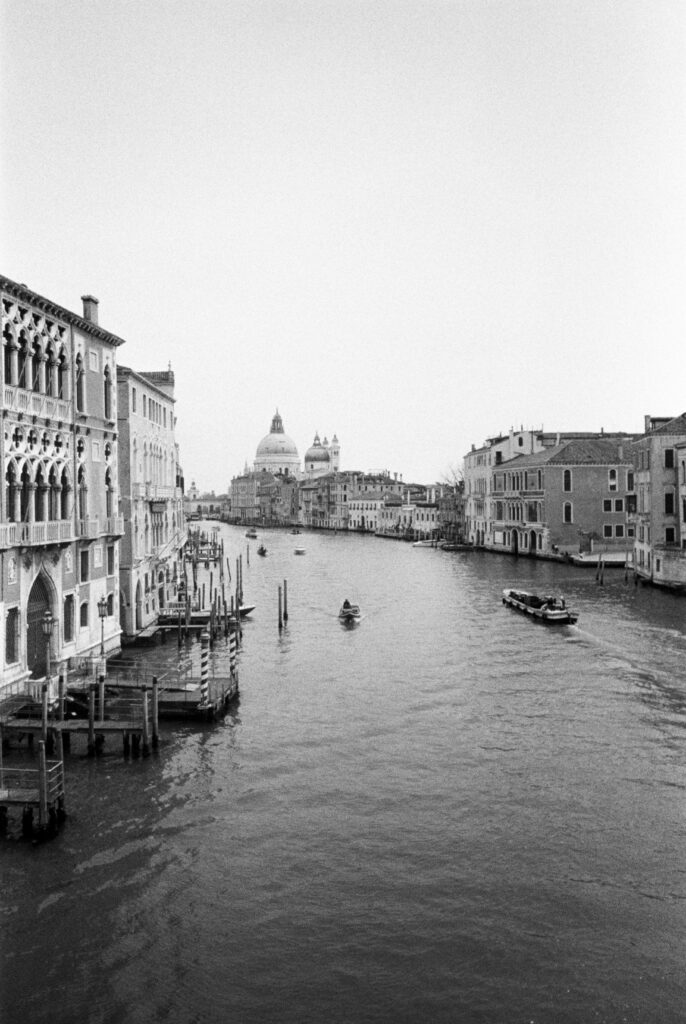
Tourist essentials – in B&W.
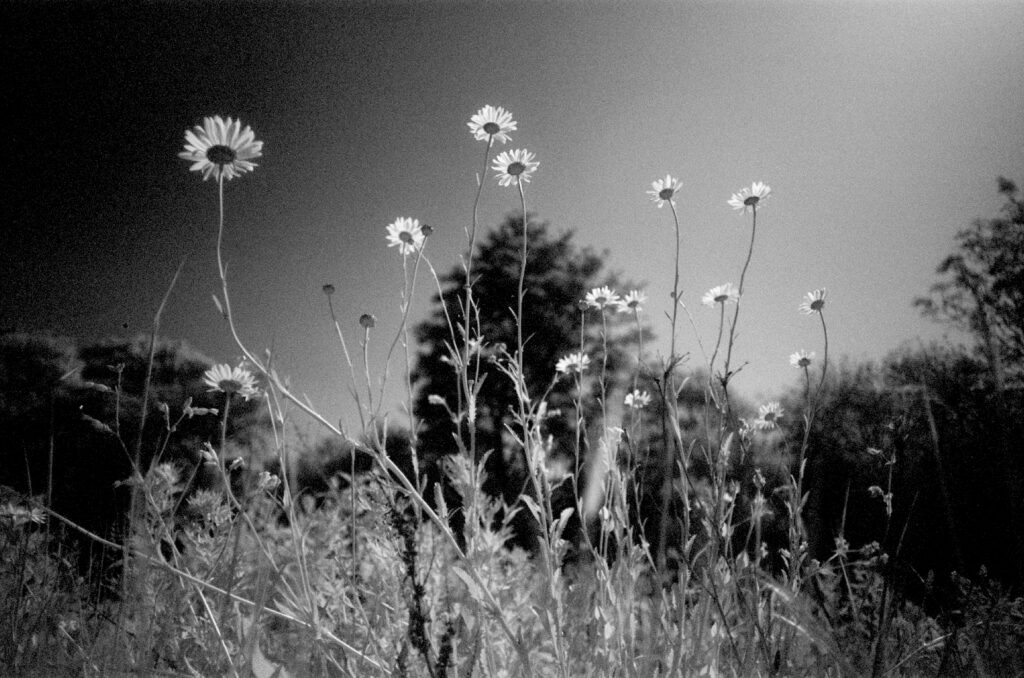
I took my Kodak Snapic A1 with me (a trusty modern 35mm point and shoot) and had about 15 photos left on my roll of Tri-X 400. I’m a professional videographer by trade and I exclusively shoot black and white on the Snapic A1 for behind-the-scenes video content. It almost felt like a waste to shoot Tri-X in such a colourful place. To combat this, I decided to snap all the touristy spots in b&w and save the unique photos for a colourful roll purchase the next day.
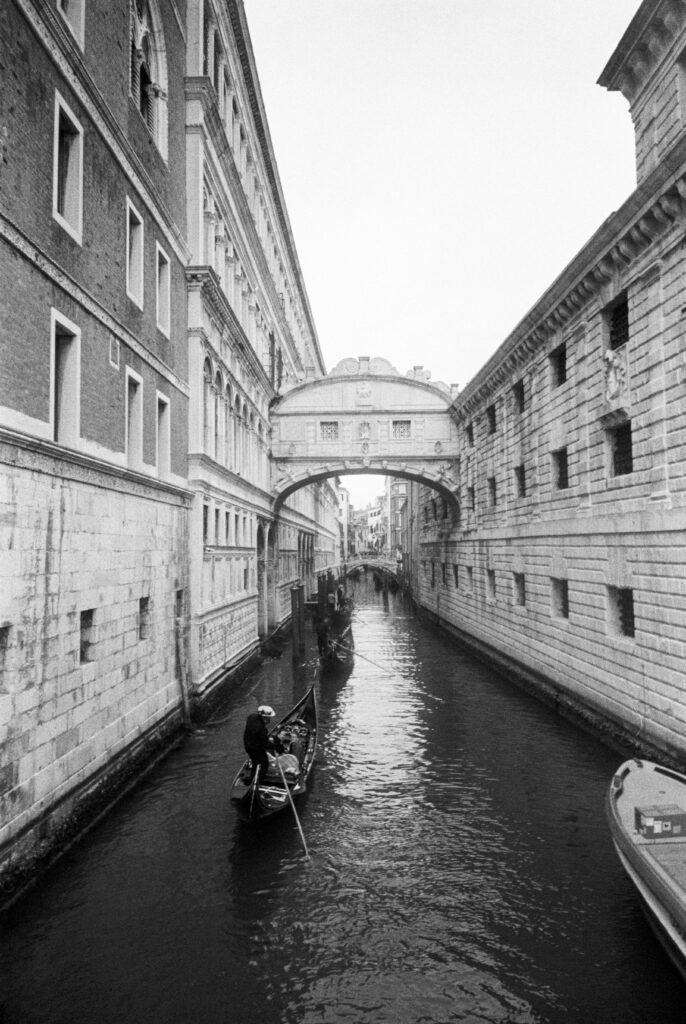
The Bridge of Sighs is one of the most photographed spots in Venice. It’s worth seeing but unbelievably crowded! Every typical tourist takes the same photo from the bridge opposite – I’m embarrassed to show mine.
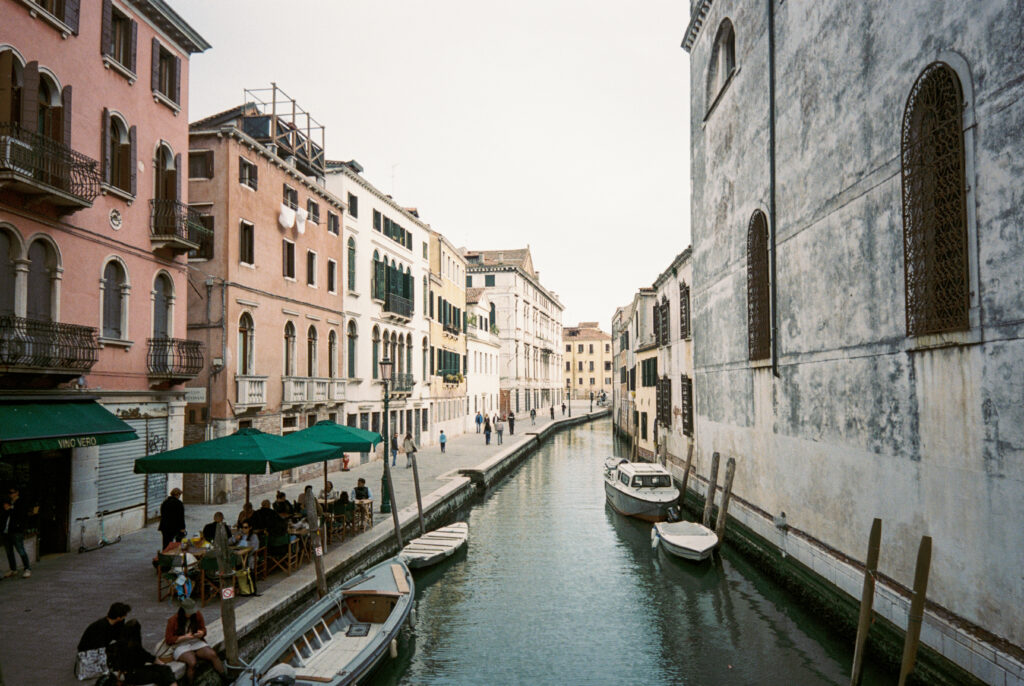
Every bridge in Venice is a scenic photo opportunity and on 35mm black and white, lots of shots here feel ambiguously timeless. My favourite aspect of shooting film is the ‘trigger discipline’ required to get the most out of every roll. I love looking at digital photos but I would have spent my entire weekend behind the lens if I wasn’t using a little point and shoot.
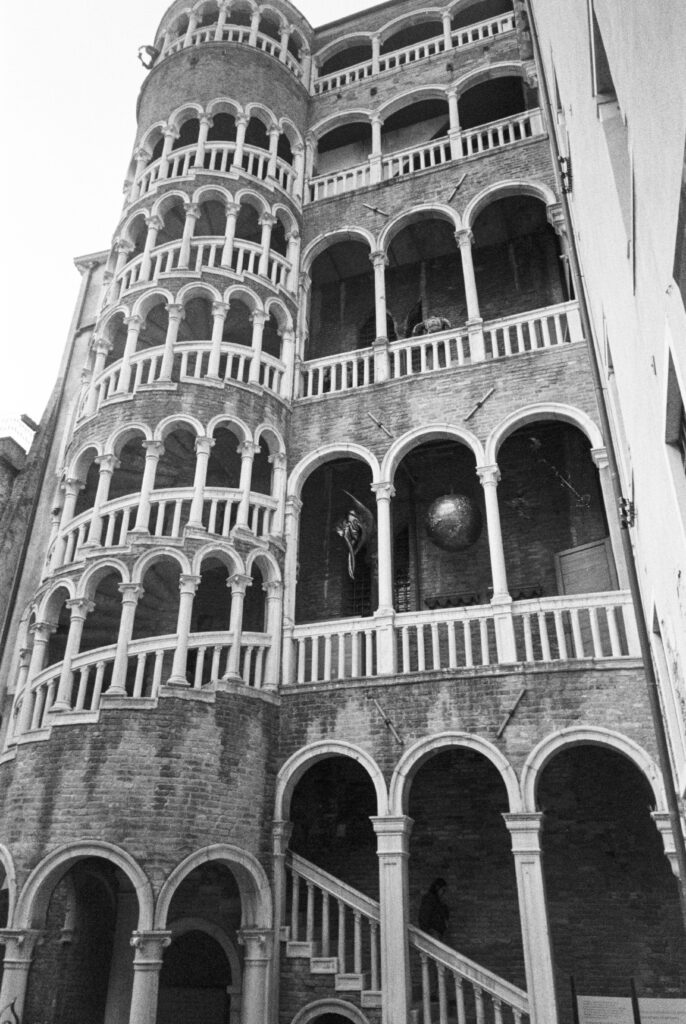
The Palazzo Contarini del Bovolo (the spirally building above) is a must see and snap. It’s accessed via a few extremely narrow side streets and it reveals itself at the angle this photo captures. It’s absolutely stunning. These ‘reveals’ are what I love about visiting famous buildings, especially when you aren’t able to view them from a distance. My first glance at the Taj Mahal in India and Machu Picchu in Peru have been some of my most vivid memories in life. There’s something special about how your eyes are first introduced to beautiful architecture, especially when you’ve seen hundreds of images online from a famous ‘photo point’ and the reveal immediately introduces a different perspective that you’ll forever remember.
Let’s switch to Portra 400..
Buying film in Venice.
Do not buy film in the centre of Venice – please bring it with you. It’s unbelievably expensive and I regret my unpreparedness. A single roll of 35mm film can cost up to 30 Euros. I’d love to write about how I chose Portra 400 for its brilliant skin tones and subtle warmth but the reality is it was the only option ‘on sale’ for some reason at around 18 Euros. Can you blame me? Yes, totally fair.
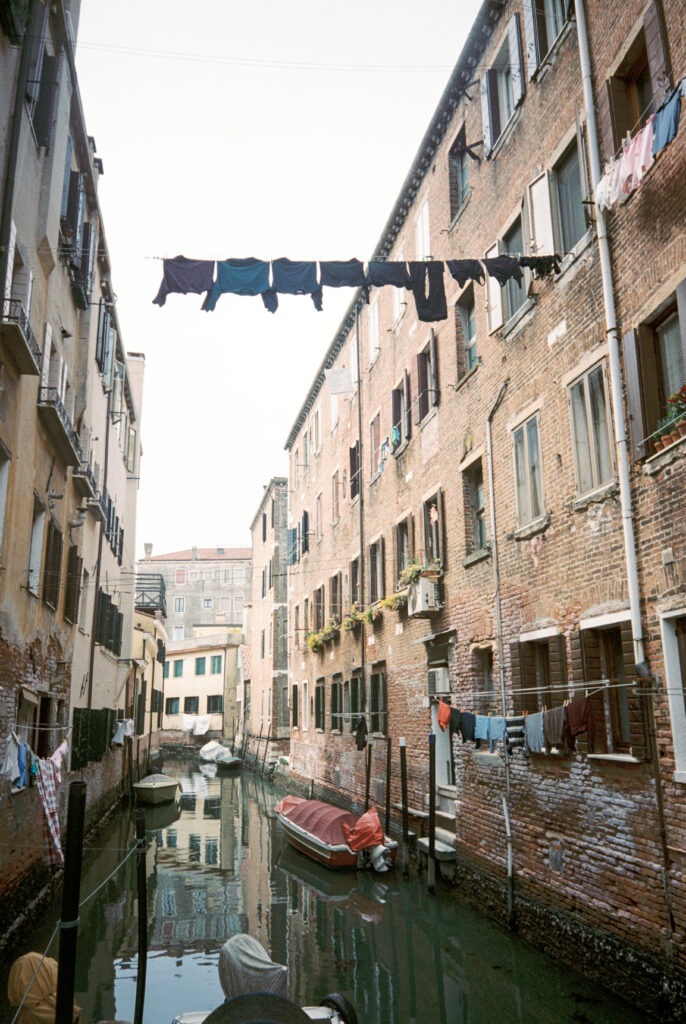
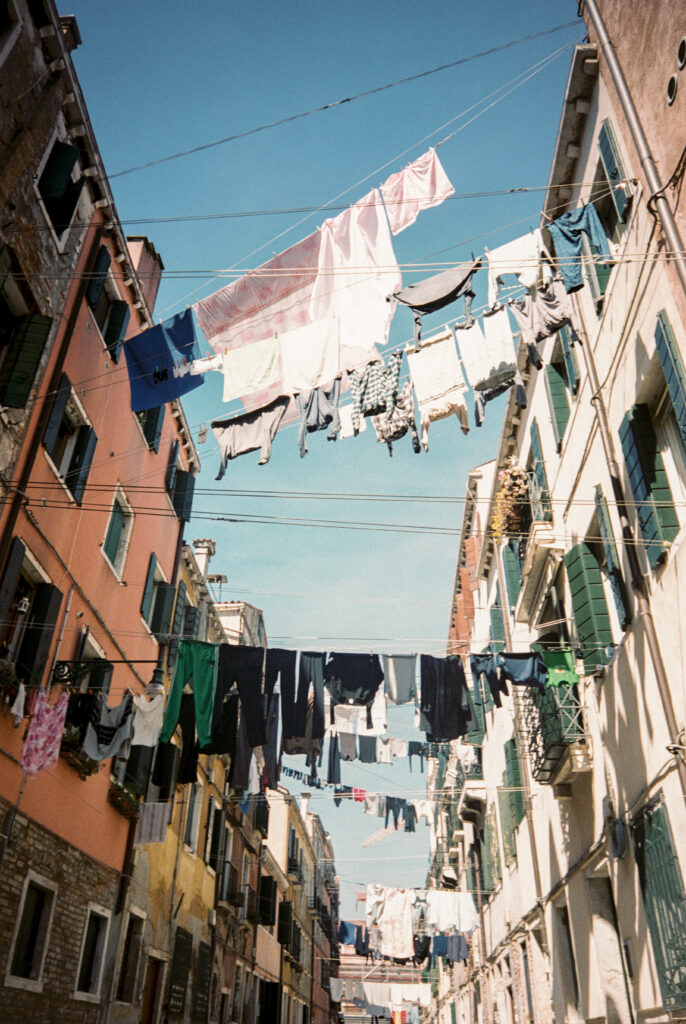
Venice is filled with busy washing lines that sprawl across Canals, streets and alleyways. As I mentioned before in regards to film, you have to think carefully about which spots deserve a shot off your roll. I would have taken 100s of washing line photos alone. If you visit Venice, don’t get too inspired by the first washing line you see (unless you are creating a collection of washing photos)! I ended up revisiting streets to take each photo and even at different times of day to ensure I had ideal light. If I weren’t an amateur film photographer with a point and shoot I would have been a lot more comfortable shooting in the early evening. I envy those Leica photographers who nail the light manually every time. It was the first time I’d taken notes of picture ideas on Google Maps and revisited instead of simply snapping. I recommend this fun process for those with time on their hands and limited film!
I was gutted about the imperfect focus & exposure on this one at first but I’m still in love with it!
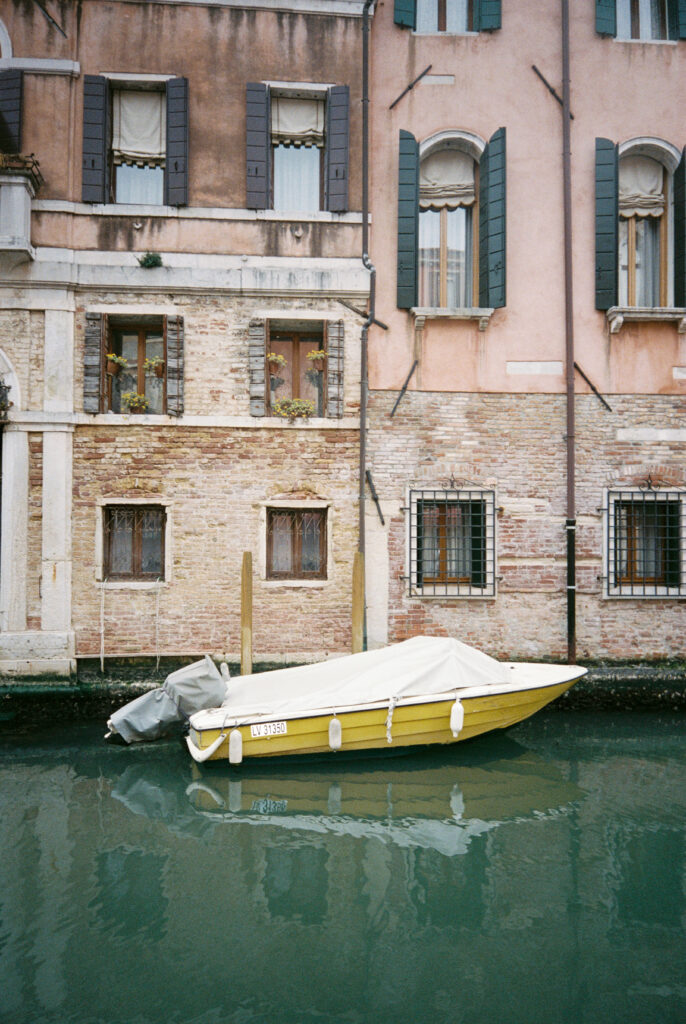
When I studied digital film production at University, I had an obsession with Wes Anderson and his love of centre frame. Since my old tutor told me to find my own style, I’ve tried hard to actively avoid it after creating shorts and documentaries that felt a little too inspired by his films. I find it funny that there’s only one photo here that Wes could relate to and it’s a quick shot of a yellow boat whilst walking to my next slice of pizza. Now I sit here writing this post, disagreeing with my old tutor and yearning for some additional centre frame photos. Old habits.
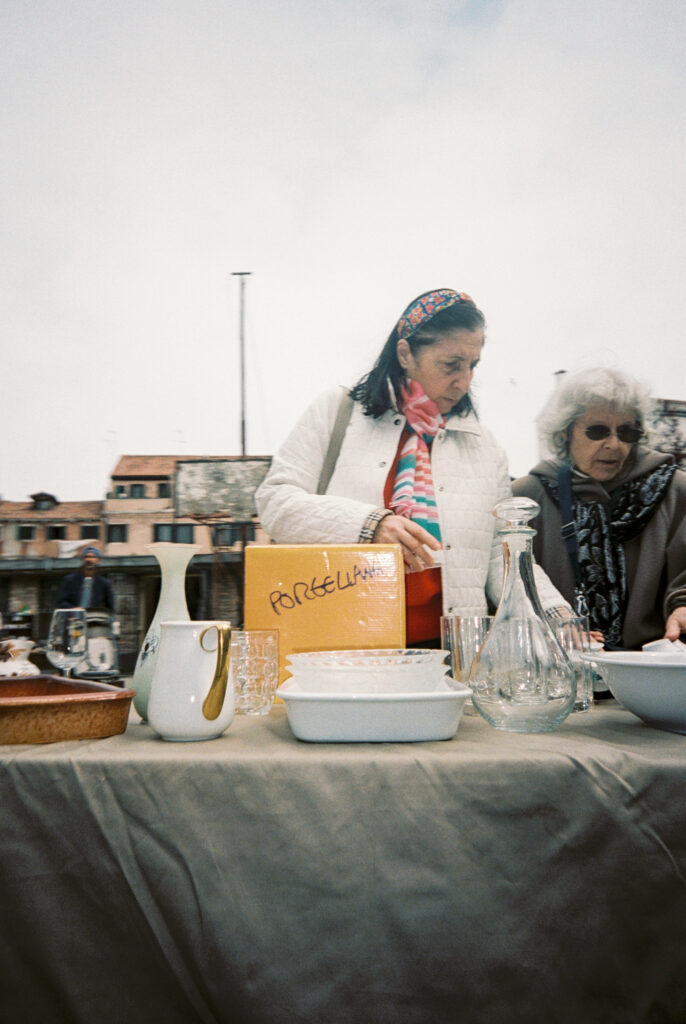
Again yearning for better focus.. My Kodak Snapic A1 only has two focus modes and I’m still new to the camera. This little pop-up antiques/wares market was a fantastic opportunity to capture an entire photo album. It’s a shame I had to catch a train in 30 minutes!
Back in the UK now (sadly).
I hope you can forgive my strange word choices, apologies! This is my first article for 35mmc and as a filmmaker who works primarily in video marketing this has been a fun but challenging exercise to avoid my default ‘advert copy lingo’ and write posts that can sit next to the great essays on here. In all honesty, it’s an honour to be able to share some travel snaps on here and I do not deserve to be placed alongside 35mmc’s incredible photographers and essayists.
If for any reason you’d like to contact me or have also taken photos in Venice (I’d love to see them) feel free to message through my website. I upload often on Instagram so if you would like to see more of my snaps, that’s the place.
Ed is a professional videographer and filmmaker from Nottingham, UK.
Despite Ed's expertise lying with video marketing and documentary style filmmaking, he finds time to take a point and shoot film camera everywhere he goes, whether that be on video production shoots for businesses in the East Midlands, socialising, travelling or catching a Nottingham Forest game.
Content contributor – become a part of the world’s biggest film and alternative photography community blog. All our Contributors have an ad-free experience for life.
Art Meripol on Shooting Film in Venice – Portra 400 & Tri-X 400
Comment posted: 28/07/2026
Thanks for the inspiration. You had me digging into my old files for my all-too-short Venice shoot years ago. I might have to write up another blog with mine from a completely different time and perspective.
Mike Gibbons on Shooting Film in Venice – Portra 400 & Tri-X 400
Comment posted: 29/07/2026
I'm curious as to why you shot Tri-X. Was that the only B&W film available in Venice? I've hated Tri-X since the day I got into film photography in 1993. The grain is wretched and since you were shooting outside you easily could have used ISO 100 or 25 (if available). I havent shot film in 20 years so I don't know which film stocks still exist, but if there are other options, ditch Tri-X and go low ISO. Also, if shooting film I hope you'rr also processing it yourself and printing in a darkroom. Thats what I miss most about film.
Okay so Kodak Tech Pan 25 has been discontinued. That film was amazing for landscape photography. Sad to see its gone. Ilford Delta 100 was my favorite for all around photography. Tight grain and can be pushed/pulled from ISO 50-200, if needed. Can push to 400 and it still has tighter grain than Tri-X.
Counterpoint - I love TriX and have found the grain to be quite fine and visually appealing. My main B&W stocks I shoot are TriX, Tmax, and Kentmere 400. Perhaps Mike’s TriX dislike is a byproduct of however it was developed.
I develop my with the Kodak TMax developer or Cinestill monobath and the results IMO are gorgeous.
I had a few frames left on my roll of Tri-X when I travelled so I decided to make a fun idea of the situation by shooting the touristy spots with this film. Completely agree that 100 ISO would have been a lot nicer but I always shoot 400 ISO as I don't usually buy film for projects sadly. I like to buy film and load it to shoot anything in the moment, it's always in my bag so that included indoor, outdoor, at night with a flash, sunny days, shady areas etc! I never shoot enough in one sitting to justify purchasing a roll for a specific setting. I've found 400 to be perfect for that gung-ho style. I personally love Tri-X but I'd love to hear some suggestions as I'm no expert, I'll definitely give them a try!
Echoing Paul: I am a committed Tri-X shooter in 35mm, 120 and 4x5 and absolutely love it (though the LF formula at ISO 320 is a different formula than the typical Tri-X 400 emulsion). In HC-110 or PMK Pyro, it yields lovely results. Your monochrome images here Ed look great to me. A slower film of course such as Ilford Pan F would also have been great though I find that that particular film struggles in some settings—high contrast scenes where it can seem harsh. Whether by chance or by design I think you made an excellent choice. Also love the color shot of laundry hanging over the canal. Perhaps it's my eyes but I couldn't see any focus problems or difficulties with exposure. Definitely one for a print!
Thanks David! I was recently told by a photographer friend of mine to try it out as it's their favourite B&W film and I loved it. My last few rolls have been Tri-X but I'd love to hear some more suggestions that are extremely reliable. I wanted to shoot Venice in colour so there is no creative decision for Tri-X in this instance - I simply had about 12 photos left on my roll I travelled with. This is why I decided make my trip a fun challenge to shoot the touristy spots and whiter buildings with Tri-X and switch to colour for the more 'unique' images.
Thanks for reading and I'm really glad you like the washing line photo you've convinced me!
cdlinz on Shooting Film in Venice – Portra 400 & Tri-X 400
Comment posted: 29/07/2026
Awesome! A couple years ago I took a contax t2 and a bunch of portra 160 to venice and blazed away. A lot of the shots are imperfect, but it was so much fun and there is something permanent and authentic about film photography. Long live film!!
Walter Reumkens on Shooting Film in Venice – Portra 400 & Tri-X 400
Comment posted: 30/07/2026
Great photos that show that it’s not the kit that matters in photography. I reckon the idea that Leica photographers set the exposure manually every single time is probably a – deliberately spread – rumour. :-)))) Thanks for the article and the photos!
hahaha I don't actually know anyone close to me that shoots manual when it comes to film sadly (I don't know any snazzy Leica owners) so most of my knowledge of manual film shooters come from YouTube etc and of course they all get really technical and take advantage of everything you can adjust. That's actually quite reassuring to hear that's a rumour. As a videographer by trade I'm used to adjusting settings/focus manually **constantly** so despite my camera addiction I'm sort of using my little point and shoot as a release from thinking about technical aspects and just practicing angles and ideas. Perhaps I need to write an article on the benefits of shooting a nifty point and shoot? Perhaps I'm not well versed enough in film to do so yet - maybe one for the future.
Thanks for the comment!!
My Venice post that I submitted after seeing yours is all manual shots. I blame it on being old and starting my career when manual was all there really was. Early auto focus and auto exposure were film-flam and not to be trusted. Besides, I told myself that I didn’t want a machine making my decisions. I still mostly shoot manual but my old eyes demand auto-focus. And I too have a laundry shot in my submission.
Danilo Leonardi on Shooting Film in Venice – Portra 400 & Tri-X 400
Comment posted: 30/07/2026
I really enjoyed your article, Ed. What I liked most, beyond the photographs themselves, was the reversal of expectations: Tri-X for the iconic Venice and colour for your discoveries in the side streets. That shift made your project come alive for me. It’s a great way of approaching a city that has been photographed so many times. Wonderful work.
Last year I used some Konica Infrared 750mm film that was given to me along with a collection of other 25+ year old fridge-stored films. The film turned out to be perfectly OK f...
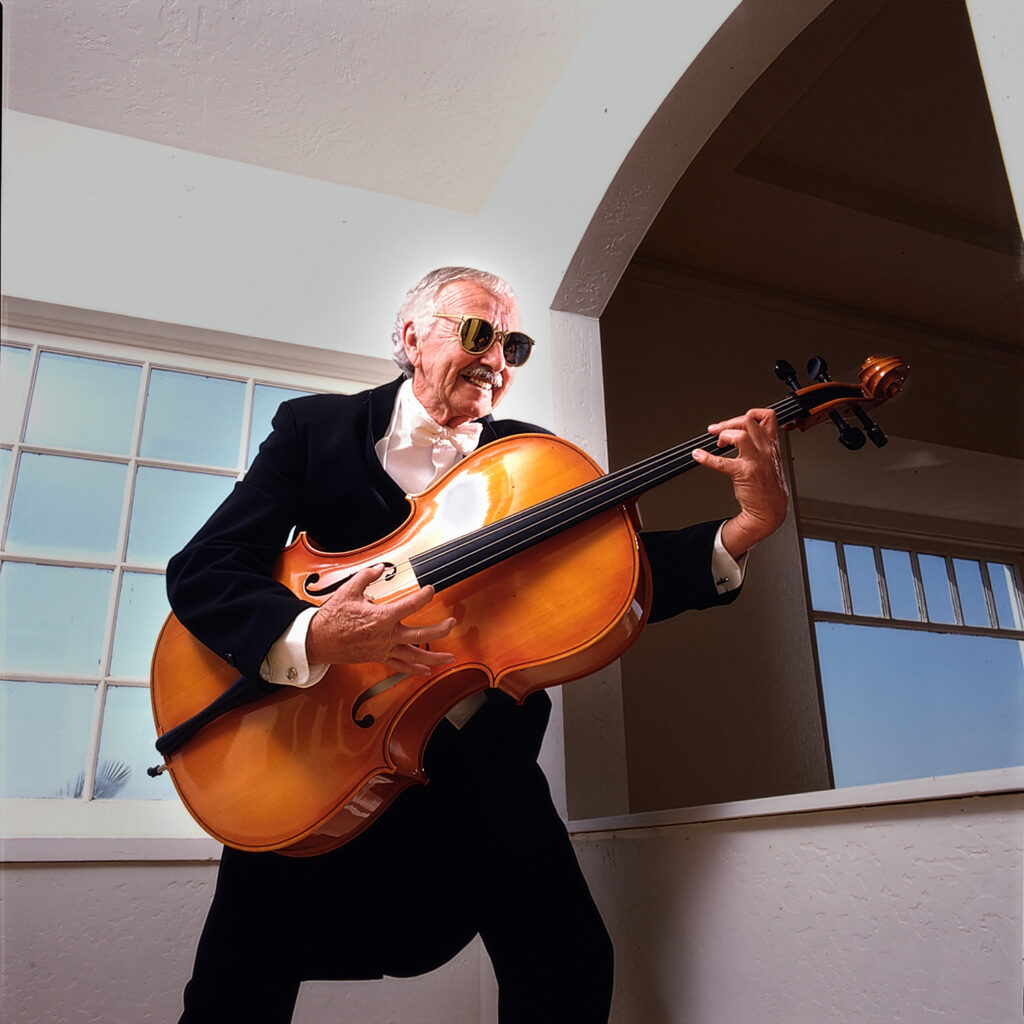
As mentioned in the ‘Picturing Musicians Part 1’, photos of live performances isn’t my long suit. There’s nothing about my photos of live gigs that look any different from anyon...
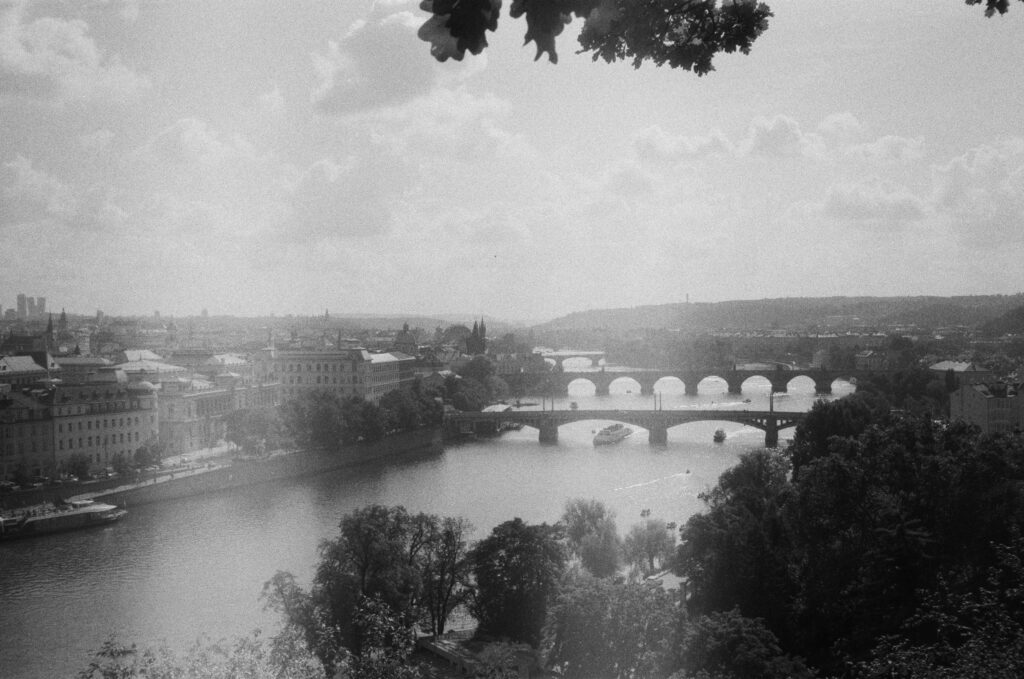
I was hoping to share a clean set of photos from a recent trip to Prague. Instead, I am sharing a series plagued with light leaks. Yet I felt it was still worth putting out into...
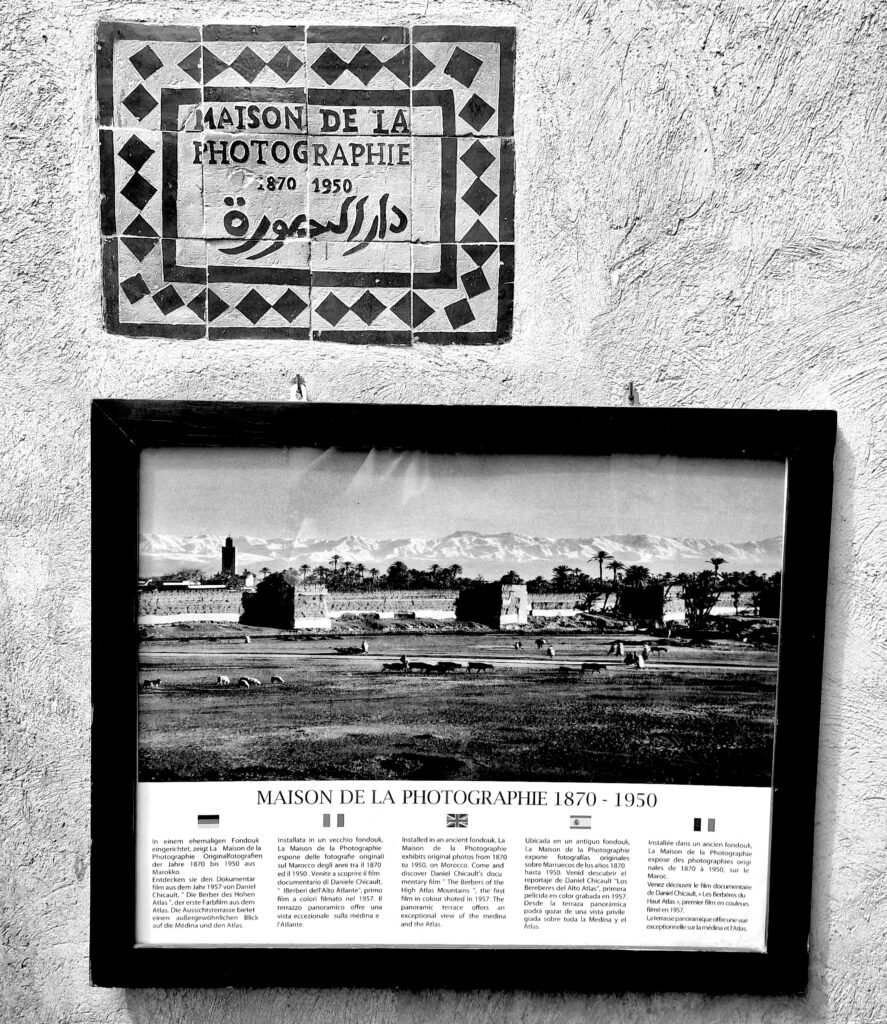
The narrow streets and alleys of the historic Medina make for a very intricate and, for many, very confusing geography of the place. Even if a map would exist, one would get los...



Comments
Gary Smith on Shooting Film in Venice – Portra 400 & Tri-X 400
Comment posted: 28/07/2026
Thanks for your article!
Comment posted: 28/07/2026
Art Meripol on Shooting Film in Venice – Portra 400 & Tri-X 400
Comment posted: 28/07/2026
Comment posted: 28/07/2026
Comment posted: 28/07/2026
Erik Brammer on Shooting Film in Venice – Portra 400 & Tri-X 400
Comment posted: 28/07/2026
Comment posted: 28/07/2026
Mike Gibbons on Shooting Film in Venice – Portra 400 & Tri-X 400
Comment posted: 29/07/2026
Comment posted: 29/07/2026
Comment posted: 29/07/2026
Comment posted: 29/07/2026
Comment posted: 29/07/2026
Comment posted: 29/07/2026
Stephen Meese on Shooting Film in Venice – Portra 400 & Tri-X 400
Comment posted: 29/07/2026
Comment posted: 29/07/2026
cdlinz on Shooting Film in Venice – Portra 400 & Tri-X 400
Comment posted: 29/07/2026
Comment posted: 29/07/2026
Walter Reumkens on Shooting Film in Venice – Portra 400 & Tri-X 400
Comment posted: 30/07/2026
Comment posted: 30/07/2026
Comment posted: 30/07/2026
Danilo Leonardi on Shooting Film in Venice – Portra 400 & Tri-X 400
Comment posted: 30/07/2026
Comment posted: 30/07/2026