

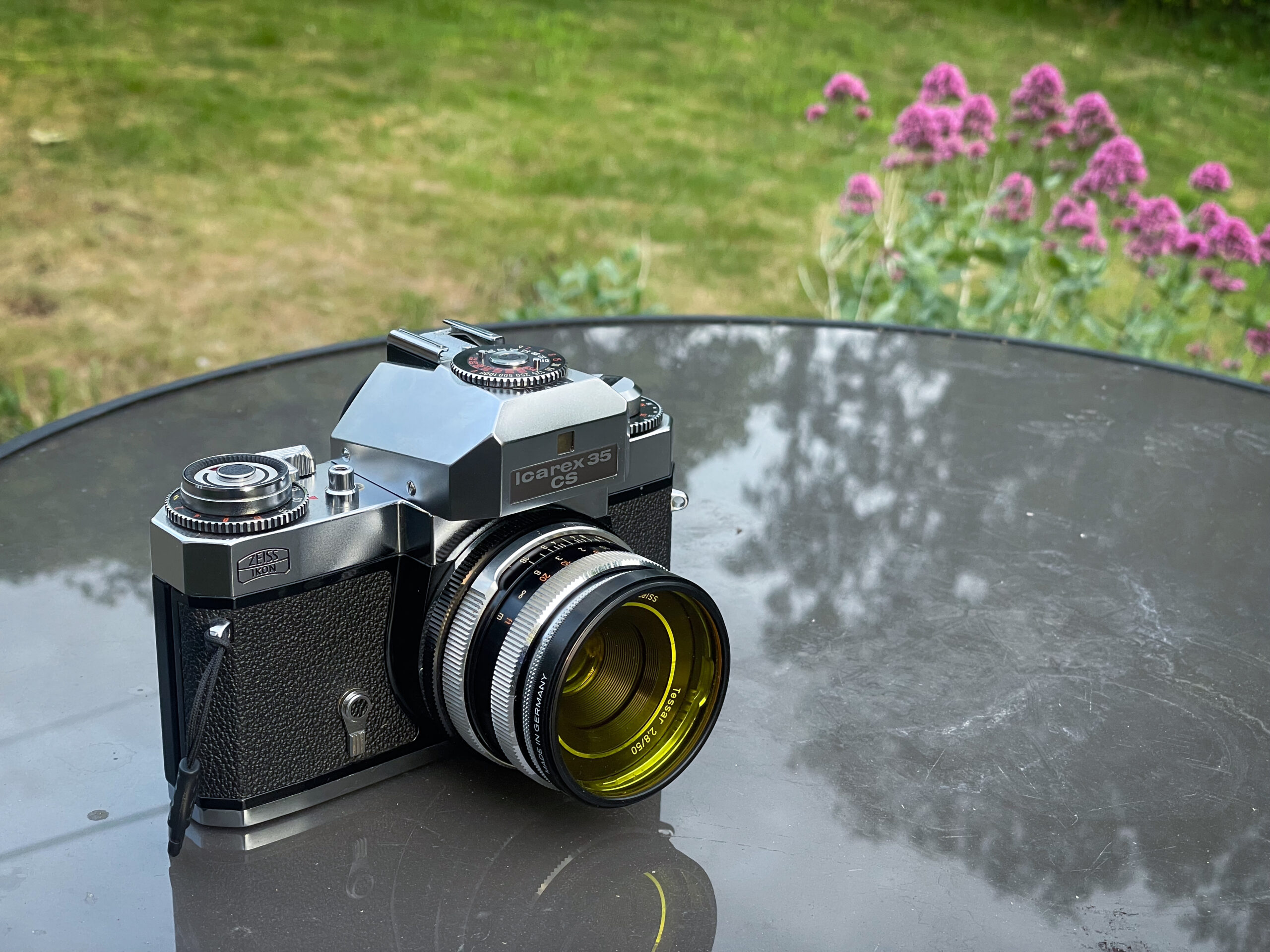
Voigtländer first came into being in Vienna, Archduchy of Austria in 1756 (270 years ago) before moving permanently to Brunswick in what was then the Duchy of the same name (Braunschweig in German) in 1868. It was probably the oldest name in Photography, but sadly ceased to exist in all but name in 1972. Voigtländer had had a close relationship with Carl Zeiss, being integrated with Zeiss-Ikon in 1965 (Zeiss having acquired Voigtländer in 1956). Carl Zeiss was founded in 1846, Zeiss-Ikon was formed in Dresden in 1926.
Zeiss Ikon was an independent camera company related to Carl Zeiss, formed by the merger of four camera makers (Contessa-Nettel, Ernemann, Goerz and ICA) in Dresden on September 15, 1926 (Wikipedia).
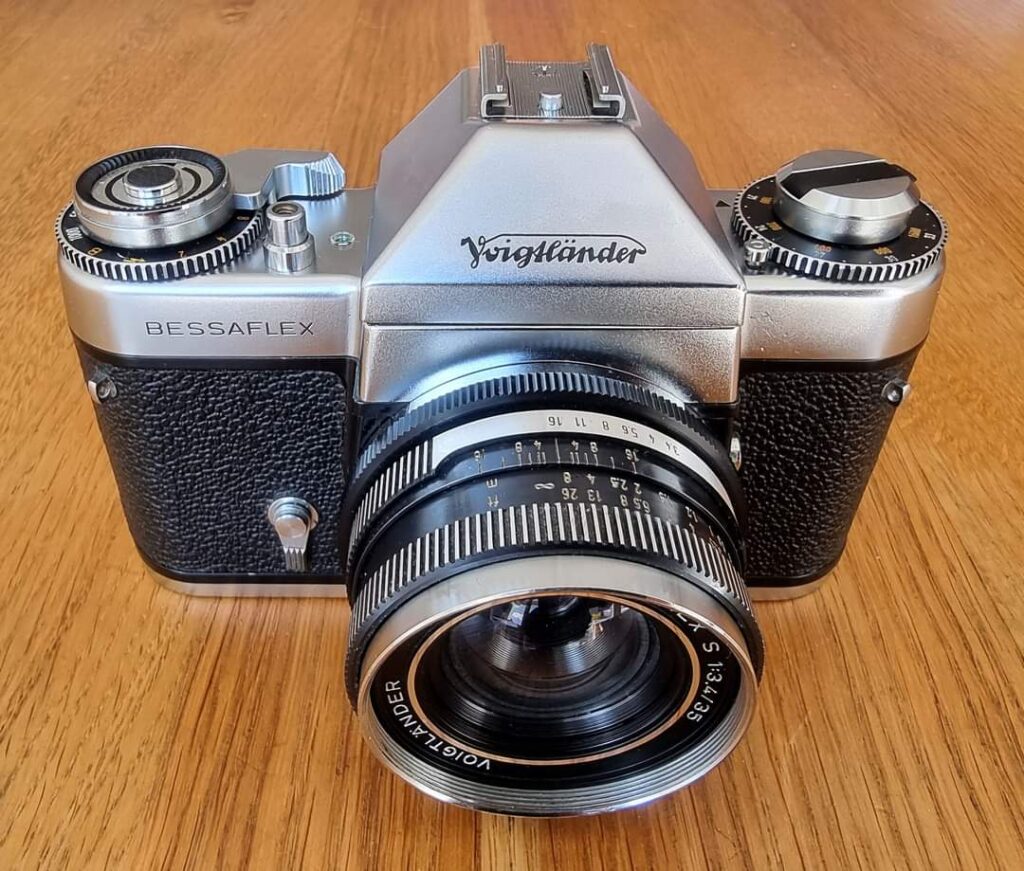
Both famous old names in Photography, with a combined operational total of about 450 years. With this long, illustrious, history defining life culminating in one last hurrah – the Zeiss-Ikon Icarex. The Icarex was a Voigtländer design, having been created as a prototype in 1963; the Voigtländer Bessaflex. After Zeiss took over they changed the design language to include obvious Zeiss Ikon influences. The Zeiss-Ikon Icarex was manufactured from 1965 until the demise of Zeiss-Ikon (and with it Voigtländer) in 1972, ending four and a half centuries of history. Icarex reminds me of Icarus. Icarus being the man in Greek Myth who the idiom “flying too close to the Sun..” refers to. No idea what that has to do with the Icarex, but the words somehow feel prophetic, both Zeiss-Ikon and Voigtländer were burned by the newer advanced cameras born out of the Land of The Rising Sun..
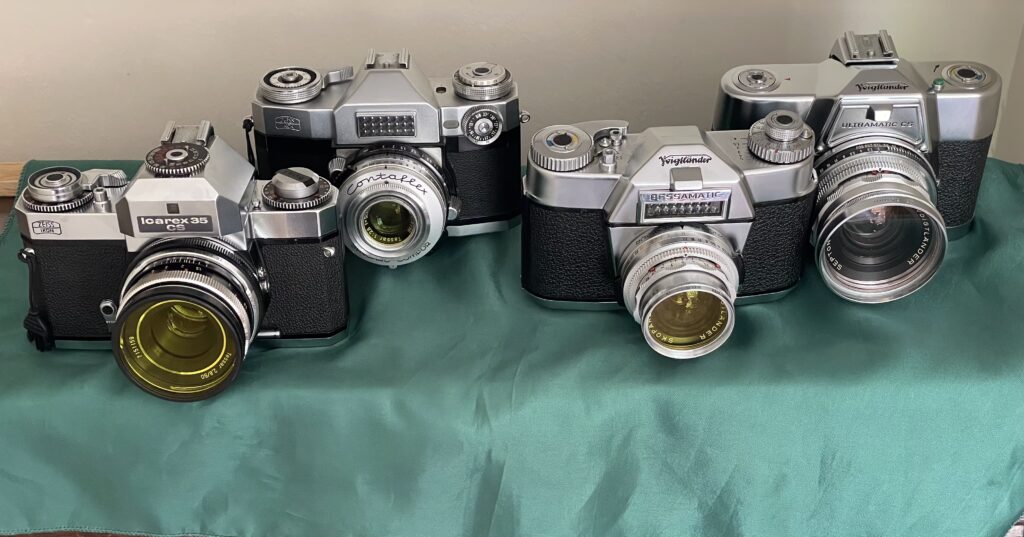
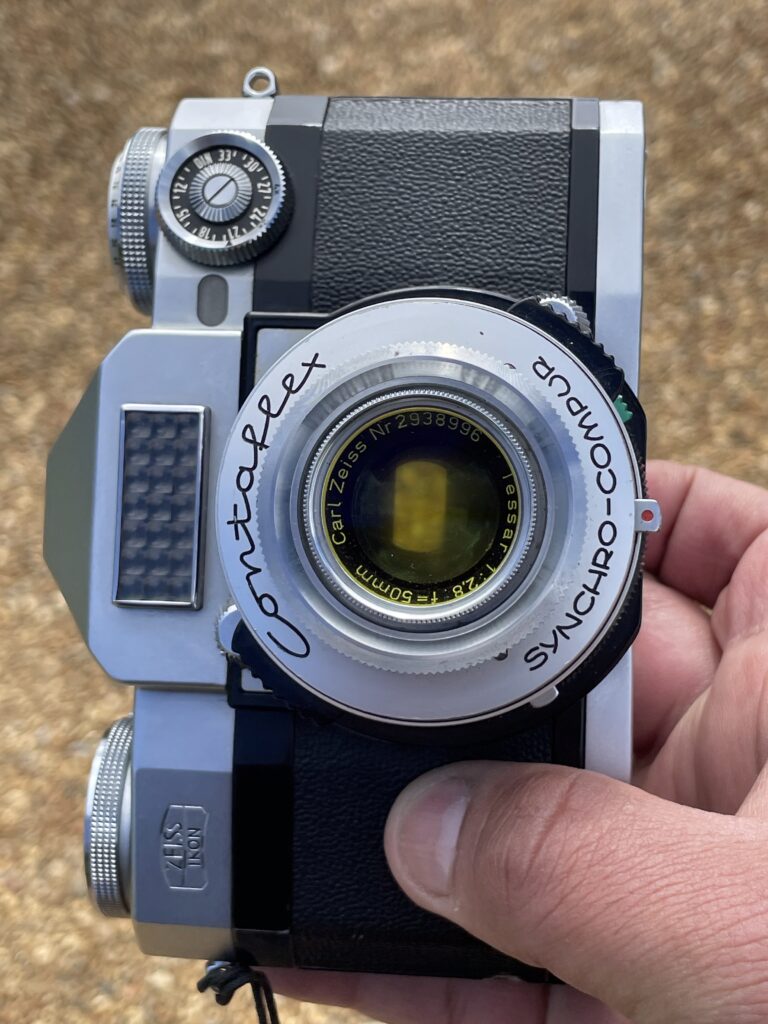
For a better read of the history of both Voigtländer, Zeiss-Ikon and the Icarex, I’ll again refer you to the excellent Mike Eckman’s site. The Zeiss-Ikon Icarex was released as a Semi-Pro model, placed just under the Contarex and just above the Contaflex (which I have and adore, and which I’ve written about HERE) and sold alongside the more expensive leaf shutter Ultramatic.
Anyway I bought myself an Icarex 35 CS model for the princely sum of £61, pretty much mint with metered Prism finder. Now, as readers may know, I’ve a soft spot for Contax cameras, and in turn Carl Zeiss/Zeiss-Ikon. So naturally, I’d acquire one of these historical significant cameras at some point.
I’m currently on a roll; for relative shirt buttons I’ve now a small collection of Voigtländer and Zeiss-Ikon SLR’s. In my opinion, both of these marques feature the most beautiful cameras ever made, even though the Icarex has a more modern design (for modern read Japanese) it’s no less beautiful than a Bessaflex.
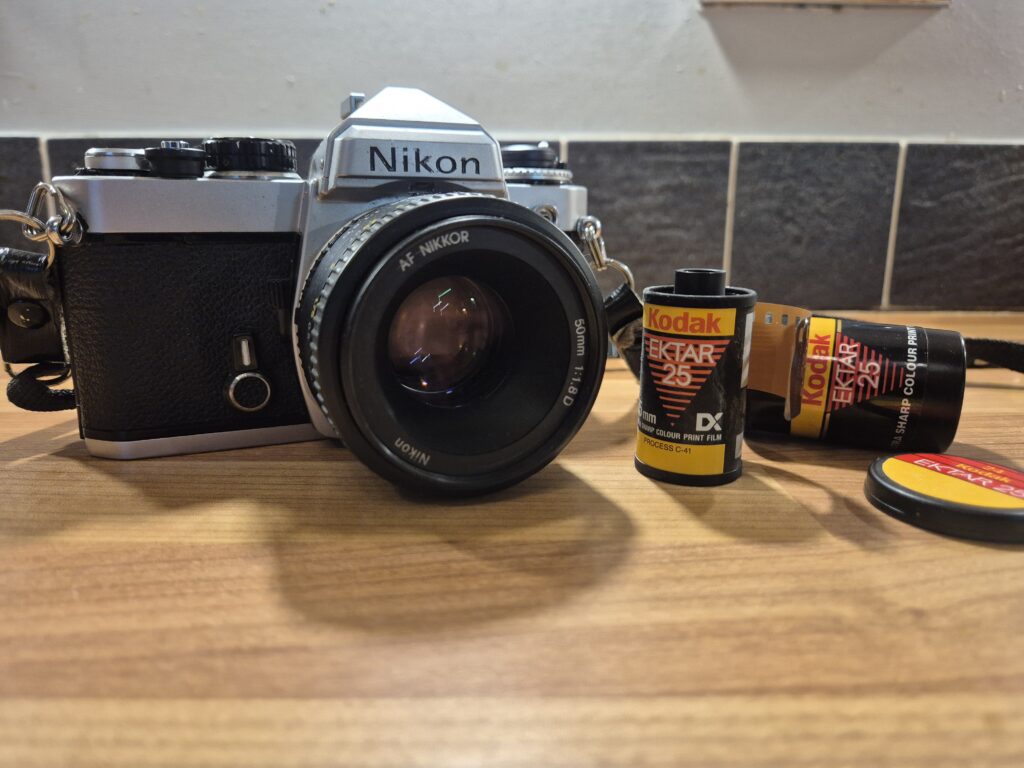
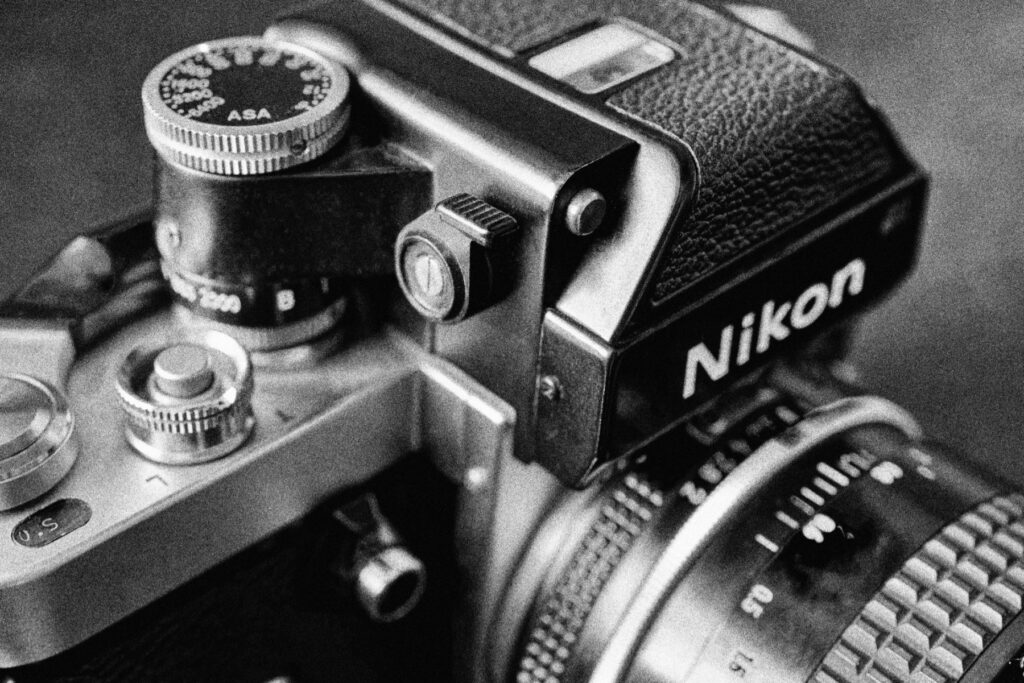
The pleasure of handling and using one is an experience in itself, sure a Nikon F (or rather the later contemporary F2) is a better camera (by better I mean TTL open aperture metering, more modular bits, faster Ti shutter and a much larger lens selection) but so what? The Japanese beat the Swiss in Chronometer trials time and time again, but what’s more desirable? A Seiko or a Jaeger-LeCoutre? Handling and shooting a Nikon F/F2/FE etc is about as enjoyable, exciting and memorable as a Pentax K1000, it is built like a Tank (and Don McCullin’s one allegedly stopped a 7.62mm bullet) but I wouldn’t call it an experience or marvel at it – it is hardly pretty in any sense of the word, nor will many get their rocks off at how it feels or fires, they just work and work very well. The F family was a camera designed and made for a purpose, for Professional Photo Journalists, to be rugged and easily serviceable. The Germans were stuck in the past, they made expensive cameras designed and made as they had done so for generations, lots of work by hand, with aesthetics and a finish to dream of, over engineered to the nth degree, impossible for Joe Bloggs to unscrew bits and get it sorted, so if they go wrong until you pay someone to un-wrong them you’ll have a pretty paperweight (though much of this applies to leaf shutter SLR’s rather than this reliable Icarex) Leitz with their Leica SLR’s were a little different, they spent less time on aesthetics and more on reliability for a time (hence the Leicaflex SL with it’s workhorse looks and indestructibility), but this too changed with unreliable later models, celebrity photographer associations and their connection with the M plus clever marketing and eventual luxury status kept them afloat. Not so with Zeiss Ikon and Voigtlander.
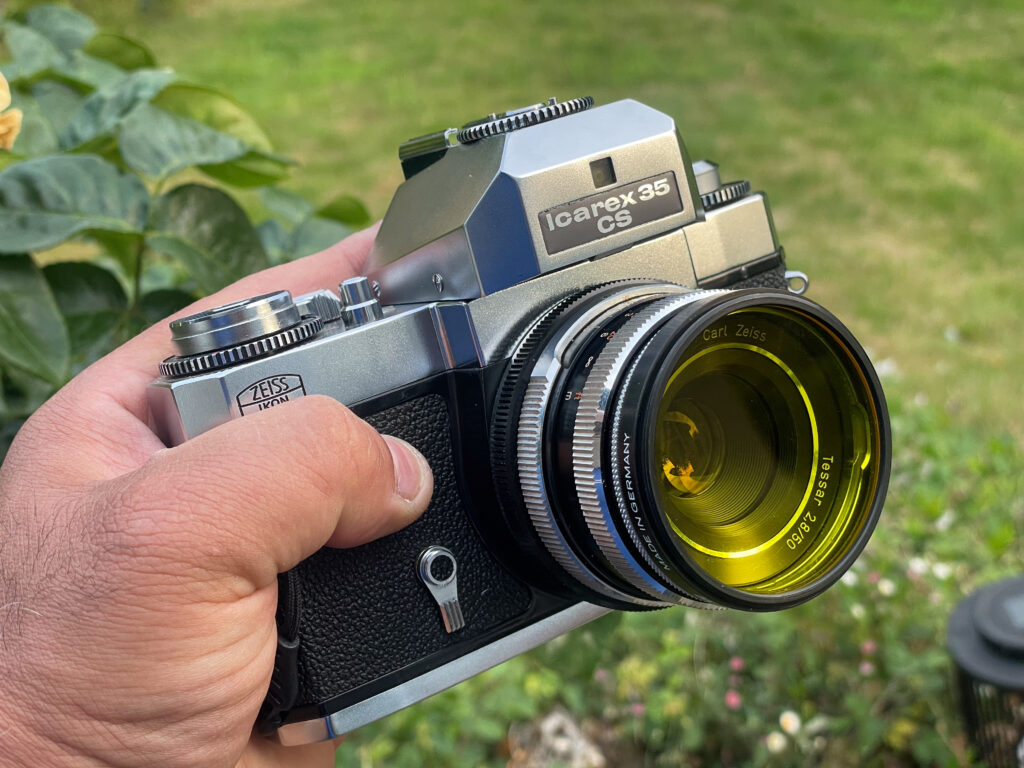
A part of the love of analogue and vintage cameras is the pleasure of handling and using works of art, design and engineering which would be simply unaffordable if made today. When you pick and up handle a Voigtländer or Zeiss-Ikon SLR, you’re handling the history of Photography made manifest. In turn you’re going to take better photographs. That’s a promise. You’re going to handle the camera as if it is an heirloom, it’s not going to be slung around or chucked and every shot will be carefully composed and lovingly taken. Even on days out with the family for snaps, they’ll be snaps with that little extra. These cameras make much more sense for those wanting analogue than a Japanese 35mm SLR.
This isn’t a review in the typical sense, as Mike Eckman has done all the hard work (as have others), but about my thought, experience and musings regarding it. When you first see it in person you’ll marvel at the finishing, in typical Voigtlander rather than Zeiss Ikon fashion; it is impeccably finished satin chrome with gentle brushing; beautiful and in typical Voigtlander style, you wont find a single scratch or mark, and the angles are typical Zeiss Ikon, with the layout and controls with nuances of both Voigtlander and Zeiss Ikon, making it a true merger of both. Then looking closely you’ll notice that everything is finely meticulously detailed with many milled parts, all with the most pleasing eye catching design. It oozes quality, hefty, weighty with no rattling. The dials all turn with a delightful reassured, well damped click. The wind on lever is made for winding; Unlike my Contax RTS II’s silent boring short throw, with this forget about having a Film in the thing, just wind it on, slowly, quickly, however you want; just so many nuances in sound and feel.. click…click..click…like winding a watch. Then press the shutter release button and hear the mirror and shutter fire; not like a clack or lifeless click as on a Contax RTS II or Nikon F, but almost a thunk and a whirr, elegantly and with a pleasing sound which is anything but industrial or harsh, as close to a leaf shutter as you can get. It is all in all a beautiful camera in every way, and this extends to the prism finder and the lenses. Everything is part and parcel of the experience and joy when using these things. So as you can imagine I couldn’t wait to use it. As is my habit, I tied on a wrist strap.
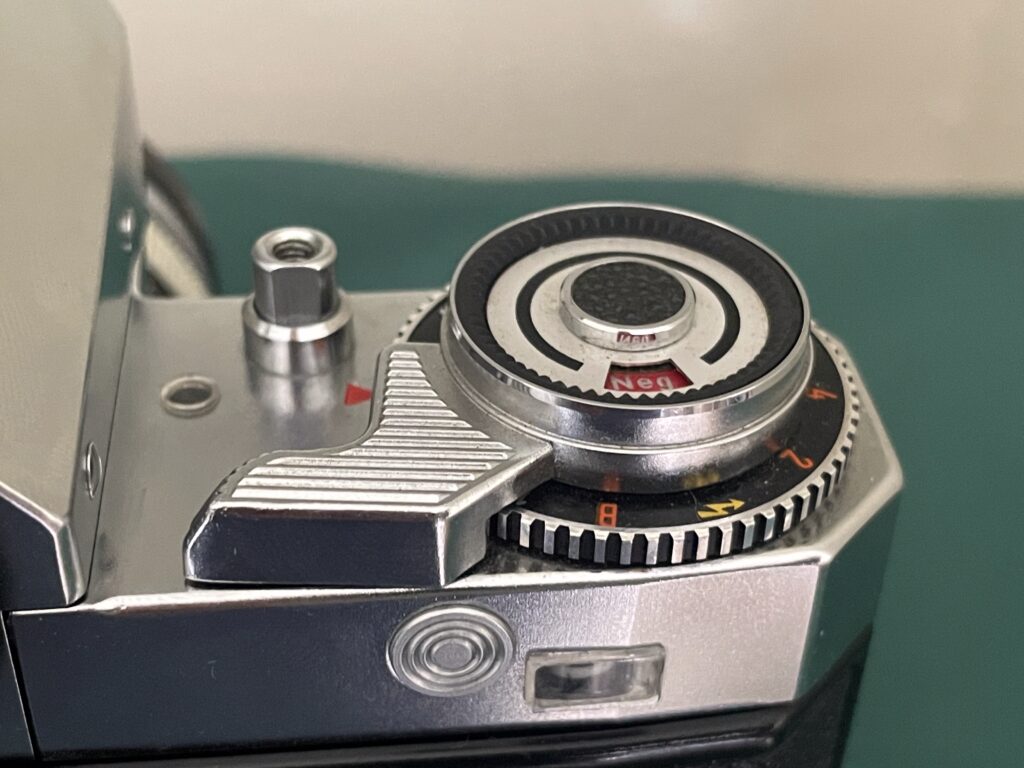
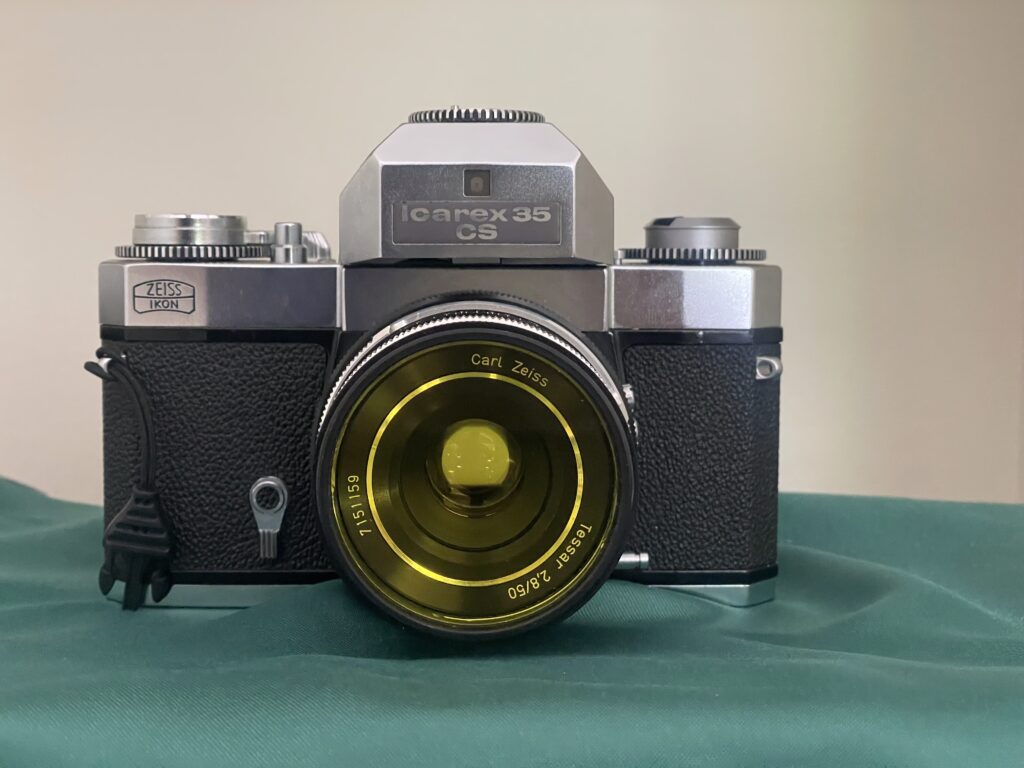
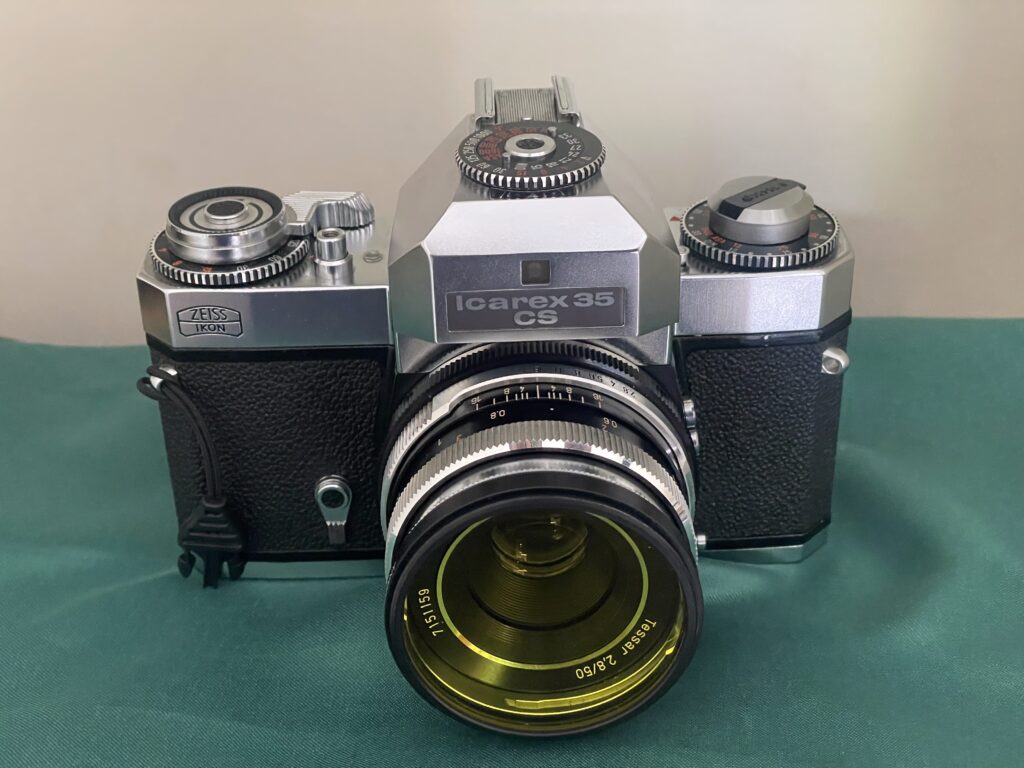
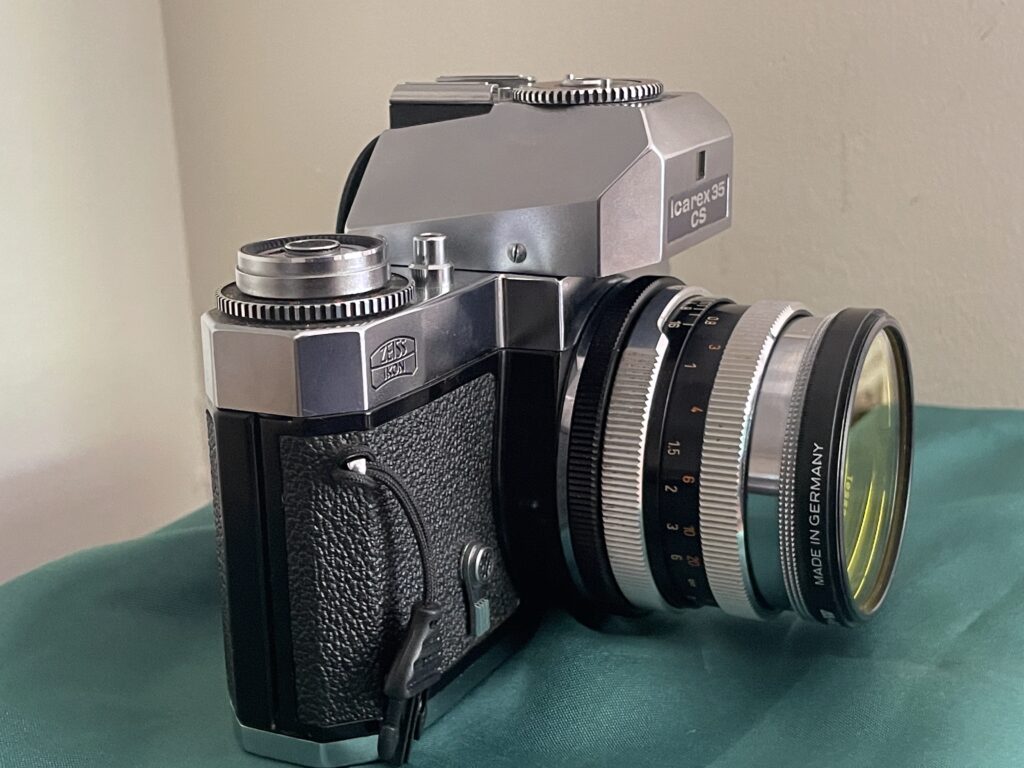
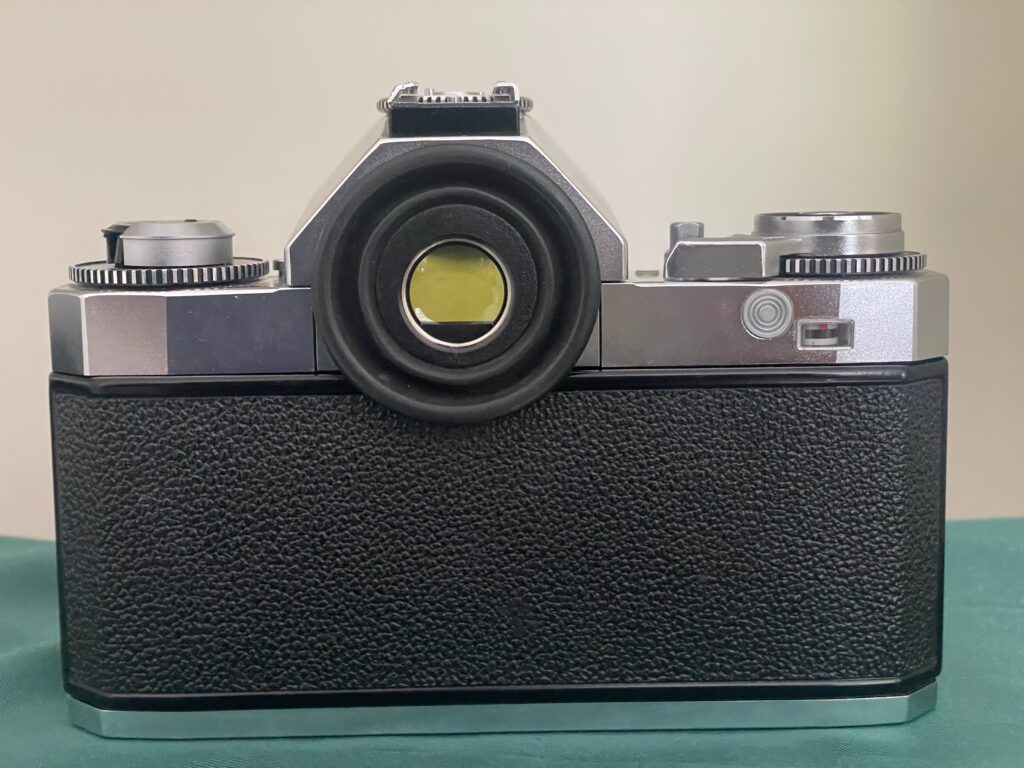
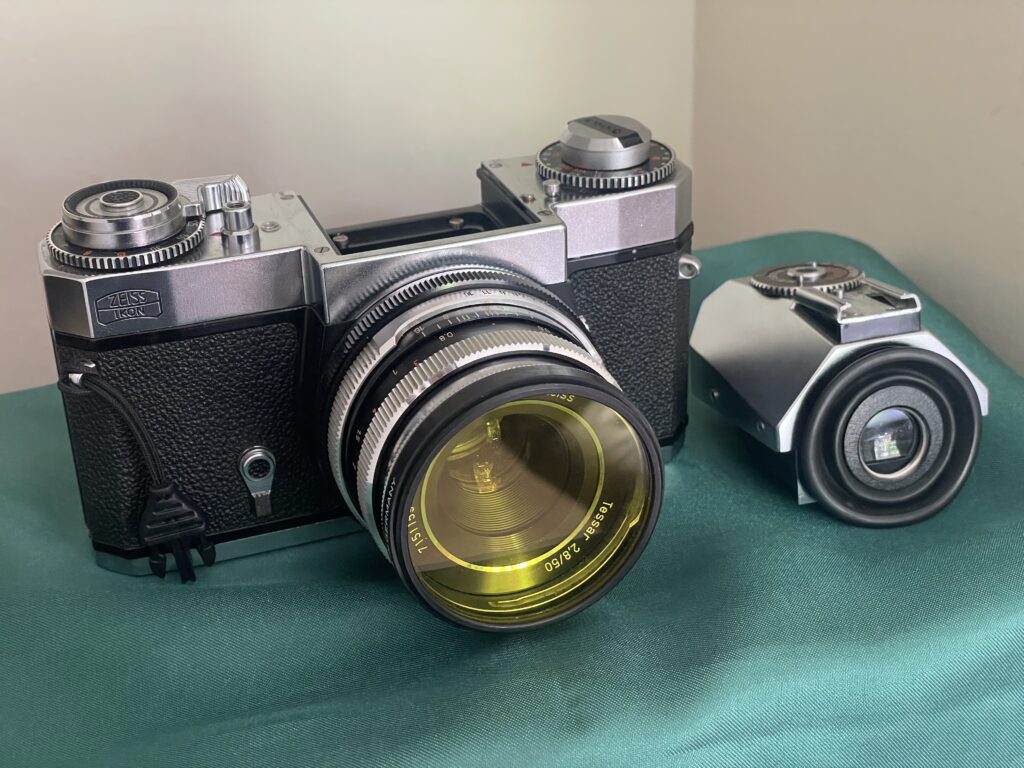
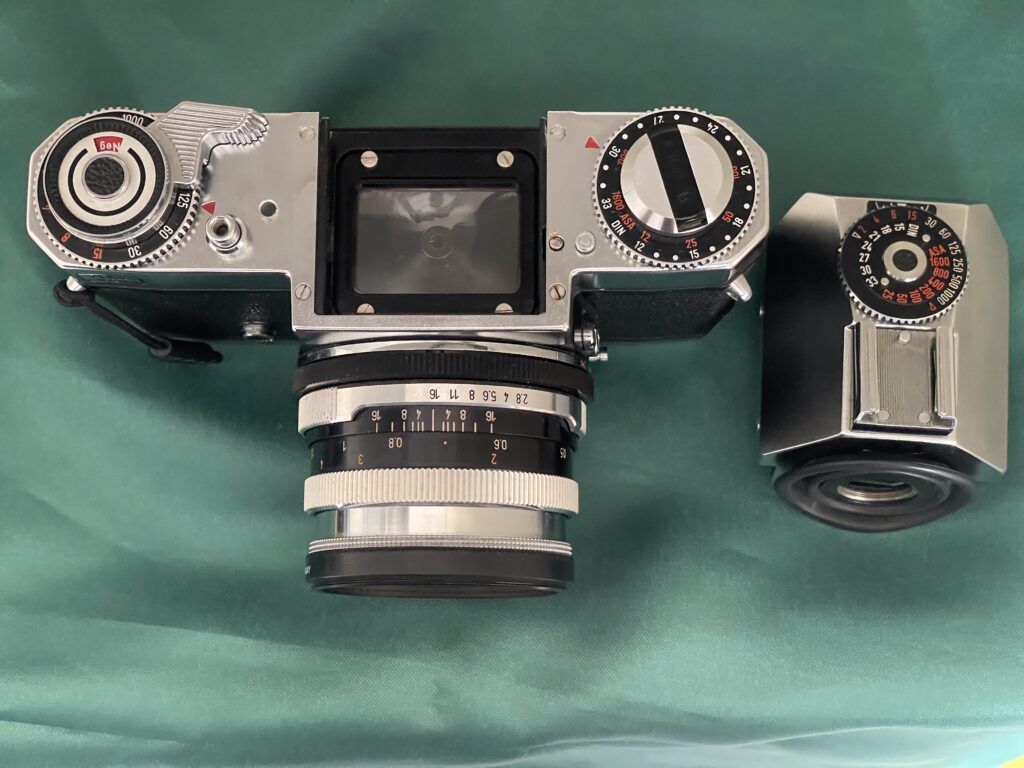
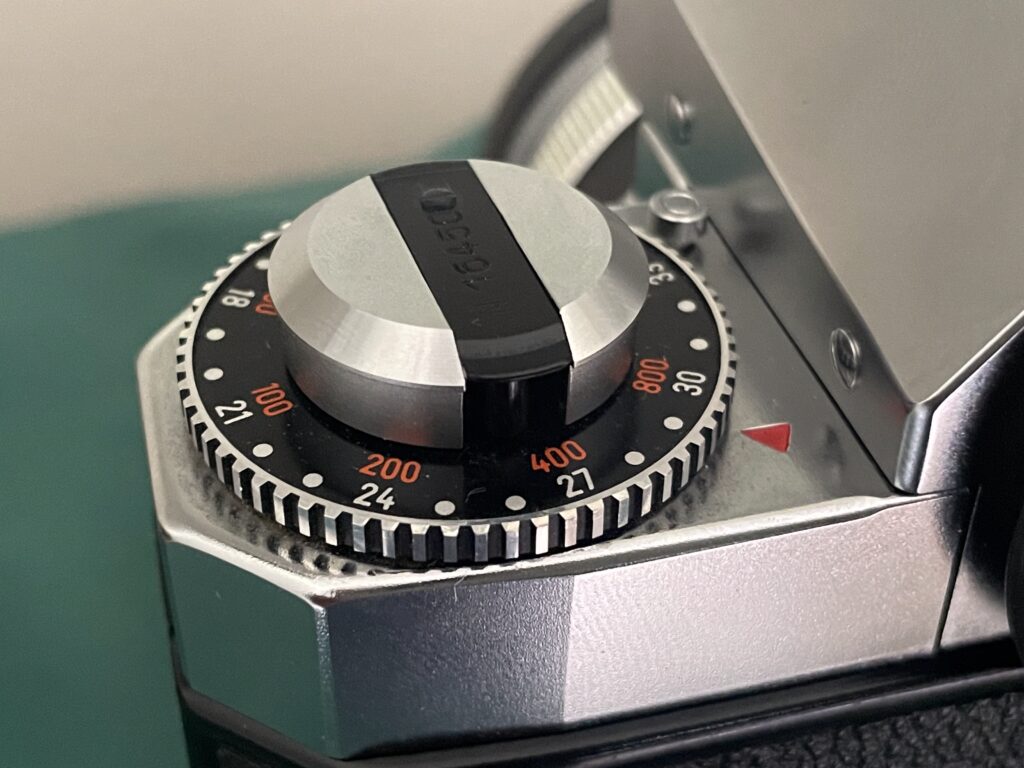
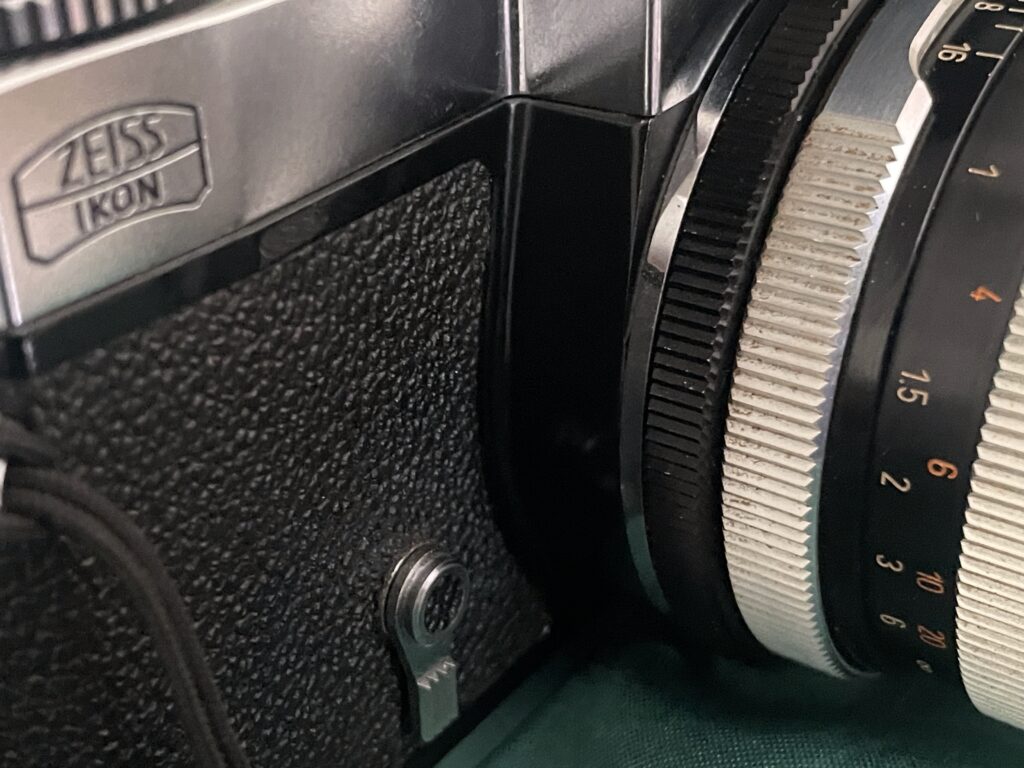
My first hurdle was trying to get a filter for it. The mount is a Zeiss Ikon Breech lock Mount, (though I now have a Zeiss Ikon adapter which allows the use of M42 screw mount lenses on this) the lens doesn’t take typical screw in filters, but a bayonet mount filter like that on a Hasselblad, in this case a Zeiss Ikon B50 mount. But, there is a way to mount a normal 55mm filter. This is because there is a hidden thread on the rim of the lens barrel, you have to flip the 55mm filter over and mount it back to front, twist and it’ll catch and screw in securely.
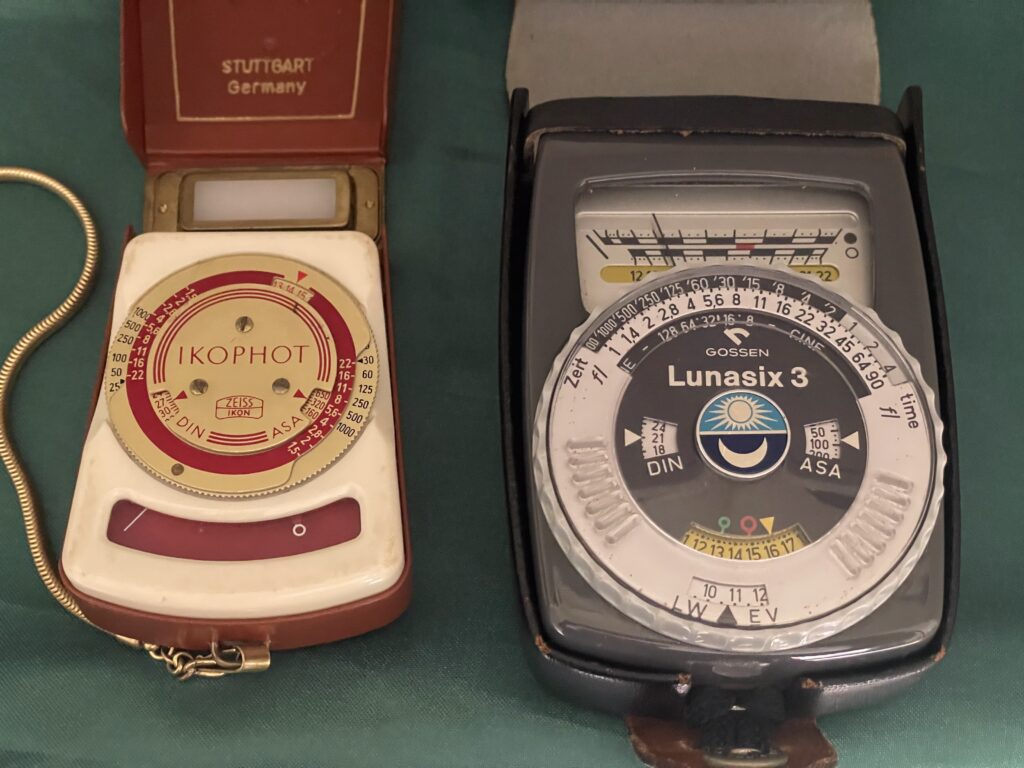
So filter sorted. I then needed a lightmeter. The metered prism takes a Mercury PX13 battery, you can buy replacements made by Weincell, but I was impatient and decided to use a normal handheld meter. My Gossen Lunasix 3 was dead as that too takes the PX13 equivalents, so I decided to use a lovley little Zeiss Ikon Ikophot Selenium meter from the early 50ies. I bought a lovely example for a few quid, about £10. It’s small, simple, very nicely made; of Bakelite and Aluminium, with a snazzy leather case and gold pocket chain, and fits into a pocket. It features a slide out diffuser which snaps onto the selenium cells. My way of using these is mostly Incident – I meter once and providing the light is constant I then play it by feel and sense and adjust exposure as I see it. For spot(ish) readings take the diffuser off and point it at the shadow areas, then adjust exposure as you would like. Straight forward. So as I hadn’t used it before I wasn’t sure whether it would be accurate – it seemed accurate enough when comparing the readings to a DSLR, but the readings were in the ball park rather than spot on exact.
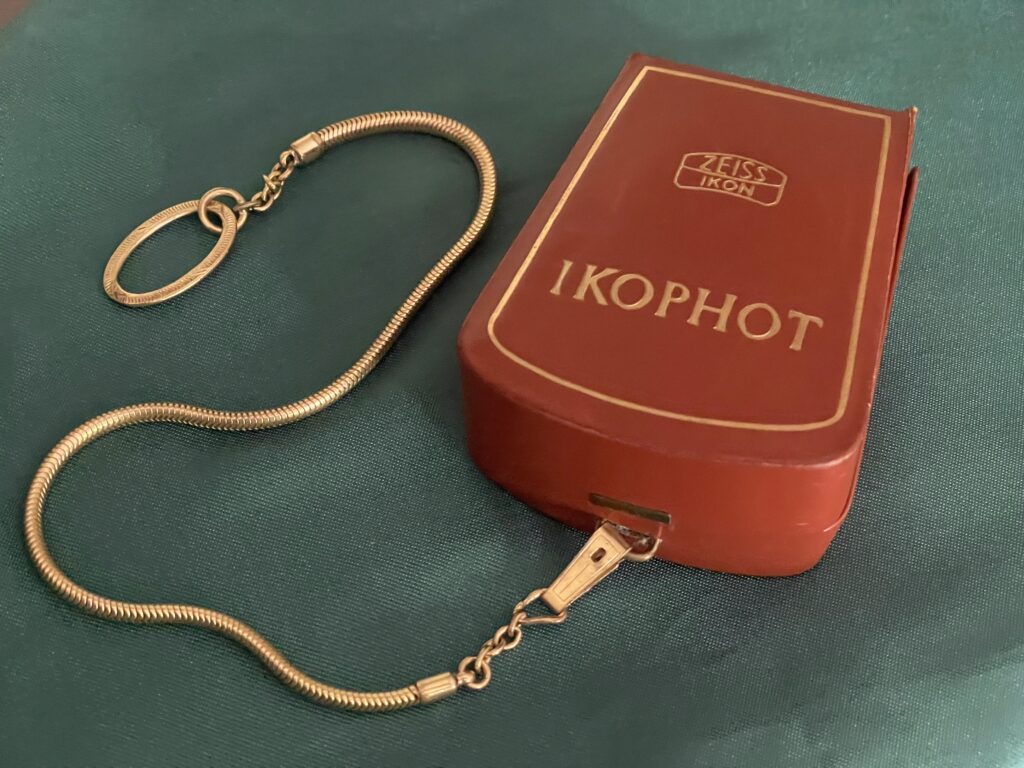
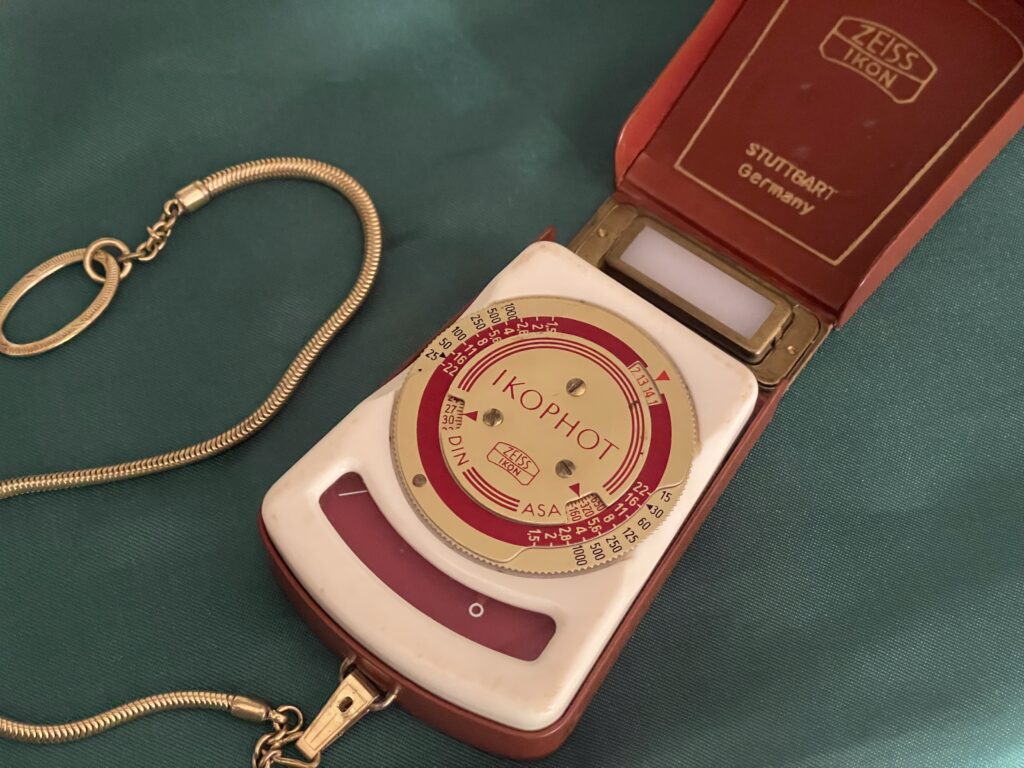
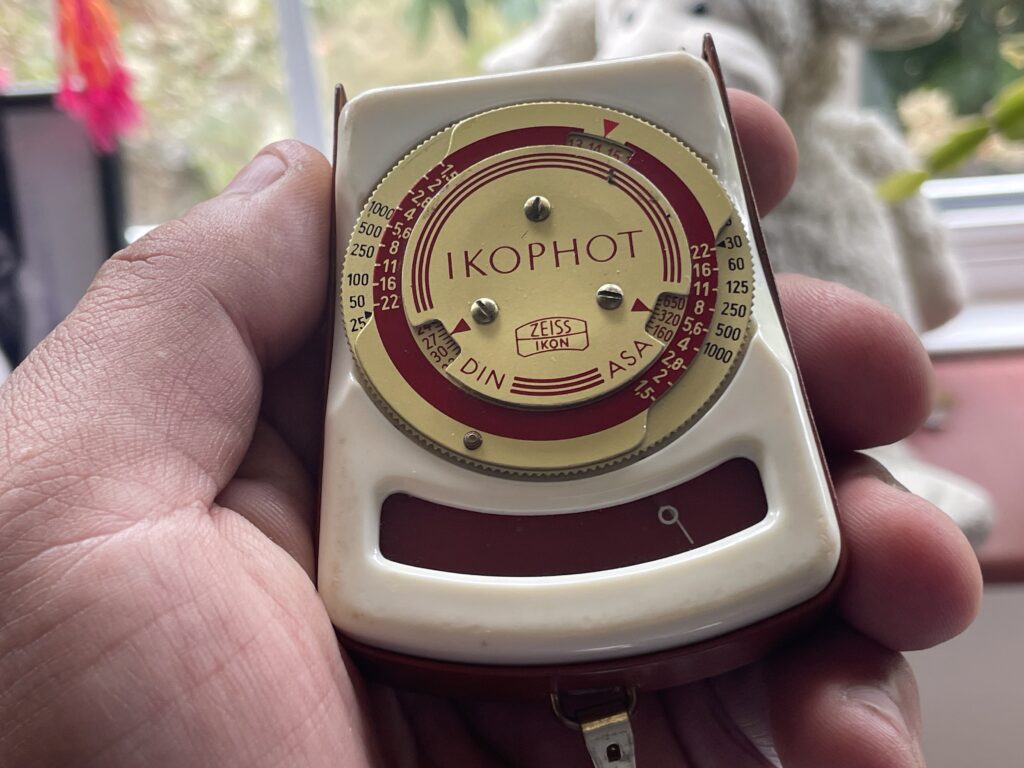
As for Film, I decided on two classic Films. I had a roll of original Agfa Gaevert Pan APX 100 (long expired) and a roll of fresh new Kodak TX400 TRI-X. It felt right to load up some German film in the old German camera, so in it went.
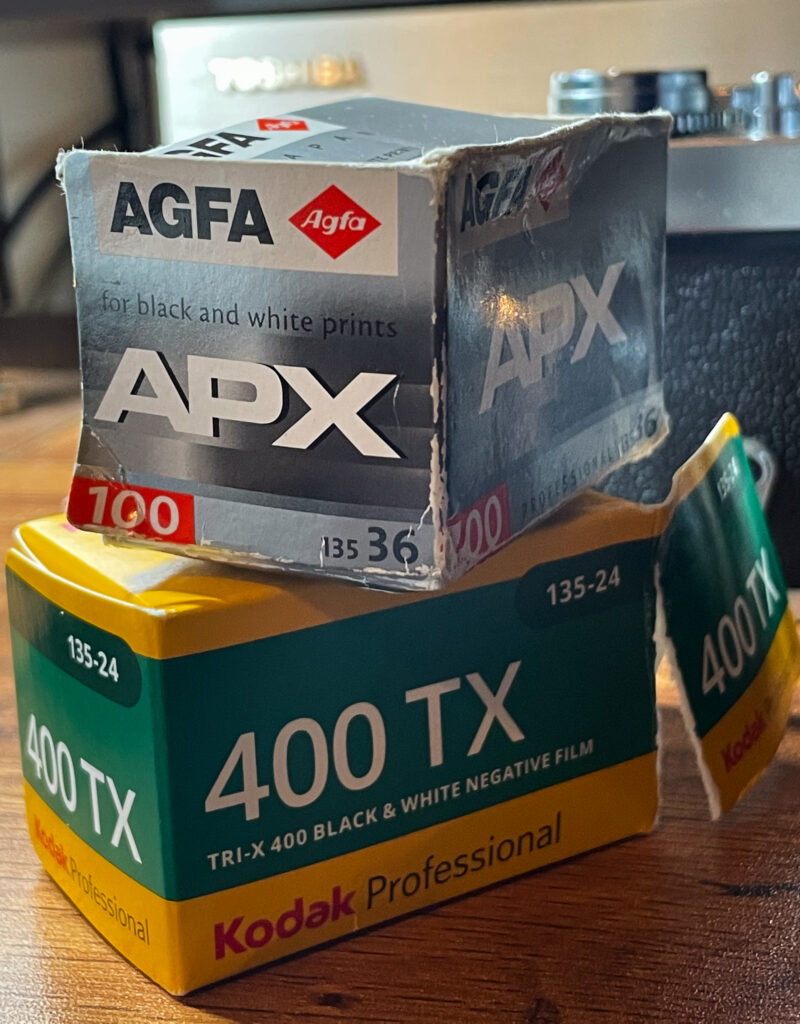
Agfa Gaevert Pan APX 100 B+W Yellow Filter
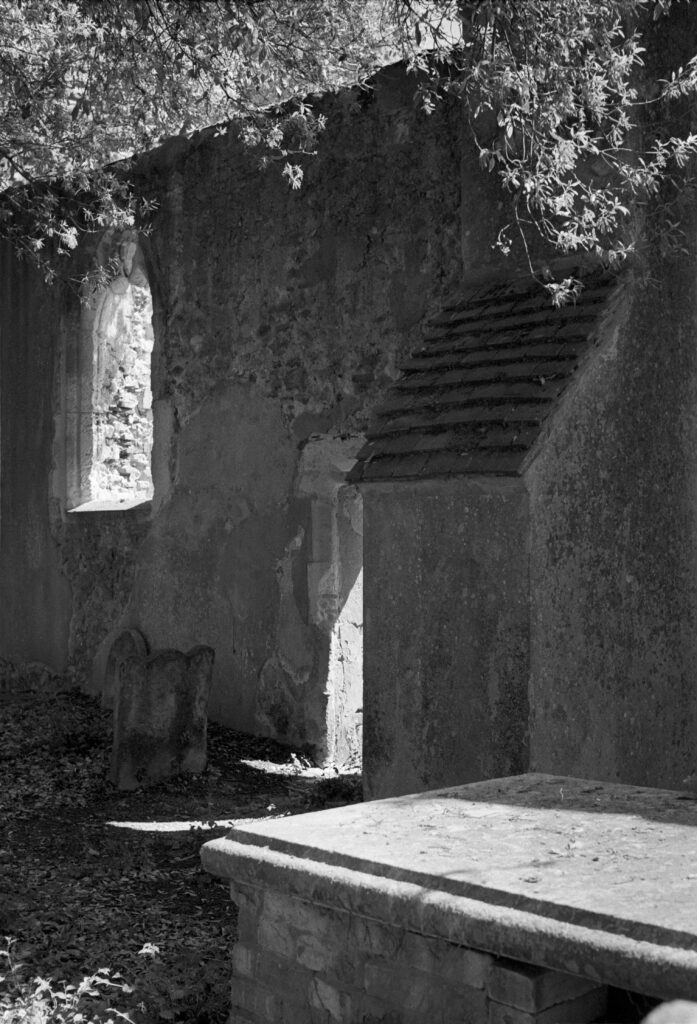
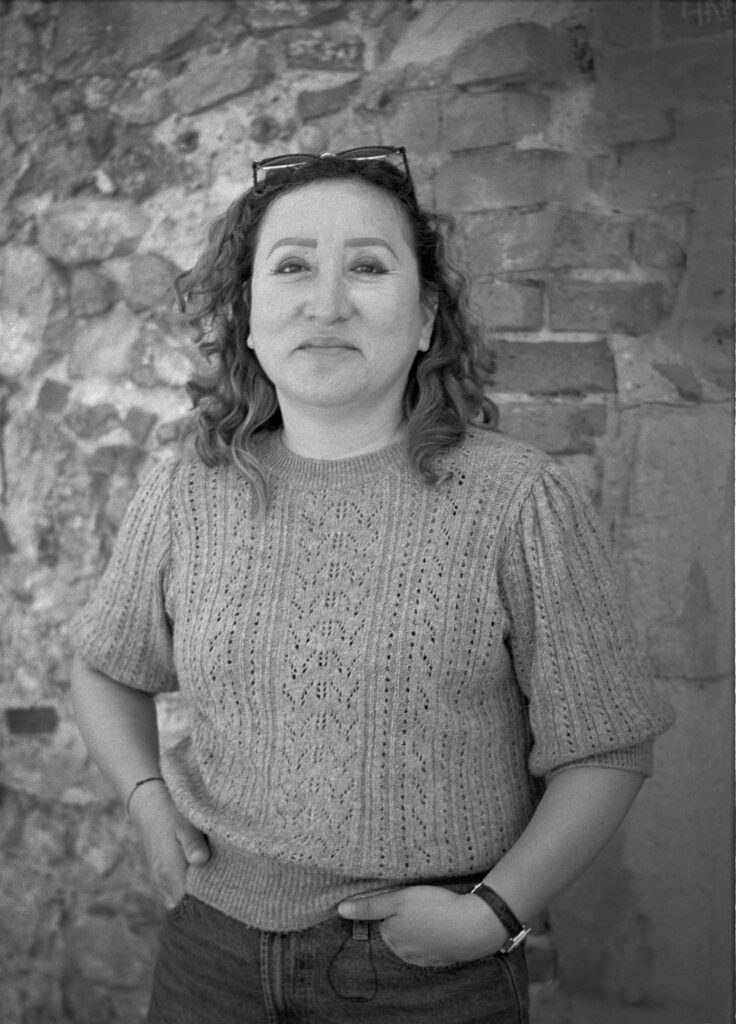
After picking my wife up from work, we drove to hear some Cuckoos, which always appear in Spring. The area around the ruins of an old Church in Essex is always full of Spring birdsong including the odd Cuckoo. The weather was fine, very bright and warm, perfect I thought (for my style where I require strong light). Photographing ruins can be a satisfying task, this one I’ve photographed before with a tiny Balda CA35 and my Contax RTS II. A lot of the ivy I liked had withered away, hence I lacked some focal points to include in the photos, so I asked wife to step in.
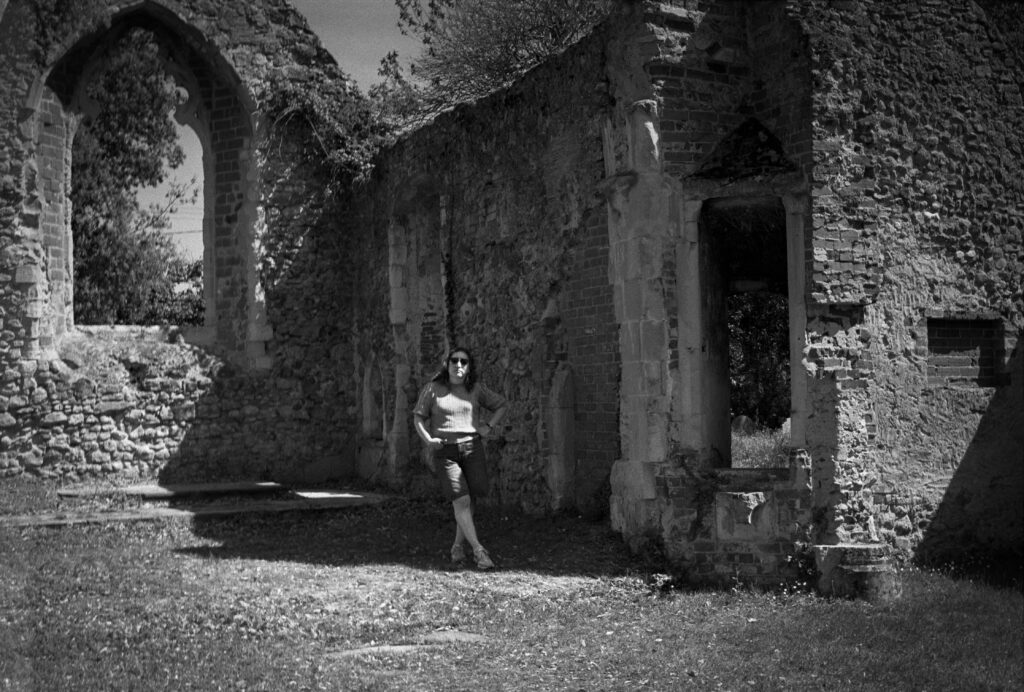
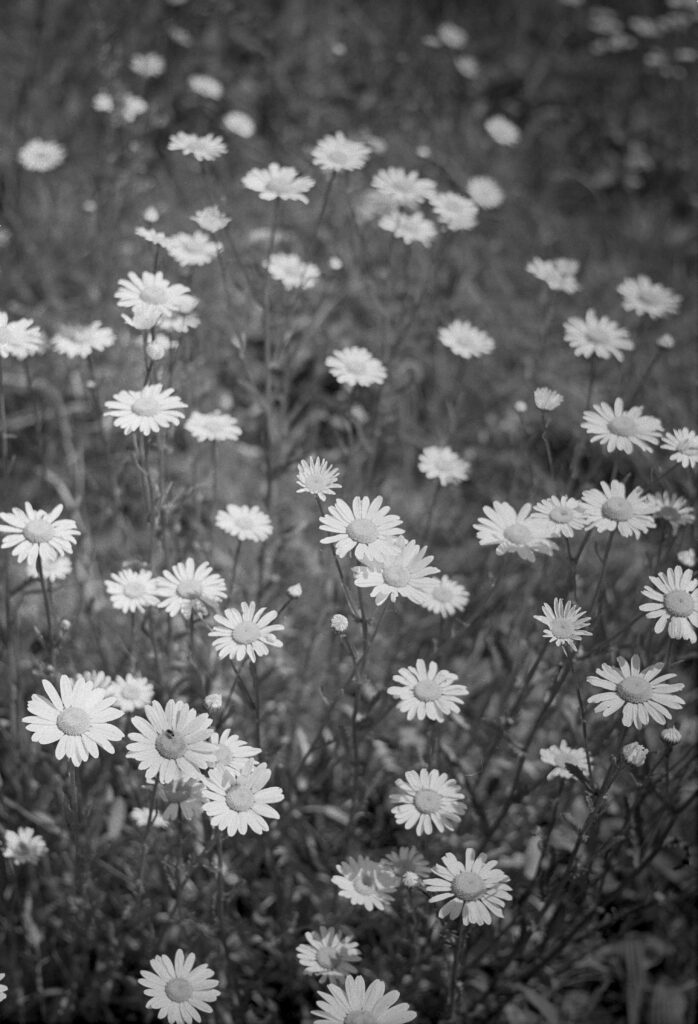
I like the play of light and shadow on the stone and the way light is filtered through leaves. I took a few exposures and then snapped some daisies wide open. I didn’t take many more snaps here as I’d done so before and besides the light outside was very bright. When we were about to leave I thought I’d take a couple of snaps of wife, she looked miserable so I cracked a joke and she laughed; enabling me to snap another! After development I see that the tone of her clothes and the wall in ab&W were almost identical – making for a very grey image. I could’ve done some work in the digital darkroom but I couldn’t be asked, I’d rather get most tones right when I click the shutter to work on afterwards effectively.
The next day I found an excuse to go to Flatford, Dedham Vale, in Constable Country, which is about 2 to 3 Miles away from home. I’ve photographed Flatford Mill and Milly Lott’s House a few times before, but it’s a fantastic subject and the area around there has wonderful light, with the buildings, fencing and stone work perfect for black and white tones, when the sun is shining. I like the setting, it’s like being transported back in time with very little in the way of modernity or tourist friendly signage and stuff to ruin the timeless look of the scene.
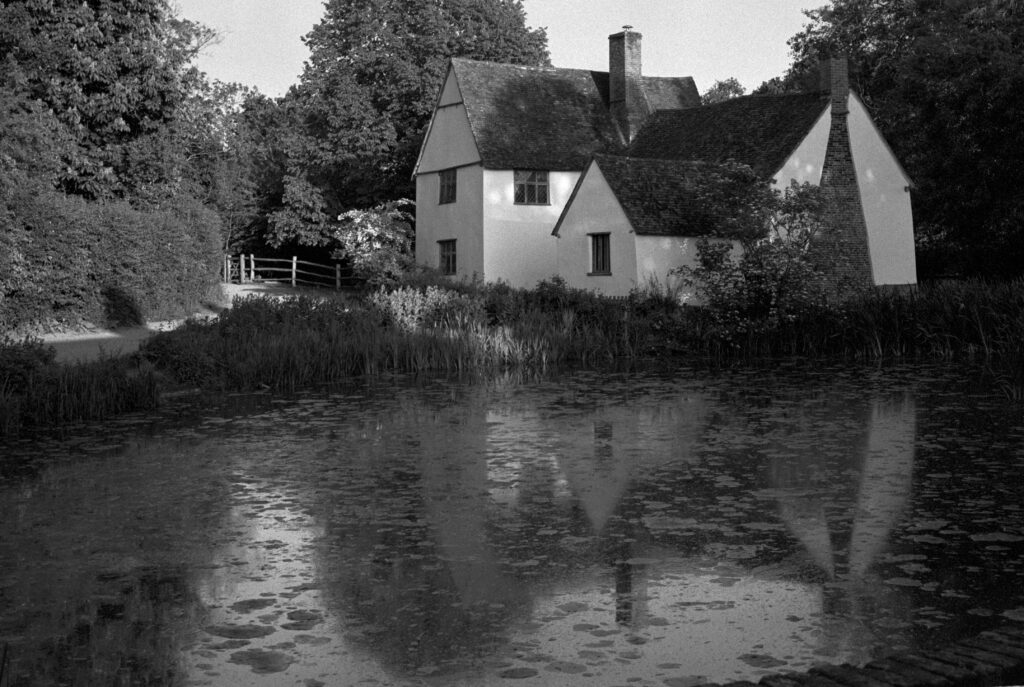
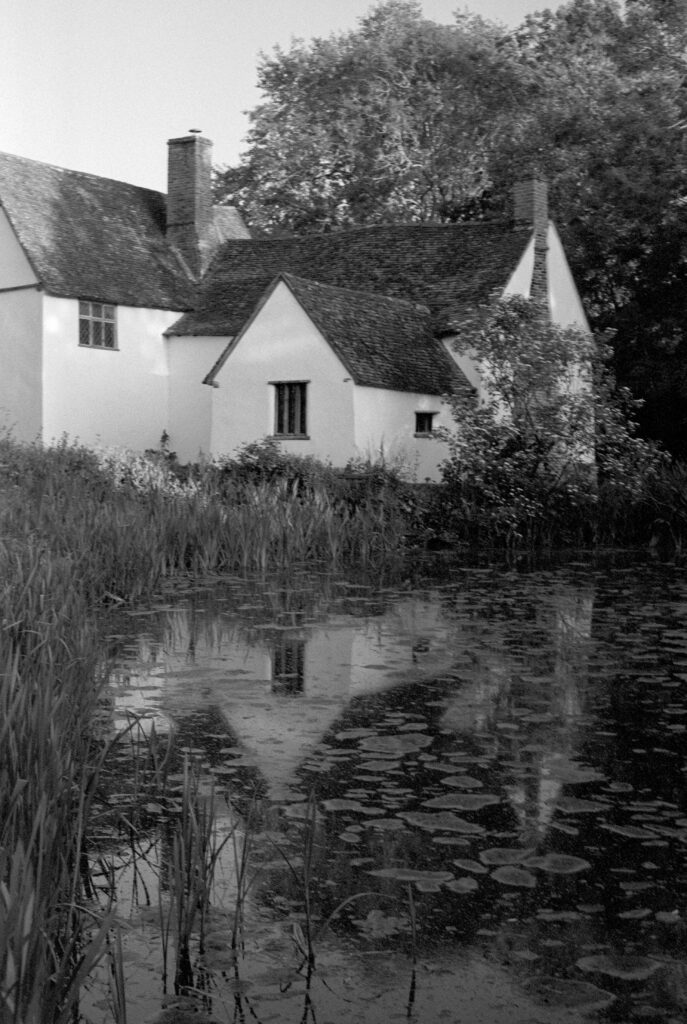
The light was fantastic, low-ish but still bright on this very warm May day. The following scene captured me, I liked the way the Eastern light glanced against the window and the fence, with the trees highlit, from the direction of the Mill and Pond. I took an exposure and then wife walked into the scene, the light caught her hair and I asked her to halt! And took a snap of her. The setting and composition was perfect, the light on the trees, fence, window, cottage and her hair was too good to miss, so I shouted “WAIT!” and under exposed by a stop, then snapped another. So the picture above is just a nice snap of wife, the one below isn’t of her but of the light and what I felt. Took a couple more and one of Wife in the shade of the Mill, to test the meter and lens. On the way home I saw some cute Sheep by the road, and finished the last two frames.
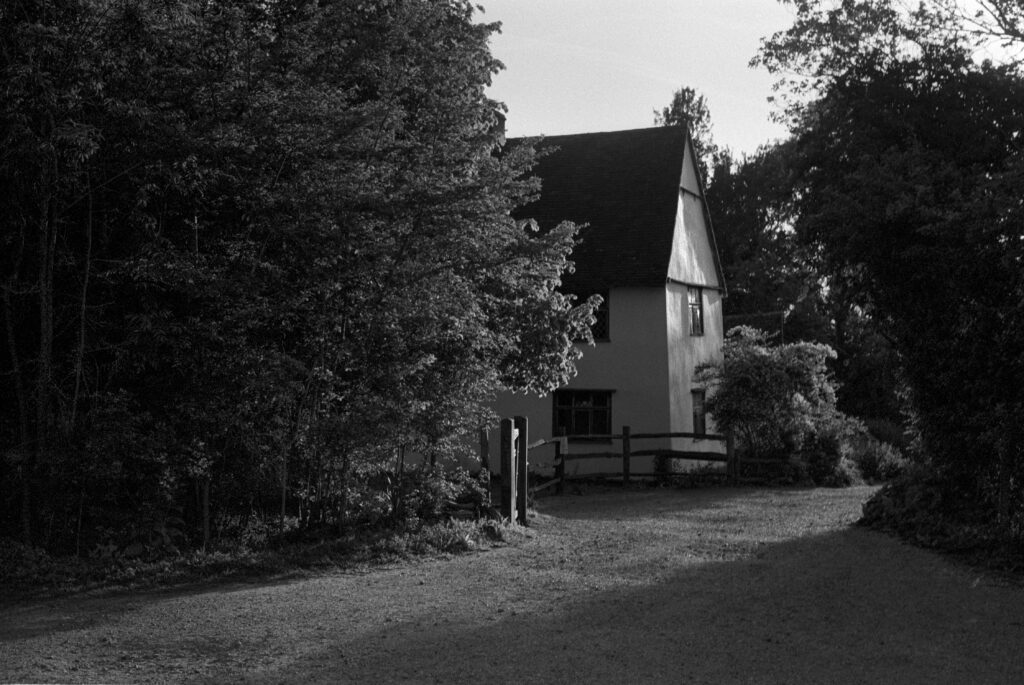
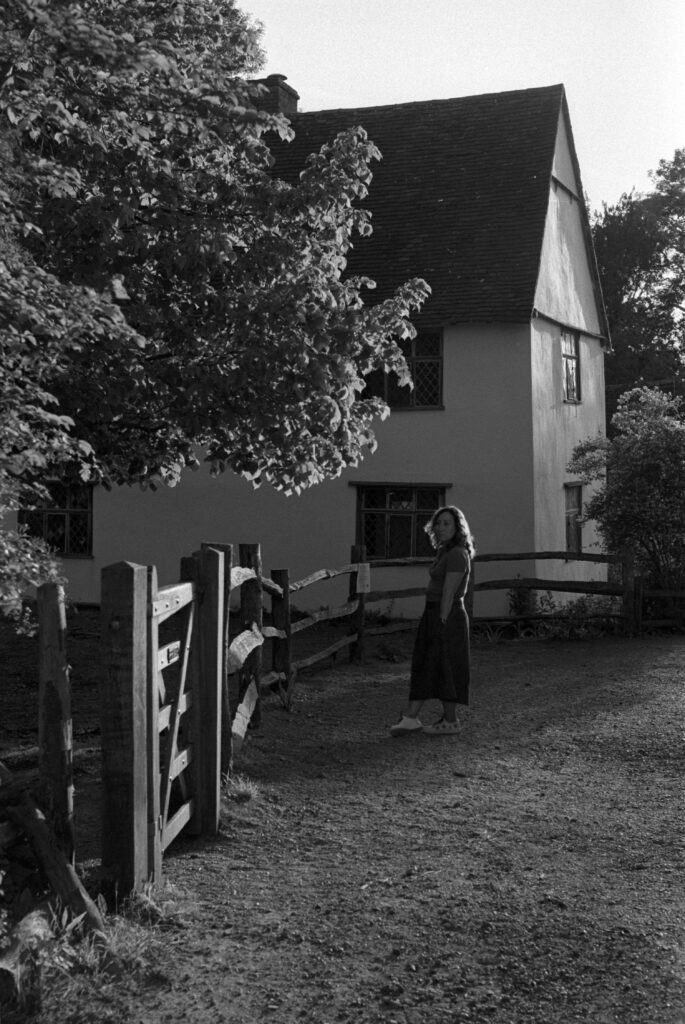
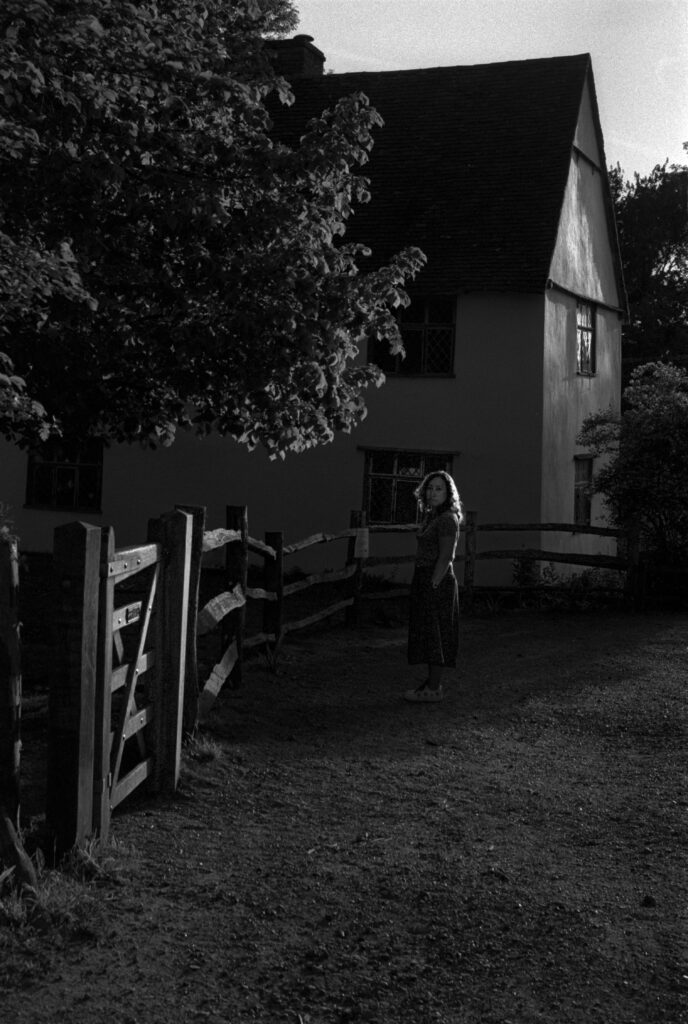
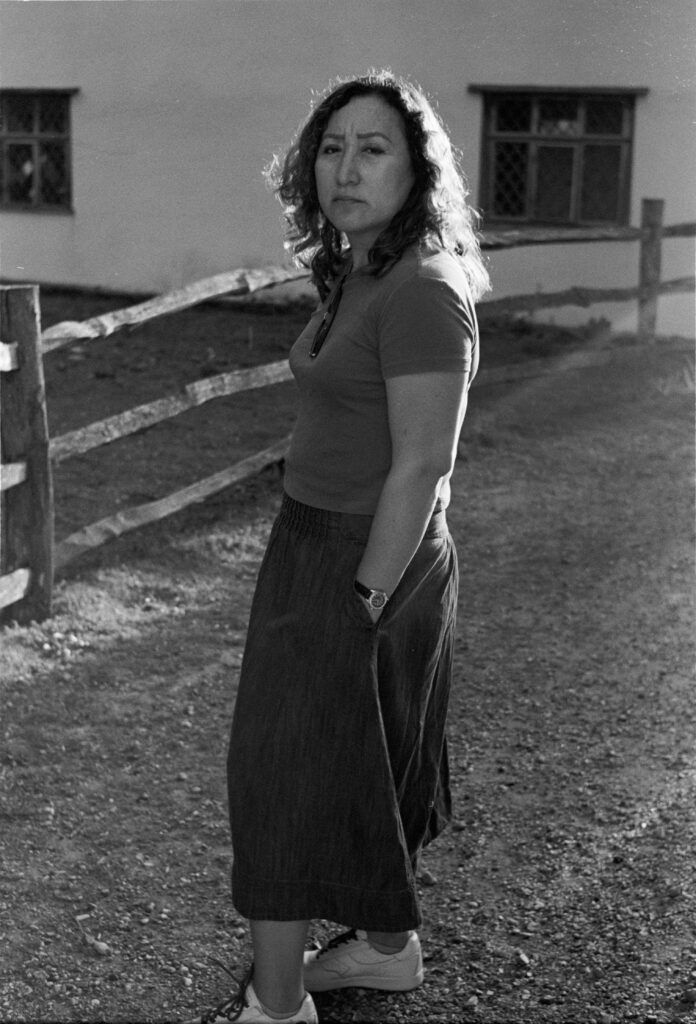
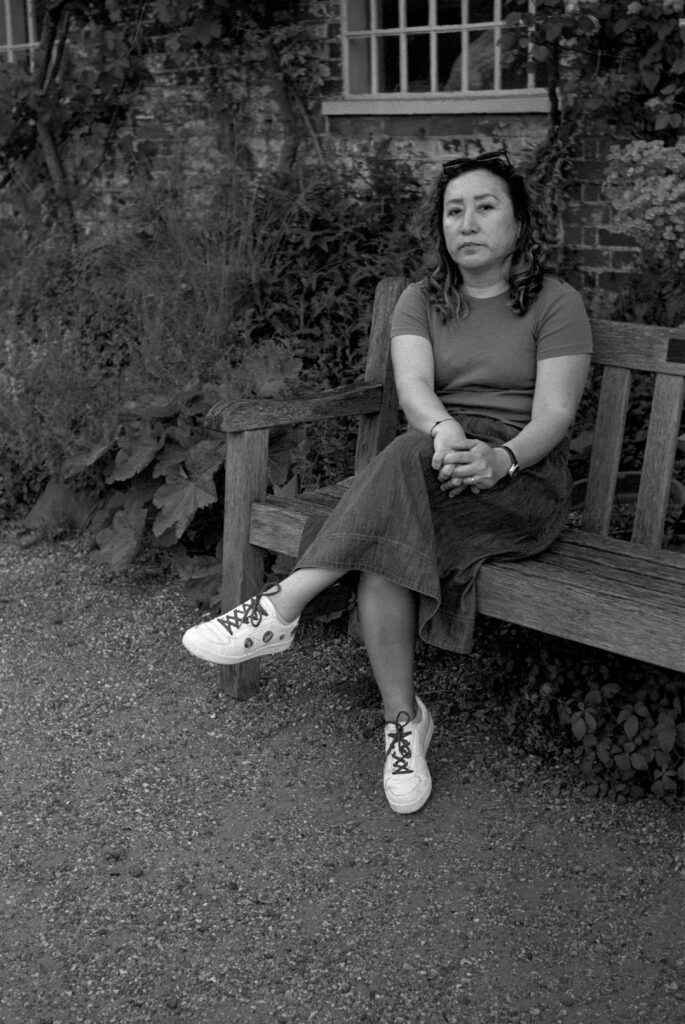
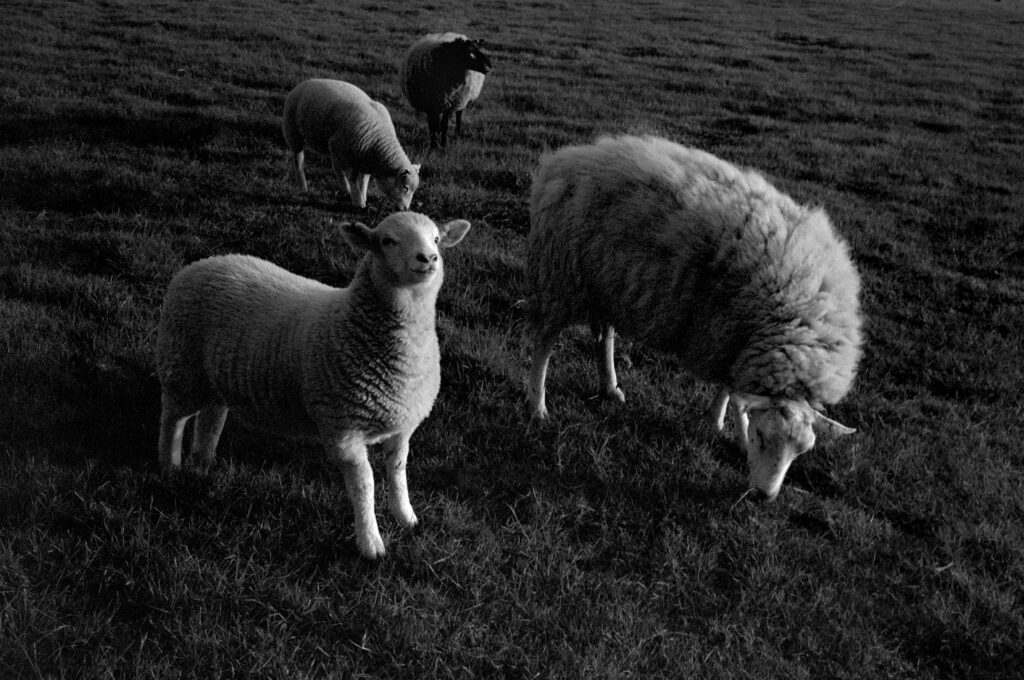
We got home and I developed the Agfa Gaevert Pan APX 100 in my usual Bellini Duo Step developer. Fresh developer mixed in Distilled Water, with Fix using distilled and a final rinse in Distilled water. the Film came out wonderul! Much better results than I’ve had before with no imperfections or anything to wind me up! Again, I encourage all to try it, especially beginners, as it is surely the quickest and easiest and most reliable developer out there.
A few days later we went for a stroll along the River Orwell, in Suffolk, which is only a 30 minute drive away. There’s a little place nestled and hidden away by the village of Chelmondiston. It;s called Pin Mill. The National Trust takes care of the area.
About Pin Mill
Get away from it all and explore the footpaths around the heathland, wooded cliffs and river valley. Head to the village for a pint or a delicious meal.
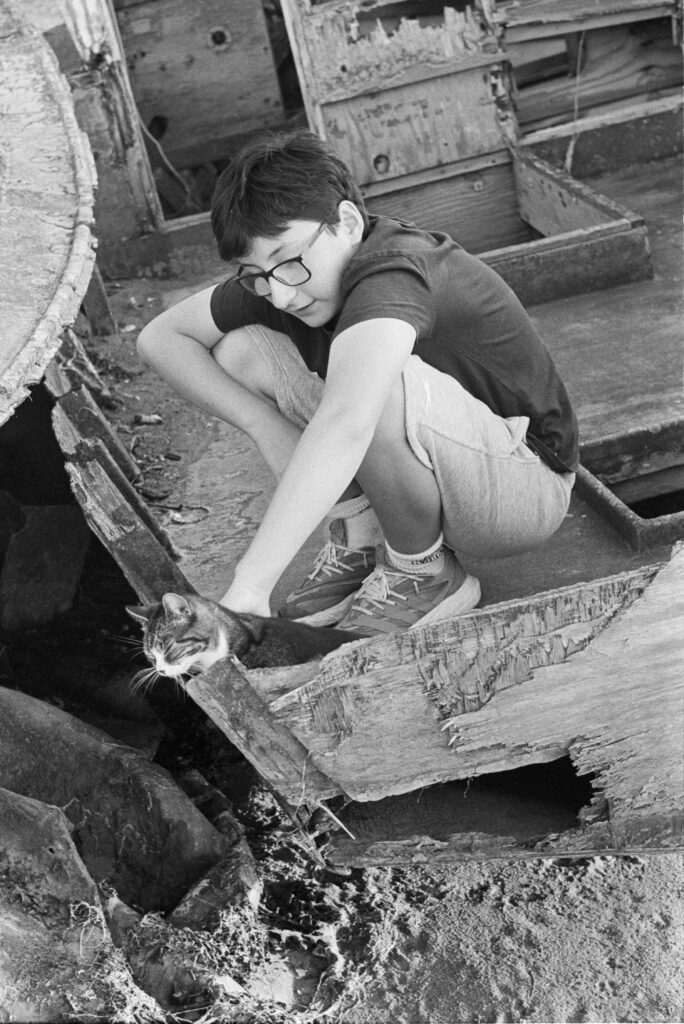
I only had one roll of Film left in the fridge, the aforementioned roll of Kodak TX400 TRI-X. Now it was a hot bright day and my concern was the film speed. Normally I’d rate the film at say 100 or 200 and pull process in development. Absent minded I did this very thing, set the Ikophot to asa 200 (it was closer to 100 actually). I had forgotten that Diafine doesn’t pull or push, it just develops. So naturally the Kodak will result in severe over exposure. Lo and behold, the negatives were all very much over exposed, but there was a hell of a lot of detail everywhere. I haven’t used this film for about 20 years, so I was so very surprised at how much better it is shot at say 160 ASA than Kodak Eastman Double X 5222. Much better tonality and just more pleasing to the eye (with the developer I used without red filter). I won’t be rushing back to this film, as it doesn’t suit my moody style, the nature of it is very different than slower inkier films such as the Agfa or Fuji Acros or Ilford Pan F. SO I was unable to get the mood I wanted, but was left with generally pleasing results nonetheless in very very bright sunlight (and it is true, more expensive branded ‘Professional’ Films are better than cheapo, experimental or novelty ones, in my experience). The icing on the cake was the little Cat who followed us through the woods and onto the waterfront and even amongst the wrecks!
Kodak TRI-X @ 200 B+W Yellow Filter
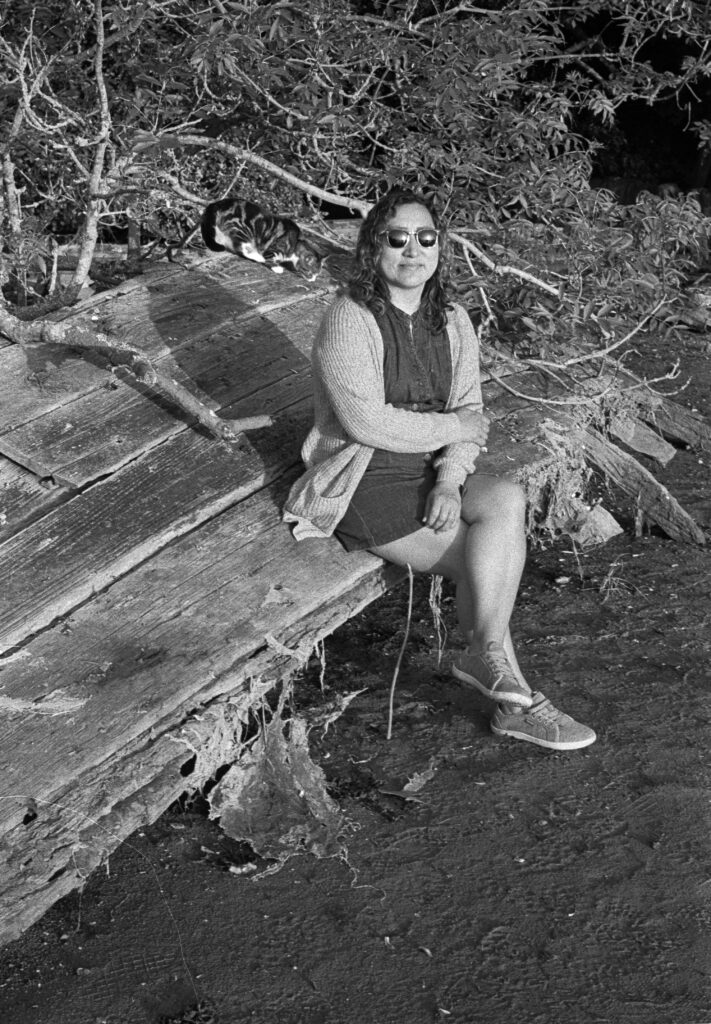
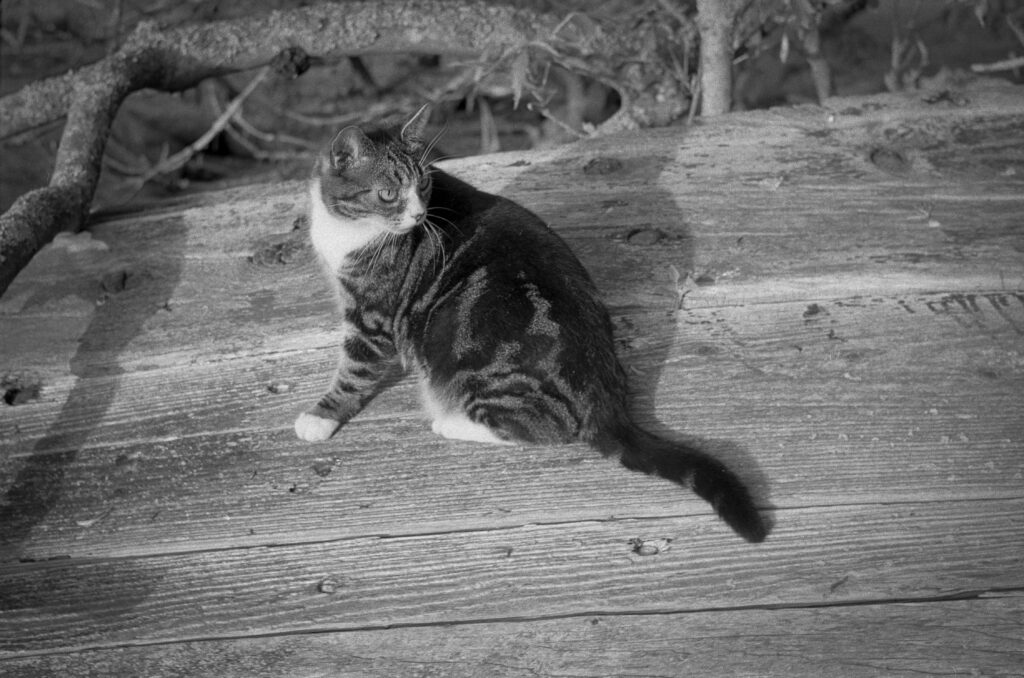
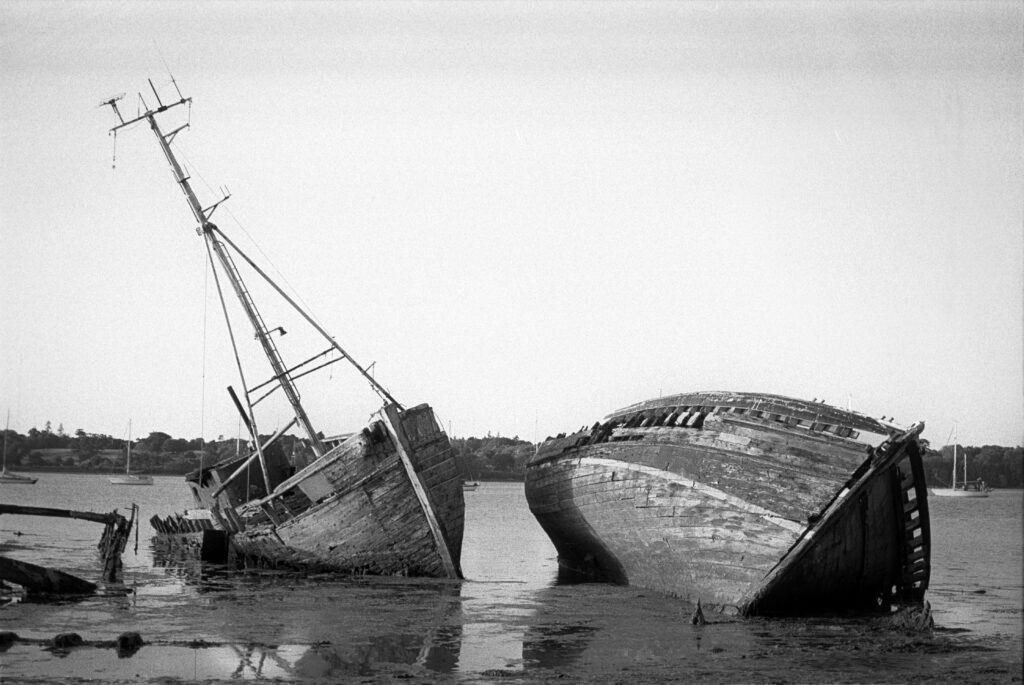
I finished the 24 exposures off in Harwich Port (where the Mayflower was built) a couple of days later.
The Mayflower, which carried English Puritans to North America, was registered with Harwich as its home port, and Harwich is the presumed birthplace of Mayflower captain Christopher Jones.
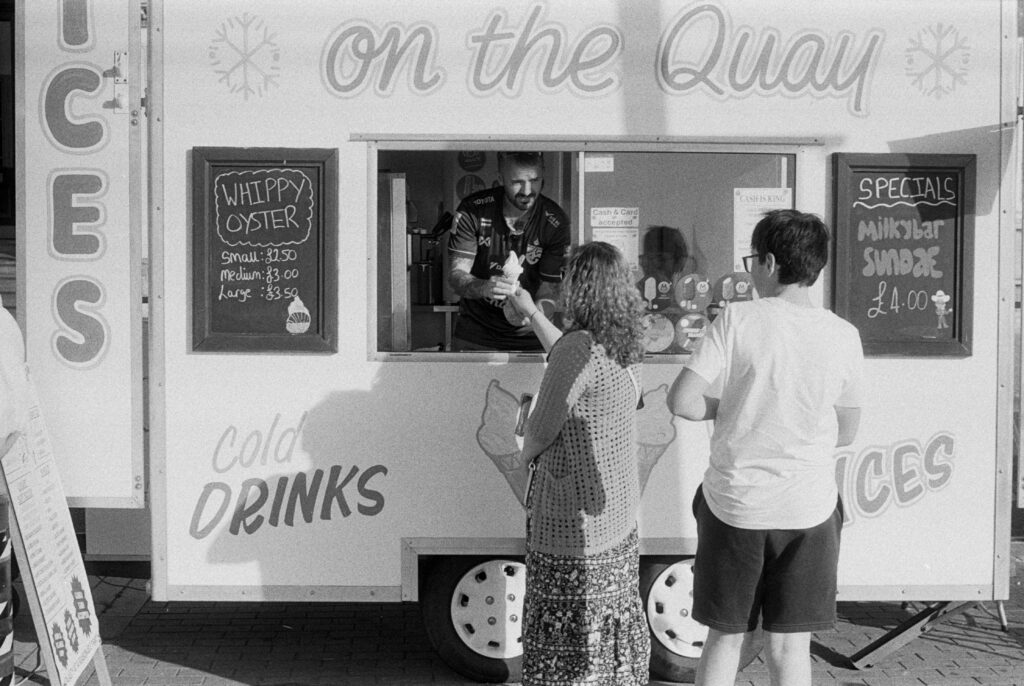
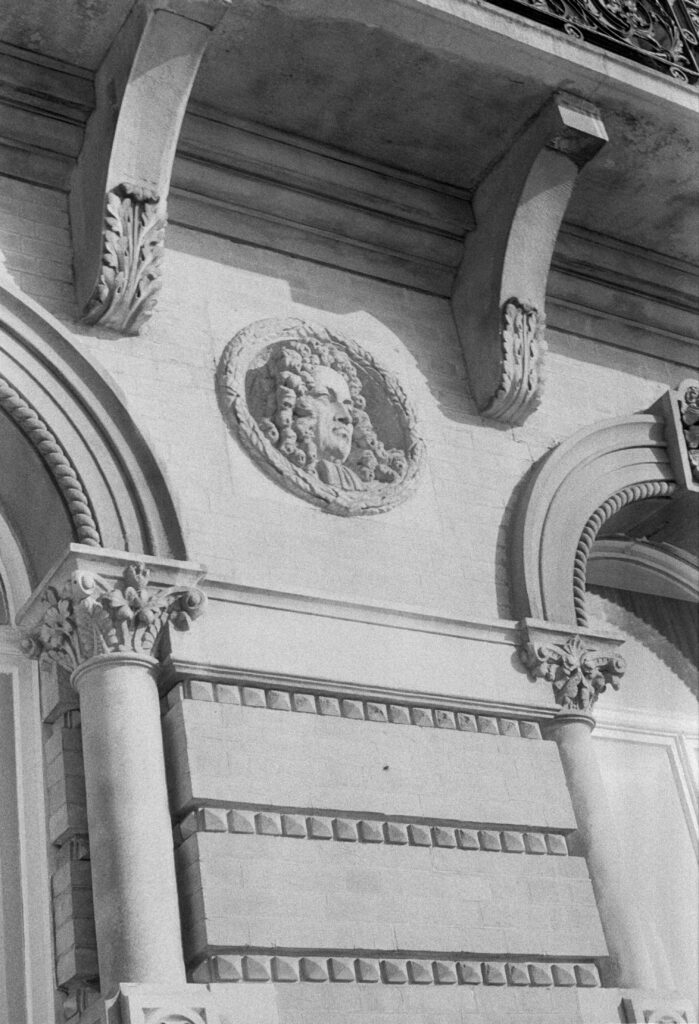
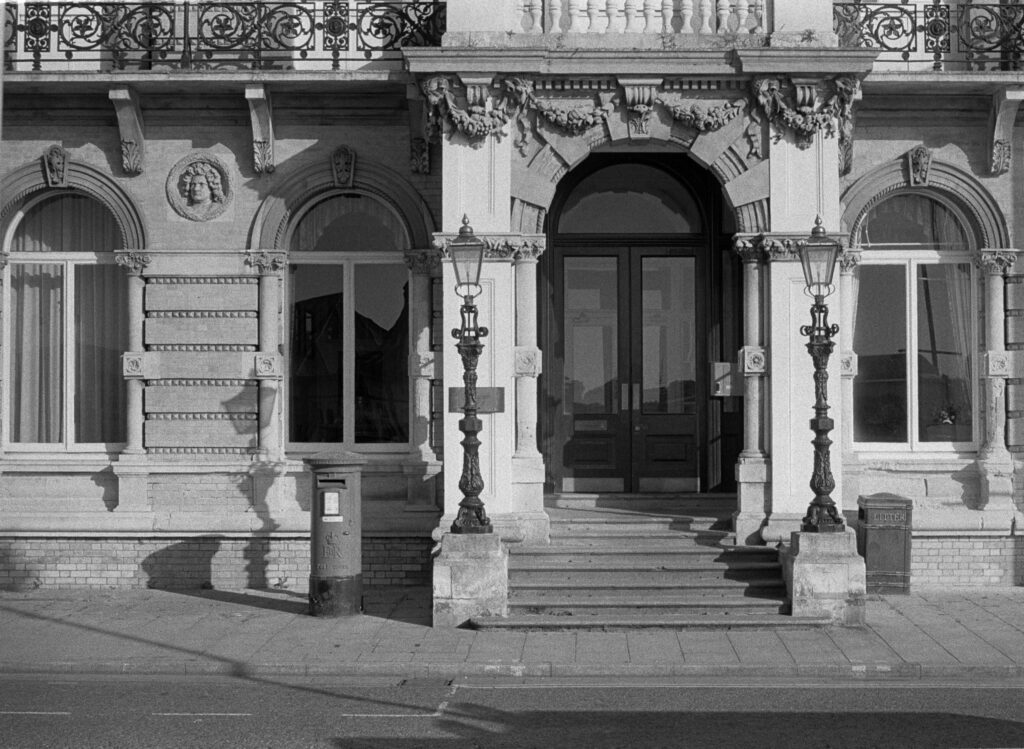
The weather has been gorgeous, so after 9 months of cold, freezing winter and rain it was a huge relief, lifted my spirits and made me want to really enjoy my family and my picture taking. Harwich is very popular with Dutch tourists and visitors, as the Ferry sails from the Hook of Holland to Harwich, so an easy route for cars and motorbikes; of which there were loads in Harwich that day.
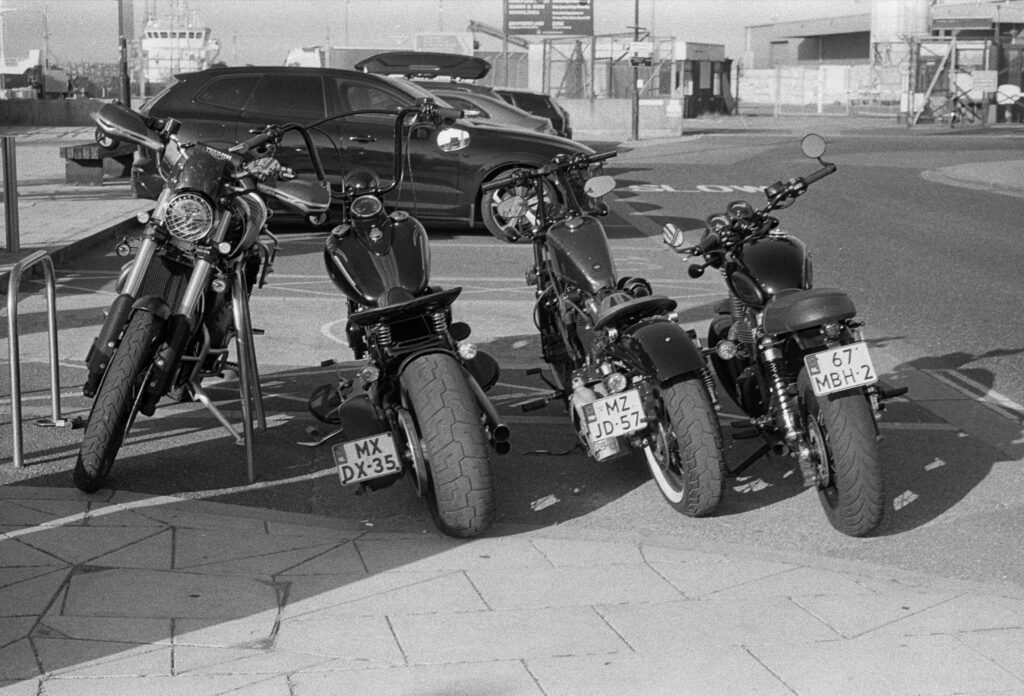
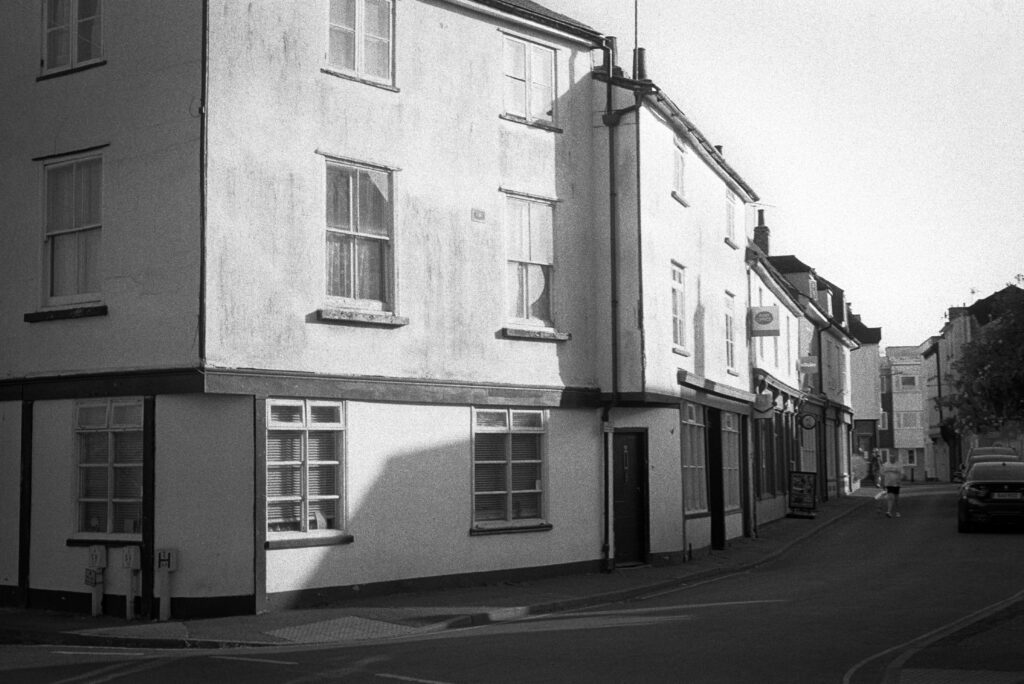
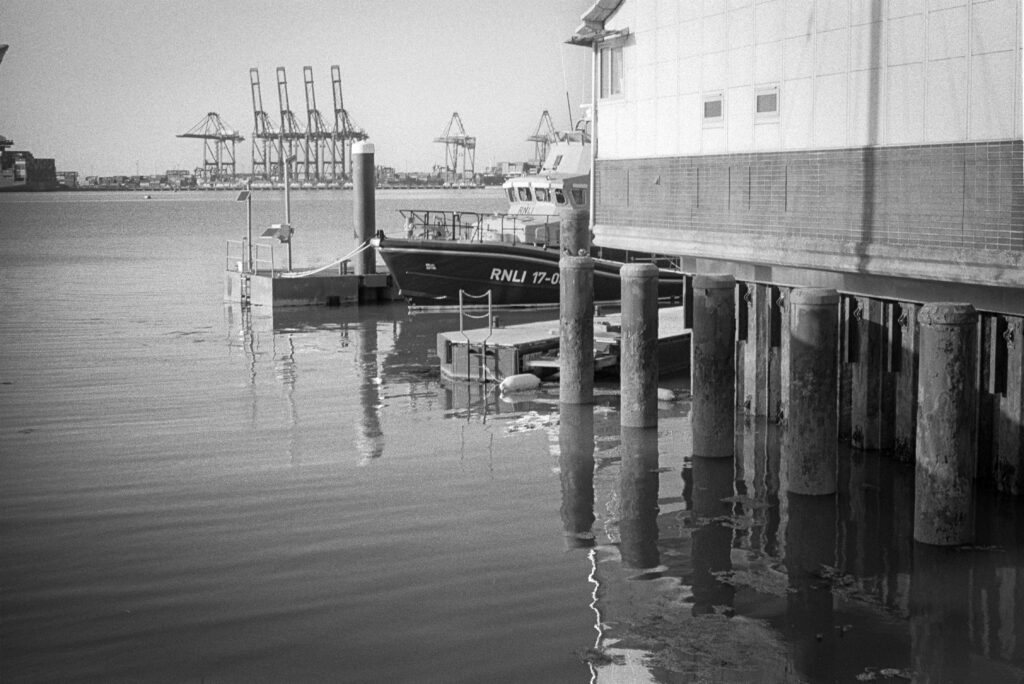
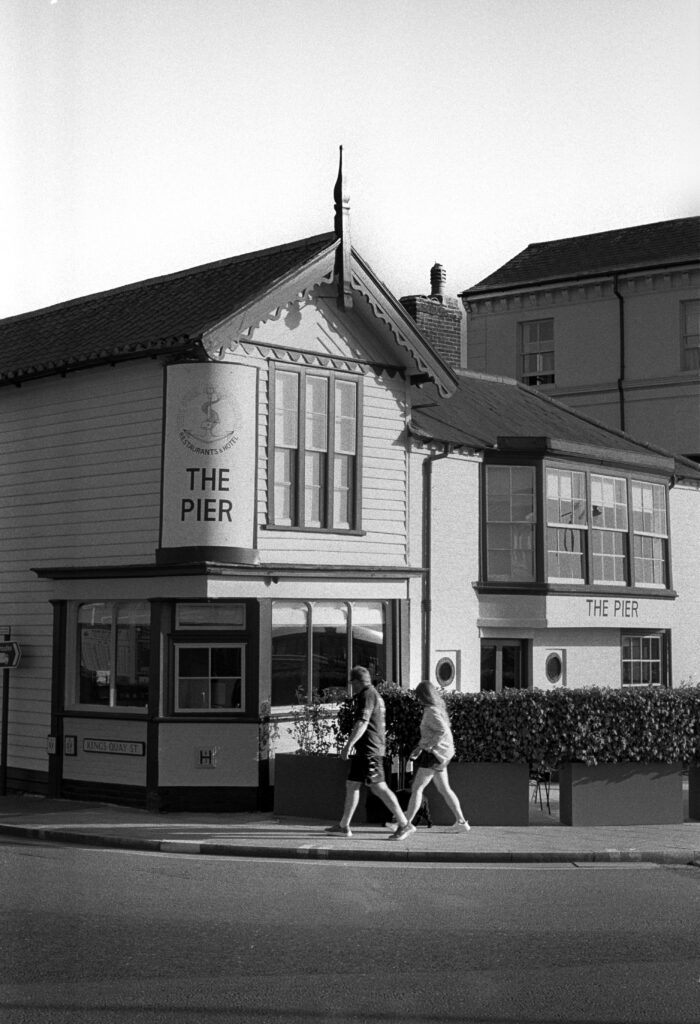
I then had a sudden inspiration to try a different developer.
In the past, my favourite results were with Ilfotec ID11 (Kodak D76) and I was pleased to see that Bellini Photo – makers of my usual easy to use lazy bastard developer – Duo Step / liquid Diafine had made their own pre mixed stock solution of D76. I of course jumped at it and bought a 1 litre bottle. The benefit is that there’s no flaffing around with mixing powders and trying to get rid of clumps – I’m useless at making pancakes and getting the mix clump free so this headache would’ve been worse The bottle arrived and I mixed up 1+3 of 300ml of developer with De-Ionized water.
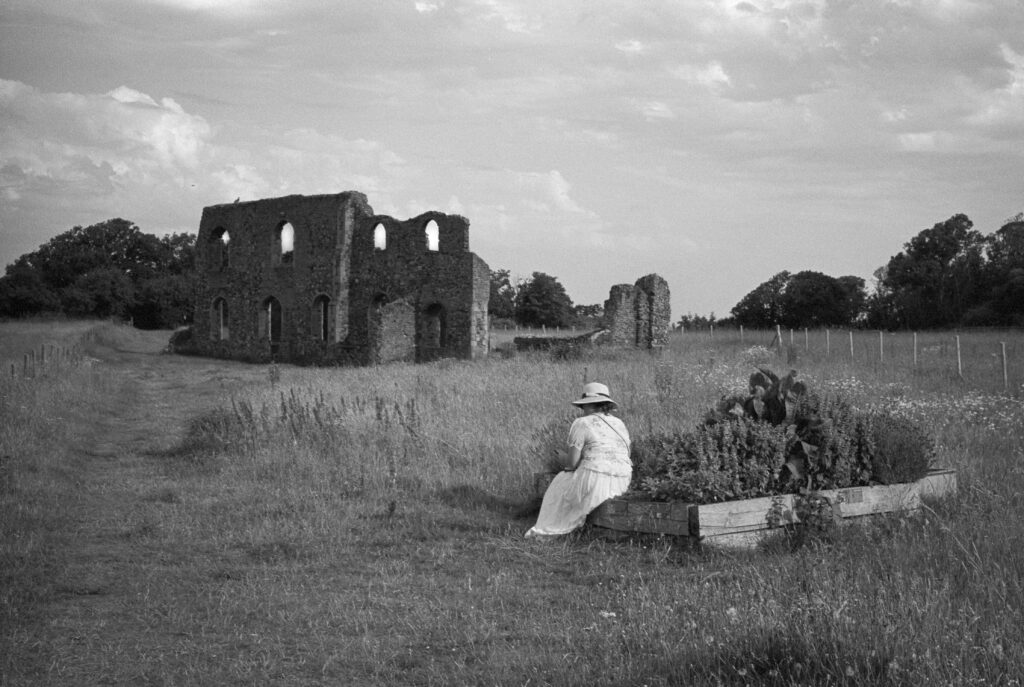
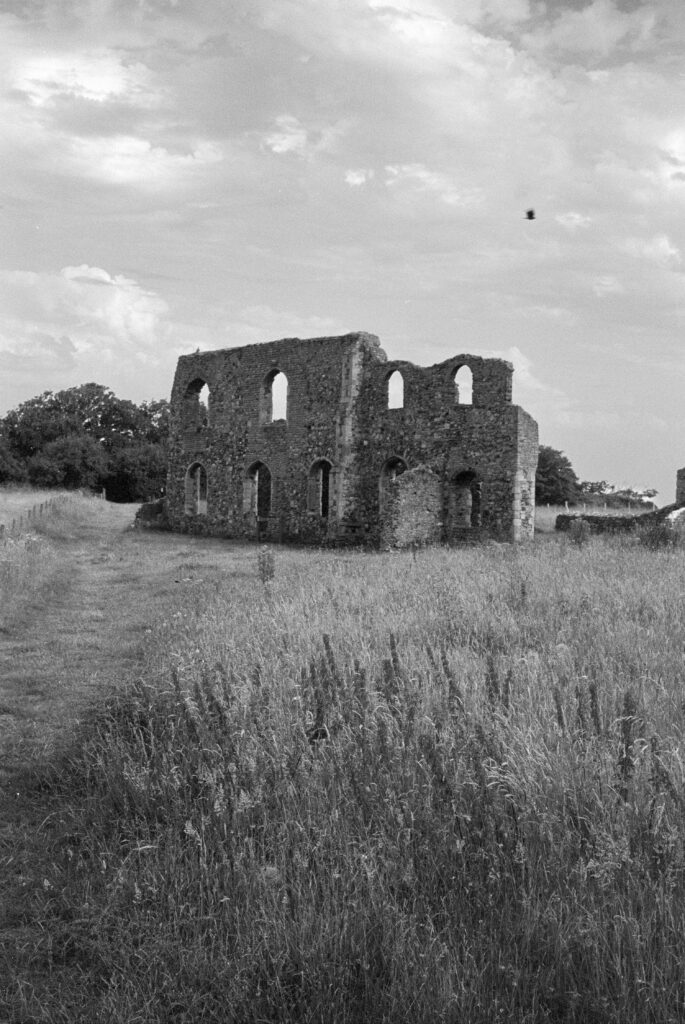
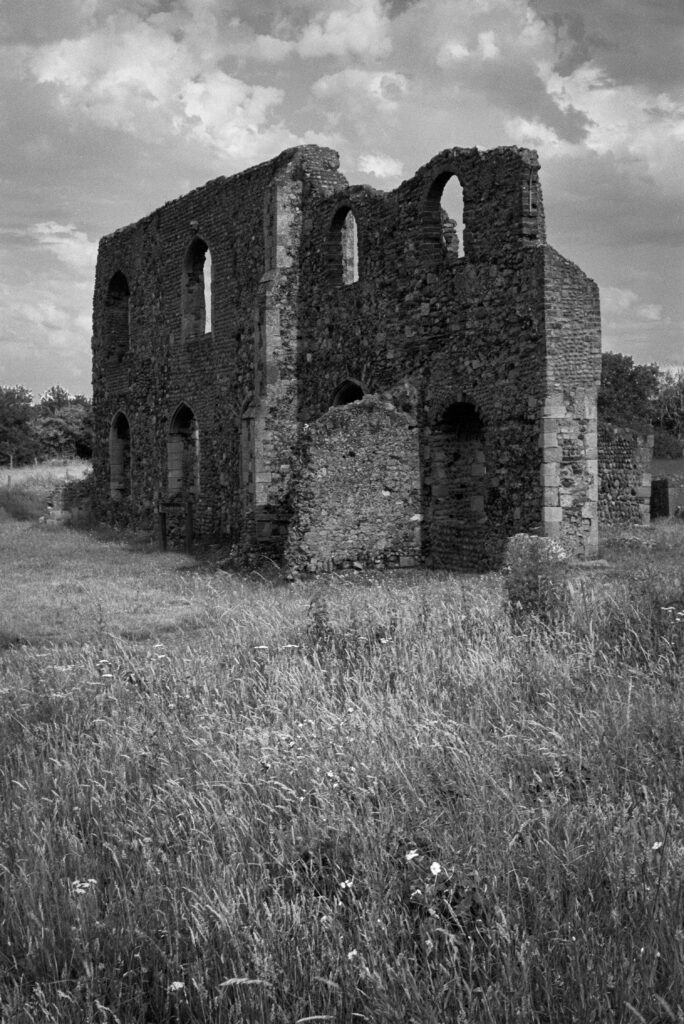
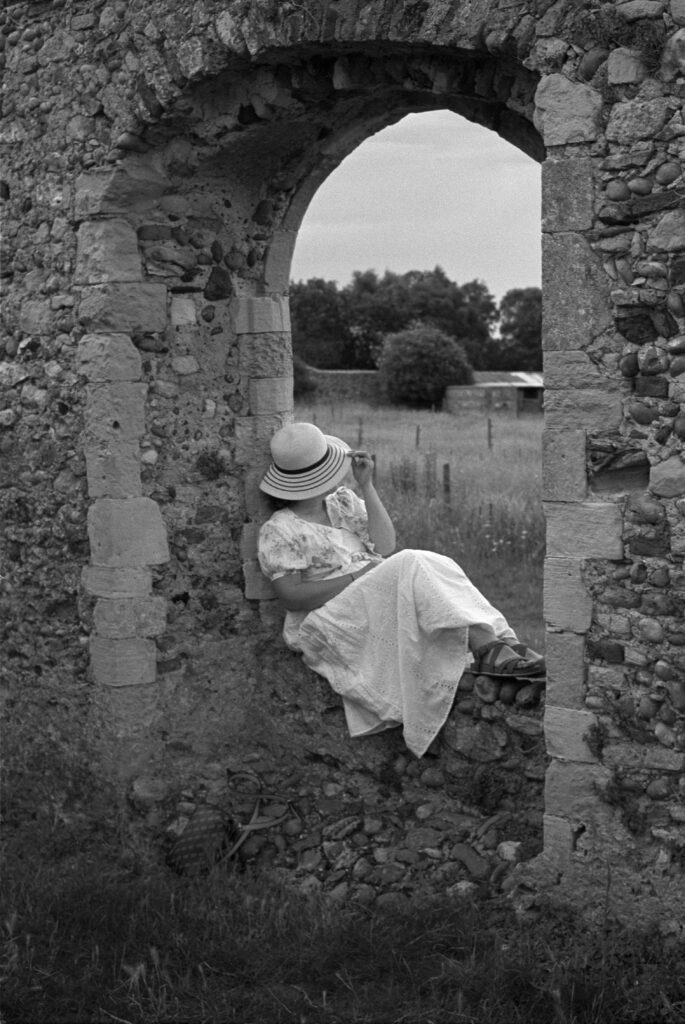
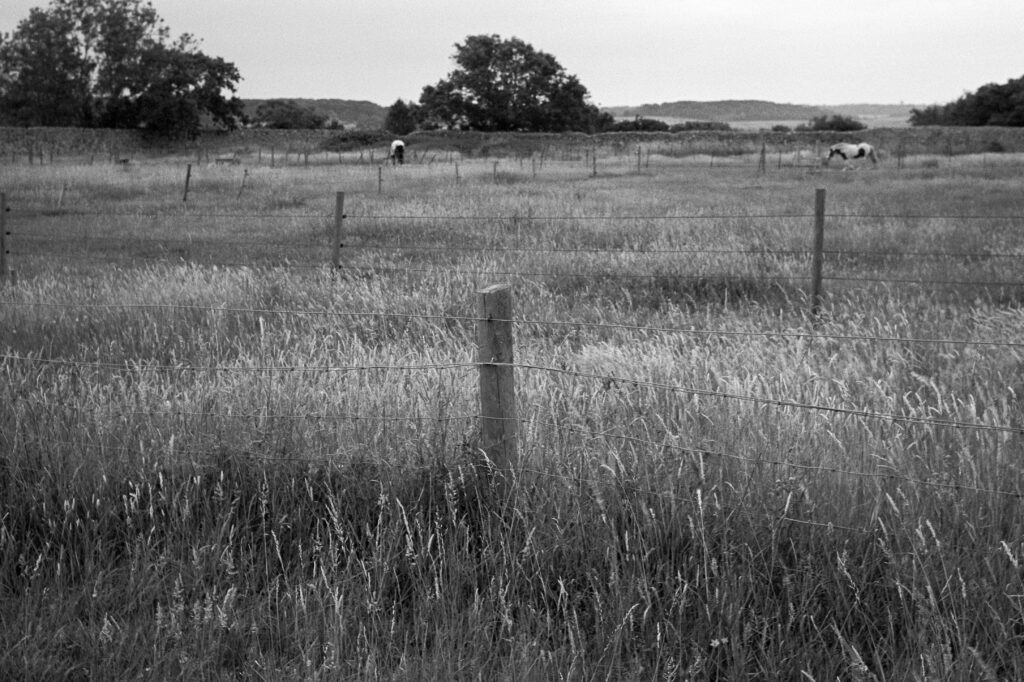
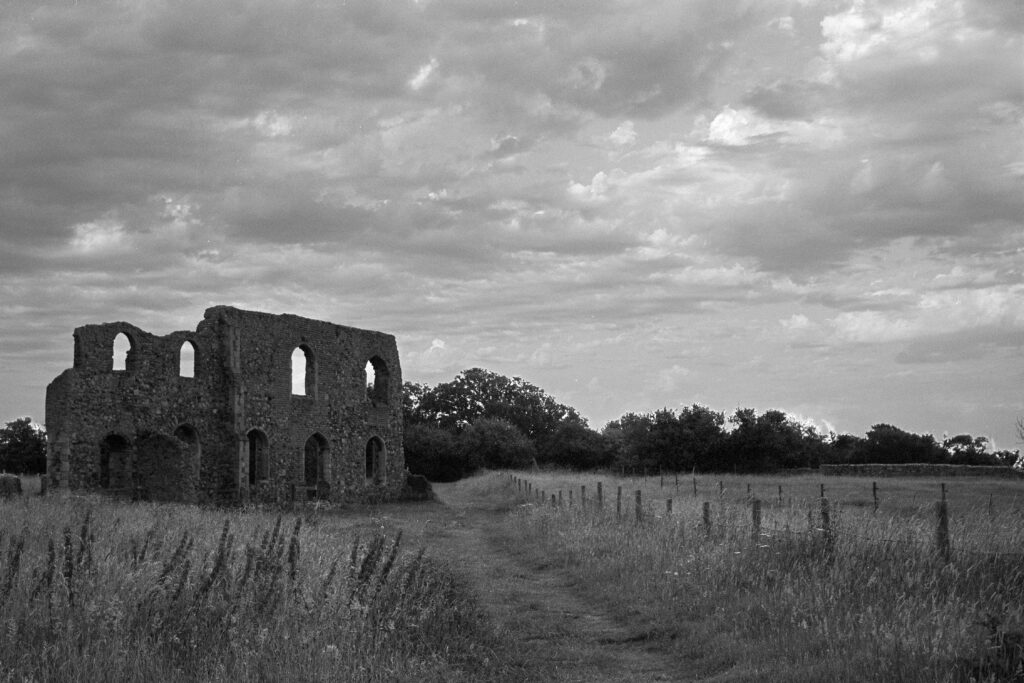
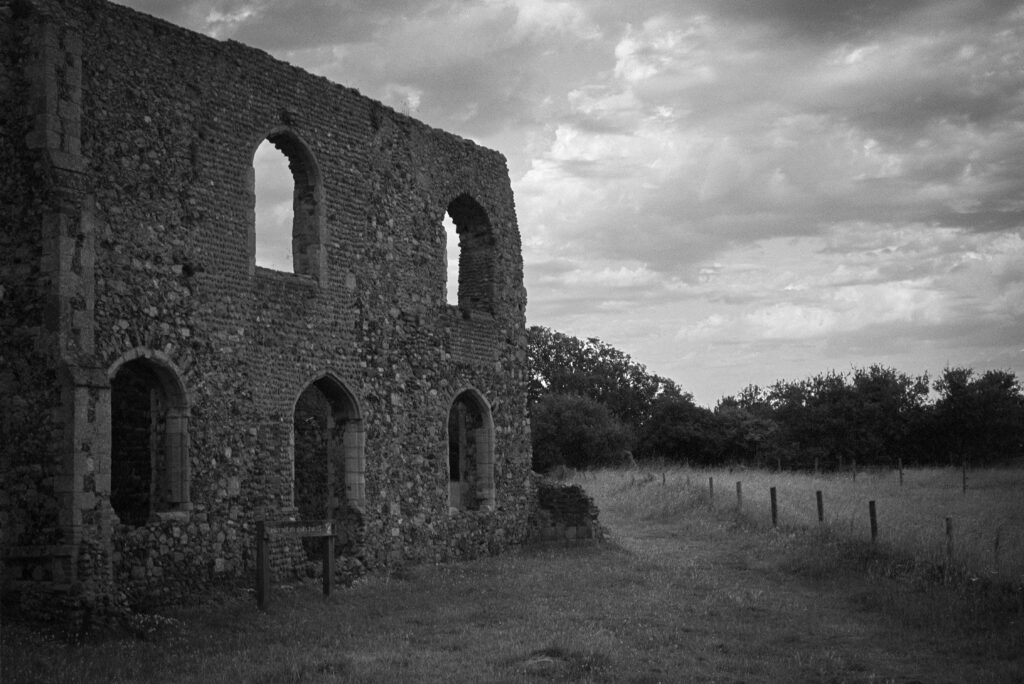
I had visited the beautiful and haunting village of Dunwich in Suffolk, East Anglia, the day before and shot a roll of the ruins of the Priory. Dunwich has been photographed by the late Great Simon Marsden in Kodak HIE and I was on the verge of loading up the Icarex with it, but at the last minute spun a roll of new Ilford Pan F+ 50 instead. With Yellow filter attached (rather than Red25) I enjoyed exploring the ruins and taking snaps. Using my Gossen meter (with new battery) and trying to get as much depth of field as possible. I switched to reflective when the light started to fail because of the cloud in the evening and was forced to shoot at f2.8 to f5.6.
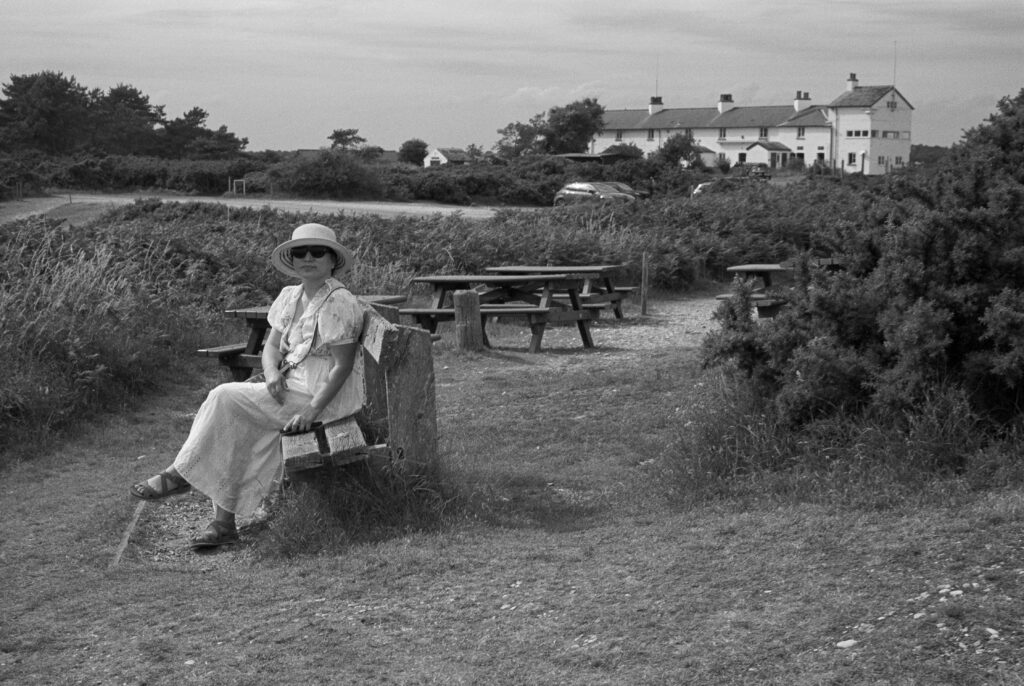
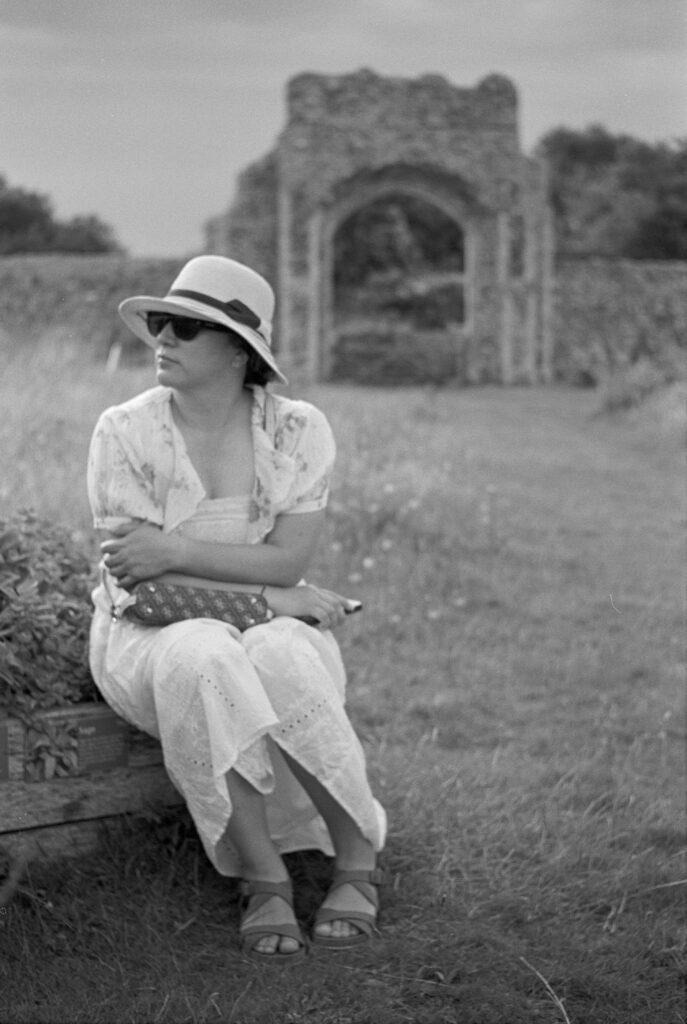
I did shoot the odd portrait.
Let’s just say I was really happy with the quality and tonality of Ilford Pan F+ with this developer. I of course prefer darker photos and increased contrast – the originals scans are lovely. And as you can see, my snaps have, because of the camera, been taken with more care and thought. I took many keepers, mainly family stuff.
Ilford Pan F+ 50. Ilfotec ID11. Yellow Filter.
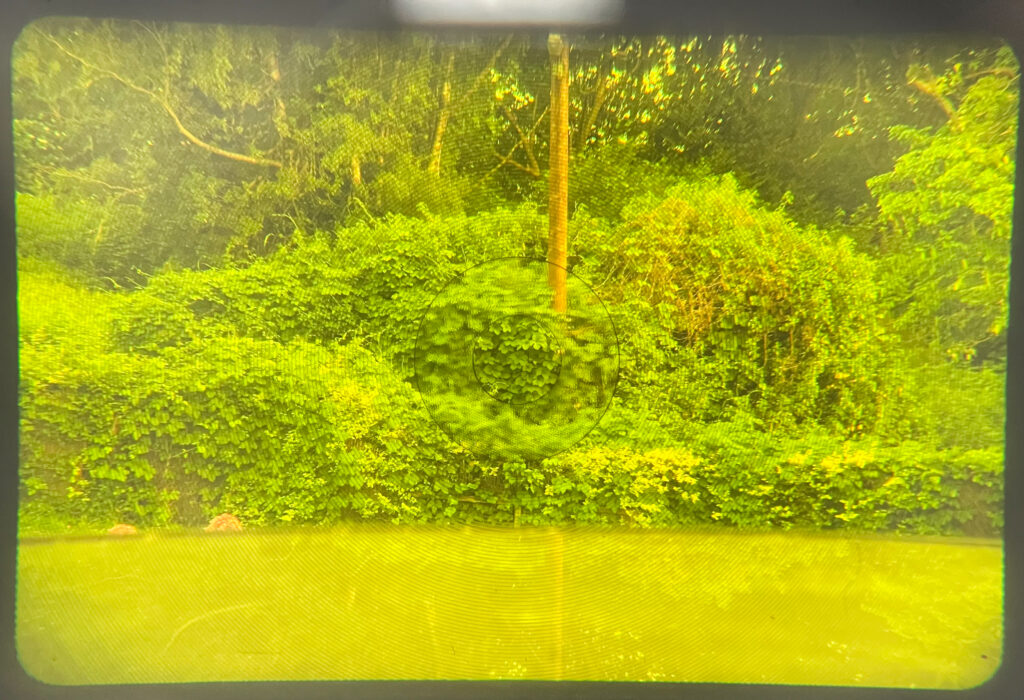
My only gripe was the Ground glass Screen with microprism spot and central diagonal split image rangefinder which is the default screen in the Icarex. It is a very bright screen, no pattern, this is what Mike Eckman says about it:
Although the focusing screens are interchangeable, the one that came on this one has a split image focus aide in the center in which the split image is at a 45 degree angle. This is different from most where the split is horizontal as it allows you to use both vertical and horizontal lines to focus on. In the gallery below, I have images of the lens in and out of focus, which helps you see the split image easier. Around the split image is the ground glass. There is no visible Fresnel pattern, so I am unsure of what technology is used to make it so bright, but it is very good.
But for me, in bright light and poor eyesight with no spectacles, I just couldn’t focus properly on very bright or complex objects (such as the cat), the diagonal confused me and I had difficulty determining sharp focus, if I get myself to an optician it would be fine, as the whole bright screen snaps into focus, but I need an aid, so since this shoot I have replaced the focussing screen with a regular fresnel screen with microprism spot with horizontal split image. Changing the screen was a 2 minute job.
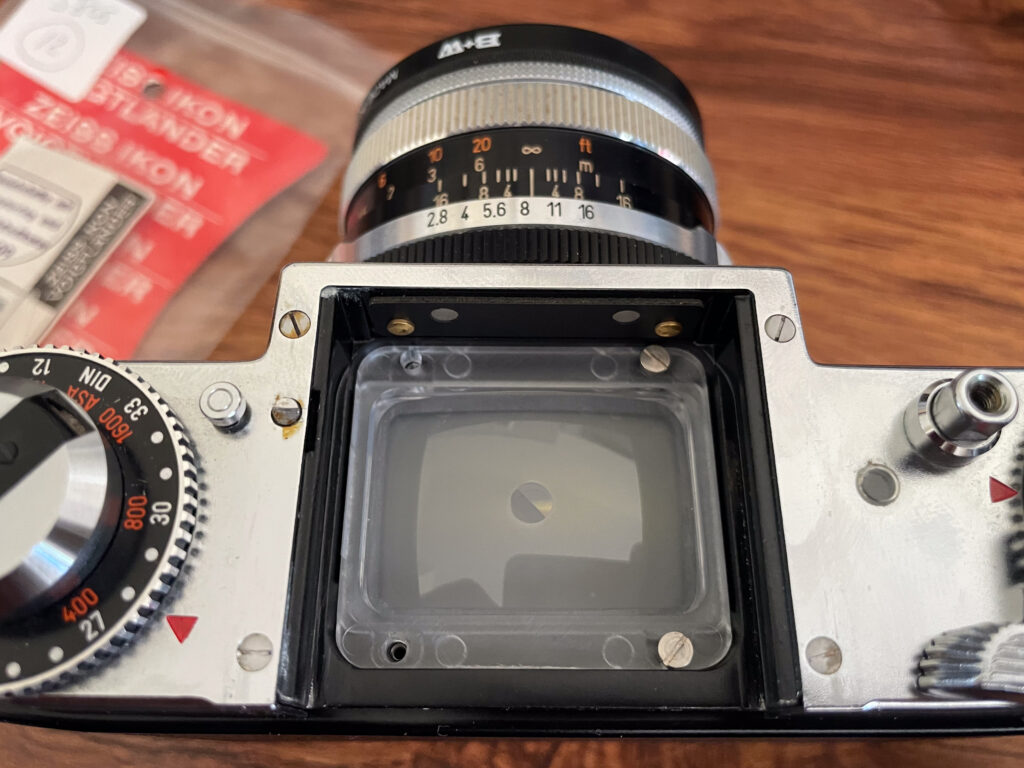
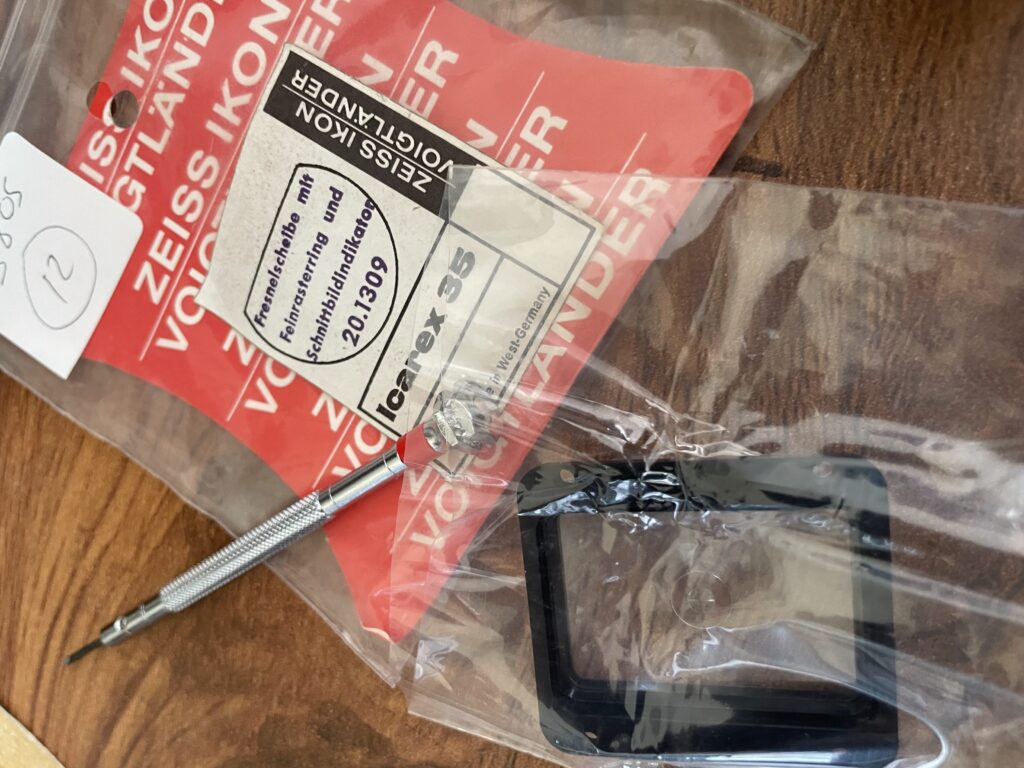
So how was my experience with the Zeiss Ikon Icarex? In one word; wonderful. A true legend and the last of a long line of cameras from both Voigtlander and Zeiss Ikon. Deserving to be in anyones collection. What a beautiful camera, a pleasure to handle, use and to admire. Everything worked well, the layout and controls are all regular and where one would think they aught to be. The Tessar (actually a Voigtländer 50mm f/2.8 Color-Skopar rather than Carl Zeiss, even though it is branded Carl Zeiss Tessar) gave photos with a classic look, very very pleasing indeed. They would’ve been nailed on sharper than a rats prick if my eyesight wasn’t so bad.
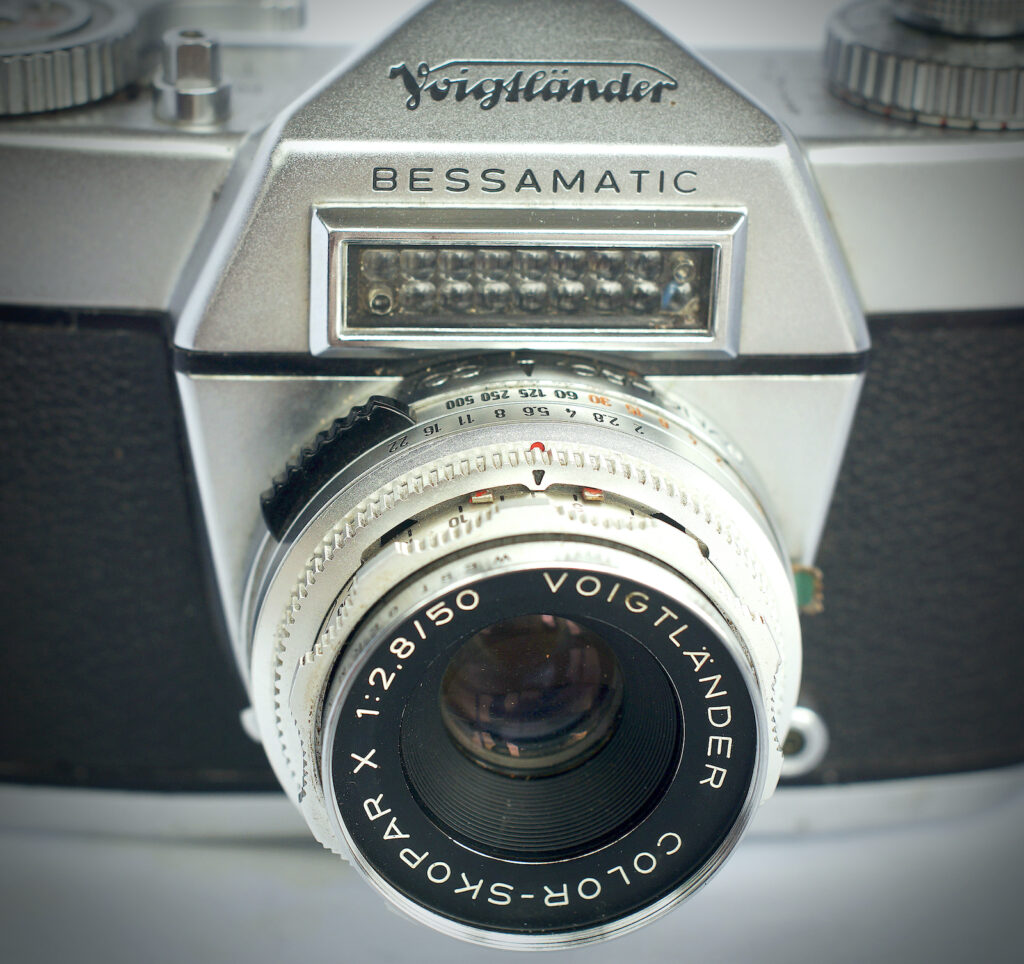
Great as the Tessar (or 50mm f/2.8 Color-Skopar) is, it’s the same lens as on many Voigtländer cameras of the era, I wish I had the legendary Carl Zeiss f1,8 Ultron (convex front element) with this camera, it just seems like the right lens to use with this, as it isn’t available for any other camera, it was released with this and for this Icarex, made by Albrecht W. Tronnier, who designed the Voigtlander 50mm f2 Septon (which I have on my Voigtländer Ultramatic and Bessamatic cameras). I shall be adding one and whenever I do I shall be sure to use it in anger and write a post about it here. There are also various other finders available for this, I have my eye on the Waist level Finder which looks great and gives an extra dimension to snapping. In the meantime I’ll be switching to shoot my Voigtländer SLR’s: The Bessamatic with 35mm f3.4 Skoparex, and Ultramatic with 50mm f2.0 Septon (and of course my Vitomatic IIa though it’s not the Ultron version).
Anyway, roll over Nikon, I’d rather have a Jaeger LeCoultre than a Seiko (ok, I’ll be honest, I’d want both!)
Share this post:

Comments
James Langmesser on Zeiss Ikon Icarex – Roll over Nikon
Comment posted: 29/06/2026
Rolf Meyer on Zeiss Ikon Icarex – Roll over Nikon
Comment posted: 29/06/2026
watch out! Collecting cameras from this period can soon become very expensive!
And as for the camera’s name: Zeiss Jena founded the company ICA (Internationale Camera Aktiengesellschaft [stock company]) to manufacture cameras. In 1926, ICA merged with three other camera manufacturers to form Zeiss Ikon. (Ikon is Green für „Picture“)
The name ‘Icarex’ is a combination of ICA and ‘rex’, the Latin word for ‘king’. And so your Icarex is the King of ICA cameras and a Contarex is the king of Contax cameras.
Have fun with your royal camera!
Rolf
Dave Powell on Zeiss Ikon Icarex – Roll over Nikon
Comment posted: 29/06/2026