

It seems like I have always taken photos, starting with a 126 instamatic as soon as I could handle one. Then in the late 1970’s when I wanted to take some proper photographs (wildlife macro) I used my mum’s Pentax K1000 with close-up diopter lenses, before buying a Canon SLR in the early 1980’s.
But I never did my own developing, I used some black and white film, but mostly colour as that was what the subjects I was interested in required. Colour negative film though was always a let down and it’s very existence probably set my interest in photography back quite a few years. When I started using slide film I quickly found any and all was way better than negative film, Kodachrome when I could afford it, but even Boots’ own brand if I couldn’t.
In the mid 1990’s I got much more interested in the process and history of photography and started taking various evening courses in order to learn techniques and especially black and white developing and printing. Evening classes locally were held at an arts and education centre that was formerly a school complete with a purpose-built dark room that had been retained after the building was converted from a school (I wonder if it is still there?).
I soon found that I could manage printing, but at the time I was a dairy farmer and what with worn and split fingers I couldn’t feel anything and never managed to load a developing reel with the lights out and always had to ask someone else to do it. Once the film was loaded for me I could do the developing, but the negatives almost always came out rubbish anyway. At the time I blamed the film, which was mostly bulk HP5 loaded into re-useable cassettes at the classes. So instead I mainly used XP2 and Kodak T400CN, dropped them off at one of the many mini-labs that were around then and got the negatives back much quicker anyway than waiting for the next evening class. These were much easier to print than the grey, greyer, and even greyer negatives I got from the self-developed HP5. With hindsight I am sure the source of the problem was the film developer available at the classes which came in a 1 gallon brown glass bottle labelled ‘developer’. I have no idea what it was, and any notes that might have held a clue have long gone. But I still have something of a phobia about HP5 and have never used it since.
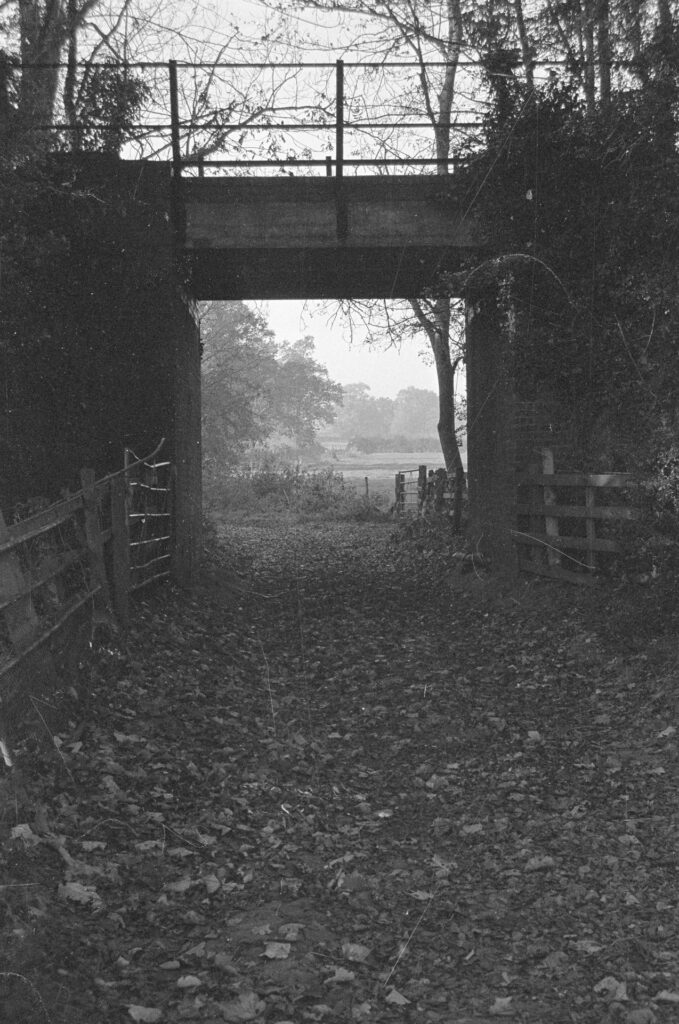
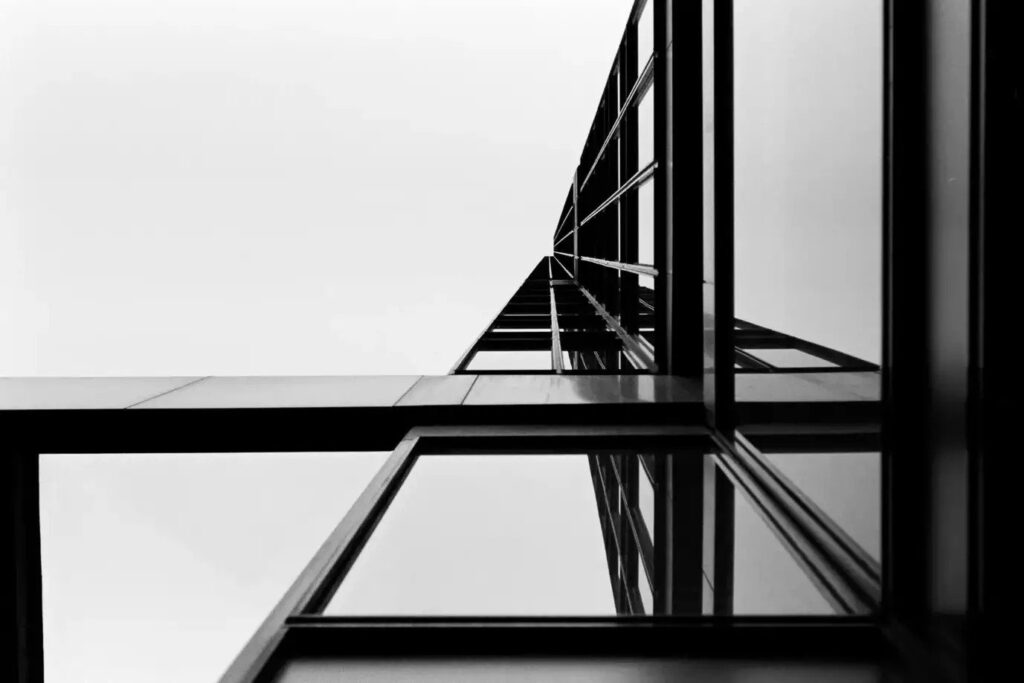
A quick note on the picture above: One thing I have noticed on returning to black and white film is that scanning does give a much greater leeway than printing with an enlarger. I have found it hard to make the results here look anything like as bad as the prints I made in the 90’s. And negatives that 30 years ago I would probably have binned can produce quite acceptable images for screen viewing and inkjet printing.
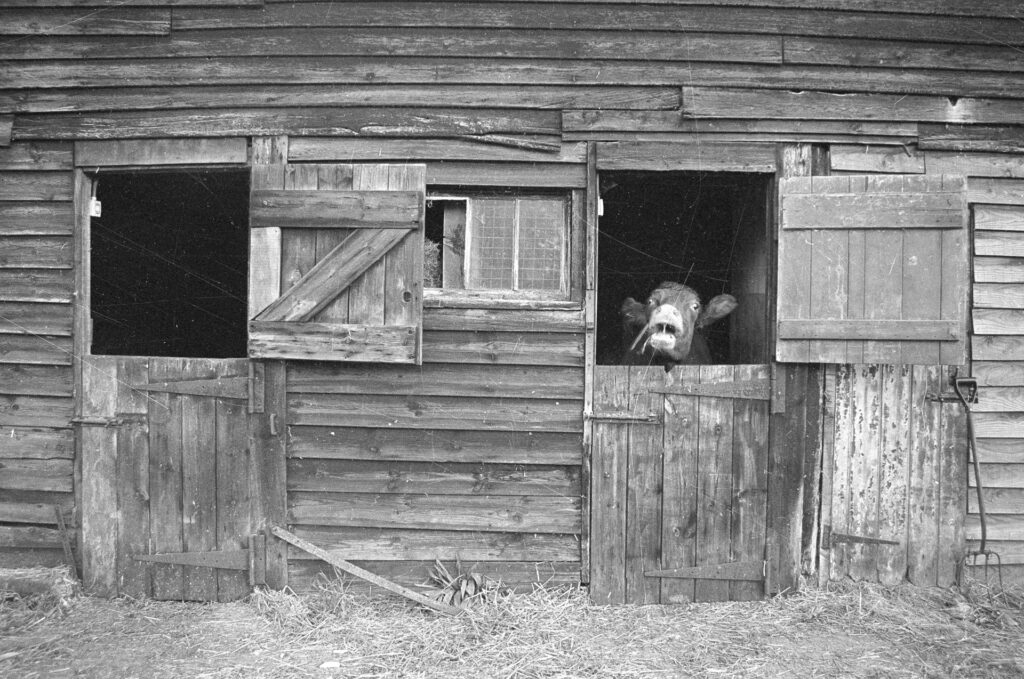
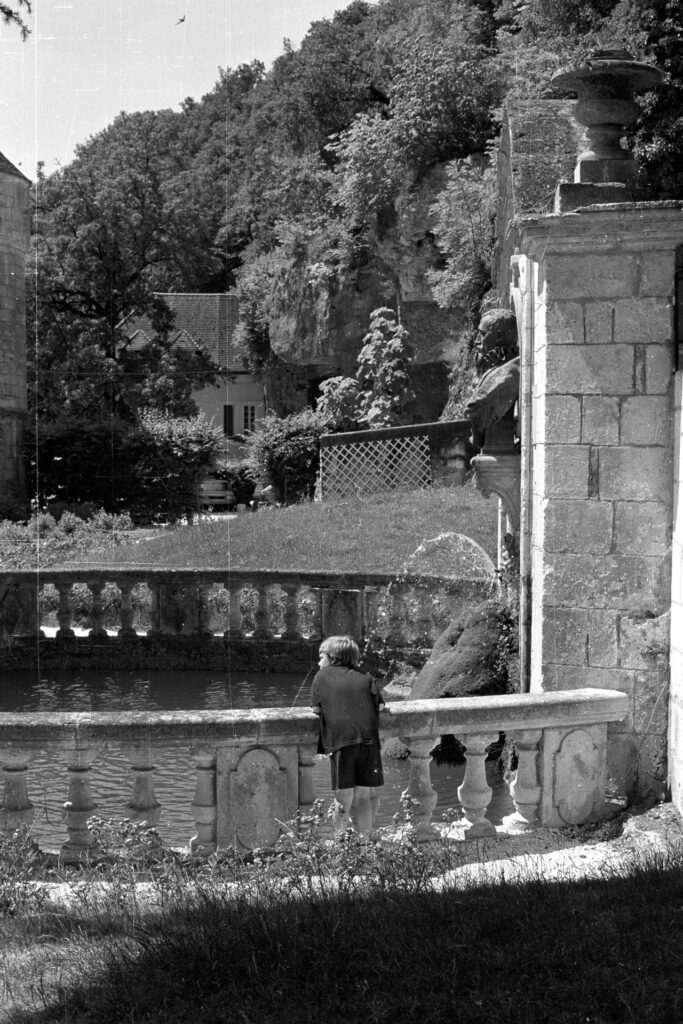
We moved to a farm in Wales in 2000 resulting in the loss of the home darkroom as well as the opportunity do do evening classes, then a few years later digital took over. Eventually after 15 years or so an interest in film photography returned. A number of factors coming together, not least inheriting the K1000.
After sending off black and white films to be developed for a while I came across the Lab-box which seemed ideal for me, a way of loading and developing both 135 and 120 films in daylight without struggling to load a reel in the dark. These days I still don’t have much in the way of fingerprints, but I can usual feel what I am touching, even so the Lab-box seemed like a way to get out of having once again to try and learn how to load a conventional developing reel. And ideal it was for a time until a series of problems became apparent. But on a positive note it in turn has led me back to developing in a Paterson tank, loading reels with 35mm and 120 films in a changing bag, sometimes without any trouble at all.
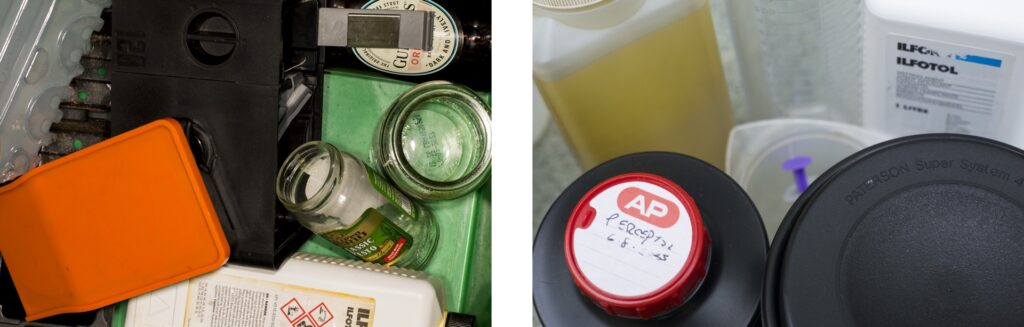
The Lab-box it turns out has several loading issues with 120 film and a catastrophic failure point with the developing tank that is the same for both formats.
Pulling 120 film into the light tight chamber prior to attaching it to the reel doesn’t always work, it will fail every time if there is any residual dampness, but also at other times seemingly randomly. Fortunately this can usually be felt when pulling out the backing paper, so then it is a case of putting the whole Lab-box in a dark bag opening it and sorting it out by feel.
Clipping 120 film to the reel always results in burning the first couple of inches and often losing the first negative or part of it. But also the film chamber closure doesn’t have a lock so great care needs to be taken when removing the backing paper and tape as any tug on the film can cause the chamber to open a little.
Probably because the film is pulled into the centre of the reel rather than pushed parts of the film on adjacent spirals can touch and prevent development of patches. This happens occasionally with 120 film in Paterson reels as well but never as often or as seriously as with the Lab-box, and of course there is no way of knowing until after the film has been developed.
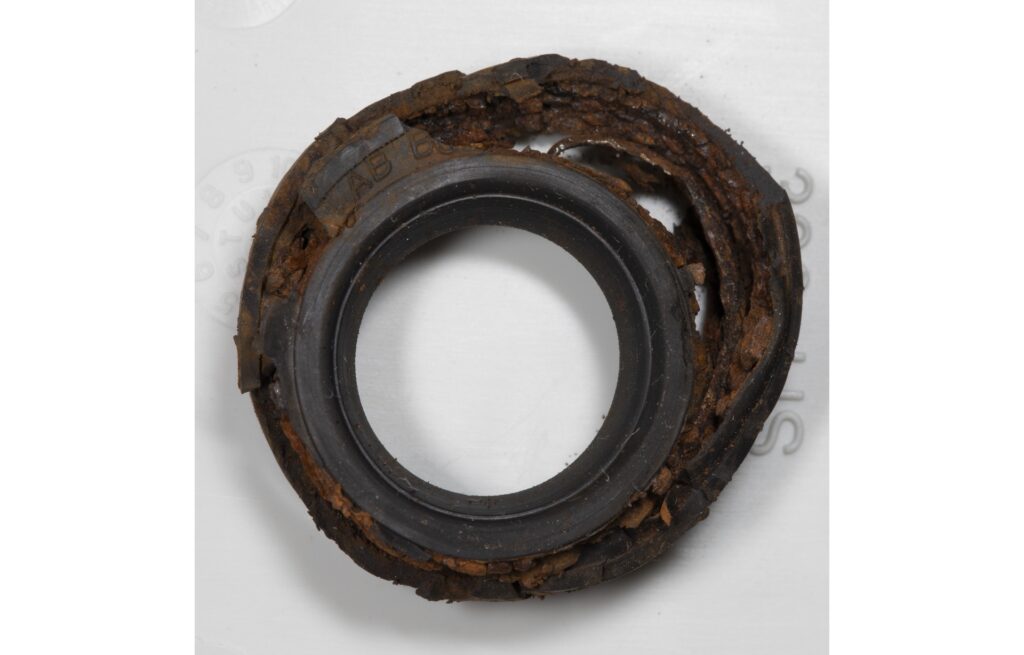
And then finally after less than 2 years of use the seal where the turning handle enters the tank disintegrated, a critical part as without it the developing tank won’t hold liquid. This seal is similar to an oil seal for a bearing, rubber of some sort containing within it a metal reinforcing ring and a circular spring, but none of it seems to have any chemical resistance at all and eventually it just fell apart. According to the Lab-box website the boxes have 2 year warranty and spares are always available. No they don’t and no they aren’t, not in the UK at least. Nor are there any contact details on the Lab-box website. I did eventually find an email address for them, but have never received a reply. Instead I found that I can get a good but not perfect seal with 2 ‘O’ rings, a large one in the recess on the side of the tank and a smaller one on the shaft of the handle.
But I have stopped using it anyway as I reasoned I was doing quite well sorting out the Lab-box in a changing bag, so why not have another go with a Paterson tank? Which is where I am now; roughly where I would have liked to have been thirty-ish years ago.
Postscript
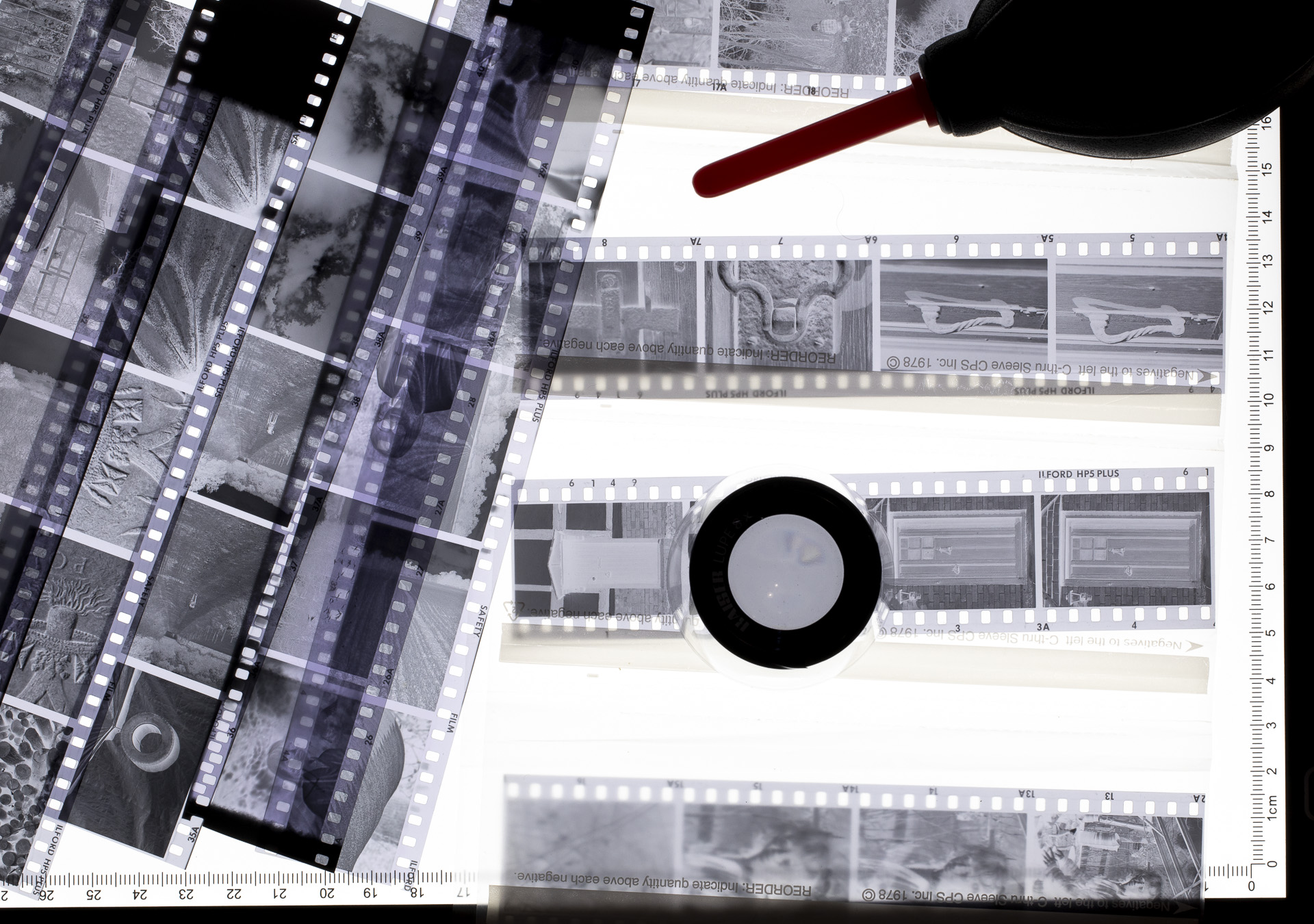
While rummaging through old dirty and scratched negatives to scan and include here I came across some HP5 that had been professionally developed (those shown in the featured image). I can’t recall where or when exactly, or indeed why, and also I can’t remember much about the reason for the subjects, some theme or other for the evening class probably. But maybe I was suspicious about the developing at the Arts Centre and tried somewhere else. Whatever the reason the negatives look like they are on a completely different emulsion to the self-developed HP5 ones.
Share this post:

Comments
Erik Brammer on Lab-Box – A Developing Story in Which a Photographer Tries to Avoid Loading a Paterson Reel But Ends Up Doing it Anyway
Comment posted: 04/03/2026
your experience with the Lab Box is a real bummer, echoing feedback on it I have read in many other places. Since I am a complete coward when it comes to loading Paterson or JOBO tanks - admitted, I have never owned one or tried it, but knowing my lack of motorical skills... - I have purchased a Rondinax 35U and a Rondinax 60. By now actually two each, since in case I should ever drop one and the bakelite goes into pieces, I want to have a spare. The Rondinax 60 for 120 film can sometimes cause problems, but in hindsight those were mostly caused by myself, rather rarely by the film I was loading.
And I hope your future experience with HP5 will be nicer as I think it's a great and versatile film.
Keep up your photography!
Cheers,
Erik
Comment posted: 04/03/2026
Comment posted: 04/03/2026
Art Meripol on Lab-Box – A Developing Story in Which a Photographer Tries to Avoid Loading a Paterson Reel But Ends Up Doing it Anyway
Comment posted: 04/03/2026
Comment posted: 04/03/2026
Gary Smith on Lab-Box – A Developing Story in Which a Photographer Tries to Avoid Loading a Paterson Reel But Ends Up Doing it Anyway
Comment posted: 04/03/2026
I can't imagine not having feeling in my fingertips. Just as I can't imagine the loss of my eyesight and hearing (although both of those seem to be going as I approach 72).
The seal in your Lab-Box is just one of many poor design choices made by photography companies. My very first post here documented just such an inappropriate decision made by Mamiya. https://www.35mmc.com/08/03/2024/an-ebay-bargain-and-impulse-bought-tale-of-woe/
Comment posted: 04/03/2026
Marcus Gunaratnam on Lab-Box – A Developing Story in Which a Photographer Tries to Avoid Loading a Paterson Reel But Ends Up Doing it Anyway
Comment posted: 04/03/2026
Comment posted: 04/03/2026
James Evidon on Lab-Box – A Developing Story in Which a Photographer Tries to Avoid Loading a Paterson Reel But Ends Up Doing it Anyway
Comment posted: 05/03/2026
Since then I have gone over to the reliable Jobo tanks and used them with a relatively inexpensive tank rotator.
It is a much more reliable choice than the Lab Box. If you want to use the Lab Box, it's a good choice as long as you stay with 35mm film.
Comment posted: 05/03/2026
Richard Lau on Lab-Box – A Developing Story in Which a Photographer Tries to Avoid Loading a Paterson Reel But Ends Up Doing it Anyway
Comment posted: 05/03/2026
film. Btw, the plastic used for the tanks is very durable. I have never experienced any mechanical failure with them. I still have some old Paterson tanks from the 1970's and they look fine. Will need to pull them out for a spin. Nostalgia is setting in. Thanks for your nice article Richard!
Comment posted: 05/03/2026
Andrew L on Lab-Box – A Developing Story in Which a Photographer Tries to Avoid Loading a Paterson Reel But Ends Up Doing it Anyway
Comment posted: 06/03/2026
Comment posted: 06/03/2026
Jeffery Luhn on Lab-Box – A Developing Story in Which a Photographer Tries to Avoid Loading a Paterson Reel But Ends Up Doing it Anyway
Comment posted: 10/03/2026
Those early HP5 negatives made nice prints after manipulation. I think you may find HP5+ to be an improved emulsion, especially processed in HC-110 at slightly longer times than recommended. This, of course, depends upon your agitation and temperament...I mean temperature. Hehehe.
I teach college level B&W film photo classes. Loading Patterson film reels is a big obstacle. Students eventually get the 35mm ones, but the 120 size is beyond vexing. I get annoyed with those and depend upon stainless steel reels for 35mm and 120. Afterall, I learned on Nikkor reels and have used them for tens of thousands of rolls since 1968.
There is another method worth considering. No reels and no tanks. I use glass Anchor brand bread pans for my 4x5 film and once I have these set up, I often run a roll of 120 through them before dumping the developer. The technique I'm going to describe works well for 120 and will also suit for short rolls of 35mm. Set up the holy trinity of chemistry (Dev, stop, fix) in three adjacent bread pans. 16 or 20 ounces is fine. In the total darkness, strip off the paper backing and grasp the 120 roll by an end in each hand. You are going to have a deep 'U' shape of film. Immerse the bottom of the 'U' into the developer and work the film through the solution by raising and lowering each end alternatively. It's a wet business, so an apron is suggested. Your fingers will need to go right into the soup, so I use gloves. But if you have a loss of feeling in your fingers, your hands will need to go bare-ass naked. This constant agitation results in higher than normal contrast, so run a test roll before you process your Pulitzer Prize images. I have had success doing this with 36x rolls by placing the trays on the floor. Washing is done the same way, but I use a 5 gallon bucket which I empty twice. Then Photoflo and dry as usual. I rinse my hands in stop bath or a weak vinegar solution to remove the slimy developer, and then wash in warm soapy water to dispel the odors. Even then, I won't eat tacos or fried chicken that night!
I hope this works for you.
Jeffery
Comment posted: 10/03/2026