

As my wife got into this non-stop practicing routine for an upcoming dance competition, I was granted the special privilege to attend a rehearsal guided by her instructor. My mind immediately flooded with ideas of capturing her dynamic dance movements and I convinced myself that speed was the key. I packed my digital Fujifilm X-Pro3 with a fast prime, planning to rely on high shutter speeds, a wide aperture, high ISO and continuous autofocus.
However, the dance studio was a visual mess and the clutter was worsened by the wall-to-wall mirrors (yes, dance studios have mirrors…). Finding the right angle to capture her choreography was a massive challenge. I wanted to remain invisible, both to avoid breaking her focus and to prevent catching my own reflection in the background. While I came home with a few keepers, deep inside I was not happy with the results.
A few days later, a second chance arrived. With the competition approaching, my wife stepped up her game and booked a place to rehearse alone. This was my shot at redemption.
The venue now was a private studio that she paid and booked just for herself, rather than a dancing school. It offered far fewer visual distractions. There were no other students, no teacher, absolutely no one around, just the two of us.
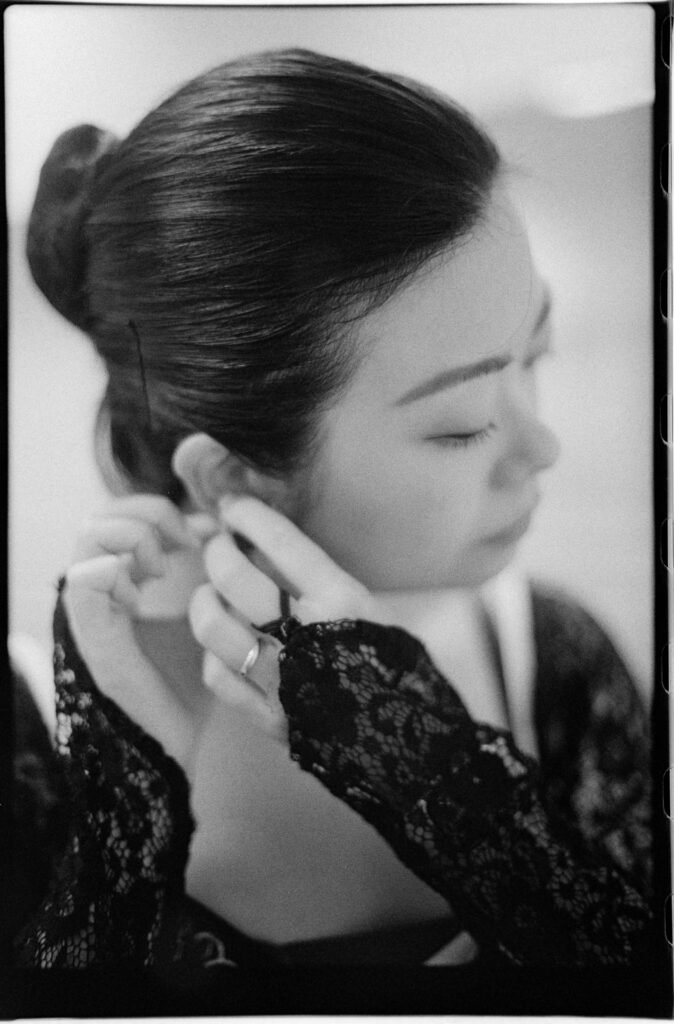
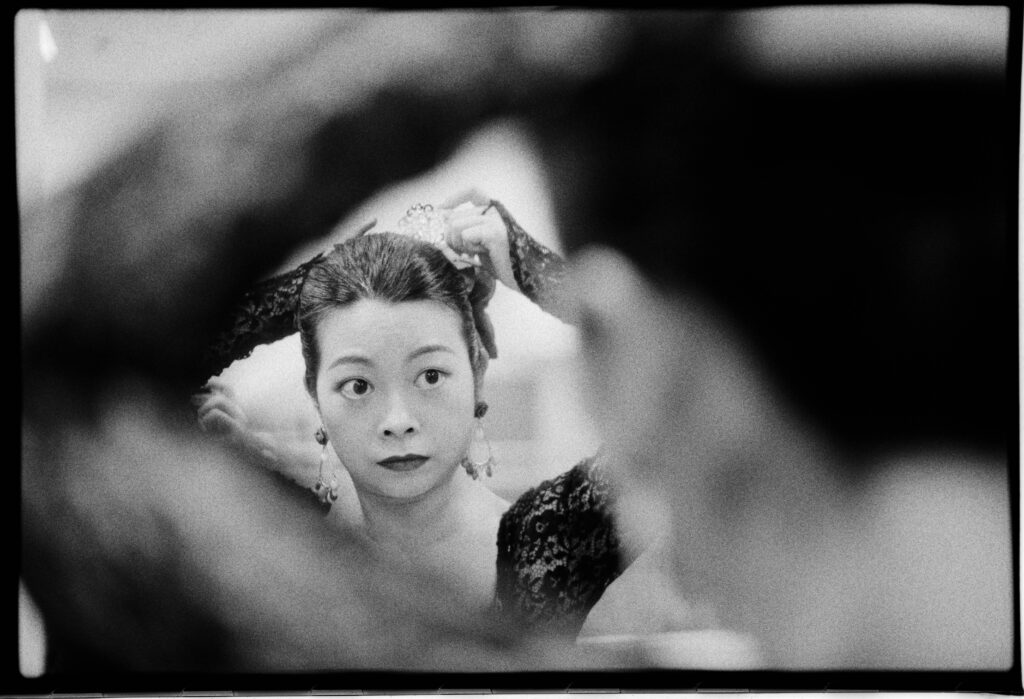
This time I decided on a completely opposite approach. Instead of tracking her motion, I chose to shoot her stationary in a documentary style, aiming to tell a deeper story. I wanted to capture her dedication: the meticulous preparations, the physical exhaustion of dancing non-stop to achieve perfection.
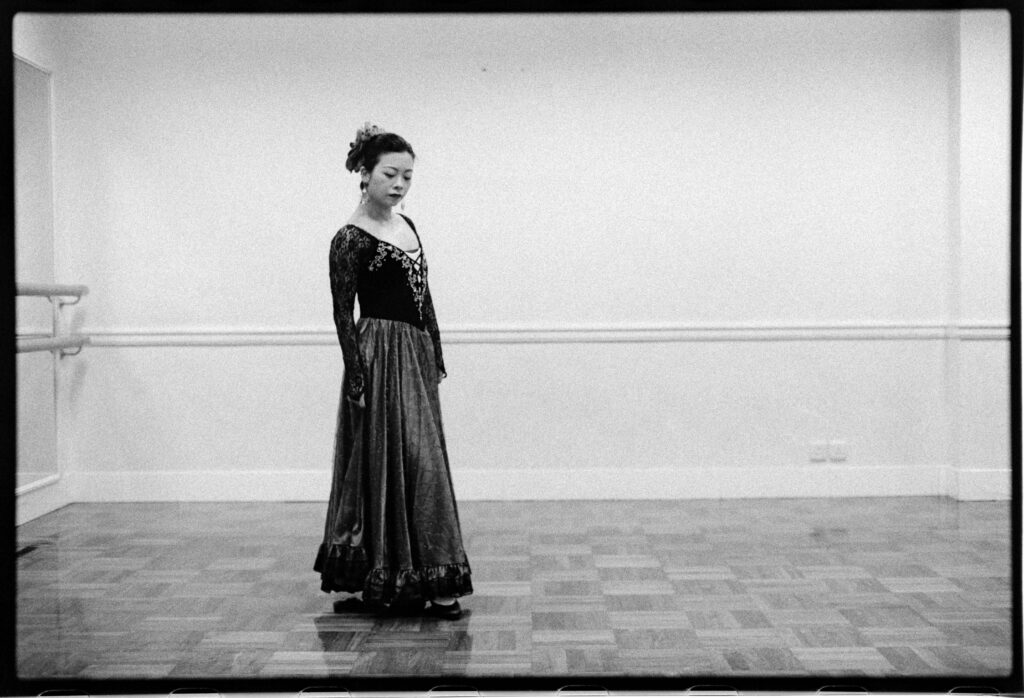
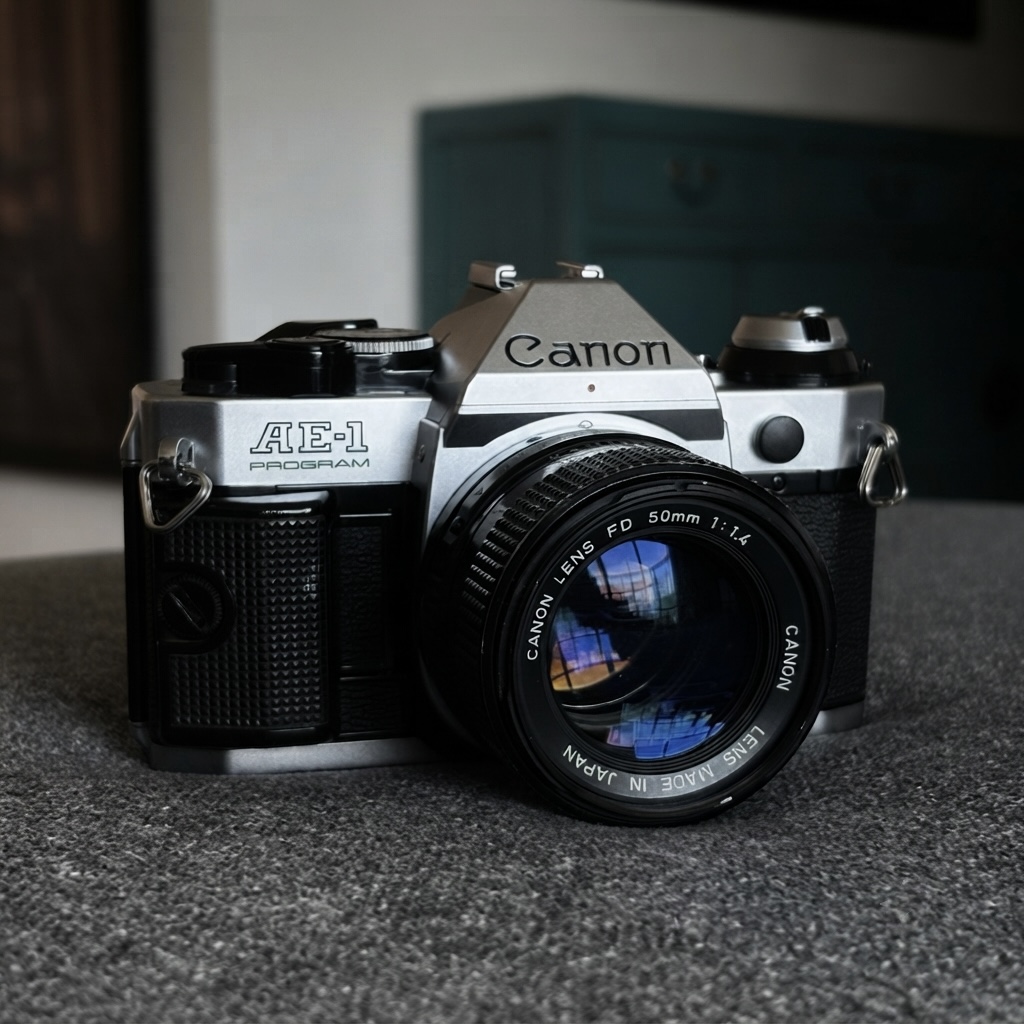
I decided to shoot black & white film to match this concept. I reached for my good ol’ Canon AE-1 Program, paired it with the Canon FD 50mm f/1.8 and loaded a roll of Kodak 400TX.
While she deliberately posed for a few frames, a couple of shots caught her in a more philosophical mood. Namely when she paused to rest against the barre, dealing with sheer physical exhaustion, probably thinking what needed further improvement before starting all over again.
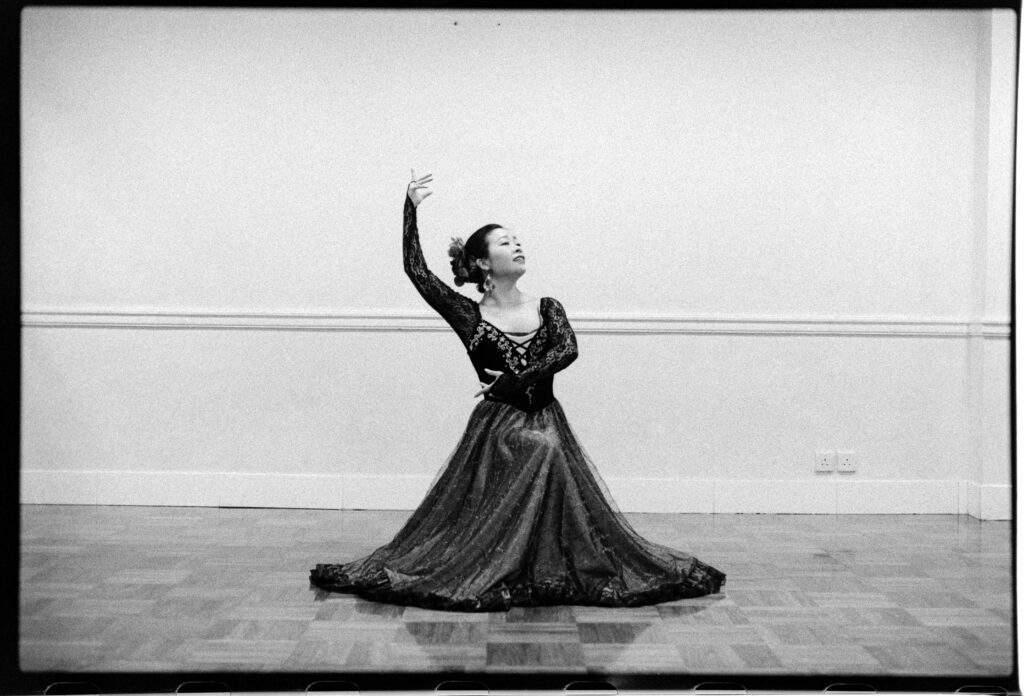
Once finished, I took the Kodak 400TX to a local lab for development and scanned the negatives at home using a Valoi Easy35 v2, my Fujifilm X-Pro3 and a 7Artisans 60mm f/2.8 Macro lens. I deliberately left the frames uncropped because I like the imperfections. This is film and film is authentic.
I was incredibly happy with the results.
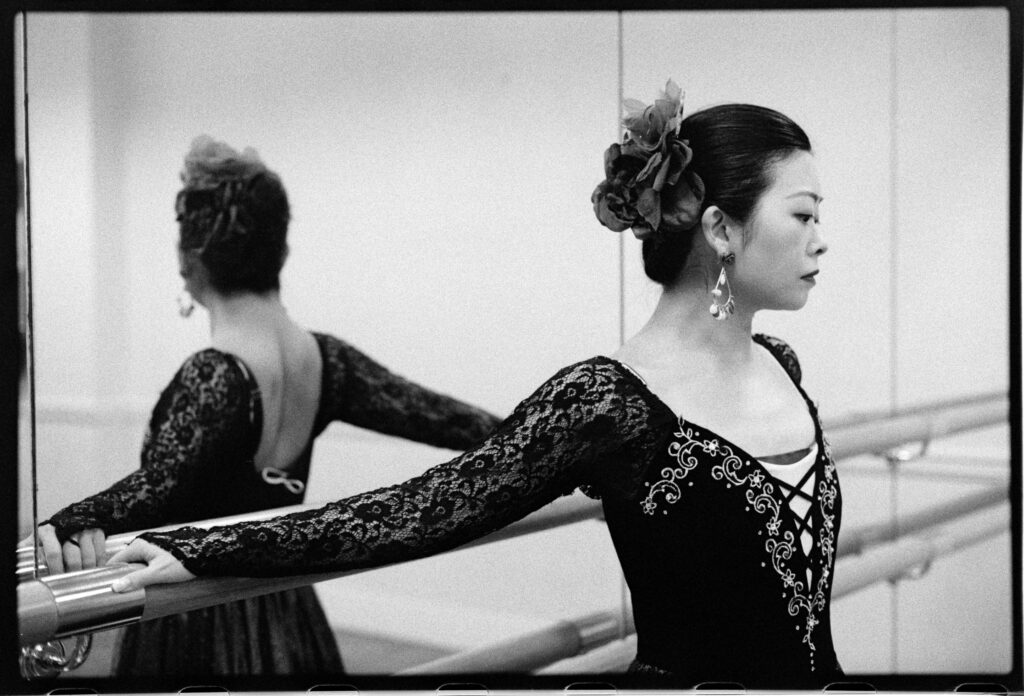
The takeaway? I think I am simply a slower photographer. I was not good enough for the first session, which required a faster pace for everything, exacerbated by the speed of a modern digital camera. Instead, the deliberate, reflective approach, with a manual focus film camera that forces me to slow down, suits me much better.
This is precisely why film is such a beautiful medium for me.
Thanks for reading. Find more about my photo journey here: www.measuringlight.com
Share this post:

Comments
Art Meripol on 5 Frames a Canon AE-1 Program and Kodak 400TX
Comment posted: 10/10/2026
Comment posted: 10/10/2026
Gary Smith on 5 Frames a Canon AE-1 Program and Kodak 400TX
Comment posted: 10/10/2026
I introduced my "family" to Canon when I purchased an FTb in 1972. My father subsequently purchased an AE-1. They were solid cameras. 54 years later I again own an FTb and shoot with it on occasion (mostly black and white). Other than the whole battery thing it is still a great camera.
Walter Reumkens on 5 Frames a Canon AE-1 Program and Kodak 400TX
Comment posted: 11/10/2026
Russ Rosener on 5 Frames a Canon AE-1 Program and Kodak 400TX
Comment posted: 11/10/2026
Comment posted: 11/10/2026
Geoff Chaplin on 5 Frames a Canon AE-1 Program and Kodak 400TX
Comment posted: 11/10/2026
Leon Winnert on 5 Frames a Canon AE-1 Program and Kodak 400TX
Comment posted: 11/10/2026
Erik Brammer on 5 Frames a Canon AE-1 Program and Kodak 400TX
Comment posted: 11/10/2026
Jeffery Luhn on 5 Frames a Canon AE-1 Program and Kodak 400TX
Comment posted: 11/10/2026
Great photos. Glad you got a second chance to collaborate.
Jeffery
Neil Lloyd on 5 Frames a Canon AE-1 Program and Kodak 400TX
Comment posted: 13/10/2026