

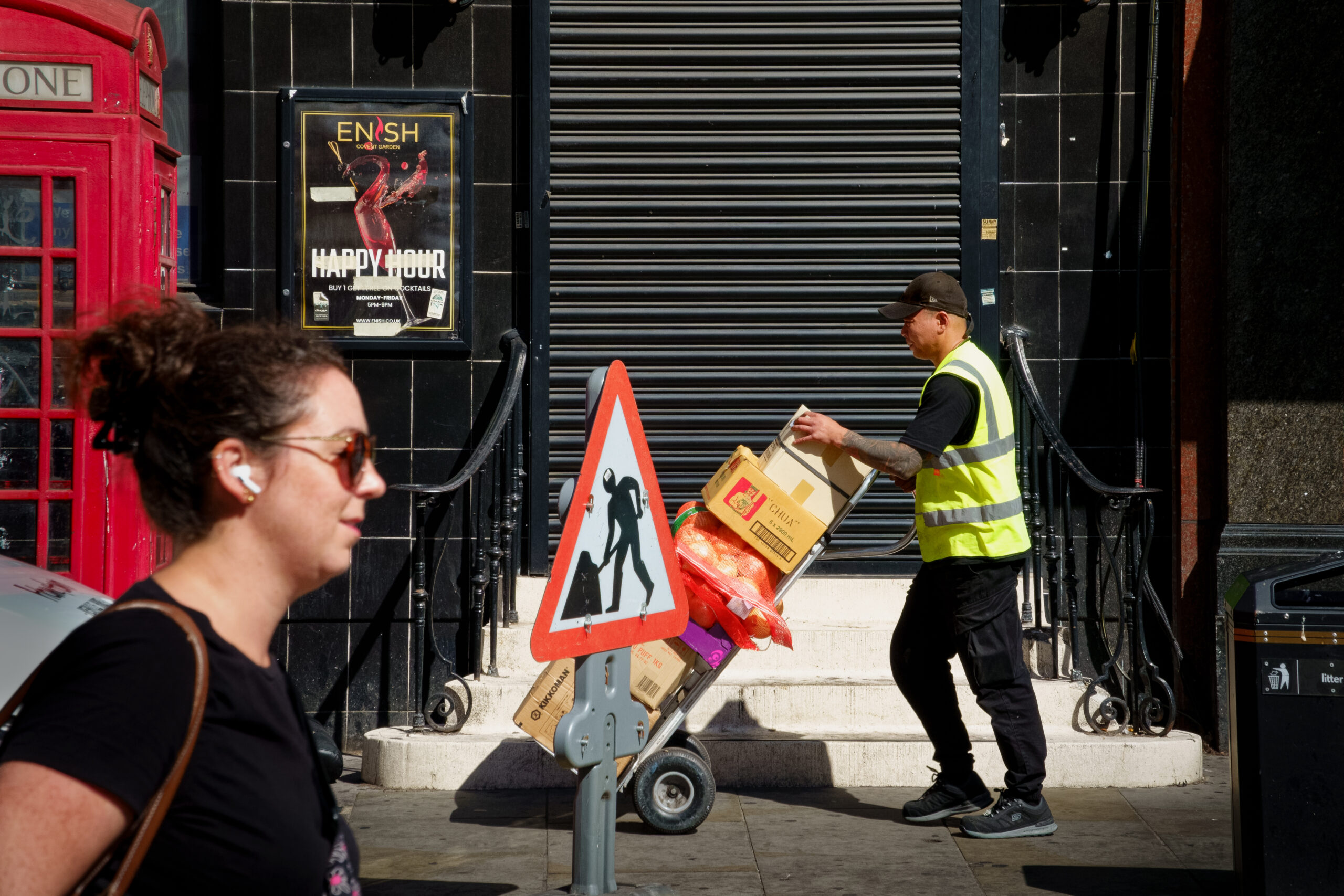
Central London very often looks as if someone had already taken the photograph. It is, in fact, a part of town endlessly photographed on phones, instant cameras, old and new “digicams”, disposables and “proper”cameras. Many of those images accumulate on social media and depict hyper-familiar versions of London: the selfie in front of something well-known, the view that confirms you have been there or the photograph taken in the street that turns another familiar London moment into a familiar photograph you recognise because it has been done so many times before.
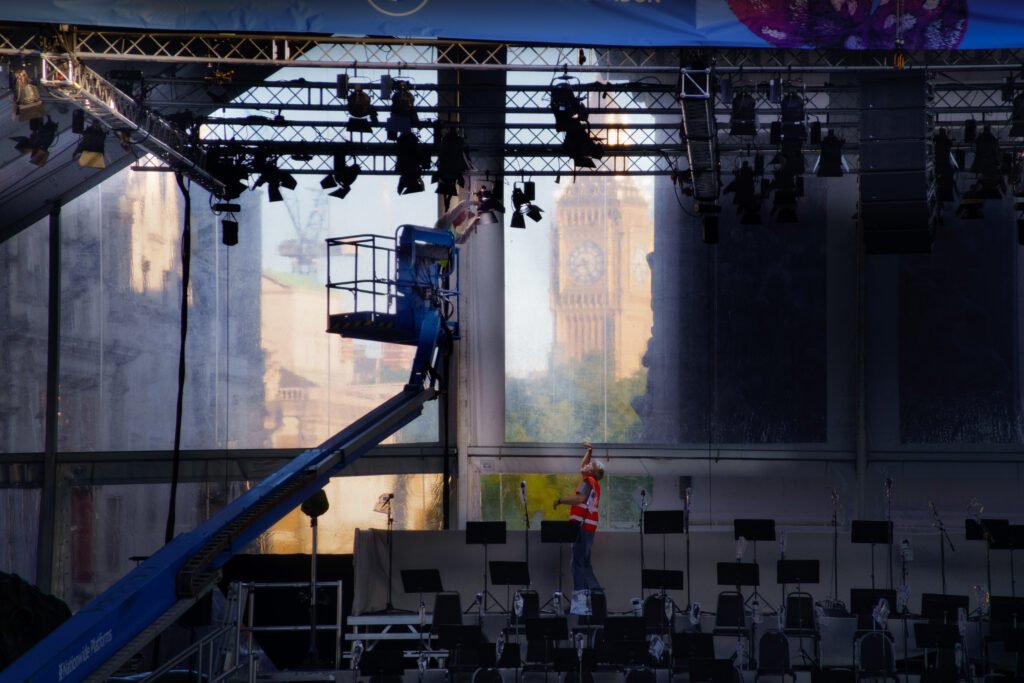
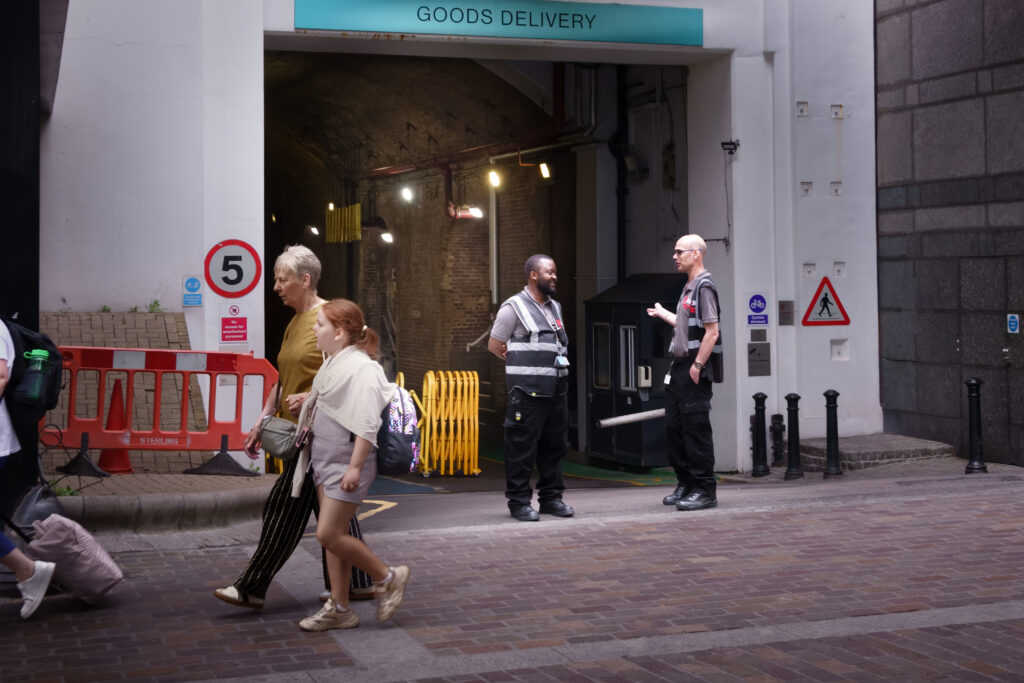
I began to wonder what had to happen every day to make the city “ready” before all those thousands of pictures could be taken. Because the city, on the surface, does give the impression of being something finished, something complete and “ready for use.” However, Central London is cleaned, supplied, repaired and maintained all the time. You see background activity at all hours, from refuse collection and pressure washing, to deliveries, and the restocking of shelves… it never stops.
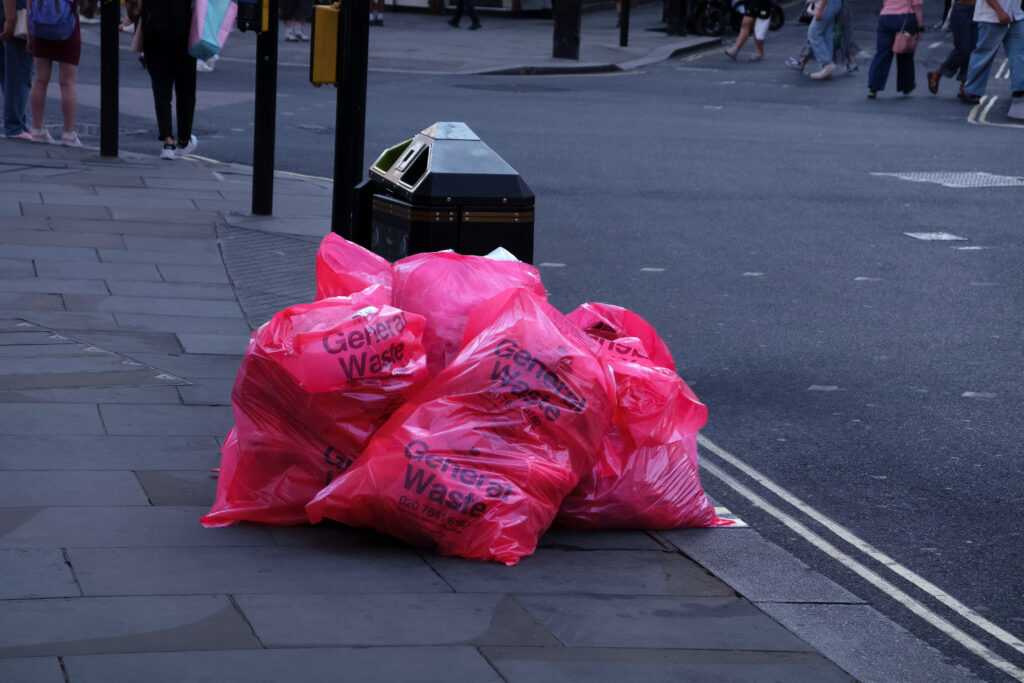
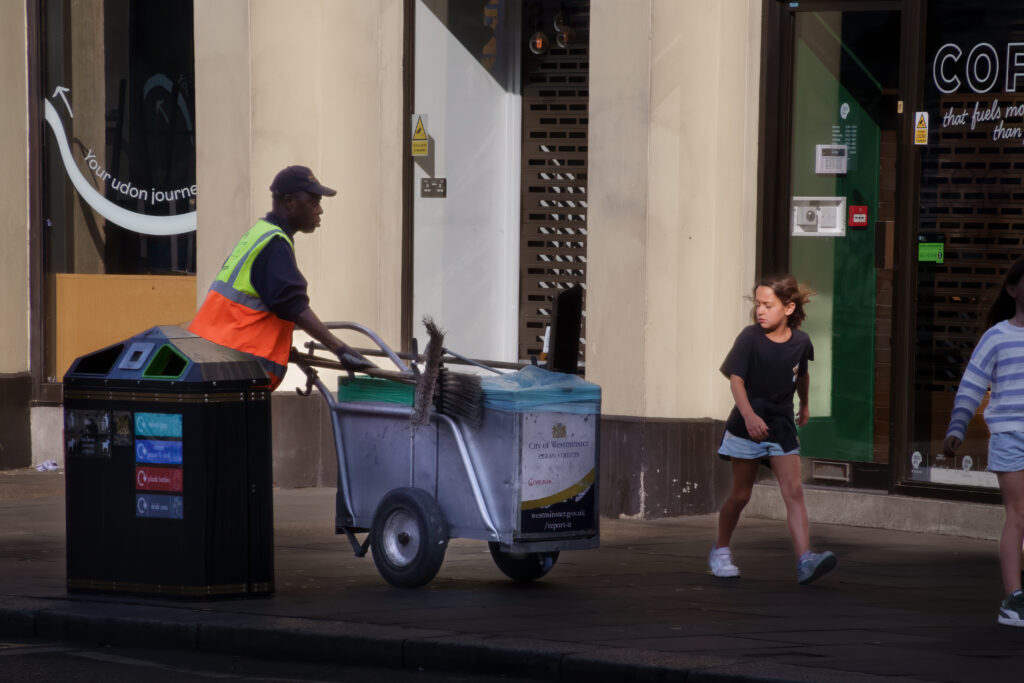
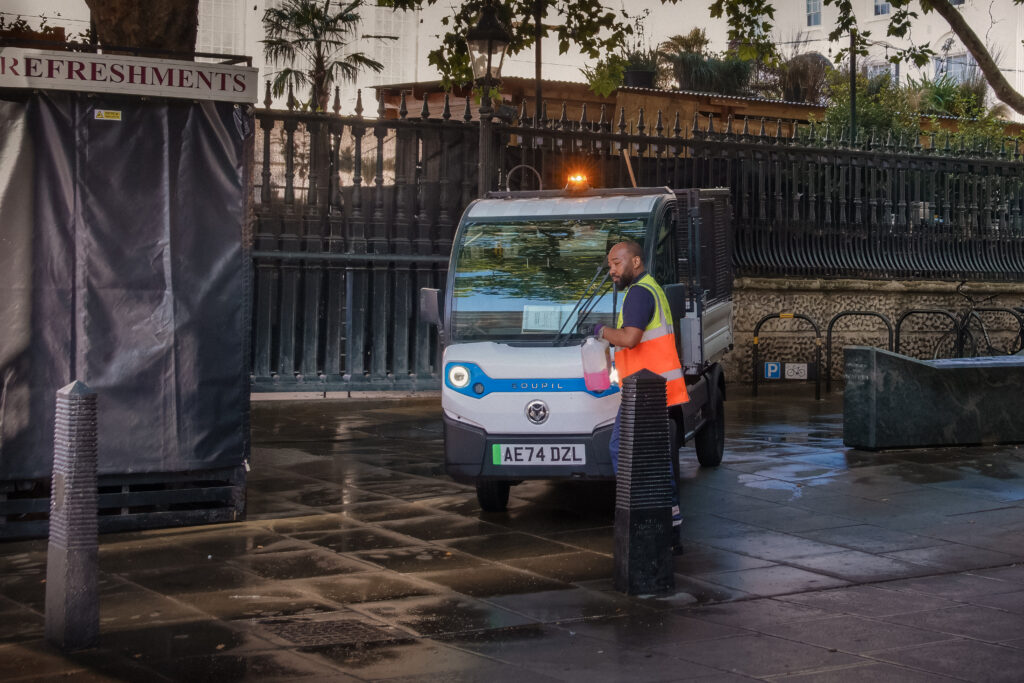
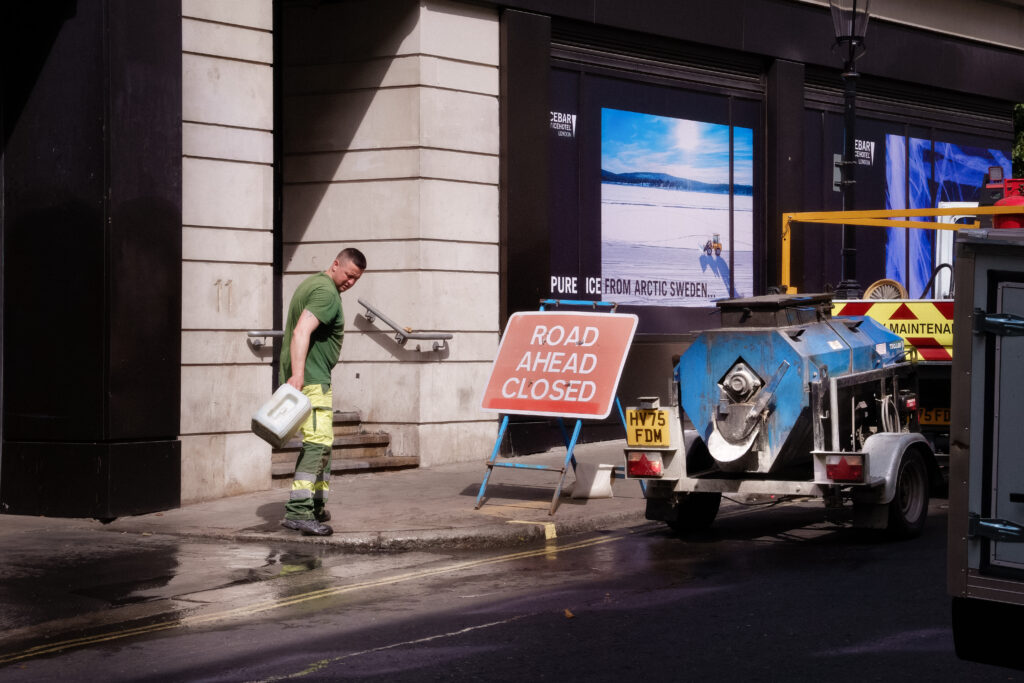
I was not trying to discover some “other London” with my photographs. I was looking instead at some of the work that takes place behind the London that is most immediately visible.
The camera that tries not to be there
I used my Sony RX100 mk VII, a tiny camera from 2019 that may be easily mistaken for a digicam, but it is not. It is much more capable than its appearance suggests. I hoped to approach photography here as a kind of “fly on the wall” in order to be present, but without announcing myself.
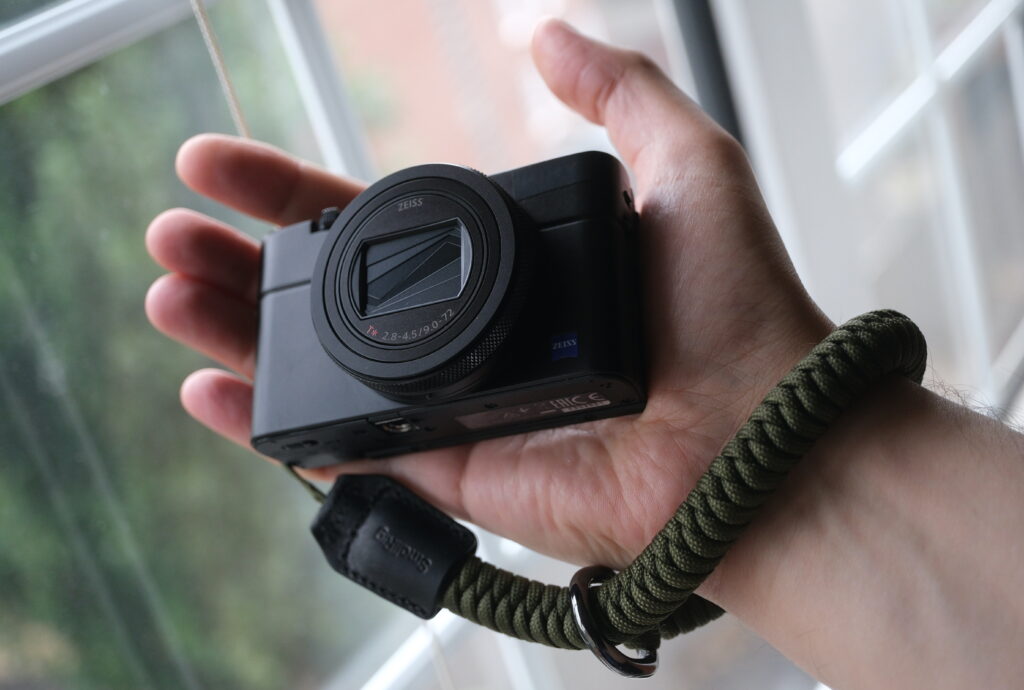
When I use the RX100 I always feel that it has the density of an object designed by engineers who have been asked to cram a lot into too little space. Its heft and edges remind me of a metal cigarette case I bought years ago in an antique shop and then used for my business cards, before I replaced them with a QR code. The cigarette case was compact, slightly uncomfortable to get your fingers around, and heavier than it looked. Then the lens extends on the RX100, and the viewfinder pops up, undoing some of its apparent simplicity and, at least to my eye, some of its almost Bauhaus style of minimalism. With everything extended, it also feels more fragile and unbalanced. I use it with a wrist strap kept on at all times. I did not add grips or other accessories that would make it larger. Like most tiny cameras, it is awkward to hold. Its smallness, however, is what really matters. That is the point of this camera. Even its small-size battery suits it because it helps to keep the whole thing tiny, and carrying a spare, or two, is not at all a challenge.
This tiny camera gave me the ability to respond to scenes in the street without the equipment itself ever becoming part of the event. Its very capable autofocus system was very useful for this project. The tracking function is very quick and “sticky”, so I noticed that placing the AF box over a subject and then recomposing was never a frustrating exercise. Likewise, using its single touchscreen function to place the AF box where I needed felt easy and efficient. Most of the time, it was a one-hand operation with this camera, which was exactly what I wanted.
I kept it mostly in Program mode. For these photographs, I would set the ISO beforehand according to the time of day and weather, to ensure a reasonably fast shutter speed. It was then a point-and-shoot, but one that always responded instantly to guidance. I believe such “big camera” responsiveness effectively reduced the distance between noticing something and photographing it. I would not think much more about the camera because it was simply there, almost invisible, doing its part.
Another very useful feature of this camera is its relatively wide-range zoom (equivalent to 24-200 mm in 35mm terms, with a maximum aperture of f/2.8 at the wide end and f/4.5 at the telephoto end). The zoom lens is placed in front of a one-inch sensor, and it is made to “work hard” in this camera. This shows: there is very noticeable vignetting at the wide end and barrel or pincushion distortion according to the zoom position. Those lens issues are very easy to correct.
Much of the activity I was photographing is itself meant to disappear into the finished appearance of the city, and the camera allowed me to disappear into the act of looking. I thought the nature of the RX100 camera made it very appropriate for this project.
The city as somewhere to spend money and time
In the finished city, people buy goods, entertainment and experiences. Even looking can be a form of consumption. Buying things sometimes in some of the city’s most expensive shops is also part of the appearance of the place, and so are activities such as window shopping or simply whiling away time. Time can be spent, and it seems to have different value depending on who controls it. For one person, the day may be something to fill. For another, it is already allocated, and their working day may occupy eight, nine or more hours, not to mention the commute. The same streets can therefore contain very different relationships to time.
A place and its “back office”
The more time I spent photographing in Central London, the more maintenance activities began to seem like a subject. A visitor may only encounter the result, but the person who works there deals with whatever their part is of the process. Their work contributes to making the place one whose public identity could depend, to a remarkable extent, on appearing effortless. A clean pavement is not normally something we would notice, and a stocked shop does not necessarily make us think of the delivery that happened at some point earlier.
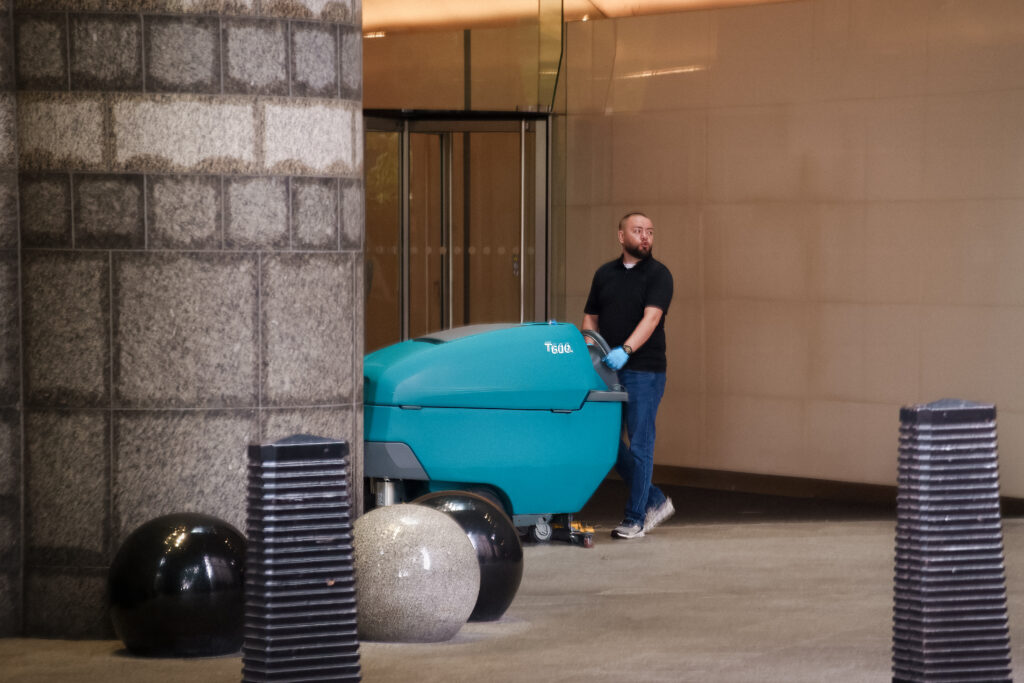
Maintenance work is most successful when it disappears.
The people behind the appearance, and the question of money
The finished city operates within an economic environment, and this is part of the background to the photographs here. I am not suggesting that the images reveal the entire reality of a metropolis. They are a look at a very few examples of the work that allows the city to present itself as finished, several times a day. When sequencing and choosing the photographs for this article I noticed that they happen to show more men than women at work, so I clarify that I do not take this to represent anything about the workforce. It is just the selection of photographs included here.
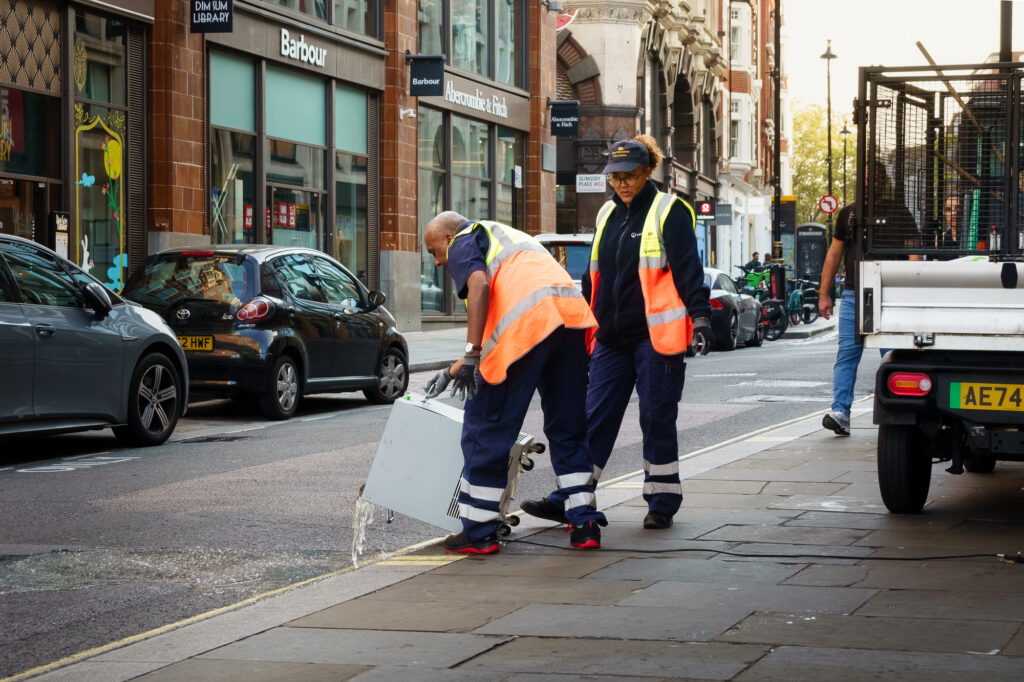
The people who keep London running do not all occupy the same economic position. Just to think of a few random examples: an electrician, plumber or any other skilled tradesperson may perhaps have more opportunity to turn their experience and knowledge into income than someone working in cleaning, retail or delivery. The maintenance of a city is of course not a single kind of work and entrepreneurial possibilities could be infinite.
The photographs selected here have a lot of limitations in what they could show. They do not show, for example, whether having a job is the same as having enough income to pay bills. A search online led me to reports by the Joseph Rowntree Foundation highlighting that what they call “in-work poverty” affects in particular some of the sectors that provide everyday services. There is also the voluntary London Living Wage, which is intended to reflect the higher cost of living in the capital, but rent, food, travel and other essentials can still make a working income difficult to stretch. An hourly rate can also conceal what a working day actually involves, as in some employments, lunch breaks may be unpaid.
London also depends on public services. People can travel to work on public transport without owning a car, and access to the National Health Service does not depend upon having private medical insurance. For some working households, Universal Credit can also form part of their income. These services and forms of support contribute to the economic environment in which the finished city operates.
The photographs do not tell me what someone earns, whether they like their job or what it means in their life. The images record a situation, not a biography. They can show a task, where it happens and sometimes even the skill involved. A photograph may show a delivery made through a crowded street, a service that depends on knowledge and ability acquired through practice. The photographs do not show, for example, that retail work may require the skill of representing a world in which objects costing several times an employee’s monthly income are presented as ordinary things to buy.
The city beneath the city sometimes appears visible
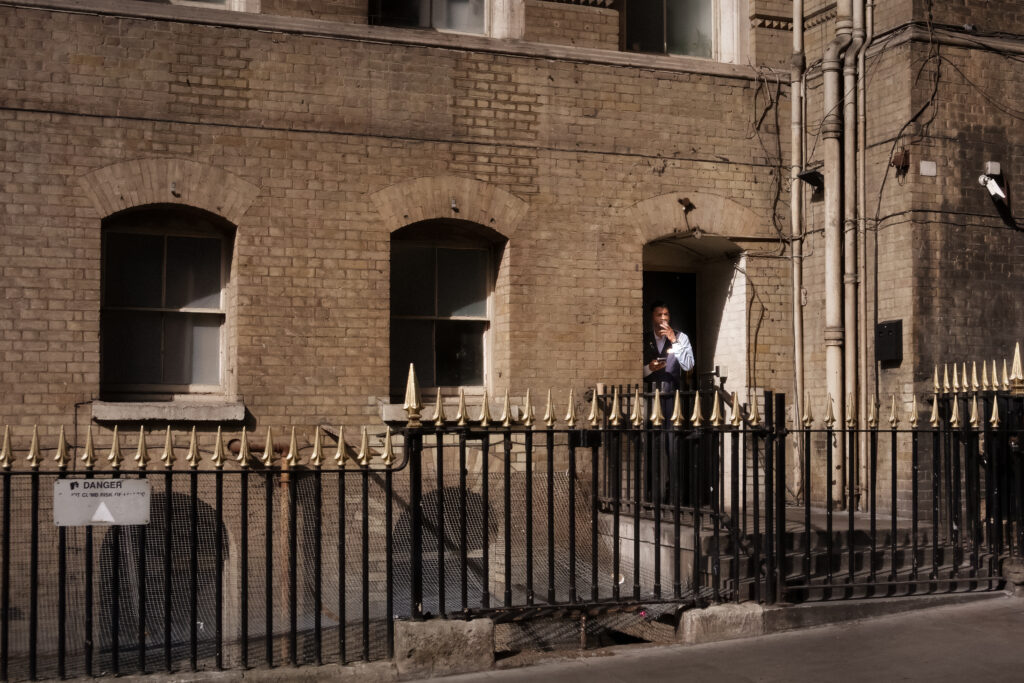
Sometimes we see a member of staff going for a cigarette at the edge of the crowd.
Sometimes someone in refuse-collection takes a quick break at a table on the pavement of a coffee shop, too early for there to be almost any customers.
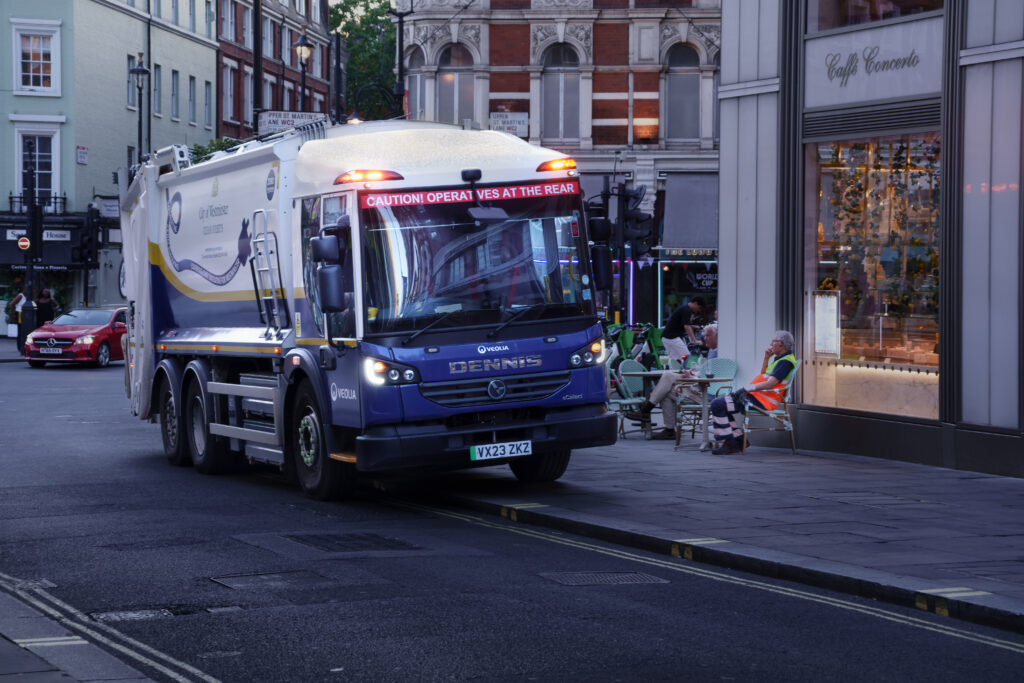
When the work pauses, if only for a few moments, it is possible to see that the function gives way to the person behind it.
Different ways of being in the city
At a given time, one person may be consuming the city as an experience while another makes that experience possible. What is unusual is how rarely the two experiences occupy our attention at the same time. Not a “hidden city”, but a city whose different functions are so closely interdependent and yet one way of being can disappear inside the other. That was part of what I was noticing.
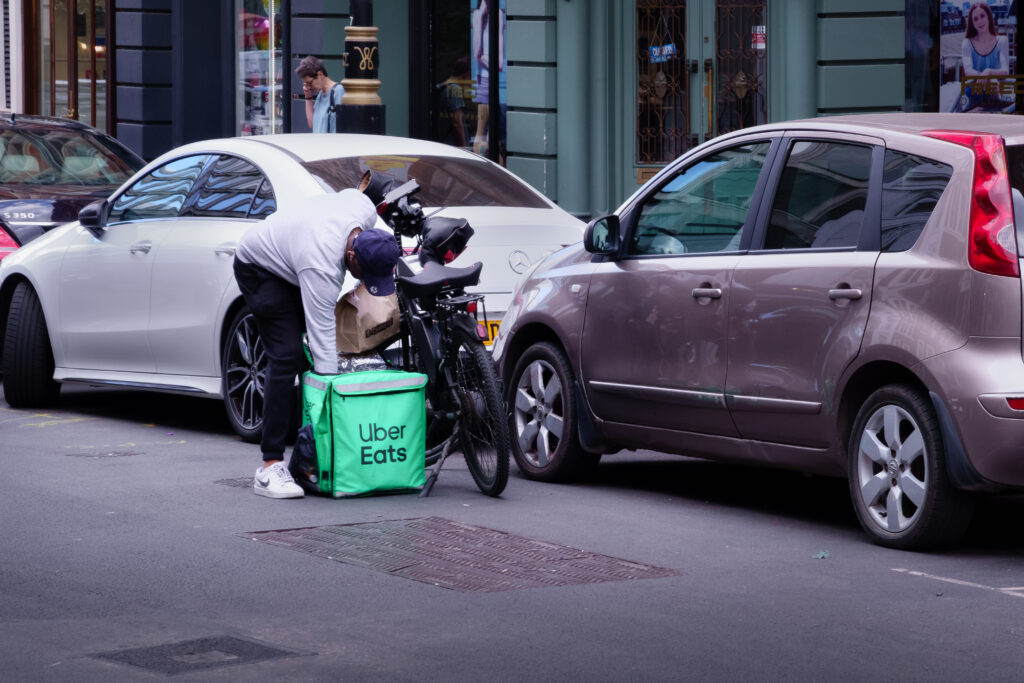
The reality is that the same person could well occupy different positions in the city at different times. The difference is between ways of experiencing the same place.
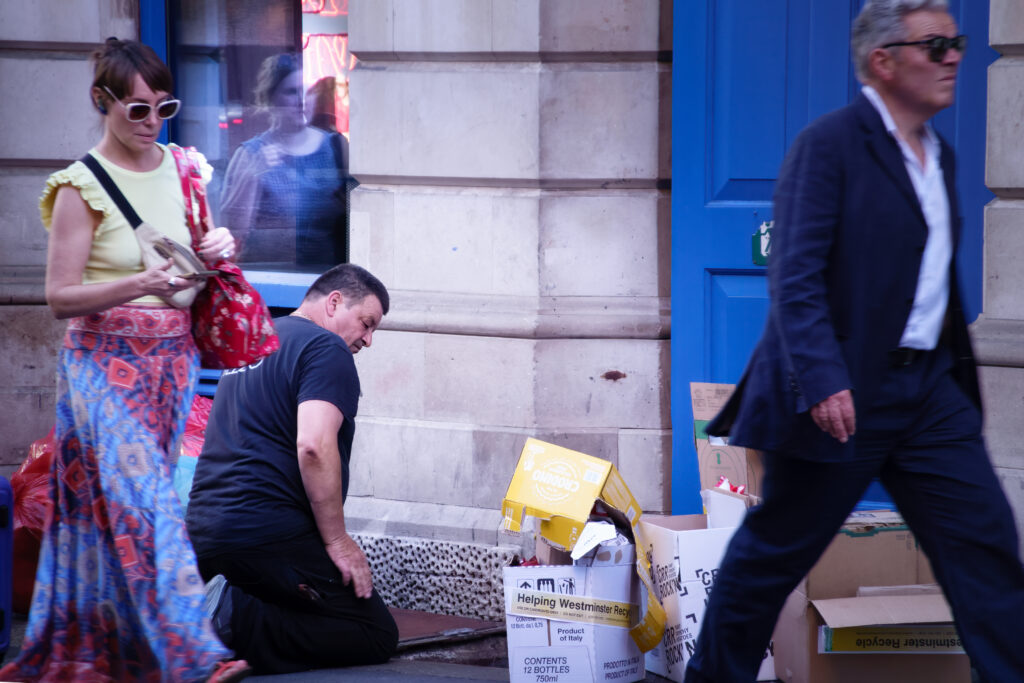
The larger story can be seen by adding up small situations
Consider the service entrance of a restaurant, the door most customers will never notice. It is the one used for deliveries and for the people whose work allows the front of the restaurant to appear effortless. Before the food reaches a table, it already has a history of transport, delivery, storage, preparation and finally, sale.
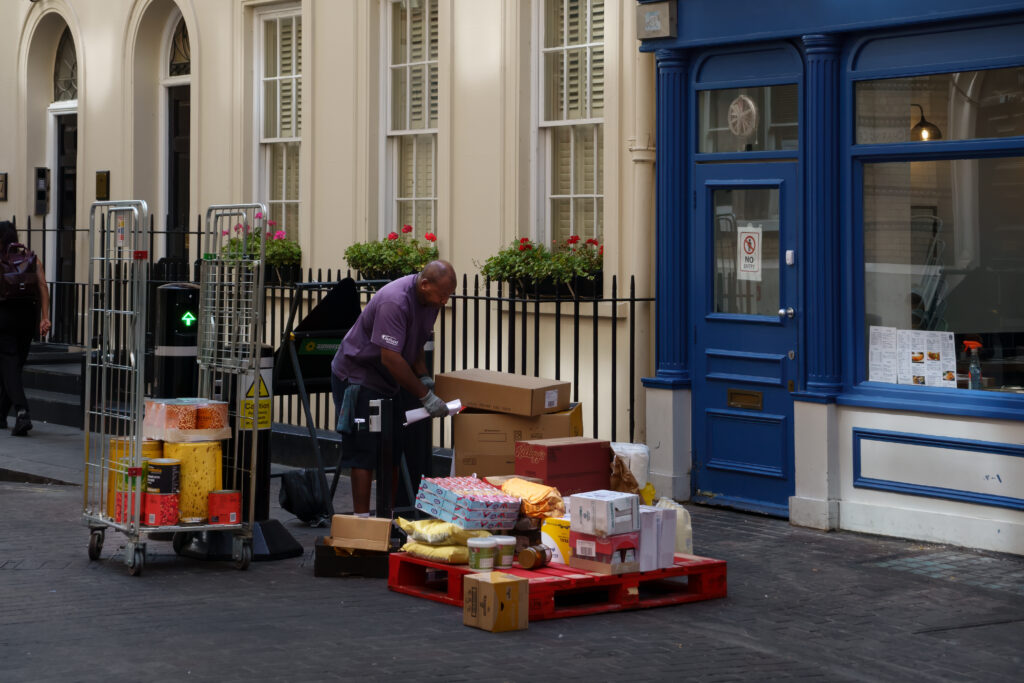
Sometimes part of that chain of events appears in a photograph, for example, when someone carries boxes very skilfully through a busy environment.
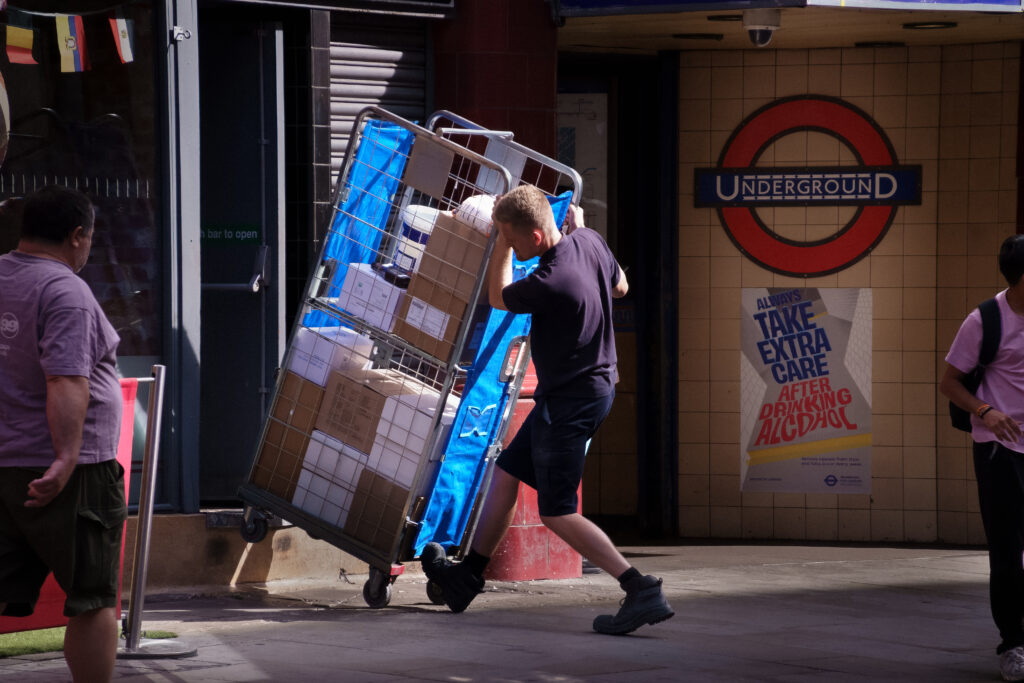
None of these moments in themselves explain the city, but they are small parts of how it works. Spending enough time in one place makes those repetitions visible. A cleaner is just someone cleaning until you begin to notice the work happening before the city wakes up, and again after the crowds have gone.
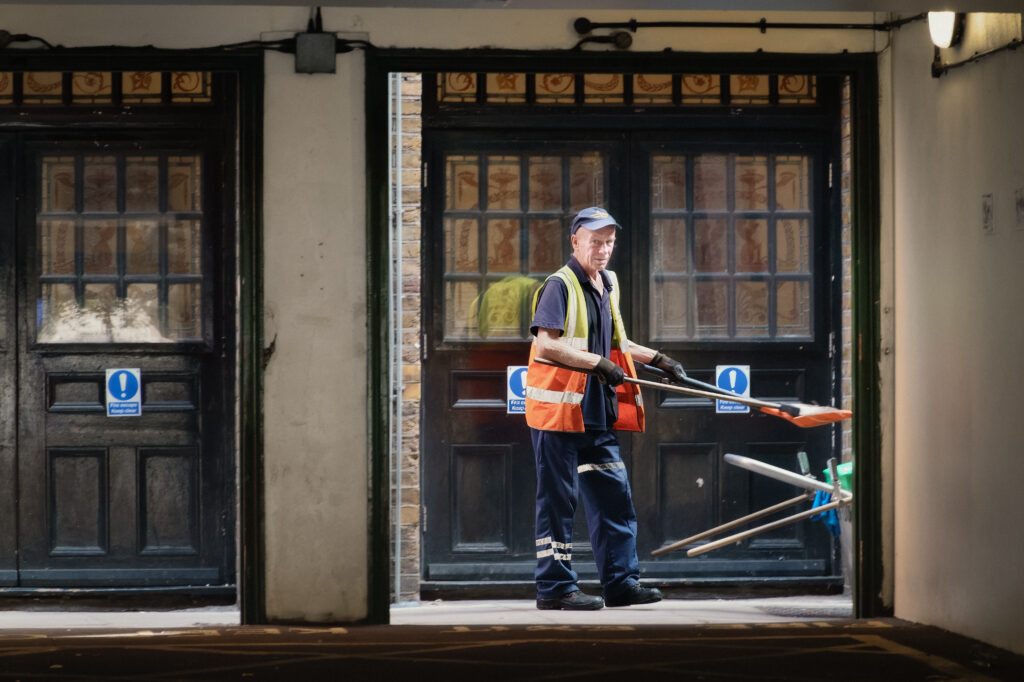
The visible city
The issue is not that the city has a front and a back. It is that the front is so familiar that we forget what makes it work. We tend to notice maintenance when something goes wrong, because until then, the people who keep things working are part of the background.
After the crowds arrive
There is a period each morning when parts of Central London are not yet quite the places visitors have come to see. The city is preparing itself, and then the crowds arrive. Once I began noticing the people who prepare, maintain and operate the places around me, the city itself became slightly different. A clean pavement was no longer just something I found there. A shop or a theatre was no longer only what it looked like from the street, because there was the work before it could appear that way, and the work that would continue after I had moved on.
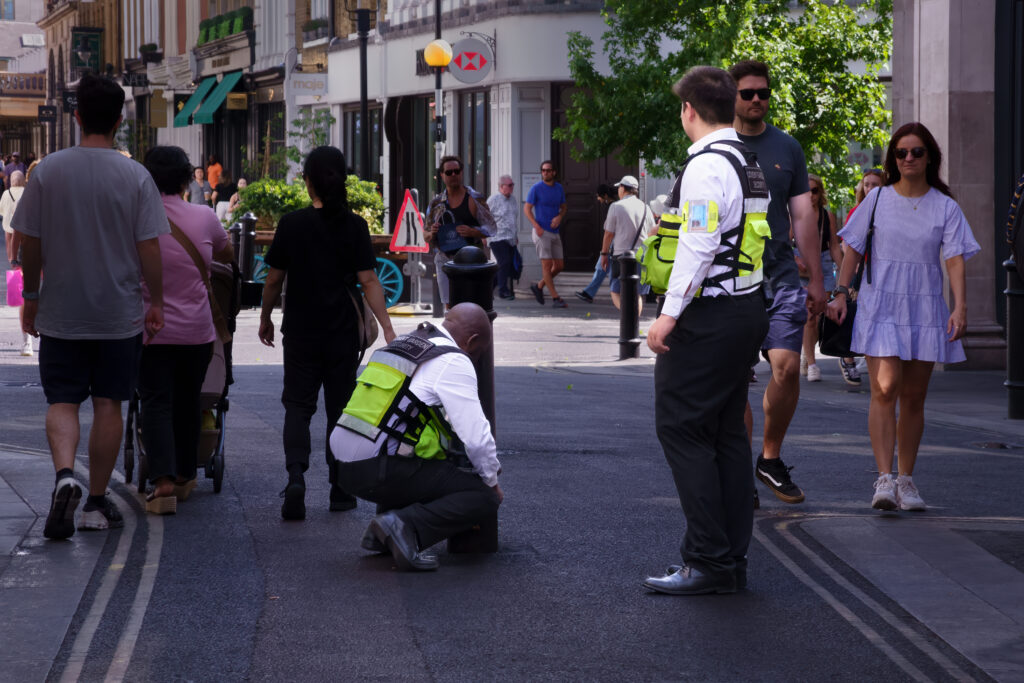
I was not outside the system I was observing, but occupying another temporary way of using the same streets. At that point in time, I had the freedom to wander, stop, look and decide what was worth photographing for my purposes. What had changed was not the place, but the direction of attention, which is what the photographs in this article address.
Featured image: Leicester Sq., in layers, pedestrians, red phone booth, temporary signage, goods being carried.
Share this post:




Comments
No comments found