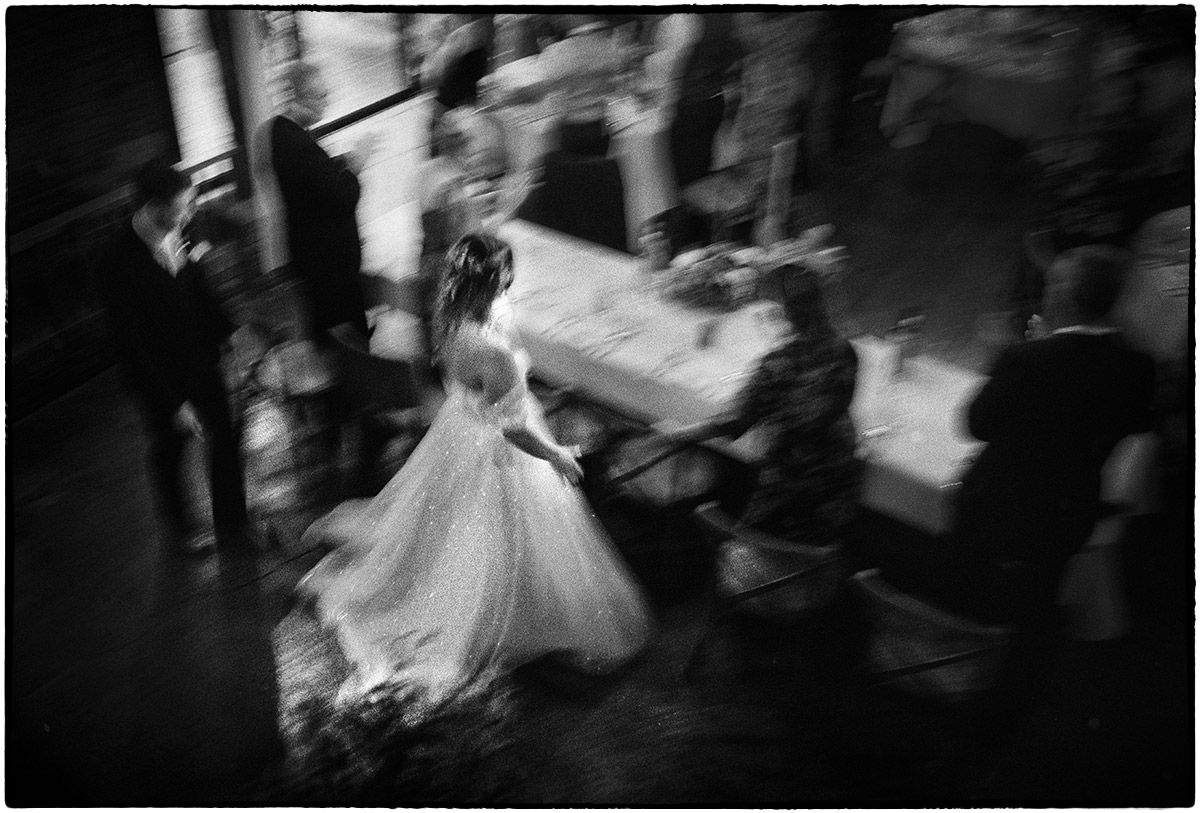
Panning motion blur as the bride and groom enter the wedding reception. Shot on Ilford HP5 plus film.

Why I take imperfect wedding photographs with a Leica film camera

By Simon Atkins

My introduction to film photography was towards the end of the 1980’s when I got a job working in the darkrooms of a daily newspaper. The standard way to become a press photographer back then was to start off by processing and printing the other photographers work in the black and white darkrooms. The picture editor shot weddings on a Saturday and took me under his wing as his unpaid assistant, back then wedding photography was still very formal and mostly consisted of set groups and portraits, in fact I remember him telling me there wasn’t anything to photograph during the ceremony and we would sit outside the church and wait to be called in for a fake signing of the register. This experience put me off wedding photography and I spent the next decade working as a press photographer. Towards the end of the 1990’s I became interested in photographing weddings in a more behind the scenes approach and became one of the early pioneers of documentary wedding photography – all shot on film of course! Then along came digital and I was keen to become an early adopter, some 1200 weddings and 25 years later I wanted a new challenge and decided to go back to shooting film!
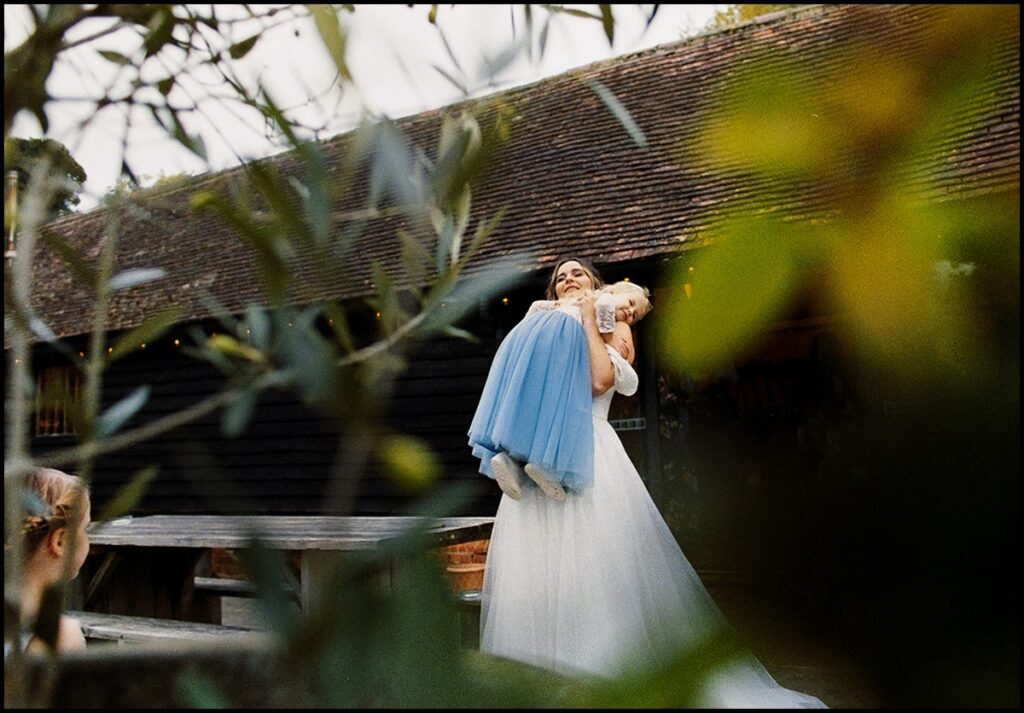
The bride with bridesmaids taken on Kodak Portra 800 film
Kodak Portra 800 film, I really love the colours with Portra.

The search for the right camera

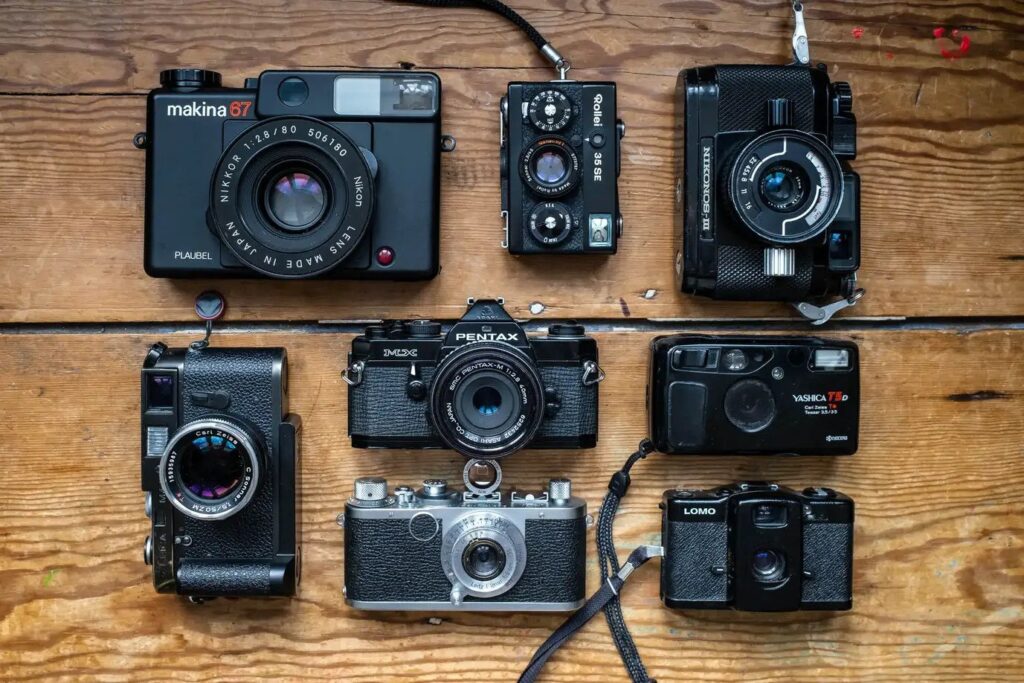
In my search for the perfect film camera I tried out various cameras, firstly a Canon Eos1N that I already owned, the Canon sounded like a cannon every time I took a photograph – it was just too loud for quiet wedding ceremonies! I then tried my trusty Nikon FM and FE cameras, these worked well but didn’t totally fit my way of working and still had fairly loud shutters combined with mirror slap. At that point I purchased a Minolta CLE and immediately felt at ease with the compact size and rangefinder focussing, my only issue was the rangefinder base length is fairly short which makes it very difficult to focus fast aperture lenses or longer lenses, especially a 90mm that is sometimes required for church ceremonies. After much reading I purchased a Leica M4-P, this proved excellent from 28mm through to a 90mm lens.
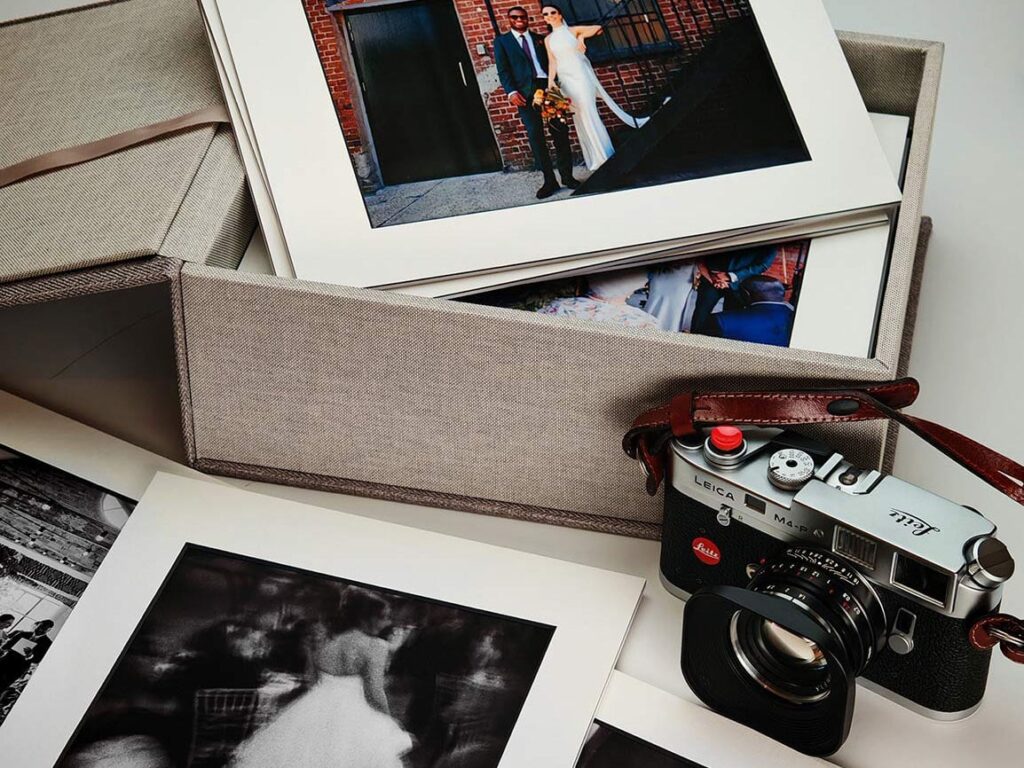
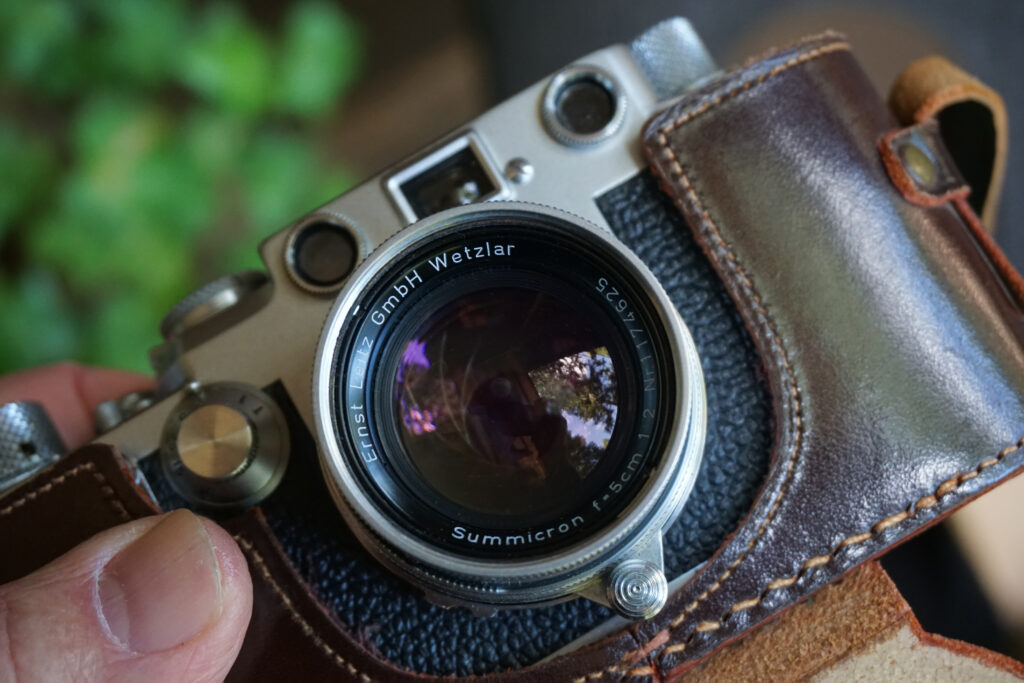
Leica M4-P

My Leica does not get in the way, it doesn’t distract me, it has no electronics – not even a light meter. I tried a Leica M6 and M7 before purchasing my M4-P and found the red LED lights in the viewfinder distracting, I prefer the view through the M4-P which other than the frame lines has no distractions and nothing lighting up. I carry a small light meter and take a few quick readings to get an idea of what the light is doing, after than I just use my experience to estimate the exposure and I find this is much quicker than constantly checking with a meter. I use two cameras as I find I always run out of film at crucial moments and even with the quick loading on the M4-P it still takes a minute or two for me to rewind and load the next film.

How I photograph weddings on film

My approach to film wedding photography is to make images which have a strong analogue look to them, I see no point in film looking like digital. I embrace grain, motion blur and the imperfections and limitations of 35mm film. To me it is about how the images make you feel rather than trying to capture a perfect vision of how it looked. I love Leica Summicron lenses but equally like to use lenses with a lot of character, for example I have a 7Artisans 50mm F1.1 and really love the very imperfect way it sees the world, sharpness isn’t something that I am looking for!

I tend to find people either love or hate my style of film photography, I don’t worry about those who hate is as they are not going to be my clients, I’d rather stay true to my own vision than try to appeal to everyone.

I work in a photojournalistic style as an observer, capturing what I see. That doesn’t mean I slink away into the shadows as I work the exact opposite way, I mingle and chat with the guests while photographing the wedding like a professional guest, mostly they think I am just another invited guest with a fancy camera.

I hand develop my own film, both colour and black and white, in my small darkroom using a Jobo processor and hanging film to dry in a Jobo Mistral film dryer. I then scan them myself, I do have an enlarger and can make prints directly from negatives but find my clients want scans rather than just prints. I love having full control over the entire process and it feels like I am creating something.

I like to use Kodak Portra film for colour and sometimes Cinestill 800T, for black and white I really like Ilford HP5 plus which can be pushed to 1600iso with great results. I also sometimes use Leica Monopan film but as that is 50 ISO it is more limited to just bright conditions.
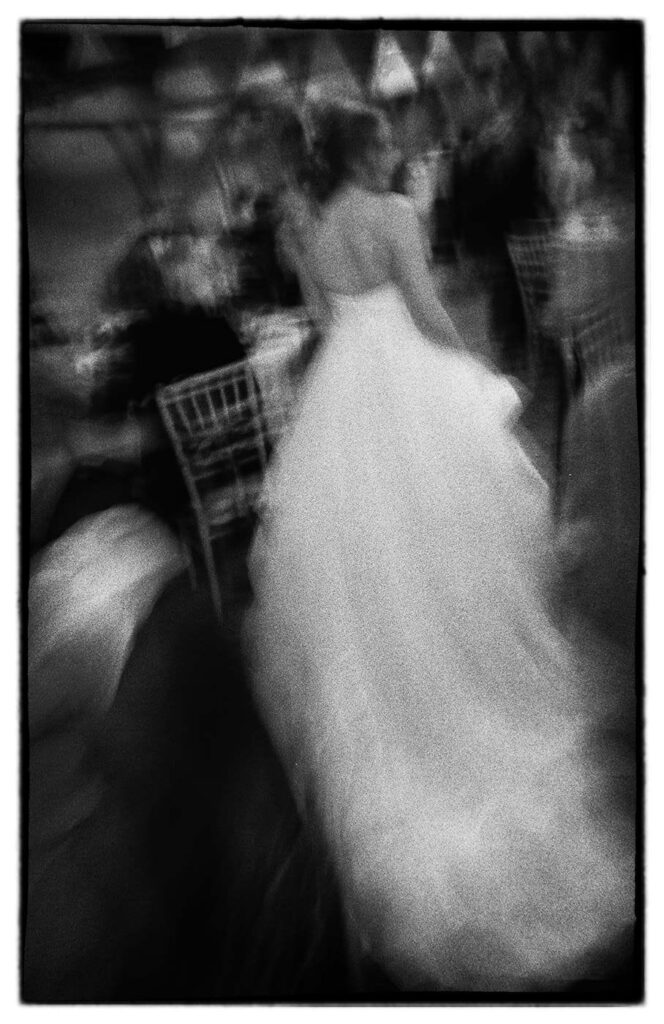
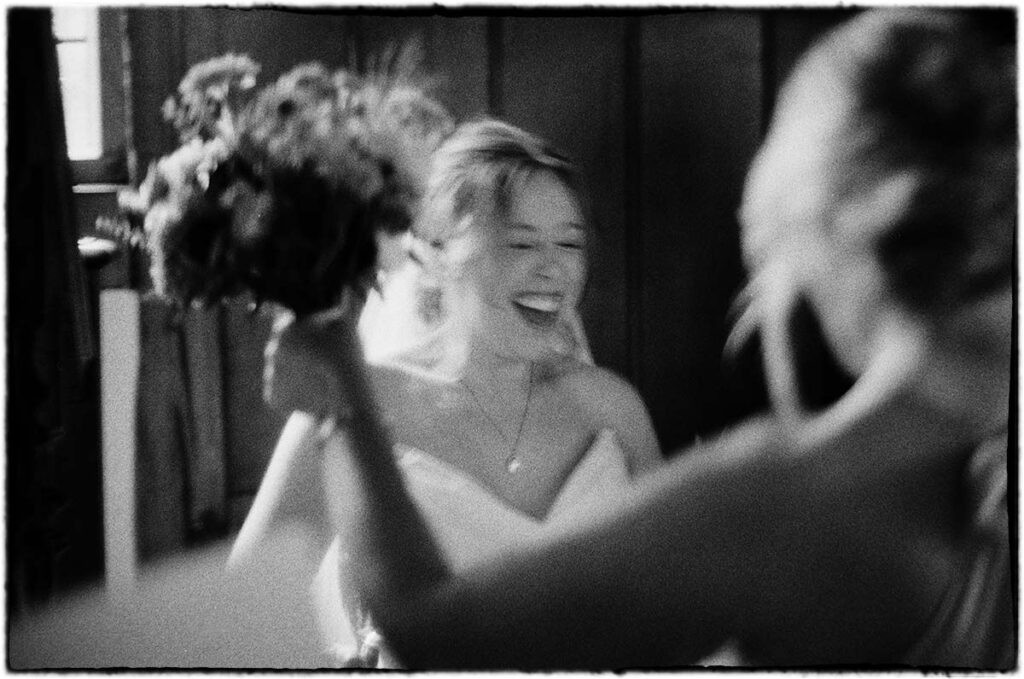
The bride's dress photographed with a slow shutter speed on Ilford HP5 plus film.
At a dark reception I used a slow shutter speed to capture this image which isn’t sharp and has a lot of movement, I was thrilled with the result.
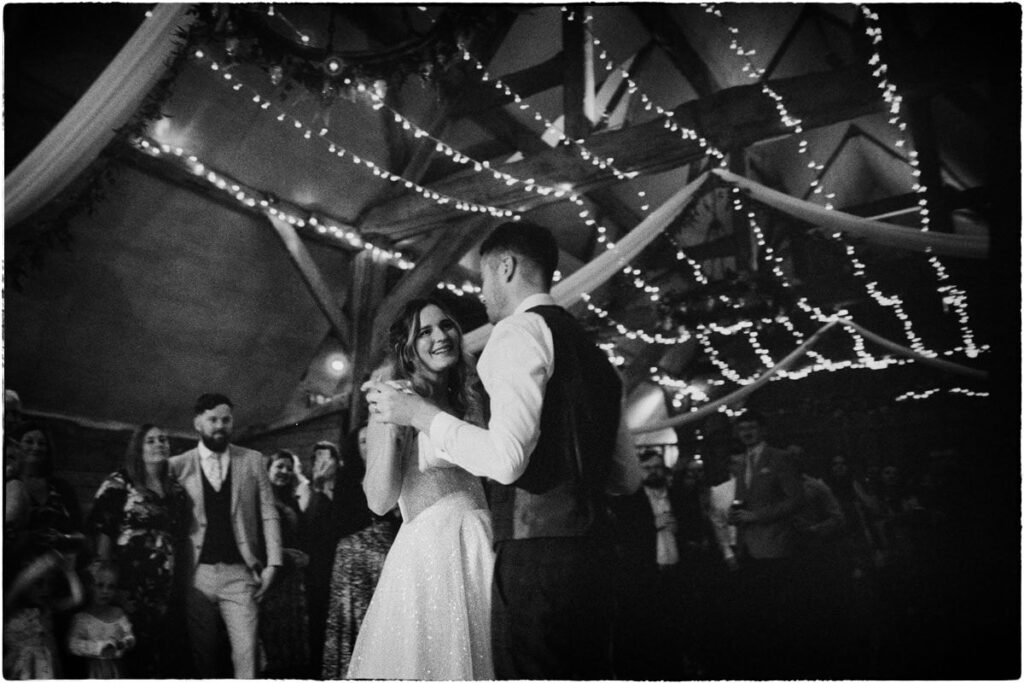
The first dance photographed on analogue film, HP5 plus pushed to 1600iso.
The first dance by available light, I pushed Ilford HP5 plus to 1600 iso and shot this with a 28mm lens wide open.
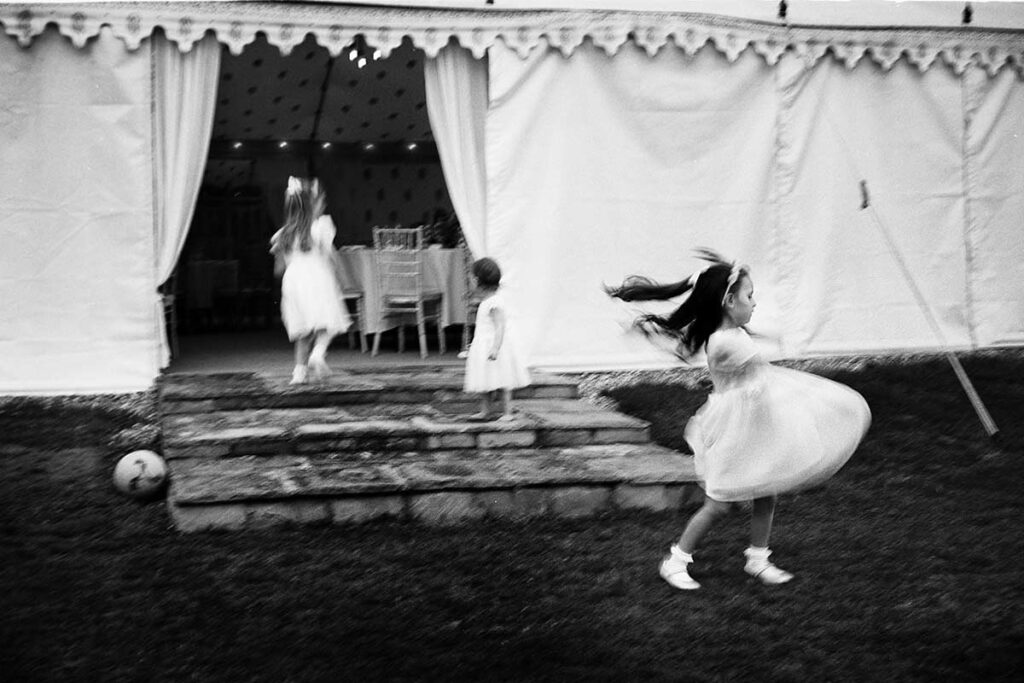
Flower girls at a wedding shot with a slow shutter speed using a Leica M4-P camera.
I spotted these flower girls playing and wanted to capture how her dress was flowing as she danced and played.
Deliberately unsharp photographs shot on film.
Low light forced me to use a slow shutter speed which resulted in this dreamy look.
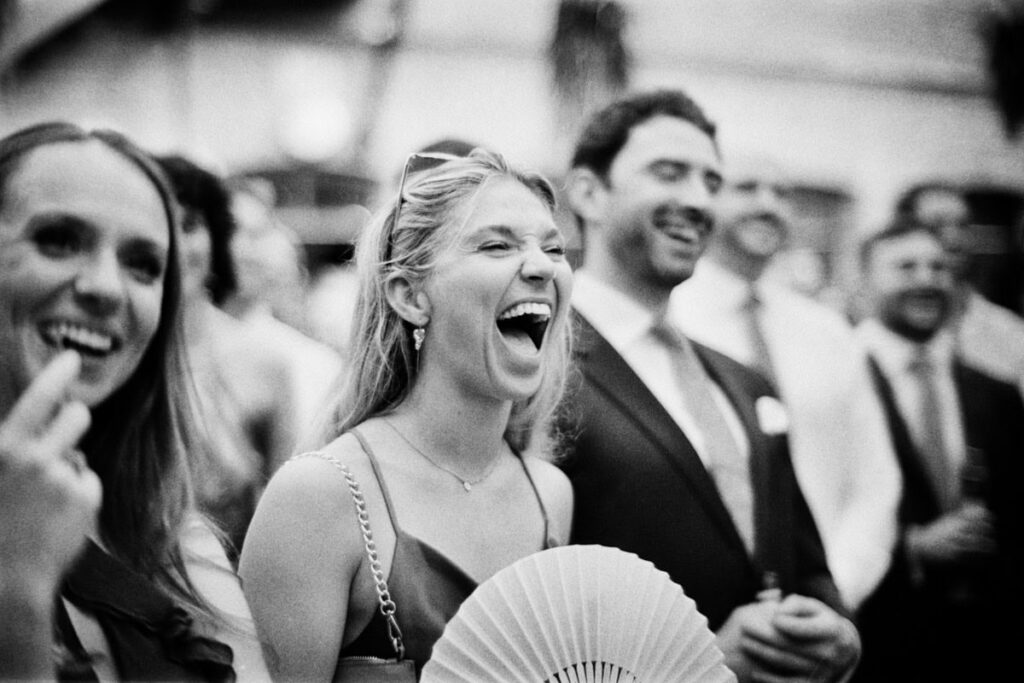
A wedding guest laughing at the speeches, shot with a Leica M4-P camera.
A wedding guest laughing at the speeches, I love capturing emotions at weddings.
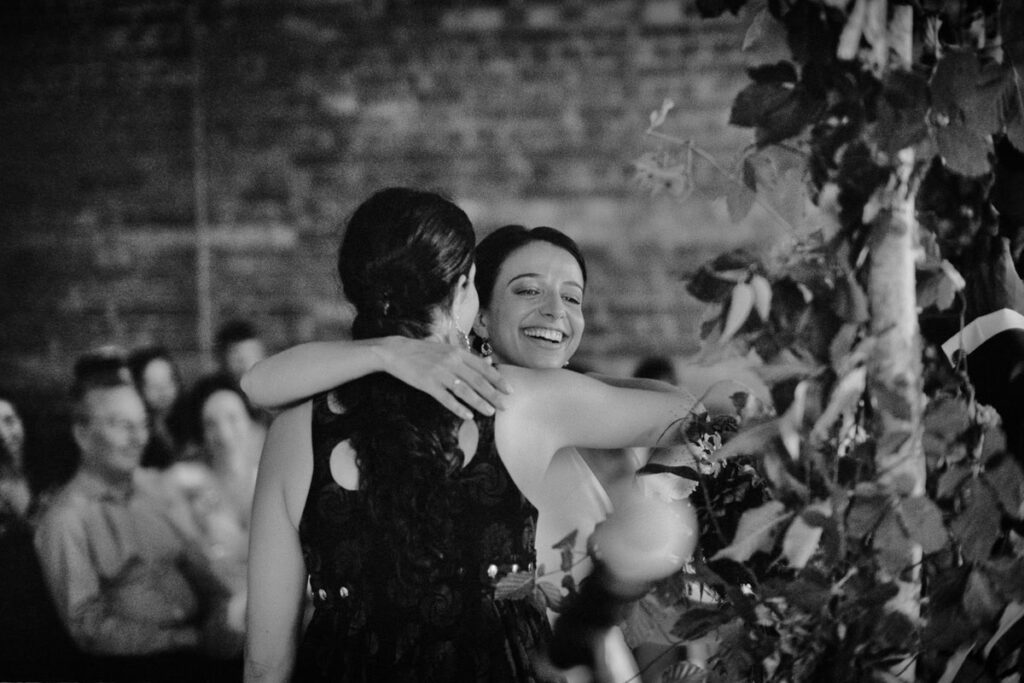
The bride hugging a wedding guest, photograph taken on film with a Leica camera.
A moment from the wedding ceremony with the bride hugging her friend who just did a reading. Using a rangefinder camera can make focussing challenging for these sort of images.

Why I photograph weddings on film

The why is maybe a little more complicated, firstly film and especially black and white film is my first love, there is a huge element of nostalgia for me. The real reasons run deeper though, I feel a lot of wedding photography has become very polished and over perfect, I also really dislike how AI is becoming common place in photography with it being used for everything from digital noise reduction to removing, changing or even creating elements in the image, to my way of thinking this reduces some of the skill of the photographer to how good they are at using AI tools in post production. Shooting film on a Leica rangefinder camera seemed as close as I can get to a pure photography experience and I’m lucky that couples book me to photograph their weddings on film and that I get paid to do something that I really love. I feel that film allows me to express myself creatively in a way that digital doesn’t.

Website: weddingphotojournalist.co.uk/35mm-film-wedding-photography/
Instagram: instagram.com/weddingphotojournalist/

Share this post:

About The Author

By Simon Atkins
I'm a UK analogue & digital wedding photographer, I use Leica M cameras for my analogue work and Fujifilm for digital. I started my photography career way back in the darkrooms of a busy daily newspaper.
Read More Articles From Simon Atkins

Find more similar content on 35mmc

Use the tags below to search for more posts on related topics:

Donate to the upkeep, or contribute to 35mmc for an ad-free experience.

There are two ways to contribute to 35mmc and experience it without the adverts:

Paid Subscription – £3.99 per month and you’ll never see an advert again! (Free 3-day trial).

Subscribe here.

Content contributor – become a part of the world’s biggest film and alternative photography community blog. All our Contributors have an ad-free experience for life.

Sign up here.

Make a donation – If you would simply like to support Hamish Gill and 35mmc financially, you can also do so via ko-fi

Donate to 35mmc here.

Comments

Chuck Young on Why I take imperfect wedding photographs with a Leica film camera

Comment posted: 05/07/2026

Simon: Thanks for sharing. I really enjoy your wedding photos.

BTW my camera with the quietest shutter is my Kodak Pony 135.
Recently Purchased on EBay for under $40!. It looks brand new. It's a bit tricky to operate ... cock the shutter by hand etc.
Chuck
Reply

Leave a Reply

Your email address will not be published. Required fields are marked *

Simon Atkins replied:

Comment posted: 05/07/2026

Thank you for commenting, that Kodak Pony looks interesting and less money than a few rolls of Kodak Portra!

Reply

Leave a Reply

Your email address will not be published. Required fields are marked *

Derek Zhao on Why I take imperfect wedding photographs with a Leica film camera

Comment posted: 05/07/2026

Your wedding photos are gorgeous and full of life. While I am not a film photographer, I have also developed a dislike for overly polished and perfect photos, enough so that I am using Lightroom less and less these days. I figure if it is a compelling photograph, there's not much more that anything outside basic adjustments can really add.
Reply

Leave a Reply

Your email address will not be published. Required fields are marked *

Simon Atkins replied:

Comment posted: 05/07/2026

Thank you for the kind comments. I'm pleased to hear it isn't just me who dislikes overly polished digital images.

Reply

Leave a Reply

Your email address will not be published. Required fields are marked *

Tim Hancock on Why I take imperfect wedding photographs with a Leica film camera

Comment posted: 05/07/2026

Hi. Interesting- I use an M2. Do clients usually have another photographer doing the trad digital shots or just book yourself ? Just curious. Thanks.
Reply

Leave a Reply

Your email address will not be published. Required fields are marked *

Simon Atkins replied:

Comment posted: 05/07/2026

I currently offer a 50/50 film / digital option but I still only offer a documentary approach with just a handful of set group photographs. I also have couples book me for just film and they have a separate photographer for digital, I prefer this as I can just get on and do my thing without distraction and leave the digital photographer to do their thing as well. Equally sometimes I'm the only photographer and they just want this approach on film.

Reply

Leave a Reply

Your email address will not be published. Required fields are marked *

Ibraar Hussain on Why I take imperfect wedding photographs with a Leica film camera

Comment posted: 05/07/2026

Got to laud your confidence and sticking to your style and what you feel, chucking all norms into touch. As long as the clients are happy then that’s all that matters!
Reply

Leave a Reply

Your email address will not be published. Required fields are marked *

Simon Atkins replied:

Comment posted: 05/07/2026

Thank you, happy clients make me happy!

Reply

Leave a Reply

Your email address will not be published. Required fields are marked *

Eva Smith on Why I take imperfect wedding photographs with a Leica film camera

Comment posted: 05/07/2026

I really enjoyed the perspective that imperfections can make wedding photographs feel more authentic and emotionally lasting. Those small, unscripted moments often become the memories couples treasure most. It's a reminder that while preserving the emotional side of a marriage matters, planning for the practical side is valuable too—https://helloprenup.com/ offers helpful resources for couples navigating those conversations before and after the wedding.
Reply

Leave a Reply

Your email address will not be published. Required fields are marked *

David Brancaleone on Why I take imperfect wedding photographs with a Leica film camera

Comment posted: 05/07/2026

How refreshing to see your work! A while ago, I was at a wedding where a photographer had a DSLR hooked to a belt and was responsive to what was going on. But it was after the ceremony and the photographer didn't mingle; felt like an outsider observing, rather than tunjng in. So although I didn't see the perfect results, I could guess. What you hint at, I'd call photographic empathy, the willingness and openness to cross the line from pure, formal, observation to active participation.

Seems you have pared down tools and practice to make it possible to bring "the flow" of the event into the frame and keep it there as flow, breaking hard and fast rules that deny it.

Even literally, the joy of the bride's flowing white perfect imperfection, the children and being able to see the essential.
So many lessons right there.
Reply

Leave a Reply

Your email address will not be published. Required fields are marked *

Simon Atkins replied:

Comment posted: 05/07/2026

Hi David, I've seen that approach myself, I'm far too social to try and photograph a wedding from the outside looking in, I like to talk to people and photograph as an insider. I do try not to interfere with what is happening in front of my camera as I like to capture the real moments and events but I find it is possible to do that without being a stranger.

Reply

Leave a Reply

Your email address will not be published. Required fields are marked *

Jeffery Luhn on Why I take imperfect wedding photographs with a Leica film camera

Comment posted: 05/07/2026

Simon,
Those are interesting B&W images. A collection of those with digital shots would make a nice book.
There's a student of mine that specializes in portraits and weddings on film. She does the setups in 2 1/4 color film and the candids in 35mm B&W. Her assistant shoots hundreds of shots with an iPhone tasked with getting a good shot of every single attendee. The participants appreciate the setups, even though some don't specifically request them.
Things have changed. Back in the 1970s, when I had to shoot weddings, I operated from a shot list of about 30 setups. In those days, the photographer had a lot of control on the event: Processional, rings, first kiss, recessional, family setups, toast, first dance, cake cutting, flower toss, rice throwing, etc. The caterer, photographer, bride's mother worked hand in hand to keep things on a smooth schedule. We took engagement shots to get to know the couple and have a photo to send to the newspaper. I assume it was a better system for the wedding party. I know the vendors did a better job. Just insisting that the photos take place immediately after the ceremony meant we didn't have to chase everyone down for pictures. In my nephews wedding about 15 years ago, the photographer only did candids. Sadly, his late mother does not appear in any shots, as well as relatives that traveled from Europe. Big disappointment for the couple. I wish he had asked me to recommend a photographer because he paid $5,000 for junk. What's your thoughts on structured vs candid shots?
I guess it's all a matter of working with the couple to plan things out before the wedding.
Reply

Leave a Reply

Your email address will not be published. Required fields are marked *

Simon Atkins replied:

Comment posted: 05/07/2026

Thank you for commenting. Regarding my thoughts on structured vs candids I market myself as a documentary photographer/ wedding photojournalist, my couples understand how I will photograph their day without interference or setting up photographs. That doesn't mean I won't do a few group photos to make sure they have a photograph of a relative who flew half way around the world, but these set images are not the focus of my coverage. I never work from a shot list, I would find that too restrictive. Because I tell couples all of this at my first meeting with them I filter out couples who are looking for those structured images, it is important to me that they understand my style and how I work before booking me. If I feel they would be better served by a different photographer I tell them that I'm not the right photographer for them. I wonder if your nephew was happy with his wedding photographs, I do sometimes feel that relatives and wedding guests don't understand why the couple would want documentary photography but it should be down to the couple to have exactly what they want rather than hiring a photographer who pleases their parents or family.

Reply

Leave a Reply

Your email address will not be published. Required fields are marked *

Jeffery Luhn replied:

Comment posted: 05/07/2026

Simon, Thanks for your reply. Was my nephew happy with his wedding photos? Not at all. The photographer had taken a wedding seminar that used pro models and all the attendees did the same shots under the teacher's direction. My nephew and his bride saw a great portfolio and hired her. It was a disaster. She misrepresented herself and had no clue how to shoot. If I hadn't done a hundred shots for him, he wouldn't have had anything good. She was awful. This is exactly the opposite of what you or I would condone. You shoot in a photojournalistic style and describe your technique to prospective clients. That's a good honest approach and I'm sorry if it seemed like I disagree with it. I don't. I haven't shot weddings in decades and I was asking if you think that styles have changed since the days of strict shot lists. I appreciated your response. Keep up the good work. Jeffery

Reply

Leave a Reply

Your email address will not be published. Required fields are marked *

Simon Atkins replied:

Comment posted: 05/07/2026

Sorry to hear that, it goes to show that having a good portfolio means nothing and photographers should have several full weddings to show.

Reply

Leave a Reply

Your email address will not be published. Required fields are marked *

Jeffery Luhn replied:

Comment posted: 05/07/2026

Exactly. 'Full weddings' is a key phrase. Couples should ask for that.

Reply

Leave a Reply

Your email address will not be published. Required fields are marked *

Richard Arbib on Why I take imperfect wedding photographs with a Leica film camera

Comment posted: 05/07/2026

I liked your articles and your photos. I can see your approach is different than what the standard was at the time. The photography of others may have been too formal. I think you were better able to capture the mood of the guests with your method. The title of your article caught my eye as I have been using a Minolta CLE since 1981. I agree that it is easier to blend in with a rangefinder camera because it is quieter.
Reply

Leave a Reply

Your email address will not be published. Required fields are marked *

Simon Atkins replied:

Comment posted: 05/07/2026

Thank you Richard. I still have my Minolta CLE and it's a great camera, especially with a 28mm or 40mm lens.

Reply

Leave a Reply

Your email address will not be published. Required fields are marked *

Omar Tibi on Why I take imperfect wedding photographs with a Leica film camera

Comment posted: 07/07/2026

Simon, glad to see your shots embrace the grain! Love the mood in all of them. I think along the same lines of you regarding film, to me shooting analog is purely for its own artistic merit. Even with the rise of film simulations, I've not seen digital be able to give the same space for raw artistic expression, as film can, though of course film can never compete if your objective is perfect-to-life accuracy. Your photos reminded me of the fact that the "character" we pursue, whether in lens, cars, watches or more, comes not from the total absence of imperfections, but from creatively making use of them.

Keep on shooting and best of luck with your business!
Reply

Leave a Reply

Your email address will not be published. Required fields are marked *

Simon Atkins replied:

Comment posted: 07/07/2026

Thank you Omar, I had a look at your Flickr page and love your work, especially the Polaroid images!

Reply

Leave a Reply

Your email address will not be published. Required fields are marked *

Simon Atkins replied:

Comment posted: 07/07/2026

Thank you Omar, I'm very happy that so many photographers are enjoying photographing on film for the unique way it sees the world.

Reply

Leave a Reply

Your email address will not be published. Required fields are marked *

Alexandre Kreisman on Why I take imperfect wedding photographs with a Leica film camera

Comment posted: 08/07/2026

Hey Simon,
Lovely pictures, and I love your approach. You really give life to those pictures!
As for the equipment, rangefinder are not for everyone, but once you start working with them and loving it, I believe it is just so easy and for me like paradise.
Keep posting interesting article, it’s very interesting and in my case educational.
Cheers,
Alex
Reply

Leave a Reply

Your email address will not be published. Required fields are marked *

Simon Atkins replied:

Comment posted: 08/07/2026

Thank you Alex, you're right that rangefinders don't suit eveyone and require a different way of working. I'm pleased you are enjoying yours.

Reply

Leave a Reply

Your email address will not be published. Required fields are marked *

Erik Brammer on Why I take imperfect wedding photographs with a Leica film camera

Comment posted: 08/07/2026

Really a wonderful style of wedding photography. I wish I could have ours photographed that way 16 years ago. Thanks a lot for sharing this, Simon!
Reply

Leave a Reply

Your email address will not be published. Required fields are marked *

Simon Atkins replied:

Comment posted: 08/07/2026

Thank you Erick, I'm glad you enjoyed my article and photographs.

Reply

Leave a Reply

Your email address will not be published. Required fields are marked *

Domen Nan on Why I take imperfect wedding photographs with a Leica film camera

Comment posted: 09/07/2026

Simon, lovely images. :) A great mix of "technically correct" images and expressive B&W images, where motion blur adds to the feeling and the story of the image. Thanks for sharing.
Reply

Leave a Reply

Your email address will not be published. Required fields are marked *

William Heber Percy on Why I take imperfect wedding photographs with a Leica film camera

Comment posted: 11/07/2026

Thank you for this article, Simon. I really admire your work and the rationale behind it. You make beautiful images which I'm sure couples and their families cherish.

Looking at your website I was immediately interested in the record of the wedding in Venice because it was so unlike the other locations. Imagine my delight when I realised that the church Anna and Vazaios married in, San Giorgio dei Greci was the same one my Great x3 Grandmother, Amelia Heber and Count Demetrius Valsamachi celebrated their marriage in on July 29, 1830. I used to do a lot of family history research and could only ever view the church from 'Canal view' using Google Earth. So it was fascinating to be able to see inside thanks to your photos.
Reply

Leave a Reply

Your email address will not be published. Required fields are marked *

Simon Atkins replied:

Comment posted: 11/07/2026

William, wow! That's amazing, the church is really beautiful both inside and out. I really enjoy photographing Greek Orthodox wedding ceremonies and this one in Venice was especially inspiring with the couple and all their guests from Greece.

Reply

Leave a Reply

Your email address will not be published. Required fields are marked *

David Pauley on Why I take imperfect wedding photographs with a Leica film camera

Comment posted: 15/07/2026

Hi Simon,

There's a poetry to your "imperfect" images that really draws one in, and for me captures emotions in ways that digital seldom reaches. (Then again I am horribly biased in favor of film!) Do you make prints in the darkroom for your clients as well? I believe you said yes—I'm very impressed as that's quite a large additional investment of time and mental energy, much more than the original shoot I would venture. Keep posting! And thanks.
Reply

Leave a Reply

Your email address will not be published. Required fields are marked *

Simon Atkins replied:

Comment posted: 15/07/2026

Hi David, I do offer prints as an add on, although not many couples see the value of a silver gelatin print and prefer to make their own prints from the scans.

Reply

Leave a Reply

Your email address will not be published. Required fields are marked *

Leave a Comment

Leave a Reply

Your email address will not be published. Required fields are marked *