Fujichrome MS 100/1000 – Irresponsible Pushing

By Omar Tibi

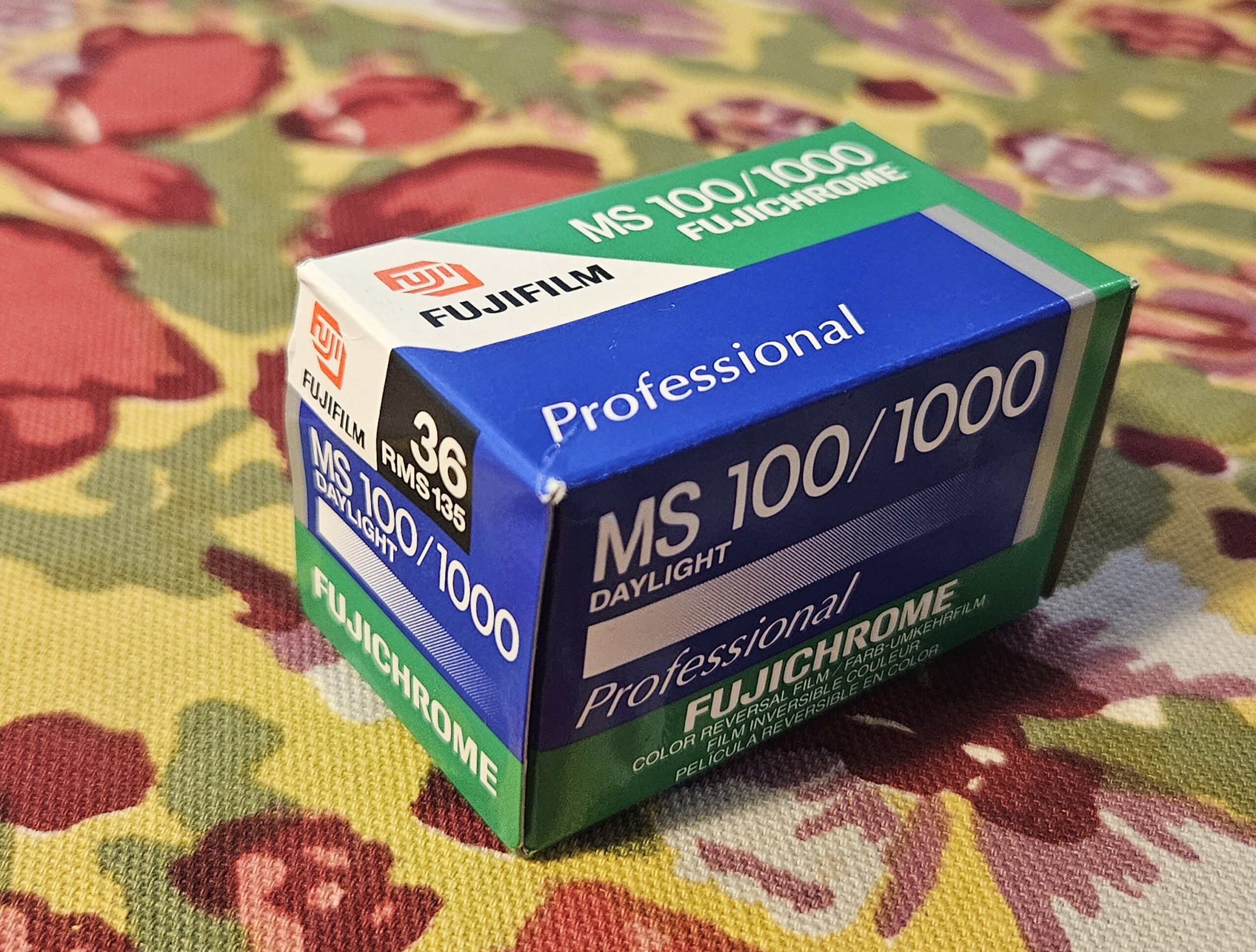
What on earth is Fuji MS 100/1000?

That was the question I had as well when I first saw the box. Everyone knows Velvia and Provia, plenty appreciate Sensia, and some still prefer the look of Astia, but MS 100/1000? A brief search online revealed barely any proper example photos for reference, let alone people pining for its return.

Reading the little material available revealed that this obscure film was formulated by Fuji back in 1999, specifically for pushing up to 4 (!) stops, all the way to an EI of 1000 from an ISO of 100. The goal was to maintain consistent, realistic colors when pushing, so that a photographer could shoot different rolls at different speeds, and then be able to mix them together without noticeable color shifts or differences in quality. It’s clear that Fuji went all in on promoting its push-ability, the box even gives a small table of development times:
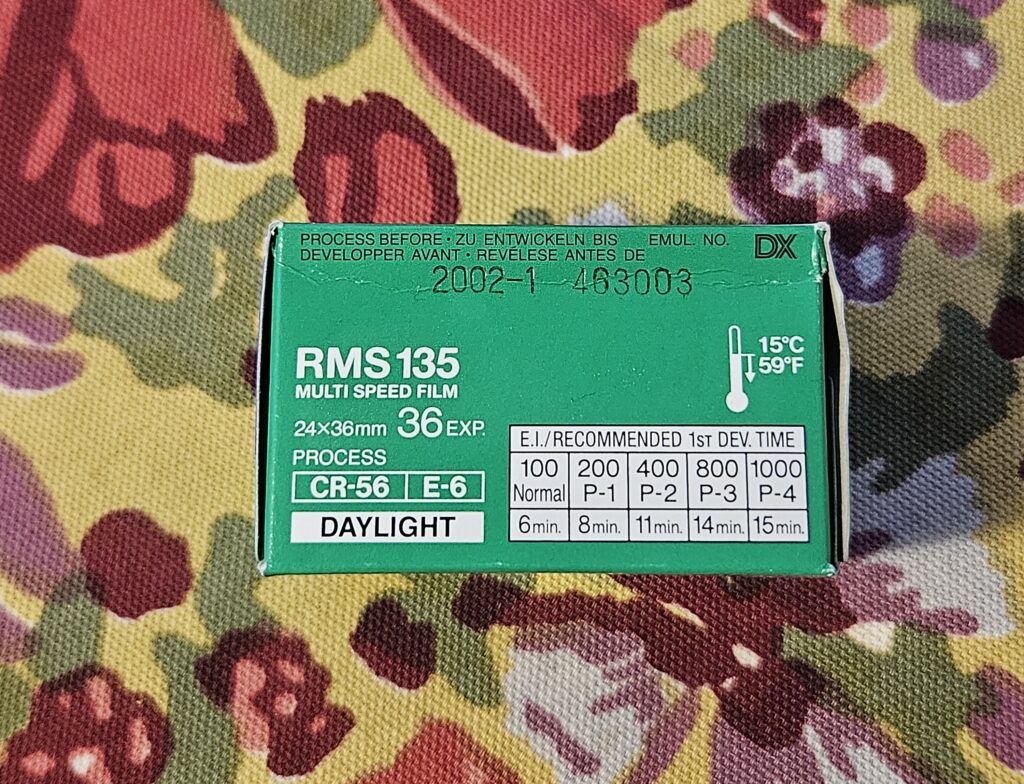
Technically, it’s quite an impressive feat, especially compared to ~1 stop for Velvia and ~2 stops for modern Provia and Ektachrome, so hats off to the scientists who made it possible. Broadly, it seems kind of useful, but if you’re wondering who would pick this over just buying a natively faster slide film… well, that’s the question the market asked too. Sadly, it was killed off without direct replacement after only a few years in 2003, when Fuji updated their slide film chemistries. My batch expired in January 2002, making it one of the first batches of 35 mm produced, possibly even before the turn of the millennium. How’s that for expired?

I rarely push films period, these rolls are nearly a quarter century old, and given that I send these out to my local lab for hand processing, pushing it is, without a doubt, irresponsible. Yet, this film was made to be pushed! So I thought, why not experiment and see what happens? I picked an EI of 400 (+2 stops) because that was the maximum push, when fresh, that would still retain its base exposure latitude, and I didn’t want to tempt fate too much by going higher.

Shooting it was a bit of a challenge. As I detailed in my article about metering slide film, I like to keep the exposure latitude of the film in mind when metering. The lack of information made it difficult to know what that range actually was. From what I found it is comparable to Velvia 50, but given the degradation over time, I didn’t know if I could still trust it. So, I focused on shooting scenes with low dynamic range and even lighting, to maximize my chance of success.

Unsurprisingly, when I got the slides back, everything had a strong magenta cast and crunchy grain. Surprisingly, and to my relief, most of the slides were still useable with some care in post. I’m not normally a lomo kind of guy, but here, I’ll take it!

Contax RX, 1.4/50 Planar T*

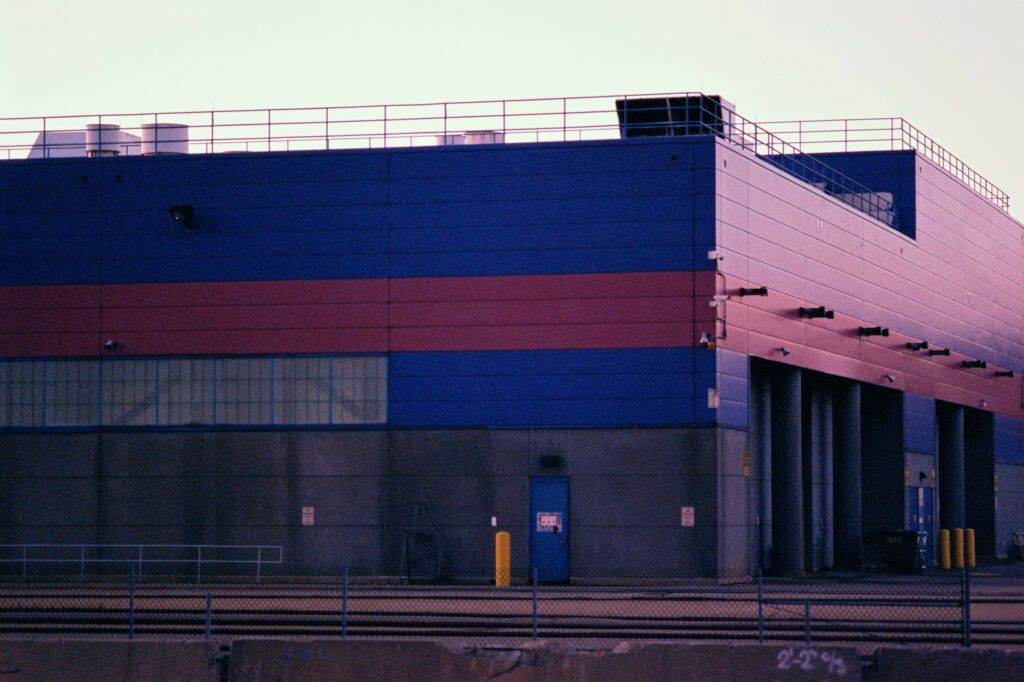
This shot of dockside silos is probably my favorite off the roll. The grain is strong but it adds a nice texture particularly for the corrugated iron details. Dynamic range isn’t as bad as I was afraid it’d be – there is still shadow detail, and despite the magenta cast the colors are otherwise accurate albeit surreally enhanced. Contrary to my worries, the contrast came out rather normal for reversal, which makes me more comfortable shooting MS 100/1000 in the future.

Looking at the other frames in this roll though, most of them aren’t as nice as this, and the best ones are almost all the same formula – even, strong available light.
Contax RX, 3.5/100 Sonnar T*

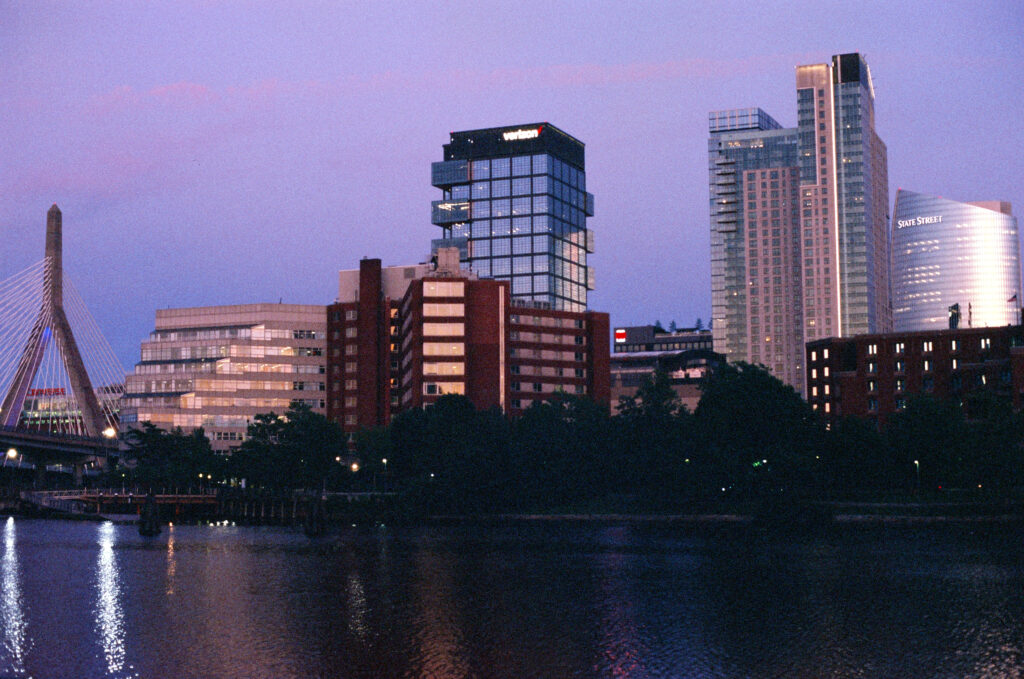
On the other hand, for this train depot, I sacrificed the sky in exchange for building shadow detail. I think it was the right choice for this shot. This came out the best of my few dusk/sunset photos, as they are all heavily magenta-tinted, and many of them have too high of a contrast. Such as this shot:
Contax RX, 1.4/50 Planar T*

Probably even if I hadn’t tried to have it pushed it wouldn’t have worked, the sky’s exposure is just too many stops away from the ground. Not the best subject matter for slide film. I like the dusk sky’s color in this shot though, as it is saturated but not inaccurate to that night.

Contax RX, 1.4/50 Planar T*

As befitting of a Fuji film, greens really stand out even with the torture I’ve inflicted on this stock. The saturated reds/pinks and lush greens remind me a bit of what I see with Provia, and so to avoid losing that I had to minimize the amount of color correction on this shot, hence the very warm browns and greys. I can imagine that the color fidelity when shot normally must be excellent.
Contax RX, 1.4/50 Planar T*

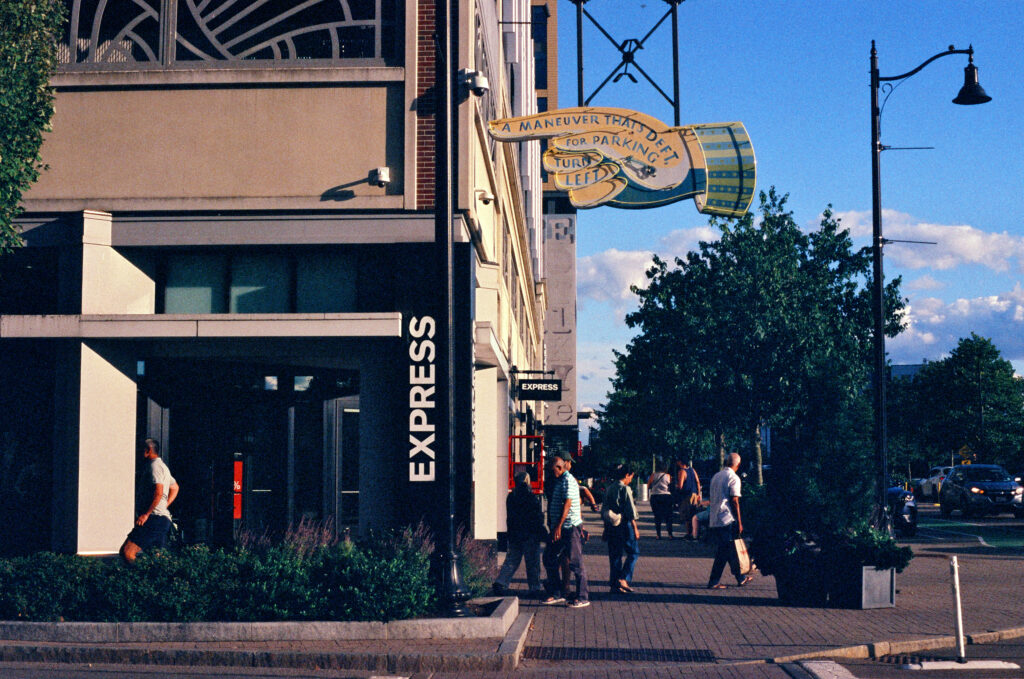
Those who’ve read my articles before know that I don’t particularly do much people photography, but for the sake of trial I took this shot at a shopping center. It’s not super surprising that a magenta shifted film would make people look roasted I suppose, just like with Ektar highlights. The signage looks on point, so architecture – again in even light – is still potentially viable pushed. The one example portrait I found online from that time, also shows rather tanned/burnt looking skin tones, so perhaps MS 100/1000 is just not people friendly? Next roll I shoot, I’d like to see if it still behaves this way at box speed.
Contax RX, 2.8/28 Distagon T*

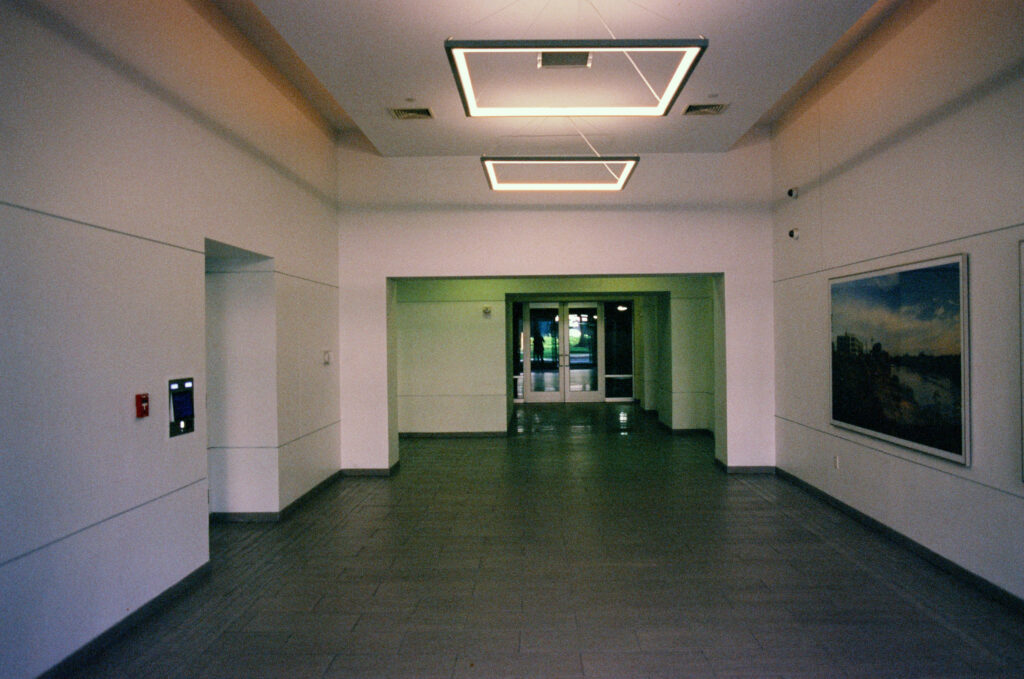
Indoors is really where this roll acts the most normal. Of course, there’s still some magenta, but it’s a lot more balanced. Does it have to do with the color temperature of the light bulbs? It’s not clear to me, but it fits again with the theme of consistent light being the best for my shots.
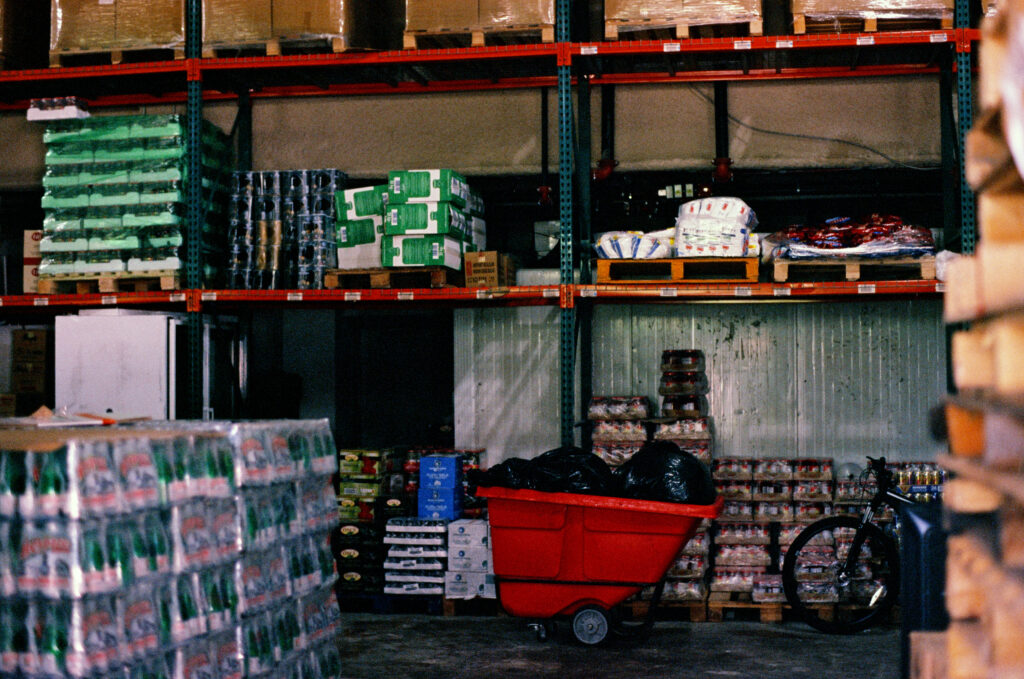
Contax RX, 1.4/50 Planar T*

Would I do this experiment again? The simple answer is of course, not this exact way; as can be seen the consistency isn’t there. I’m unsure how much of this is simply age versus an issue with development, since again, this was done by my local lab. However, if I can develop it myself at home, I’d be more willing to try a push and see what happens.

Contax RX, 1.4/50 Planar T*

In addition, shooting this made me realize that I don’t actually benefit that much from increased speed, at least for my style of photography. Most of my photos on this roll, just like the ones I’ve shown, are outdoors in bright or partially cloudy daylight, I only had a couple of scenes in low light or indoors, and pushed, the former were not particularly great. Yes, shooting high speed slide is fun, but I only noticeably benefited from it indoors, otherwise I really just took shots that I could’ve taken with Velvia 50 or Ektachrome. I suppose my findings ended up repeating the market’s back then too.
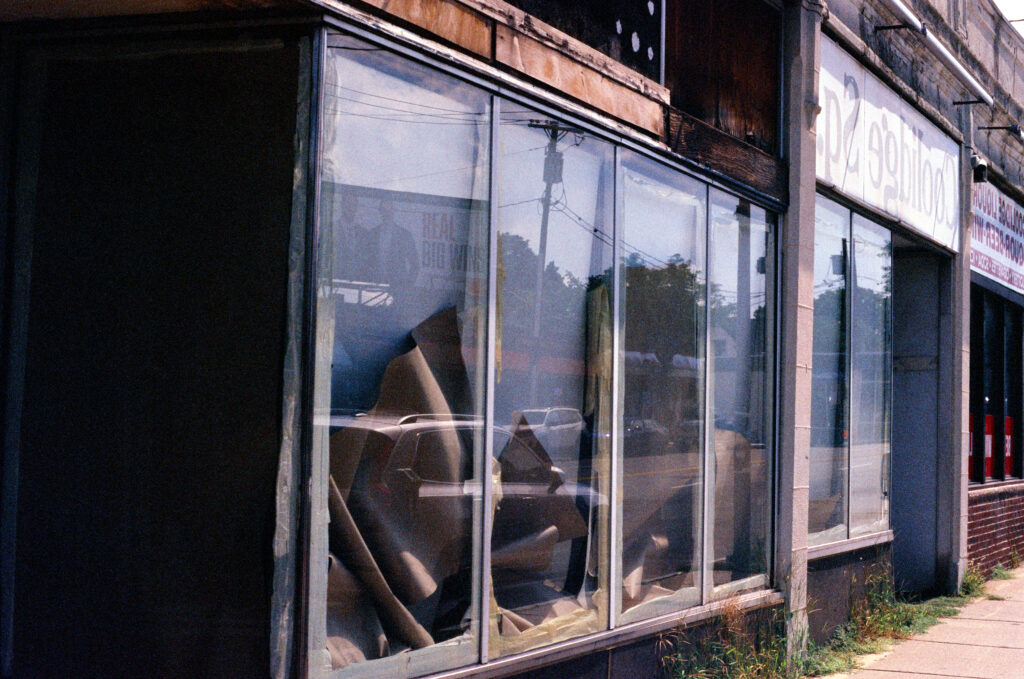
Contax RX, 1.4/50 Planar T*

Despite the funkiness of my attempt, this is still a decent 100 speed slide film, and I can never be sad about having more reversal to shoot. Next time, I’ll try it as normal and see what it is like, especially when it comes to people being in the shot.

A big thanks to Hamish and the whole 35mmc family for this wonderful community!
If you’d like to see more of my work, come follow me on Flickr here.

Share this post:

About The Author

By Omar Tibi
I am a biopharma scientist by day and an analog film addict whenever time allows it. Playing around with unusual film stocks or ways of shooting film is something I am especially passionate about. Thankfully, my better half is amazingly understanding when it comes to this obsession.
Read More Articles From Omar Tibi

Find more similar content on 35mmc

Use the tags below to search for more posts on related topics:

Donate to the upkeep, or contribute to 35mmc for an ad-free experience.

There are two ways to contribute to 35mmc and experience it without the adverts:

Paid Subscription – £3.99 per month and you’ll never see an advert again! (Free 3-day trial).

Subscribe here.

Content contributor – become a part of the world’s biggest film and alternative photography community blog. All our Contributors have an ad-free experience for life.

Sign up here.

Make a donation – If you would simply like to support Hamish Gill and 35mmc financially, you can also do so via ko-fi

Donate to 35mmc here.

Comments

Simon Foale on Fujichrome MS 100/1000 – Irresponsible Pushing

Comment posted: 25/10/2026

Interesting story, thanks for sharing. About four or so years ago I found (in the freezer) and shot a long expired 120 roll of Provia 400. I hardly ever used 400 speed slide film in the pre-digital days, but the results I got from this expired roll made me regret that I hadn't! It's terrific film - beautiful colours and incredibly fine grain for a 400 speed film. I've since seen it for sale online at really ludicrous prices.
Reply

Leave a Reply

Your email address will not be published. Required fields are marked *

Omar Tibi replied:

Comment posted: 25/10/2026

Thank you for reading Simon! You had a legend in your hand there! Honestly would love to try it, but those prices...I can't justify it to myself. Wish there was still a high speed slide option available, like Provia 400, or even something like E200, I use plenty of slow film but the flexibility of higher speed is always nice to have. Happy shooting and I'm interested in seeing how your Provia shots turned out!

Reply

Leave a Reply

Your email address will not be published. Required fields are marked *

Sneakerzoom on Fujichrome MS 100/1000 – Irresponsible Pushing

Comment posted: 25/10/2026

Oooh the thrill of finding obscure film stock! The roll came out surprisingly well I must say, nice work on your metering! I do like the people shot, dispite the discolouration. There's a warm, vintage look to it. Not LOMO :)
Reply

Leave a Reply

Your email address will not be published. Required fields are marked *

Omar Tibi replied:

Comment posted: 25/10/2026

Thanks my friend! Absolutely, it's a lot of fun winging these weird rolls especially when seemingly nobody has shot it, and there's no real information to help you, it's like entering undiscovered waters...I'm glad that you liked that mall shot, quite frankly I thought it was one of my weaker ones. Now I feel a bit more confident in shooting a second roll :) I definitely sense some sort of vintage mood too in these shots, not sure if this is because of the grain, the age, the fact that it is a whole tech generation behind Provia 100F, or a mix. But I like it! Looking forward to seeing more of your work up and wishing you a great week!

Reply

Leave a Reply

Your email address will not be published. Required fields are marked *

Bob Janes on Fujichrome MS 100/1000 – Irresponsible Pushing

Comment posted: 25/10/2026

Box speed isn't an absolute - I think it is more of an indication of a reliable amount of exposure to give along with a consistent amount of development... Remember that Ilford's Delta 3200 is supposed to be an ISO 1000 film, but it pushes up to ISO 3200 without too much grain 'cost'...
Reply

Leave a Reply

Your email address will not be published. Required fields are marked *

Walter Reumkens on Fujichrome MS 100/1000 – Irresponsible Pushing

Comment posted: 25/10/2026

I’ve never heard of this film before, Omar. Right, I haven’t taken photos on slide film since 1993, because family and friends prefer paper prints, negative film is better suited to that, and the exposure latitude is wider and more forgiving. But I’ve always kept an eye on things. I find the shots shown here surprisingly good given the age of the emulsion; many labs wouldn’t have accepted the film for development at this stage. In general, the E-6 process hardly plays a role here in Germany.
It’s to your credit that you saw this project through despite the risk. Wedding photos of friends wouldn’t have been the best choice for this, though. Thanks, Omar, and all the best.
Reply

Leave a Reply

Your email address will not be published. Required fields are marked *

Omar Tibi replied:

Comment posted: 25/10/2026

Always glad to hear from you Walter! Thank you for your kind words my friend, it makes me happy to know that this test came out so well. For what it is worth, it doesn't seem like many photographers in this stock's heyday knew of it either...I think its best characteristic is really simply its novelty. And definitely, no important photos were taken in this process! I'm interested in why E-6 is not very present in Germany. Is it purely because of the collapse of the film industry, or did modern color negative films just overtake it, like you've said? CN films are very flexible and I feel like after all of this slide, I should go back to my ORWO colors again. Cheers and hoping you have a great week!

Reply

Leave a Reply

Your email address will not be published. Required fields are marked *

Walter Reumkens replied:

Comment posted: 25/10/2026

I can only answer your questions based on my own experience. In 1963, when I was 15, my parents gave me my first camera as a present. It was to mark a seven-day school trip. There were 20 of us pupils, and only two of us had brought a camera at all. I only ever shot one roll of film; it was Agfa negative film. About 10 years later, things changed: almost everyone bought an SLR camera from Asahi Pentax, Canon, Minolta, Nikon or mail-order companies such as Foto Quelle (Revue) or Neckermann (Cosina). The vast majority of photos were taken on holiday; mostly slide film was used, as it was cheaper than colour negative film. No prints were made; instead, friends were invited to slide shows. Only a few photographers took pictures regularly, continued their training and took up black-and-white photography, including developing their own film and exposing paper prints in the darkroom. The long slide shows went out of fashion; there was greater demand for 9x12 cm paper prints that were passed round. For the general public, the SLR was replaced by small compact cameras such as the Olympus mju 1 or a Yashica with the Zeiss Tessar lens and programme mode. People became more convenience-oriented; for the general public, a Canon A1 was too complicated to use. The large E6 processing laboratories run by Kodak, Agfa and Fuji ceased production, and then came the mobile phone and the digital camera. None of the labs I send my films to for development can process E-6; the few reversal films available are expensive, and the paper prints are of poorer quality than those from negative film; reversal films also need to be exposed more precisely (with regard to the highlights). I don’t see any advantage in this. In the past, publishers used to require slide film for print layouts, as it was very well suited to enlargement using projectors. As far as I’m concerned, their time is up. Even here in the community, I keep noticing that a great many people are adjusting the colours in post-production when using colour film. So they aren’t reverting to the ORWO colours at all, as you do. More and more Adobe colours are being shown. The film really shouldn’t even be mentioned anymore. I wish you all the best too, Omar! Thanks!

Reply

Leave a Reply

Your email address will not be published. Required fields are marked *

Erik Brammer on Fujichrome MS 100/1000 – Irresponsible Pushing

Comment posted: 25/10/2026

Hey Omar, thanks for this article. I guess I will never have the chance to use this film stock, but I like your choices of exposure which - as you said - reaffirms what you wrote in your previous article that I could relate to so well. So this is really helpful!
Best,
Erik
Reply

Leave a Reply

Your email address will not be published. Required fields are marked *

Omar Tibi replied:

Comment posted: 25/10/2026

Thank you for your kind words Erik! If you look around you may still be able to find it, I've seen it pop up occasionally on Ebay, but like I told Walter, I think its main selling point is its novelty :)

Reply

Leave a Reply

Your email address will not be published. Required fields are marked *

Jeffery Luhn on Fujichrome MS 100/1000 – Irresponsible Pushing

Comment posted: 25/10/2026

Omar,
Thanks for this peek at a long expired film in the hands of a curious photographer. The results are pretty darn good. If you have more film, I'd really like to see what can be done with stage lighting and musicians in a tavern, or night street scenes after a rain. As a commercial photographer, along with hundreds of thousands of others, we had to shoot transparency films for clients. Millions of dollars spent on hectares of film processed in oceans of E6. My gut reaction: Good bye and good riddance! But then you come along emerging from the black lagoon with a smile on your face and a handful of interesting shots. Ain't life great? Doesn't 35mmc make it even better? Go, brother!
Jeffery Luhn
Reply

Leave a Reply

Your email address will not be published. Required fields are marked *

Omar Tibi replied:

Comment posted: 25/10/2026

Thank you so much for coming by and reading! Reading about all your work it means a lot to hear your praise. I think the night shots can be arranged! I'm very curious as well, I have a couple of Ektachrome examples and a couple on Velvia 50, but I haven't done much night photography in general. I expect it to perform well though I have no clue about reciprocity on this stock. Life is great indeed, and it is best shared with great company, particularly fellow photogs! Always a pleasure Jeffery, keep on shooting! I'm curious to hear more of your thoughts on using chromes back in the day, my grandfather was big into photography but I was too young to shoot anything other than original Polaroid before digital wiped out everything :)

Reply

Leave a Reply

Your email address will not be published. Required fields are marked *

Richard Becker on Fujichrome MS 100/1000 – Irresponsible Pushing

Comment posted: 25/10/2026

I tried MS 100/1000 when it first came out, your results are so much better than I ever achieved. Though weird colour casts are less of a problem with digital scanning than when trying to sell slides, I tried it as an alternative to pushing Provia 100 1 or 2 stops for moving subjects, butterflies, birds, etc. I used one roll at 200 ISO (bad) and the next at 400 (even worse) then finished the rolls I had left at 100 ISO with flash as the colours were reasonably accurate with artificial lighting, Provia 400F was launched soon after the MS film making it even even more pointless.
Reply

Leave a Reply

Your email address will not be published. Required fields are marked *

Omar Tibi replied:

Comment posted: 25/10/2026

Richard, thanks a lot for stopping by and reading, it's especially valuable to hear from someone who has used it, and I appreciate the praise! Good to know that the weirdness was part of the experience from the get-go...and I was wondering about that, it seems to me like Provia 400F was pretty well regarded so perhaps it's no surprise MS 100/1000 disappeared so quickly. I really do wonder why Fuji made it, but maybe it was a bubble economy decision, like so many other products from Japan at the time.

Reply

Leave a Reply

Your email address will not be published. Required fields are marked *

David Brancaleone on Fujichrome MS 100/1000 – Irresponsible Pushing

Comment posted: 25/10/2026

Well, your experiment worked!
I used to use slide film years ago. Now I wouldn't be so confident, if what I have read about its lack of flexibility is true.

But the reason for writing is aesthetics, not technical.

There are two photographs that really stand out to me.
The flowers against the grey panelling with the amazing combination of yellows and grey. It sings its own tune.
Could have been boring, bit it's not. Those two colours catch my eye.

The other photograph is subtle in a different way. Not easy to render window reflections so well and a feeling comes across of the surrounding atmosphere.
Reply

Leave a Reply

Your email address will not be published. Required fields are marked *

Tony Warren on Fujichrome MS 100/1000 – Irresponsible Pushing

Comment posted: 25/10/2026

I am getting used to modern monochrome emulsions that can be push/pulled to a one time unbelievable extent but to push slide film like this is staggering, especially given results like these. I see you have corrected for the magenta cast, something I have always experienced with Fuji reversal, with greater or lesser success. Sometimes it is too unbalanced. But the grain doesn't look particularly bad and the colours in some frames are very natural.
Reply

Leave a Reply

Your email address will not be published. Required fields are marked *

Ian on Fujichrome MS 100/1000 – Irresponsible Pushing

Comment posted: 29/10/2026

Was the indoor shot under fluorescent lighting? If that was the case, the magenta cast may have offset the greenish colour-cast fluorescent lighting records as on film. Interesting article and a film stock I've never come across. Thank you
Reply

Leave a Reply

Your email address will not be published. Required fields are marked *

Omar Tibi replied:

Comment posted: 29/10/2026

Hi Ian, thanks for stopping by! I do believe so yes, it was fluorescent so your theory holds weight. Thanks for the insight!

Reply

Leave a Reply

Your email address will not be published. Required fields are marked *

Leave a Comment

Leave a Reply

Your email address will not be published. Required fields are marked *