Kentmere Pan 200 – A Walk Home… (A Quick Review)

By Greg May

Day to day I work as a secondary school physics teacher. It’s not the easiest job. It’s not the hardest job. But it’s sadly a job that keeps me indoors most of the summer months, even over lunchbreak. But, I have the advantage of my commute which I generally do by foot or by bike. A lovely 8 km that I can enjoy which ever way I choose.
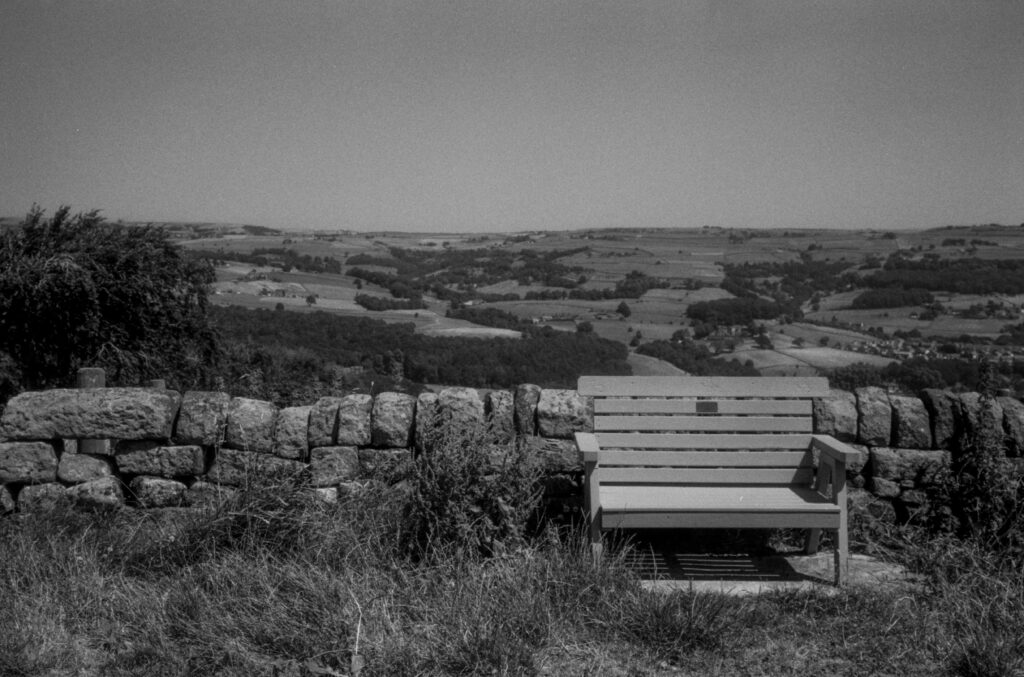

One of the perks of my job is running the schools Duke of Edinburgh Award program. That’s how I get some extra outside into my inside job. One of the perks of that is, other than hanging out with some great people getting their first real taste of the outdoors, that I have to go reccy the routes we use. On company time. Generally with a camera.
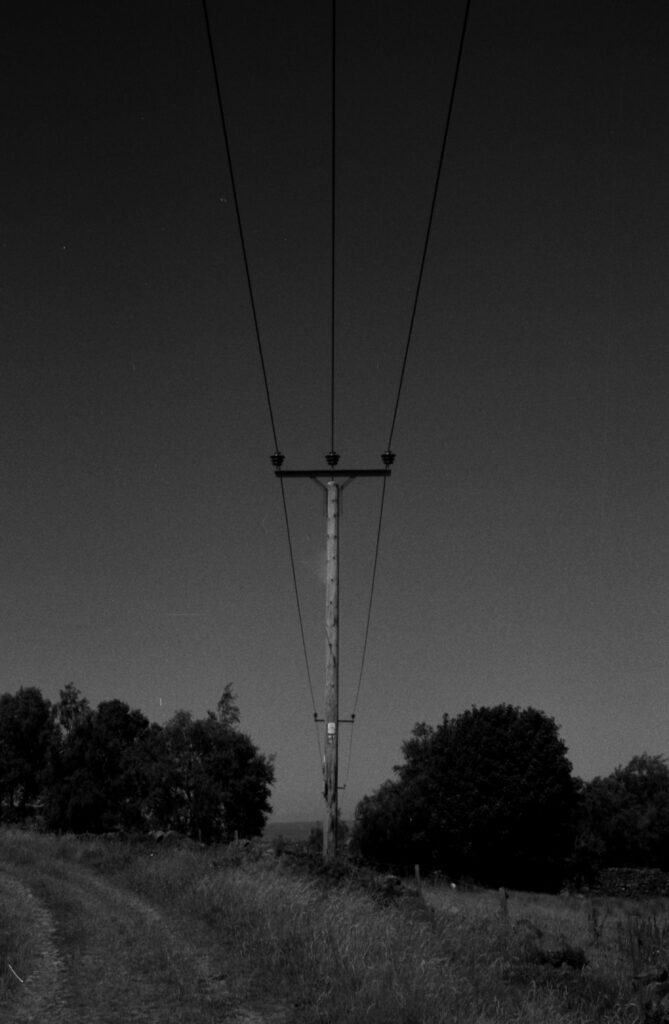

I’d opted to take my Olympus DC 35 with me. A quick twiddle with a red filter due to the intense sunlight, and I loaded some new to me Kentmere Pan 200. Yes I know it has been around for a while. But why leave HP5 and K400 when you know what they will give you back?
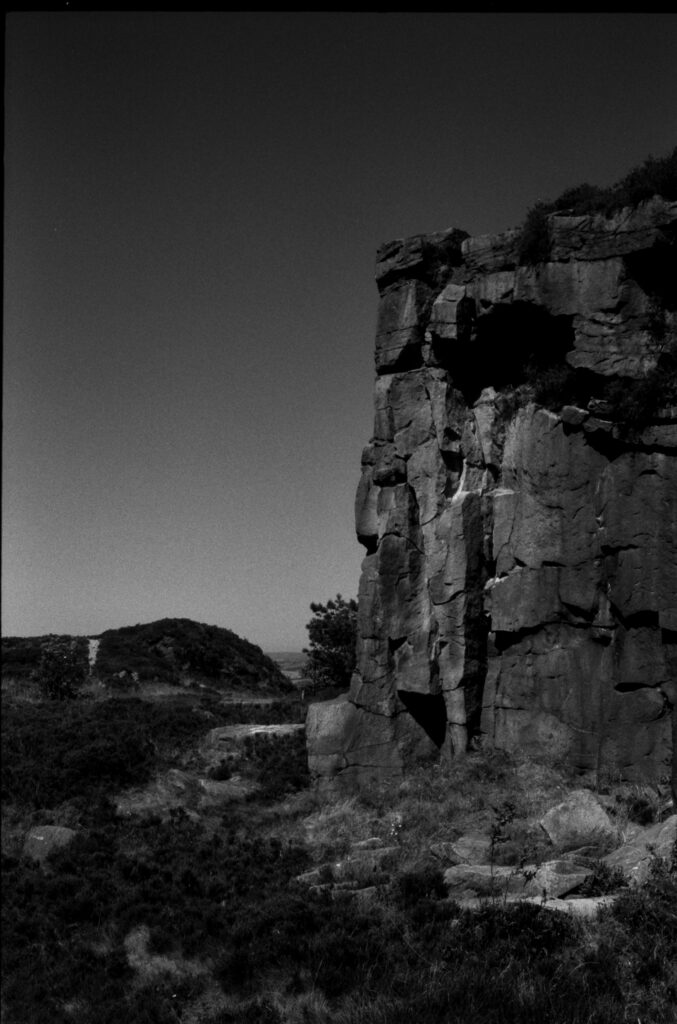

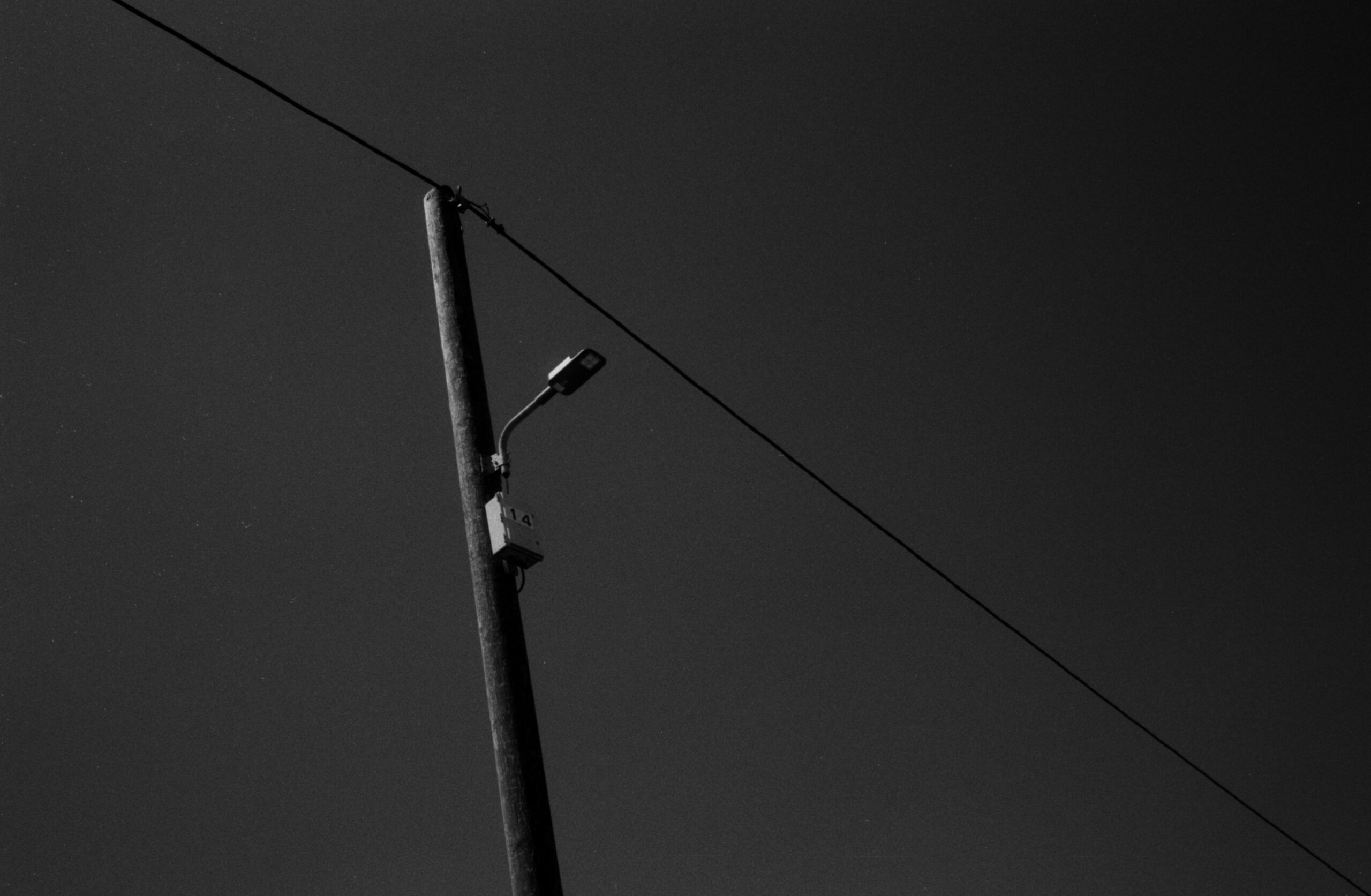
I’m not certain what I think of the Pan 200 as of yet. Grain is lower, that’s certain. But, not all of it exposed, there was a lot of retouching of the negatives needed to remove spots. An issue I never have with K400 or HP5.
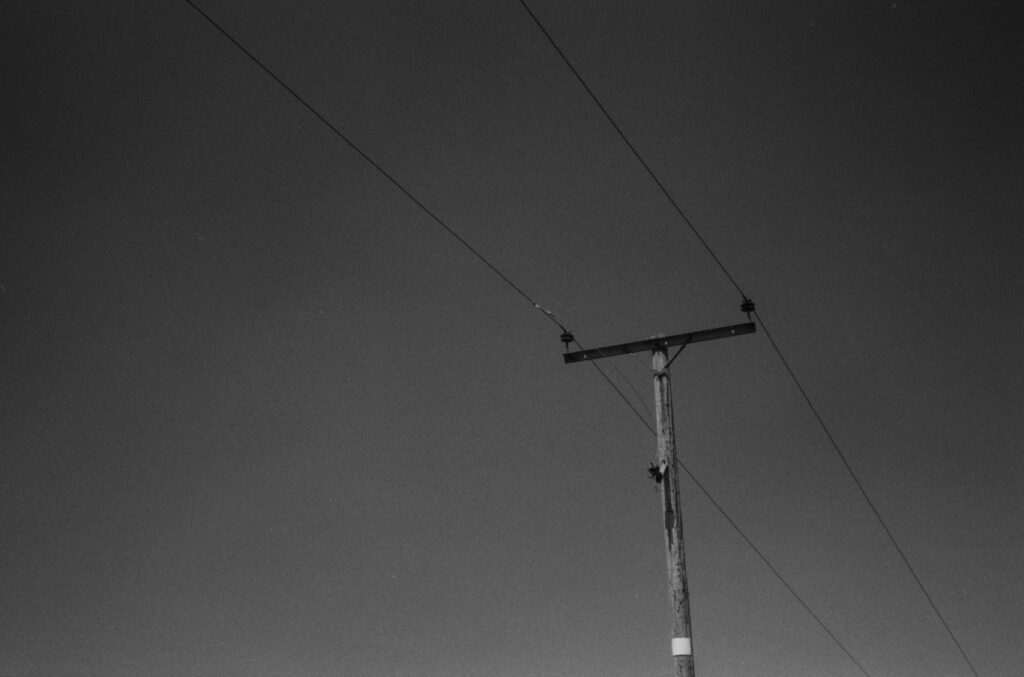

The red filter may not have been the best idea for the DC 35, I didn’t think about the light metering too much and I suspect everything was underexposed by a stop. Nothing Lr can’t fix I suppose.
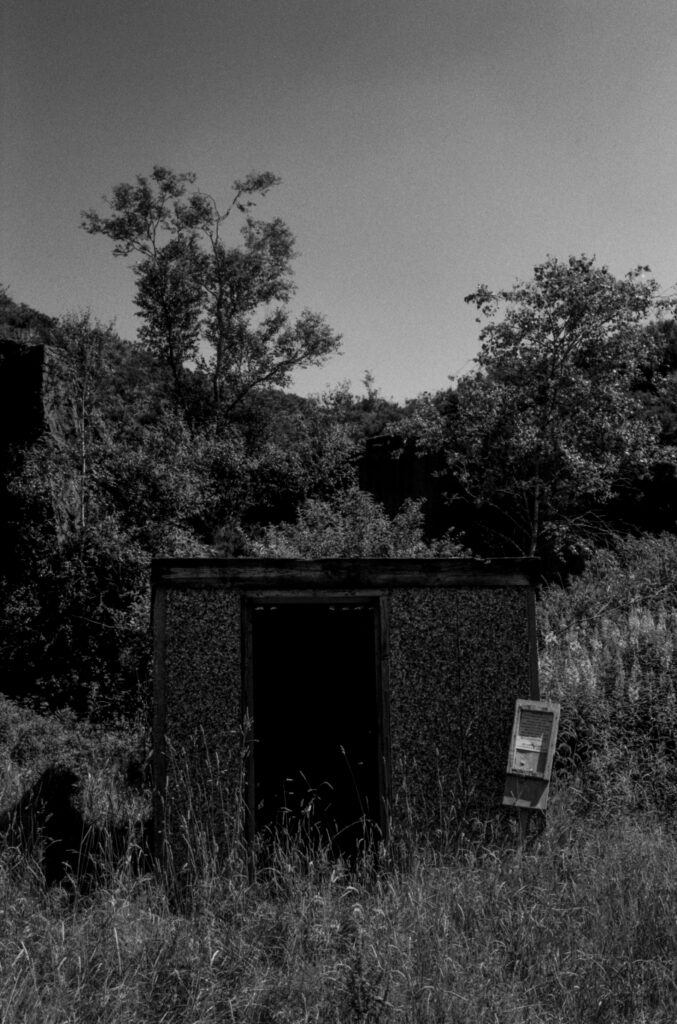

I don’t hate the look. But I think a few more rolls with a camera which meters a bit better needs to happen before I can make my mind up. Another excuse for a walk home.

Share this post:

Find more similar content on 35mmc

Use the tags below to search for more posts on related topics:

Donate to the upkeep, or contribute to 35mmc for an ad-free experience.

There are two ways to contribute to 35mmc and experience it without the adverts:

Paid Subscription – £3.99 per month and you’ll never see an advert again! (Free 3-day trial).

Subscribe here.

Content contributor – become a part of the world’s biggest film and alternative photography community blog. All our Contributors have an ad-free experience for life.

Sign up here.

Make a donation – If you would simply like to support Hamish Gill and 35mmc financially, you can also do so via ko-fi

Donate to 35mmc here.

Comments

Geoff Chaplin on Kentmere Pan 200 – A Walk Home… (A Quick Review)

Comment posted: 24/10/2026

I love the look! Probably little to do with the film: the red filter, the light, and the exposure (I won't say underexposure because the results work for me).
Reply

Leave a Reply

Your email address will not be published. Required fields are marked *

Erik Brammer replied:

Comment posted: 24/10/2026

I agree, it's a look resulting from the red filter and the conversion you have chosen, from what I can see. I also like the look. If it was meant to be lighter and brighter, have you set the black and white point? Otherwise, have you tried playing with the curve, pulling up the midtones? I would certainly be curious to see more of your photography! Thanks, Erik

Reply

Leave a Reply

Your email address will not be published. Required fields are marked *

Greg May replied:

Comment posted: 24/10/2026

Underexposure comment is interesting, I thought the camera was TTL measuring .... but now I'm not sure. I quite like the contrast, and it was a blindingly bright day, so perhaps these combined to lead it the way it is. Other rolls with the M6....have been better.

Reply

Leave a Reply

Your email address will not be published. Required fields are marked *

Greg May replied:

Comment posted: 24/10/2026

Hi Erik, yes I think the red filter was very much on the dark end! I've done nothing to the negatives bar scan and then remove the parts that did not develop. It was literally a test roll for me. I like quite a few of the images, so may rescan and go back to them with a ... meddlers brain ;)

Reply

Leave a Reply

Your email address will not be published. Required fields are marked *

Sergio Palazzi (aka @CanonF1) on Kentmere Pan 200 – A Walk Home… (A Quick Review)

Comment posted: 24/10/2026

Greetings from this chemistry high school teacher (frome a more urban environment). I'm not in love with K200, while K400 in many situations can be a substitute for the best film for me, HP5. Probably, it needs both a little more exposure and a little harder developer? Enjoy the walk!
Reply

Leave a Reply

Your email address will not be published. Required fields are marked *

Greg May replied:

Comment posted: 24/10/2026

Hello Sergio, and thanks for the comment. K400 is a go to film stock for me, so I'd hoped to get something similar for the summer months which would still let me shoot with a shallow DOF.... not so much the outcome sadly.

Reply

Leave a Reply

Your email address will not be published. Required fields are marked *

David Rusling on Kentmere Pan 200 – A Walk Home… (A Quick Review)

Comment posted: 24/10/2026

I've shot Kentmere 200 several times and I like, although I have to tweak it to get more contrast into it. Mind you, I really like Kodak Tri-X and its contrast. I develop it myself and it gives reliable results. I usually shot it with a yellow filter but none of my photographs look as dark as yours, so, you may be right about under exposing it.

By the way, where's the countryside? I live in Derbyshire and it looks similar, but I don't recognise the locations..
Reply

Leave a Reply

Your email address will not be published. Required fields are marked *

Greg May replied:

Comment posted: 24/10/2026

Hi David, it's around West Yorkshire - Sowerby Bridge area to be precisce, so very similar terrain. I think I went to deep on the filter, I am going to try and shoot a roll with an orange filter next time we get a bright day (so maybe March 2027) and see what it brings. Tri-X.... I've 4 rolls sitting in the fridge with its friend HP5 for later in the year. Both are favourites of mine.

Reply

Leave a Reply

Your email address will not be published. Required fields are marked *

Bob Janes on Kentmere Pan 200 – A Walk Home… (A Quick Review)

Comment posted: 24/10/2026

What sort of developing times were you using? My go-to app still hasnt got much in the way of Kentmere 200 timings. As a rule of thumb I've started to develop as if it was K100 pulled one and one third stops although I've also used K400 times pulled by two stops.
Reply

Leave a Reply

Your email address will not be published. Required fields are marked *

Greg May replied:

Comment posted: 24/10/2026

Hi Bob, IIRC I used 14 mins with Ifosol 3. I'd have to go check notes! It was all I had to hand at the time. Any idea what time you were using? And with what?

Reply

Leave a Reply

Your email address will not be published. Required fields are marked *

Bob Janes replied:

Comment posted: 24/10/2026

I think I over-developed to begin with. I've tended to use Fomadon R09. My go-to app gives a time of 7:30 for Ifosol 3 at 1:14 concentration at 20 degrees.

Reply

Leave a Reply

Your email address will not be published. Required fields are marked *

Greg May replied:

Comment posted: 24/10/2026

Hi Bob, not sure I agree - other rolls, no red filter, that I went with have been fine!

Reply

Leave a Reply

Your email address will not be published. Required fields are marked *

Walter Reumkens on Kentmere Pan 200 – A Walk Home… (A Quick Review)

Comment posted: 24/10/2026

As far as I am aware, the Olympus DC 35 is a fully automatic camera; on some models, the exposure metering can be restricted to the rangefinder field. This would have been advisable for these subjects, as the exposure needs to be set for the shadows. Otherwise, the image can easily become underexposed, which cannot be corrected retrospectively during image processing when using film. I have the RC35, which also offers a fully manual mode; I would use this as an alternative for such subjects, in conjunction with an external light meter fitted with an Invercone. Thank you for sharing the article and the photos – I really like the shots, Greg.
Reply

Leave a Reply

Your email address will not be published. Required fields are marked *

Greg May replied:

Comment posted: 24/10/2026

Hi Walter, now that is interesting... I'd assumed it was TTL as my other rangefinders are. That would explain a lot! I've since shot some P200 with my M6 and the red filter and they turned out quite well. Thanks for the tips!

Reply

Leave a Reply

Your email address will not be published. Required fields are marked *

Gary Smith on Kentmere Pan 200 – A Walk Home… (A Quick Review)

Comment posted: 24/10/2026

I guess that I'm a Luddite. In all of my years shooting b&w film, I have never used a color filter. Back when I started there was usually a UV filter on the 50/1.4 on the FTb and I used a CP for a while on a couple of my digitals. Your examples are too dark for my taste and would have benefitted from some adjustments during post (again, in my opinion). The good news is that you were shooting for you and not for me.
Reply

Leave a Reply

Your email address will not be published. Required fields are marked *

Jeffery Luhn replied:

Comment posted: 24/10/2026

Gary, You have a lot to look forward to with filters!! Start with yellow!

Reply

Leave a Reply

Your email address will not be published. Required fields are marked *

Greg May replied:

Comment posted: 24/10/2026

Hi Gary, no worries at all. Unless you were a client I always shoot for myself ;)

Reply

Leave a Reply

Your email address will not be published. Required fields are marked *

Jeffery Luhn on Kentmere Pan 200 – A Walk Home… (A Quick Review)

Comment posted: 25/10/2026

Hi Greg,
These images are nicely composed, but very dark on my screens. I use filters often, mostly one stop like yellow and yellow green. The deep green and the 25a red are at least two stops. I find that Kentmore 400 requires 2 1/2 stops more light with the 25A red. I was unimpressed by Kentmore 200, but get on with the 400 quite well. I know this is odd, but the 200 rolls I had had streaks, spots, and more grain than the K 400. I used Hc-110 dilution B. My fav is HP5+ in HC-110 Dilution B or Rodinal 1:25 for medium format. What developer did you use?
Reply

Leave a Reply

Your email address will not be published. Required fields are marked *

Greg May replied:

Comment posted: 25/10/2026

Hi Jeffery, it's interesting ...in Lr they are not as dark, so I am also thinking something to do with the exporting. I used the only thing left in the house which was some Ilfosol 3, though I think my assumption that I was TTL measuring light may be the end culprit.

Reply

Leave a Reply

Your email address will not be published. Required fields are marked *

Paul Quellin on Kentmere Pan 200 – A Walk Home… (A Quick Review)

Comment posted: 26/10/2026

I like these images, though there is underexposure. I think it might be the K200 as well as metering. I have found it seems to like a bit more exposure than the box speed, but that might also be development times. There were some rather varying suggestions when it first appeared. I now tend to go with what Massive Dev chart has for it, but I start the timer after I have poured and I don't rush at the end of the time, so it's probably accruing another 30 seconds or so. I have a rather old Mamiya 6 with a little haziness in the lens coating; Kentmere 200 suits it rather well as the glass tends to lower the contrast a bit and it softens the contrasty look this film can have. Thank you
Reply

Leave a Reply

Your email address will not be published. Required fields are marked *

Greg May replied:

Comment posted: 26/10/2026

Hi Paul, thanks for the comment. I have a roll in my Yashica A at the moment and am looking forward to seeing how that has worked out. I think the underexposure was due to my brain assuming it was metering TTL. It was the first time I'd used the DC35 with a red filter...and it was probably way too much.

Reply

Leave a Reply

Your email address will not be published. Required fields are marked *

Tony Warren on Kentmere Pan 200 – A Walk Home… (A Quick Review)

Comment posted: 26/10/2026

That's a nice sideline to have Greg. If your unhappy with the metering, it looks to me that your meter is suffering nothing more than an imbalance in sensitivity with your red filter. Cds meters of the period were known to underexpose through a red or orange filter and your camera has the filter covering the meter cell. Simply downrating the film speed when using the red filter will bring exposures back to where they should be. One or two stops maybe. ASA 50 or 100 instead of 200. A downside of the well intentioned attempt to simplify things by not having to apply filter factors manually.
Reply

Leave a Reply

Your email address will not be published. Required fields are marked *

Greg May replied:

Comment posted: 26/10/2026

Hi Tony, I won't lie, the freelance work is less than it was, family takes up time I'd rather not spend on another persons duty. I think you may be correct on the meter cell - it's fine without a filter. Perhaps I drop to ISO 100 and try again?

Reply

Leave a Reply

Your email address will not be published. Required fields are marked *

Walter Reumkens on Kentmere Pan 200 – A Walk Home… (A Quick Review)

Comment posted: 26/10/2026

Greg, your reply to my comment has given me food for thought. I’d written my comment in German and then had it translated automatically. As I’ve discovered, this very often leads to mistakes. So I’ve done some more research:

"The Olympus 35 DC measures the light passing through the lens (TTL) – though not in the same way as modern SLRs, but via a CdS cell situated behind the lens. This means that all light passing through the front lens – and thus through the filter – strikes the CdS light-metering cell in exactly the same way, directly influencing the exposure measurement. As a result, every filter – UV, yellow, orange, ND, warm/cool – is automatically taken into account in the measurement."

I don’t know anything about the range of the exposure meter. That’s why I prefer to work in manual mode and take the reading with an external light meter. After all, black-and-white negative film needs to be exposed for the shadows. I believe the camera has a backlight button. You can see the CDS sensor to the left of the lens when you look at the camera.
Reply

Leave a Reply

Your email address will not be published. Required fields are marked *

Greg May replied:

Comment posted: 26/10/2026

Danke Walter, mein Deutsch ist heutzutage echt mies, aber ich stimme zu – Übersetzungen geben nicht immer den eigentlichen Sinn wieder. However I think you are correct - it is a TTL, but Tony has suggested it is quite poor with a red/orange filter. It is interesting, I have an old DC35 which I destroyed with a beer related accident... it was excellent with a red filter! So perhaps my "new" DC 35 is the problem itself.

Reply

Leave a Reply

Your email address will not be published. Required fields are marked *

Art Meripol on Kentmere Pan 200 – A Walk Home… (A Quick Review)

Comment posted: 27/10/2026

Your 'commute' sounds like a delight. Or would be most days. I'm sure there are 'those' days too. But the time spent inside your mind and viewfinder would be a gift. I love 35mmc for all the great information like the comments here offer. So much good stuff on film, filters and development.
Wonderful post Greg.
Reply

Leave a Reply

Your email address will not be published. Required fields are marked *

Greg May replied:

Comment posted: 27/10/2026

I am lucky with where I have chosen to work for certain. To be able to walk/run/cycle home.... I know how much joy this can bring.

Reply

Leave a Reply

Your email address will not be published. Required fields are marked *

Leave a Comment

Leave a Reply

Your email address will not be published. Required fields are marked *