


Sometimes I need to work on a story or story-elements that don’t occur in optimal conditions, whether that means light or access or other conditions. Weather doesn’t need to be on my side, and I have frequently been on assignment in the rain, especially in London and across the UK where it seems water is a reality to be navigated rather than an obstacle to somehow avoid. I bought a waterproof phone at the first chance I could, but cameras have only recently started to catch up with decent IP ratings, and my solution for day-to-day use, as with many around me, seems to be a simple plastic bag.
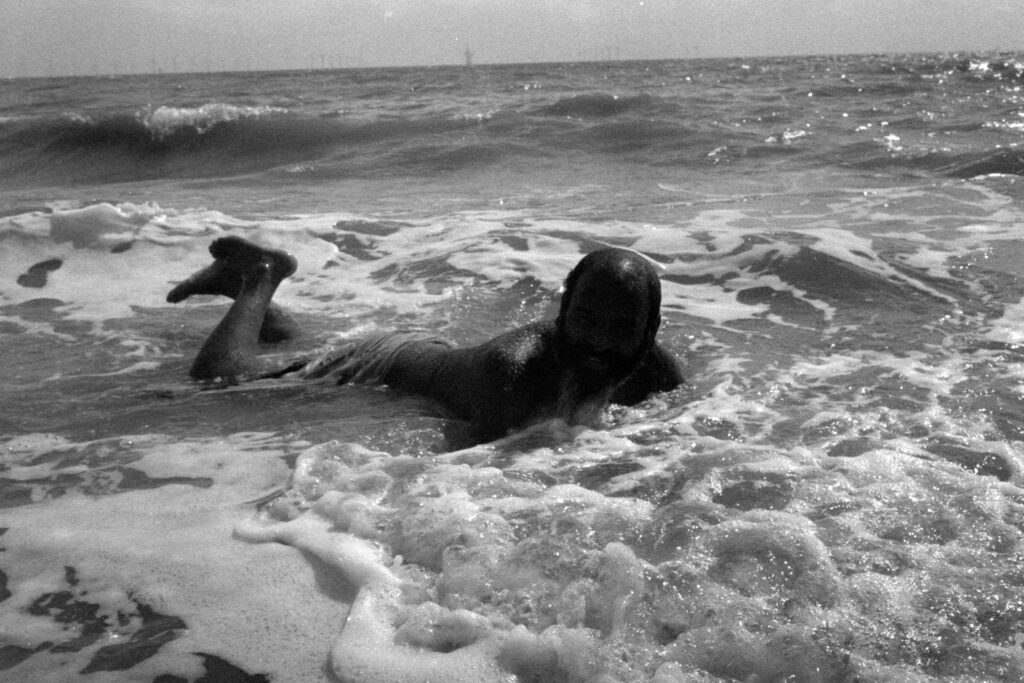
It isn’t often that I need to be fully immersed, requiring a fully waterproof setup to be submerged not just rained on. Maybe a couple of times a year, for the sake of a handful of images that may or may not make it into two stories. Nonetheless, I found my “land” cameras to not quite offer me what I needed the last time I worked in this environment; in 2023 I waded out into the ocean carrying a Nikon F4 and L35AW AF which gave me usable images, but ultimately were compromises compared against the potential I saw by eye. I simply wasn’t able to work the way I needed to to get the photographs I knew were possible in this environment.
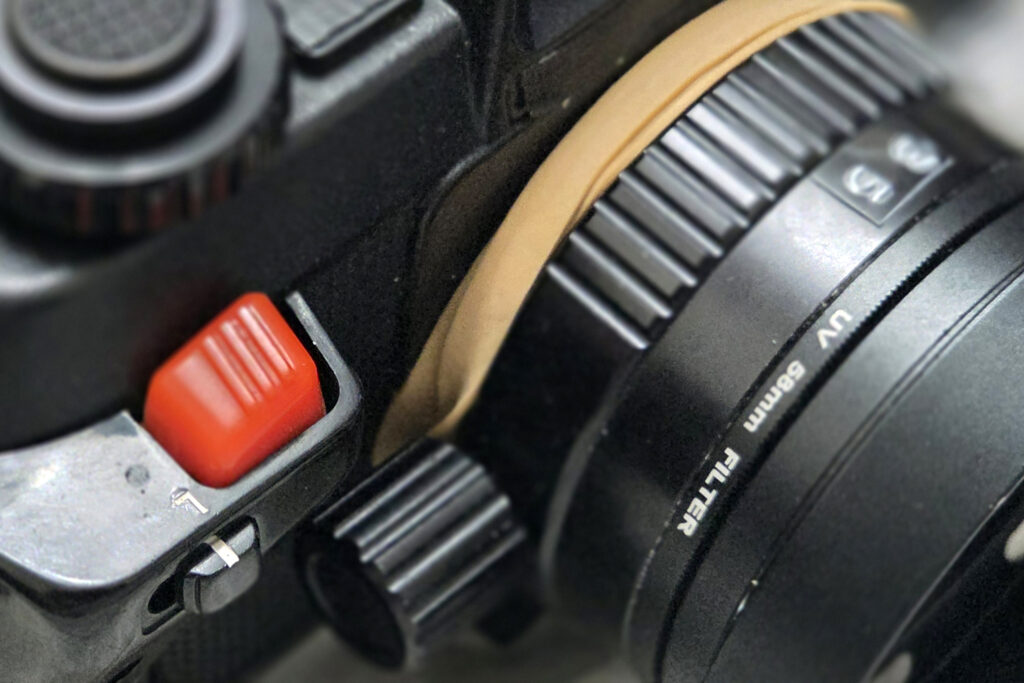
My commitment to this project is enough to justify specific gear purchases, and something from the Nikonos lineup was the obvious solution. Aside from the obvious benefits of a fully sealed system with lenses that can be used both in and out of the water, my main reservation was the focusing technique. Rangefinder or SLR I rely on fine tuning my focus in order to nail sharpness on my subject, and the Nikonos does not have a coupled focusing system, or anything visible for feedback whatsoever to know that what you want in focus is in focus. Instead the closest comparison to me is my Rollei 35 which works out more or less identically when it comes to focus, ie guesstimating distance and using that measurement paired with hopefully deep depth of field to roughly achieve general focus, but never a true critical achievement.
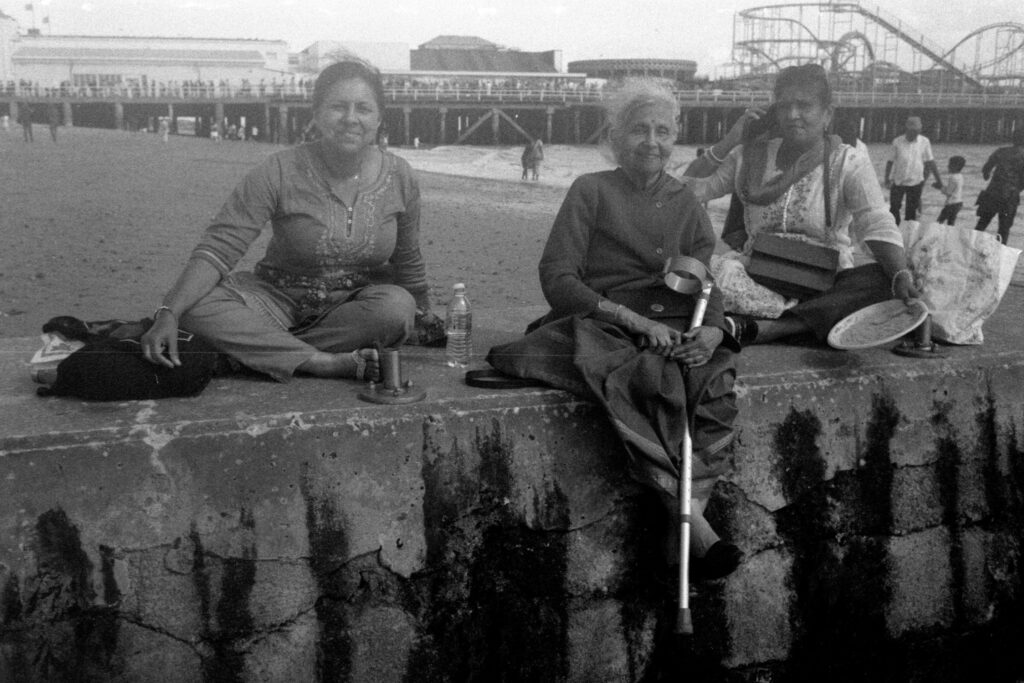
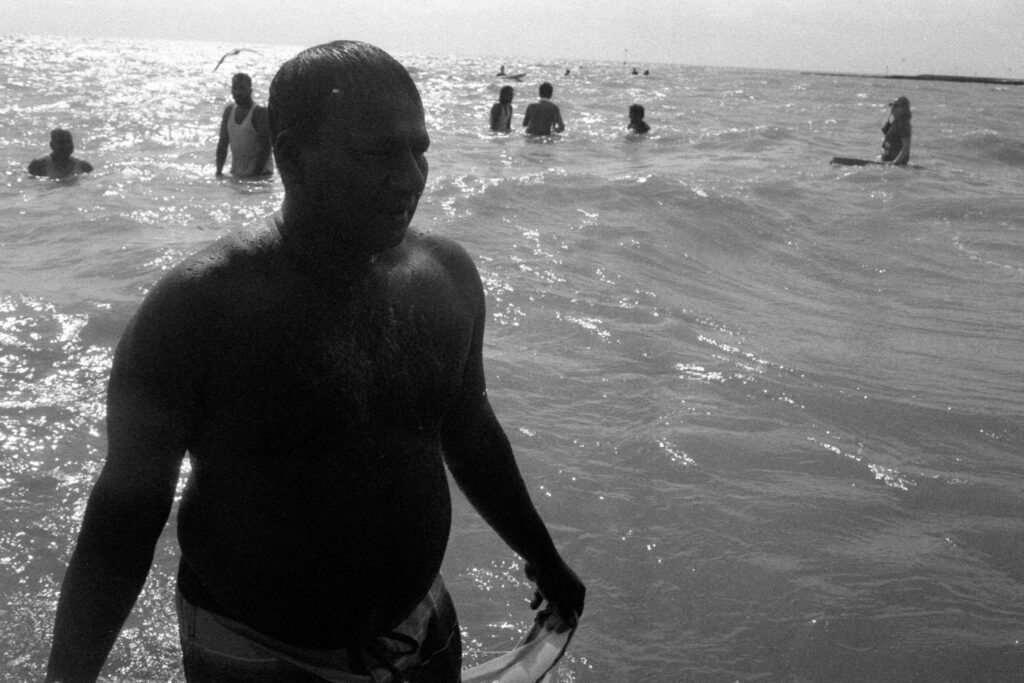
The system is flawlessly implemented, with a moving aperture range readout on the front of the lens, which makes things a little simpler, and I spent some time beforehand measuring distances in my room in order to get a better sense of what was beyond 2 meters from me (within this distance I am already somewhat okay at guessing). I bulk loaded some Delta 400, which would give me ideal depth of field ranges to work at f/16, and occasionally drop down to f/22, however the day did not see me load any of these – instead I shot a roll of HP5+ and FP4 517 Cine in that order.
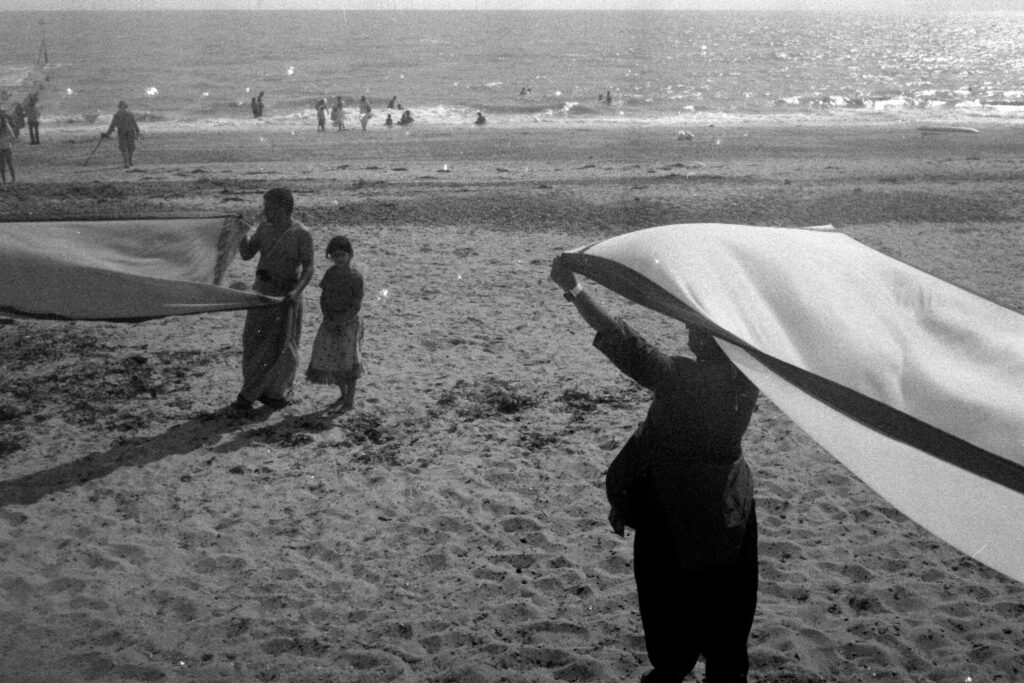
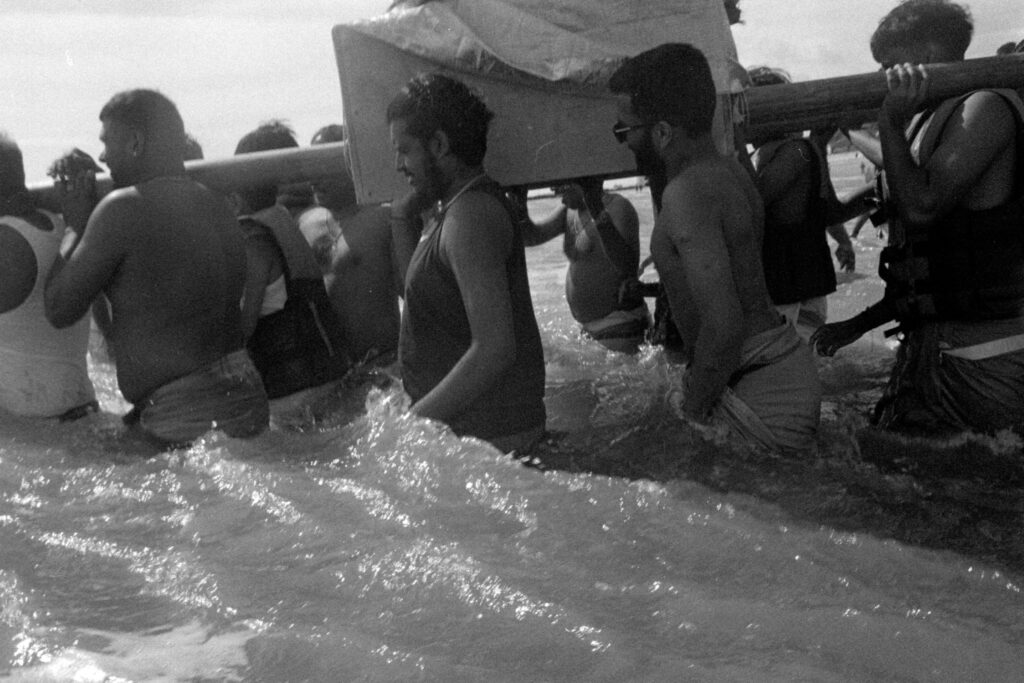
I made sure the camera was water-tight by leaving it in the filled sink overnight, and checking the internals the following morning – hardly scientific but enough to reassure me. I also checked the O-rings and made sure they were not degraded. I attached some waterproof film containers to the strap, intending to use these while out int he ocean for a fast reload, but I ended up over-tightening the lids and not being able to open them with wet hands, so had to return to shore when I finished the HP5+.
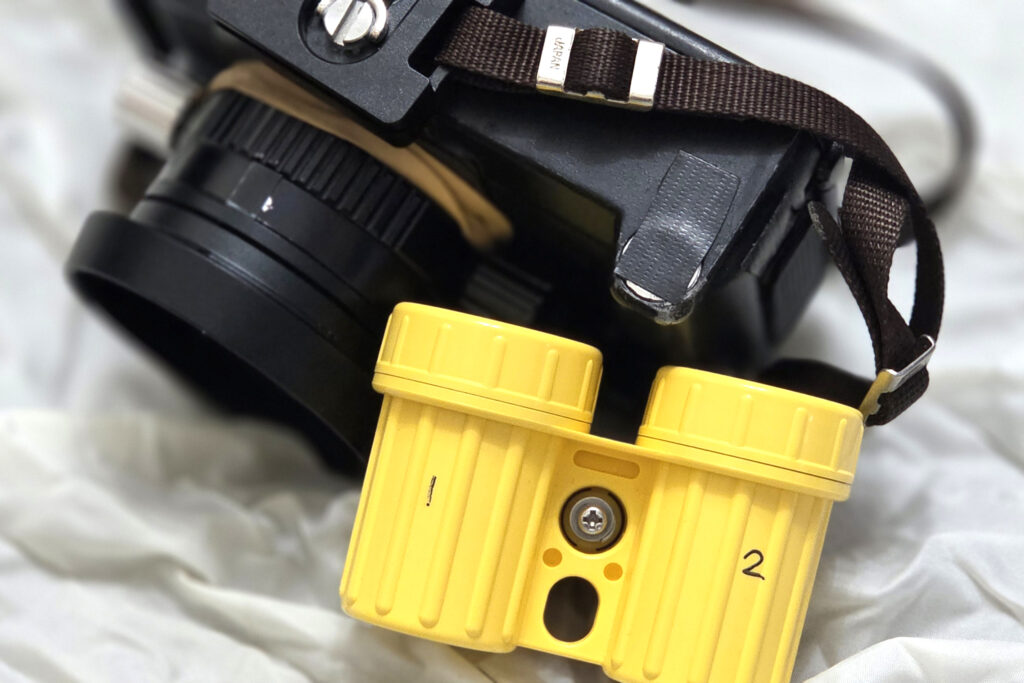
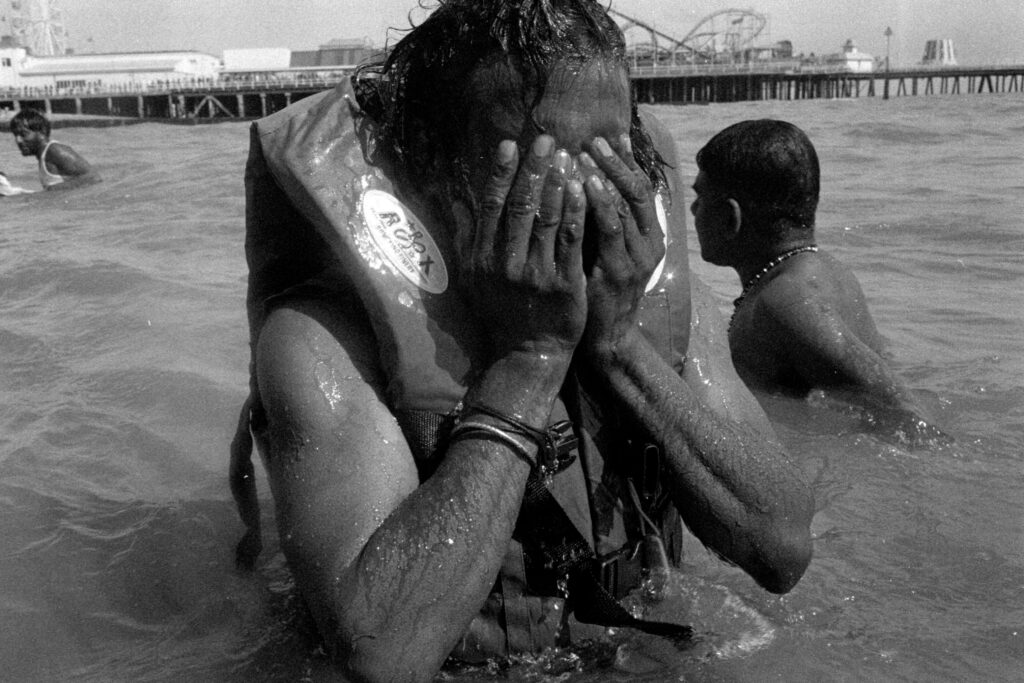
I think I would have come to dry land to reload in any case, the water was choppy and at points I needed to concentrate on staying afloat or standing over prioritising my photography.
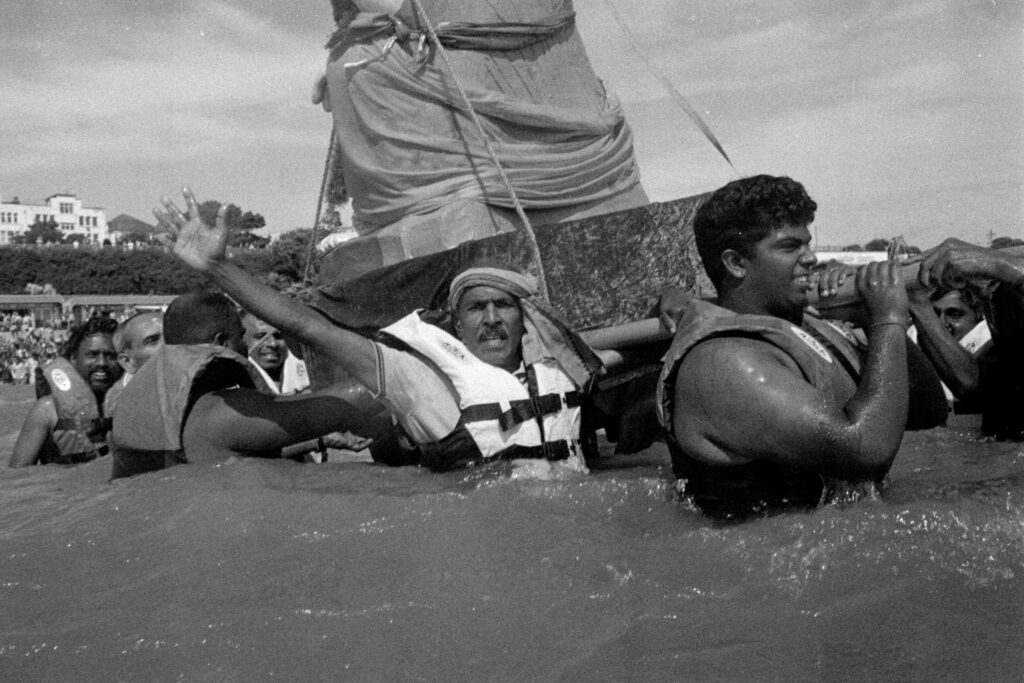
On the reload I made a mistake I’ve made before, when in a rush forgetting to change the ISO setting on the camera, and as an automatic machine this meant underexposure by two stops – the dial stayed at 400 with a 100 speed film freshly loaded. I compensated in the development, making this my first deliberately pushed roll of 517 Cine, with a formula of 5ml Ilfotec HC and 295ml water, agitation for the first minute and then a gentle agitation after 30 mins, then again after another 30, and then a final 30 min rest before a water stop rinse and regular fix.
I’m pleased with the results from this, although I would of course prefer to have my intended 100 at 100 exposures, but for correcting my mistake it’s going to be a compromise. Most of my images across both rolls are a little underexposed to my eye as a result of the strong backlight conditions, reflections from the water, and overall brighter conditions against darker subjects. Next time I do this I will ensure to use only Delta 400 and expose them at 200, relying on that extra stop to give me the shadow and subject detail I lacked this time around.
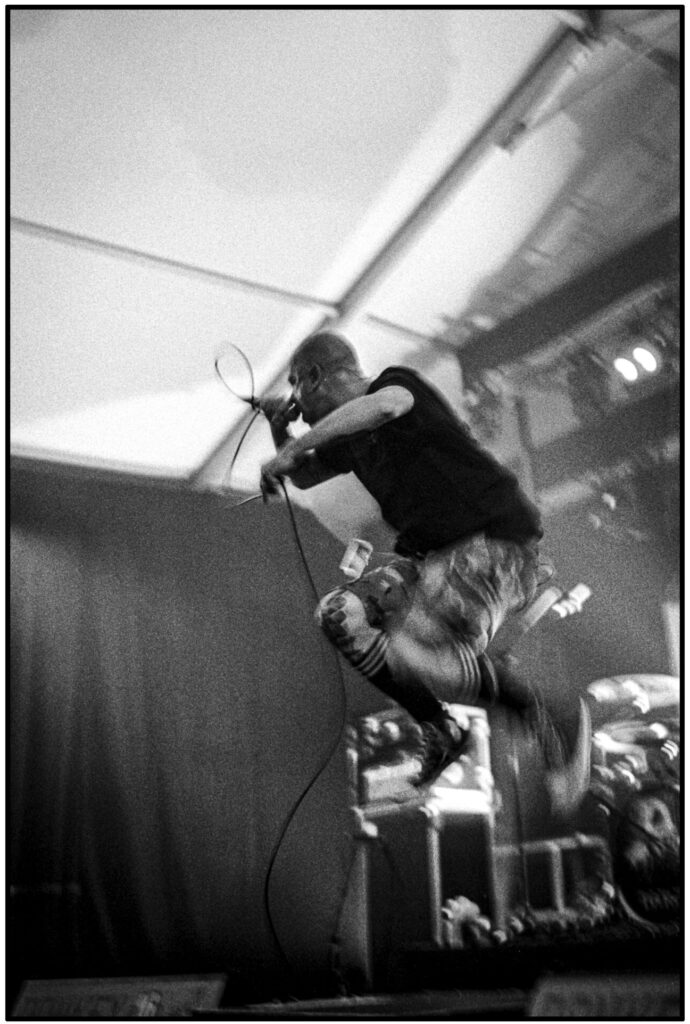
The photograph at the conclusion of this article was taken on a Leica Q(2/3?) and you can see from how much brighter the sea and sky are in that what would be necessary to make a more appropriate and clear exposure in these conditions.
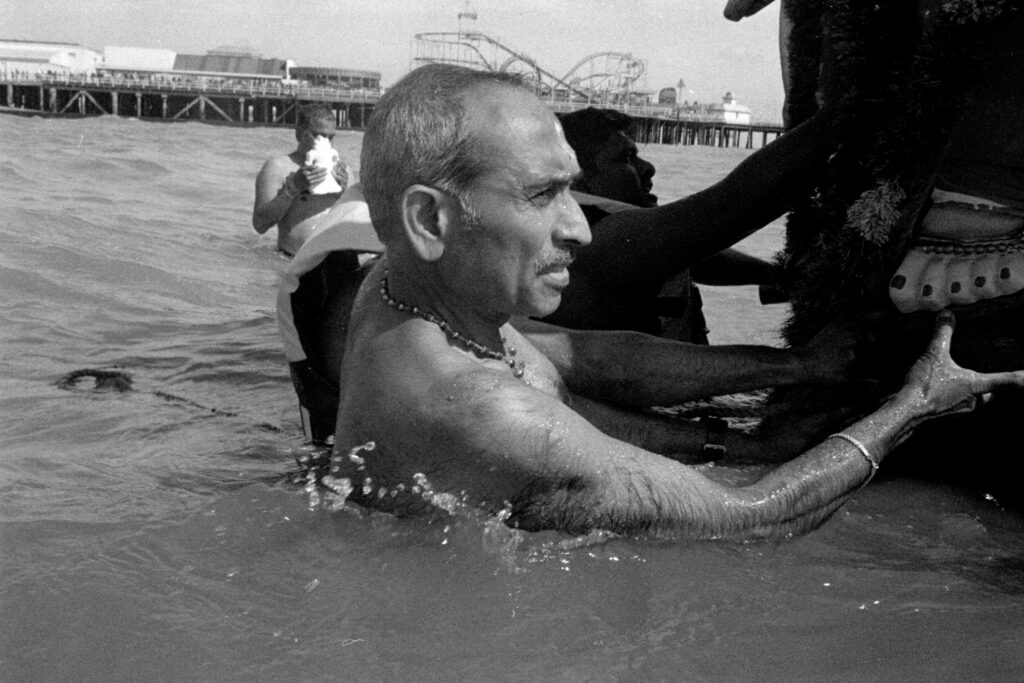
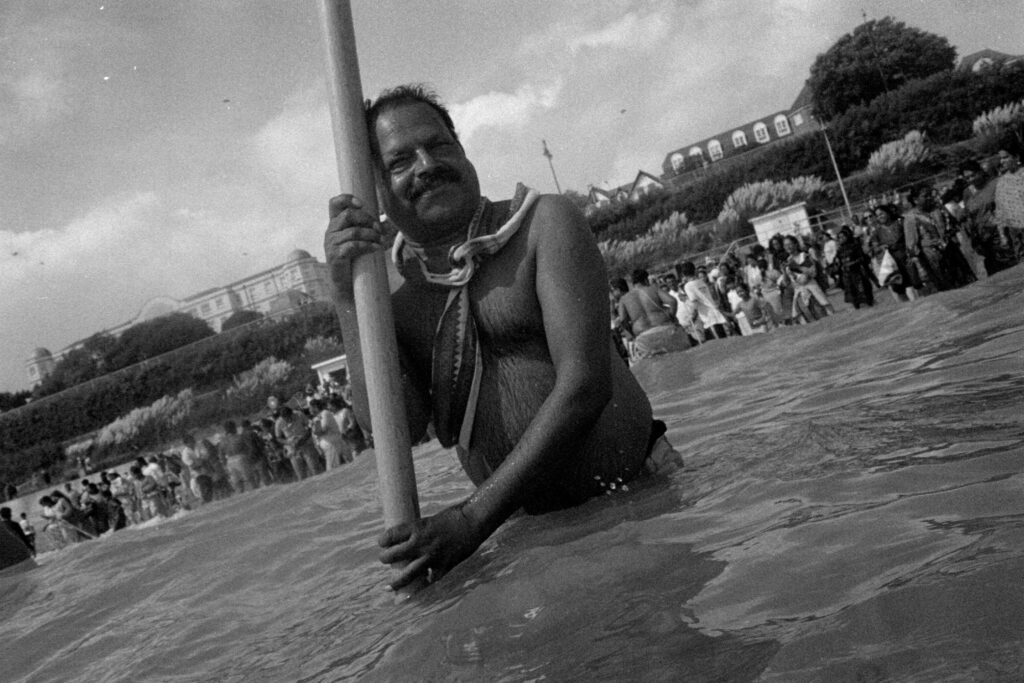
Focusing turned out as good as I could hope for, with no missed focus across any of my 72 frames. I mostly left it at a critical reading of 2 meters, which game me a range up to around 5 to be working with, but stayed close enough to the people I was photographing to make sure they were in focus. For portraits I would quickly shift to around 1m to the closest focus of 0.7m which took a little longer than I’d prefer having to check the front to make sure I was doing everything correctly. This also gave me a lot of video of the sky any my own face I needed to edit out, as my GoPro was attached to the tripod screw mount via an arca swiss plate.
This isn’t an “underwater” situation as some may use it, such as diving for marine photography, but there were several points where I was submerged entirely, including one point where I tripped and ended up floundering for a few seconds, both Nikonos and GoPro were underwater for as long as I was.
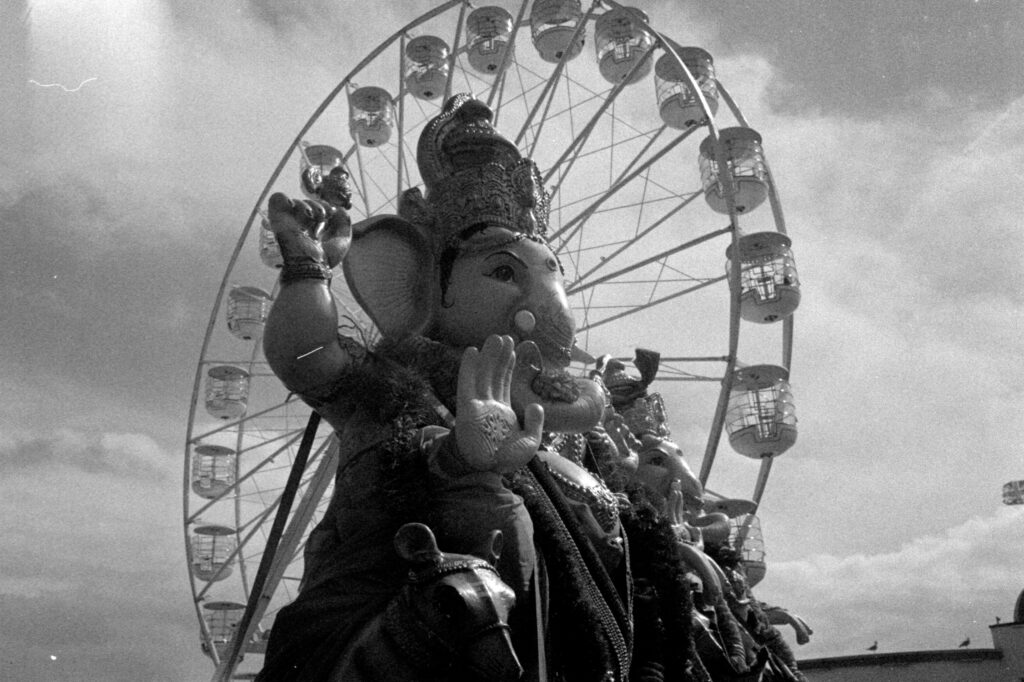
On a review of my images I think the 35mm worked out well, but I would like to go a little wider. Unfortunately the 20mm Nikonos lens is underwater only, and will not give a focused image without it as it accounts for refraction to behave as a true front element. I own the 85mm which is much trickier to zone focus, but which will definitely come in useful at some point in the future. As it is, all images in this article and that you’re likely to see from this camera from my use is made with the 35mm lens.
A few images had marks from where water splashed on the lens, so I’ll need to figure out a way to keep a cloth dry for the occasional wipe down as and when its needed next time I’m working this.
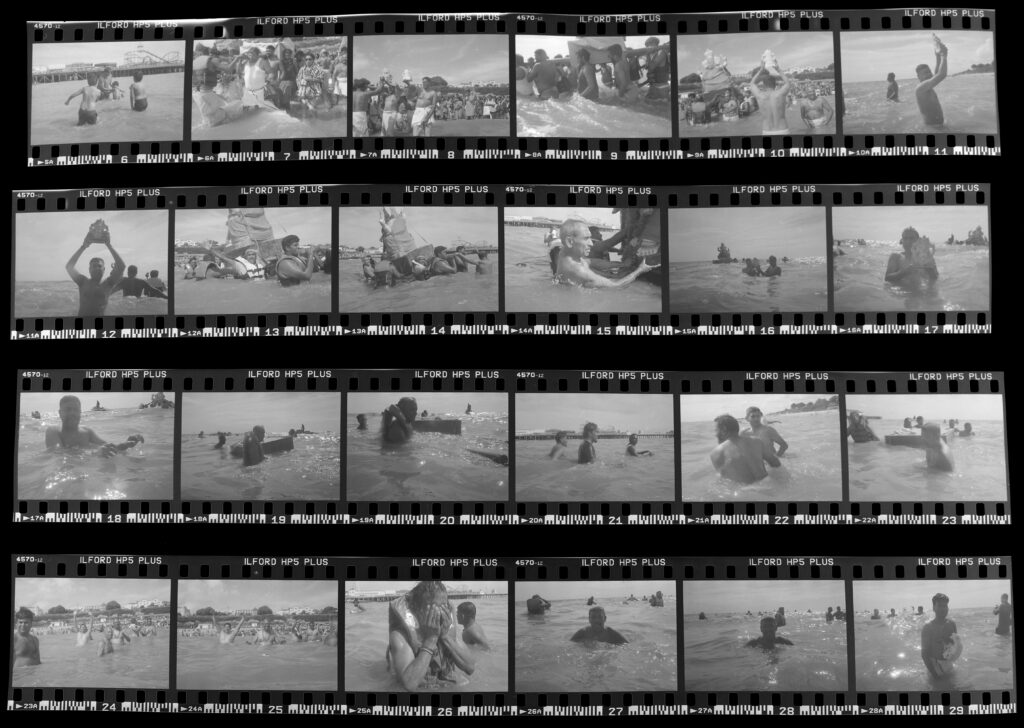
I think even if this is the only situation where this camera comes in useful (and I know it won’t be) it was worth it for that extra usability over my previous combination which left me hesitating and uncertain moving through the waves. I want gear to be out of my mind entirely so I can focus on what is happening in front of me, and in the water my Nikonos offers exactly that, if nothing else.
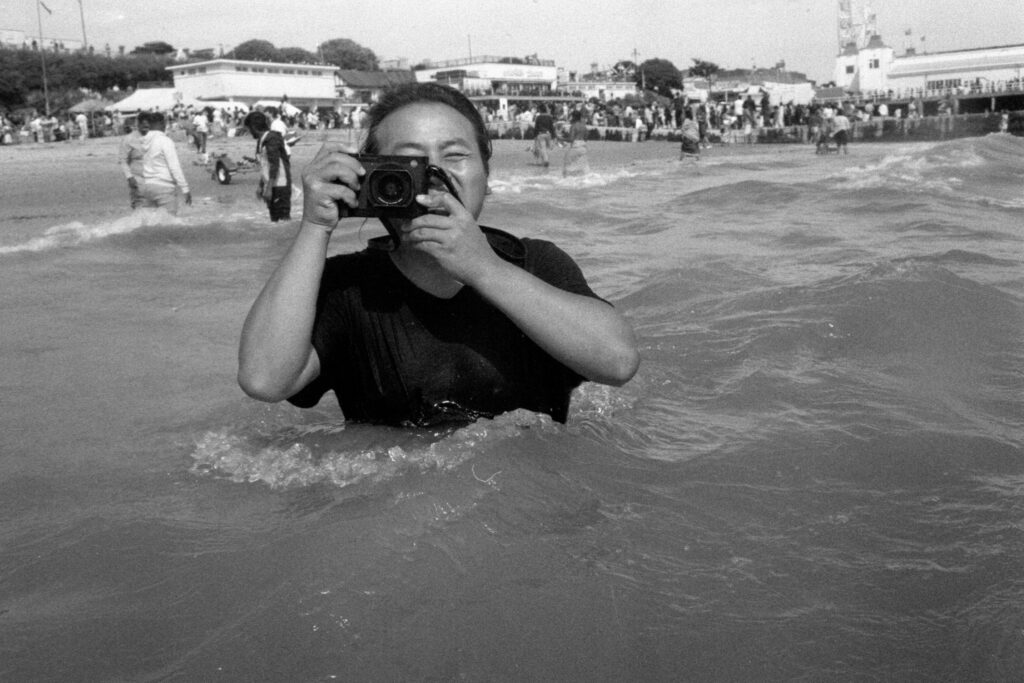
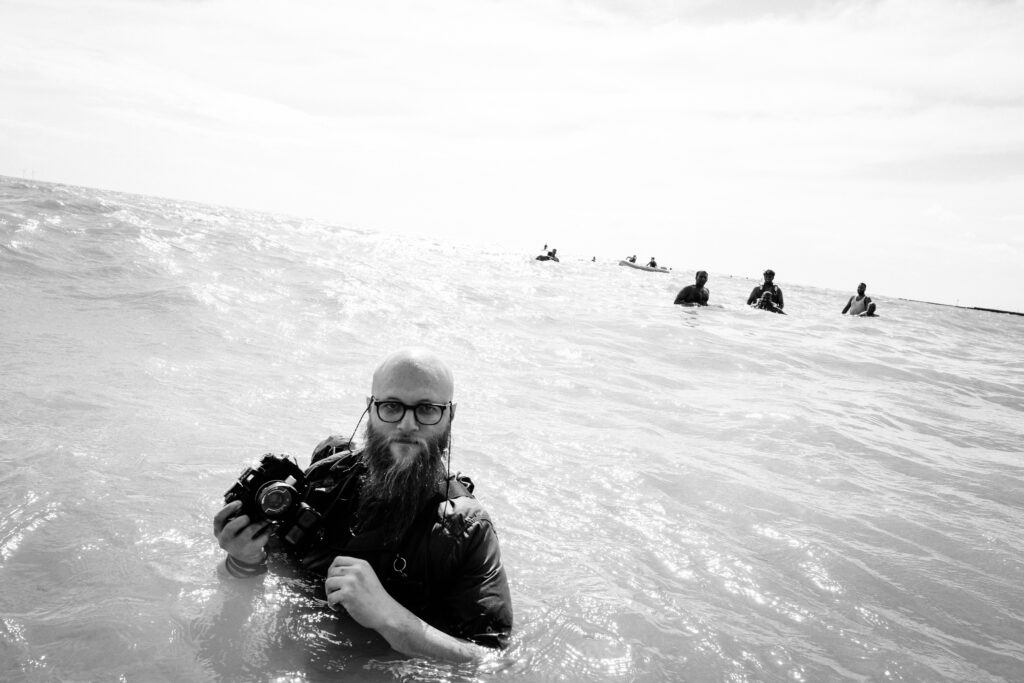
Above, my photograph of Le, photographing me photographing him. Below, Le’s photograph of me a couple of seconds prior (or possibly after, I forget!). I haven’t yet seen the rest of his photographs from the day, but he is one of the best photographers I am lucky enough to know at the moment, so I am certain they will be outstanding. You should absolutely spend some time looking at his work!
Thanks for reading! I hope you enjoyed my photographs, and maybe the video if you stopped to watch it! This was a lot of fun to write, and helped clarify my thoughts on both the camera gear and my approach to this particular story, as much of my writing often does. I have many articles published on this website going back nearly a decade at this point, as well as on my own blog.
I buy most of my film from Analogue Wonderland.
Share this post:


Comments
Ben Mackey on Nikonos IV-a for Documentary Photography
Comment posted: 11/11/2025
For me, the contact sheet provides a wonderful feeling of how the event evolved around you while you covered it.
Comment posted: 11/11/2025
Adrian Riu on Nikonos IV-a for Documentary Photography
Comment posted: 11/11/2025
For others who might be considering using these amphibious cameras mostly above water, it is worth noting that the Nikonos IV-A and the Nikonos V have a "bottom-center-weighted" exposure metering pattern that Nikon engineers thought would be superior to a simple center-weighted for underwater subjects. This is usually only a concern if using the camera in portrait orientation.
Eric Rose on Nikonos IV-a for Documentary Photography
Comment posted: 12/11/2025
Comment posted: 12/11/2025
Jeffery Luhn on Nikonos IV-a for Documentary Photography
Comment posted: 12/11/2025
Thanks for this article. I enjoyed the photos and text. The timing was good, because a friend just gave me two Nikonos V bodies and several lenses, including a 15mm. I teach photography at a college in the mountains of California and these cameras seem perfect for loaning to students for taking into the snow and on rafting trips.
Jeffery
Comment posted: 12/11/2025