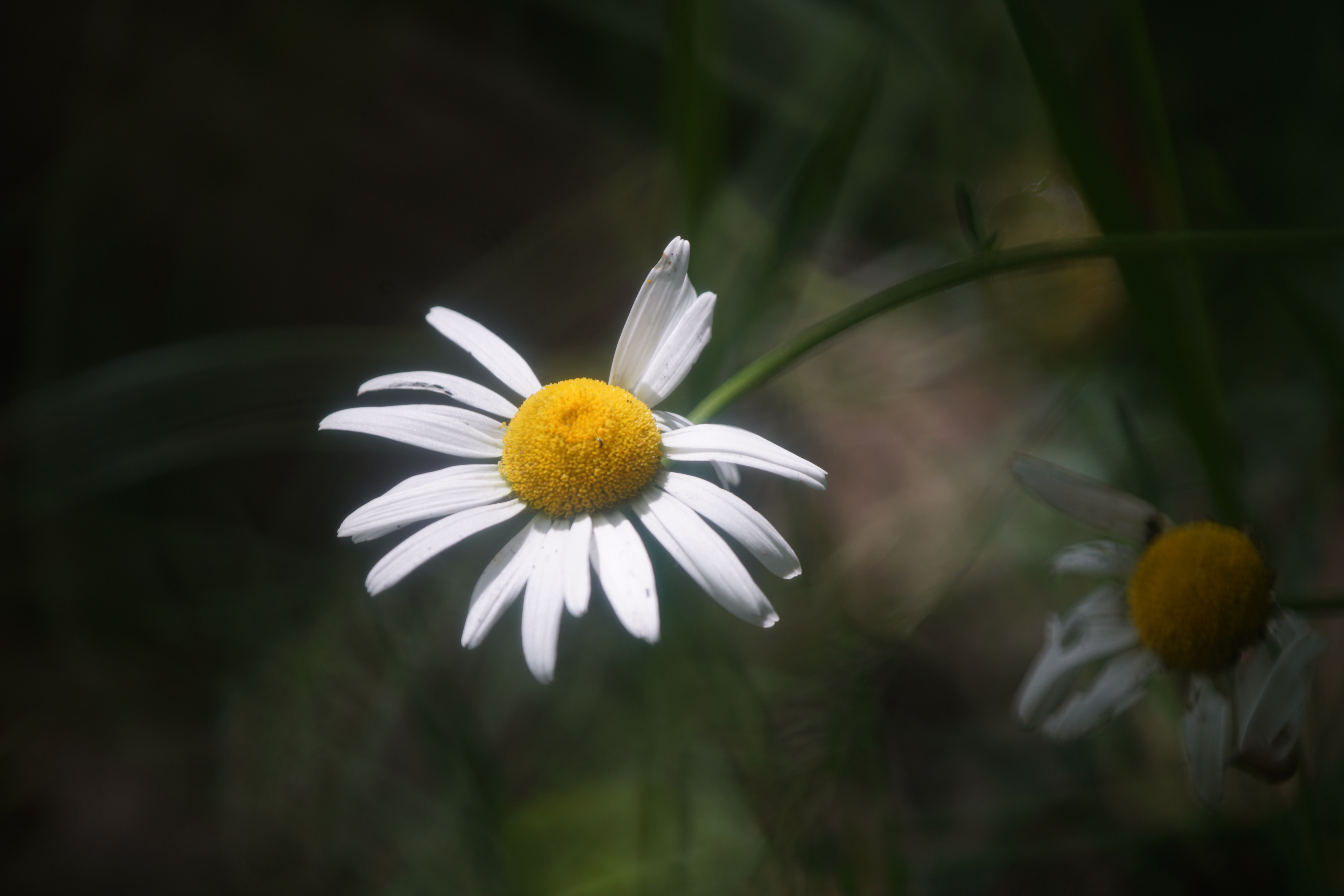
Tamron 500 SP

Jupiter 8 and Tamron 500 SP – Two cheap lenses

By Geoff Chaplin

No, I’m not a flower photographer, and this isn’t a review, merely my thoughts after a few hours playing with two second-hand lenses costing about ₤40/€45/$50 each. Specifically a Russian Jupiter 8 50mm f2 Sonnar design lens, bought “new old stock” and in mint condition, and a Tamron 500mm f8 SP lens, mechanically mint but with internal fungus on the optical components.

I used the lenses on my wife’s Sony A7Rii, and I’ll have a whinge about that later. If using IS remember to set the focal length of the lens manually in the IS settings. Images shown are in-camera jpgs on standard setting.
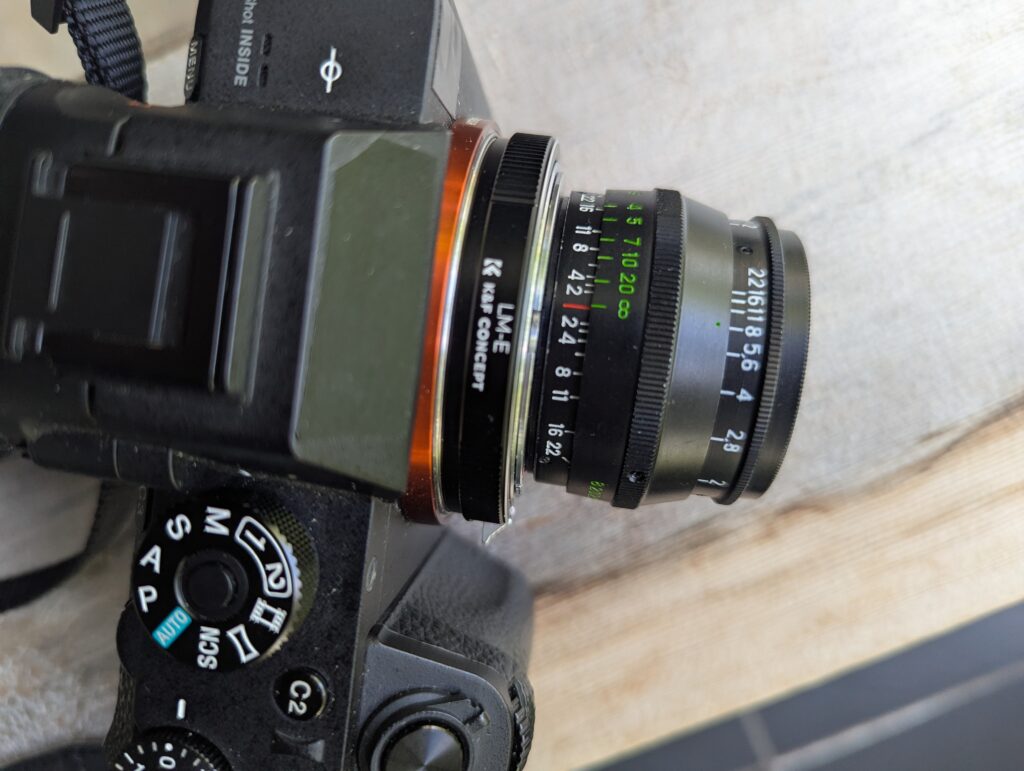
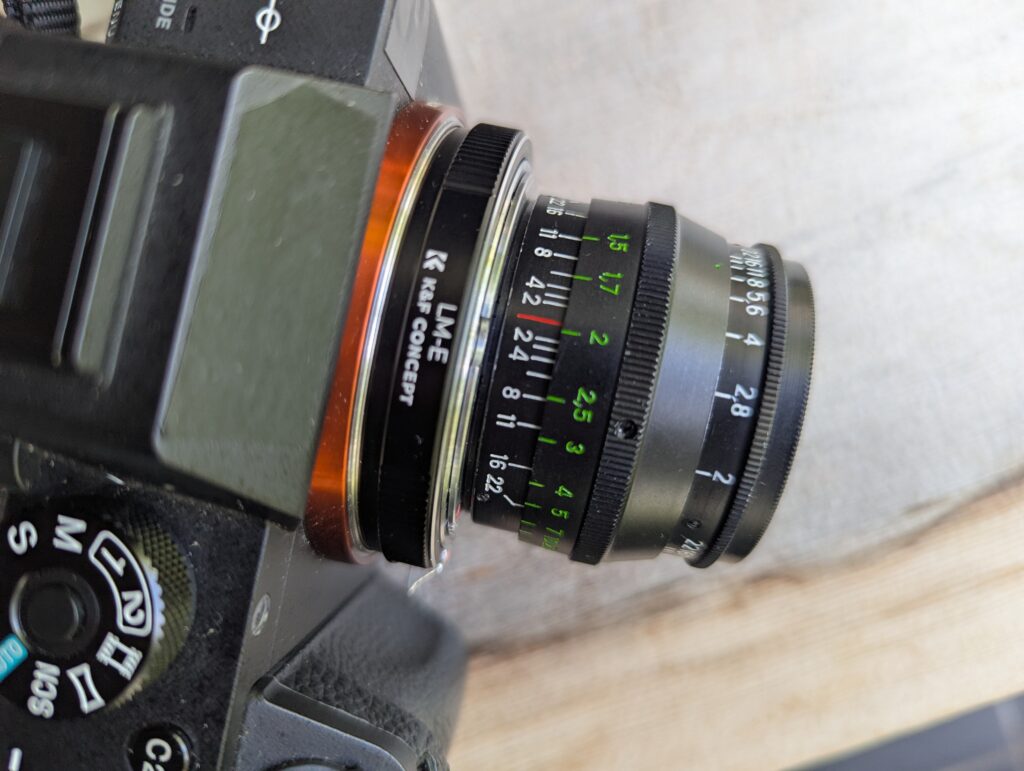
See the green dot (next to f8)?
It’s moved!

Jupiter 8

I know this lens is slightly soft and less contrasty (even at f8) compared to my Zeiss Sonnar but for the price there is no other Sonnar design lens in the lineup. There are many excellent reviews and articles about this lens on 35mmc and elsewhere, in particular Simon King’s comparison with the Zeiss Planar. (Editor’s note: and in my/Hamish’s Sonnar series here)

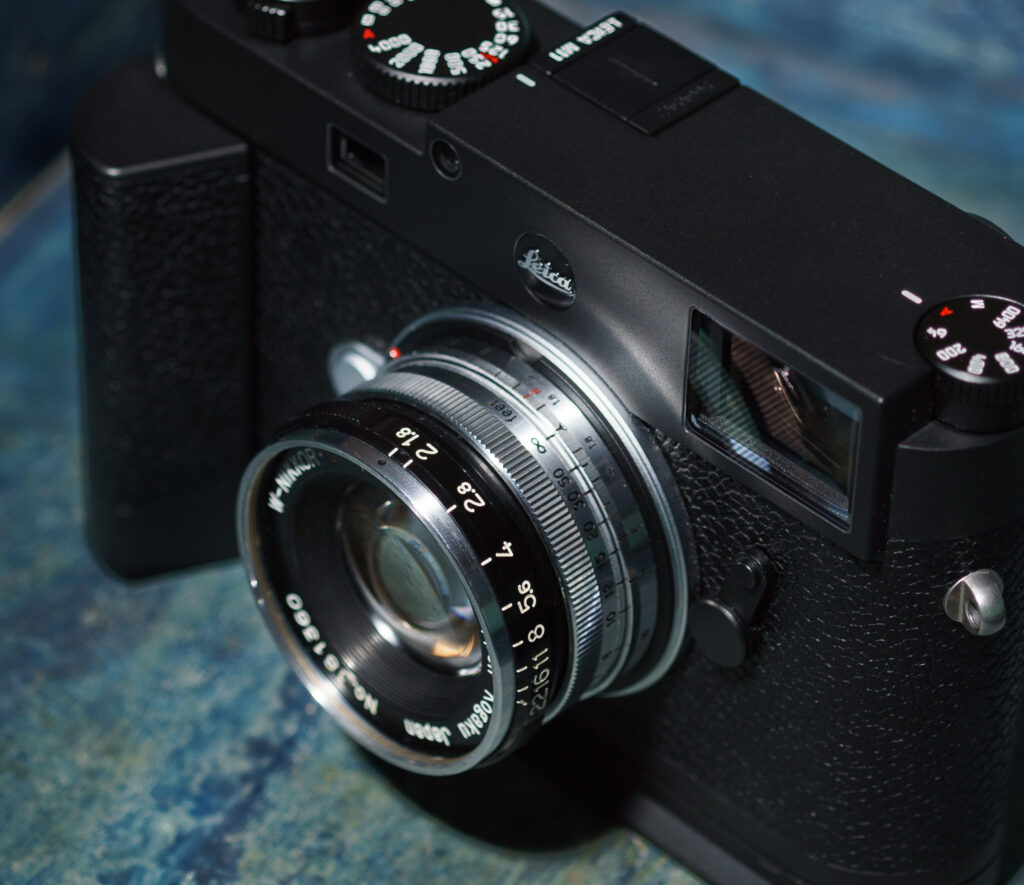
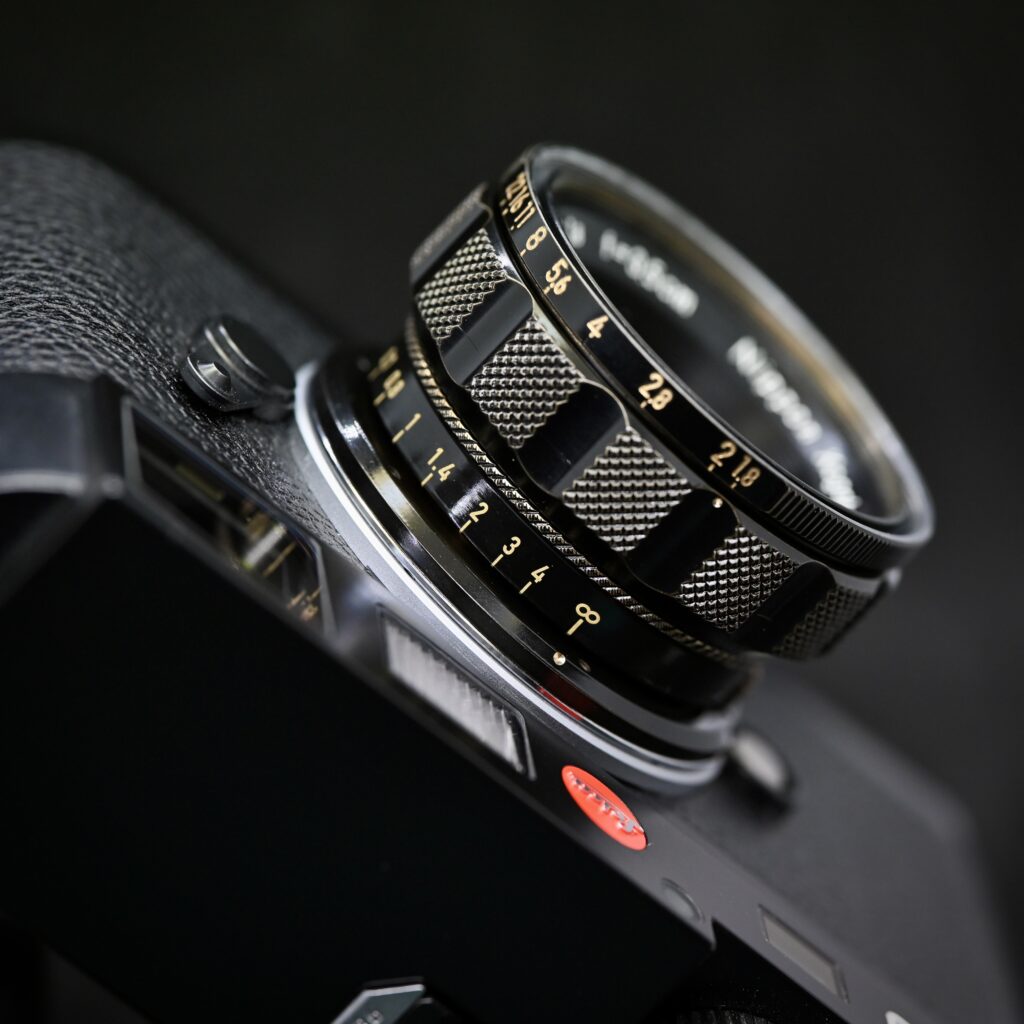
I shall restrict my comments to gripes about the ergonomics. (1) The aperture ring has no click stops, (2) it can be easily nudged to a different setting by mistake, (3) the marker against which to align the aperture desired is a tiny green dot, hard to see in many situations, (4) the aperture ring rotates with the focus setting potentially taking it to the side of the lens where it is not immediately visible, and (5) finally the aperture ring is very slim making difficult to find and hard to use if you are wearing gloves. However the lens is very light and compact, so 5/10 for ergonomics – bad enough for me to use the lens rarely

I use 50mm lenses 95% of the time for my photography and my preference is for contrasty images so poor ergonomics and low contrast means this lens doesn’t get used often. Unless you are wedded to the Sonnar design there are so many better alternatives in 50mm focal length – second hand kit lenses from the 70s onwards – offering better ergonomics and optics at normal apertures. No doubt many of you will jump to defend the lens against my fussy old man’s criticisms – go ahead!

Some images: all shots taken at f8. Taken on a shopping trip to Asahikawa

Jupiter 8
On the old market street
Jupiter 8
Warehouse
Jupiter 8
Flower stand
Jupiter 8
Aging house and workshop. Snow damage visible on the central roof. Better foundations under the now sloping workshop would have helped.
Jupiter 8
Patchwork

Tamron 500 SP

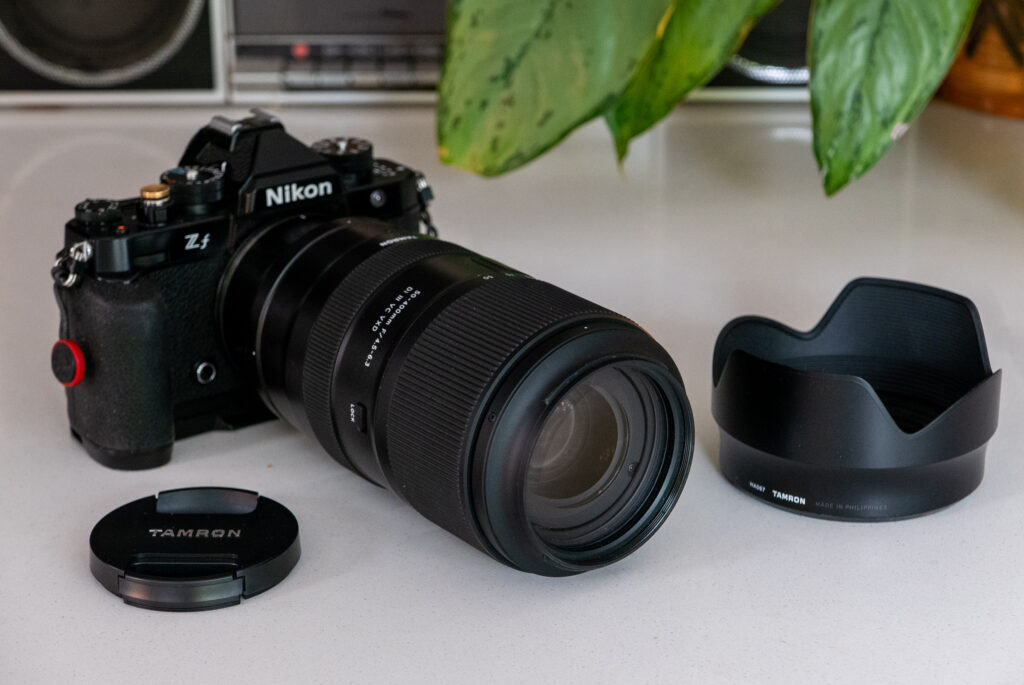
This is a mirror lens of fixed f8 aperture based on a Maksutov telescope design with what is I assume is a field flattening lens at the camera end. Tamron lenses can be adapted to 35mm camera bodies from the main manufacturers with the appropriate Tamron adapter. Because of the catadioptric design the lens is very compact and light. With 5 stops of in-camera IS hand-held exposures at 1/30th of a second should generally be possible.

There are several excellent articles on 500mm lenses of this design on 35mmc.
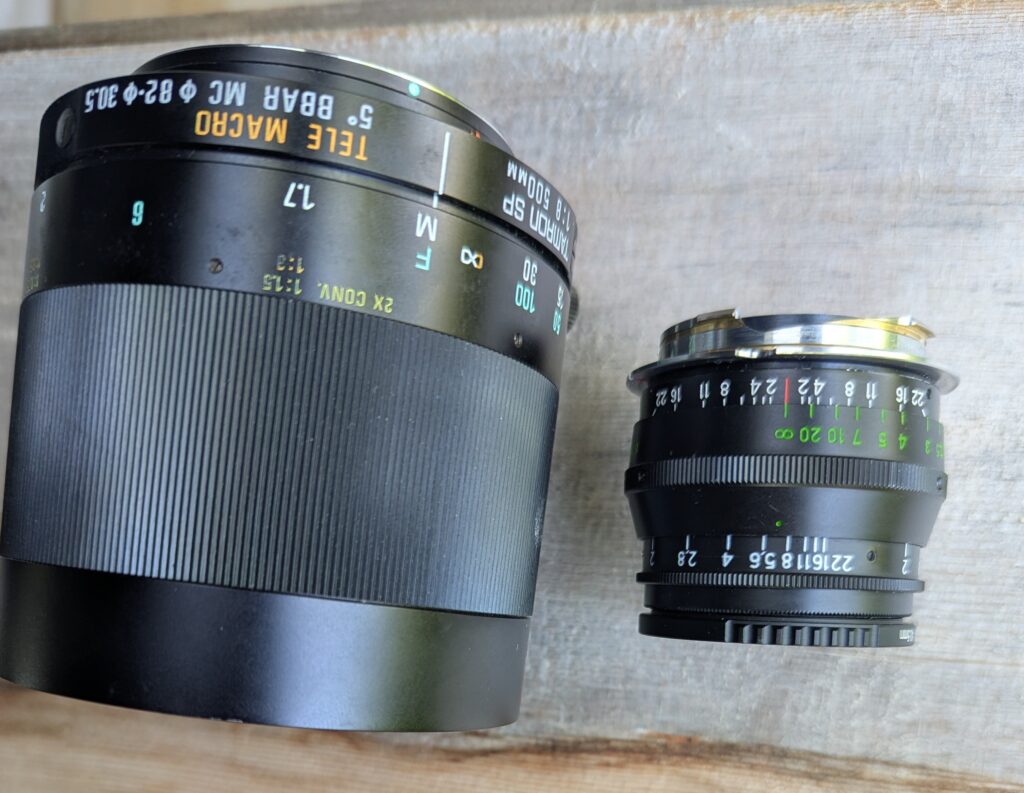
Tamron next to the diminutive Jupiter 8

Unavoidably the biggest problem with the lens is the manual focus making stationary subjects much easier though Bob Janes illustrates some stunning results by pre-focusing and waiting for the subject to come into the field of view. Even with stationary subjects focusing hand-held is not easy because of the 10x magnified wobble caused by your shaky hands.

So why use a 500mm lens? Apart from obvious situations (sport, wildlife etc.) using such an unusual focal length makes you look at the world differently. How often have you looked at your images and spotted as small area of the image which makes for a much more interesting picture? Well for me, many times. For the price of a decent bottle of wine the lens can take you out of your comfort zone, open up new ways of looking at the world and relight your imagination.

Images: the featured image and the following, all shot at f8 (ha!), all hand held and slightly out of focus

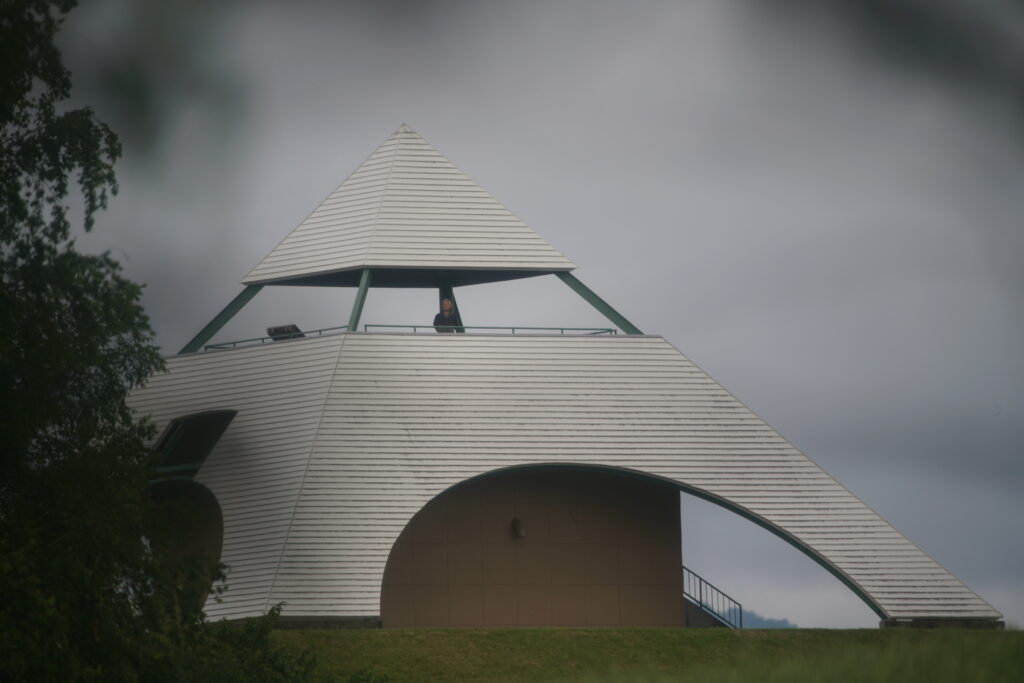
Tamron 500 SP
Sharp focus is on part of the tyre but limited dof means most of the image is slightly soft
Tamron 500 SP
Viewpoint seen through nearby tree cover
Tamron 500 SP
More flowers- tricky when the wind blows
Tamron 500 SP
Trees in, building parts come out the other end.

A final whine about digital cameras

In bright light I find the viewfinders (and more so, screens) dim or invisible, even with brightness set to maximum. In strong light nothing beats rangefinders or optical reflex viewers. On top of that digital is just not a PROCESS I enjoy. Maybe the camera is more clever than me and takes away much of the thought – but where is the fun in that? Whine over.

Share this post:

About The Author

By Geoff Chaplin
Primarily a user of Leica film cameras and 8x10 for the past 30 years, recently a mix of film and digital. Interests are concept and series based art work. Professionally trained in astronomical photography, a scientist and mathematician.
Read More Articles From Geoff Chaplin

Find more similar content on 35mmc

Use the tags below to search for more posts on related topics:

Donate to the upkeep, or contribute to 35mmc for an ad-free experience.

There are two ways to contribute to 35mmc and experience it without the adverts:

Paid Subscription – £3.99 per month and you’ll never see an advert again! (Free 3-day trial).

Subscribe here.

Content contributor – become a part of the world’s biggest film and alternative photography community blog. All our Contributors have an ad-free experience for life.

Sign up here.

Make a donation – If you would simply like to support Hamish Gill and 35mmc financially, you can also do so via ko-fi

Donate to 35mmc here.

Comments

Ed on Jupiter 8 and Tamron 500 SP – Two cheap lenses

Comment posted: 28/07/2026

Hi Geoff - thanks for this piece. I've just obtained a Jupiter-8 for an LTM camera. I'm interested to see how it performs on a different format. Your findings are interesting and i wonder how I'll get on with the ergonomics and mechanical side of things. It sounds a bit frustrating. Mirror lenses get a mixed response for photography. I am familiar with them for astronomy, but of course this is a very different scenario where depth of field is not an issue and they are usually mounted on very sturdy tripods.

Best wishes. Ed
Reply

Leave a Reply

Your email address will not be published. Required fields are marked *

Geoff Chaplin replied:

Comment posted: 28/07/2026

Thanks Ed and good luck! The lens needs patience, held preferably with some support either directly for the camera or for your arm, and using the image magnifier if your camera has one. DoF is really quite shallow so more careful choice of subject is needed than my attempts above, but as you already know these lenses can be spectacularly good performers once all the difficulties are overcome.

Reply

Leave a Reply

Your email address will not be published. Required fields are marked *

Mark Ellerby on Jupiter 8 and Tamron 500 SP – Two cheap lenses

Comment posted: 28/07/2026

I like the donut-shaped bokeh from the mirror lens.
Reply

Leave a Reply

Your email address will not be published. Required fields are marked *

Geoff Chaplin replied:

Comment posted: 28/07/2026

Thanks Mark - not something that attracts me to the catadiotric lenses, but a 'feature' certainly.

Reply

Leave a Reply

Your email address will not be published. Required fields are marked *

Peter Kornaukhov on Jupiter 8 and Tamron 500 SP – Two cheap lenses

Comment posted: 28/07/2026

Great photos, thank you alot. My 5 cents. It may happen that Jupiter 8 has glasses not blacken the sides. Me own Jupiter 3 red "П" and using it with NEX is great. Even Industar 50 with red "П" is valuable for close up portraits with f:5.6-8 cause its quality was better with no doubt
Reply

Leave a Reply

Your email address will not be published. Required fields are marked *

Geoff Chaplin replied:

Comment posted: 28/07/2026

Thanks Peter. I think it's only the late version with black barrels (apart from some relatively rare exceptions).

Reply

Leave a Reply

Your email address will not be published. Required fields are marked *

Andrew on Jupiter 8 and Tamron 500 SP – Two cheap lenses

Comment posted: 28/07/2026

I use the Jupiter 8 with an adapter as a long focus lens on my Nikon 1. That camera has a 1 inch sensor, so the magnification factor of 2.7 makes the lens a 135mm equivalent. Yes its operation is slow and only suitable for “composed” photos. But because I’m only using the centre of the image circle on a Nikon 1 the results are fantastic.
I guess folks who use this as a portrait length lens on APS-C would probably say similar since they also are not using the periphery of the image circle.
Reply

Leave a Reply

Your email address will not be published. Required fields are marked *

Geoff Chaplin replied:

Comment posted: 28/07/2026

Thanks for the info here and your other comment. While cropping generally gets rid of the less technically accurate off-axis rendition I'm still not happy with the central contrast. But as you say a first version might be better - if you can find one in good condition.

Reply

Leave a Reply

Your email address will not be published. Required fields are marked *

Kodachromeguy on Jupiter 8 and Tamron 500 SP – Two cheap lenses

Comment posted: 28/07/2026

I have a 1962 Jupiter-8, and I continue to be impressed how good it is on film (Leica M with adapter). Maybe mine was an unusually good sample. I always use a hood to control flare.

I love your urban decay examples. What tones and textures.
Reply

Leave a Reply

Your email address will not be published. Required fields are marked *

Andrew replied:

Comment posted: 28/07/2026

I did a bit of research on these lenses before I bought mine. I believe there are 4 or even 5 “series”- I can’t remember which now. The recommendation is to go for either the first series or the final one. Apparently the first series used Zeiss glass from Jena, so what you got optically was a Zeiss lens, with post-war coating. From second series onwards the lens was recomputed to use Soviet glass, I.e optically not as good. The production quality fell off at the same time, so they became flimsy as well as optically inferior. The build quality was improved for the final version. So you go either for the very first series with Zeiss glass and Zeiss computation. Or the last series with less good glass but at least a higher standard of construction.

Reply

Leave a Reply

Your email address will not be published. Required fields are marked *

Geoff Chaplin replied:

Comment posted: 28/07/2026

Thanks, and yes, I was more than pleasantly surprised by the tone and texture of the rust shots in particular. I works well in colour and for that subject matter but I mostly shoot B&W and definitely prefer the rendition of the Zeiss Sonnar.

Reply

Leave a Reply

Your email address will not be published. Required fields are marked *

Gary Smith on Jupiter 8 and Tamron 500 SP – Two cheap lenses

Comment posted: 28/07/2026

I love the optical viewfinders on my Nikons.
Reply

Leave a Reply

Your email address will not be published. Required fields are marked *

Geoff Chaplin replied:

Comment posted: 28/07/2026

Agreed - optical viewfinders are much better than digital.

Reply

Leave a Reply

Your email address will not be published. Required fields are marked *

Morgan on Jupiter 8 and Tamron 500 SP – Two cheap lenses

Comment posted: 29/07/2026

I bought a New Old Stock Jupiter 8 myself and had all the complaints you have, particularly about the ergonomics of it. I used it on my film cameras, and ended up selling it. Thank you for having the same opinions.
Reply

Leave a Reply

Your email address will not be published. Required fields are marked *

Geoff Chaplin replied:

Comment posted: 29/07/2026

You're welcome Morgan. Less of a problem if you shoot aperture priority mode but an ergonomic nightmare on manual mode.

Reply

Leave a Reply

Your email address will not be published. Required fields are marked *

Walter Reumkens on Jupiter 8 and Tamron 500 SP – Two cheap lenses

Comment posted: 29/07/2026

I can only smile at this ‘test’ of the Jupiter-8 with the Sony A7RII. I can’t take it seriously. Almost every old lens – including Leitz and Zeiss lenses – performs poorly on this camera. I own the successor to this camera and would never dream of adapting such lenses from a different era. As far as I’m concerned, the Sony NEX-6 is where the fun ends.

Furthermore, it is worth bearing in mind that a comparison between Zeiss/Leitz and Russian lenses is rather flawed and misleading. On the one hand, we have two brands that manufactured lenses and cameras in the luxury segment in relatively small quantities; on the other, we have products manufactured for the mass market, as was the case with KMZ. There are no confirmed production figures for the Jupiter-8. However, it was the standard lens on the Zorki-4 (1956–1973), which was produced over 1.7 million times. It should be obvious that products manufactured for the mass market cannot maintain consistent quality over nearly two decades at such high production volumes. I own the Jupiter-8 alongside other lenses from KMZ and FED (Industar); I mainly use them on the cameras for which they were built, have no problems with their handling, and am more than satisfied with the results.
Reply

Leave a Reply

Your email address will not be published. Required fields are marked *

Geoff Chaplin replied:

Comment posted: 29/07/2026

Walter it specifically says it is not a review. The successor to the A7Rii has the same sensor and processor. I can't vouch for the handling of the older Jupiter 8 lenses but certainly for me the later lenses have poor ergonomics though, as you intimate, for their cheap-as-chips price image quality is remarkable good but nevertheless beaten by 70s and 80s era 50mm kit lenses from the main manufacturers. That's my opinion and you are welcome to have yours.

Reply

Leave a Reply

Your email address will not be published. Required fields are marked *

Andrew replied:

Comment posted: 29/07/2026

Yes, I think we need to be careful. If you put almost any lens on a super-high resolution digital camera and then “pixel peep” you’re going to find things you don’t like. But does that matter/is it relevant? For most use cases of a camera, unless you are producing massive exhibition posters, 12 MP is plenty enough. So perhaps a “fairer” test of these lenses would be on a 12Mp digital like the Sony A7S or on film. All I can reiterate is that my final edition Jupiter-8 does everything I need on my Nikon 1 (except as I agree, the ergonomics are a bit frustrating). Yes, you can also get cheap DSLR primes, but they are massively bulky and unbalanced on a modern mirrorless, especially a small one like mine. Leica thread or bayonet mount is what you need for these, and where else can you get a pretty decent 50mm prime for £50 or so???

Reply

Leave a Reply

Your email address will not be published. Required fields are marked *

Walter Reumkens replied:

Comment posted: 29/07/2026

I didn’t claim either of those things. It was simply a reference to my version of the A7R and an objective assessment of the Jupiter-8 without the ‘Leica-tinted glasses’ that you seem to wear in every one of your articles. Thank you Geoff!

Reply

Leave a Reply

Your email address will not be published. Required fields are marked *

Geoff Chaplin replied:

Comment posted: 29/07/2026

Thanks Andrew. I was suggesting 70s and 80s kit primes (i.e. manual lenses) which are compact and light, and cheap. For optical testing of course you are right, the older lenses don't pass the pixel peep test. And as Hamish shows so well in his portrait shots, less is often more.

Reply

Leave a Reply

Your email address will not be published. Required fields are marked *

Andrew replied:

Comment posted: 29/07/2026

Yes, but I took 70s/80s kit primes as meaning those intended for SLRs. These have a long back focal distance, and so stick out unnecessarily far and are more bulky than they need be on a modern mirrorless camera. Lenses with a short back focal distance are optimal on these cameras, and that means Leica thread or bayonet mount, Nikon mount, Canon mount or other rare exotica. I struggle to think of many rangefinder mount 50mm primes which would have the price/performance balance of the Jupiter-8 and that’s why I bought one. I haven’t been disappointed.

Reply

Leave a Reply

Your email address will not be published. Required fields are marked *

Geoff Chaplin replied:

Comment posted: 29/07/2026

Ltm to Eount adapters are relatively slim, none are hatd to buy in my experience (internet). These MF lenses are somuch smaller and loghter than the digital counterparts. Bit I'm glad you're happy with the Jupiter - I'll admit the colour images can be surprisingly nice even if softish.

Reply

Leave a Reply

Your email address will not be published. Required fields are marked *

Geoff Chaplin replied:

Comment posted: 29/07/2026

Andrew, fair point. Yes they stick out a bit!

Reply

Leave a Reply

Your email address will not be published. Required fields are marked *

Leon Winnert on Jupiter 8 and Tamron 500 SP – Two cheap lenses

Comment posted: 29/07/2026

Tamron SP 500. Back in the '80s I had 2. Used them on my Nikon F2A. Very interesting lens. Had some fun with it. But unfortunately both developed the same fault. Sharp focus was only achieved in a central band across the frame. Can't recall if it was horizontal or vertical. But the picture had full length rectangular bands of soft focus of about one third coverage at either end of the frame and a full length rectangular band of sharp focus in the middle of the frame.. Contact with Tamron resulted in no reason given as to cause. I could only surmise that it was due to some sort of mirror distortion.

Pity, I enjoyed the lens and would like something similar again. Note. At that time Nikon were doing their own mirror lens. Horrendously expensive. Tameron was an affordable option.
Reply

Leave a Reply

Your email address will not be published. Required fields are marked *

Geoff Chaplin replied:

Comment posted: 29/07/2026

Thanks Leon. Years ago I had a Russion (MTO-1100) mirror lens, that was a beast but pretty good quality. At nearly 4kg tripod only (and a solid tripod too!)

Reply

Leave a Reply

Your email address will not be published. Required fields are marked *

Omar Tibi on Jupiter 8 and Tamron 500 SP – Two cheap lenses

Comment posted: 29/07/2026

Have fun shooting Geoff! A 50

Regarding the Jupiter-8, the ergonomic issues you mentioned were solved with the updated Jupiter-8M, which surprisingly never made it to LTM, it was a Contax mount exclusive. It's rather interesting actually - the fantastic Helios-103 was also only made for Contax mount, the USSR considered the Kiev family to be their professional rangefinder, but as a result of their planned economy, I guess they needed to keep something differentiated instead of consolidating 3 separate rangefinder families & ~2-3 mounts into 1. Give the Helios a try if you like normal primes, I've been using it on my Contax IIa recently and it's a very nice lens, modern but with a hint of vintage feel.
Reply

Leave a Reply

Your email address will not be published. Required fields are marked *

Geoff Chaplin replied:

Comment posted: 29/07/2026

Many thanks for the info Omar. A quick look shows a huge variety (103!) of these lenses, slightly different focal length and mount. The 44 seems popular - in the same way that Holga cameras are - and it looks like contax to sony E adapters are available so I'll give it a try.

Reply

Leave a Reply

Your email address will not be published. Required fields are marked *

Aster on Jupiter 8 and Tamron 500 SP – Two cheap lenses

Comment posted: 30/07/2026

How did I not know about the Tamron!? I’ve been shopping around for a new vintage lens, a casual wildlife lens (my gigantic 600mm feels a bit excessive for a walk in the park), and a macro lens with a good working distance for skittish bugs. This looks like it could check all 3 boxes!

It’s a shame its macro capabilities only achieve a 1:3 ratio, but if you’re the sort that factors sensor crop into the reproduction ratio then I think the 1.4x and 2x get you roughly 1:1 and 1.167:1 respectively on an APS-C sensor.

I just bought the lens/adapter for now and I’ll wait on the teleconverter until I come to grips with the handling. I want to know how much light I’m willing to lose between the TC and high shutter speeds.

Thanks for the article Geoff!
Reply

Leave a Reply

Your email address will not be published. Required fields are marked *

Geoff Chaplin replied:

Comment posted: 30/07/2026

Tamron isn't the only maker of course. If buying any optics from humid Japan makes sure there is no sign of fungus.

Reply

Leave a Reply

Your email address will not be published. Required fields are marked *

Scott Ferguson on Jupiter 8 and Tamron 500 SP – Two cheap lenses

Comment posted: 31/07/2026

Hey Geoff,
Cool post! I have a Jupiter 8 that was attached to a Zorki that a friend gave me because it was gathering dust on a shelf. It was her father’s camera and my best guess is that it was from the late 50’s/early 60’s. I started hearing about Jupiter lenses a few months ago and thought I would try it out. I’ve only shot two partial rolls, but I think I must have an early copy of one of the ‘good’ ones with Zeiss glass, because my results look quite good — pretty decent contrast and sharpness and that Sonnar ‘pop’. The lens is lightweight, feels a bit rickety with loose focus and aperture rings, and the aluminum barrel is blighted, but I think the optics are surprisingly good on mine. I don’t think it will enter heavy rotation any time soon, as I have other lenses I love more, but I would have been happy to recommend a Jupiter 8 to someone on a tight budget. I now realize that my recommendation would probably be to look for a first edition Jupiter lens, based on what I learned from this post. I share you lack of enthusiasm for digital viewfinders. My son has a Sony A7iii that he shares with me, and I’ll use it from time to time when I need a digital workflow for any reason, and while I think it’s a good camera I’m not a fan of shooting while looking at digital screen. I tried renting a Leica M10, which has an optical viewfinder identical to the M film camera finder and is built exactly like an M, other than having a screen on the back, but I didn’t really end up loving that experience either, compared to shooting film.
I’m intrigued by the idea of a 500mm mirror lens, but I’m still trying to get better at shooting with a 50mm.
Best
S
Reply

Leave a Reply

Your email address will not be published. Required fields are marked *

Geoff Chaplin replied:

Comment posted: 31/07/2026

Ha, ha, ha! Come off it - you're pretty damn good at shooting a 50!

Reply

Leave a Reply

Your email address will not be published. Required fields are marked *

Jeffery Luhn on Jupiter 8 and Tamron 500 SP – Two cheap lenses

Comment posted: 31/07/2026

This is a bit off topic. Does anyone know of a good online site with Soviet era photography? There were millions of cameras in circulation there, but photographs, both day-to-day shots and historical images are scarce. Jeffery
Reply

Leave a Reply

Your email address will not be published. Required fields are marked *

Walter Reumkens replied:

Comment posted: 31/07/2026

In my opinion, that’s a bit short-sighted, Jeffery. Surely it doesn’t depend on a current online platform? Who’s going to be interested in them once the camera manufacturers have disappeared after the turn of the century? Yes, there were some very good photographers, and some very good photographs taken with KMZ, FED or Arsenal cameras and their lenses. That applies not only to Eastern Europe but also to Turkey. A few photographers who are still alive are self-publishing photo books or, after a long search, finding a publisher willing to take the risk of a new edition. You can also find photos from that era on the internet. You just have to look in the right places. Perhaps, though, it’s easier to find them from Germany or Europe.

Reply

Leave a Reply

Your email address will not be published. Required fields are marked *

Geoff Chaplin replied:

Comment posted: 31/07/2026

Jeffery, interesting question. I guess you've done a search for "soviet era photography". I came across a Guardian Newspaper article https://www.theguardian.com/artanddesign/gallery/2015/jun/23/seven-decades-of-soviet-photography-in-pictures which might also have some useful links. Let me know if you find anything particularly good.

Reply

Leave a Reply

Your email address will not be published. Required fields are marked *

Leave a Comment

Leave a Reply

Your email address will not be published. Required fields are marked *