

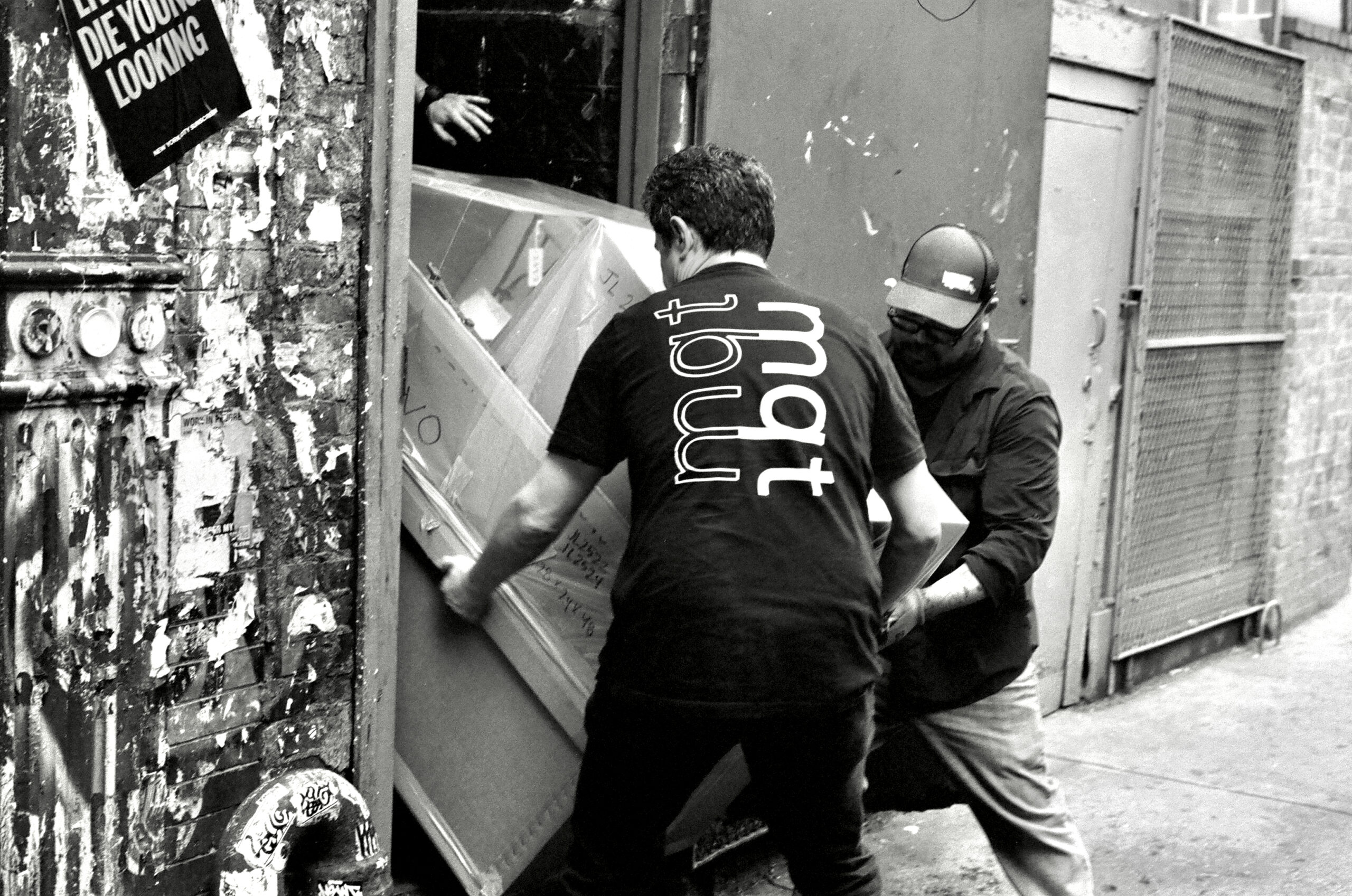
Above: 7 Bleecker Street: With the property sold, workers remove the last possessions of Robert Frank and June Leaf
After my recent 35mmc article, describing our April trip to Butte, Montana, I didn’t think I would have anything further to write about Robert Frank.
In late June, though, we flew to New York City to celebrate a friend’s birthday, and checked into a hotel on The Bowery very near Robert’s former loft at 7 Bleecker Street. Since the death of his wife, the artist June Leaf, in 2024, the building has stood vacant, and in March it was offered for sale.
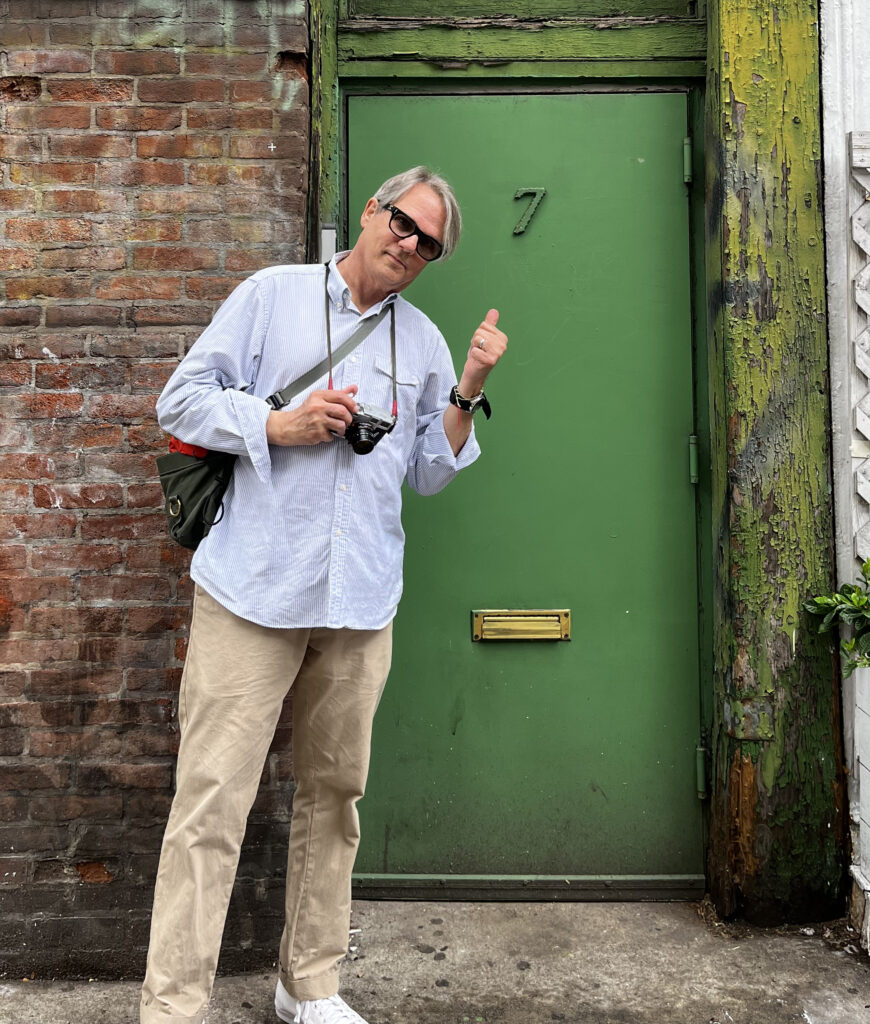
The day before we arrived, I contacted the listing agent to see if a quick tour would be possible. She turned me down — nicely — reporting that the property was now under contract, and therefore she couldn’t let anyone in. Understandable.
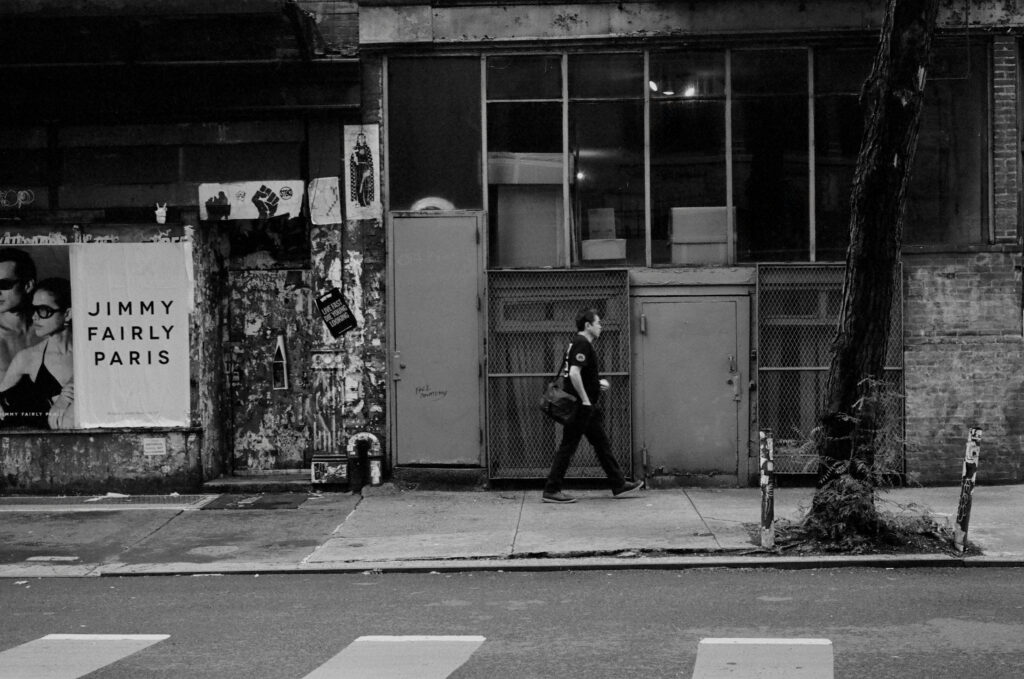
On our first morning in the city, I walked over to take photographs of the exterior.
While I was there, Alex, who lives across the street, approached me.
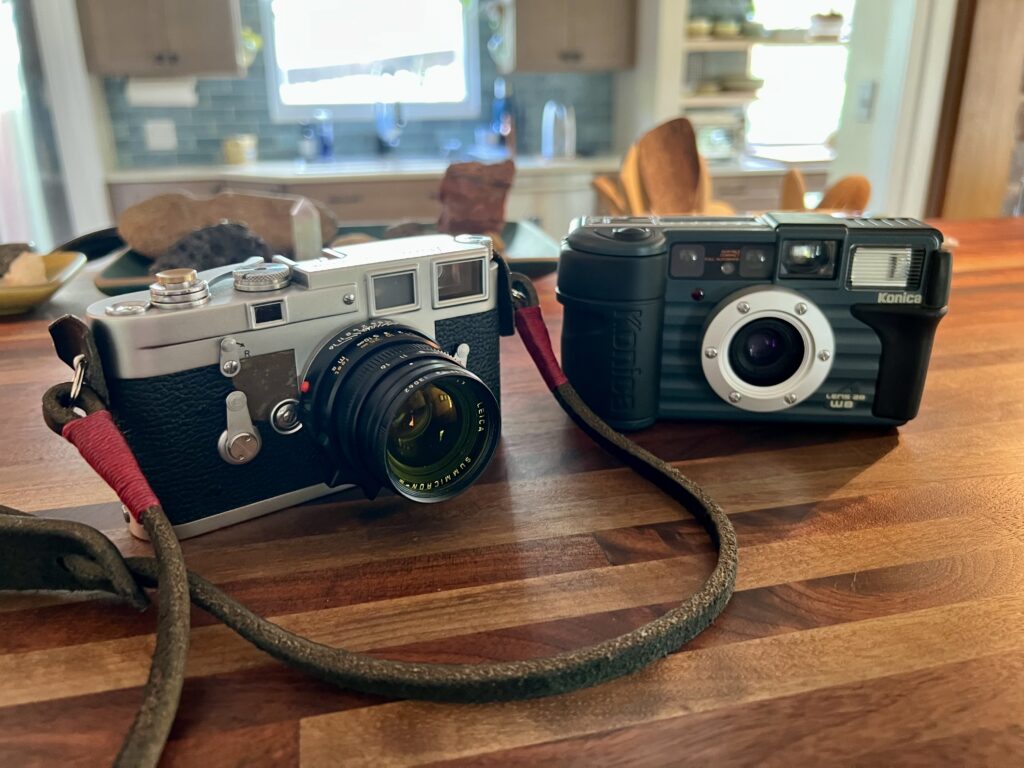
“What’s going on?” he asked, eyeing my Leica M3.
I said, “Oh, I’m just an admirer of Robert Frank.”
I asked Alex if he had known Robert and June.
“I knew June better. By the time I moved to the block, Robert was pretty doddery.”
We chatted about cameras. Alex pulled a well-worn black paint Leica M4 from his bag. I showed him my Konica Genba Kantoku. After talking a bit more, we exchanged Instagram handles, and off he went.
Later that same afternoon, my wife, Darby, said, “Why don’t we walk over, and you can show me Robert’s loft?”
Fortuitously, we arrived just as the movers were taking out the last of Robert and June’s possessions.
I got a few shots of them at work while Darby photographed me photographing them.
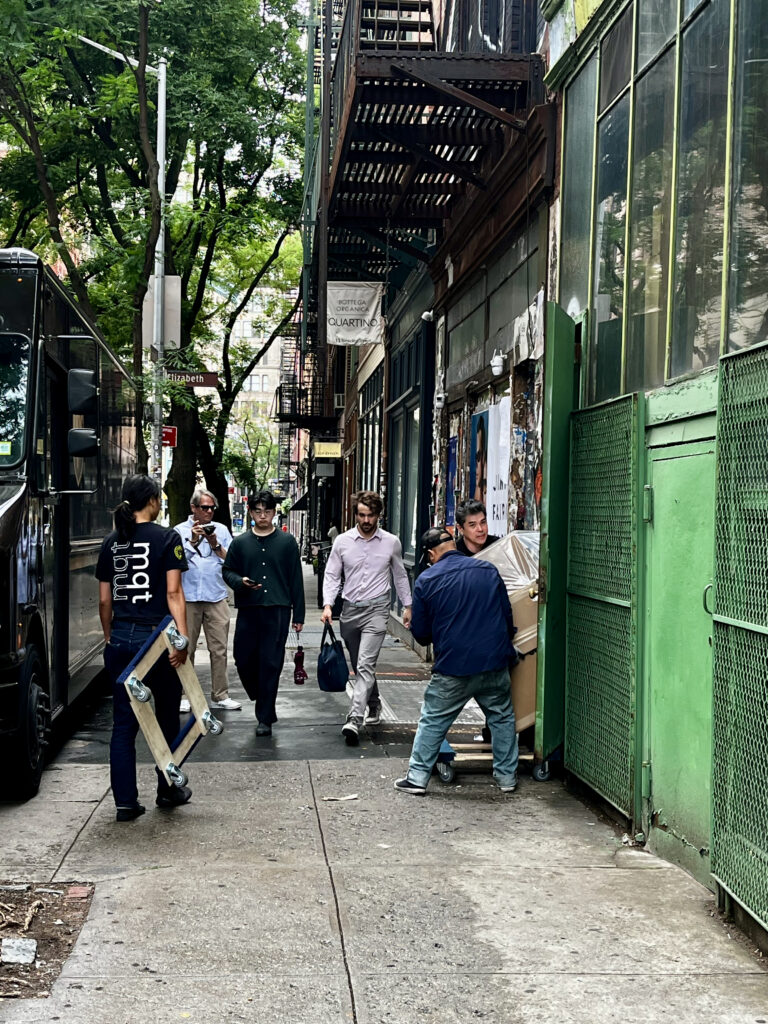
“Were you a friend of Robert’s?,” the supervisor asked when he saw me with my cameras.
“No,” I replied, “just a fan.”
“May I take a picture or two?” I asked, pointing at the open door.
“Yes, but only from the first step,” he replied. Again, I understood. They were busy, and it’s a litigious world.
I stood on the rusty metal stair, raised my camera over my head, and shot blindly into the space that Robert and June had long occupied.
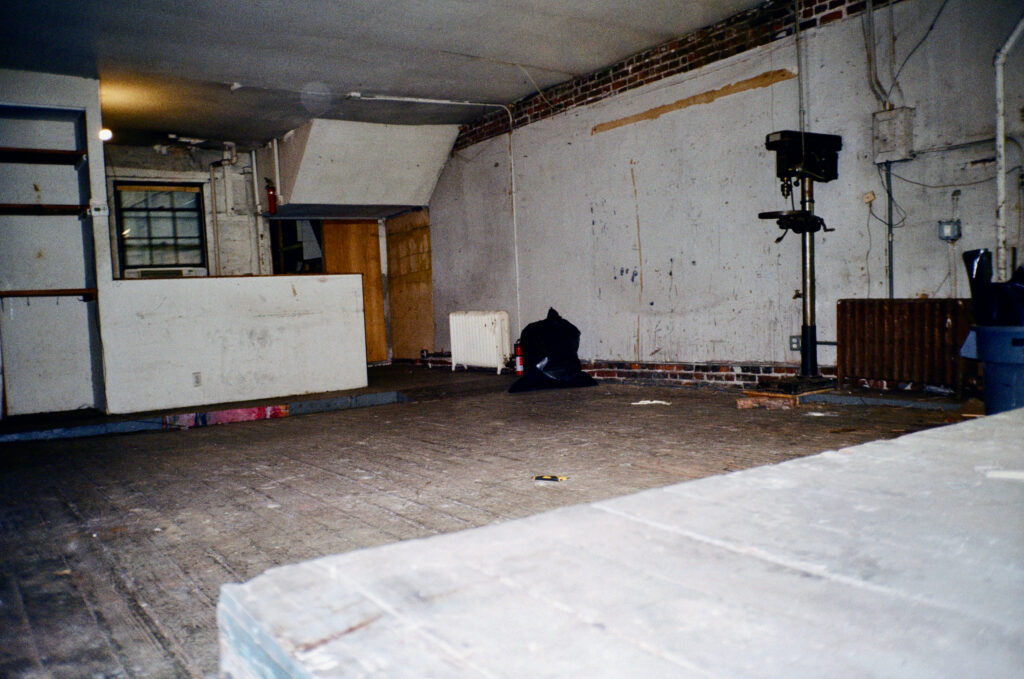
In these rooms, they had grown from middle-age into old age, and although they were regularly away at their house in Nova Scotia, they spent many years on the Lower East Side of Manhattan, creating art, guiding book publications, helping to plan exhibitions, being interviewed by filmmakers, writers, and fellow photographers. Robert directed a music video here in 1996: “Summer Cannibals” by Patti Smith.
They changed over the years, but the neighborhood changed more.
“The yuppies, they have a right to live too, but I don’t want to live amongst them. I don’t even want to live next to them, but I have no choice.”
from “Leaving Home, Coming Home: A Portrait of Robert Frank”
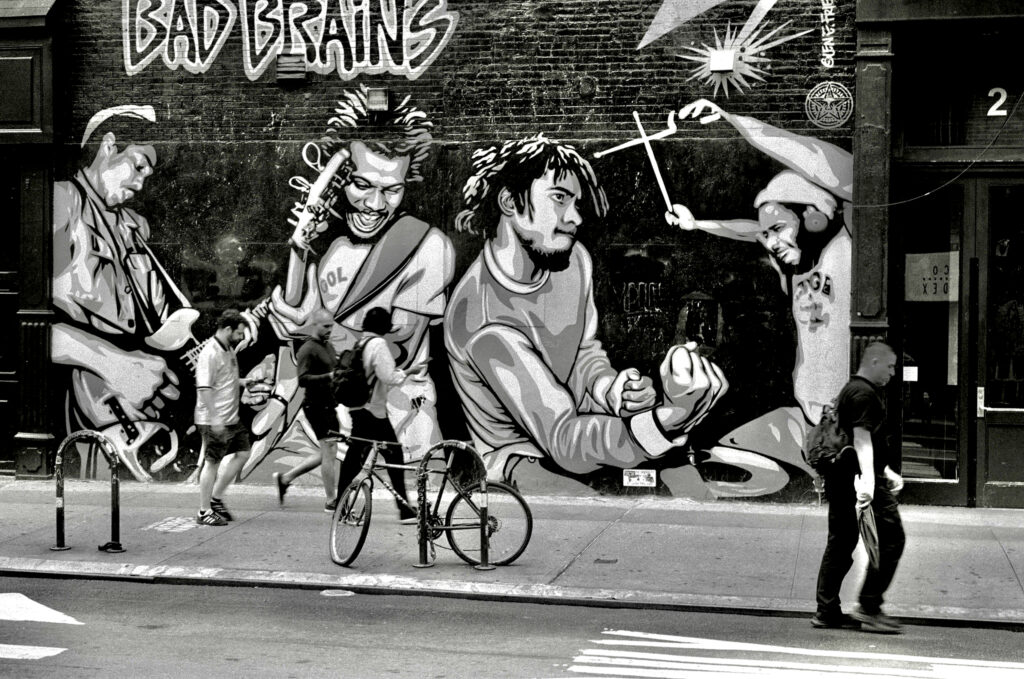
When I left New York in 1980, The Bowery — and much of the East Village — was a daunting place that only determined music fans, longtime residents, buyers in search of illegal substances, urban adventurers, and creative people without day jobs knew firsthand. The legendary club, CBGB, where bands like The Ramones, Talking Heads, Blondie, Television, and so many others got their start, was just a few hundred feet from Robert’s loft.
The former punk venue is now occupied by an upscale clothing store selling $150 Bon Jovi t-shirts and $2,400 suede jackets. And so it goes.
Neighborhood rents have soared, and little remains of those long gone grainy Tri-X days.
An apartment that could have been had for a couple of hundred dollars in the 1970s now goes for north of $7,000. A 1BR / 1BA around the corner on Elizabeth Street is currently listed for $8,800 a month.
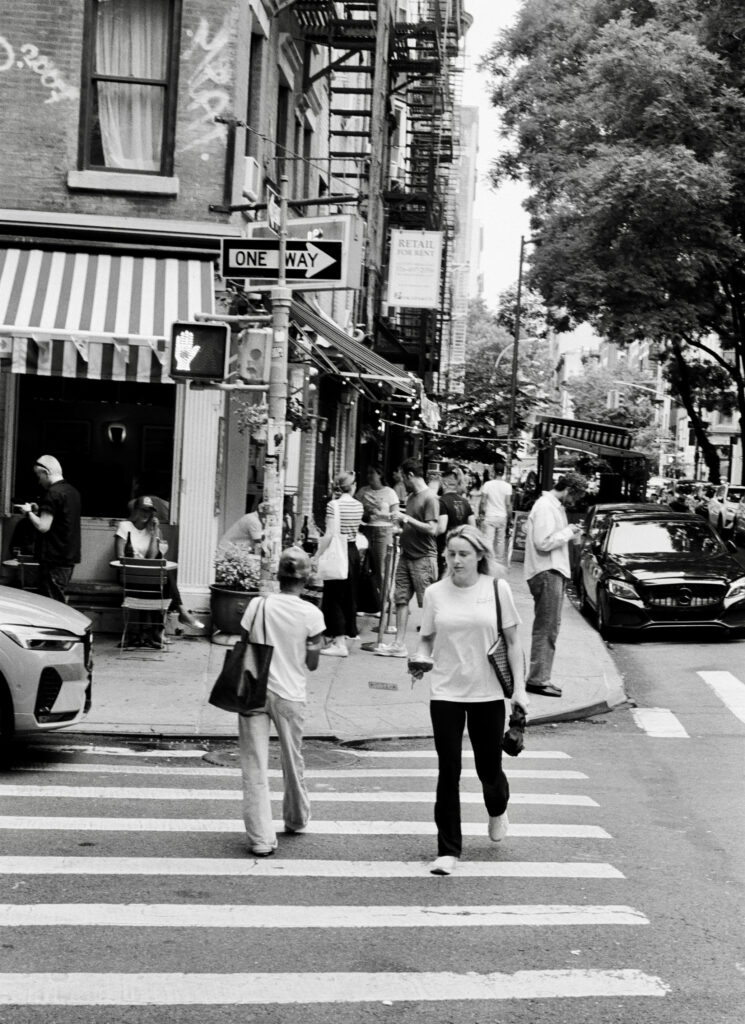
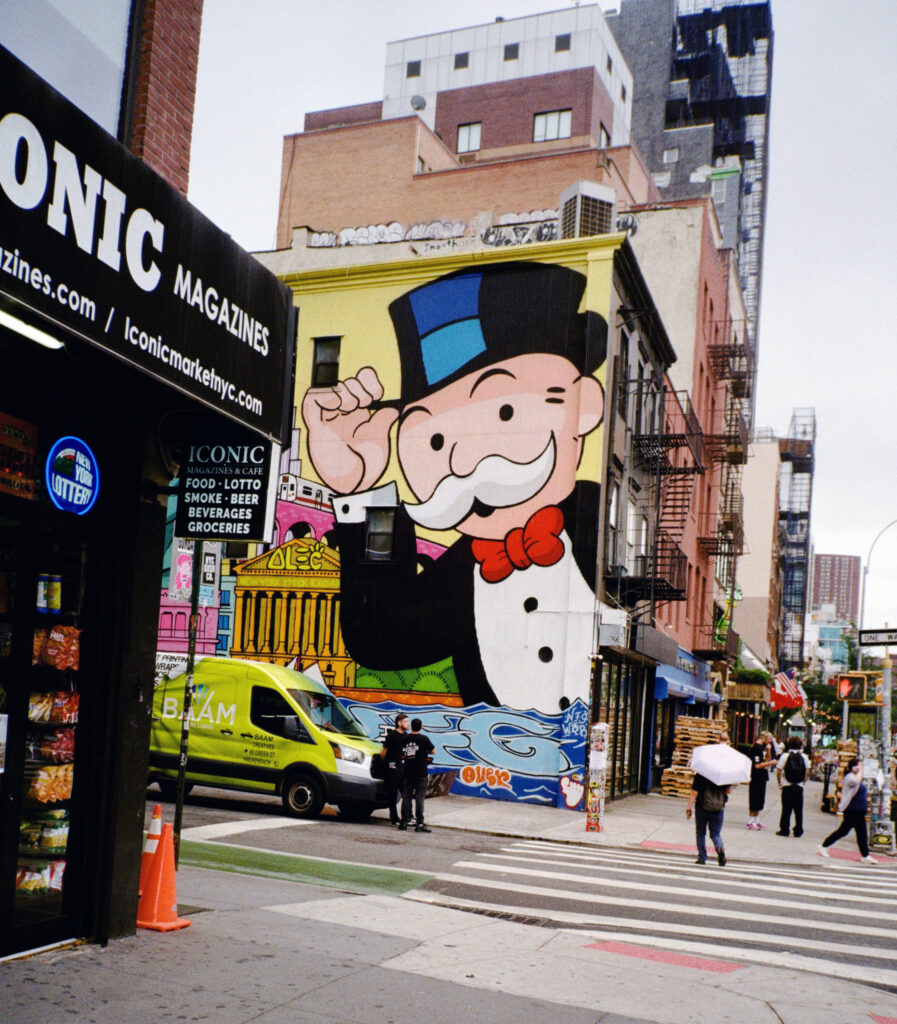
Wages have kept pace, sure, but money has changed the area in ways that seem irreversible.
In earlier times, new immigrants bemoaned the arrival of the beatniks who later decried the hippies who detested the punks who complained about the investment bankers who witnessed the invasion of the techies. Of course, there are similar stories in every city from London to New York to San Francisco.
Still, my hope is that in the gritty corners of far-flung towns, artists are madly painting and photographing and typing and proclaiming, unencumbered by petty concerns like skyrocketing costs and regular employment.
It’s OK if they’re eating beans from a can. Just let them work! Keep them out of sight of the wanna-be hipsters and real estate speculators who would descend, pushing up prices, destroying what first drew them there in their vain attempt to be as cool as the people they eventually force out.
Just like they did in Robert Frank’s old neighborhood. Just like they’re doing everywhere.
“This ain’t no party, this ain’t no disco
This ain’t no fooling around
This ain’t no Mudd Club, or CBGB
I ain’t got time for that now…”(Byrne-Frantz-Harrison-Weymouth)
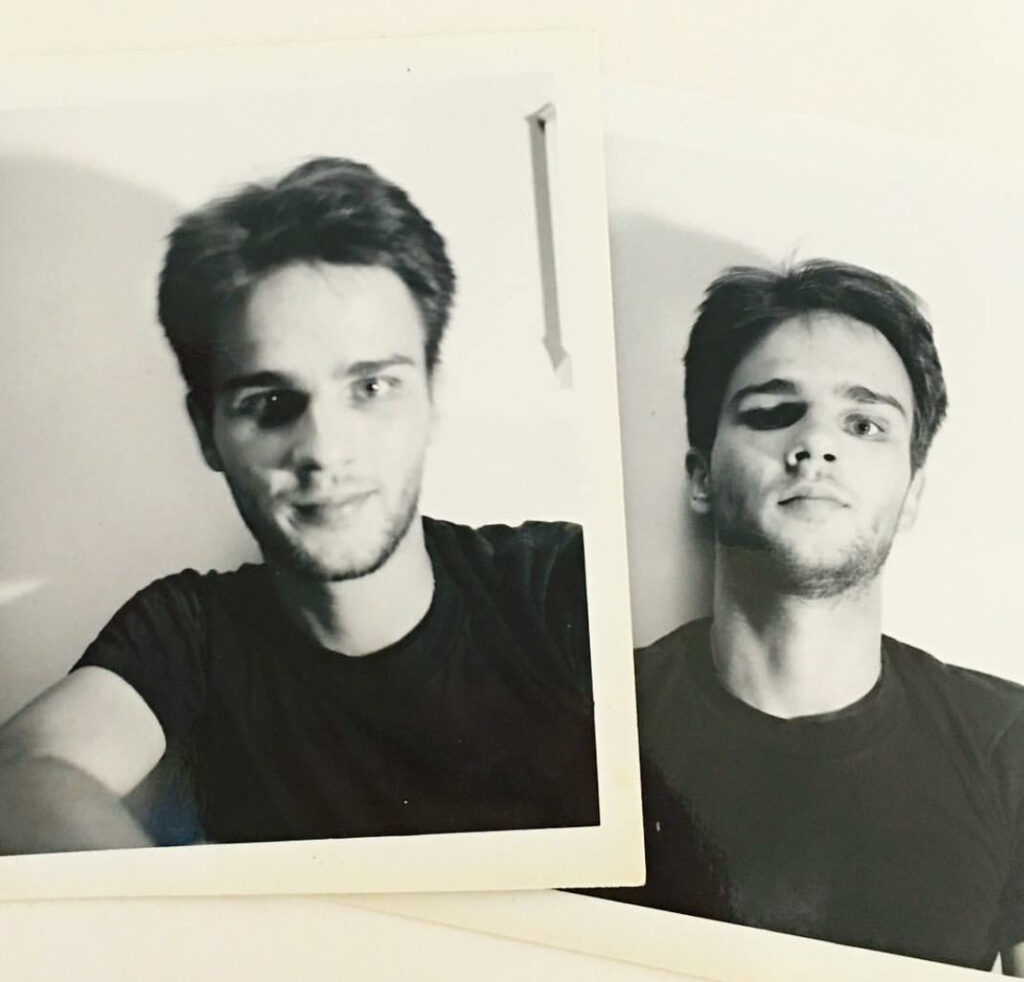
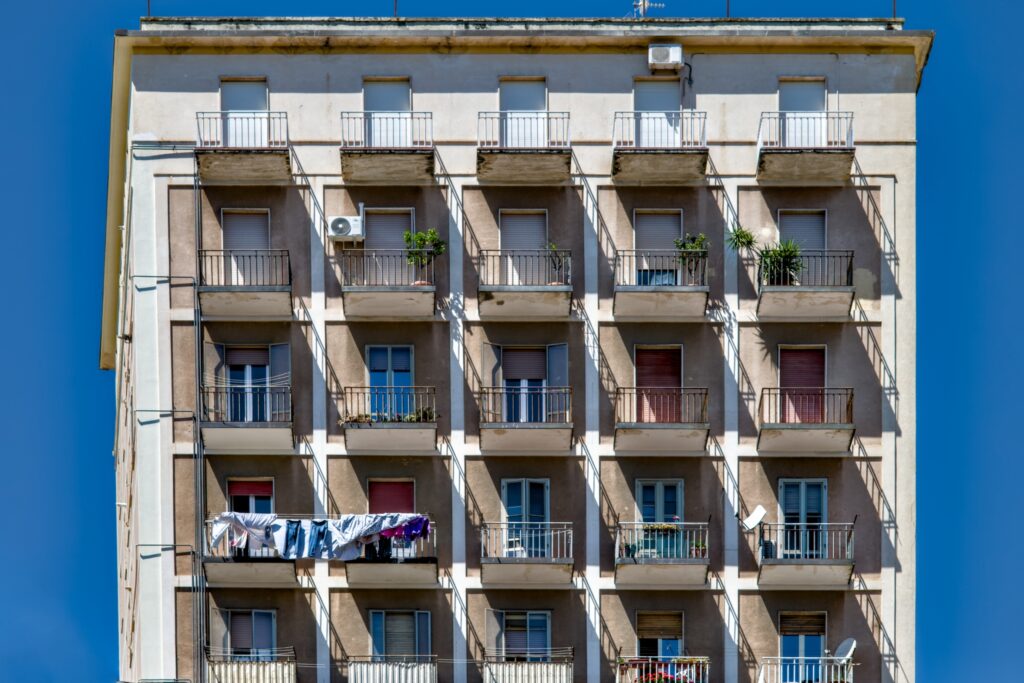
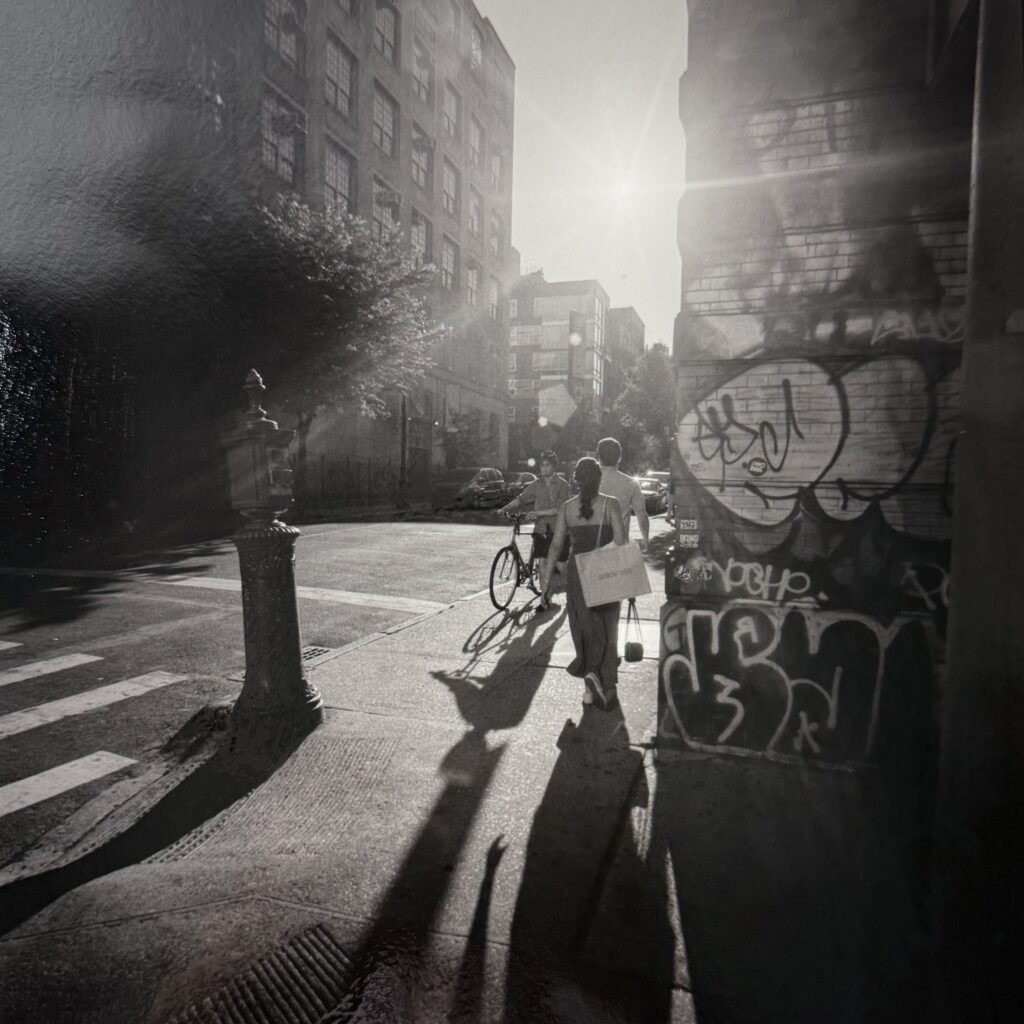
Kodak Tri-X and Kodak Gold 200 photos were developed and scanned by Blue Moon Camera & Machine in Portland, Oregon. iPhone pix by Darby Bennett.
My Flickr account is here. And Instagram here.
Share this post:

Comments
Walter Reumkens on Robert Frank’s Disappearing New York Neighborhood
Comment posted: 30/07/2026
I think it’s a brilliant idea, given New York’s urban development, to feature photos from his immediate surroundings during his lifetime. Everyday scenes and people from a vibrant, cosmopolitan city that has probably lost much of the charm of earlier years. Thanks, John!