

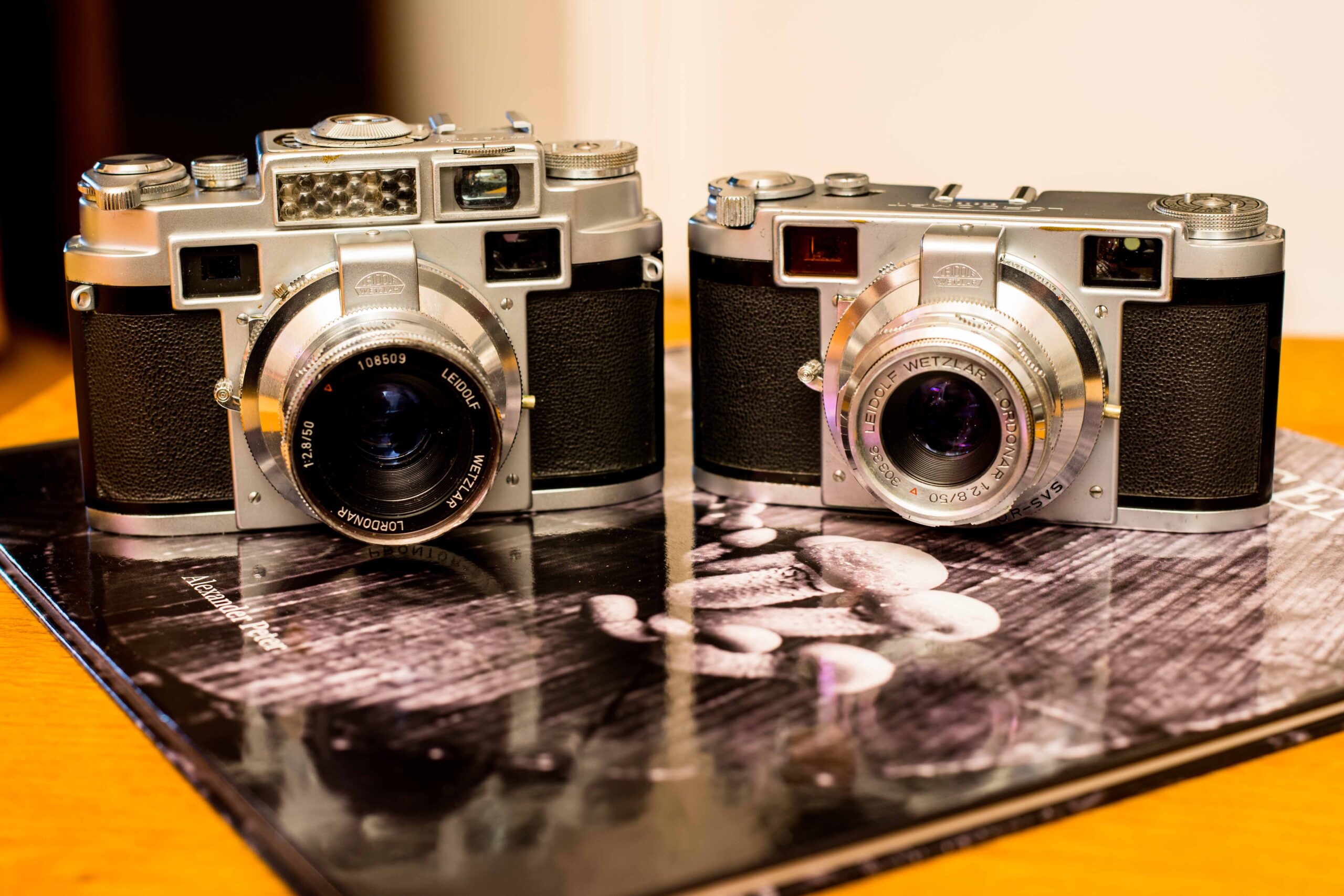
The Leidolf Lordomat is the most important camera in my collection because it belonged to my father. My father bought the camera around 1954. As an enthusiastic athlete, he also photographed track and field competitions and training sessions.
This gives me a special connection to the company Leidolf.
Leidolf, based in Wetzlar, began producing microscope lenses in 1921. From 1948 onward, they also manufactured cameras. The optical hub of Wetzlar was certainly the perfect environment for this. Big names like Hensoldt, Minox, and of course Leica are associated with Wetzlar. In contrast, the company Leidolf is relatively unknown—unjustly so, because the craftsmanship of both the camera and the lens is exceptionally good. Ultimately, production could no longer be maintained economically. Production numbers declined, and Japanese competition did the rest. Leidolf suffered the classic fate of the German camera industry.
The mail-order company Quelle, a major customer of Leidolf since 1957, had continuously increased price pressure. As a result, a variety of different models with declining quality were produced, all developed from the basic Lordomat model. In 1962, Leidolf was taken over by the Swiss company Wild. Camera production was discontinued, and the Leidolf factory halls were subsequently used to manufacture parts for surveying instruments.
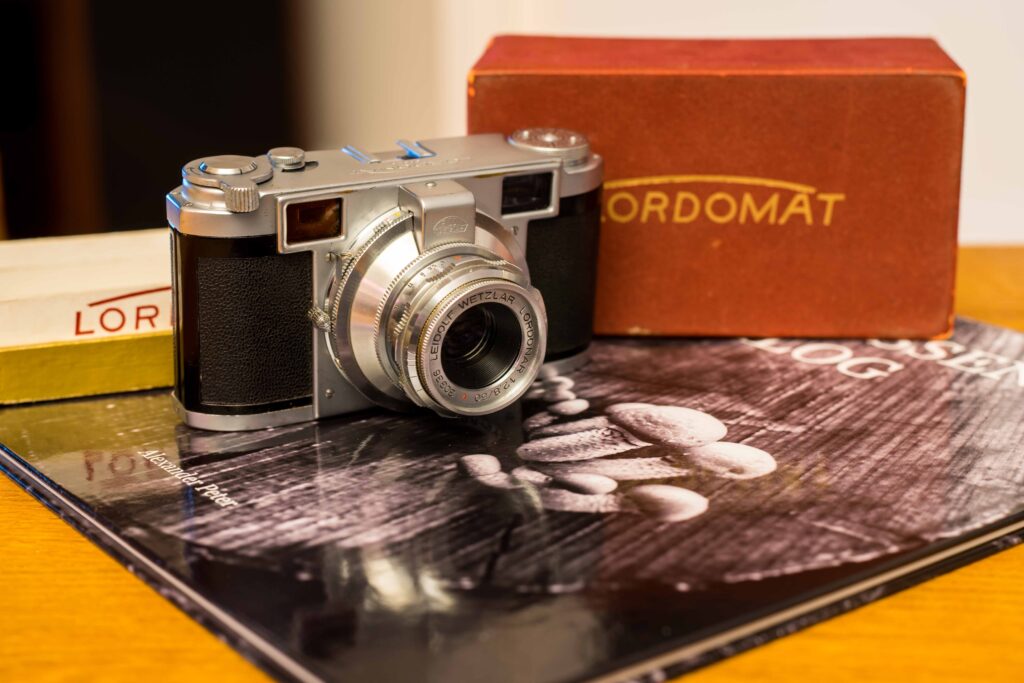
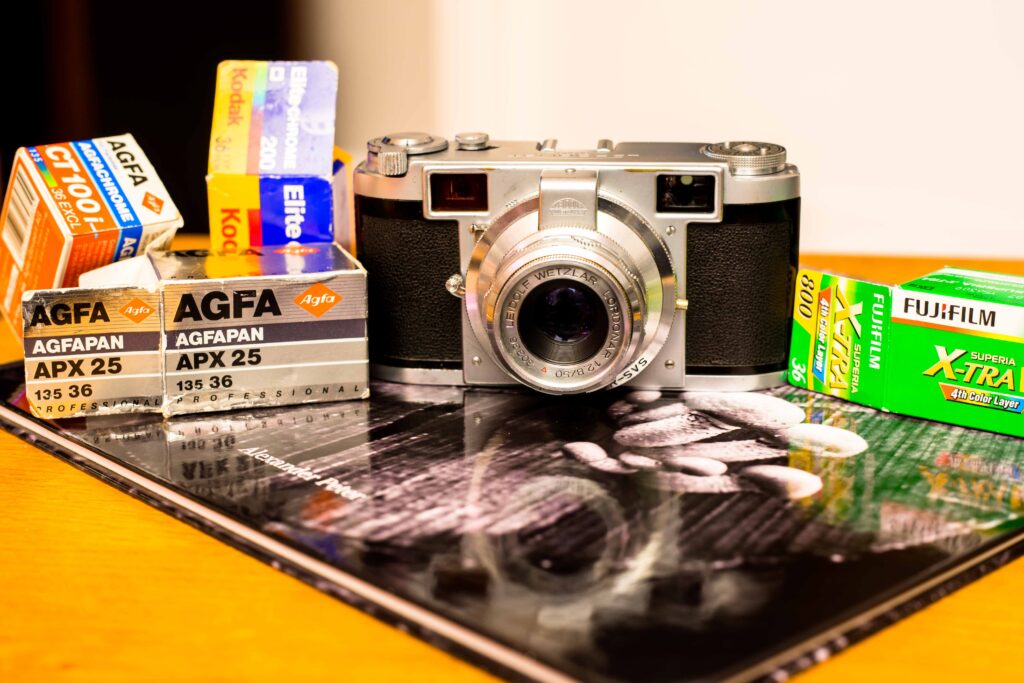
My father’s camera is the first version of the Lordomat, recognizable by the red rangefinder window. The die-cast body was fitted with chrome-plated controls. The Lordonar 2.8 / 50 was a four-element design (produced maybe by Enna, Munich). This version was built until 1956. It cost 240 Marks at the time—not cheap, but still a very good price-performance ratio. A German skilled worker earned about 150 Marks per month back then. Comparable cameras from Voigtländer or Leica were significantly more expensive.
Our family photos were taken with it until the 1970s. A Minolta XD7 then put the Lordomat into retirement.
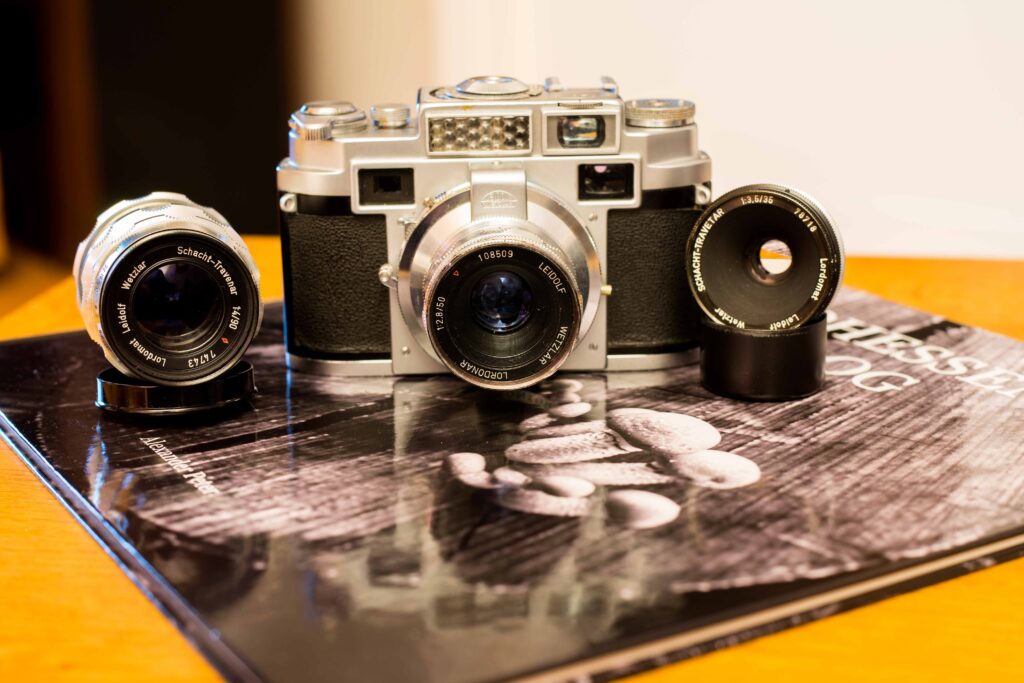
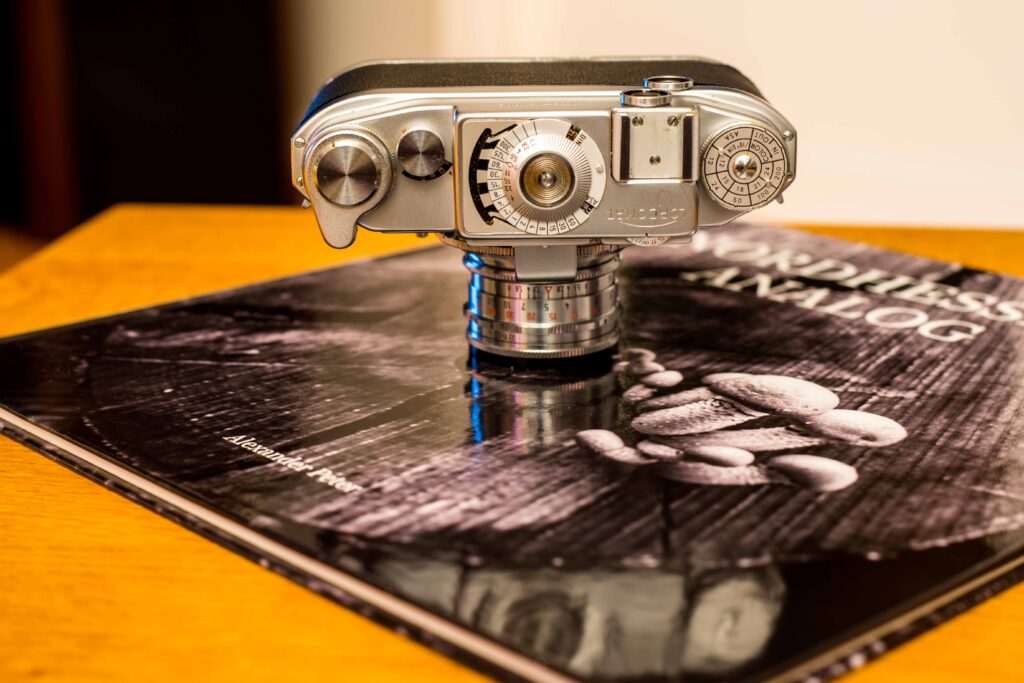
The Leidolf C35 is based on the Lordomat and was introduced to the market in 1956. The camera features an uncoupled exposure meter and the Lordomat universal viewfinder. The sales brochure states:
Everything is included in the Lordomat C35. This popular saying characterizes what you will notice when you hold the Lordomat C35 in your hand: its elegant design adapted to modern taste, its handy size, and not least its outstanding precision and technical features.”
Customer testimonials were also included, praising the Lordomat in the highest terms—and they weren’t entirely wrong. As with many cameras of the 1950s, the manufacturing quality of the Lordomat C35 is excellent. The equipment reflects the standards of the time. For example, the multi-viewfinder has parallax compensation for 35/90/135mm.
The Leidolf and Schacht Travenar lenses are sharp and contrast-rich. The 35mm and 50mm lenses were not in-house productions (I believe they were made by Enna), although no external manufacturer was mentioned. The telephoto lenses (90mm and 135mm) came from the well-known company Schacht. I find the design of the exposure meter simply fantastic.
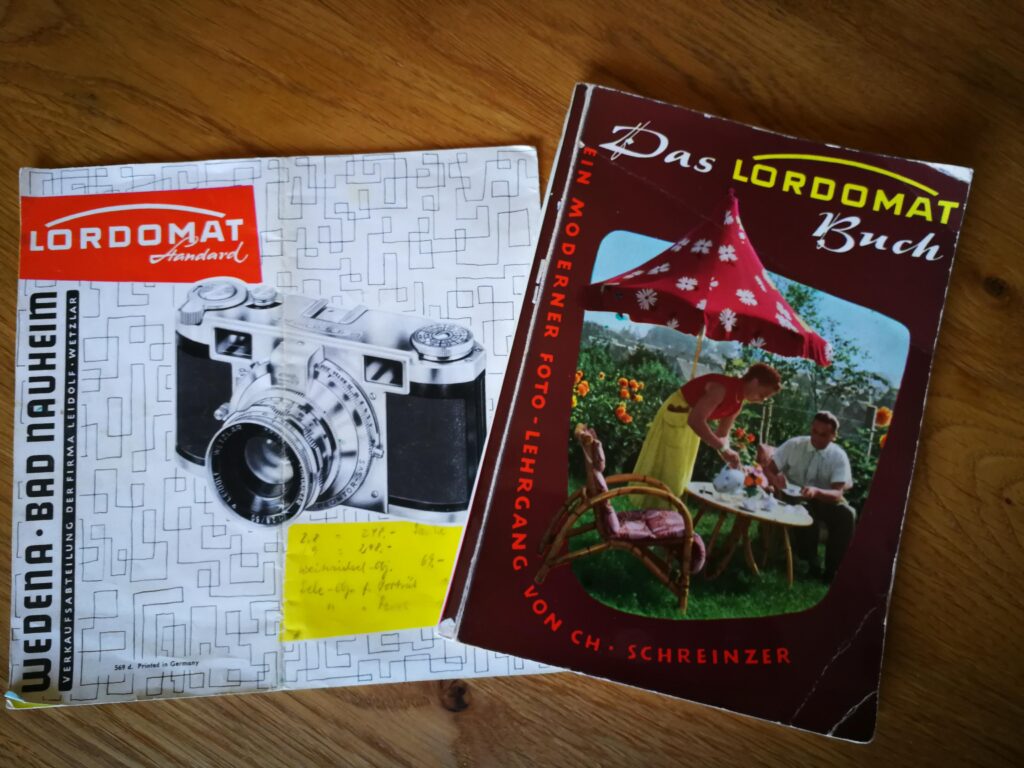
The company Wedena handled the distribution of Leidolf cameras from the start. They were very active and produced various brochures and the “Lordomat Book.” On the first page of the Lordomat Book, there is a note informing mail-order customers from Quelle that the Lordomat was called Lordox there. The prices handwritten on the Lordomat brochure are interesting:
- Lordomat Standard with Lordonar 1:2.8/50 – 240 Marks
- Lordomat C35 with Lordonar 1:2.8/50 – 369 Marks, with Lordon 1:1.9/50 – 465 Marks
- Special Travenar 1:3.5/35 – 135 Marks
- Special Travenar 1:4/90mm – 169 Marks
- Special Travenar 1:4/135mm – 255 Marks
The brochure always lists price pairs. Possibly these were list prices and sales prices side by side. If so, the discounts were substantial. This is supported by the fact that the buyer noted only the lower prices again at the end of the brochure. Price erosion would then have been significant by the late 1950s.
What remains is a camera that still produces razor-sharp images even after more than 60 years and whose exposure meter still works precisely. And the realization remains that both Lordomat versions are high-quality cameras that can still be used today with great enjoyment.
Share this post:

Comments
Eric Rose on Leidolf Lordomat & C35 – Hidden gems from Wetzlar
Comment posted: 19/12/2025
Eric
Comment posted: 19/12/2025
William on Leidolf Lordomat & C35 – Hidden gems from Wetzlar
Comment posted: 01/05/2026
Comment posted: 01/05/2026
Comment posted: 01/05/2026