

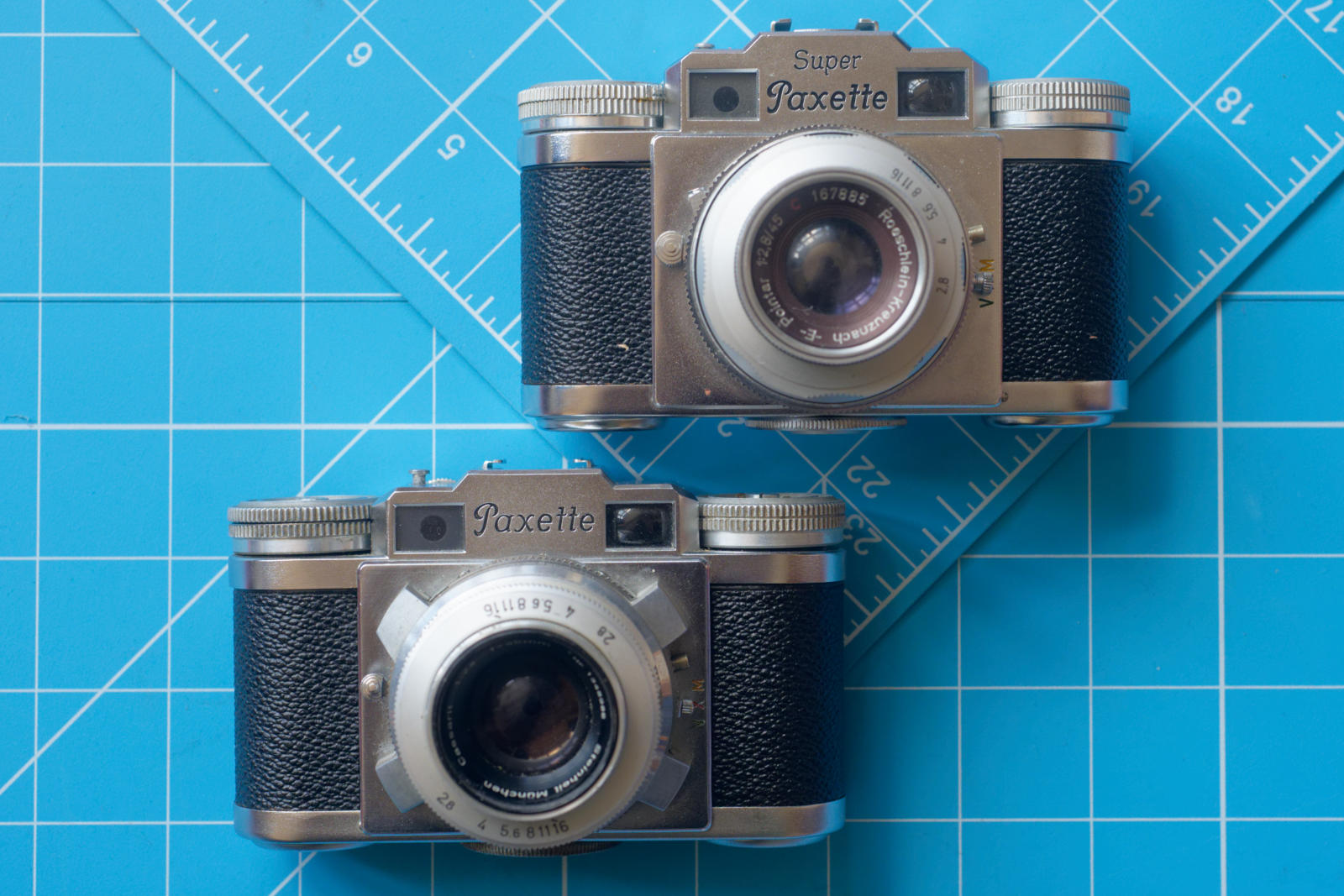
The Paxette range of viewfinder cameras were produced in Germany after the Second World War by Braun in Nuremberg.
There is another well-known German company (currently a wholy-owned subsidiary of Proctor and Gamble) called Braun. They became rather famous for making electric shavers and hair grooming products. This is not that company.
That Braun didn’t made stills cameras, although they did make Radiograms, record players, movie cameras, slide projectors (in direct competition to the Nuremberg company), clocks and kitchen appliances, as well as electric shavers.
The company that made the Paxette cameras and the Paximat range of slide projectors was started by Carl Braun as Karl Braun KG, Fabrik optischer Geräte und Metallwaren in 1915, it predated the other company by 6 years.
In 1948 they changed the name of the Nuremberg company to Carl Braun Camera-Werke. Under their new name, they produced a series of Rollfilm and 35mm cameras. Prominent among these were a series of Paxette direct viewfinder cameras.
The Paxette range
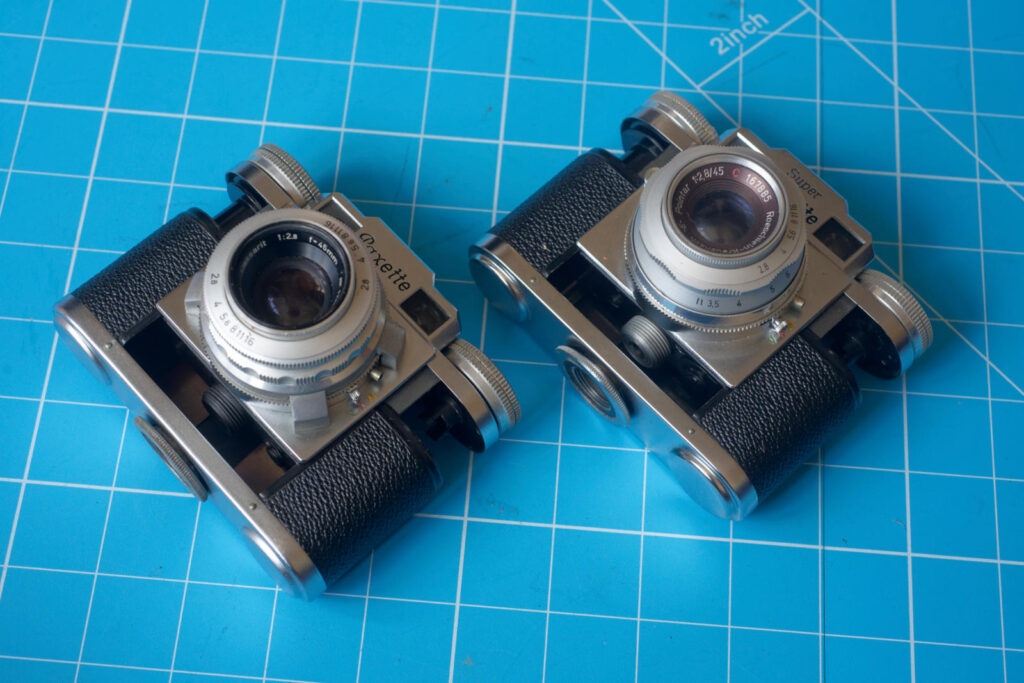
The Paxette cameras are diminutive, featuring a wrap around, round edged body in two parts. The rear section slides off downwards and consists of the back, sides and base of the camera. A fixed spring in the back holds the hinged pressure-plate of the other section of the camera in place.
The first Paxette camera appeared in 1951. It had a flat top-plate, a fixed 45mm lens and a knob wind, but it was recognisably similar to the subjects of this review.
The shutter release is integral to the shutter-lens unit. Other than the shutter being set by the camera’s film advance, the set-up is remarkably simple and modular.
Variants
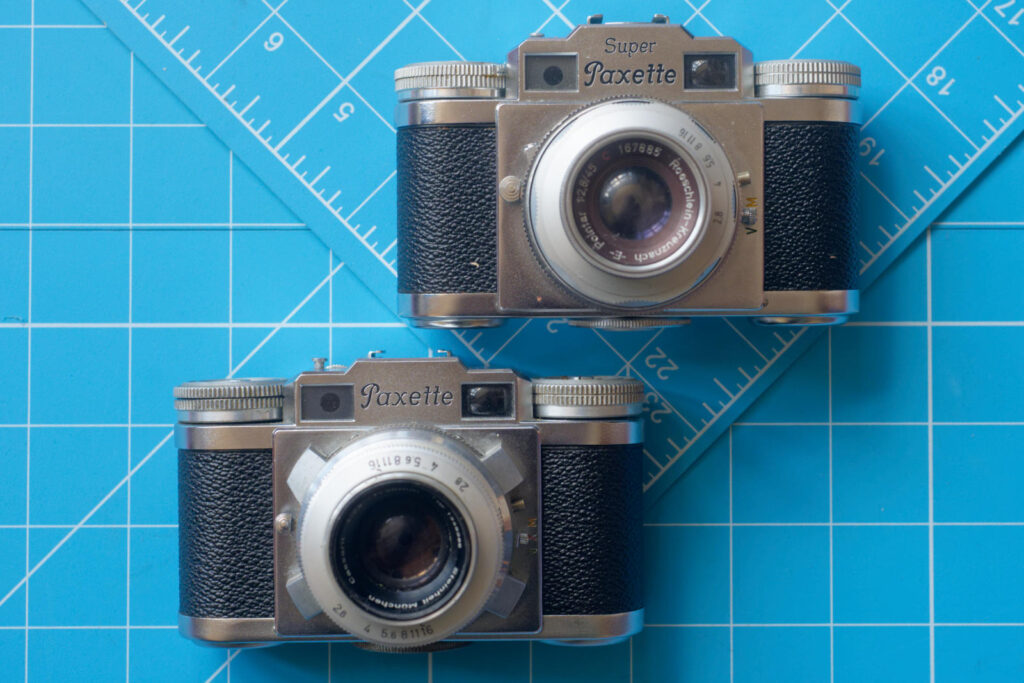
The engraving on Paxette cameras does not help too much in identifying individual models – other than that models with a coupled rangefinder tend to have ‘Super’ in their name. Fixed lens models are generally called I, while the interchangeable lens versions are referred to as II.
According to Collection-appareils, there were 14 variants of Paxette Cameras, with a further 7 ‘Super’ models.
Differences include the presence of an exposure meter (some extinction, some selenium), the presence of a rangefinder (some coupled, some uncoupled), Knob or lever-assisted wind, interchangeable or fixed lenses, conventional or lever rewind, and brightline or plain viewfinder.
The two models I’m looking at in this article are a Paxette IIM (interchangeable lens, uncoupled rangefinder, lever wind – hereafter the ‘IIM’) and a Super Paxette I (Pointar lens, coupled rangefinder, originally lever wind, hereafter the ‘Super’). The IIM is an earlier design, but the lever wind places both cameras around 1956-1958.
Camera features
One of the more obvious differences between the two cameras is the buttress surrounding the lens mount on the interchangeable-lens version. This reinforcement seems to have been added to cater for the extra torsion forces that the lens mount takes when a lens is screwed tight into the mount.
Shutter
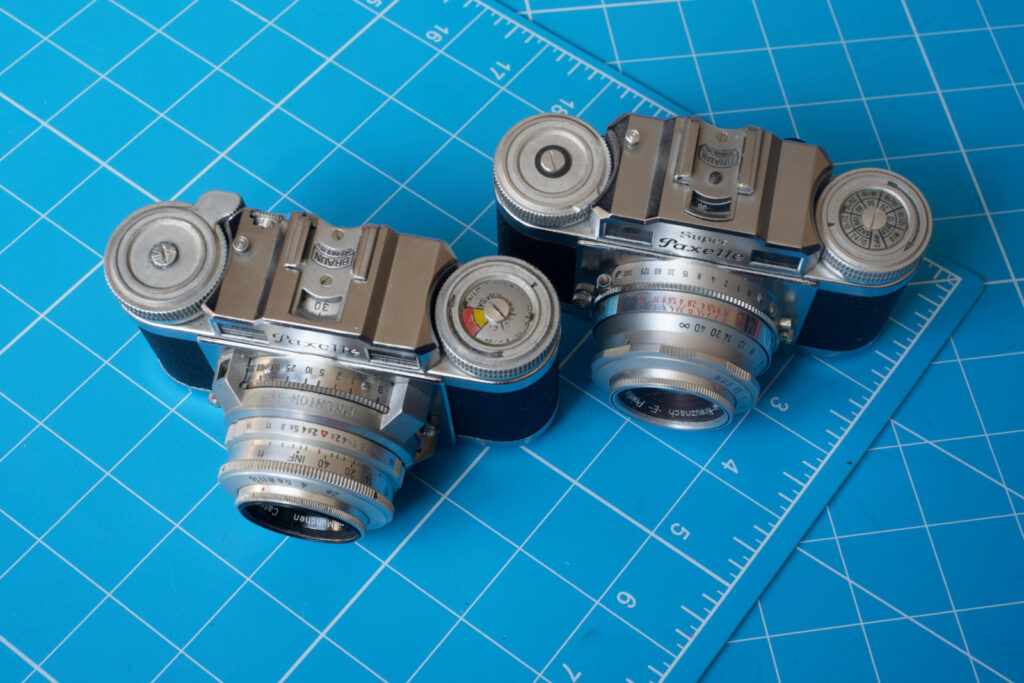
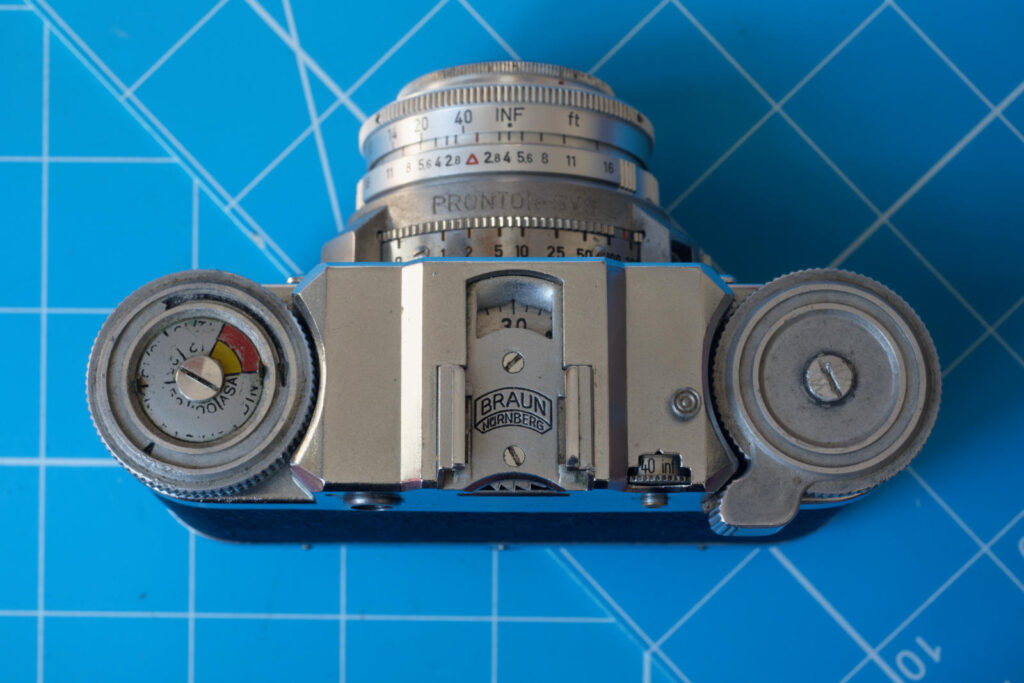
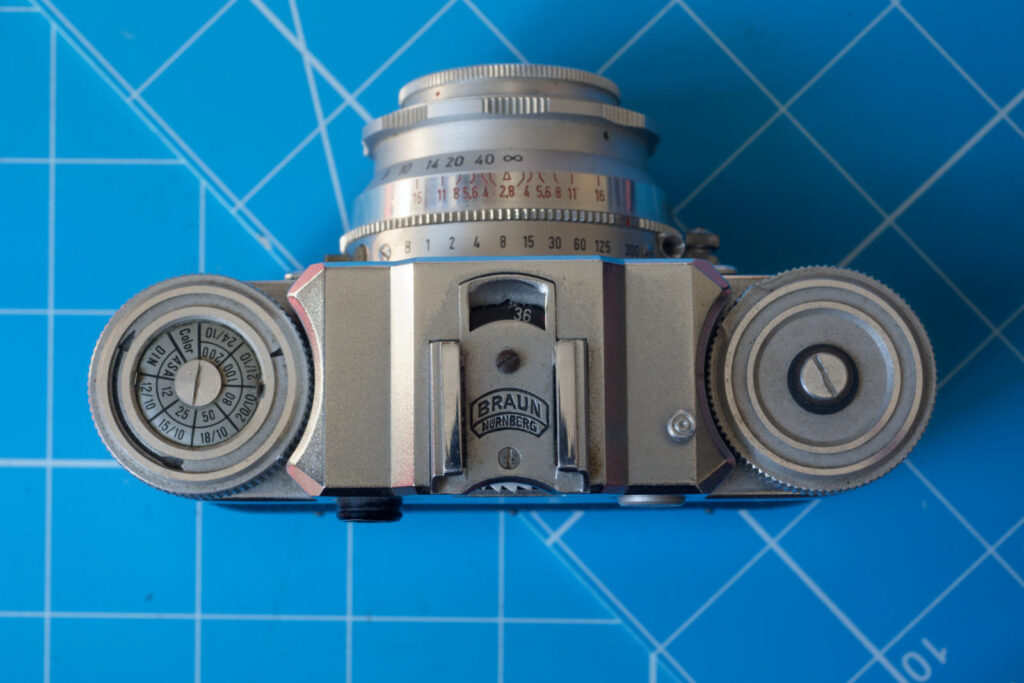
The Prontor-SVS shutter used on both cameras ranges from 1-1/300 plus B. The indicated speeds on the IIM go 5-10-25-50100-300, while the Super shows the more modern 8-15-30-60-125-300 markings. While the SVS is a mechanical shutter, it is constantly variable, so you can (for instance) set it between 100 and 300 for an intermediate (but somewhat imprecise) speed.
Lenses
The IIM takes a variant of the M39 screw mount. Not the version with the 28.8mm registration distance used by Leica, nor the 45.2mm registration distance version as used by Zenit on some early SLRs, but a 44mm registration distance version, peculiar to Braun. If you have any Zenit 3M 39mm lenses, it should be possible to shim them out to work on the non-coupled versions of the Braun cameras.
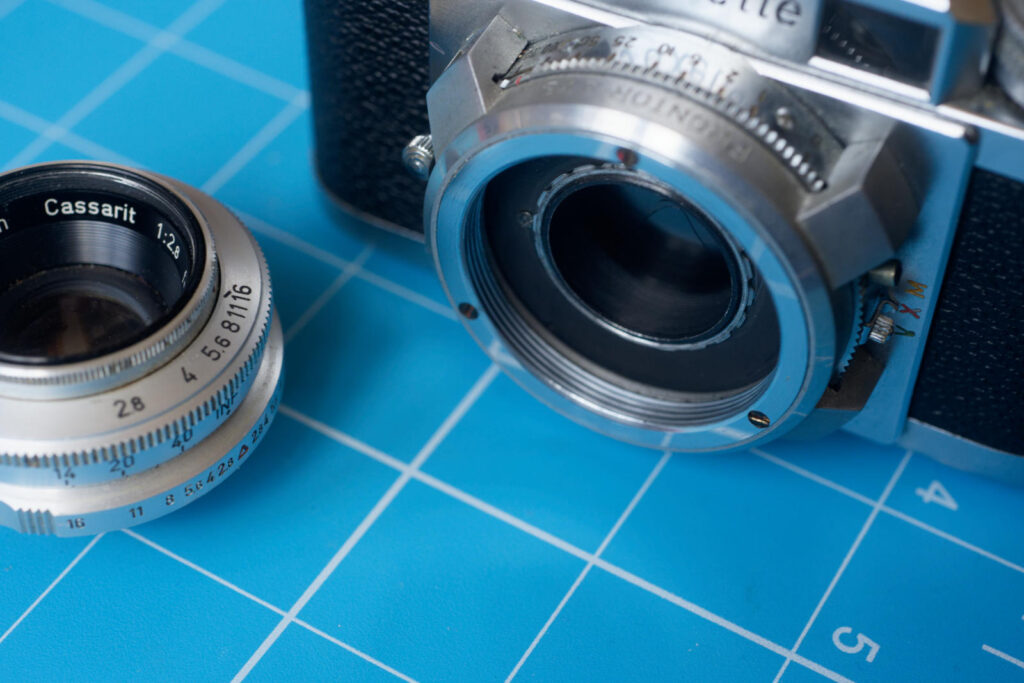
Both of these cameras feature 45mm f/2.8 lenses. My IIM wears a Cassarit from Steinheil of Munich, while the Super, has its ‘fixed’ Roeschlein-Kreuznach Pointar. Other standards included Kataplast, Casser and Staeble-Kata 45mm lenses.
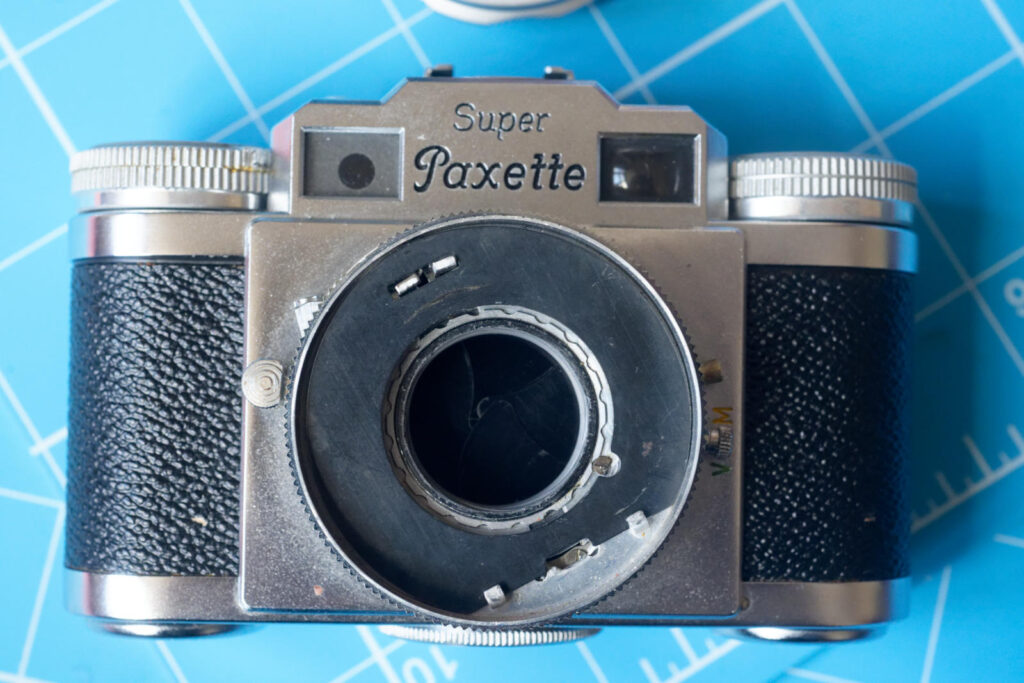
There were a fair number of lens choices for Braun’s version of M39. Interchangeable lenses seem to have been available from 35 to 135mm from a whole range of suppliers, including Carl Zeiss, Schneider and Wray. I’ve not got access to any extra lenses. Lenses tend to have multiple blades (12 is quite common) and stop down to around f/16.
Viewfinder
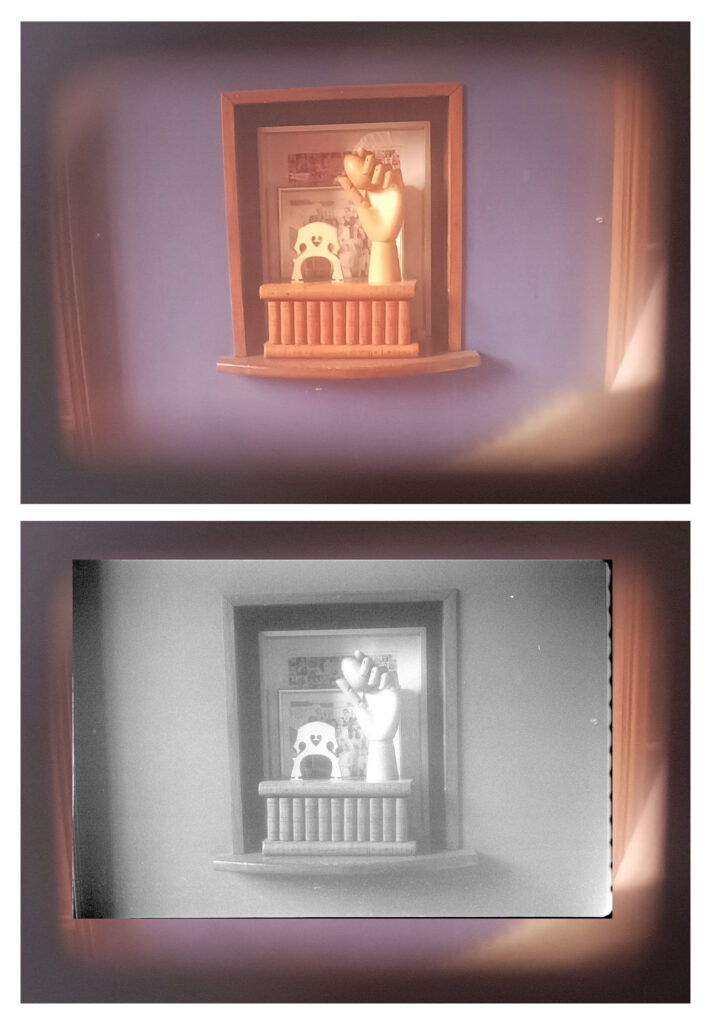
The Viewfinders of both of these cameras are very similar. The ability of the IIM to take wide-angle and telephoto lenses is one thing, but the viewfinder gives no assistance whatsoever. I can only think that it must have been assumed that you would use a supplementary viewfinder.
After a recent run of using cameras with poor viewfinders (Lomo 120, Konica 28W), I’ve now hit rock bottom. The Paxette viewfinder, is as bad as a viewfinder could get without deliberately pointing in the wrong direction or attempting to poke your eye out. The only way is up.
The viewfinder is small, not particularly bright, rather difficult for spectacle wearers. It has no bright lines and shows more than the standard 45mm lenses will project onto the film. Braun may have made their cameras uglier with their later high-top bright-frame versions, but I would see it as entirely justified if it improved the viewfinder.
Lever wind
The lever wind works by ratcheting one disk over another. The lower disk needs to turn 360 degrees to advance the film and cock the shutter. The film winds and the shutter cocks with 1 and 2/3 strokes of the winder (although you can use multiple short strokes).
Film counter
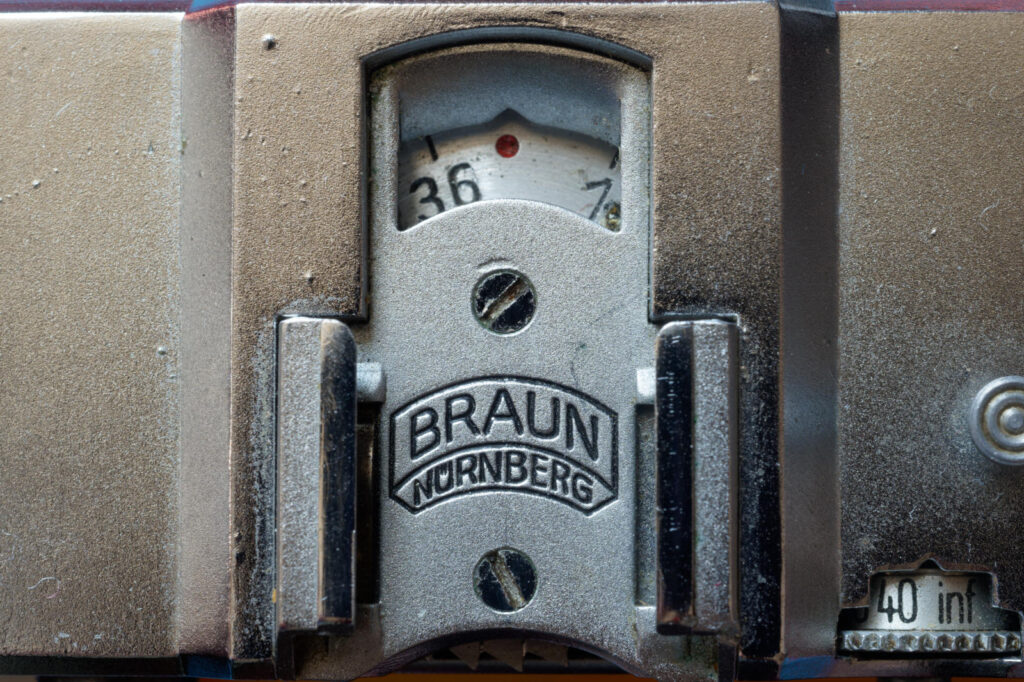
Both cameras have a manually set film counter (counting down) which is built into the cold shoe. It is neat and seems reliable.
Changes to the film gate
Although the sliding back seems to have been a constant through the history of the Paxette range, there are detail changes to the hinged pressure plate and film transport between these two models. The earlier design from the IIM uses a single large sprocket driving the top row of sprockets and features a pressure plate that hinges from the top, while the Super has a more conventional transport pulling both sets of perforations of 35mm film and hinges the pressure plate at the bottom. It is also notable that the later design features a prominent serial number – something absent from earlier cameras.
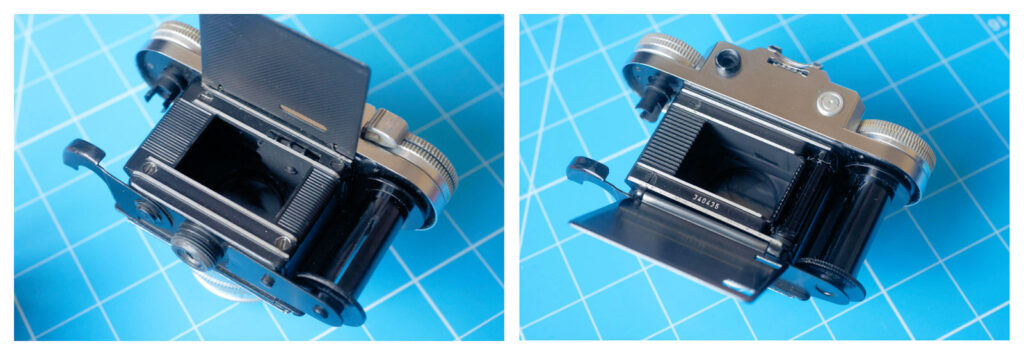
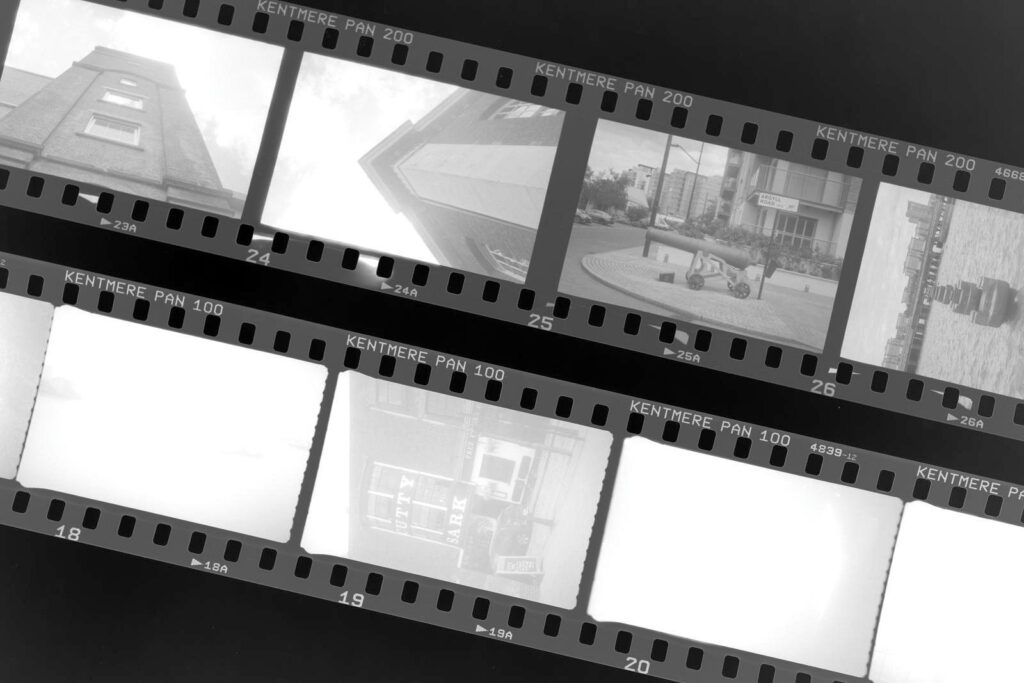
The change to film transport seems to have made a difference to negative spacing. Frame spacing with both cameras is variable, but is noticeably wider with the Paxette IIM.
Issues
The rewind of the Paxettes is not intuitive. With the rewind knob down in what might be thought of as its normal working position, it doesn’t engage with the forks that fit into the 135 cassette. This means you don’t get confirmation of the film transport by seeing the knob turn as you wind. To rewind, you need to pull the rewind knob up about 1cm, which makes it engage with the forks. Once the knob is in the raised position , you can then press the rewind plunger on the top-plate and rewind the film. It is just a quirk, but it can be unsettling if you don’t know about it (or if you don’t have access to a manual) my first films were unloaded in a dark bag.
My Super seems to have had the lever-assist tab of its winder cut off at some point – effectively converting it to knob-wind (the tab assist is a bit faster, but the knob-wind is OK),
Prior to running a film through the Super for this review, I remember taking it to Sheffield around the time I was writing my first Minolta SRT 101 review back in the summer of 2020. At that time the Paxette had a good go at shredding the perforations on the film I loaded. I think I put the remainder of the roll through another camera. As I had lots else going on at the time, I just put the camera aside until recently.
This time I didn’t have any issues with film transport. What I did have a problem with was shutter timings. I tend to steer away from the slower speeds with old leaf shutters as the lack of ‘exercise’ of those speeds tends to make them a little ‘unpredictable’; however the faster speeds are generally OK.
The Prontor-SVS shutter used in the Paxettes only goes up to 1/300, and as the summer of 2026 when this article is being prepared, has been quite bright, I was using it a fair amount. When the film came out of the tank I could see quite quickly that the majority of the shots were overexposed, although the shot I took on a tripod with the speed set to either 1/125 or 1/60 to show viewfinder coverage was far better exposed. It could be a duff shutter, or it could just be that the shutter needed more exercising at its fastest speeds. Anyhow, that is my excuse for the scarcity and quality of sample Super Paxette shots in this article.
The Paxette IIM shutter seems to operate fine. While the rangefinder in the Super was quite good (about the only positive thing I can say about the viewfinder), the rangefinder patch in the IIM is very hard to see. I suspect that someone has previously cleaned up the rangefinder parts in the Super, but that the IIM is still dealing with 70 years of accumulated grime. Normally, I would take the top-plate off and clean everything up, but one of the pages I found on the internet had the nearest I’ve ever seen to a ‘Here be dragons’ warning regarding the lever wind mechanism used on the Paxette cameras. Basically, it warned that getting the springs and pawls back together was challenging. As the winder would need to come off to remove the top-plate and access the rangefinder, I decided that improving the visibility of the uncoupled rangefinder was not worth the risk. It did maybe explain why my ‘Super’ had ended up with a simplified knob-wind though..
Fellow travellers
I’m convinced that there must have been some co-operation between Braun and Aeronautical General Instruments’ AGILux camera subsidiary. The IIM is even more like the Agimatic than I noted the Super Paxette was. It has to be said that British firms did have a go at playing fast and loose with German camera patents during and after the war (the AGIFlex and MicroCord being examples), but the similarities between the Paxette and Agimatic/Agima cameras just seem too sustained (and two-way) not to have been some form of co-operation. Both companies were of similar sizes and for much of the 1950s until export controls came off in the UK, they were not in direct competition. I’ve not found anything about co-operation or patent challenges, but this degree of convergent development stretches credibility a bit.
Pictures
Paxette IIM
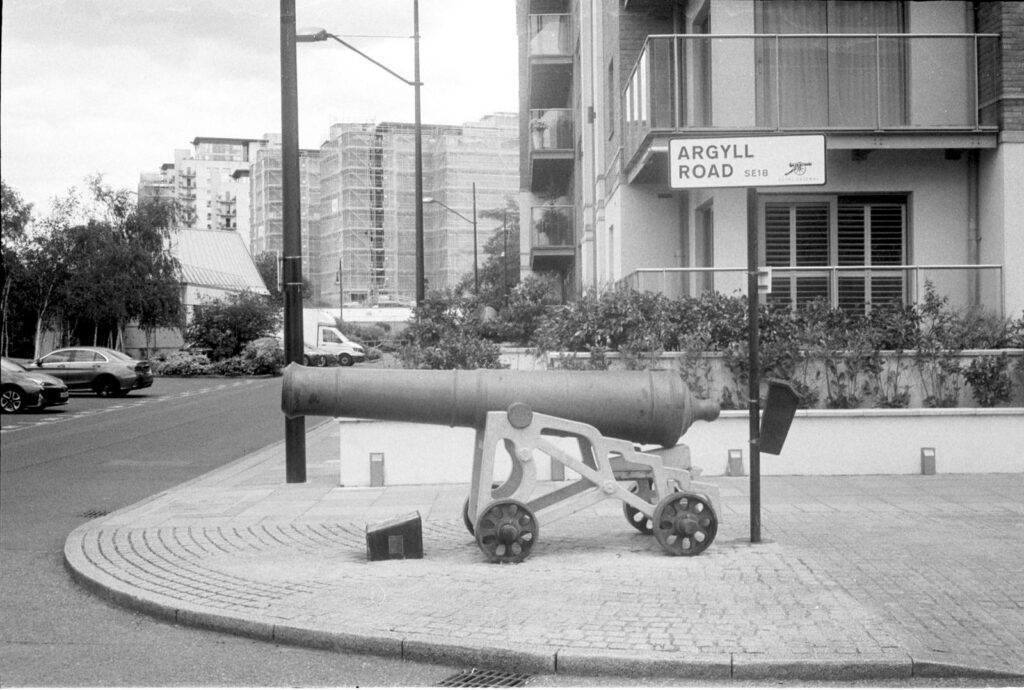
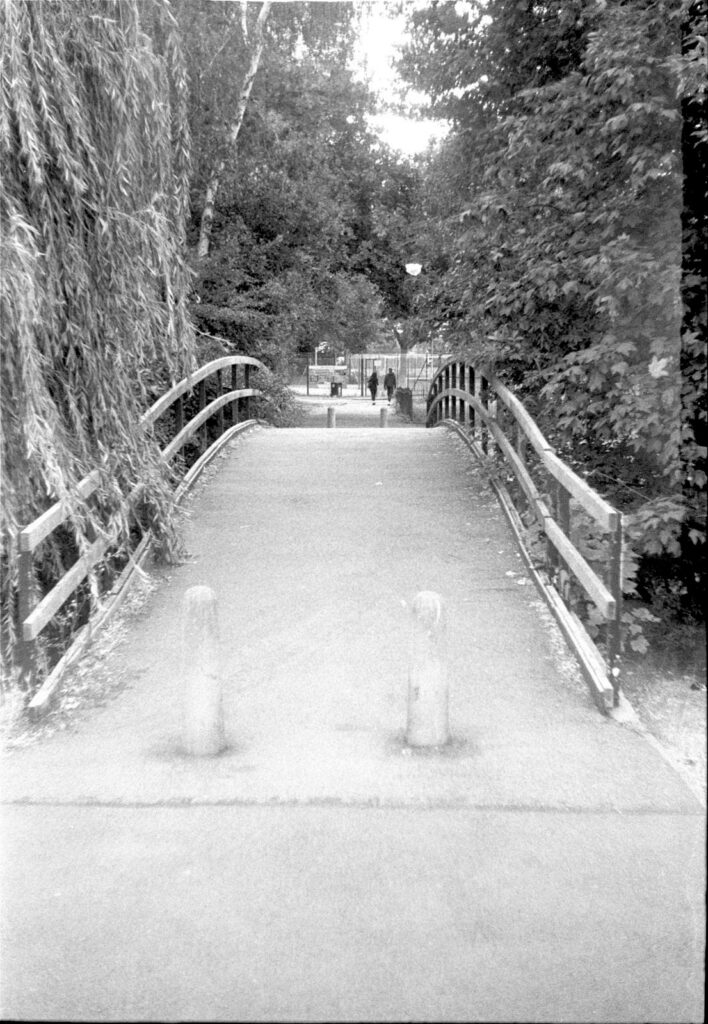
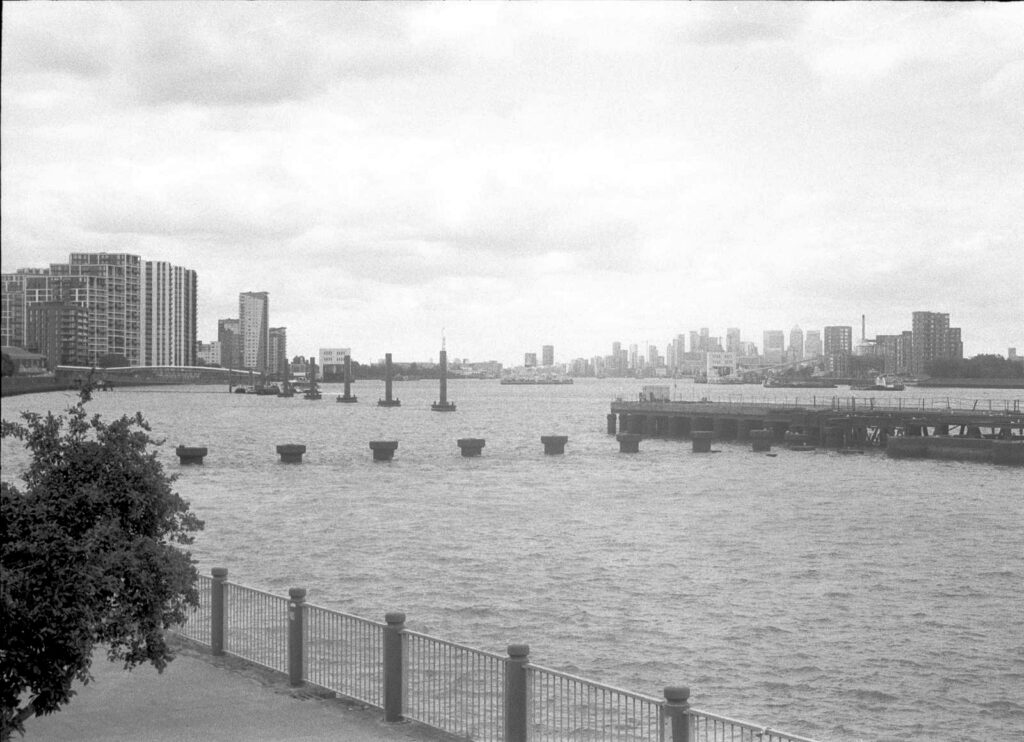
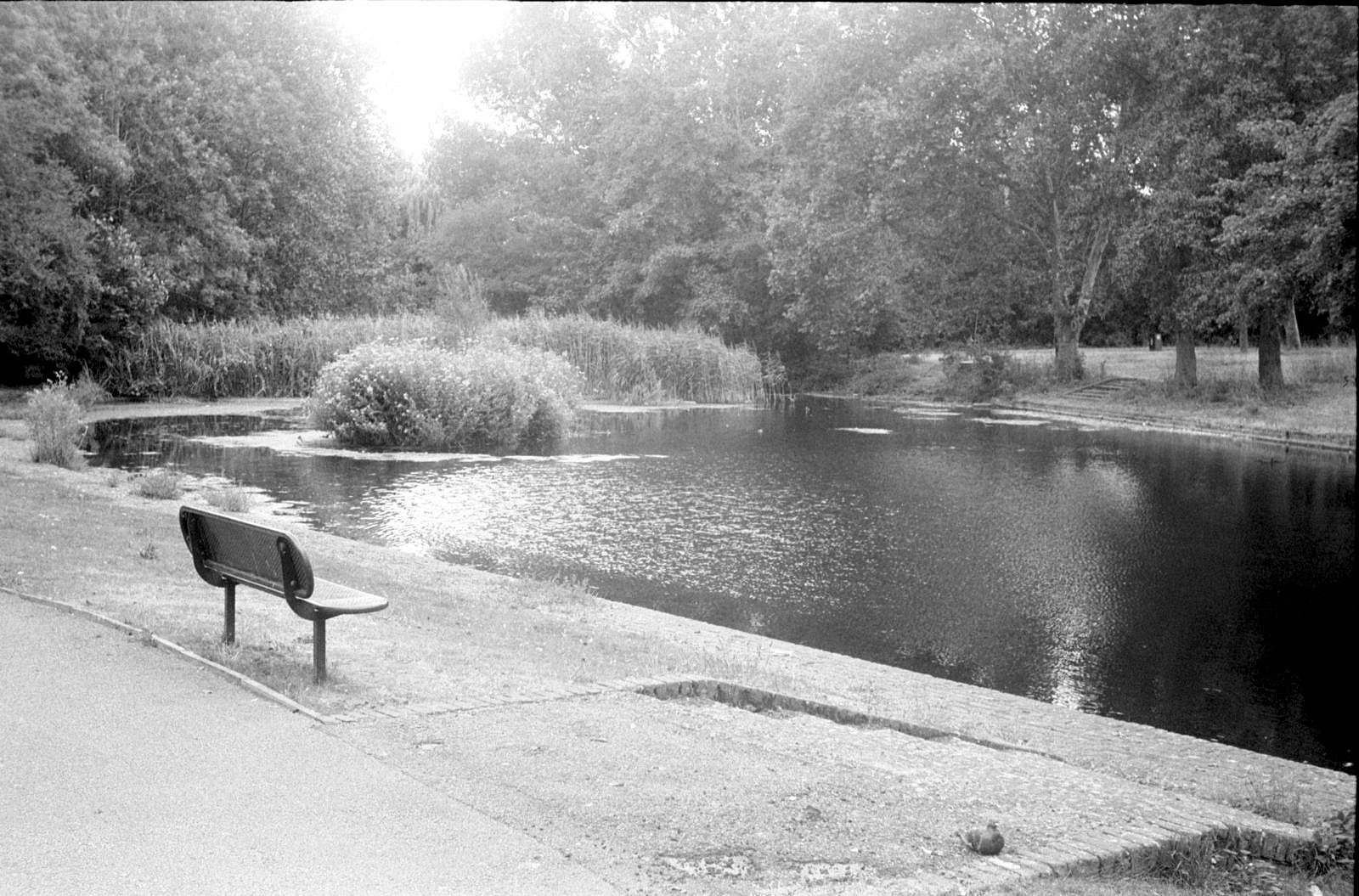
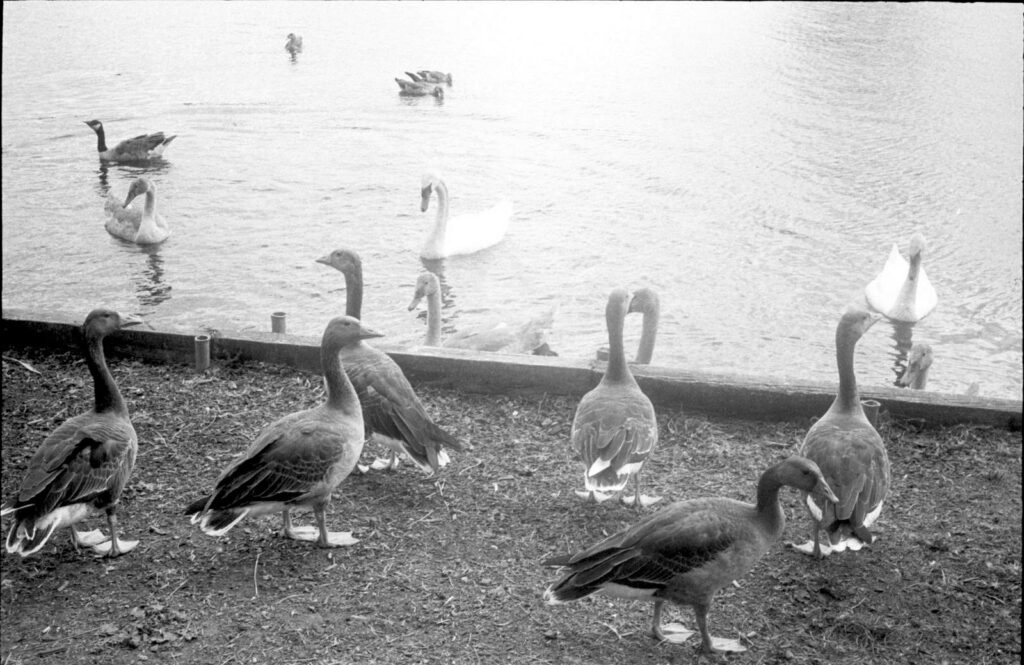
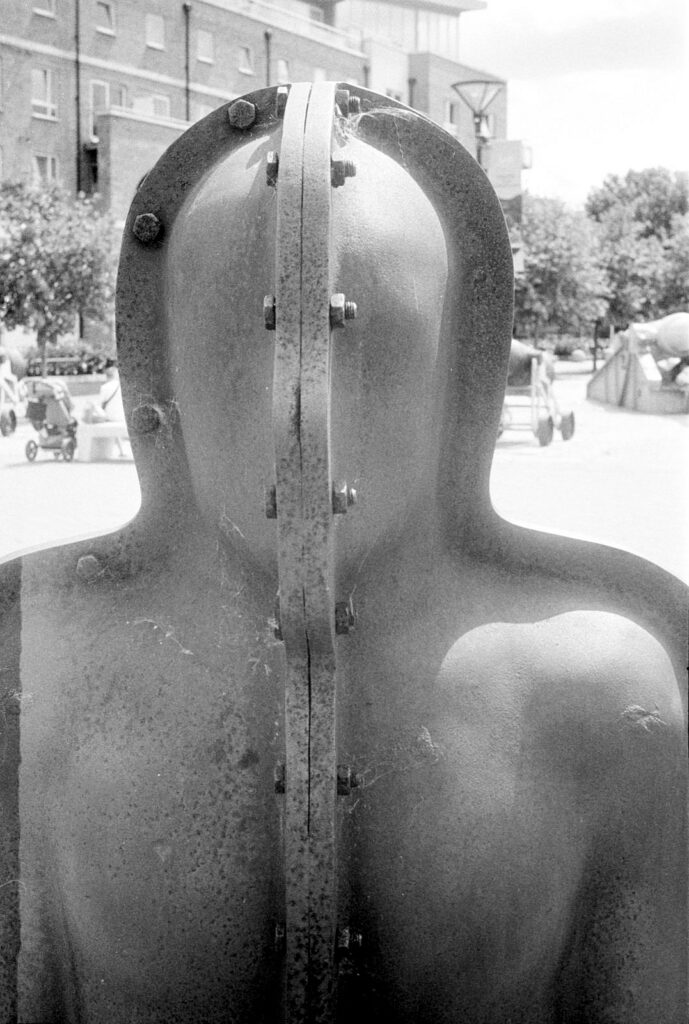
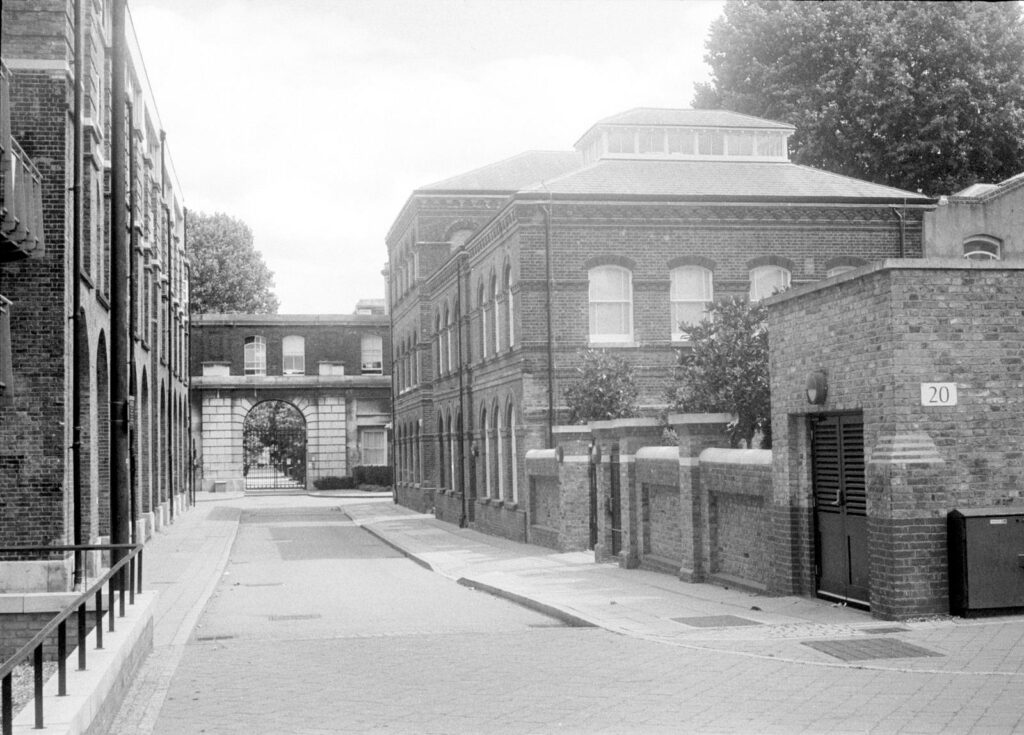
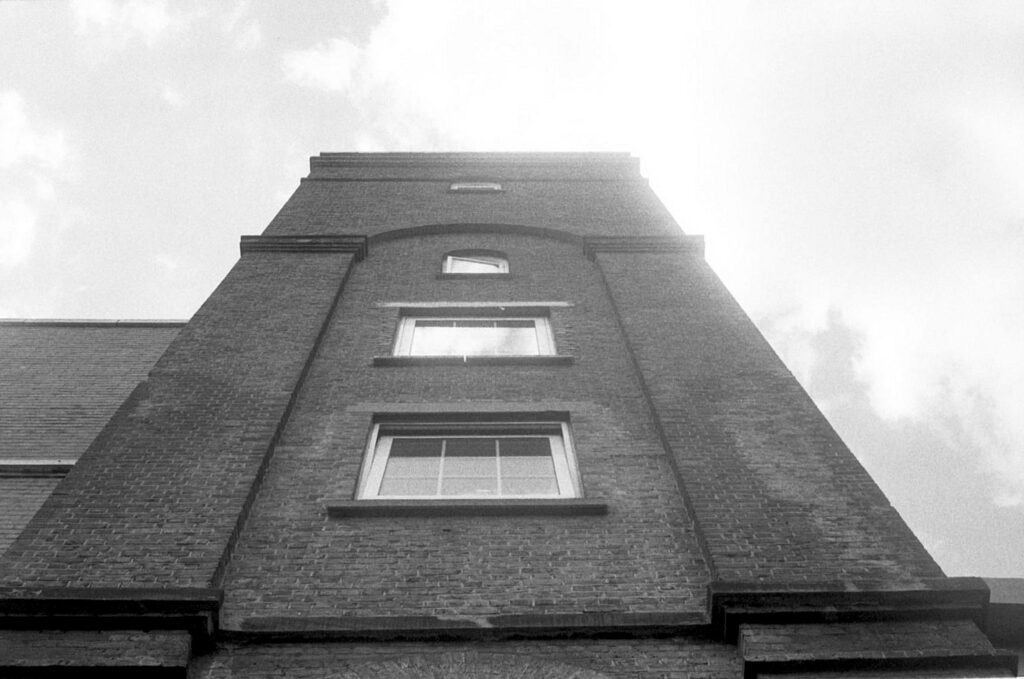
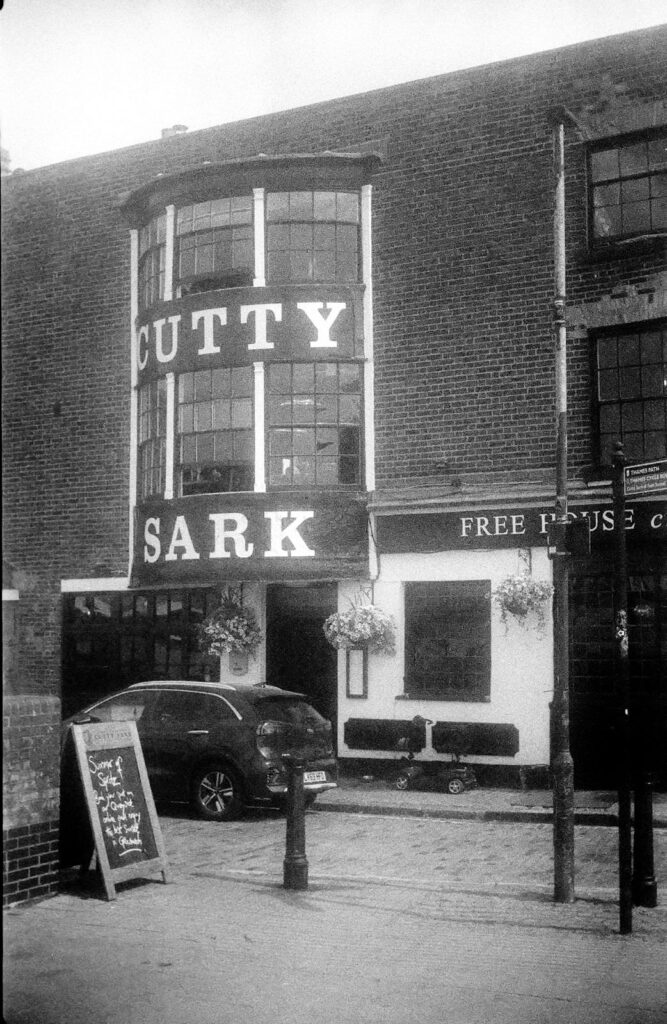
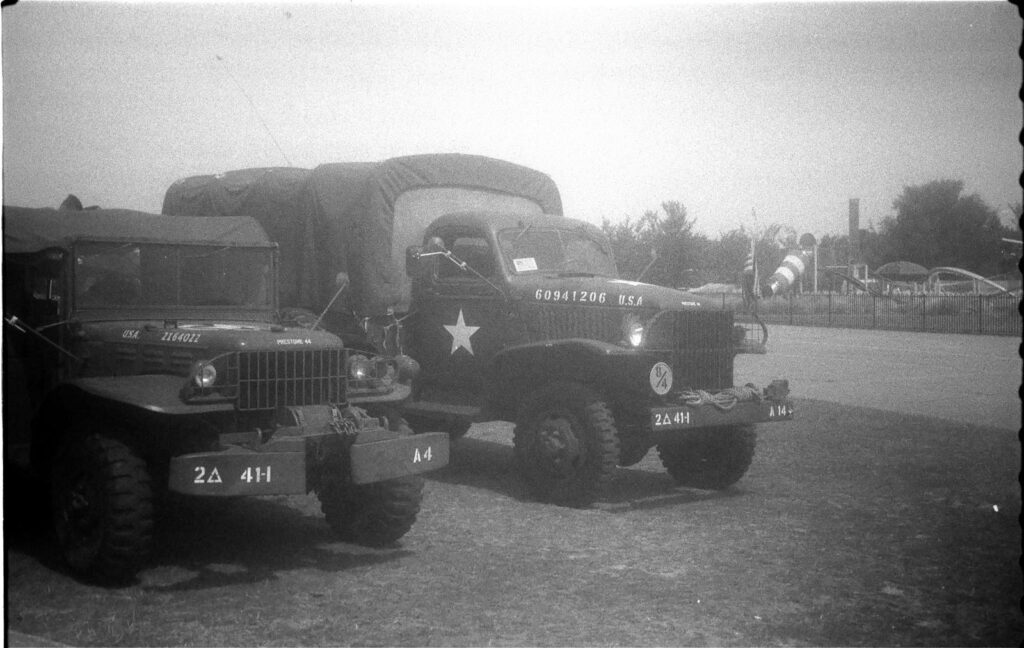
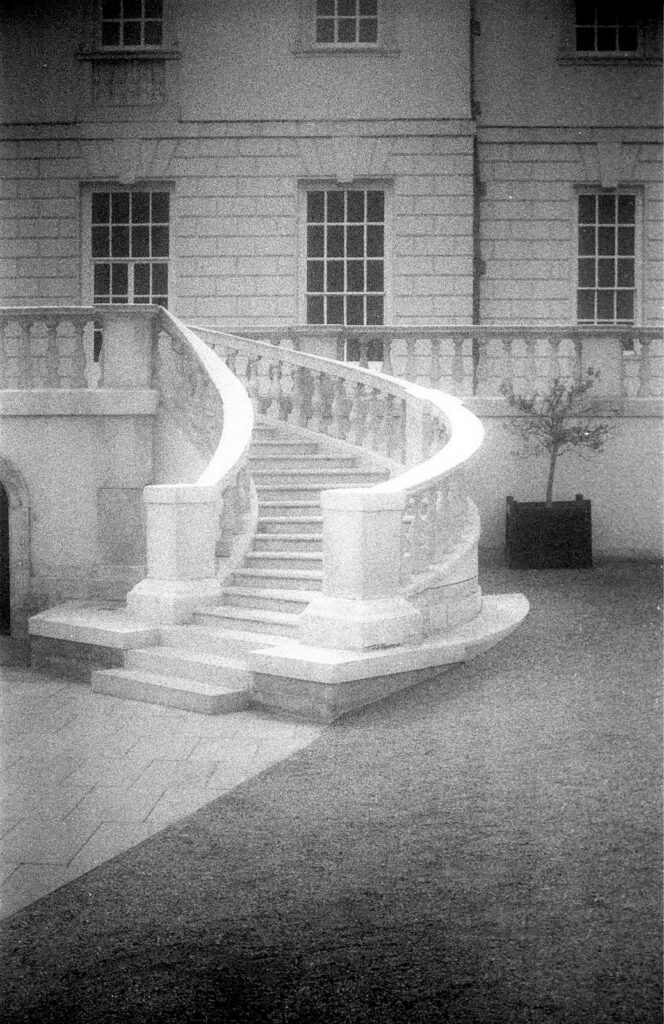
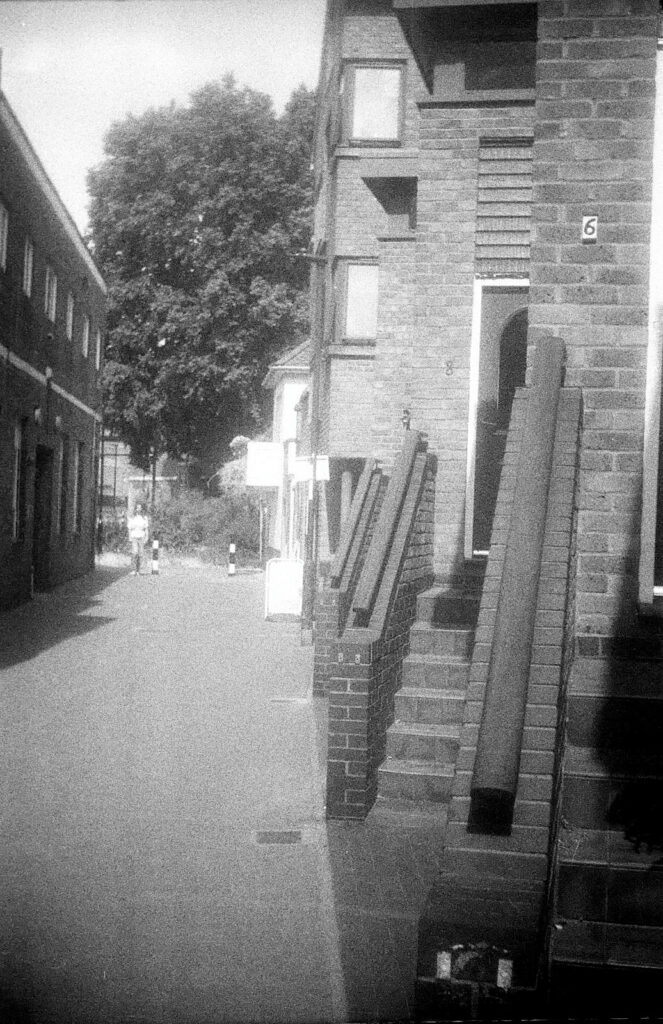
These were shot with the IIM on Kentmere 200, processed in Fomadon R09 and scanned with a Plustek 135i.
Super Paxette I
These were shot with the ‘Super’ on Kentmere 100, processed in Fomadon R09 and scanned with a Plustek 135i – the scanner has had to do a lot of work as the negatives were rather horribly over-exposed.
Conclusion
The Paxettes are really good little cameras – attractive for those with access to a lightmeter, or who are practiced in ‘sunny 16’. Very capable and relatively reliable for instruments that are 70 years old. They have their quirks, but I guess that is part of the attraction. I’m a bit sceptical about how practical they are as interchangeable lens cameras, but the standards seem quite good. Because you don’t get speeds faster than 1/300, you may need to exercise care over your choice of film sensitivity (or treat yourself to an ND filter).
As with the AGI cameras, the older cameras (with the lousy viewfinders) look better, but the bright-line viewfinders of the later Paxettes (post 1958) gives them extra appeal for practical picture taking.
I’ve noted a similarity between the Paxettes and the Agimatic and Agima cameras from AGILux. There is not a lot in it, but I think I prefer the Agimatic and Agima takes, despite those cameras being derivative. Of course the unconventional Four-in-One shutter release and winder of those cameras may put some people off. I also acknowledge I may be showing a local bias, as I hail from South London. I’ve not used either range with telephoto lenses and there were certainly more options available for the Paxettes. For me, the controls are just a bit better laid out and easier to use on the cameras from Croydon.
If you get the chance to try out a Paxette, I’d say to go for it. I’d be really interested to try one of the bright-line Paxettes and see what Braun did next.
Where are they now?
Braun abandoned film cameras during 1960s, but they carried on producing other optical devices, including a highly respected range of slide projectors. They are still trading independently at the time of writing, as Braun Photo Technic. They make scouting and action cams, binoculars, spotting scopes, night-vision equipment, digital photoframes and sundry photographic equipment. They appear to have close ties to the scanner manufacturer Reflecta (to the extent of appearing to share a headquarters building).
Share this post:

Comments
Alastair Bell on Braun Paxette IIM and Super Paxette I review
Comment posted: 14/09/2026
I love the small size, solid build simplicity of design. The viewfinder is tiny as noted but in mine the rangefinder patch is bright and easy to use. Mine has a 50mm Schneidar Kreuznach Xenar 50mm f/2.8 which gives superbly sharp images.
I bought mine on an impulse. My local camera shop had it in the top of their display cabinet of used equipment and I just knew I was going to buy it. I took it to Goodwood Revival (what better place to take a vintage camera?) fitted with Dragin Film No. 1 and it acquitted itself extremely well.
I did a review of it here:
https://www.35mmc.com/20/11/2025/5-frames-with-a-braun-super-paxette-using-dragon-no-1-film/