

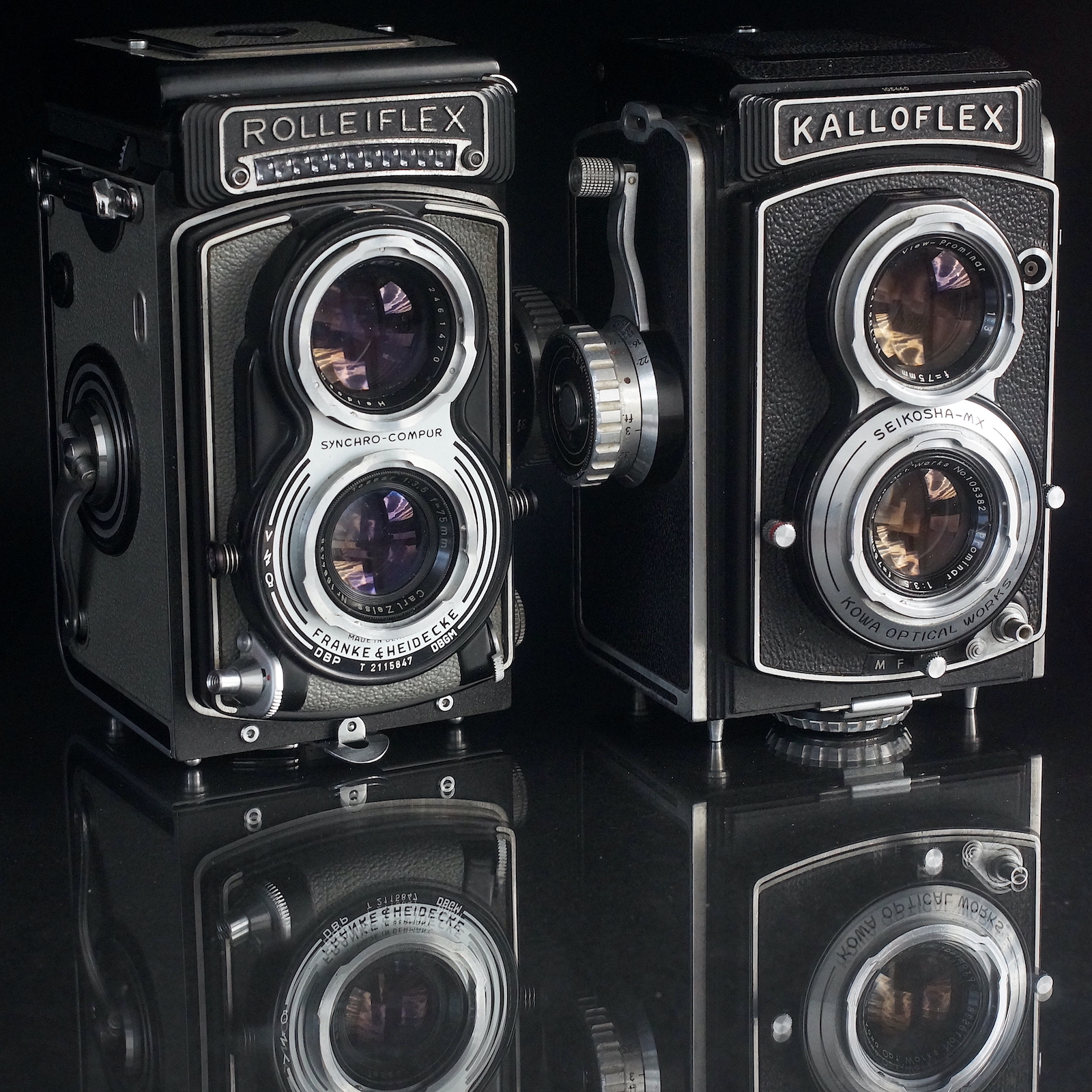
The TLR is a type of camera I have used regularly over the past 50 years or so. After prices tumbled post-millennium in the early days of digital and just after I retired, I was able to try quite a few more. I had never, however, been able to run to the top end makes, in particular the better Rolleiflexes or the quite rare Kalloflex, known as the poor man’s Rolleiflex.
I did have a well used Rolleiflex Automat, probably the 1951 version with Synchro Compur but no light values. This was in the early digital era but I felt it was mostly little different from its near identical, later copy, the Yashicamat, introduced in 1957, that I had used for quite a few years back in the 1970s. The Rollei had the sensing bar that triggered the frame counter and the addition of a finder lens and mirror for focussing through the direct vision finder but neither feature was particularly significant for my purposes.
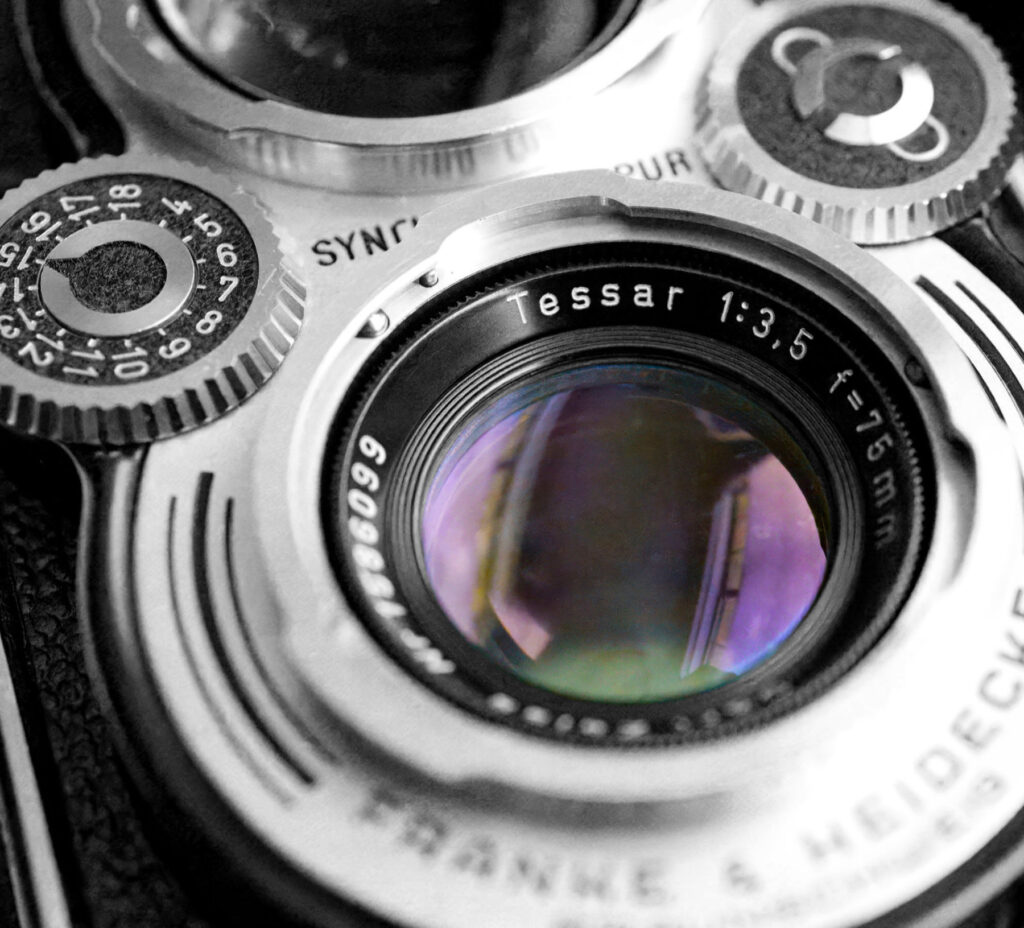
At risk of putting everyone to sleep, I have to come back to the twin lens reflex. After taking a deep breath and exceeding my usual limit by three or four times I currently have an example of two similar but very different cameras to compare. One, the Kalloflex Automat K2, already reviewed, and the other, a recently acquired Rolleiflex T, first version, both in very good to near mint condition with the “T” which is a one-off within its family and the Kalloflex equally so but for different reasons.
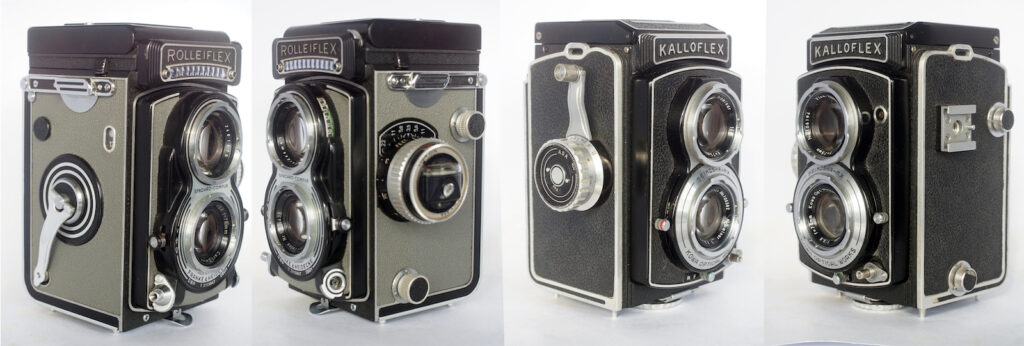
Despite many similarities and based on the same basic design they are very different cameras. The Rollei is aimed at the keen amateur or casual, serious shooter, pitched at a price point mid-way between the expensive, top of the line Rolleiflexes and the simpler but more affordable Rolleicords. The Kalloflex on the other hand is a sturdy working tool, intended to appeal to the professional and press photographer. As a result, the Rollei’s design aims to express modern quality and refinement, the Kalloflex remaining closer to the older design with rugged practicality its most important feature.
This gallery gives a closer look at details. The flash connections and the shutter release locks contrast in particular, the Kalloflex being almost identical to the original design. The strap attachment also shows more modern thinking with the Rollei, though their connection design was always easier to attach/detach than passing the strap through a simple slot and fixed to a buckle. A further example of the practicality of the Kalloflex is the provision of an accessory shoe with a securing thread for secure attachment.
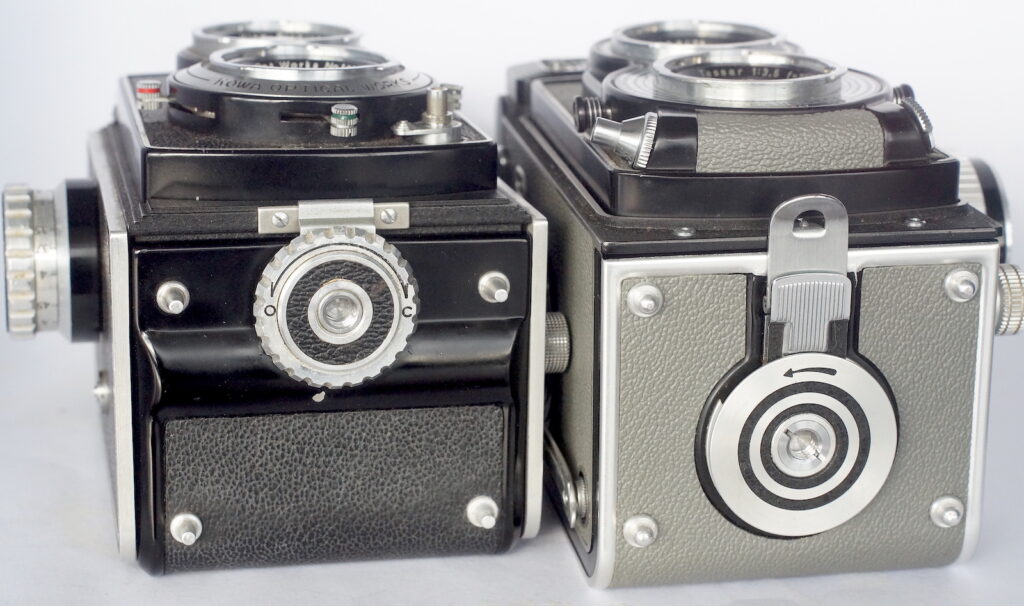
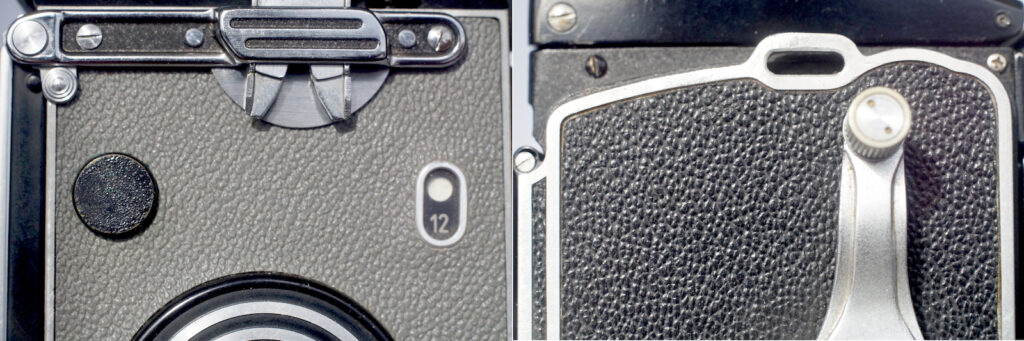
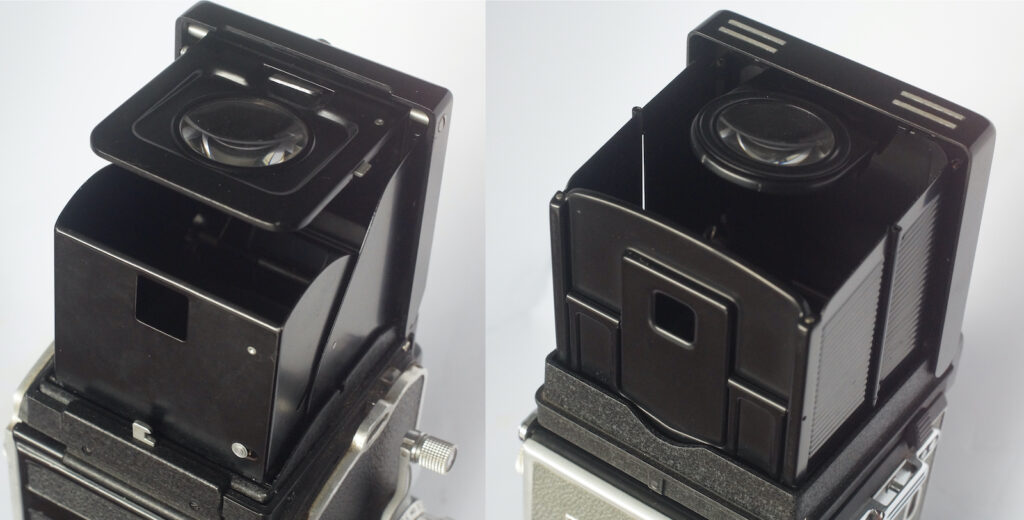
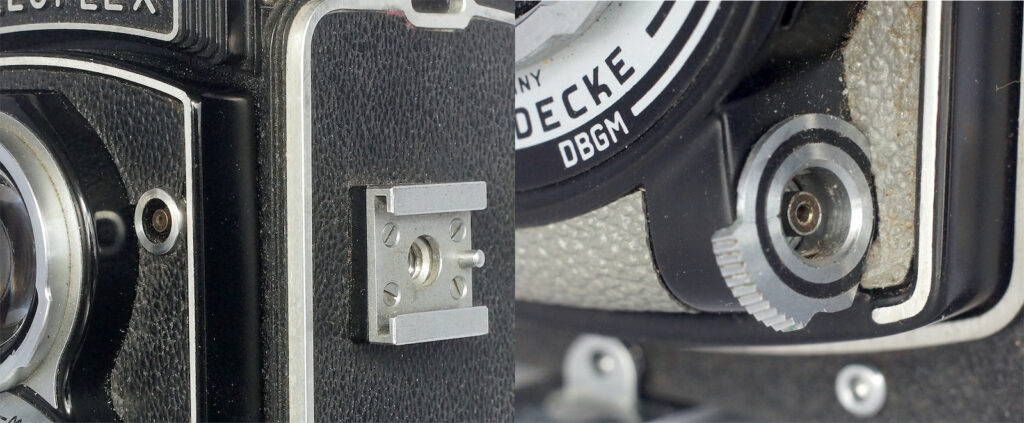
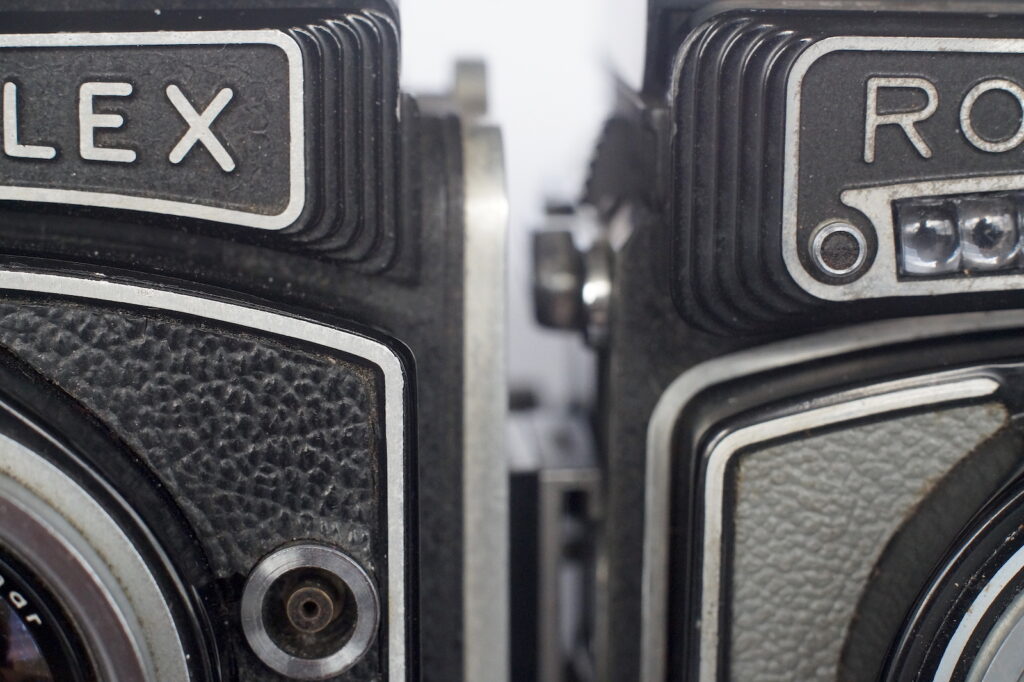
Both cameras have their roots in the early Rollei designs, particularly the post WWII double bayonet equipped Automats, the one I had. The T has developed this basic concept and refined some details to give it a more modern feel for the buyer of the day. The beefier Kalloflex is much closer to the original in many details with a few innovations of its own to fit with its intended professional user.
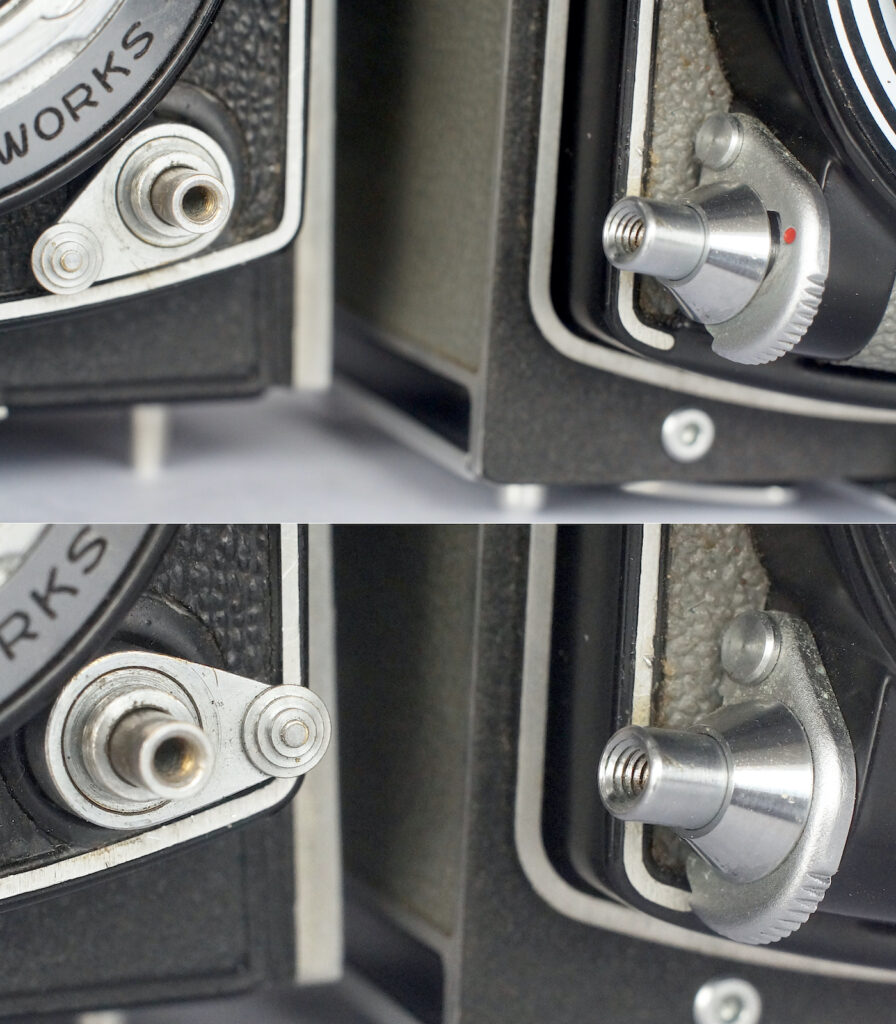
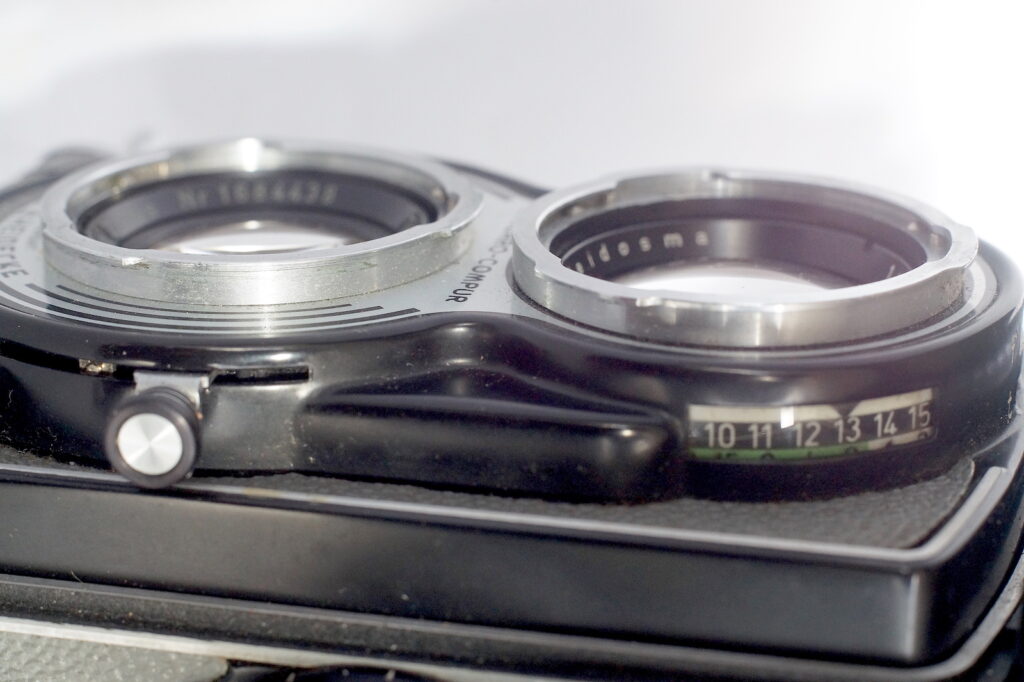
Apart from the Rolleimagics, the T is the only model that departed from that early basic design and only in small ways even then. Apart from the Rolleicord style film loading, shutter release/flash connection and the light value (LV) shutter everything else about it is straight from the standard parts catalogue. Even so the changes were apparently too much for the accountants and its designer’s tenure at the manufacturer, Franke & Heidecke, was very short I understand.
Reflections on the two cameras.
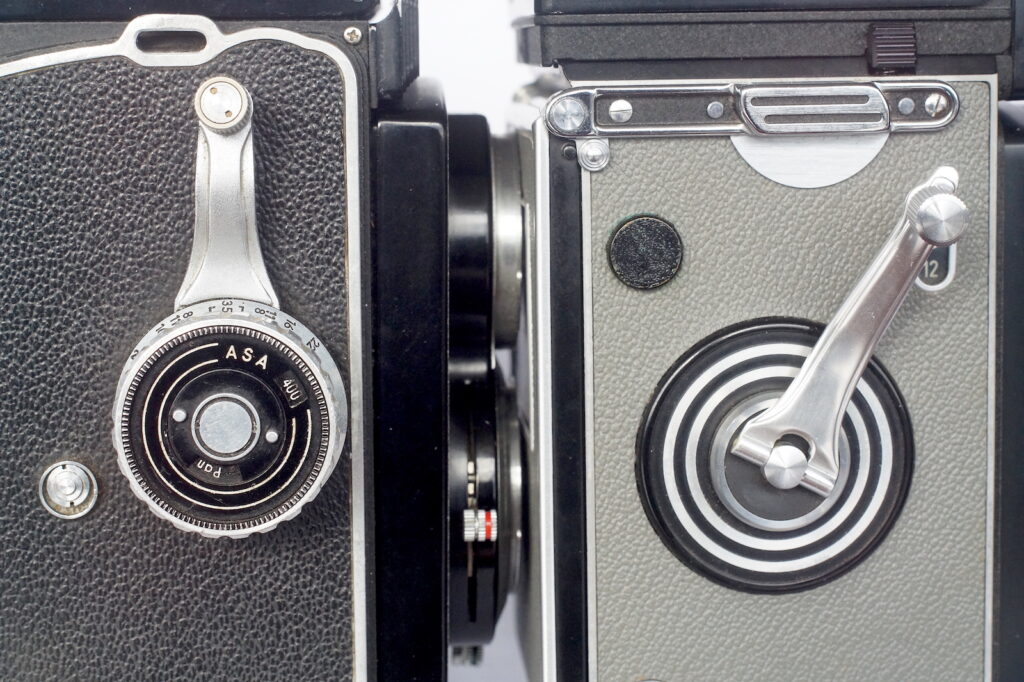
My often expressed criticism of the ergonomic design of the Rolleiflex is the need to switch hands between the focus/frame/shoot stages and the wind on/shutter cocking operation. This is because the wind lever is on the opposite side of the body to the focus control forcing a change of grip to wind on. I admire the Kalloflex because their designers combined the wind and focus at one location, the two mechanisms sharing a common hub. For myself, I have always found the Rollei arrangement tends to break one’s concentration in a situation where continuous exposures are being made, action or studio work for instance. This is particularly true when you are using the magnifier for critical focus and don’t want to take the camera away from the eye. Using the Kalloflex supports this completely and the process flows very smoothly. This style of working was being overtaken by the rapidly developing 35mm SLR with instant return mirror and motor drive though, especially for press work, cutting short its usefulness.
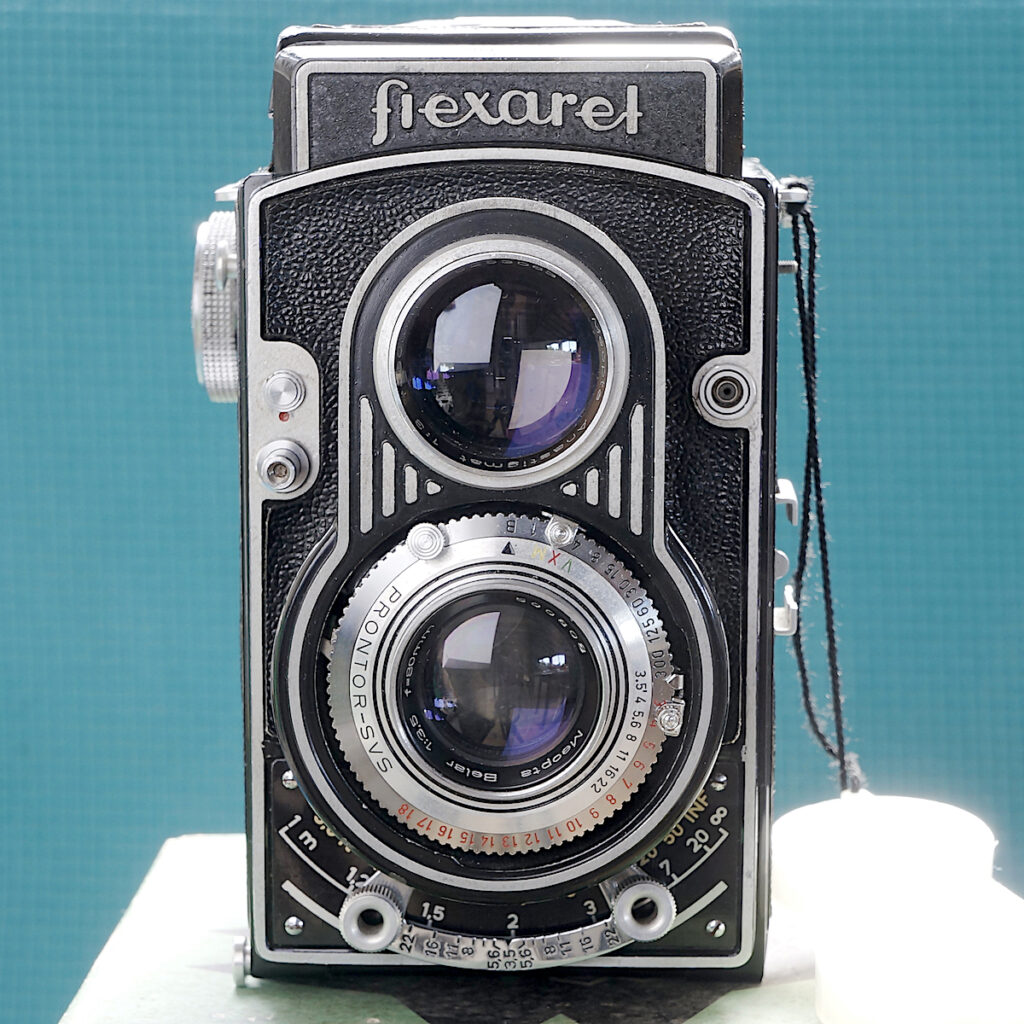
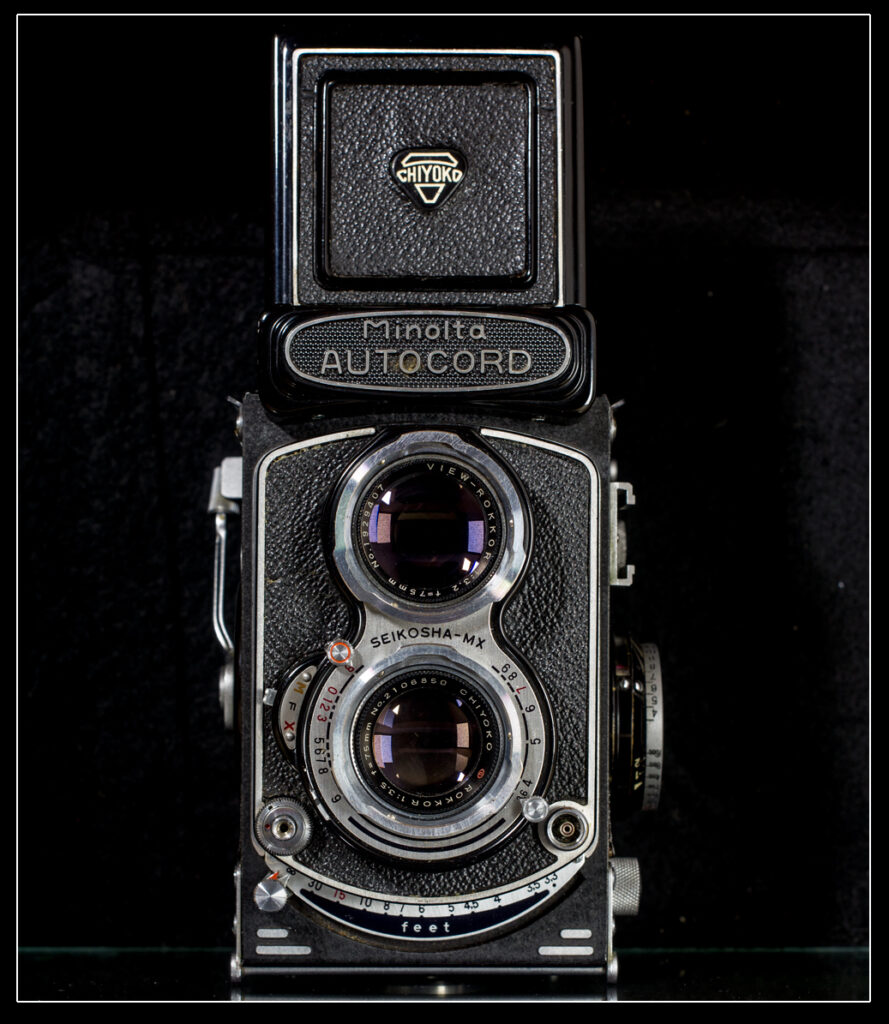
Of the cameras I have used the ideal designs to my mind have been the Fexaret Va in particular and the Minolta Autocord, almost as good. The Flexaret Va release is in an excellent position, just ahead of the wind knob and placed at the same level on the front panel. The Minolta’s release is less conveniently placed lower down but still operated with the right hand.They both have lever focus below the lens which allows the left hand to support the camera and focus with no shuffle between exposures.
Final thoughts
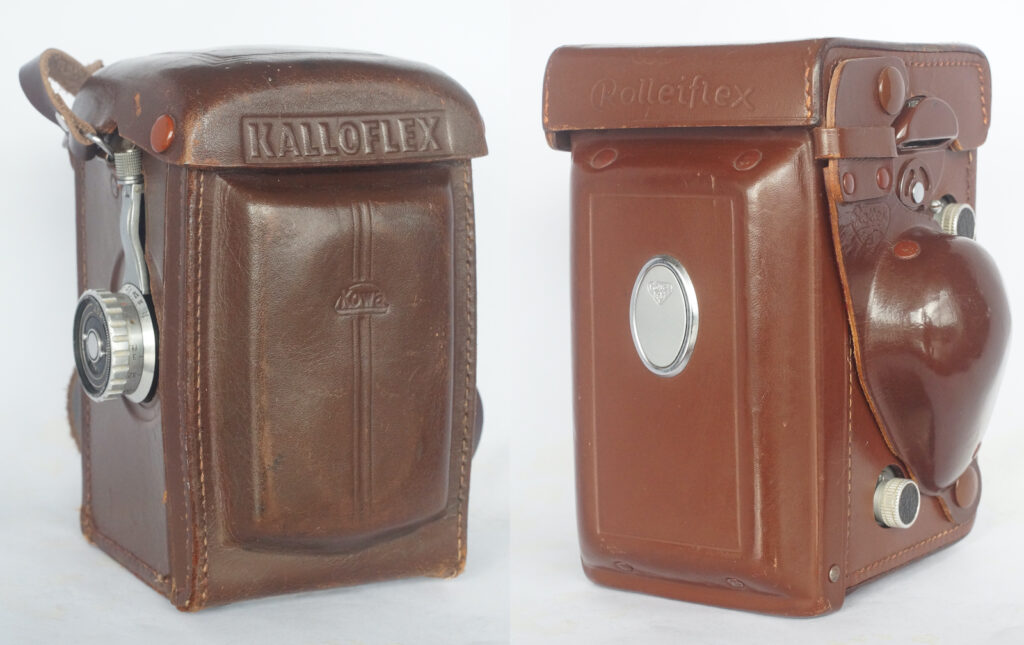
Whenever I get hold of a new film camera, two things immediately strike me. Firstly how well it has been looked after and secondly the quality of its design and construction. Both here are very well made, in good condition and still operate well in all respects. The Rollei has apparently led a very sheltered life, probably on a tripod to judge by its condition and the accompanying Rolleifix tripod mount it came with. The Kalloflex has definitely been used quite a bit but with care. This is evidenced by its condition and the loss of the shutter release cap and the collar that have to be removed to fit a Leica type cable release, both easily misplaced in a working situation for a pro.
I have never really collected cameras, they just seem to have accumulated over recent years. I have always used one extensively and appreciated the ones that produced good results and handled the best, I am also old enough to have experienced the rapid rise and refinement of the SLR in the later 20th century and then the digital camera which probably is why design and operation figure so highly with me. It was my youthful ambition to be an industrial designer, now called product design I believe, before being channeled into architecture.
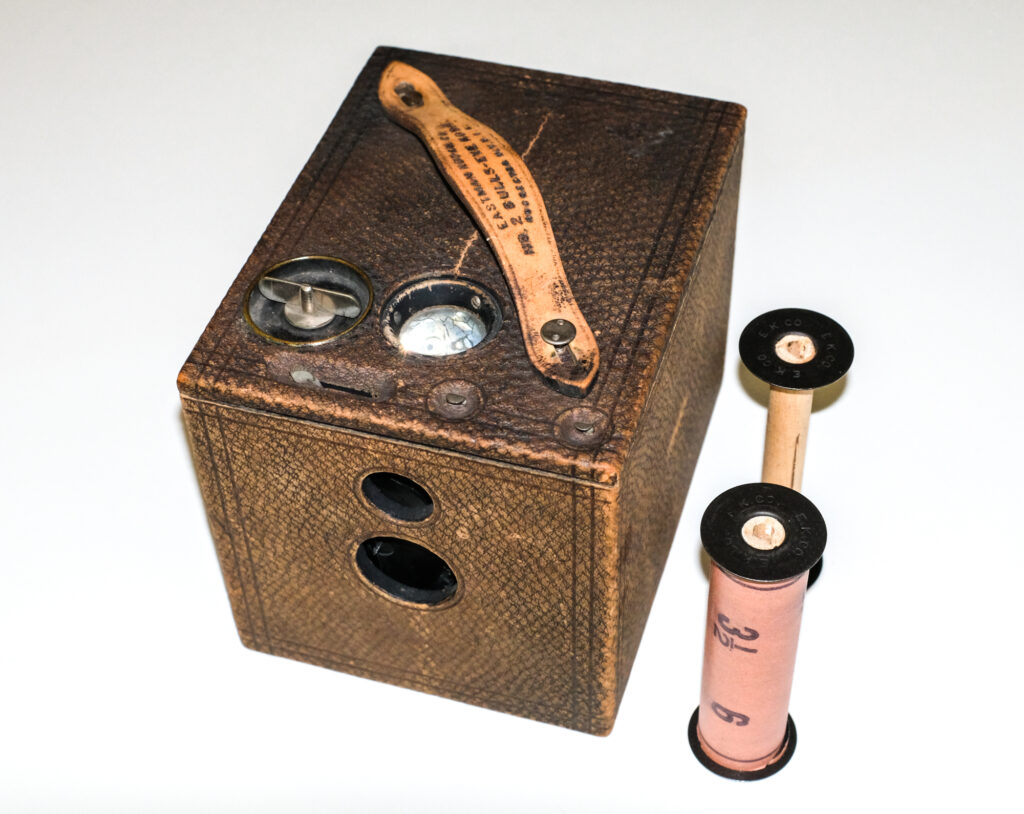
I started out with a box camera and then a folding Kodak, both with waist level viewing which I think is why the TLR appeals to me so strongly. It allows a certain detachment and a considered approach. These two examples are at the opposite ends of the user spectrum commercially though both are capable of dong the same work. But the Kalloflex is almost purely functional, building on the original design and refining it for a specific purpose. It can be appreciated for this alone and its really excellent build quality. The Rolleiflex T on the other hand is a refined and developed commercial design that built on the original concept by the maker who first produced the modified stereo camera and introduced the roll film version of the type to the world in 1928. TLRs had existed previously of course but the Rolleiflex brought the type into the easily hand-held category with convenient roll film as the sensitive material.
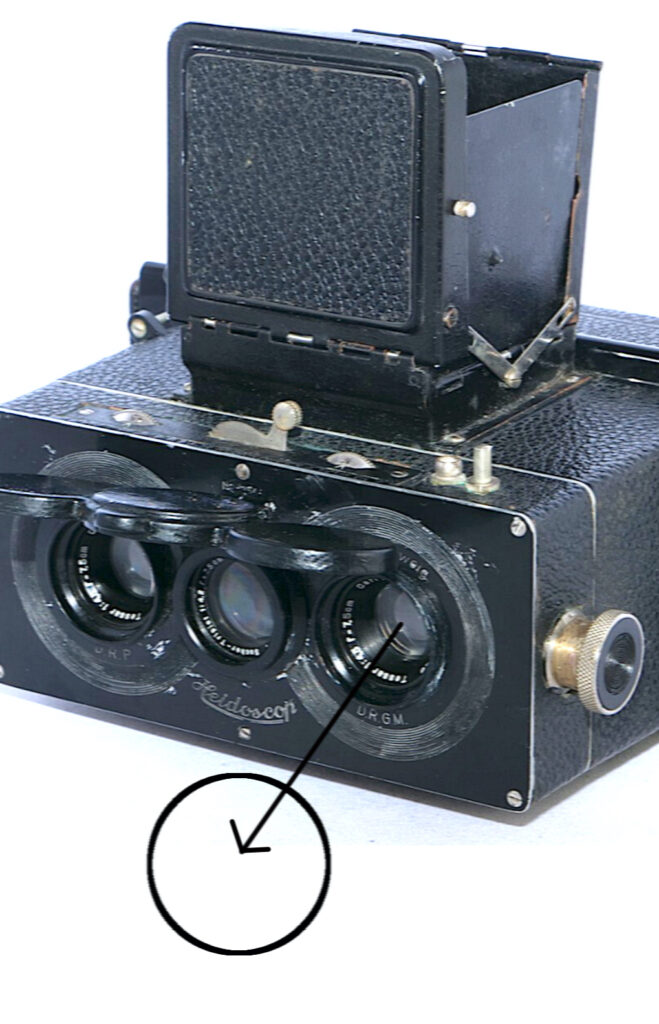
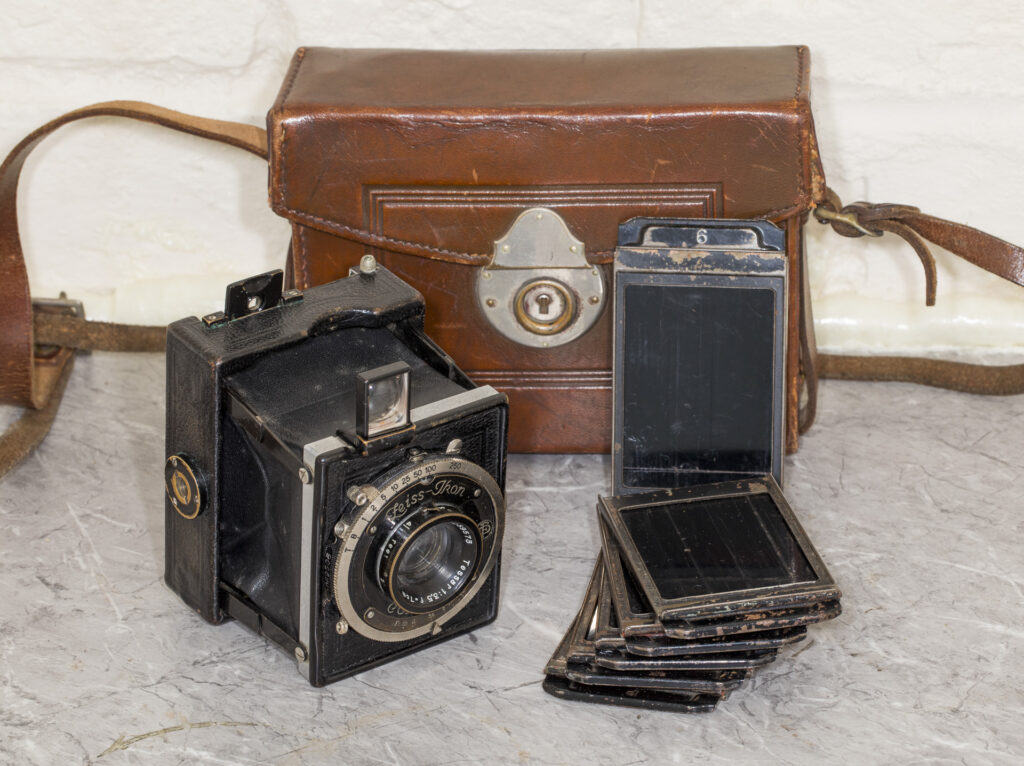
There is no doubt that the small format cameras, 120 and 35mm, made more serious photography accessible than was possible with the simple box camera. George Eastman and the people who followed did that for film and people like Franke and Heidecke, Barnack and Hasselblad among others did the same for the equipment that used the films that became available.
Nowadays the lens makers seem to be continuing the traditional way of working but even then with, no doubt, considerable help from computer technology and still basically refining existing optical designs. What goes around comes around is perhaps very true and history helps our appreciation all the more.
Share this post:

Comments
Martin on Rolleiflex & Kalloflex – A Tale of Two Twins
Comment posted: 02/10/2026