


In 2025, with the inspiration of 35mmc, I began to explore the world of 110 gear and film. 110 as a format was developed by Kodak in the early 1970s and was immensely popular during that decade and the 1980s. It seems that interest began to wane during the 1990s and most camera manufacturers stopped their 110 lines at this time. The last rolls of 110 stock were made by Fujifilm in September 2009. Lomography began making cartridges again in 2011 and is currently the only supplier of film.
Over the months since the autumn of last year, I used a range of expired 110 films and cameras to explore this format. I had mixed success, with some films returning good results and others being failures. The images below show some of the highlights and lowlights of the experiment. The cameras I used were the Pentax Auto 110, the Minolta Zoom 110 and a Keystone Everflash Zoom XR608. The 110 aesthetic is distinctly lo-fi and will appeal to some photographers; others may see it is an abomination! However, in the format’s heyday, a 110 camera would have been an affordable gateway to the world of photography.
Why 110?
Hamish’s 35mmc website inspired me to look again at using film stock as an alternative to digital media. I won’t give up digital photography for lots of reasons, but a return to the film days of my youth began to have appeal. I thought about what my options might be: 35mm, medium format, or one of the more consumer oriented formats like 110 or 126. As a child my introduction to photography was a Kodak Instamatic that used 126 cartridges. This is a very simple way to produce images and wasn’t quite what I was looking for. I thought about medium format. The output that I had seen, particularly for landscape images, was very impressive but the cost and weight of the gear was a barrier. I have used a 35mm SLR so I had had that particular experience.
In time, my mind turned to the 110 format, inspired by Bob Jane’s pieces on the Pentax Auto 110, a camera that I knew from my youth but that I forwent in favour of a Minolta XG-M. After a bit of research on the internet and reading Bob’s pieces, the possibility of 110 photography using the Pentax Auto 110 seemed like a good option. I liked the lo-fi look and I’d always admired the technical ingenuity of the tiny cameras. And I thought that it would be something new, compact, lightweight, and interesting.
The following images are some of the better ones that I took, and also some of the more disappointing that came out of the experiment.
Pentax Auto 110 SLR

The first film that I used was a generic 100 ISO Unichem film from September 1995. It’s likely that these cartridges would have been retailed through independent pharmacies in the UK. The actual manufacturer of the film is unknown, but the product was made in Germany. The results from this roll were generally good, given the age of the film. The camera was the first version of the Pentax Auto 110 SLR. I used either the 18mm or 24mm lens. The tiny 13mm x 17mm negatives show a surprising amount of detail and the graininess of the image lends a pleasing analog quality to the photograph. The expired film looks like it is colour shifted towards red, but given that this photo would have been taken in the late afternoon it’s not inappropriate.
Keystone Everflash XR608 Zoom

This image was taken with a simple point and shoot ‘chocolate bar’ 110 camera sold under the Keystone brand. I plan to write a piece on this camera in due course. The film was another generic stock retailed by BonusPrint, one of the postal film developing and processing companies that would have been ubiquitous in the heyday of 110. The expiry was September 1986, nearly a decade before the Unichem cartridge. The quality of the film has clearly deteriorated due to the length of time that it’s been in the cartridge beyond the ‘use by date’. The image shows the same red shift and the low morning light means that the picture looks under-exposed. I plan to give this camera another run to see how it performs with fresh stock. It’s an intriguing little camera, very much in the 110 style.
Pentax Auto 110 Super SLR
The Pentax Auto 110 Super is the second iteration of Pentax’s diminutive SLR. The original Auto 110 I bought had a problem with a slipping clutch system in the winder mechanism. Having failed to repair one example of the camera with a similar problem, I didn’t try a second time. The Super has some additional features like a self-timer and the benefit of a single stroke winder, rather than the original model’s double stroke system.

I’d reserved the branded film for this Pentax marvel. The stock was Kodacolor II ISO 200 which had expired in April 1993. However the whole roll was quite unusable. I was disappointed because I thought that I’d framed some attractive images of the Killerton National Trust gardens. Any appraisal of the Super version of the Pentax camera would have to wait for another cartridge.
Minolta Zoom SLR Mk 2

This image, despite the incorrect exposure and red shifted hues, is appealing. It shows the River Exe in spate, in the early morning sun, following the winter’s heavy rains. This camera struggled with the exposure (taken into the low sun) and an out of date cartridge didn’t help. However, I don’t count the snap as a failed image. The film was another cartridge of the BonusPrint, expiry September 1986. Despite the BonusPrint cartridges not responding well to low light and having problems with chromatic shift, I enjoyed the images that the film produced. This is, I guess, the joy and risk and happenstance of exploring the world of expired film stock.
Minolta Zoom Mk I
This camera is one of the wonders of 110 photography. I will write a more extensive piece on this remarkable piece of 1970s technology in the near future. I couldn’t find a link to a previous 35mmc piece on this sci-fi wonder, or its more orthodox sister, the Mk II, so I hope that these forthcoming pieces will be of interest to readers and subscribers.

The film stock for this beach walk was Konica Super XG ISO 200 which expired in February 1997. The images suffer from over-exposure to my eye, which might be because of the ISO rating of 200. It seems most 110 cameras were designed to manage either 100 or 400 ISO cartridges. The red shift is again apparent. The camera has some very unique features and a very unique look which are worth exploring in more detail. One of the most intriguing features is a macro function which allows very close focusing. The image of the yellow rose, which had been laid under the sea wall, shows the possibilities of the close focus that is available with this lens. The rose is perhaps 6-8 centimetres away from the front of the lens. The worn-out film doesn’t do justice to the memorial flower or those individuals whose story is woven into its petals.

Pentax Auto 110 Super
My results with the out of date films had been decidedly mixed. I think my appetite for exploration had been piqued by the success of the first roll shot with the temperamental Pentax. I destroyed one of my final cartridges while trying to free the film so that I could wind it on and I was left with one more roll. This was a Max Spielmann branded cartridge – Maxi Color Hi Grade XTR, rated at ISO 200, expiry July 2003. I decided that this cartridge would be my last throw of the expired film dice, and I was pleasantly surprised by the results.
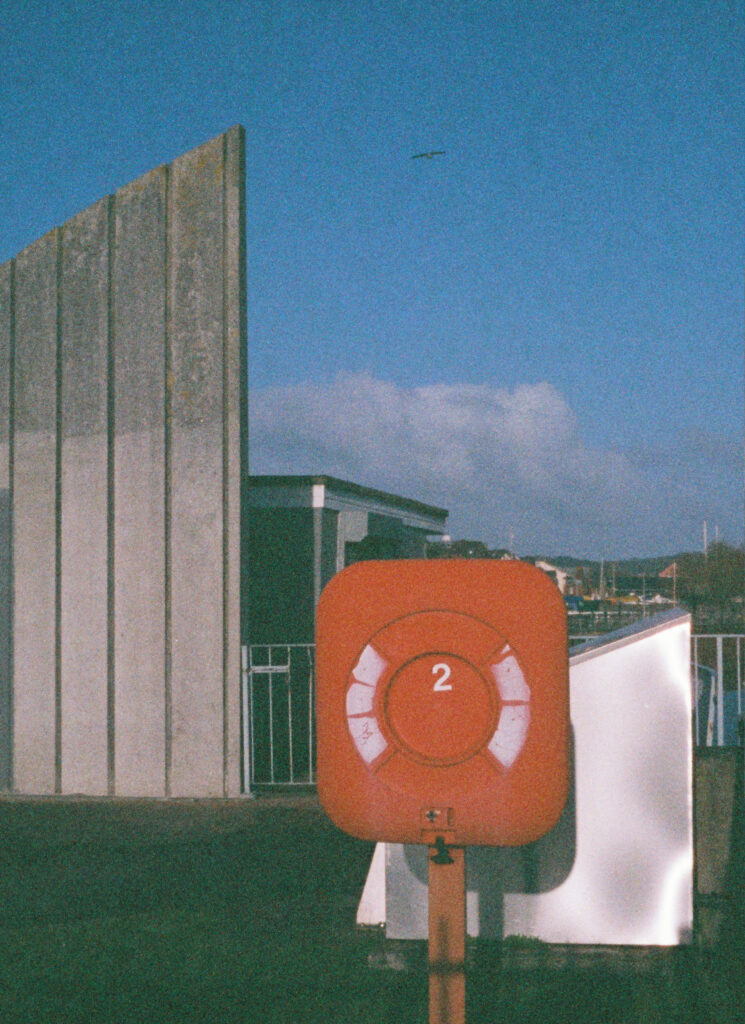


The cartridge produced the most successful set of images in any conventional sense. I felt that my journey into 110 might turn into something that could become quite rewarding. With Hamish’s support I will continue to record my impressions and conclusions on the blog. The Spielmann film was the most recently expired and it seems that this, perhaps alongside quality considerations, might be why the images rendered quite accurately. A bright day with a clear sky undoubtedly helped the Pentax with its auto-exposure system.
Conclusions
The world of expired 110 film stock is a total lottery. Branded or unbranded films seem to be problematic, and the older they are the more problematic they become. It is probably not coincidental that the most recently expired cartridge took the best quality images in the conventional sense. If you fancy dipping your lens into world of 110 expired film my conclusion is that you should get the most recent stock preferably from the mid-late 2000s. It looks like this might increase your chances of success in the expired film lottery. Unfortunately, at least at the present time, there is no cost advantage to using expired film. The price of developing and processing is the same whether your film is in or out of date. The expired cartridges usually command a premium over new stock too, which makes the process of image making with these ‘past their best’ films not only risky but pricey.
All of the little 110 cameras I used have their merits. There is no doubt that the whole world of 110 technology – from film to hardware – is a marvel, given that the high point of the format was 40-50 years ago. Without leveling the field with a consistent film stock, it’s difficult to come to any particular conclusions on the strengths and weaknesses of each camera. However, the overall results tend to support the view that the film stock and tiny negatives are the limiting factor with 110 image quality.
Thank you for reading and I welcome any comments and questions below. To see related posts, click my name below.
All processing and developing by Photo Hippo Lab, Burnley, Lancashire: https://photohippo.co.uk/
Share this post:



Comments
Sneakerzoom on New Adventures in Lo-Fi with 110
Comment posted: 24/03/2026
Comment posted: 24/03/2026
Mark Ellerby on New Adventures in Lo-Fi with 110
Comment posted: 24/03/2026
Comment posted: 24/03/2026
Martin Siegel on New Adventures in Lo-Fi with 110
Comment posted: 24/03/2026
Comment posted: 24/03/2026
Joel Keller on New Adventures in Lo-Fi with 110
Comment posted: 24/03/2026
Comment posted: 24/03/2026
Neal Wellons on New Adventures in Lo-Fi with 110
Comment posted: 24/03/2026
Comment posted: 24/03/2026
Tony Warren on New Adventures in Lo-Fi with 110
Comment posted: 24/03/2026
Comment posted: 24/03/2026
Gary Smith on New Adventures in Lo-Fi with 110
Comment posted: 25/03/2026
Nice article Ed!
Comment posted: 25/03/2026
Niall Keohane on New Adventures in Lo-Fi with 110
Comment posted: 25/03/2026
A really interesting article, and thank you for including the 'failed' images. As one that is very much focused on process over outcome at present, it's always good to see that the game of analogue photography can be hit and miss for other photogrphers as well. Of course, a positive outcome is aleays welcome!
I particularly like the image of the Exe. There's something impressionistic about it, maybe even Turner-esque in the light in the sky.
Comment posted: 25/03/2026