Which Photo Did I Shoot?

By Andrea Monti

Post-processing — and cropping, in particular — is one of the most discussed topics in photography. The often heated discussions involve ‘purists’ — who claim that a photo should not be altered but for miminal exposure, highlights and other similar tweaking — and ‘artists’ whose tenet is that only the final result matters.

In principle, I think that both sides have a point. A photo taken by a journalist should reflect ‘reality’, so it should not be composed and/or edited to tell a different story. By contrast, a photo whose goal is to tell a story should not be subject to such constraints and the photographer should not be blamed also for significant alterations.

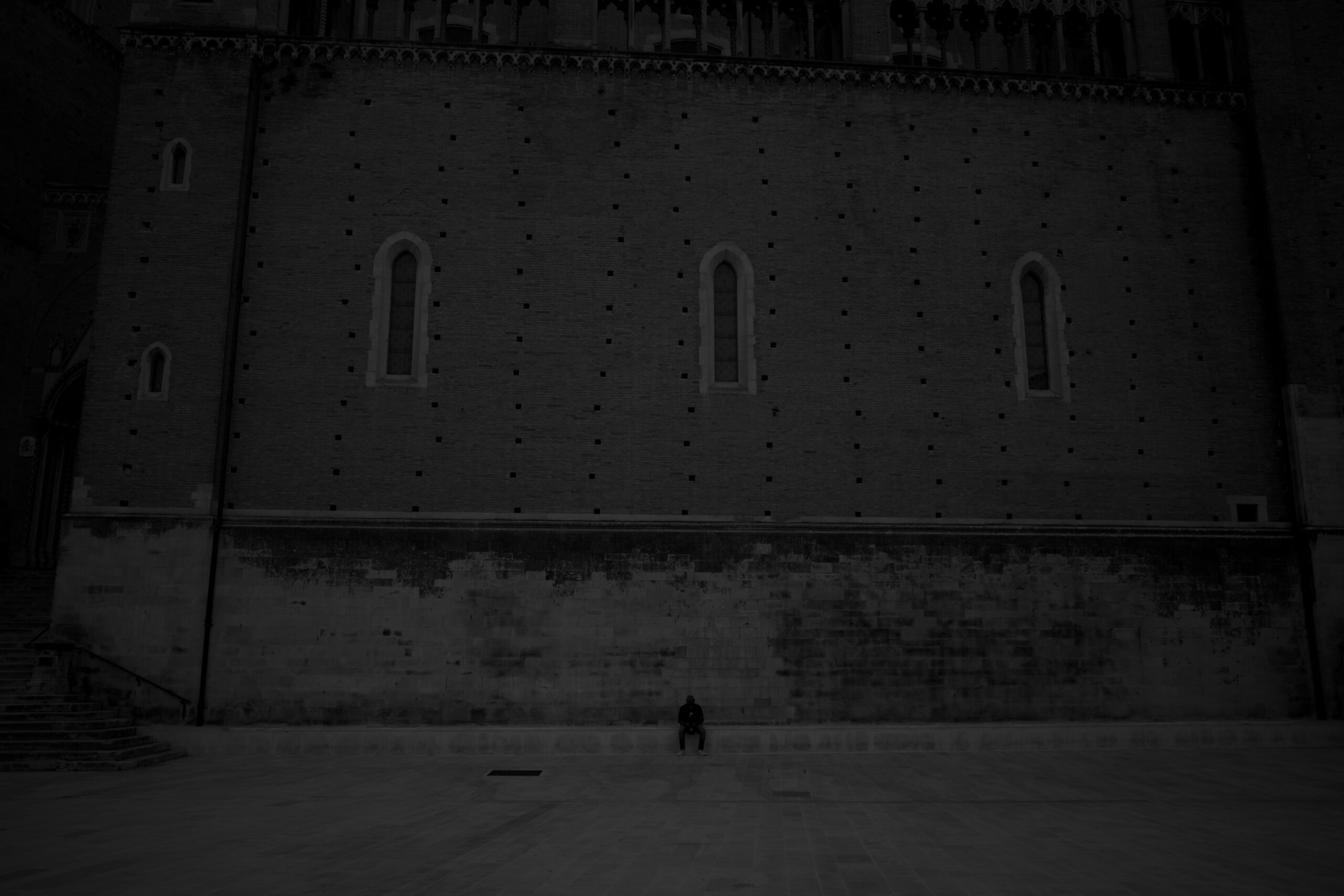
For example, consider the photo featured in this post, that is the original, unprocessed version, taken in the late afternoon in Piazza San Giustino, in Chieti, a city whose origins, according to the tradition, date back to before Rome was settled.

Moderate post-processing adjusted the overall exposure and contrast, giving the photo better composition while respecting the initial camera angle.
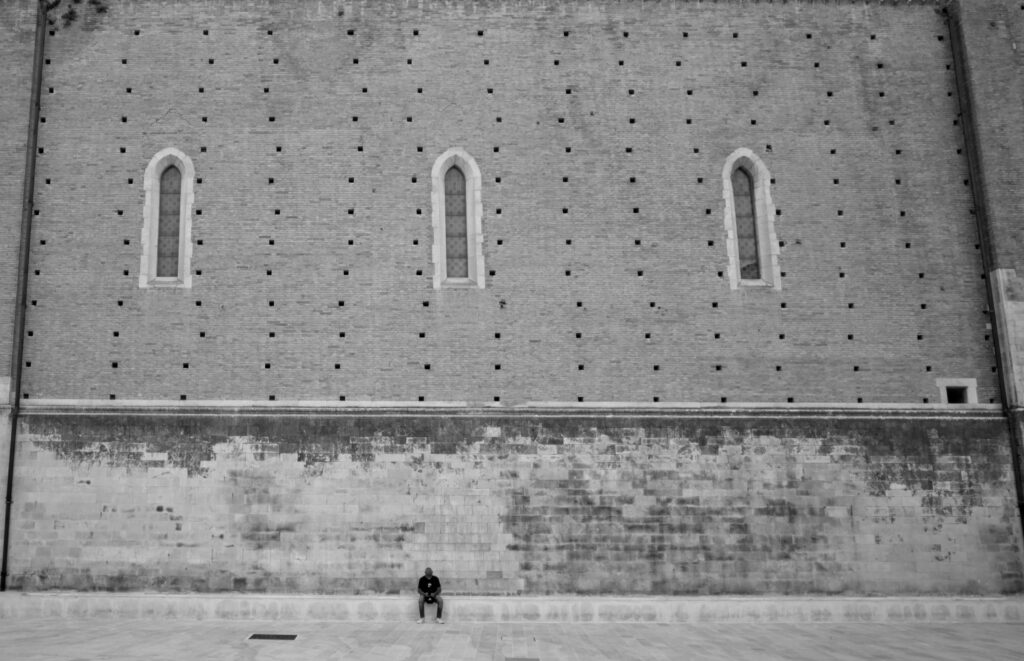
However, the result is unsatisfactory due to the cathedral’s perspective and the man’s asymmetrical relationship with the central window. So I decided to adjust the vertical orientation and crop the photo like this.
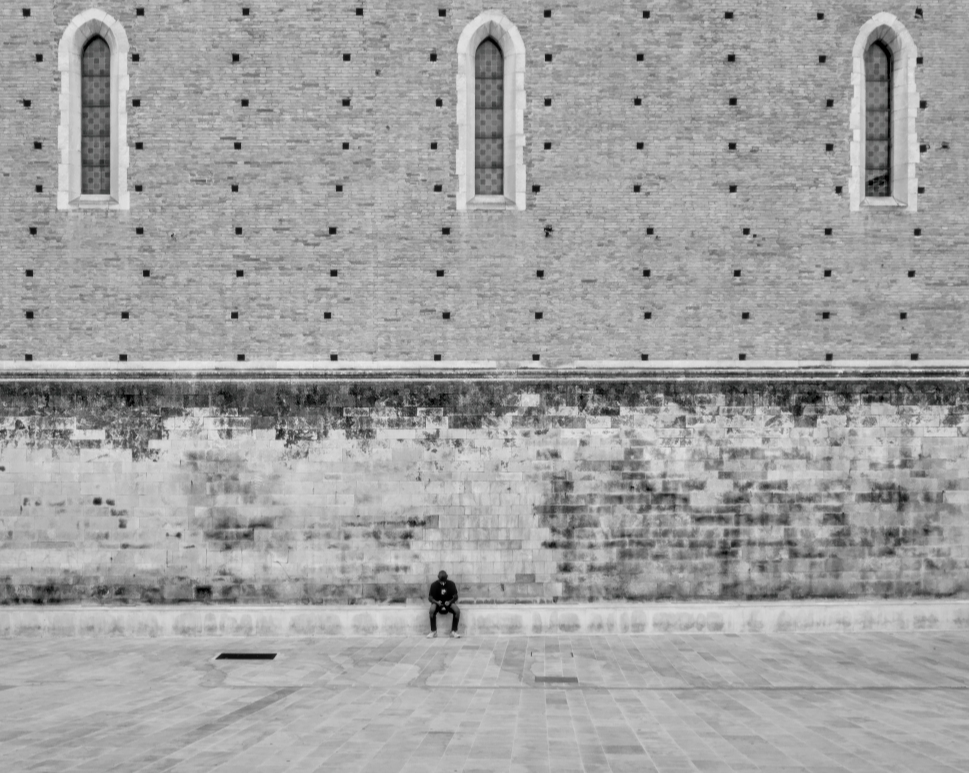
As much as the result is better, there is still room for improvement, as the next photo shows.
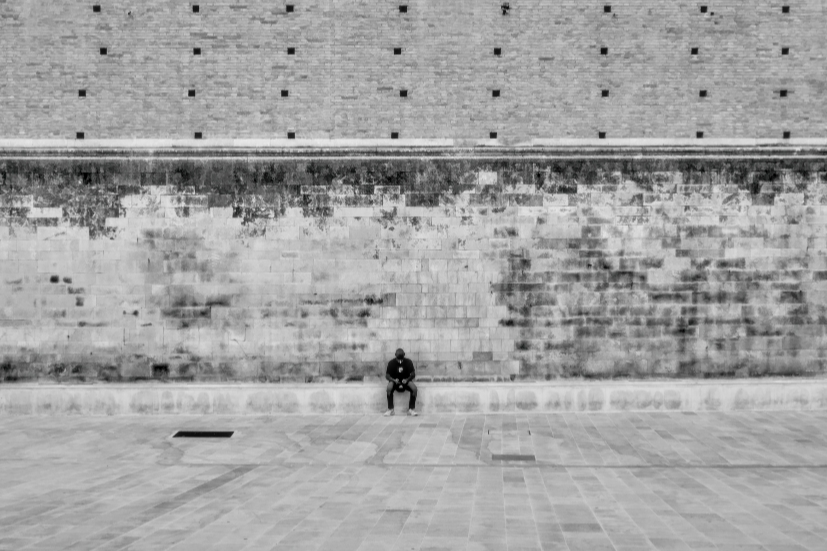
The further crop evens out the asymmetry between the windows and the man, leading to a definitely more balanced composition, at the price of losing the initial contrast between the majesty of the cathedral’s wall and the small human figure. However, this effect can be taken back by making drastic changes to the composition, such as switching to portrait orientation and cropping the image accordingly.
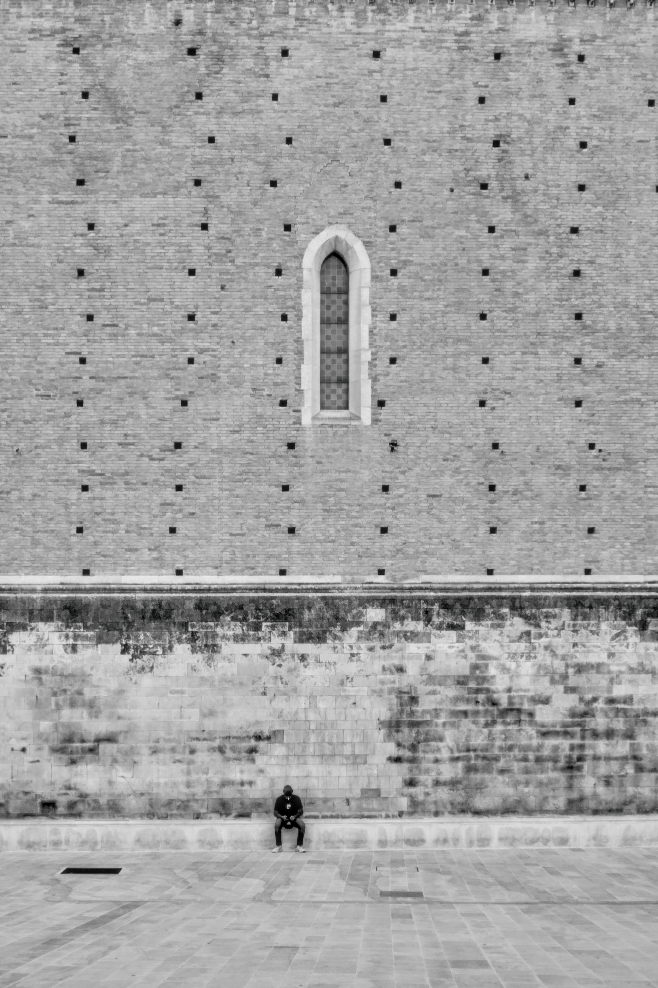
That said, here comes the question: which photo did I shoot?

p.s. I have used a Ricoh GR IV Monochrome

Share this post:

About The Author

By Andrea Monti
My name is Andrea Monti. I’m an Italian free-lance journalist, photographer and – in my spare time – an hi-tech lawyer. The works I am more proud of are covering live jazz, pop and rock concerts for an Italian online music magazine and Opera and prose for a 200 years-old theatre. I also do sport photography mainly in athletics and fighting disciplines. You may find out more about me on https://andrea.monti.photography
Read More Articles From Andrea Monti

Find more similar content on 35mmc

Use the tags below to search for more posts on related topics:

Donate to the upkeep, or contribute to 35mmc for an ad-free experience.

There are two ways to contribute to 35mmc and experience it without the adverts:

Paid Subscription – £3.99 per month and you’ll never see an advert again! (Free 3-day trial).

Subscribe here.

Content contributor – become a part of the world’s biggest film and alternative photography community blog. All our Contributors have an ad-free experience for life.

Sign up here.

Make a donation – If you would simply like to support Hamish Gill and 35mmc financially, you can also do so via ko-fi

Donate to 35mmc here.

Comments

rap on Which Photo Did I Shoot?

Comment posted: 08/09/2026

cropped works.
Reply

Leave a Reply

Your email address will not be published. Required fields are marked *

David Mackay on Which Photo Did I Shoot?

Comment posted: 08/09/2026

I find that if it is a philosophical debate it is a very shallow one at best. Whether edited in post or not every photo is a result of choices made by the photographer and therefore morphed in some way to tell a story or provide a particular perspective even if not done consciously. I think it's dangerous to assume that a journalist could produce an objective photograph as it will never amount to what was real.

I do like how you have described your process. For me the last one works best.
Reply

Leave a Reply

Your email address will not be published. Required fields are marked *

Nick on Which Photo Did I Shoot?

Comment posted: 08/09/2026

The photo you took is the one that was in your head before you lifted the camera to your eye. Whatever you do in post to get close to that is valid!
Reply

Leave a Reply

Your email address will not be published. Required fields are marked *

Simon McCreery on Which Photo Did I Shoot?

Comment posted: 08/09/2026

I prefer the last take as it keeps some of the height of that foreboding wall.
My eyes see the suject as the figure who lends a sense of scale to the architecture.
I could live with the original happily.
Reply

Leave a Reply

Your email address will not be published. Required fields are marked *

Cem Eren on Which Photo Did I Shoot?

Comment posted: 09/09/2026

In my opinion, all the adjustments including re-framing are acceptable till the editor changes the content adding or removing objects which were not present at that moment. If it is not light written, it is not a photograph but certainly a sort of image. Therefore in your case, if you want to present the photo you have taken this way, that's the right way.
Reply

Leave a Reply

Your email address will not be published. Required fields are marked *

Geoff Chaplin on Which Photo Did I Shoot?

Comment posted: 09/09/2026

In days of contact printing in-camera LF negatives post-processing options were extremely limited. Now with a grillion pixels of data the photo you took was simply a dataset on the memory card. The photo you want is the one you produce after cropping, straightening, perspective adjustments etc etc.
The photo I like is a different - and irrelevant - matter (unless you are trying to sell to me).
Thought provoking article, thanks
Reply

Leave a Reply

Your email address will not be published. Required fields are marked *

Roger on Which Photo Did I Shoot?

Comment posted: 09/09/2026

You shot all of them, otherwise they would not be here! They all exist. If you mean which photo did you intend to shoot, then it is a question that can be answered only by you or your psychoanalyst.
If you are a journalist, obviously adding or removing an object is inappropriate, as it would not correspond to anything that could have been seen; moving the sitter to line up with the window to create perfect symmetry would also be creating an image that could not have been seen. The location could be significant. On the other hand, if distorting perspective is an issue, does that imply that a journalist should never use a view camera or tilt-shift lens to achieve in camera what you achieved on the computer?
Reply

Leave a Reply

Your email address will not be published. Required fields are marked *

Gary Smith on Which Photo Did I Shoot?

Comment posted: 09/09/2026

I noticed that you didn't edit any of them to move the man to be centered under the middle window.

How do you like the GR IV monochrome? Had you any other digital monochrome bodies to compare the results to?
Reply

Leave a Reply

Your email address will not be published. Required fields are marked *

Ashish Tamhane on Which Photo Did I Shoot?

Comment posted: 10/09/2026

Personally I try to crop as minimum as possible in an effort to improve my photography eye.
Reply

Leave a Reply

Your email address will not be published. Required fields are marked *

Dogman on Which Photo Did I Shoot?

Comment posted: 10/09/2026

If you have ever looked at contact sheets from the Speed Graflex and Rolleiflex TLR days, you would know the answer. It is what you want it to be when you print the photo. Photographers at that time, using these cameras, did a considerable amount of composition and framing in the darkroom. They had these big negatives to work with and could pick out the dominant subject and disregard the nonessential elements on the easel. Along came the 35mm "miniature" camera and such darkroom composition was problematical--the quality fell apart with enlargement. That plus the ill-advised Cartier-Bresson statements that the negative was sacred and should only be printed full-frame combined to almost kill the concept of cropping.

But today we use better film, better lenses and better cameras. And high resolution digital cameras are in abundance. Quality doesn't suffer as much with cropping. Cropping has always been acceptable historically. Cropping as a method to improve the photograph is simply not at question unless you're one of those dogmatic believers in the sanctity of the edges of the negative.

Which photo did you shoot? The one you choose and show. The final decision is always yours.

.........................................................
Reply

Leave a Reply

Your email address will not be published. Required fields are marked *

Leave a Comment

Leave a Reply

Your email address will not be published. Required fields are marked *