

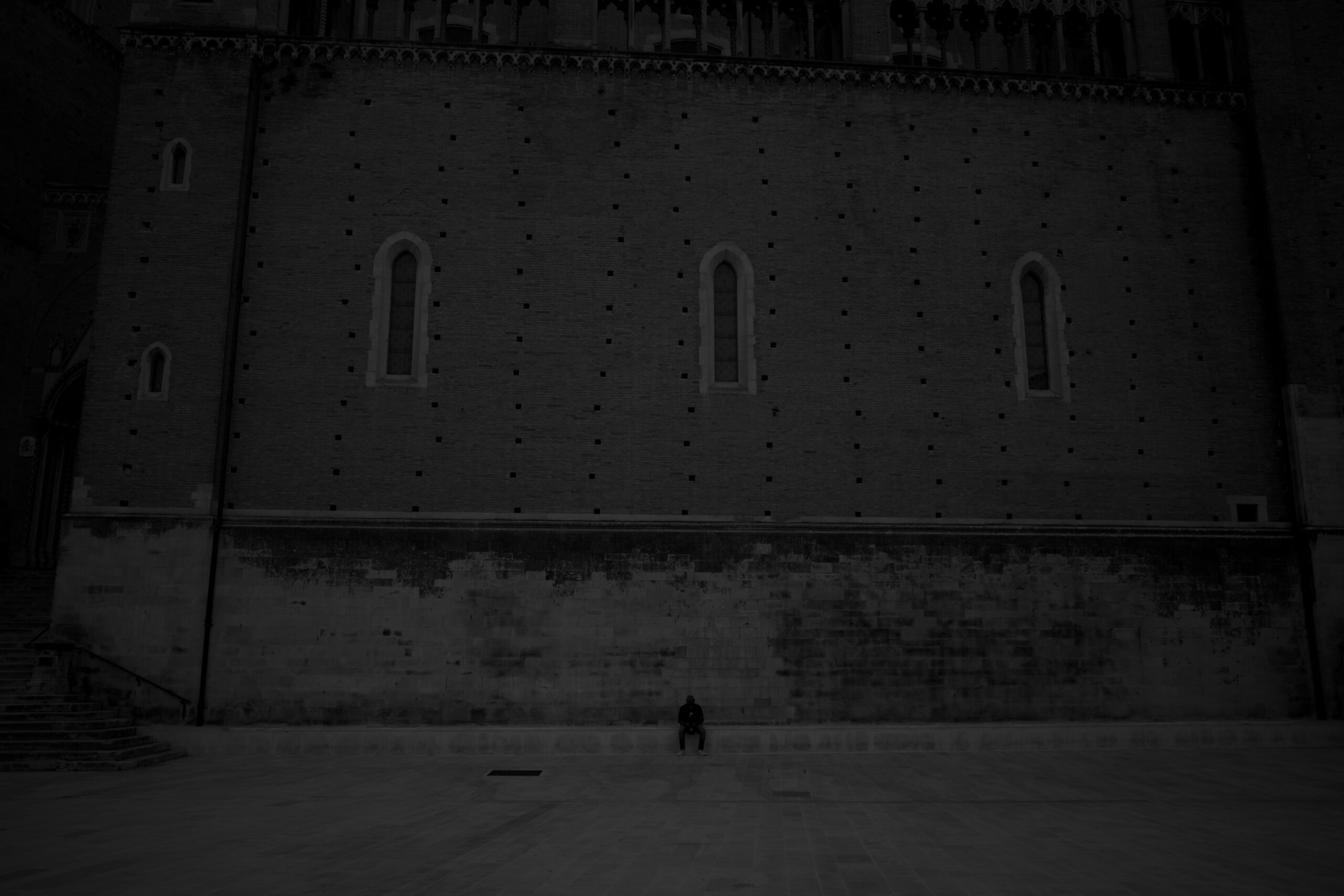
Post-processing — and cropping, in particular — is one of the most discussed topics in photography. The often heated discussions involve ‘purists’ — who claim that a photo should not be altered but for miminal exposure, highlights and other similar tweaking — and ‘artists’ whose tenet is that only the final result matters.
In principle, I think that both sides have a point. A photo taken by a journalist should reflect ‘reality’, so it should not be composed and/or edited to tell a different story. By contrast, a photo whose goal is to tell a story should not be subject to such constraints and the photographer should not be blamed also for significant alterations.
For example, consider the photo featured in this post, that is the original, unprocessed version, taken in the late afternoon in Piazza San Giustino, in Chieti, a city whose origins, according to the tradition, date back to before Rome was settled.
Moderate post-processing adjusted the overall exposure and contrast, giving the photo better composition while respecting the initial camera angle.
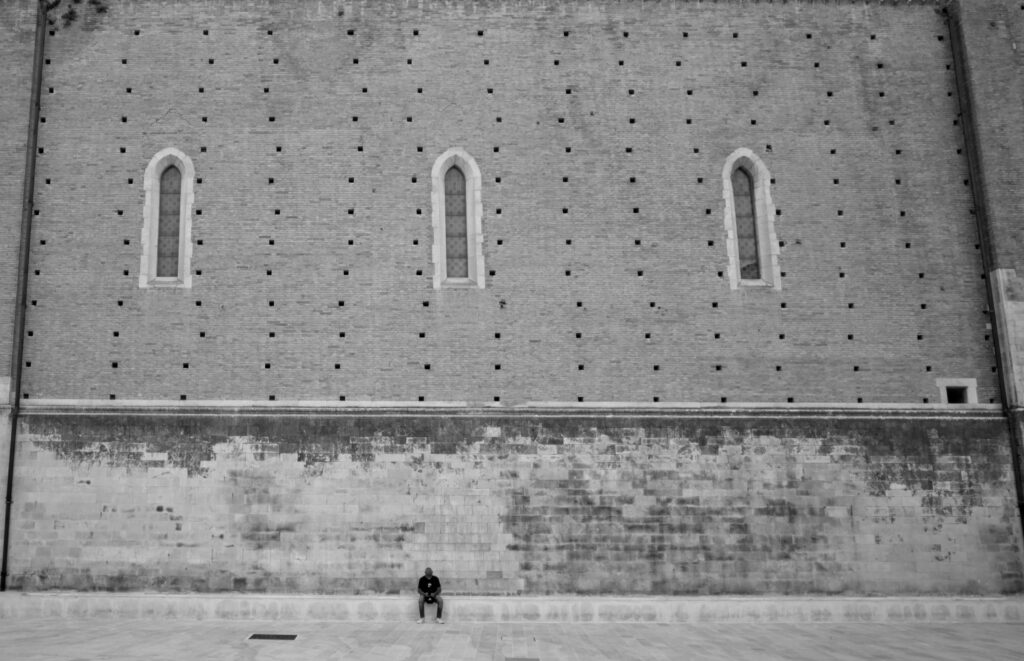
However, the result is unsatisfactory due to the cathedral’s perspective and the man’s asymmetrical relationship with the central window. So I decided to adjust the vertical orientation and crop the photo like this.
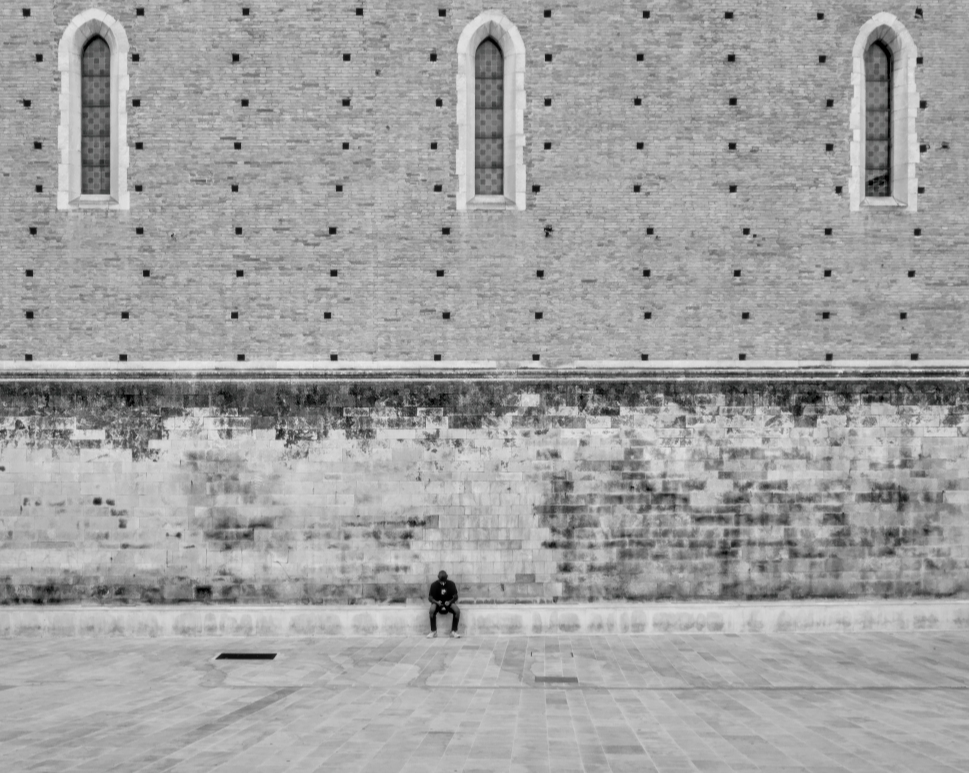 As much as the result is better, there is still room for improvement, as the next photo shows.
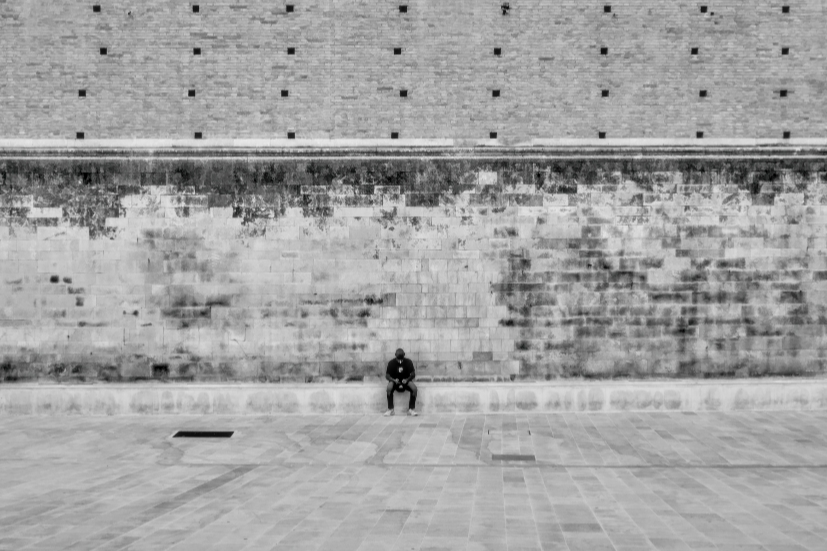 The further crop evens out the asymmetry between the windows and the man, leading to a definitely more balanced composition, at the price of losing the initial contrast between the majesty of the cathedral’s wall and the small human figure. However, this effect can be taken back by making drastic changes to the composition, such as switching to portrait orientation and cropping the image accordingly.
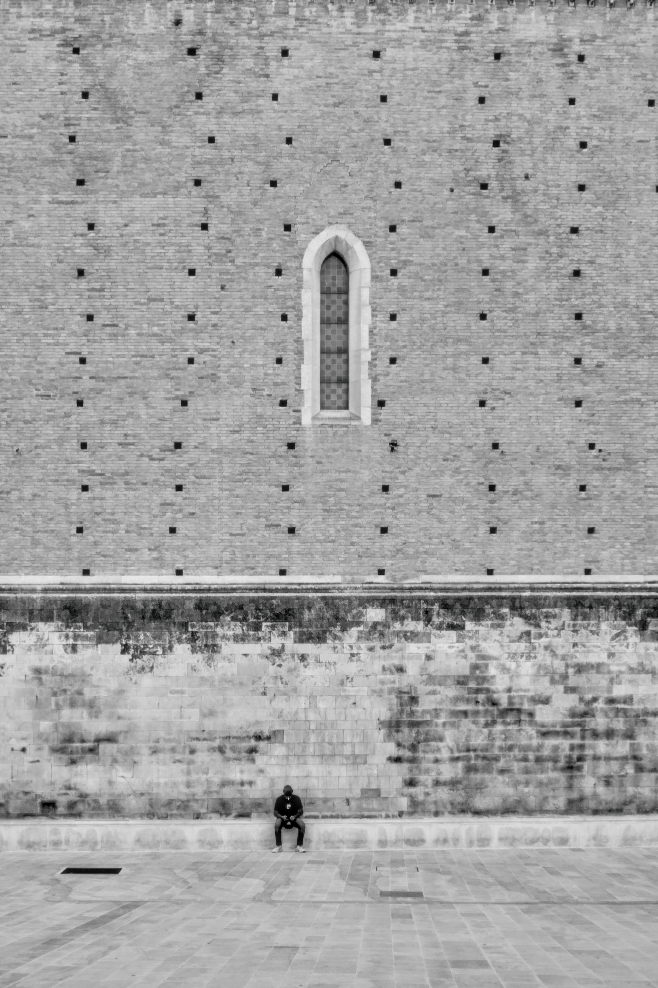
That said, here comes the question: which photo did I shoot?
p.s. I have used a Ricoh GR IV Monochrome
Share this post:

Comments
rap on Which Photo Did I Shoot?
Comment posted: 08/09/2026
David Mackay on Which Photo Did I Shoot?
Comment posted: 08/09/2026
I do like how you have described your process. For me the last one works best.
Nick on Which Photo Did I Shoot?
Comment posted: 08/09/2026
Simon McCreery on Which Photo Did I Shoot?
Comment posted: 08/09/2026
My eyes see the suject as the figure who lends a sense of scale to the architecture.
I could live with the original happily.
Cem Eren on Which Photo Did I Shoot?
Comment posted: 09/09/2026
Geoff Chaplin on Which Photo Did I Shoot?
Comment posted: 09/09/2026
The photo I like is a different - and irrelevant - matter (unless you are trying to sell to me).
Thought provoking article, thanks
Roger on Which Photo Did I Shoot?
Comment posted: 09/09/2026
If you are a journalist, obviously adding or removing an object is inappropriate, as it would not correspond to anything that could have been seen; moving the sitter to line up with the window to create perfect symmetry would also be creating an image that could not have been seen. The location could be significant. On the other hand, if distorting perspective is an issue, does that imply that a journalist should never use a view camera or tilt-shift lens to achieve in camera what you achieved on the computer?
Gary Smith on Which Photo Did I Shoot?
Comment posted: 09/09/2026
How do you like the GR IV monochrome? Had you any other digital monochrome bodies to compare the results to?
Ashish Tamhane on Which Photo Did I Shoot?
Comment posted: 10/09/2026
Dogman on Which Photo Did I Shoot?
Comment posted: 10/09/2026
But today we use better film, better lenses and better cameras. And high resolution digital cameras are in abundance. Quality doesn't suffer as much with cropping. Cropping has always been acceptable historically. Cropping as a method to improve the photograph is simply not at question unless you're one of those dogmatic believers in the sanctity of the edges of the negative.
Which photo did you shoot? The one you choose and show. The final decision is always yours.
.........................................................