

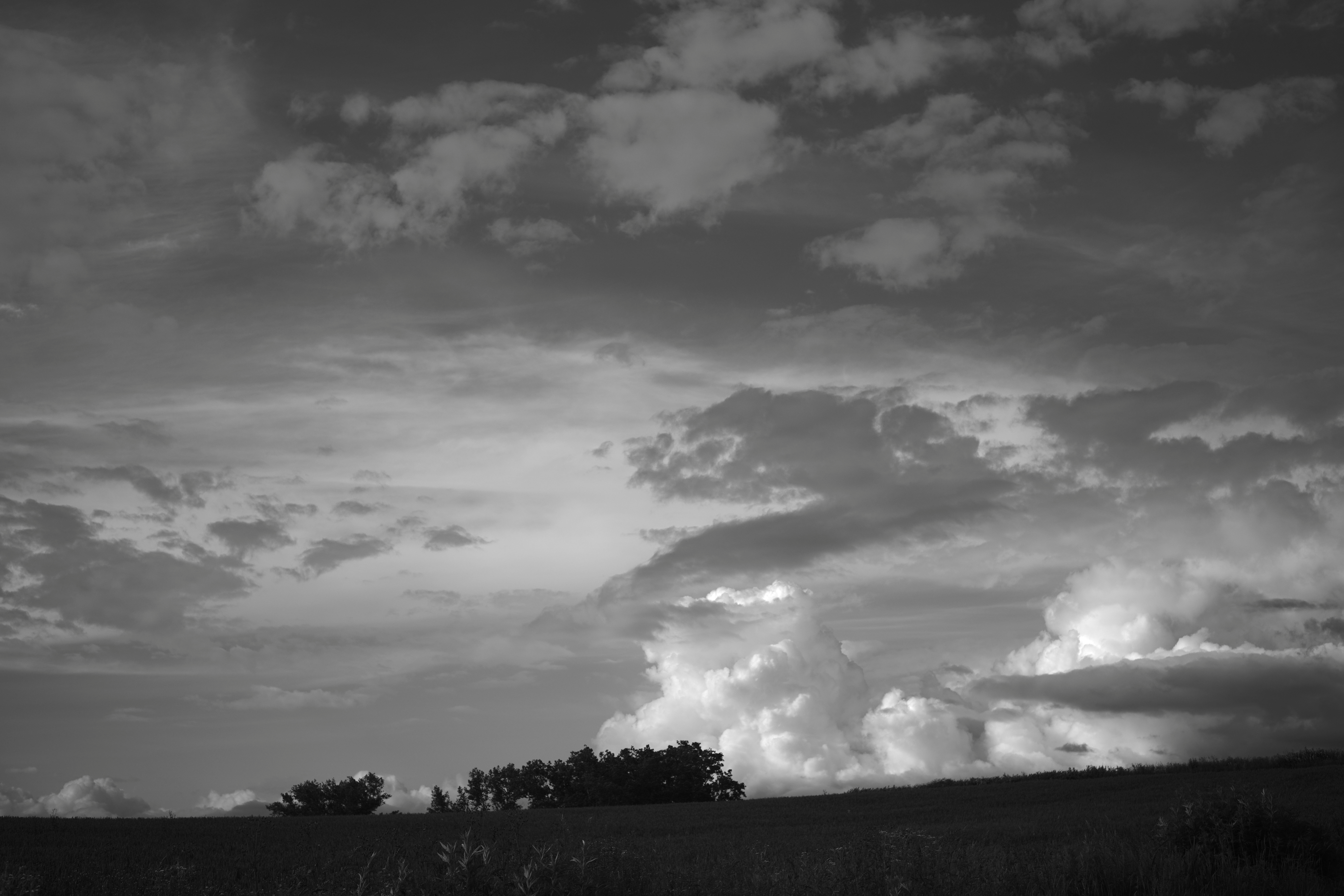
Should I use colour filters when shooting B&W on a digital camera? The resounding answer on the internet is, no, shoot RAW and you have more flexibility in casting to B&W by mixing the colour channels or filter emulation. But is there an argument in favour of using filters?
B&W on film
Shooting B&W on film we have to learn to pre-visualise the effect of colour filters on the rendition of the image. It is often said that when shooting B&W on a digital camera we can set the mode to B&W and immediately see the image in B&W. But this does not tell you how the final image will appear after colour filtering the RAW file. Indeed the camera screen image may be positively misleading and look too bland, putting you off even taking the photograph.
Filter test
I decided to photograph a colour chart using no filter and with an orange filter. Normally I shoot with a deep yellow filter but I thought the orange would make differences in colour rendition clearer – it turned out the deep yellow and orange were virtually identical in the rendition of the blues which is the area that primarily interests me. I had tried photographing outdoors when the light was constantly changing but the results reminded me that the variation in colour temperature and contrast can have as great an effect on the image as a change in the filter – after all, what we are photographing is the light, so this isn’t surprising. So I chose a moment when the light was good (white) and steady. The unfiltered shot was metered and then I used a 1.5 stop longer exposure for the (light) orange filter I was using.
What issues are there using colour filters on B&W?
The camera’s meter is dependent on the spectrum of light in a way I don’t fully understand but the presence of a filter causes the camera to underexpose, dramatically so when using a red filter. I found the most effective method to get the correct exposure with a filter attached was to meter without a filter and then use the filter factor to adjust exposure manually, just as I would when using film.
A second issue is the potential loss of data points if one or more of the three colours is missing. This is possible if using a deep red or a deep blue filter but in practice – and especially true for yellow to orange filters – all colours are transmitted to some extent so loss of image quality is unlikely to be an issue.
Filter effect on a colour chart
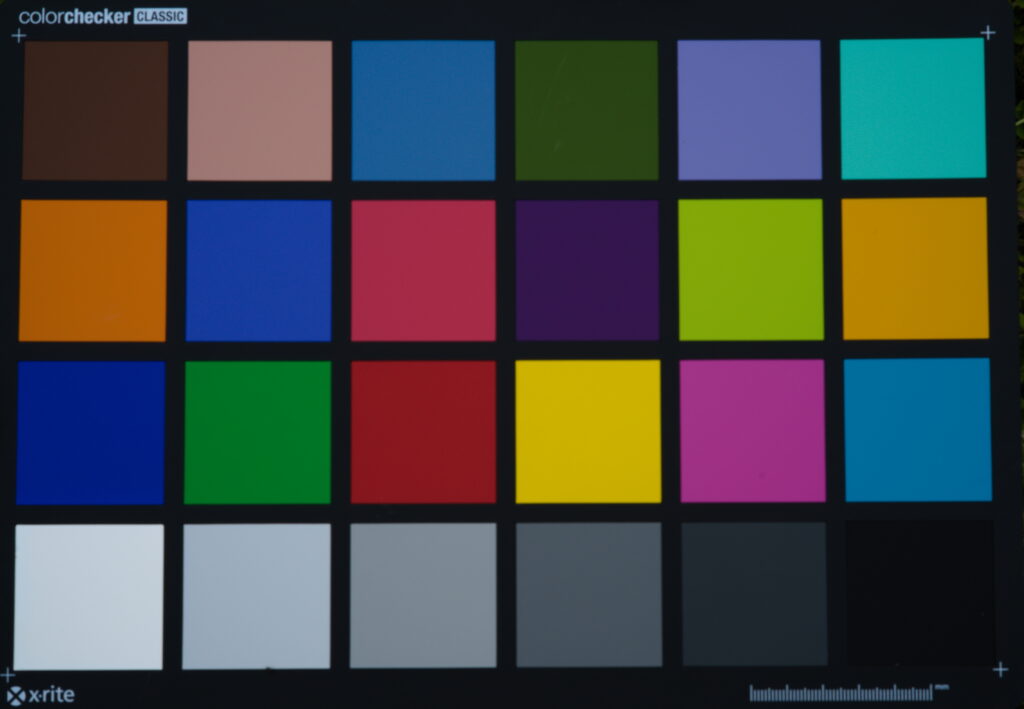
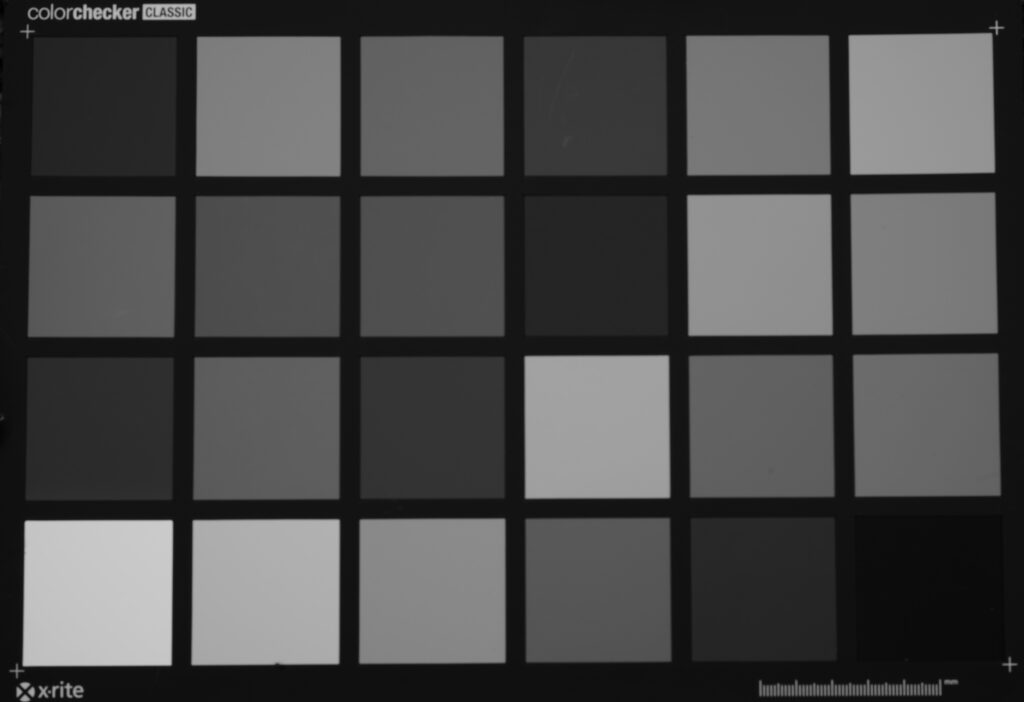
Using an orange filter the impact is most marked on the blues, Row1Column3, R2C2, R3C1 and R3C6 (and slightly R2C4)
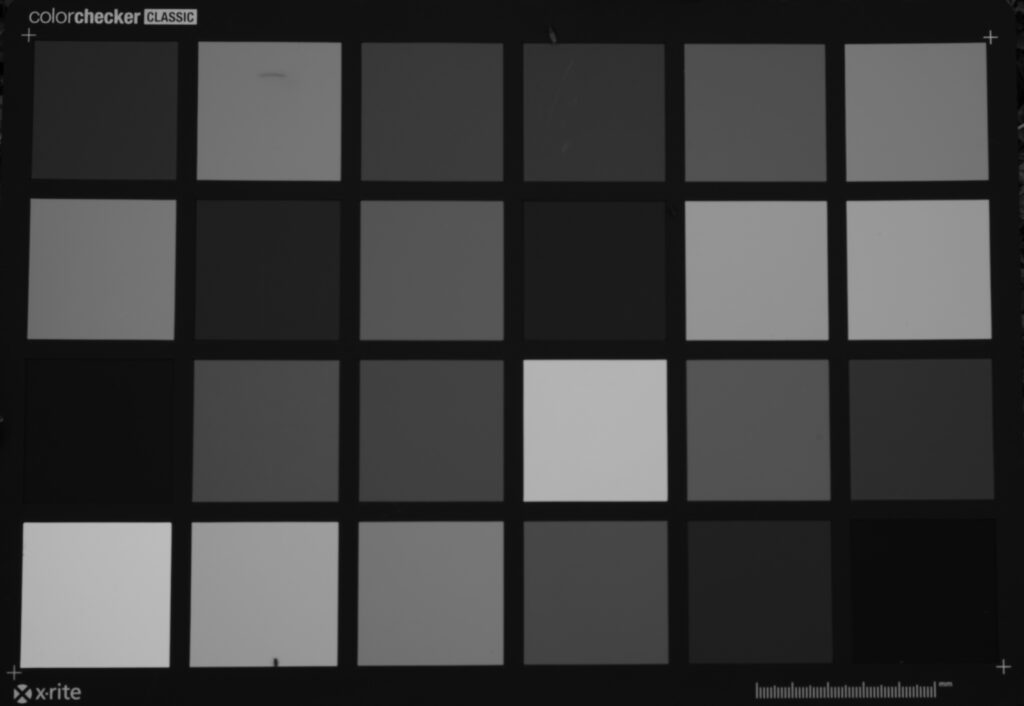
Actual image comparison
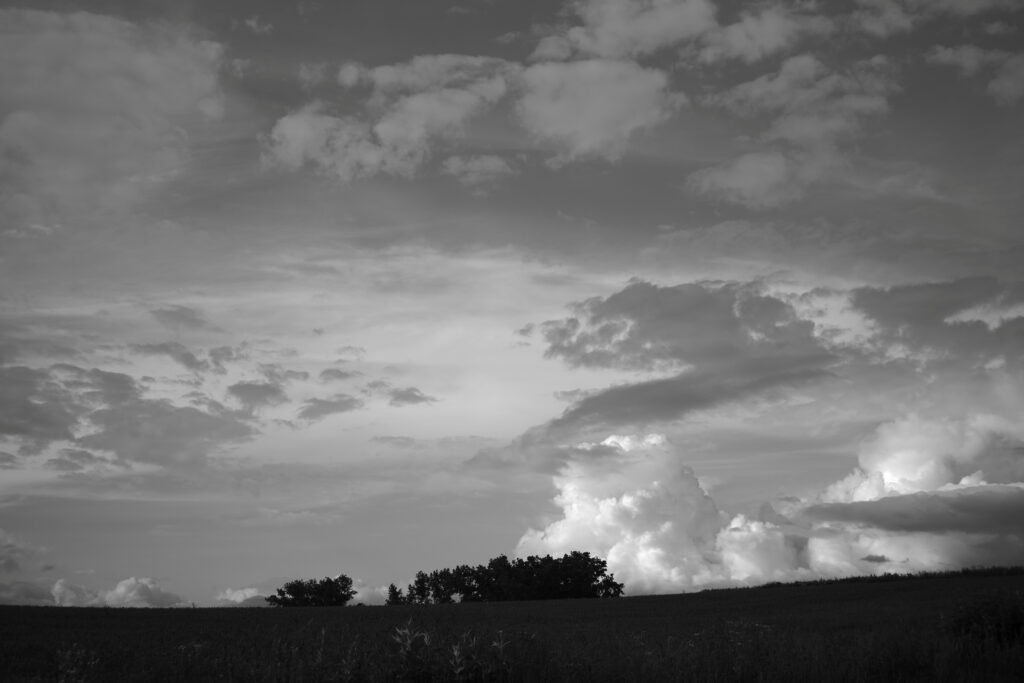
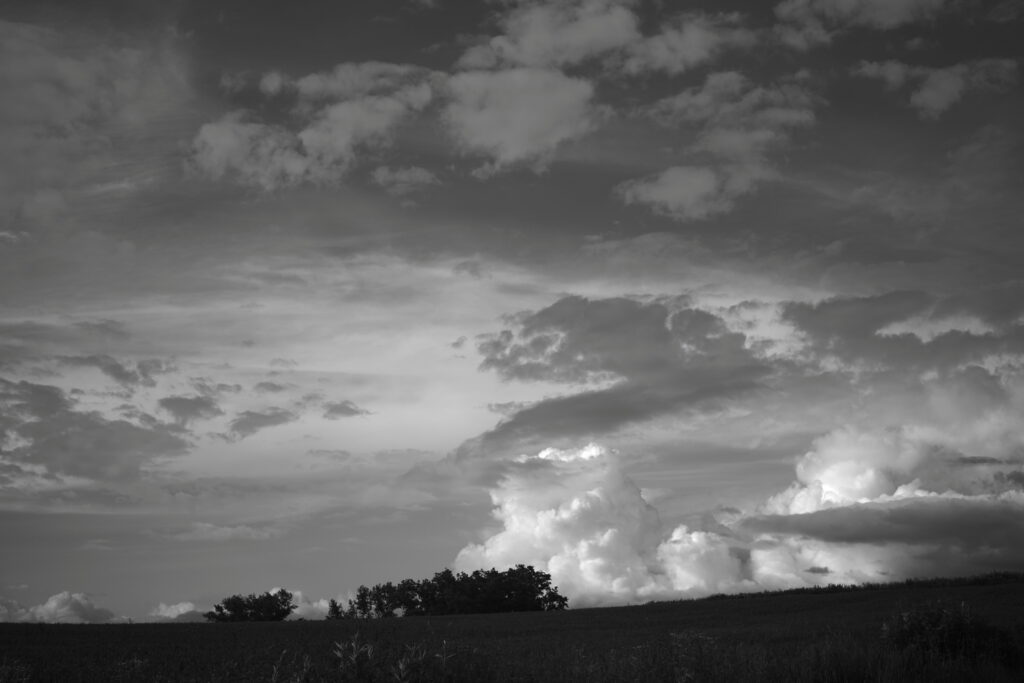
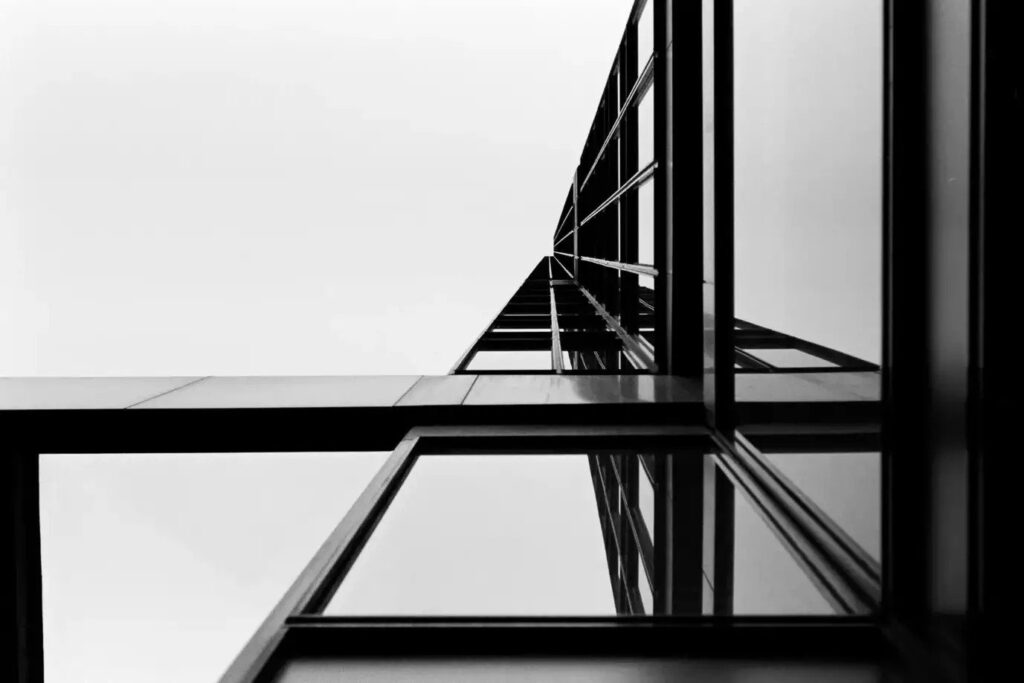
The images below show a rough comparison between as it appears on the camera monitor without a filter being used and how it appears with an orange filter in place. The filter effect is subtle but but most easily seen in the darkening of the sky and the differentiation of the clouds near the horizon.
Conclusions
If you find the presence of a filter useful for composition when shooting B&W on digital then go ahead and use it. Remember to take account of the possible misreading by the camera’s meter when the filter is in place (particularly if using auto white balance).
Share this post:

Comments
Ibraar Hussain on Digital B&W … … with filters?
Comment posted: 11/07/2026
This is very interesting and confirms what I thought, that whether film or digital a filter will have an effect
Excellent reference!
Comment posted: 11/07/2026
Comment posted: 11/07/2026
Comment posted: 11/07/2026
Comment posted: 11/07/2026
Ed on Digital B&W … … with filters?
Comment posted: 11/07/2026
Comment posted: 11/07/2026
Reed George on Digital B&W … … with filters?
Comment posted: 11/07/2026
When using a monochrome digital camera, using filters is well accepted and makes total sense.
I have used them when shooting a Bayer filtered (regular color digital) camera, too. My feeling is that while color mixing is typically enough in post without filters, using a filter does alter the mix and amount of light of different wavelengths that reach the sensor and can therefore give you more (or less) of the specific light you’re interested in to work with in post.
It also makes your images dedicated monochrome, as the filter cast on the color version can be strong and distracting.
That’s been my experience. Thanks for sharing yours.
Comment posted: 11/07/2026
Khürt Williams on Digital B&W … … with filters?
Comment posted: 11/07/2026
Thanks for sharing your testing on this! As someone who loves shooting black and white, I always enjoy seeing how people bridge the gap between classic film mentalities and digital sensors.
Your point about the TTL meter struggling with physical filters is spot on—it’s a frustrating quirk that definitely catches people off guard if they aren't used to calculating manual filter factors like they would on an old film body.
I actually shoot with modern mirrorless bodies (the Fujifilm X-T3 and X-T5), and reading your post made me appreciate how much the technology has adapted. For my setup, physical contrast filters have mostly been made redundant by the EVF (electronic viewfinder). Because I can load built-in profiles like Acros with digital Yellow, Orange, or Red filter simulations right in the camera, I actually see the high-contrast, filtered result live in my viewfinder before I even click the shutter. It completely removes that "bland screen" pre-visualization hurdle you mentioned!
Plus, keeping the physical glass off the lens means the sensor still captures full data across all the RGB channels, which keeps the exposure metering perfectly accurate.
That said, I totally see your point if you're shooting with a dedicated monochrome sensor (like a Leica Monochrom) where the camera can't separate color channels in-camera. In that world, glass filters are absolutely essential.
It’s great to see that physical filters still have a place for those who prefer that workflow or are using specific gear. Looking forward to seeing more of your work!
Comment posted: 11/07/2026
Christopher Welch on Digital B&W … … with filters?
Comment posted: 11/07/2026
Comment posted: 11/07/2026
Gary Smith on Digital B&W … … with filters?
Comment posted: 11/07/2026
I probably ought to own some filters but with 19 cameras deciding which to filter and which to go au natural becomes more trouble than my tired brain can handle.
Thanks for your investigation!
Comment posted: 11/07/2026
Comment posted: 11/07/2026
Comment posted: 11/07/2026
Jeffery Luhn on Digital B&W … … with filters?
Comment posted: 11/07/2026
Thanks for the article on that subject. Students ask me whether filters work on digital cameras and I give them the canned response, but I've never bothered to test it. Thanks for providing a well done experiment. I suppose my answer should be,"Yes, they work, but it may not be worth the effort. And your camera meter may not be reliable. But....if you're shooting infrared with a camera that has an altered sensor, an IR filter is a must."
Since I shoot mostly film these days, I use the Y/G filter a lot. Lightens foliage and helps give skin tones a creamy midtone.
Cheers!
Comment posted: 11/07/2026
David Hume on Digital B&W … … with filters?
Comment posted: 11/07/2026
I guess this highlights are certain timidity of approach on my part; if I'm just shooting raw in order not to stuff something up, rather than shooting raw in order to realise a vision. It's highlighted to me that my thoughts and confidence are much better in colour than in black-and-white. Thanks for this, cheers.
Comment posted: 11/07/2026
Stephen Barnett on Digital B&W … … with filters?
Comment posted: 12/07/2026
Comment posted: 12/07/2026
Comment posted: 12/07/2026
Comment posted: 12/07/2026
Aster on Digital B&W … … with filters?
Comment posted: 12/07/2026
I generally prefer practical effects to editing. I find it keeps photos grounded and plausible. And maybe it’s crazy, but it feels rewarding to take that extra beat to read the scene, decide what the photo needs, and not have the option to take it back later. In a digital world with endless possibilities and infinite undos, I like to hold on to some creative constraints.
Comment posted: 12/07/2026
Comment posted: 12/07/2026
Comment posted: 12/07/2026
Walter Reumkens on Digital B&W … … with filters?
Comment posted: 13/07/2026
That’s a matter for post-processing – and not just advice for students. That’s how professionals work – professionals who also know exactly how Photoshop and Lightroom work in detail. In other words, people who really know these very powerful tools inside out. Someone who has a darkroom but has done little work in it is still a long way from gaining the experience needed for truly good film results. And who really has a proper grasp of Photoshop and Lightroom? Let alone brilliant tools like SilverEfex or the capabilities of Fujifilm cameras? If you overdo the post-processing – not just with black and white – you’ll end up doing a lot of things wrong and making the results worse. Digitalisation has reinvented photography!
Comment posted: 13/07/2026
Comment posted: 13/07/2026
Comment posted: 13/07/2026
David Pauley on Digital B&W … … with filters?
Comment posted: 14/07/2026
Comment posted: 14/07/2026
Agata Urbaniak on Digital B&W … … with filters?
Comment posted: 23/07/2026
Dann in Indonesia on Digital B&W … … with filters?
Comment posted: 25/07/2026
Walter and I are from a past generation of photographers. In my case, I cut my teeth in it during the early 1960s, iintially with B&W film processed in my own darkroom in my parents' home. In 1970 I went mostly over to color, at first with color negative films until I discovered the beauty of slides from Kodachrome and Ektachrome and somewhat later, slide films from Agfa and Fuji.
We did things far more simply back then. In 1970 I went to Bali for the first time, again in 1972 and 1973 and for a three-months stay (truly, those were the good old days) in 1975. My cameras for these journeys were initially a Yashica D, a Rolleiflex E2, two circa 1950 Kodak Retinas, a Mamiya 500 DTL and a Pentax K1000. All my cameras had UVs, yellow and orange filters, only later did I discover the benefits of a polariser in harsh tropical light.
Leaping on to the digital era, now and then I put a yellow or an orange Nikkor filter on one of my DSLRs (D700 and D800, now moved on to Z6 and Z5 but still using the old Ds as I work best with optical viewfinders). And I use the cameras not with the Monochrome setting. I try to cover all my bases as regards color shifts and exposure variations by setting my Nikons to make two or even three images of important scenes, at -0.3, 0.0 and +0.3. A lot of images to plod through at downloading/post-processing time, but it ensures that now and then I get something close to what I wanted in the final results.
I will admit, however, that the results I am getting from all this effort have so far been mostly - well, disappointing. The images are basically acceptable but not good enough to work with to any great extent. But I persevere.
Best from DANN in Indonesia.
Dann in Indonesia on Digital B&W … … with filters?
Comment posted: 25/07/2026
My exposure variations by setting my Nikons to make two or even three images of important scenes, at -0.3, 0.0 and +0.3., are mostly for images I make in tropical lighting (Indonesia).
Anyone planning to use this method in northern hemisphere light may do better with -0.5, 0.0 and +0.5. English daylight even in summer is really nothing at all like noon in Surabaya...
Best from DANN in Indonesia
Comment posted: 25/07/2026