

To paraphrase one of the trolls in Tolkien’s ‘The Hobbit’: “Rain yesterday, rain today, and blimey, if it don’t look like rain again tomorrer.”
It’s raining as I write this. It was raining yesterday as well, and the day before. In fact, I’ve counted 28 days of rain so far, and it was the plethora of the wet stuff prior to this that prompted the counting in the first place.
I don’t mind the rain and fully appreciate its importance to our world. I generally see it, when in positive mood, as a life-giving force, the very essence of existence, a literal and metaphysical symbol of renewal, of making clean and providing clarity; the allure of petrichor is not lost on me. However, the sheer relentlessness of this dismal and dreary weather, with its slate skies, its flaccid and flat light, is not conducive to either the pursuit of this project or to my ongoing recovery. At least we already know the answer to, ‘What will the weather do tomorrow?’, I suppose.
All this is to say that I’ve struggled with the next stage of my Out of the Drawer and Into the Light project. Following the burst of energy that led to the writing of the first article, I kind of ran out of steam; I think, looking back at the photos, I realise that they are not yet ‘creative’, being just photos for the sake of photos, and instead of being inspired by the act of creativity I became stifled by it. I feel the same about the images in this article and very nearly scrapped it, but having stated in the first article that it’s a journey I feel its better to crack on and take those next steps! Here ya go, then…
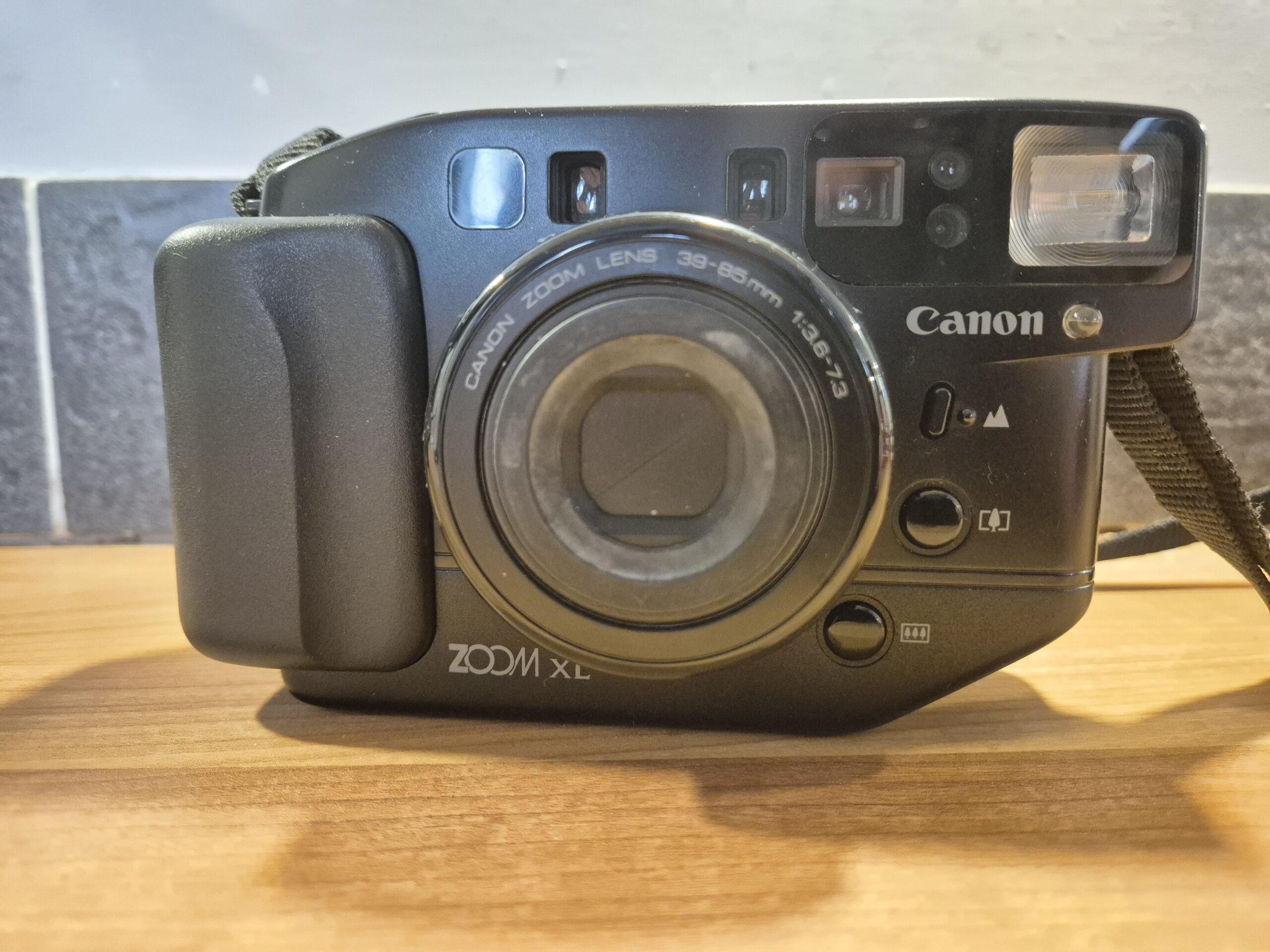
Putting the Exa Ia away, I pondered upon which camera I should use next. During lockdown, I bought a few superzoom cameras for next to nothing from Facebook Marketplace, thinking I’d use them once those crazy days were over. But the terrible combination of the inexorable slog of work and my awful memory meant they remained in that prison of a drawer. A big chunk of grey plastic caught my eye as I rooted through (maybe the grey sky had inspired me); I reached for it and pulled out the behemoth that is the Canon SureShot Zoom XL (such a catchy name).
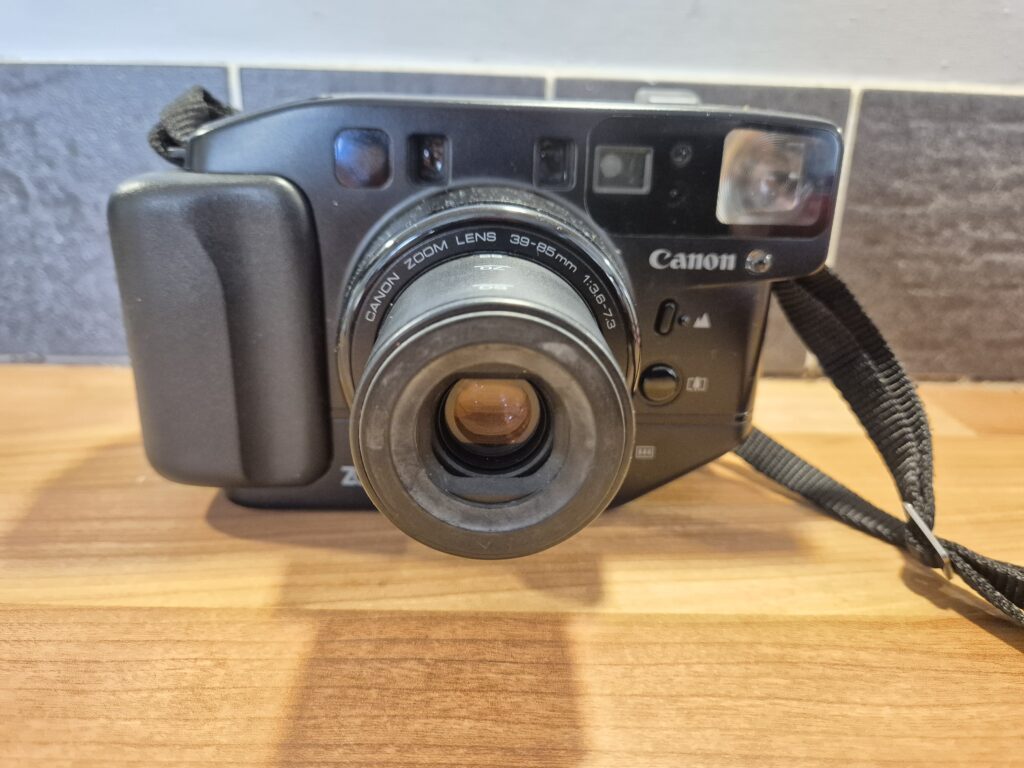
Mike Hannon described it in his excellent review on this very website as ‘an elegant brute’. There’s certainly something endearingly utilitarian in its design, being a huge slab of a thing, with its protruding flash and opposing angles making it look like a futuristic super-ferry from the front, with layers of decks perched above a heavy hull. As a fan of brutalist architecture, this camera seemed a good choice.
I discovered that the camera uses DX coded film, with no manual control for ISO. A quick glance in the instruction manual told me that non-DX coded film is set to 100. Hooray! That works perfectly for my choice of Ilford FP4 Type 517, which I shoot at 100 anyway. I am beginning to regret this choice of film already, as will be discussed later.
A brief overview of the camera is probably necessary. It was released in September 1989 as a fully automatic zoom camera, relying on a silicon photocell for its triangulation autofocus system, and a near-infrared beam to assist in low light. Canon were rather keen on the 39-85mm f/3.6-7.3 lens, comparing it to their FD range of lenses. It has an ISO range of 50 to 3200. I’ve been unable to find the original UK price, but it was 54,800 yen in Japan, and $245 in the US, so it was probably somewhere between £250-300.
Controls are limited to flash options on the top of the camera, allowing for on, off or slow sync. Also on top is a 10-second timer button and an exposure button. This last switches between single and continuous modes (1.2 fps), and an interesting Intelligent Framing Zoom mode. My understanding of this is that it allows the photographer to set a specific size of subject; if I were to photograph a bowl of fruit, for example, and the bowl took up half of the frame, I could get either closer or further away from the bowl and the camera will automatically zoom so that it is the same relative size in the frame. I have to admit, I can’t really see any use for this mode and only tried it with the camera unloaded. There is, of course, also the shutter release button up top.
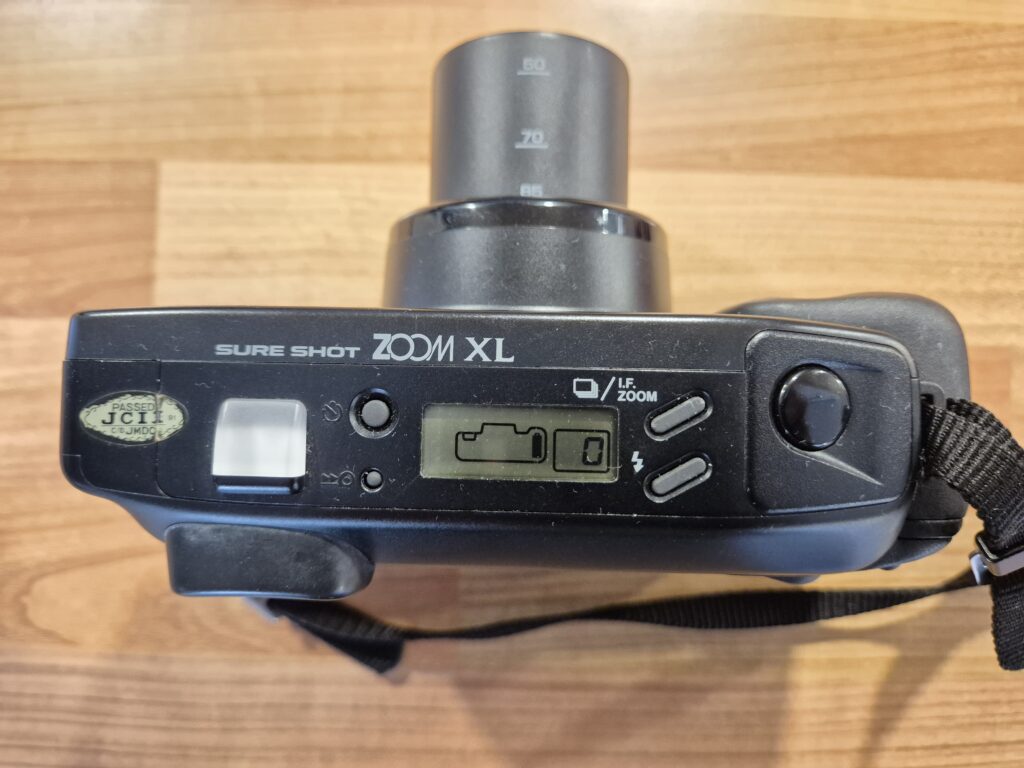
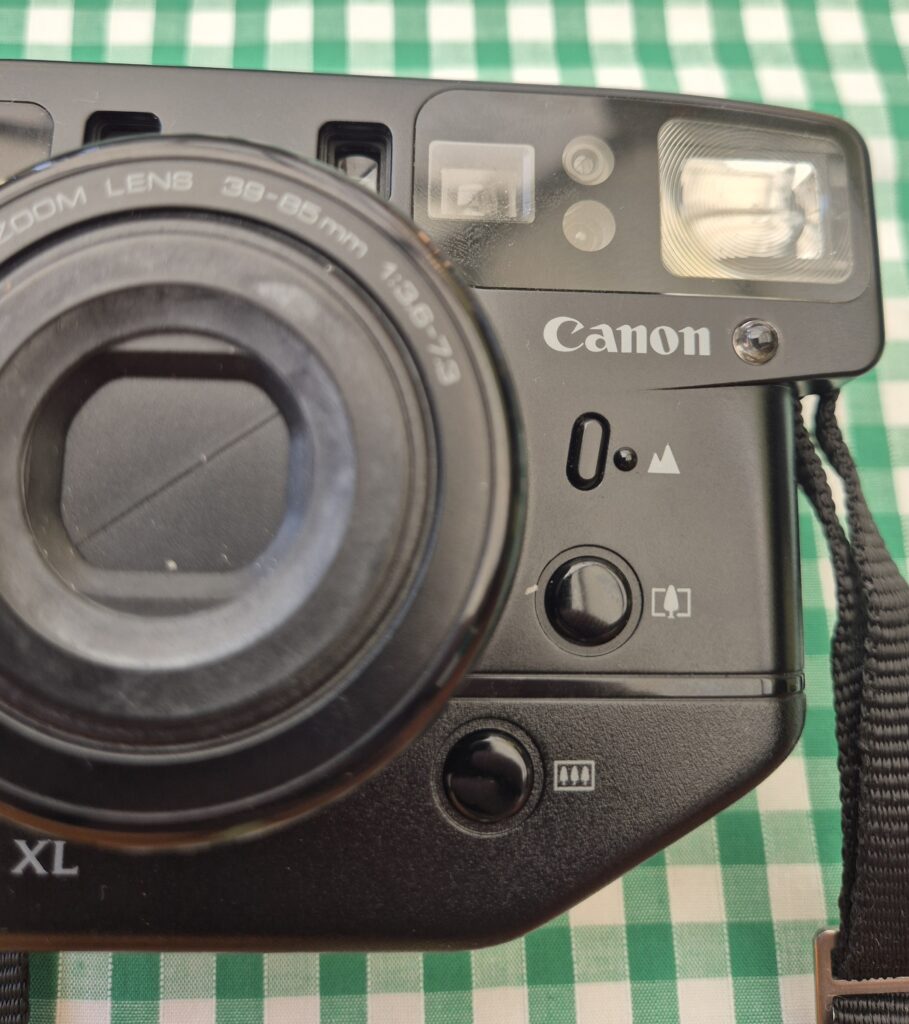
I expected the camera to feel heavy and unwieldy in the hand, but I thought it surprisingly light for such a monster (mine weighs in at 607g) and the grip to the right of the camera allows for easy handling, although I could certainly feel the heft when holding one-handed. To the left of the lens are the zoom buttons and an infinity button. I admit to occasionally hitting the infinity button when searching for the tele-zoom, but that’s a fault of mine rather than the camera, as I now realise there is a small dome of plastic next to the infinity button, as well as it being rectangular, as opposed to the roundness of the zoom buttons. A fool, I am, and not for the first time in my life I found myself wishing I’d read the manual and taken a little more time to explore the quirks. Not the end of the world, of course.
Loading the film is easy and involves simply pulling the film leader across and closing the back. Even I didn’t get this part wrong!
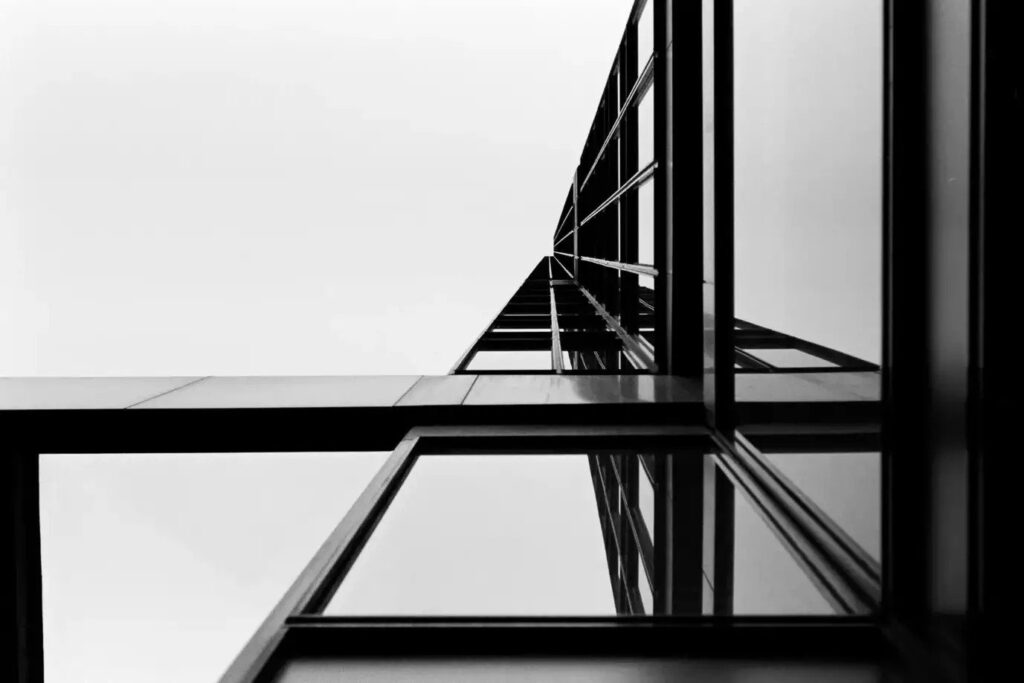
The grey days were certainly slowing down my recovery and I found it extremely difficult to find inspiration at home. I snapped a few, anyway.
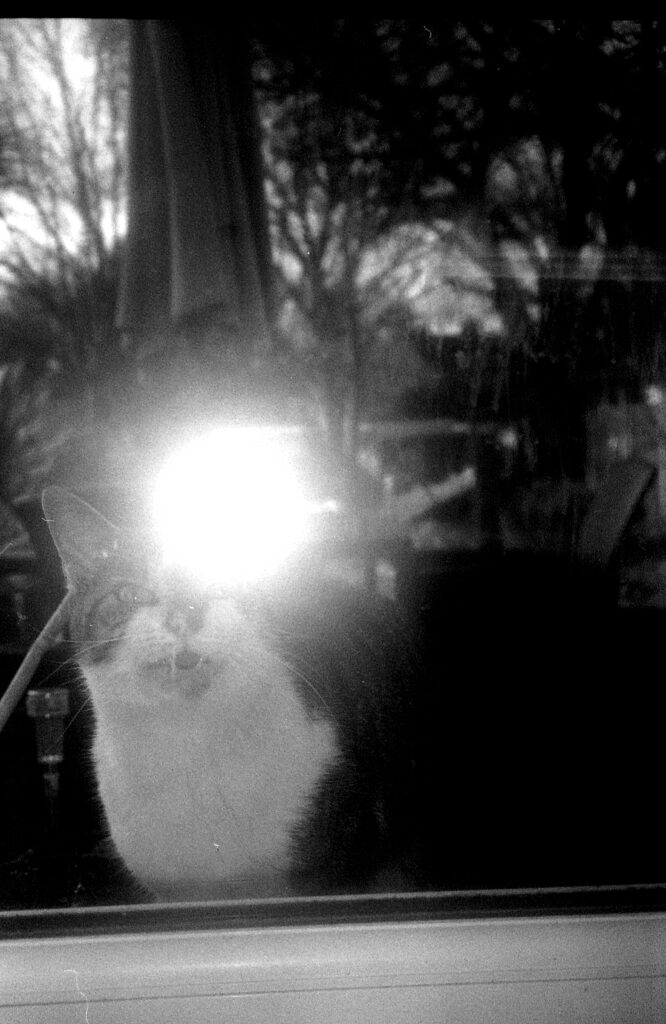
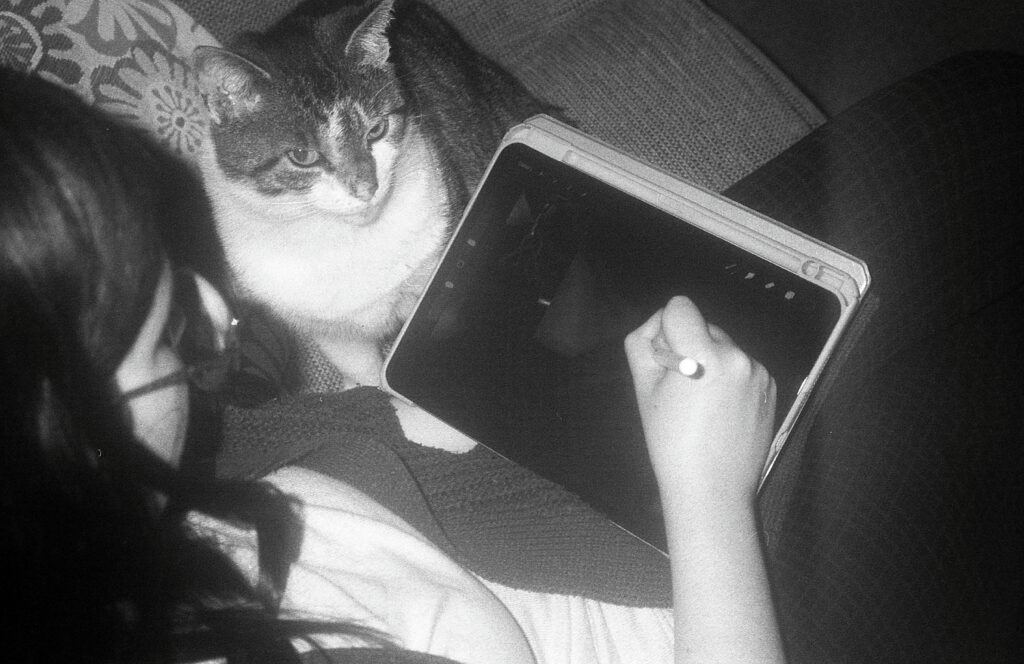
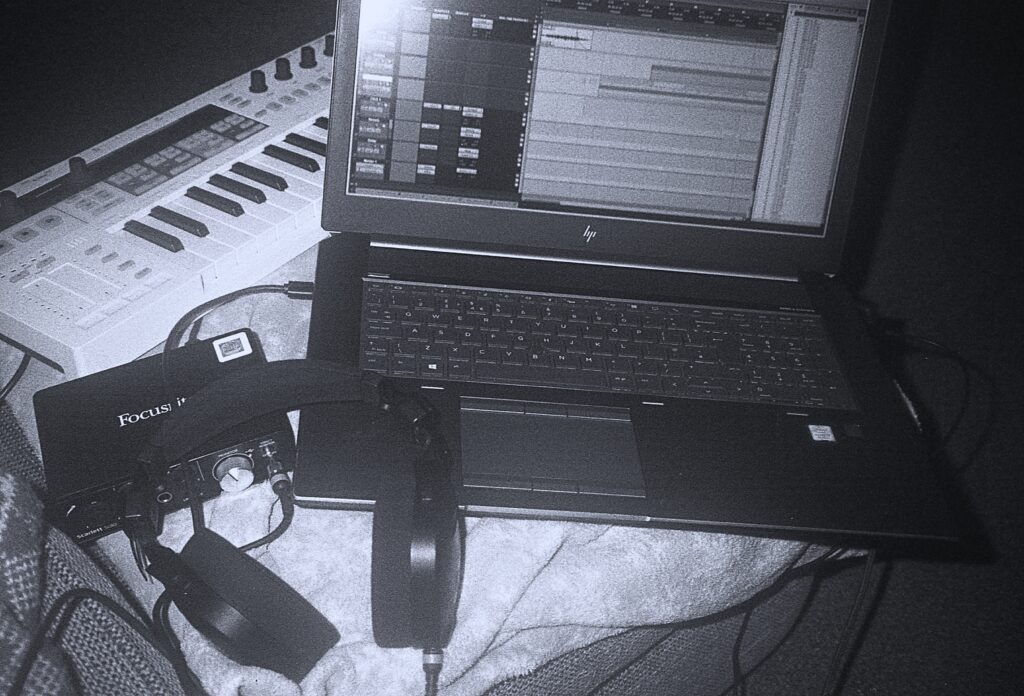
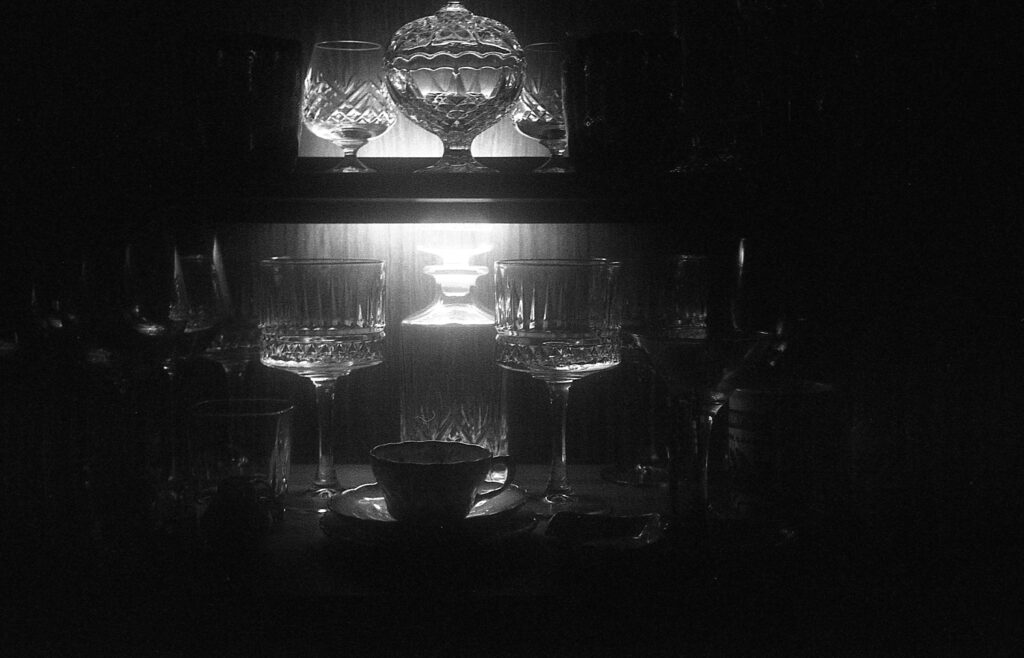
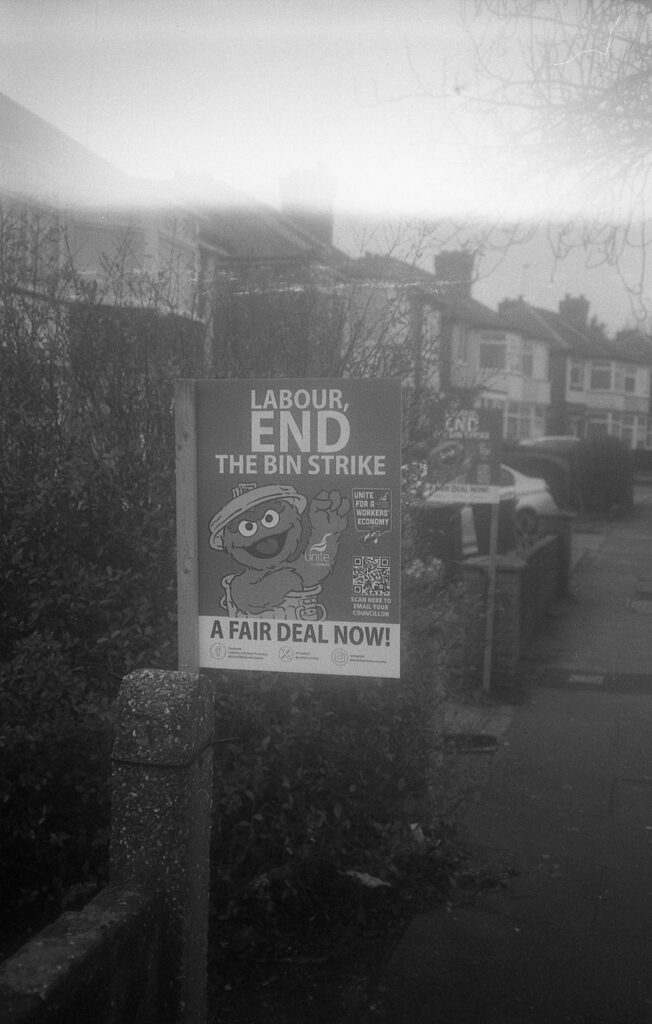

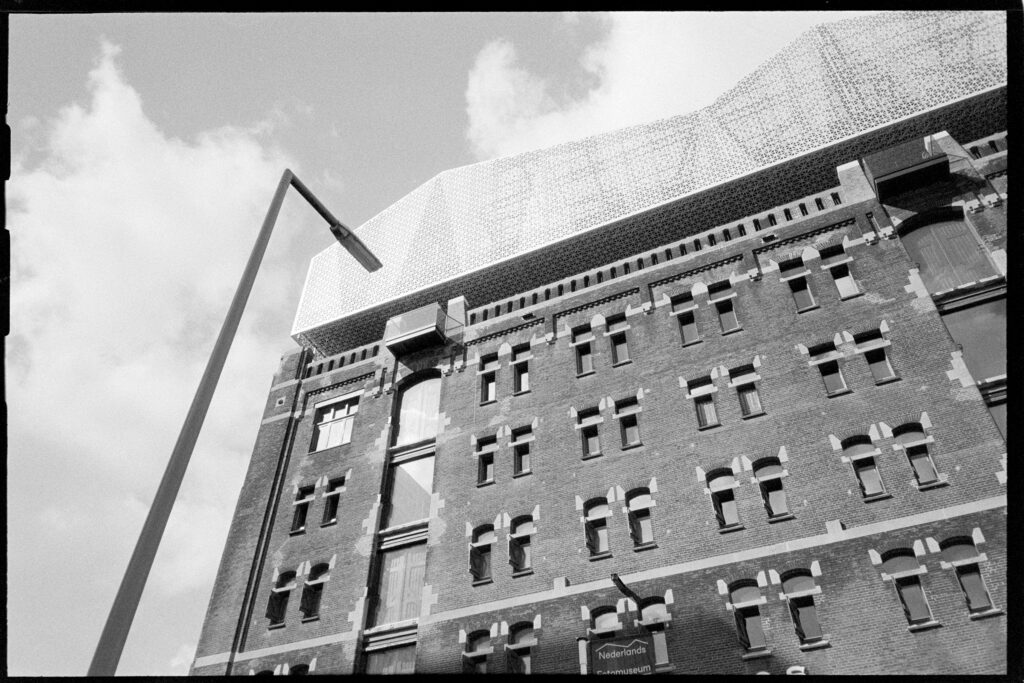
As it turned out, we were going to a ballet in February (something I never thought I’d do; my daughter was obsessed when she was younger and so I reluctantly agreed to go along to one with the family. Though every fibre of my working-class being was screaming resistance, I was blown away by the discipline, the athleticism, the music, the sheer grace and beauty of the spectacle. Why should the ruling classes hog ‘high-art’, anyway? Screw ‘em). Although I’d be unable to photograph the ballet, I could at least visit a few places in the city beforehand.
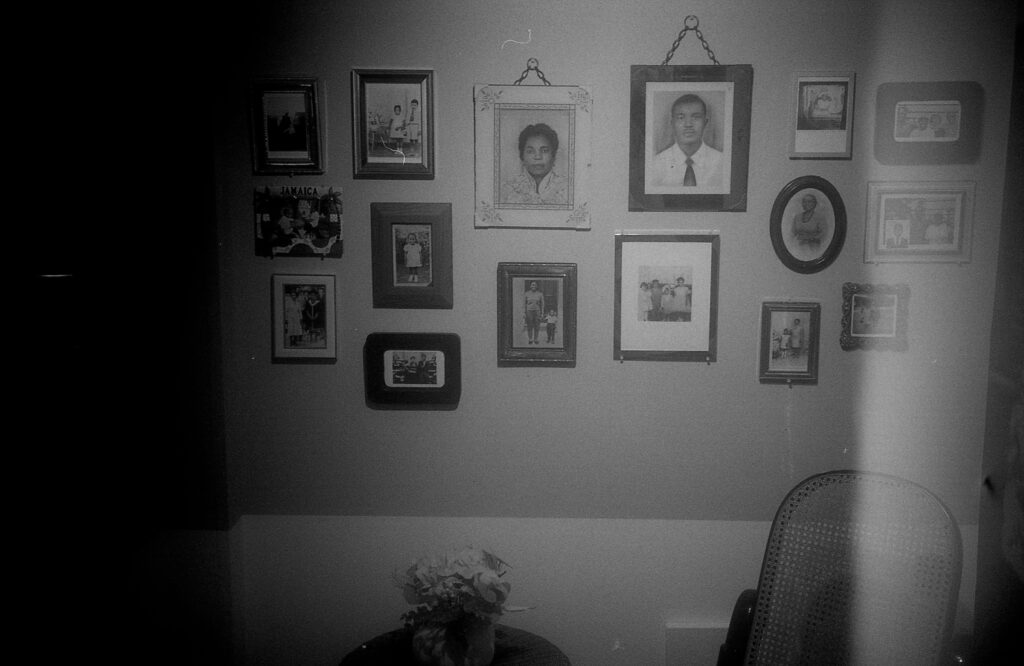
Before the show (is that the right word for a ballet? Performance, perhaps?), we visited Court 15 second-hand book shop, above which is a free exhibition space. They were holding two exhibitions, the first entitled ‘Mrs B: A Handsworth Life’, exploring the importance of community through the life of Mrs Anita Eutedra Bartley.
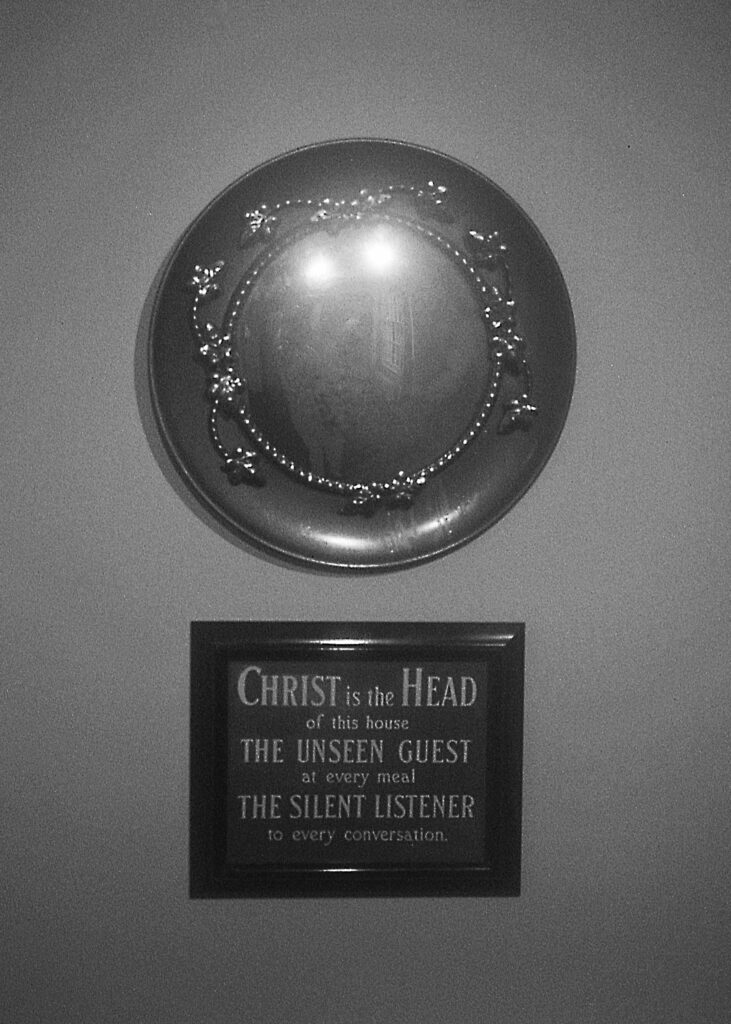
The second exhibition was called ‘Beyond Glitter and Feathers’, exploring the work of local artist and activist, Gary Jones.
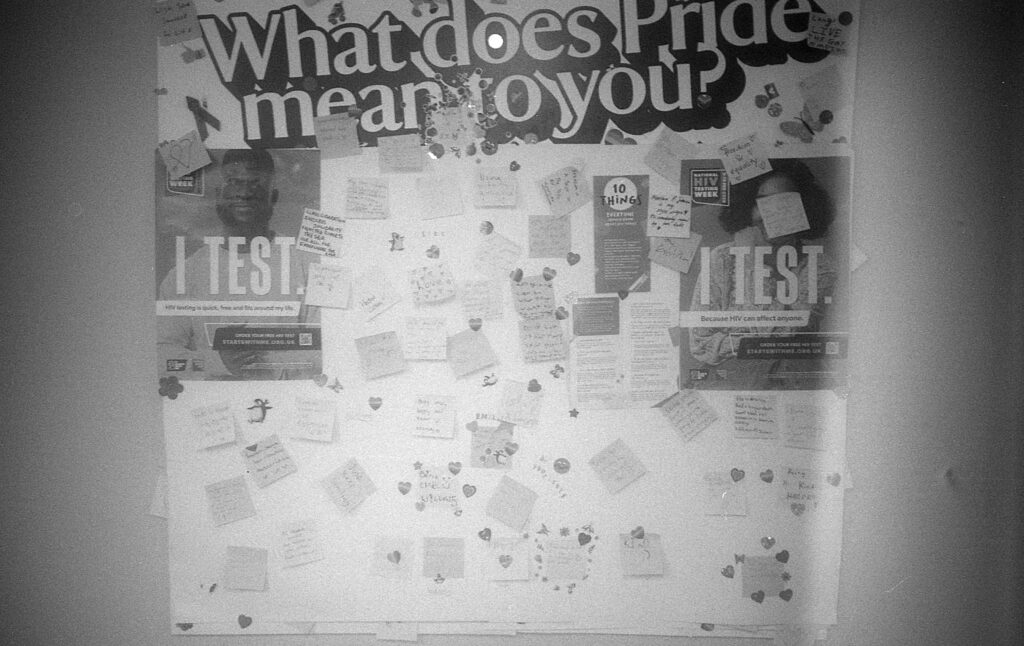
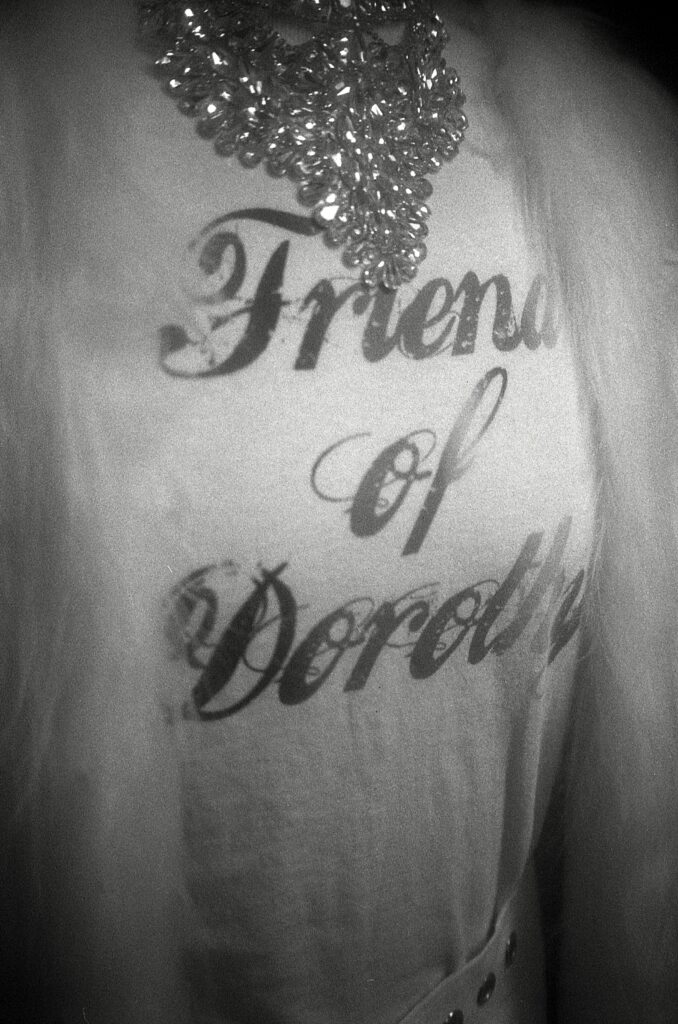
My wife and daughter had booked to go to a pre-show viewing of the dancers’ rehearsals, so I decided to walk across town to the always-excellent IKON gallery. It is telling in terms of my recovery that I have begun applying for jobs – none of which I have any expectation of getting – and I had applied for a role for which I have no qualifications at the IKON (Marketing Analyst, for those that are interested. No, I’ve no idea why I applied either!) I visit the gallery fairly often when I’m in the city, and on this occasion there was an exhibition of Donald Locke’s ‘Resistant Forms’.
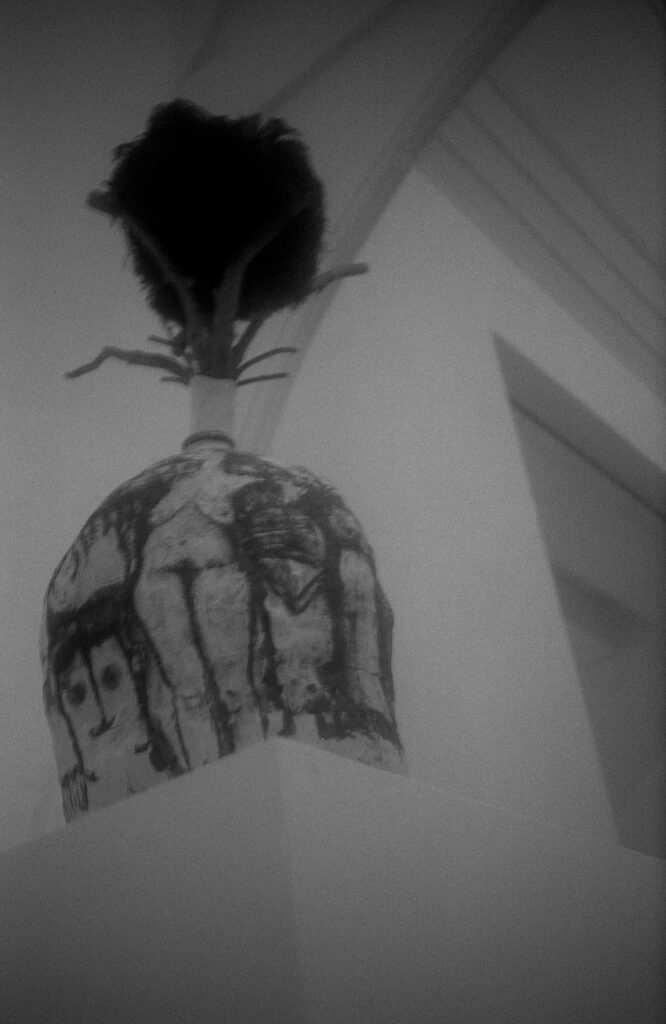
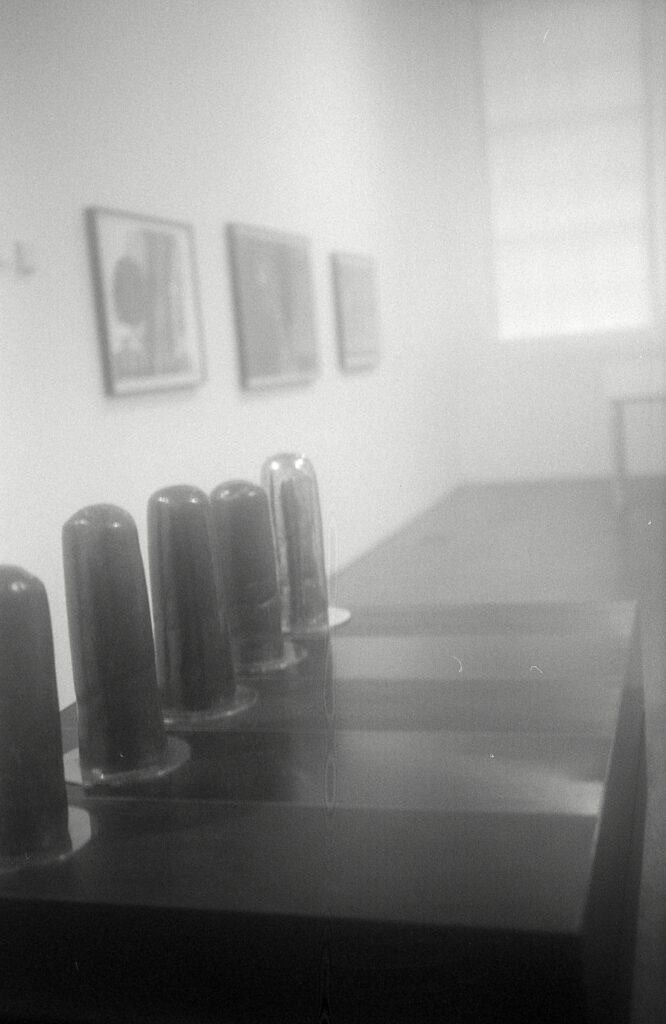
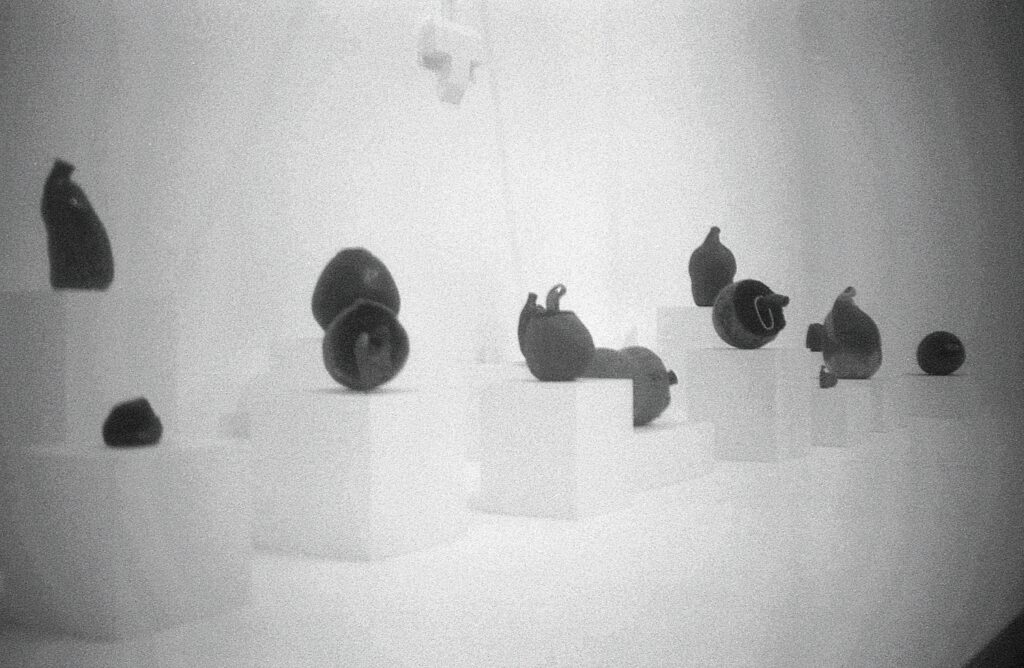
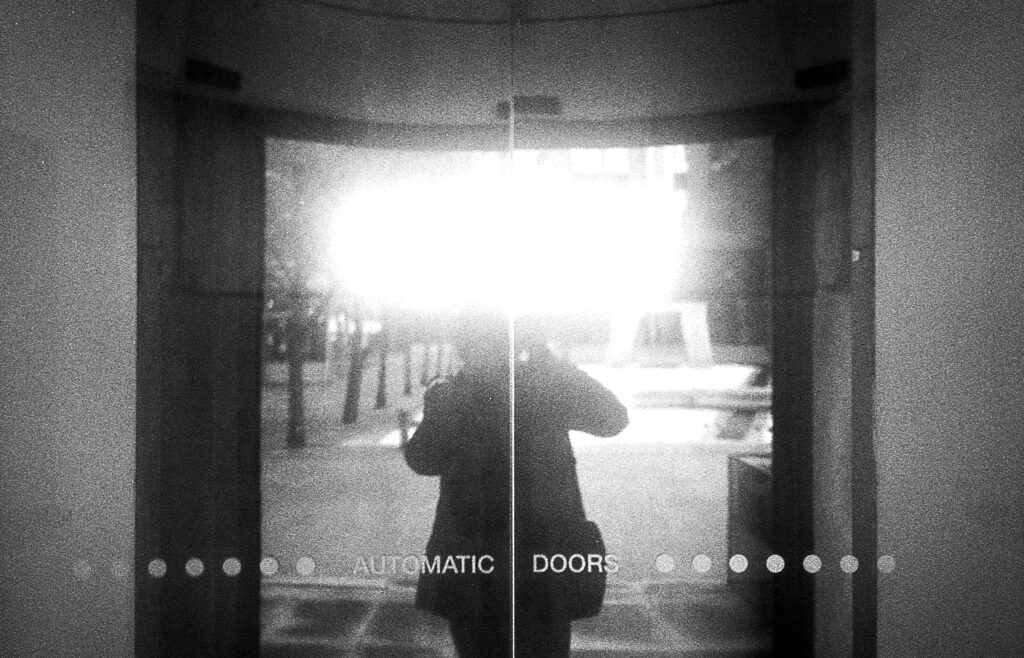
It was while I was taking these interior photos that I wished I’d used HP5. I love the FP4 Type 517 and it is currently an absolute bargain, but the limitations of 100 ISO are probably not conducive to a thorough test of a camera. Nevertheless, I am very much committed to the notion of process over outcome, and having made the decision to use the Type 517, I will stick to it.
After re-reading the manual, I was exceptionally disappointed in myself that I didn’t test the remote control! Once I realised I had neglected this, I slipped into one of my default modes when I’m feeling low, and that is negative self-talk. I am terrible for this, and I started to berate myself severely, calling myself some rather horrible names that I would normally reserve only for the most odious of our politicians and world leaders. It is at times like this, when something seemingly quite meaningless and trivial happens, that the worst of me appears, and I had a significant struggle in talking myself down from the precipice. My counselling has taught me to just stop at times like these, to breathe, count, and reflect. Whilst in the throes of self-loathing, of course, advice such as this is exceptionally difficult to recall, even more difficult to put into practice. After some time, I was able to contextualise what had (or, in this case, hadn’t) happened, and I even had a little chuckle at myself for taking it so seriously; this is most definitely progress.
So, for those readers that were desperately looking forward to reading about the cute remote control function of the camera, you have my sincere apologies. Don’t call me names for it, though, as I’ve already done that.
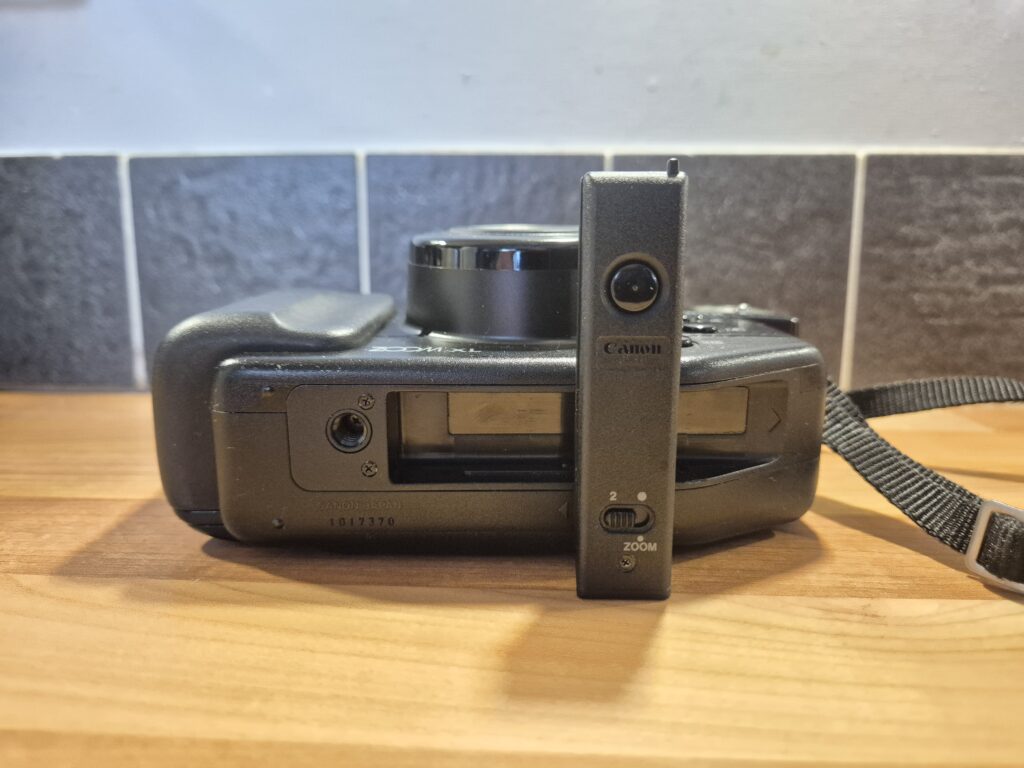
I feel that many of the photos are a little ‘washed out’, and I don’t think it is in the development. I have successfully used Bellini Hydrofen with Type 517 previously, so can only assume that this is something to do with my version of the camera. Of course, it could be this particular roll of Type 517; the film is, after all, at least 35 years old, and quite probably older. I will run a roll of a different film through it before deciding on whether it is a keeper or not. I suspect it will be put up for sale, however, as I can’t really see a use for it in my hands.
On to the next step, then…
Share this post:

Comments
Danilo Leonardi on Canon SureShot Zoom XL – Out of the Drawer and Into the Light – A Journey of Recovery and Rejuvanation (Part Two)
Comment posted: 14/04/2026
I couldn’t resist wondering about the technical side. The softness you describe made me think the camera may simply be showing its age, perhaps internal haze or even fungus. I've used this same camera (I am selling my copy now, together with other items, to make room for something else...), and in my experience, the camera produced excellent results with a very crisp rendering, and the fill flash worked very well. The 39–85mm zoom is impressive. I think the camera is a remarkable value, image quality-wise standing alongside some of those compacts of the film era that everybody seems to want, you know, those with the German brand on the lens.
I'm enjoying your series.
Comment posted: 14/04/2026
Comment posted: 14/04/2026
Gary Smith on Canon SureShot Zoom XL – Out of the Drawer and Into the Light – A Journey of Recovery and Rejuvanation (Part Two)
Comment posted: 14/04/2026
Thanks for documenting your journey with these cameras "out of the drawer".
Comment posted: 14/04/2026
Walter Reumkens on Canon SureShot Zoom XL – Out of the Drawer and Into the Light – A Journey of Recovery and Rejuvanation (Part Two)
Comment posted: 15/04/2026
Comment posted: 15/04/2026