Robert Frank’s Disappearing New York Neighborhood

By John Bennett

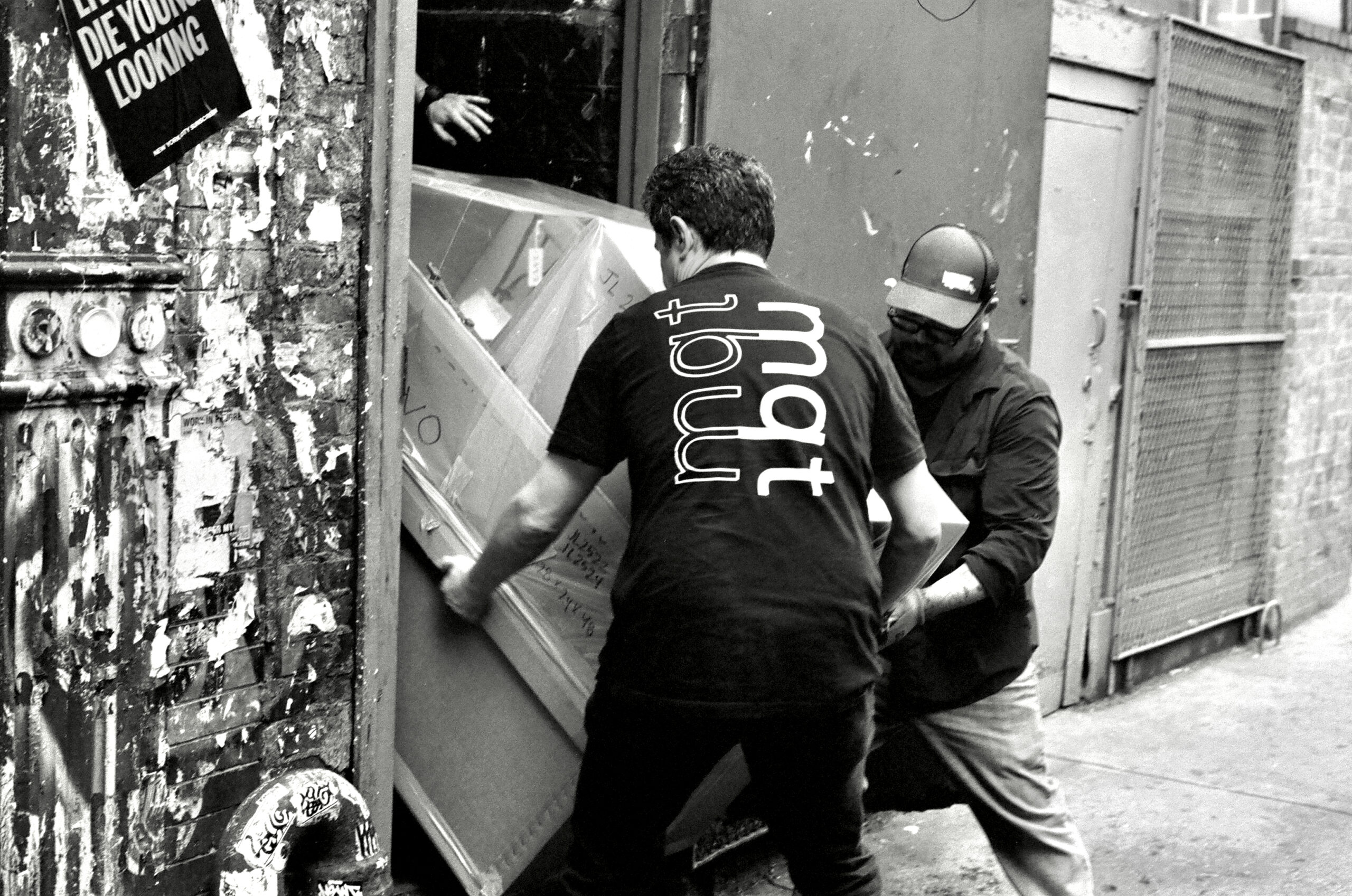
Above: 7 Bleecker Street: With the property sold, workers remove the last possessions of Robert Frank and June Leaf

After my recent 35mmc article, describing our April trip to Butte, Montana, I didn’t think I would have anything further to write about Robert Frank.

In late June, though, we flew to New York City to celebrate a friend’s birthday, and checked into a hotel on The Bowery very near Robert’s former loft at 7 Bleecker Street. Since the death of his wife, the artist June Leaf, in 2024, the building has stood vacant, and in March it was offered for sale.
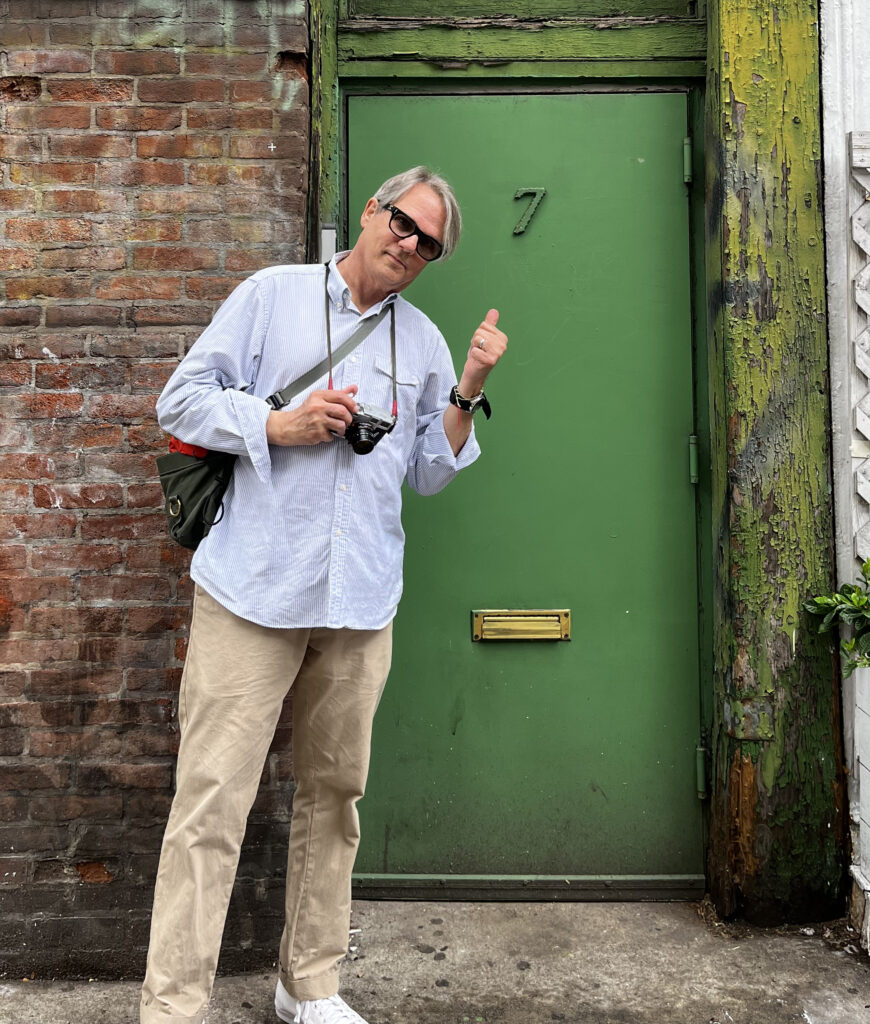
At the door that Robert Frank used many, many times.

The day before we arrived, I contacted the listing agent to see if a quick tour would be possible. She turned me down — nicely — reporting that the property was now under contract, and therefore she couldn’t let anyone in. Understandable.

On our first morning in the city, I walked over to take photographs of the exterior.
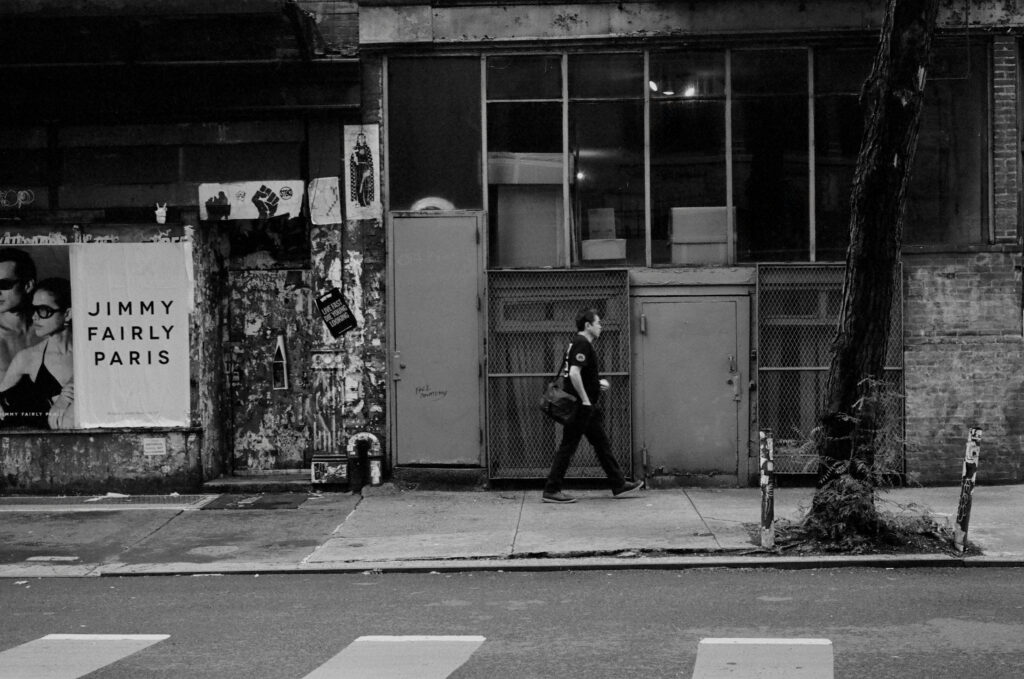
7 Bleecker Street

While I was there, Alex, who lives across the street, approached me.

“What’s going on?” he asked, eyeing my Leica M3.

I said, “Oh, I’m just an admirer of Robert Frank.”

I asked Alex if he had known Robert and June.

“I knew June better. By the time I moved to the block, Robert was pretty doddery.”

We chatted about cameras. Alex pulled a well-worn black paint Leica M4 from his bag. I showed him my Konica Genba Kantoku. After talking a bit more, we exchanged Instagram handles, and off he went.
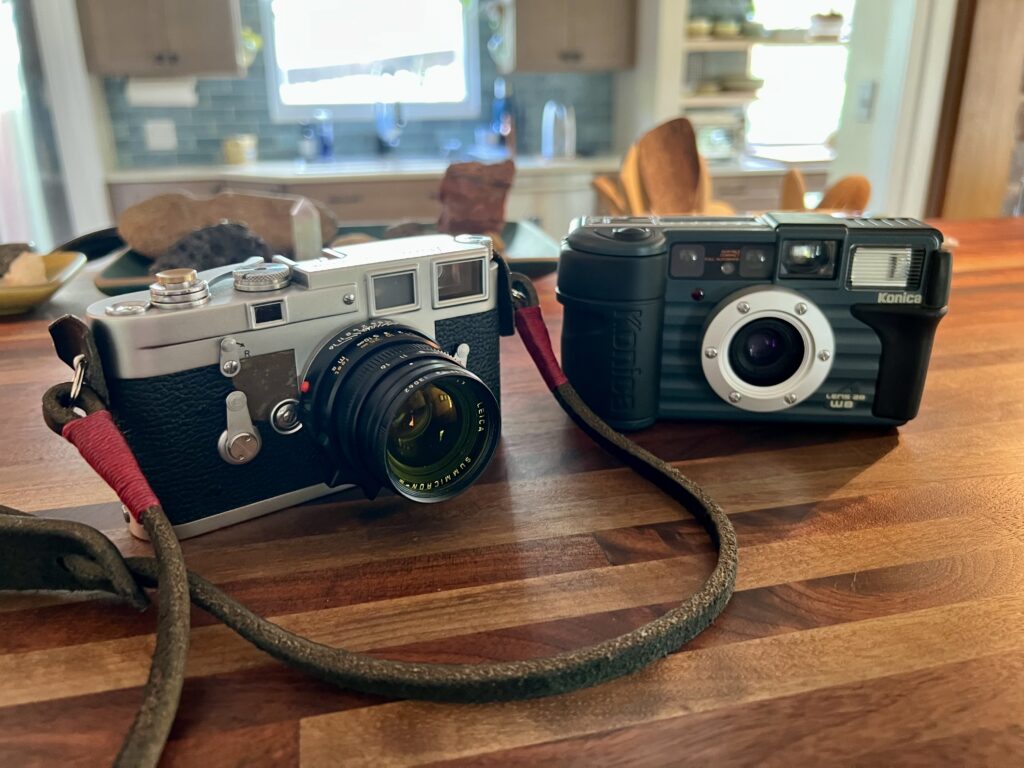
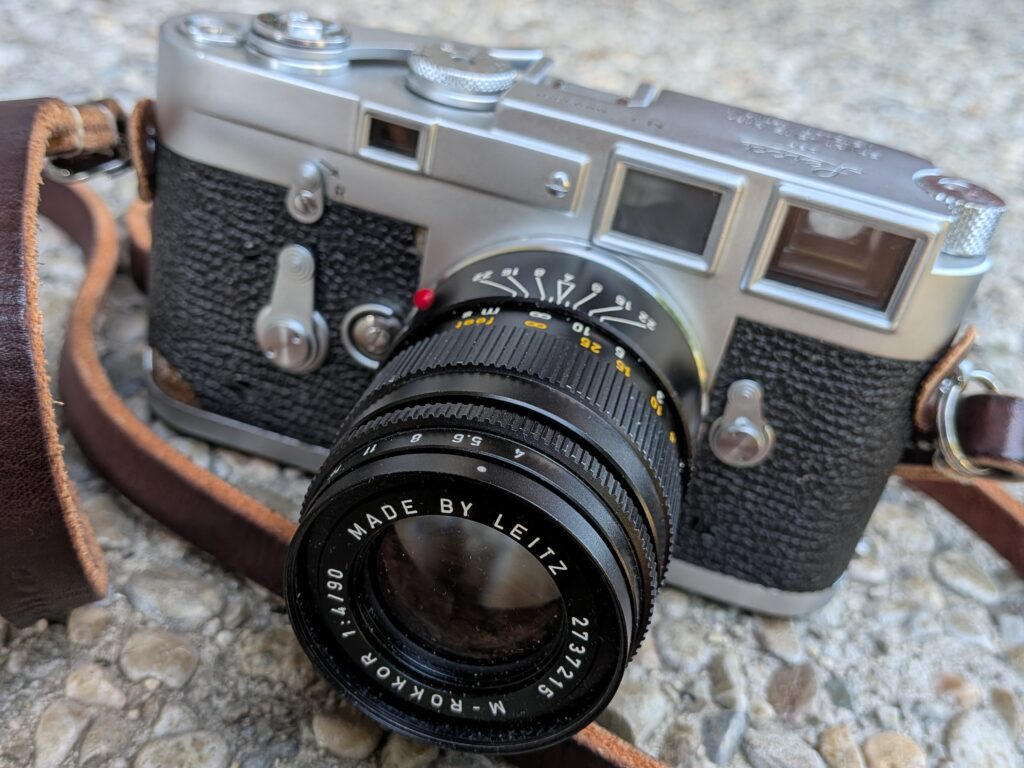
My travel gear: a 1956 Leica M3 with a v4 Summicron 50mm f2 lens and a Konica Genba Kantoku 28 WB

Later that same afternoon, my wife, Darby, said, “Why don’t we walk over, and you can show me Robert’s loft?”

Fortuitously, we arrived just as the movers were taking out the last of Robert and June’s possessions.

I got a few shots of them at work while Darby photographed me photographing them.
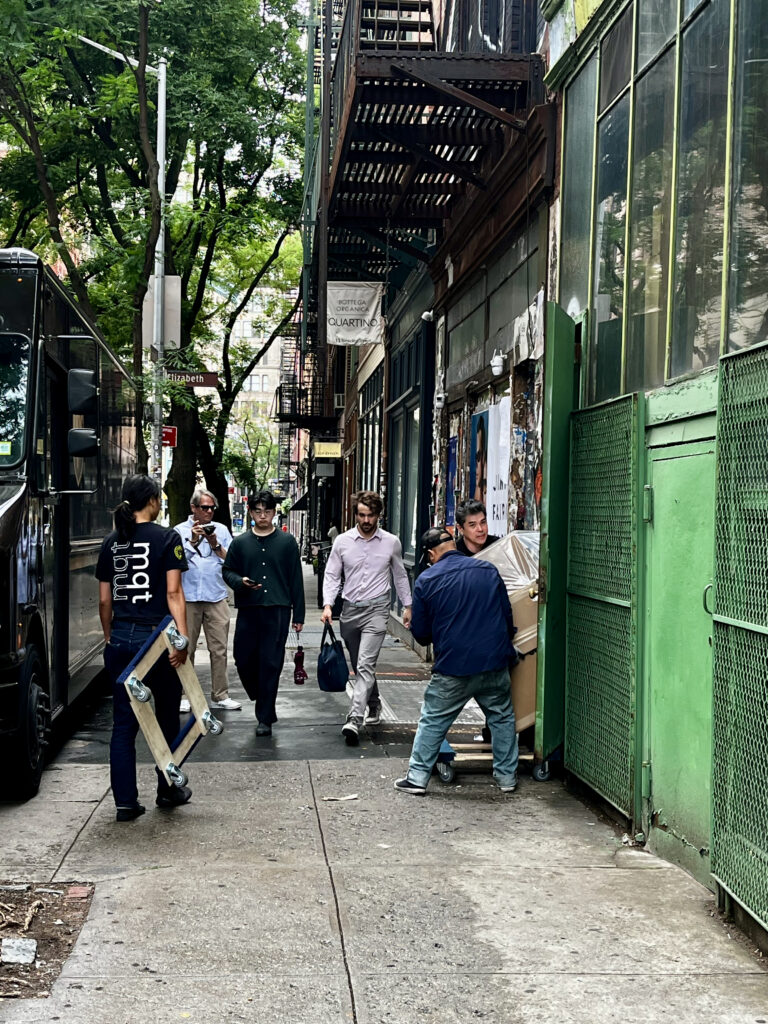
Photographing the movers

“Were you a friend of Robert’s?,” the supervisor asked when he saw me with my cameras.

“No,” I replied, “just a fan.”

“May I take a picture or two?” I asked, pointing at the open door.

“Yes, but only from the first step,” he replied. Again, I understood. They were busy, and it’s a litigious world.

I stood on the rusty metal stair, raised my camera over my head, and shot blindly into the space that Robert and June had long occupied.
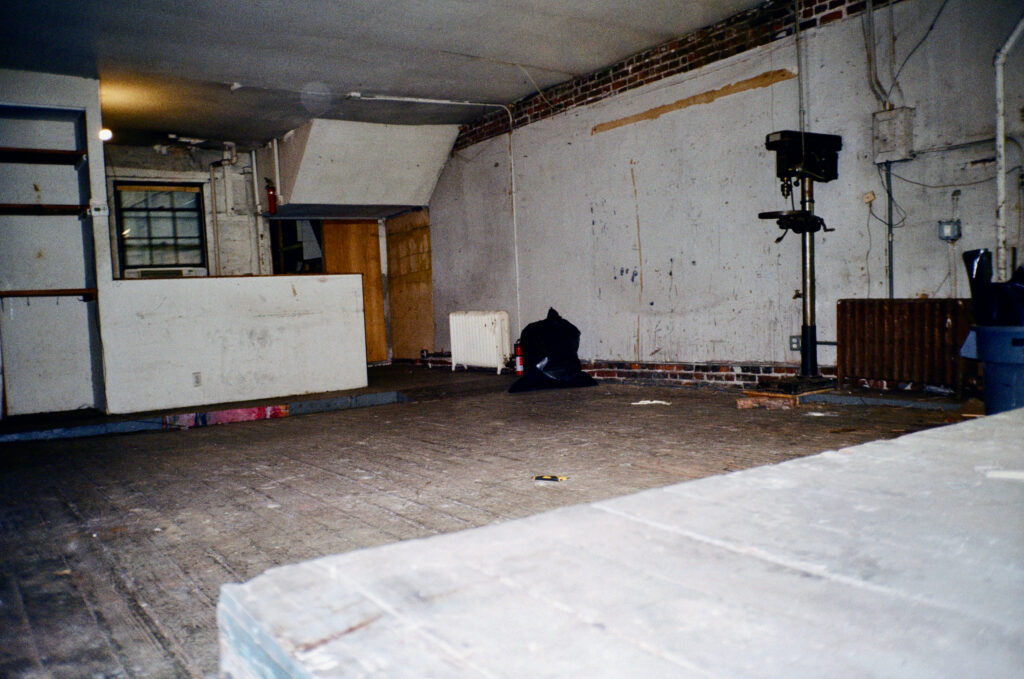
Interior view from the bottom step

In these rooms, they had grown from middle-age into old age, and although they were regularly away at their house in Nova Scotia, they spent many years on the Lower East Side of Manhattan, creating art, guiding book publications, helping to plan exhibitions, being interviewed by filmmakers, writers, and fellow photographers. Robert directed a music video here in 1996: “Summer Cannibals” by Patti Smith.

They changed over the years, but the neighborhood changed more.

“The yuppies, they have a right to live too, but I don’t want to live amongst them. I don’t even want to live next to them, but I have no choice.”

from “Leaving Home, Coming Home: A Portrait of Robert Frank”

When I left New York in 1980, The Bowery — and much of the East Village — was a daunting place that only determined music fans, longtime residents, buyers in search of illegal substances, urban adventurers, and creative people without day jobs knew firsthand. The legendary club, CBGB, where bands like The Ramones, Talking Heads, Blondie, Television, and so many others got their start, was just a few hundred feet from Robert’s loft.

The former punk venue is now occupied by an upscale clothing store selling $150 Bon Jovi t-shirts and $2,400 suede jackets. And so it goes.

Neighborhood rents have soared, and little remains of those long gone grainy Tri-X days. 
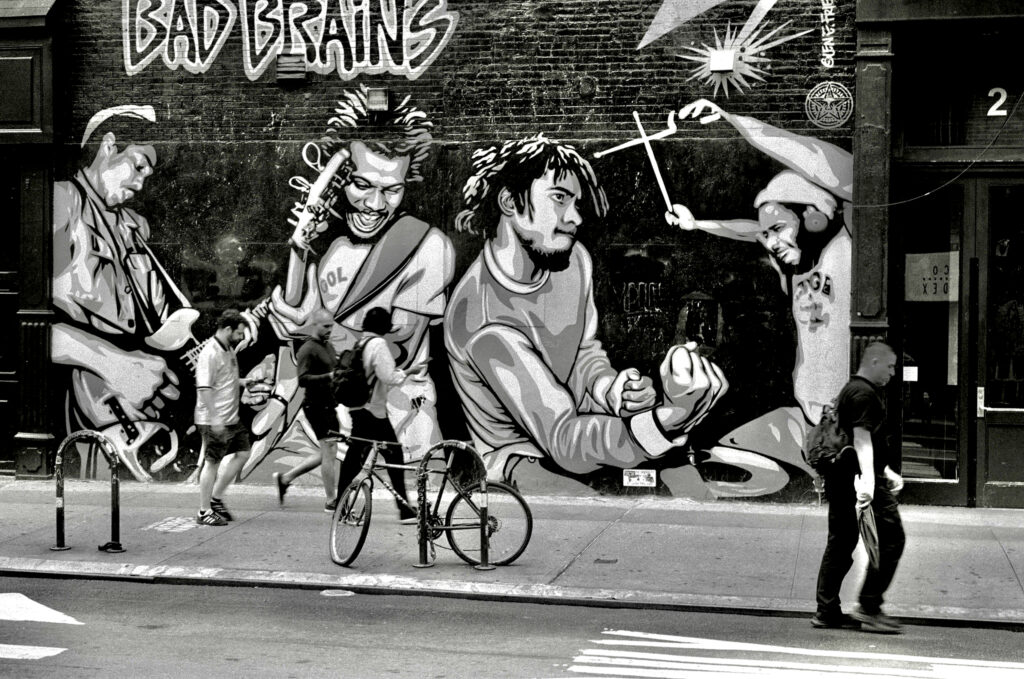
Murals depicting artists have replaced actual artists

An apartment that could have been had for a couple of hundred dollars in the 1970s now goes for north of $7,000. A 1BR / 1BA around the corner on Elizabeth Street is currently listed for $8,800 a month.
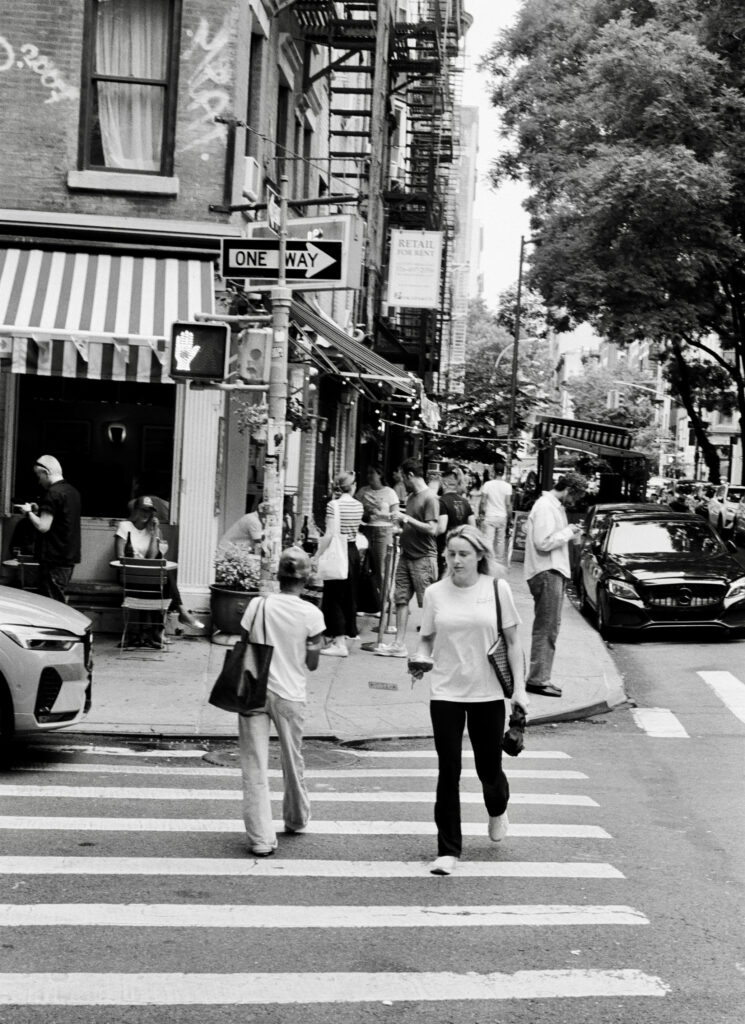
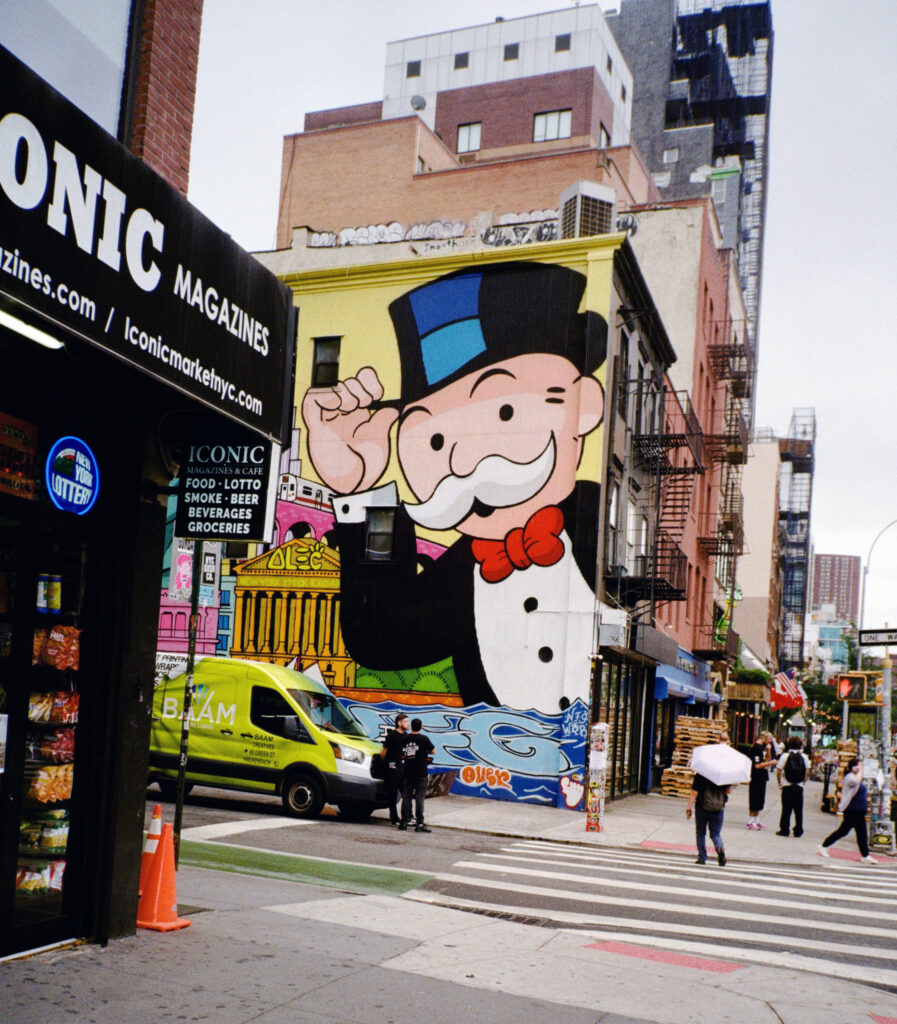
The corner of Elizabeth and Bleecker Streets
The Bowery: The imagery is undeniable

Wages have kept pace, sure, but money has changed the area in ways that seem irreversible.

In earlier times, new immigrants bemoaned the arrival of the beatniks who later decried the hippies who detested the punks who complained about the investment bankers who witnessed the invasion of the techies. Of course, there are similar stories in every city from London to New York to San Francisco.

Still, my hope is that in the gritty corners of far-flung towns, artists are madly painting and photographing and typing and proclaiming, unencumbered by petty concerns like skyrocketing costs and regular employment.

It’s OK if they’re eating beans from a can. Just let them work! Keep them out of sight of the wanna-be hipsters and real estate speculators who would descend, pushing up prices, destroying what first drew them there in their vain attempt to be as cool as the people they eventually force out.

Just like they did in Robert Frank’s old neighborhood. Just like they’re doing everywhere.

“This ain’t no party, this ain’t no disco
This ain’t no fooling around
This ain’t no Mudd Club, or CBGB
I ain’t got time for that now…”

(Byrne-Frantz-Harrison-Weymouth)

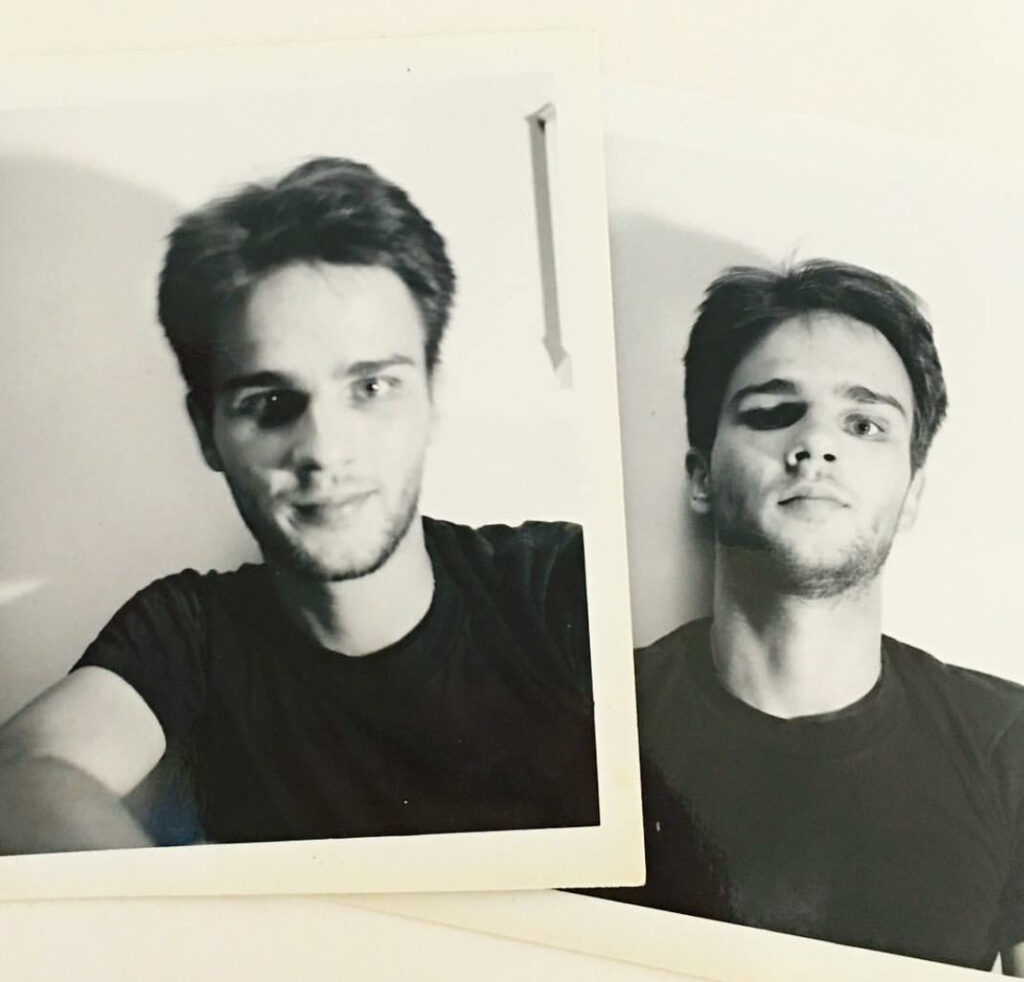
Self-Portraits, 1979 (NYC). Soon after, I took to heart the lyrics of the Talking Heads song, “Life During Wartime” when choosing my wardrobe.

Kodak Tri-X and Kodak Gold 200 photos were developed and scanned by Blue Moon Camera & Machine in Portland, Oregon. iPhone pix by Darby Bennett.

My Flickr account is here. And Instagram here

Share this post:

About The Author

By John Bennett
I live in Portland, Oregon, where we are fortunate to have a number of great camera stores and a thriving darkroom scene.
Read More Articles From John Bennett

Find more similar content on 35mmc

Use the tags below to search for more posts on related topics:

Donate to the upkeep, or contribute to 35mmc for an ad-free experience.

There are two ways to contribute to 35mmc and experience it without the adverts:

Paid Subscription – £3.99 per month and you’ll never see an advert again! (Free 3-day trial).

Subscribe here.

Content contributor – become a part of the world’s biggest film and alternative photography community blog. All our Contributors have an ad-free experience for life.

Sign up here.

Make a donation – If you would simply like to support Hamish Gill and 35mmc financially, you can also do so via ko-fi

Donate to 35mmc here.

Comments

Walter Reumkens on Robert Frank’s Disappearing New York Neighborhood

Comment posted: 30/07/2026

That’s all the sort of thing you need to know before travelling from Oregon to New York for a few days. Some Leica photographers living in New York will no doubt be surprised by your article and the idea of taking photos there. I only own *The Americans* and the Photo Poche paperback No. 10 on Robert Frank from France. I’m a fan all the same – I liked the sort of person he was. Perhaps it also plays a part that most of his photos from *The Americans* were taken with his Leica IIIc and a Nikkor S O 1.4/50mm lens. Our role models simply took only the best. :-)))

I think it’s a brilliant idea, given New York’s urban development, to feature photos from his immediate surroundings during his lifetime. Everyday scenes and people from a vibrant, cosmopolitan city that has probably lost much of the charm of earlier years. Thanks, John!
Reply

Leave a Reply

Your email address will not be published. Required fields are marked *

John Bennett replied:

Comment posted: 30/07/2026

Thanks, Walter! If you are interested, I have another article on 35mmc about my attempt to reconstruct Robert’s Leica iii. https://www.35mmc.com/30/10/2025/robert-franks-leica-well-close/

Reply

Leave a Reply

Your email address will not be published. Required fields are marked *

Walter Reumkens replied:

Comment posted: 30/07/2026

Thanks, John. I already knew her; we’d even had a chat there. :-))))

Reply

Leave a Reply

Your email address will not be published. Required fields are marked *

John Bennett replied:

Comment posted: 30/07/2026

I remember!

Reply

Leave a Reply

Your email address will not be published. Required fields are marked *

Gary Smith on Robert Frank’s Disappearing New York Neighborhood

Comment posted: 30/07/2026

I had to look up Frank; he doesn't loom large in my mythology. I have quite a few printed images of his in my various books. I live in Gresham and Blue Moon has taken its fair share of my retirement dollars. At one point I tried to figure out what you're calling the thriving darkroom scene. It may be thriving, but I wasn't able to find a way in. I develop and scan color and black and white despite sending more and more out. I'd likely do more if I had space for a wet darkroom, enlarger and all the rest.

I have 2 articles that are still percolating...
...one is the threatened comparison of the results from a Voigtländer VITO CLR with a Kodak Retinette 1B. The other is a travelogue of sorts that I'm calling "Biogon across Oregon."

Thanks for your post!
Reply

Leave a Reply

Your email address will not be published. Required fields are marked *

John Bennett replied:

Comment posted: 30/07/2026

Thanks, Gary! If you haven’t, check out Franklin Foto down the street from Blue Moon Camera on Lombard in St. Johhs. I’ve been at PCC’s darkroom since 2018. Will look for your next articles!

Reply

Leave a Reply

Your email address will not be published. Required fields are marked *

shawn granton replied:

Comment posted: 30/07/2026

What John said. There's also The Portland Darkroom, who has about two Open Darkroom nights, usually Wednesdays. You need to sign up in advance for them. It seems like Franklin Foto is more "drop in" style.

Reply

Leave a Reply

Your email address will not be published. Required fields are marked *

John Bennett replied:

Comment posted: 30/07/2026

Shawn Knows.

Reply

Leave a Reply

Your email address will not be published. Required fields are marked *

David on Robert Frank’s Disappearing New York Neighborhood

Comment posted: 30/07/2026

Thanks for your insights about Robert Frank and your photographs. I have a lot of time for him, having taught Frank's The Americans for some years and watched his films. He is still overlooked, but important photographer, not only for the enormous volume of photographs he made for that book, first rejected by US publishers, and only published in English after Les Americains French edition came out.
Thousands of 35mm shots whittled down to 82 photographs offered a critical gaze that had been lacking in North American street photography. Frank's (and Leslie') Pull My Daisy had a voiceover written by key Beat Generation writer Jack Kerouac, but Frank's later autobiographical films are far more innovative for his turning to autobiographical diary film. He Sitney and others overlooked his experimental filmmaking, but I think wrongly so.
Your commentary and photographs I find compelling. Their empty shared studio space, the street. The Yuppie takeover. Same happened in the 1980s to Covent Garden and other spaces where artists lived.
I also relate to the low-key tone. I think it suits Frank perfectly, ironic and world-weary.
Reply

Leave a Reply

Your email address will not be published. Required fields are marked *

John Bennett replied:

Comment posted: 30/07/2026

Thank you, David. Much appreciated. Robert Frank was, as my darkroom teacher says, “A true bohemian.” The Americans remains, for me, THE key photo book of the 20th century.

Reply

Leave a Reply

Your email address will not be published. Required fields are marked *

David Pauley on Robert Frank’s Disappearing New York Neighborhood

Comment posted: 31/07/2026

Hi John,

There's something uniquely forlorn about empty rooms once the movers have exited, and that feeling is all the greater knowing who the eminent residents were in this particular space. (God, the place does look shabby!). I admire Frank and can see his importance in the canon though more as an intellectual admiration, not a true devotion like what you feel (and which makes your pieces so special to read). Peter Hujar on the other hand whose last NY residence was above a theater (now a movie theater) on Second Avenue and 12th Street always gets me when I walk by there. I lived diagonally across the street from there from 1994-1997, but by then neighborhood was already hugely gentrified and would have been unrecognizable to Hujar who died of HIV/AIDS in '87...a year before I moved to NY. Hard not to wonder what would have become of him and so many others if effective HIV therapies had come in a decade sooner. I'm glad you wrote the piece and were able to document Frank's former residence on a fateful day. Also I think I may know the Alex you spoke to who is also a photographer who has an interest in Frank. Cheers from across the Brooklyn bridge!
Reply

Leave a Reply

Your email address will not be published. Required fields are marked *

John Bennett replied:

Comment posted: 31/07/2026

Thank you, David. I know Peter Hujar’s work mostly through Nan Goldin and his friend, Fran Lebowitz. I have read that his integrity was second-to-none. We lost an entire generation of very creative people to AIDS. New York was hit especially hard.

Reply

Leave a Reply

Your email address will not be published. Required fields are marked *

David Pauley on Robert Frank’s Disappearing New York Neighborhood

Comment posted: 31/07/2026

P.S. I also love your moody 1979 self portraits! You were way cooler than I was at that age!
Reply

Leave a Reply

Your email address will not be published. Required fields are marked *

John Bennett replied:

Comment posted: 31/07/2026

Doubtful, but thank you!

Reply

Leave a Reply

Your email address will not be published. Required fields are marked *

Andrew L on Robert Frank’s Disappearing New York Neighborhood

Comment posted: 31/07/2026

I think The Americans may be the single best photo book. Of course that's an impossible declaration to support, but for me it encapsulates time, documentation, vision, and all of the best characteristics of street photography. For that, Frank has my undying esteem. It's hard, though, seeing his world pass away, especially as the era of street photography done the way he did it has also passed away unrecoverably. We're working with something else, now, there's no doubt about that, but I sure wish I had his material to work with, inferior as my own vision mostly is.
Reply

Leave a Reply

Your email address will not be published. Required fields are marked *

John Bennett replied:

Comment posted: 31/07/2026

Thank you, Andrew. I posted a longer reply — or at least I thought I did — but I don’t see it. It said something about looking at art with the eyes of the times in was created. When The Americans was first published, there was nothing else like it out there!

Reply

Leave a Reply

Your email address will not be published. Required fields are marked *

Christopher Welch on Robert Frank’s Disappearing New York Neighborhood

Comment posted: 01/08/2026

This post really resonates with me John. I grew up in Dallas and still live here, and our version of The Bowery is called Deep Ellum. It is being paved over and gentrified now and it's really hard to watch. Back in the 80's when I was in high school, Deep Ellum was where all the underground clubs and bars were. There were industrial shops next to clubs next to all night coffee houses next to dive bars and warehouses. That's where indie bands played through the 90's into the early 2ks. It's rapidly disappearing with no effort to halt development to preserve the area, and some of the best clubs are now parking lots and boutique retailers... gone forever. It was the best part of downtown Dallas. I can't imagine seeing what CBGBs looks like now in person. Thanks for the article.
Reply

Leave a Reply

Your email address will not be published. Required fields are marked *

John Bennett replied:

Comment posted: 01/08/2026

Thank you, Christopher. Much appreciated. I’ve never been to Dallas, but I know a little about Deep Elum. Jimmie Dale Gilmore’s version of the traditional song, Deep Elum Blues was in regular rotation on my CD player for many years.

Reply

Leave a Reply

Your email address will not be published. Required fields are marked *

Bill Brown replied:

Comment posted: 01/08/2026

Christopher, I've lived in Dallas since 1974 and have photographed in and around the city since 1978. Since about 2007 the changes have been moving at a rapid pace. Deep Ellum isn't the only area experiencing gentrification. Oak Cliff along Eighth Street and Jefferson Blvd. and the Bishop Arts District. I wouldn't know where I was if I hadn't driven that area many times back in the day. I think they call it progress at least for the developers. With the expansion of I-35/Hwy 67 all visual connection to the area has been walled off. The giraffe sculpture at the zoo comes to mind. Around 2006/7 I began a photo project I call 'Drive Time'. Businesses in Oak Cliff along S. Beckley Ave. and Uptown areas were my main focus. I never imagined what was about to unfold over the coming years. In many ways it feels like the life has been sucked out of these areas and Dallas too. Gets harder and harder to find inspiration to photograph.

Reply

Leave a Reply

Your email address will not be published. Required fields are marked *

Erik Brammer on Robert Frank’s Disappearing New York Neighborhood

Comment posted: 02/08/2026

Great article covering some interesting developments over time.
Reply

Leave a Reply

Your email address will not be published. Required fields are marked *

John Bennett replied:

Comment posted: 02/08/2026

Thank you, Erik. Much appreciated!

Reply

Leave a Reply

Your email address will not be published. Required fields are marked *

Jeffery Luhn on Robert Frank’s Disappearing New York Neighborhood

Comment posted: 03/08/2026

"In earlier times, new immigrants bemoaned the arrival of the beatniks who later decried the hippies who detested the punks who complained about the investment bankers who witnessed the invasion of the techies. Of course, there are similar stories in every city from London to New York to San Francisco."
Well stated! I grew up in the San Francisco area and have seen that scenario play out first hand. This is the way of the world.
It's too bad that Robert Frank's space couldn't have been converted into a workspace for young photographers. But who would have managed that? Fortunately, there are still places in the world where adventurous photographers can pursue street photography. Thanks for your parting words, photos, and rememberances of a great photographer.
Jeffery
Reply

Leave a Reply

Your email address will not be published. Required fields are marked *

John Bennett replied:

Comment posted: 03/08/2026

Thank you, Jeffery. I lived in San Francisco for 32 years (1980- 2012). The changes there have been exponential. I guess “change” seems that way, but it appears that money is always the driving force. The listing agent for Robert’s loft told me that someone aware of its history had purchased it. I don’t know that it will ever become a workspace for photographers, but perhaps some aspects will be saved. Fingers crossed.

Reply

Leave a Reply

Your email address will not be published. Required fields are marked *

Ed on Robert Frank’s Disappearing New York Neighborhood

Comment posted: 05/08/2026

Thanks John - what a great insight into the life of Robert and June's life in New York. Gentrification is everywhere! I do hope the spirit of the place is not lost in the transformation. Great photos too. Best wishes. Ed
Reply

Leave a Reply

Your email address will not be published. Required fields are marked *

John Bennett replied:

Comment posted: 05/08/2026

Thank you, Ed!

Reply

Leave a Reply

Your email address will not be published. Required fields are marked *

Leave a Comment

Leave a Reply

Your email address will not be published. Required fields are marked *